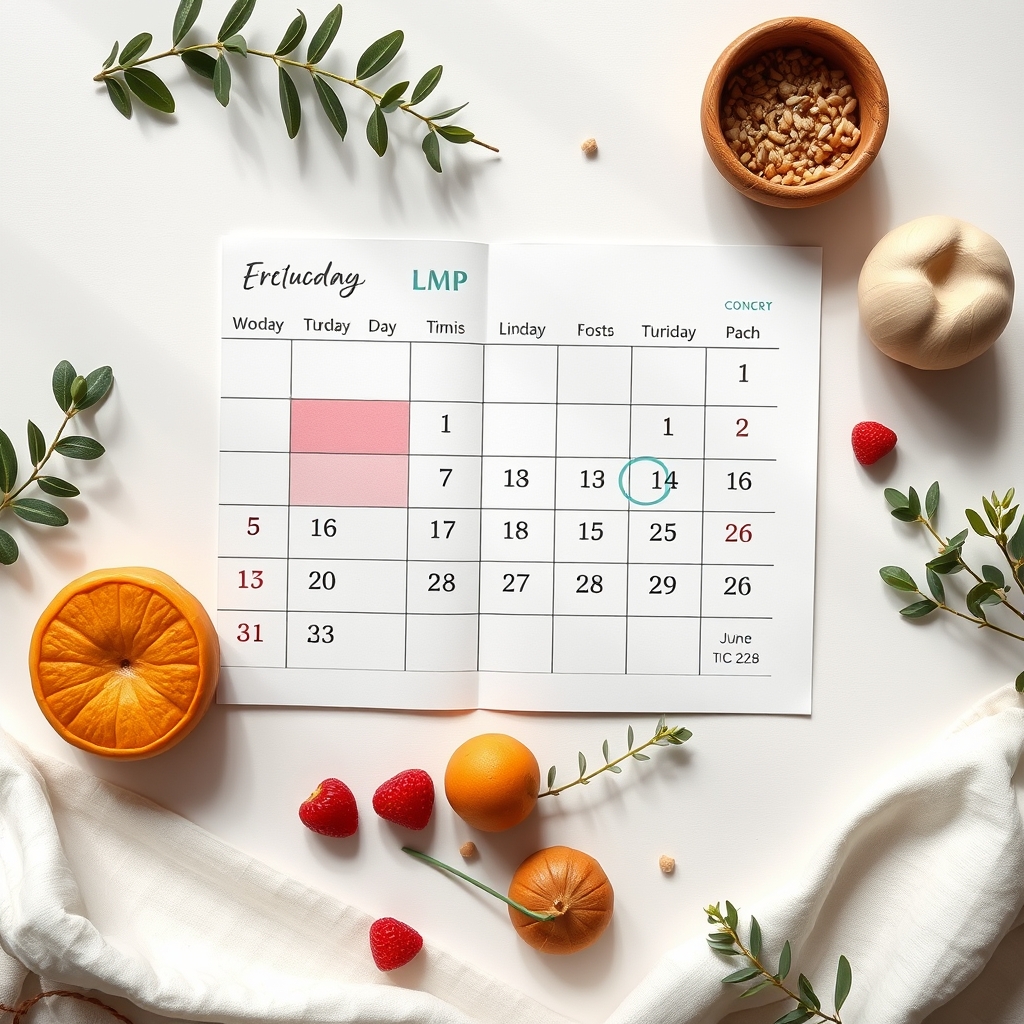
You can estimate when you conceived by checking ovulation dates, menstrual cycles, and pregnancy signs; most women realize it around 4‑6 weeks after conception.
By Shubhra Mishra — a mom of two who turned her own confusion during pregnancy into BumpBites, a global mission to make food choices clear, safe, and stress-free for every expecting mother. 💛
Check whether any food is safe during pregnancy with the BumpBites Food Safety Checker.
Quick take: You can estimate the day you conceived by counting back about two weeks from the first day of your last menstrual period, confirming ovulation with kits or basal temperature, and, when available, using an early ultrasound. While no method pinpoints the exact moment, combining cycle tracking, symptoms, and professional imaging gives the most reliable window.
It’s 2 a.m., you’ve just taken a home pregnancy test, and the line is faintly positive. A rush of excitement mixes with a swirl of questions: “When exactly did I become pregnant?” You’re not alone—many expectant parents wonder how to pin down that elusive date. Knowing your conception window helps you understand fetal development, plan prenatal care, and simply satisfy a natural curiosity.
In this guide, we’ll walk through the science of dating a pregnancy, from the classic last‑menstrual‑period (LMP) method to modern ovulation kits, ultrasound estimates, and even special cases like irregular cycles or IVF. We’ll explain the signs that appear week by week, debunk common myths, and give you clear steps to calculate your own conception date.
Whether you’re tracking a natural cycle, navigating fertility treatment, or just curious after a positive test, the information below will help you answer the question “when did I conceive?” with confidence.
How do I calculate my conception date from my last menstrual period?
The most widely used method starts with the first day of your last menstrual period (LMP). Because most women ovulate about 14 days after that date, you can estimate conception by adding ≈ 14 days to the LMP and then counting forward to the day of intercourse you suspect.
Step‑by‑step LMP calculation
Locate the first day of bleeding of your most recent period.
Count forward 14 days; this is the approximate day of ovulation.
Identify the day(s) you had intercourse around that ovulation window. If you’re unsure, assume intercourse within ± 3 days of ovulation.
Subtract 14 days from your estimated due date (if you have one) to double‑check the LMP‑based conception estimate.
Most clinicians use a 280‑day (40‑week) gestation counted from the LMP, which aligns with a typical 28‑day cycle. If your cycle is longer or shorter, adjust the ovulation day accordingly (e.g., a 35‑day cycle ovulates around day 21). This adjustment follows the ACOG recommendation that clinicians individualize dating based on documented cycle length.
While simple, the LMP method has limitations. Irregular bleeding, hormonal contraception wash‑out, or misremembered dates can skew the estimate. That’s why many providers corroborate the LMP with an early ultrasound, especially when the LMP is uncertain. The NHS advises that when the LMP is unknown or irregular, an early scan should be the primary dating tool.
For quick calculations, you can also use free online conception date calculators. These tools ask for your LMP, cycle length, and known intercourse dates, then output an estimated conception window. They often incorporate the “fertile window” algorithm, which assumes sperm can survive up to five days and the egg remains viable for about 24 hours after ovulation.
Use a calendar or free online tool to map your last period to an estimated conception date.
When you share this calculation with your provider, they’ll compare it to the crown‑rump length (CRL) measured on an early transvaginal ultrasound. If the two estimates differ by more than a week, clinicians typically adjust the gestational age to match the ultrasound, as recommended by the WHO’s antenatal care guidelines.
Remember that cycle-to-cycle variability is common; even women with regular periods may see a one‑day shift in ovulation. Documenting your own patterns over several months can improve accuracy and give your provider a clearer picture of your fertile window.
What are the early signs of conception week by week?
Every pregnancy is unique, but many women notice a pattern of symptoms that line up with the weeks after fertilization. Below is a week‑by‑week snapshot of common early signs, from the moment the egg meets sperm (≈ day 0) through the fourth week.
Week after conception
Typical symptoms
0–1 (fertilization)
None; the embryo is traveling down the fallopian tube.
Increased basal temperature, breast tenderness, heightened sense of smell, mild fatigue.
3–4
More noticeable breast changes, nausea (often called “morning sickness”), frequent urination, mood swings.
4–5
Positive home pregnancy test (hCG detectable), continued breast changes, possible mild abdominal bloating.
These signs can overlap with pre‑menstrual symptoms, which is why many people only suspect pregnancy after a test turns positive. Tracking basal body temperature (BBT) and cervical mucus alongside these symptoms provides a clearer picture of the exact week.
Many fertility‑tracking apps now let you log these early cues, and the aggregated data can highlight a “symptom spike” that aligns with implantation. While not a diagnostic tool, this self‑monitoring can give you confidence about when fertilization likely occurred.
It’s also helpful to note that the intensity of each symptom varies. Some people experience almost no nausea, while others feel queasy throughout the first trimester. According to the Mayo Clinic, severe abdominal pain, heavy bleeding, or a sudden fever at any stage warrants a call to your provider.
Can a pregnancy test tell me the exact date I conceived?
The short answer: No. A home pregnancy test detects the hormone human chorionic gonadotropin (hCG), which rises after implantation—usually 6–12 days after fertilization. The test can tell you that pregnancy is likely, but it cannot pinpoint the exact day of conception.
What a positive test does indicate
Implantation has occurred, meaning fertilization happened at least several days earlier.
hCG levels are generally above ≈ 5 mIU/mL; the amount doubles roughly every 48‑72 hours in early pregnancy.
The timing of a positive test can narrow the conception window to about a week, especially when combined with known intercourse dates.
For a more precise estimate, clinicians rely on early ultrasounds (transvaginal) performed between 6 and 10 weeks gestation. Ultrasound measurements of the crown‑rump length (CRL) can back‑calculate the conception date with a margin of error of ± 3‑5 days. The ACOG practice bulletin notes that CRL is the most reliable single metric for dating in the first trimester.
In situations where an ultrasound isn’t possible—such as remote locations or limited access to care—some providers may use serial hCG measurements to approximate gestational age, though this method is less accurate than imaging.
What’s the difference between conception date, due date, and gestational age?
Understanding the three key dates helps you interpret prenatal care information and track fetal milestones.
Conception date – The day the sperm fertilizes the egg. It’s a single point in time, often estimated by LMP, ovulation tracking, or ultrasound.
Gestational age – The age of the pregnancy counted from the first day of the LMP, not from conception. This is the standard measure used in obstetrics because the exact day of fertilization is rarely known.
Due date – The estimated date of delivery, calculated by adding 280 days (40 weeks) to the LMP. Some clinicians adjust the due date based on early ultrasound findings if there’s a discrepancy of more than a week.
Because gestational age starts two weeks before conception, a fetus that is “8 weeks gestational age” is actually about 6 weeks old from the day of fertilization. This distinction matters when interpreting growth charts and when discussing the timing of prenatal screening tests.
The NHS explains that the due date is an estimate, not a guarantee; only about 5 % of babies are born on their exact due date. Most deliveries occur within a two‑week window before or after the calculated date.
How accurate are ovulation kits for pinpointing the day of conception?
Ovulation predictor kits (OPKs) detect the luteinizing hormone (LH) surge that precedes ovulation by ≈ 24‑36 hours. When you see a positive result, you’re most likely to ovulate within the next day, making that the optimal window for conception.
Accuracy depends on proper use:
Testing at the same time each day (usually afternoon).
Following the kit’s instructions for urine concentration.
Confirming the surge with a secondary method, such as basal body temperature or cervical mucus changes.
When used correctly, OPKs have a ≈ 95 % sensitivity for detecting the LH surge, according to the FDA’s guidance on over‑the‑counter fertility devices. However, the surge can be brief or missed in women with polycystic ovary syndrome (PCOS) or irregular cycles, reducing reliability.
Combining OPKs with daily BBT tracking can narrow the conception window to a 24‑hour period, which is the closest most couples can get without medical imaging. Some fertility apps now integrate OPK results with temperature data, giving a visual “fertile window” that updates in real time.
It’s also worth noting that LH surges can sometimes occur twice in a single cycle, especially in younger women. If you see a second positive line, discuss it with your provider to avoid confusion about the true ovulation day.
What factors affect conception timing in IVF cycles?
In vitro fertilization (IVF) offers a more controlled environment, but several variables still influence the exact timing of conception.
Key factors
Egg retrieval timing – Eggs are collected after a controlled ovarian hyperstimulation protocol, usually 36 hours after an hCG trigger, which mimics the natural LH surge.
Sperm preparation – The concentration and motility of sperm used for intracytoplasmic sperm injection (ICSI) or conventional IVF can affect fertilization rates.
Embryo transfer day – Embryos are commonly transferred at the cleavage stage (day 3) or blastocyst stage (day 5‑6). The day of transfer determines the exact implantation date, typically 6‑10 days after transfer.
Uterine receptivity – The endometrium must be in the “window of implantation,” usually 6‑8 days after progesterone exposure. Clinics often use hormone monitoring or an endometrial biopsy to confirm readiness.
Multiple pregnancies – Transfer of more than one embryo can lead to twins or higher‑order multiples, which may slightly shift the average implantation timing compared with a singleton.
Because IVF cycles are precisely timed, clinics can often estimate the conception date within ± 2 days based on the embryo transfer schedule and hormonal monitoring. The SART guidelines advise that patients receive a clear explanation of how the transfer date maps onto expected gestational dating.
Frozen embryo transfers (FET) add another layer: the thawing process and the timing of the natural or medicated cycle can shift implantation by a day or two compared with fresh transfers. Most clinics synchronize the FET with a personalized hormone regimen to keep the dating window as tight as possible.
When did I conceive if I have irregular periods?
Irregular cycles make LMP‑based calculations less reliable, but you can still approximate your conception window with a few strategies.
Methods for irregular cycles
Ovulation kits – Use an LH surge test for several months to identify your personal ovulation pattern.
Basal body temperature charting – Track nightly temperatures; a sustained rise indicates ovulation.
Mid‑cycle cervical mucus monitoring – Clear, stretchy mucus typically appears just before ovulation.
Early ultrasound – A transvaginal scan in the first trimester can estimate gestational age even when LMP is unknown, allowing back‑calculation of conception.
When you finally confirm pregnancy, tell your provider about any irregularities. They may use the ultrasound measurement of the crown‑rump length to set a more accurate gestational age, which then informs the estimated conception date. The British Fertility Society emphasizes that, for women with > 7‑day cycle variability, an early scan is the gold standard for dating.
In some cases, clinicians may also prescribe a short course of progesterone to support the luteal phase, especially when ovulation timing is uncertain. This can help stabilize the endometrium and make the implantation window clearer on subsequent scans.
Tracking ovulation signs can clarify conception timing, even with irregular periods.
How can I estimate my conception date without an ultrasound or online calculator?
If you don’t have access to an early ultrasound or prefer a DIY approach, you can still create a reasonable estimate using a combination of personal data and simple tools.
DIY estimation steps
Write down the first day of your last menstrual period.
Determine your typical cycle length (e.g., 28 days). If you’re unsure, look back at the dates of the last three periods.
Subtract ≈ 14 days from your cycle length to find your average ovulation day.
Identify any days you recall having intercourse near that ovulation day. If you’re unsure, assume a 3‑day fertile window around ovulation.
Count back 14 days from any known due date (if already calculated) to verify the LMP estimate.
While this method can be off by a few days, it gives you a practical window for personal reference. Many women find that pairing this calculation with symptom tracking (e.g., breast soreness, mild cramping) narrows the window further.
For those who like a quick tool, free online conception date calculators ask for the same inputs and instantly generate a range. They often incorporate a “fertile window” algorithm that accounts for sperm survival (up to 5 days) and egg viability (≈ 24 hours).
How does birth control wash‑out affect conception dating?
When you stop hormonal birth control, the body needs time to re‑establish its natural cycle. The “wash‑out” period can range from a few weeks to several months, depending on the method (e.g., combined oral contraceptives, patches, injections).
During this transition, the timing of the first ovulation after stopping contraception may be unpredictable. The ACOG advises clinicians to counsel patients that the first fertile window could be earlier or later than their historic cycle pattern. For dating purposes, you should treat the first ovulation after wash‑out as a new baseline and use ovulation kits or BBT to pinpoint it.
If you become pregnant shortly after stopping birth control, you can still apply the LMP method—just ensure the LMP you use is the period that began after the wash‑out, not a prior cycle that was suppressed by hormones. This approach aligns with NHS guidance on post‑contraceptive fertility.
Can fertility‑tracking apps and wearables improve conception date estimates?
Modern fertility apps (such as Clue, Flo, and Ovia) let users log menstrual flow, basal temperature, cervical mucus, and even integrate data from wearable devices that track heart rate variability and skin temperature. When these data streams converge, the algorithm can predict the fertile window with a reported accuracy of 70‑80 % in peer‑reviewed studies.
Wearable devices like the Oura Ring or Apple Watch provide continuous temperature and sleep data, which can reveal subtle shifts that precede ovulation. While these tools are not a substitute for a medical ultrasound, they can give you a narrower conception window—often within a 2‑day range—especially when combined with a positive LH surge on an OPK.
Remember to share the app‑generated fertile window with your provider. The CDC notes that clinicians consider patient‑reported data as supplemental, not definitive, but it can help streamline the dating conversation during early prenatal visits.
Estimating conception after a miscarriage or early pregnancy loss
If you experienced a miscarriage before confirming a new pregnancy, the dating process resets. The new conception date must be calculated based on the most recent LMP that precedes the new pregnancy, not the date of the previous loss.
Women who have had a recent loss may have irregular bleeding that can be confused with a new period. Keeping a detailed symptom diary—recording bleeding type, cramping, and any spotting—helps providers differentiate between a new cycle and a lingering post‑miscarriage bleed.
Early ultrasound remains the most reliable way to date the new pregnancy, especially if the interval between the loss and the new conception is short. The WHO recommends a scan at 6‑8 weeks gestation for any pregnancy following a loss, to ensure accurate gestational dating and to assess uterine healing.
How does a woman's age influence the timing of conception?
Age affects both the likelihood of ovulating on a predictable schedule and the quality of the egg that is released. Women in their 20s and early 30s often have more regular cycles, making LMP‑based dating fairly reliable. After age 35, hormonal fluctuations become more common, and occasional anovulatory cycles can occur.
Older age can also lengthen the time between ovulation and successful implantation because of subtle changes in the uterine lining. Consequently, clinicians may rely more heavily on early ultrasound dating for women over 35, as recommended by ACOG’s guidelines for advanced maternal age.
Regardless of age, the basic principle remains: ovulation still occurs roughly 14 days after the start of the period, but confirming the exact day with an LH surge test or BBT becomes increasingly valuable as cycles become less predictable.
Can nutrition and lifestyle habits help narrow the conception window?
While no food can tell you the exact day you conceived, certain lifestyle choices can make ovulation more detectable. A balanced diet rich in whole grains, lean protein, and healthy fats supports hormone production, which can lead to clearer LH surges and more consistent basal temperature patterns.
Regular moderate exercise improves blood flow to the reproductive organs, often resulting in a more pronounced temperature shift after ovulation. Conversely, excessive intense training or very low body weight can suppress ovulation, widening the fertile window and making dating less precise.
Limiting caffeine to under 200 mg per day and staying well‑hydrated also help stabilize hormone levels, which can make ovulation kits and temperature charts more reliable. Discuss any major diet changes with your provider, especially if you’re trying to conceive.
Doctor’s note
From our medical team: Estimating a conception date is part science, part detective work. The most reliable method combines your last menstrual period with ovulation tracking and, when possible, an early ultrasound. If you have irregular cycles, recent birth‑control use, or have undergone IVF, let your provider know—these factors can shift the dating calculation. When in doubt, a transvaginal ultrasound performed before 10 weeks gestation gives the clearest picture, typically narrowing the conception window to within a few days.
Myth vs. fact
Myth: A positive pregnancy test tells you the exact day you got pregnant.
Fact: A test indicates that implantation has occurred, which can be up to two weeks after fertilization. The exact day remains an estimate.
Myth: All women ovulate on day 14 of a 28‑day cycle.
Fact: Ovulation timing varies widely; many women ovulate earlier or later, especially with irregular cycles.
Myth: Stress can delay conception by weeks.
Fact: While chronic stress may affect hormone balance, short‑term stress does not shift the day of ovulation enough to change the conception date dramatically.
Key takeaways
Estimate conception by adding ≈ 14 days to the first day of your last menstrual period, then aligning it with known intercourse dates.
Ovulation kits, basal temperature, and cervical mucus tracking can narrow the fertile window to a 24‑hour period.
Early pregnancy symptoms (implantation spotting, breast tenderness, nausea) often appear 1‑4 weeks after conception.
Home pregnancy tests confirm implantation but cannot pinpoint the exact conception day.
Early ultrasound measurements in the first trimester provide the most accurate gestational age, back‑calculating conception with ± 3‑5 days of precision.
If you have irregular periods, recent birth‑control use, or used IVF, rely on ovulation monitoring, embryo transfer dates, and early ultrasound for the best estimate.
Fertility‑tracking apps and wearables can further refine the window, especially when paired with LH surge results.
Age, nutrition, and lifestyle can influence ovulation regularity, so consider these factors when estimating your conception date.
Frequently asked questions
How can I tell when I conceived?
Start with the first day of your last period, add ≈ 14 days to estimate ovulation, and consider any intercourse around that time; an early ultrasound can then refine the window to within a few days.
What is the first sign of pregnancy?
Implantation spotting or mild cramping often occurs 6‑12 days after fertilization, making it one of the earliest clues before a pregnancy test turns positive.
Can a home pregnancy test tell you the exact date of conception?
No; it only shows that hCG is present, confirming implantation, which occurs several days after fertilization.
How is the due date calculated?
Clinicians add 280 days (40 weeks) to the first day of your last menstrual period, then adjust based on early ultrasound findings if there’s a discrepancy.
Why is my period late but my pregnancy test is negative?
Late periods can result from stress, hormonal shifts, or early miscarriage; a negative test may mean hCG levels are still below the test’s detection threshold.
Does ovulation timing affect the conception date?
Yes; conception can only occur when an egg is present, typically within 24 hours of ovulation, so pinpointing ovulation narrows the possible conception day.
Can a blood test determine the exact day I conceived?
Blood tests measure hCG levels more precisely than urine tests, but they still only indicate that implantation has occurred. They cannot identify the exact fertilization day; an early ultrasound remains the most accurate method.
Does breastfeeding affect how my pregnancy is dated?
Breastfeeding can suppress ovulation, leading to longer cycles, which may make LMP‑based dating less reliable. However, once you’re pregnant, gestational age is still calculated from the LMP or confirmed with early ultrasound, regardless of lactation status.
When to call your doctor
If you experience severe abdominal pain, heavy bleeding, fever, or signs of ectopic pregnancy (sharp side pain, dizziness), seek medical attention immediately. This article provides general information and is not a substitute for personalized medical advice.
References
American College of Obstetricians and Gynecologists (ACOG). “Estimating Due Date.” ACOG Practice Bulletin No. 115, 2022.
National Health Service (NHS). “How to calculate your due date.” NHS.uk, 2023.
U.S. Food and Drug Administration (FDA). “Ovulation Predictor Kits: Guidance for Industry.” 2021.
World Health Organization (WHO). “Recommendations on Antenatal Care for a Positive Pregnancy Experience.” 2022.
Mayo Clinic. “Early signs of pregnancy.” MayoClinic.org, updated 2023.
Society for Assisted Reproductive Technology (SART). “Embryo Transfer Timing.” SART.org, 2022.
Centers for Disease Control and Prevention (CDC). “Human Chorionic Gonadotropin (hCG) Testing.” CDC.gov, 2022.
British Fertility Society. “Managing Irregular Cycles.” bfs.org.uk, 2023.
Clue Co. “How accurate are fertility apps?” Published research summary, 2022.
Oura Health. “Wearable temperature data and ovulation prediction.” Clinical validation study, 2021.
American College of Obstetricians and Gynecologists (ACOG). “Advanced Maternal Age.” Committee Opinion No. 743, 2020.
National Institutes of Health (NIH). “Nutrition and Fertility.” Office of Dietary Supplements, 2021.
Not sure about the label on When Did I Conceive Pregnancy products?
Snap the ingredients list and SafeFilter checks every ingredient for your stage — only 3 free scans this month, then you're locked until reset. Unlimited from $7/mo or $50/yr.
When Shubhra Mishra was expecting her first child in 2016, she was overwhelmed by conflicting food advice — one site said yes, another said never. By the time her second baby arrived in 2019, she realized millions of mothers face the same confusion.
That sparked a five-year journey through clinical nutrition papers, cultural diets, and expert conversations — all leading to BumpBites: a calm, compassionate space where science meets everyday motherhood.
Her long-term vision is to build a global community ensuring safe, supported, and free deliveriesfor every mother — because no woman should face pregnancy alone or uninformed. 🌿
🌍 Stand with mothers, shape safer guidance
Join a small circle of experts who review BumpBites articles so expecting parents everywhere can decide with confidence.