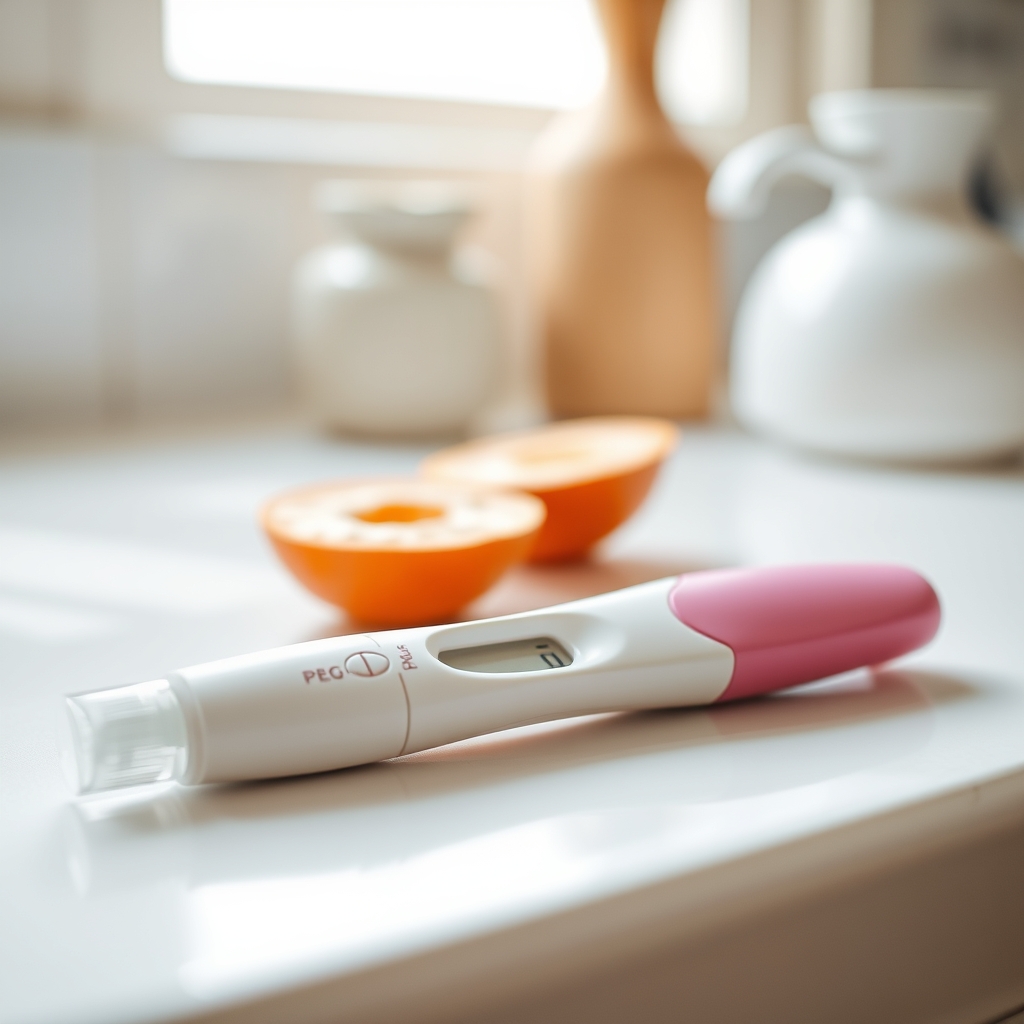
Yes—most ectopic pregnancies still produce enough hCG for a positive result, so a pregnancy test will usually be positive, but it cannot tell where the pregnancy is located.
By Shubhra Mishra — a mom of two who turned her own confusion during pregnancy into BumpBites, a global mission to make food choices clear, safe, and stress-free for every expecting mother. 💛
Check whether any food is safe during pregnancy with the BumpBites Food Safety Checker.
Quick take: Yes—most home pregnancy tests will show a positive result in an ectopic pregnancy because they detect the hormone hCG, which is still produced. However, the level of hCG can be lower or rise more slowly, sometimes leading to a false‑negative or a test that turns positive then negative. If you have any pain, bleeding, or unusual symptoms, contact your provider right away.
It’s 2 a.m., you’re curled up in bed, and a faint line appears on the pregnancy test you just bought. Relief washes over you, but a knot forms in your stomach when you notice sharp side pain. You’re not alone—many expecting parents wonder, “Will the pregnancy test be positive with an ectopic pregnancy?” The short answer is that most tests will turn positive, but the story behind that line is more nuanced. In this guide we’ll explain how pregnancy tests work, why hCG levels matter, what an ectopic pregnancy looks and feels like, and exactly what you should do if the results don’t match your symptoms.
We’ll walk through the most common questions you might type into Google, from “Can an ectopic pregnancy show up on a pregnancy test?” to “How long after implantation will a pregnancy test be positive with an ectopic pregnancy?” You’ll get clear, evidence‑based answers, a practical table of hCG ranges, and a quick checklist you can take to your next appointment. Remember, this article is for information only; always follow up with your OB‑GYN, midwife, or family doctor.
Can an ectopic pregnancy show up on a pregnancy test?
Home pregnancy tests (HPTs) detect the presence of human chorionic gonadotropin (hCG) in urine. hCG is produced by the placenta after a fertilized egg implants, whether that implantation occurs inside the uterus or outside it. In an ectopic pregnancy—most often a tubal pregnancy—trophoblastic tissue still secretes hCG, so a test will usually read “positive.”
What matters is the amount of hCG. A typical intrauterine pregnancy reaches a threshold of about 25 mIU/mL by the time of a missed period, which is the sensitivity most over‑the‑counter tests advertise. Ectopic pregnancies can produce enough hCG to cross that threshold, especially after a few weeks of growth. However, some ectopic pregnancies produce lower levels, and a test taken very early may still be negative.
One reader shared that she saw a faint positive line at day 10 after her missed period, but by day 12 the line had disappeared. She later learned she had a ruptured tubal pregnancy. This illustrates that while most ectopic pregnancies do show up on a test, the timing and strength of the line can vary.
Why timing matters: The hormone surge that triggers a positive line often coincides with the first trimester weeks when the embryo is still tiny. Because ectopic pregnancies grow in a less optimal environment, the surge may be delayed, meaning the test could turn positive later than you expect. If you notice a positive line but feel something isn’t right, a follow‑up blood test can clarify the picture.
Even a faint line can indicate an ectopic pregnancy; follow up with a clinician.
How accurate are pregnancy tests with ectopic pregnancies?
Accuracy depends on two factors: the test’s sensitivity (the lowest hCG level it can detect) and the hCG level produced by the ectopic pregnancy. Most modern HPTs claim >99 % accuracy for detecting hCG ≥ 25 mIU/mL in a laboratory setting. In real‑world use, the detection rate for ectopic pregnancies is slightly lower because many ectopic pregnancies generate hCG levels below that cut‑off early on.
Studies referenced by the American College of Obstetricians and Gynecologists (ACOG) indicate that about 70–80 % of ectopic pregnancies will be detected by a standard home test taken after a missed period. The remaining 20–30 % may yield a false‑negative result, especially if the test is taken too early (before 6 weeks gestation) or if the woman’s hCG rise is slower than average.
For the most reliable result, ACOG recommends using a test with a sensitivity of ≤ 10 mIU/mL and waiting at least a week after a missed period before testing. If you have risk factors for ectopic pregnancy—such as a prior ectopic, tubal surgery, or pelvic inflammatory disease—consider a serum hCG test, which can detect lower levels and track the rise more precisely.
Practical tip: If you get a negative result but still have classic early‑pregnancy symptoms, repeat the test in 48 hours or ask your provider for a quantitative blood hCG. A rising level, even if still low, can signal an early ectopic that a urine test missed.
What are the chances of a false‑negative pregnancy test with an ectopic pregnancy?
A false‑negative occurs when the test does not detect enough hCG to trigger the positive line. In ectopic pregnancies, the chance of a false‑negative is higher than in normal intrauterine pregnancies because the growth of the trophoblast is often slower. The NHS estimates that about 1 in 5 ectopic pregnancies may initially test negative, especially in the first few weeks after implantation.
Key reasons for a false‑negative include:
Early testing: Testing before the embryo has produced sufficient hCG (usually before 5 weeks gestation).
Low‑hCG ectopic: Some tubal pregnancies produce markedly lower hCG levels, staying under the detection threshold longer.
Diluted urine: Testing after drinking a lot of fluid can dilute hCG, making the line faint or invisible.
If you receive a negative result but still experience classic pregnancy symptoms—missed period, breast tenderness, nausea—or you have pelvic pain, a repeat test in a few days or a serum hCG test is advisable.
What to watch for: A faint line that disappears on a second test, or a line that seems “half‑present,” should prompt a call to your provider. Those subtle cues often precede the more dramatic symptoms of a ruptured ectopic.
Do ectopic pregnancies always show a positive pregnancy test?
The short answer is no; they do not always show a positive result, especially when testing very early. However, once the ectopic pregnancy reaches a size where trophoblastic tissue is viable, most will produce enough hCG for a standard home test to turn positive. The “always” scenario is more common with intrauterine pregnancies, where the placenta forms in a predictable environment.
Consider the case of a woman who experienced a sudden onset of sharp abdominal pain at 5 weeks gestation. Her home test was negative, but a serum hCG level of 12 mIU/mL confirmed an early ectopic pregnancy. She was treated with methotrexate before the condition worsened.
Therefore, while a positive test is a strong clue that pregnancy is present, a negative test does not rule out an ectopic pregnancy—especially if symptoms are concerning.
Bottom line: If you have risk factors or unexplained pain, don’t rely solely on a negative urine test. A quick blood draw can catch an early ectopic that a home test misses.
How long after implantation will a pregnancy test be positive with an ectopic pregnancy?
Implantation of an ectopic embryo typically occurs 6–12 days after fertilization, slightly later than the average intrauterine implantation window. After implantation, hCG production begins, and most HPTs can detect the hormone roughly 7–10 days later—meaning the earliest a home test may turn positive is around 4 weeks gestation (about the time of a missed period).
Because ectopic pregnancies often grow more slowly, the rise in hCG can be less than the expected doubling every 48 hours seen in normal pregnancies. This slower rise may delay the point at which the test becomes positive. In practice, many clinicians advise waiting until at least 5 weeks gestation (or one week after a missed period) before relying on a home test for definitive confirmation.
Below is a simplified timeline:
Event
Typical Timing
hCG Level Approx.
Fertilization
Day 0
0 mIU/mL
Ectopic implantation
Day 6‑12
5‑30 mIU/mL
Home test positive
Day 14‑21 (≈4 weeks)
≥ 25 mIU/mL (varies by test)
Serum hCG detectable
Day 9‑12
≥ 5 mIU/mL
Remember that individual variation is common; if you suspect an ectopic pregnancy, trust your symptoms and seek care even if the test is negative.
Quick tip: If you’re testing at home and get a faint line, note the exact date and repeat the test in 48 hours. Consistent results help clinicians interpret the hCG trajectory more accurately.
Side‑by‑side view helps explain why hCG patterns differ between ectopic and intrauterine pregnancies.
Can a pregnancy test detect an ectopic pregnancy before symptoms appear?
Yes, a highly sensitive home test can sometimes turn positive before you notice any pain, bleeding, or other ectopic symptoms. The detection relies solely on hCG, not on the location of the pregnancy. However, because ectopic pregnancies often produce lower hCG, the earliest positive result may still coincide with early symptoms such as mild abdominal cramping or spotting.
In a prospective study cited by the UK’s National Health Service (NHS), 82 % of women with tubal ectopic pregnancies had a detectable hCG level ≥ 25 mIU/mL by the time they first experienced pain. That means a test taken at the same time would likely have been positive, even though the pain was the first clue that something was wrong.
If you have risk factors (previous ectopic, infertility treatments, smoking, or a history of pelvic infection), you might consider a serum hCG test even before symptoms. Serial measurements (every 48 hours) can reveal an abnormal rise pattern, prompting early imaging with transvaginal ultrasound.
Takeaway: A positive test in the absence of typical pregnancy symptoms should still prompt a quick office visit. The combination of hCG data and a focused ultrasound can locate the pregnancy before it becomes an emergency.
What is the relationship between hCG levels and ectopic pregnancy test results?
hCG is the hormone both pregnancy tests and clinicians use to gauge pregnancy viability. In a normal intrauterine pregnancy, hCG typically doubles every 48 hours during the first trimester. In an ectopic pregnancy, the rise is often slower—sometimes increasing by less than 66 % over the same period or even plateauing.
This difference matters because:
Positive test, low hCG: A home test may be positive while serum hCG is still low, signaling that the pregnancy may be ectopic or very early.
False‑negative risk: If hCG is below the test’s threshold, the result will be negative, even though a pregnancy exists.
Monitoring tool: Doctors track hCG trends; a rising but sub‑doubling pattern often triggers an ultrasound to locate the pregnancy.
The CDC’s guidelines note that an hCG level below 1500 mIU/mL with an empty uterus on transvaginal ultrasound is considered “non‑visualized,” prompting further evaluation for possible ectopic pregnancy.
Clinical nuance: Some labs now provide “quantitative” hCG results that report the exact number, allowing providers to chart the rise or fall more precisely than a simple positive/negative line.
Will a home pregnancy test be positive with a tubal ectopic pregnancy?
In most cases, yes. Tubal ectopic pregnancies still involve trophoblastic tissue that secretes hCG, and a standard home test that detects ≥ 25 mIU/mL will usually show a positive line once the hormone reaches that level. The nuance lies in how quickly the line appears and how strong it is.
Some women report a “positive‑then‑negative” pattern: the test reads positive one day, then a faint line disappears on a repeat test a few days later. This can happen when hCG peaks just above the detection limit and then drops due to the failing ectopic tissue, or when the test is performed with diluted urine. If you experience this pattern, it is a red flag for an abnormal pregnancy, and you should seek immediate medical evaluation.
Additionally, a positive home test does not differentiate between a healthy intrauterine pregnancy, a miscarriage, or an ectopic pregnancy. That’s why clinicians combine the test result with symptoms, hCG trends, and imaging to pinpoint the exact situation.
Even with a positive test, a follow‑up scan is essential to confirm where the pregnancy is located.
How does an ectopic pregnancy affect pregnancy test results and symptoms?
Beyond the possibility of a false‑negative, an ectopic pregnancy can cause atypical test patterns. A serum hCG that rises slowly or plateaus often correlates with mild or absent pregnancy symptoms—making the situation confusing for many. Conversely, some women experience classic early pregnancy signs (nausea, breast tenderness) alongside abdominal or shoulder pain, which should raise suspicion.
Symptoms that may accompany a positive test in ectopic pregnancy include:
Sharp unilateral pelvic or abdominal pain, often worsening with movement.
Vaginal spotting that may be lighter or darker than a typical period.
Dizziness, faintness, or shoulder pain (signs of internal bleeding).
Absence of a fetal heartbeat on ultrasound despite a positive test.
If you notice any of these alongside a positive test, especially if the pain is severe, call your provider immediately. Early detection can allow for medical management with methotrexate, which preserves fertility in many cases, rather than emergency surgery.
Important reminder: The intensity of pain does not always match the severity of the ectopic. Some tubal pregnancies rupture with relatively modest discomfort, so trust any new or worsening pain.
Can you have a positive pregnancy test with a miscarriage or ectopic pregnancy?
Yes. A positive hCG test indicates that a fertilized egg has implanted somewhere, but it does not specify whether the implantation is viable, non‑viable, or ectopic. In early miscarriage (often called a “chemical pregnancy”), the embryo may stop developing before a heartbeat is ever detectable, yet the hCG level can still be high enough to produce a positive test.
Distinguishing a miscarriage from an ectopic pregnancy requires a combination of serial hCG measurements and imaging. A miscarriage typically shows a rapid decline in hCG (more than 50 % drop over 48 hours), whereas an ectopic pregnancy may show a slower rise or plateau, followed by a sudden drop if the tissue begins to degenerate.
Both scenarios are emotionally challenging, and a supportive conversation with your healthcare team is essential. They can explain the results, discuss treatment options, and provide resources for emotional support.
Note on emotional health: Experiencing a positive test followed by loss can be heartbreaking. Many clinics offer counseling or support groups; don’t hesitate to ask your provider about these services.
From our medical team: If you see a positive home test but the pain feels different from what you expected, trust your instincts. A quick office visit for a serum hCG and a transvaginal ultrasound can clarify the situation before it escalates. Early intervention is the key to preserving health and future fertility.
Should you use a digital versus a line‑type pregnancy test for detecting ectopic pregnancy?
Digital tests display words like “Pregnant” or “Not Pregnant” instead of a colored line. The underlying technology still measures hCG concentration, so sensitivity is comparable to line‑type tests when the same brand offers both formats. However, digital tests can sometimes be easier to read when the line is faint, reducing the chance of misinterpreting a weak positive as negative.
According to the FDA’s guidance on home pregnancy test performance, both digital and analog formats must meet the same minimum sensitivity (usually 25 mIU/mL). For an ectopic pregnancy, the key factor remains the hormone level, not the display style. If you’re concerned about missing a low hCG level, choose a test advertised as “ultra‑sensitive” (≤ 10 mIU/mL) regardless of format.
Bottom line: Either format works; the most important choice is a test with high sensitivity and proper timing. If you have risk factors, a serum hCG is still the gold standard.
What imaging tests do doctors use after a positive test to locate an ectopic pregnancy?
Once a positive hCG result is confirmed, clinicians typically order a transvaginal ultrasound. This imaging technique provides a close‑up view of the uterus, fallopian tubes, and surrounding structures. An empty uterus with a rising hCG level (often > 1500 mIU/mL) strongly suggests an ectopic location.
If the ultrasound is inconclusive, a repeat scan in 24–48 hours is common. In some cases, a magnetic resonance imaging (MRI) scan may be employed, especially when the ectopic is suspected in atypical locations such as the ovary or abdomen. The NHS notes that MRI is reserved for complex cases because it offers excellent soft‑tissue detail without radiation exposure.
Key point for patients: Imaging is painless and usually completed in a clinic setting. The goal is to pinpoint the pregnancy’s exact site so the appropriate treatment—medical or surgical—can be planned.
How does treatment (e.g., methotrexate) change hCG levels and test results?
Methotrexate, a medication that stops rapidly dividing cells, is the first‑line medical treatment for many early, unruptured ectopic pregnancies. After a single dose, serum hCG should begin to decline by at least 15 % within four days. The decline continues until the hormone becomes undetectable, confirming that the ectopic tissue has resolved.
During this decline, home pregnancy tests will typically turn negative, sometimes after a brief “positive‑then‑negative” window. The ACOG bulletin on ectopic management advises clinicians to monitor hCG every 48 hours until it falls below 5 mIU/mL, ensuring complete resolution before concluding treatment.
What you might notice: A rapid drop in hCG often coincides with a reduction in pain and spotting. If hCG does not fall as expected, additional doses of methotrexate or surgical intervention may be required.
Myth vs. fact
Myth: A negative home pregnancy test means there is no pregnancy, ectopic or otherwise.
Fact: A negative result can occur early in an ectopic pregnancy when hCG levels are still below the test’s detection threshold. Repeat testing or a serum hCG is recommended if symptoms persist.
Myth: Only a doctor can confirm an ectopic pregnancy.
Fact: While a definitive diagnosis requires ultrasound and blood work, a home test can provide the first clue. Positive hCG with atypical symptoms should prompt immediate medical evaluation.
Myth: All ectopic pregnancies cause severe pain and bleeding.
Fact: Some ectopic pregnancies have mild or no pain initially, especially in early stages. Subtle symptoms like light spotting or unilateral cramping deserve attention.
Key takeaways
A positive home pregnancy test most often indicates an ectopic pregnancy produces hCG, but the result can be false‑negative if tested too early.
hCG levels in ectopic pregnancies rise more slowly; serial blood tests help differentiate them from normal pregnancies.
Typical ectopic symptoms include sharp unilateral pain, spotting, and shoulder discomfort—any of these with a positive test warrant urgent care.
Early detection (before rupture) allows for medical treatment with methotrexate, preserving fertility in many cases.
If you have risk factors—previous ectopic, tubal surgery, infertility treatment—consider earlier serum hCG testing and prompt ultrasound.
Never rely solely on a home test; follow up with your provider for an ultrasound and hCG trend analysis.
Frequently asked questions
Can an ectopic pregnancy be detected by a home pregnancy test?
Yes—most home tests will turn positive because they detect hCG, which is still produced in an ectopic pregnancy. However, the result may be faint or appear later than in a normal pregnancy.
How common are false‑negative pregnancy tests with ectopic pregnancies?
Approximately 20–30 % of ectopic pregnancies may yield a false‑negative result if the test is taken very early or if the ectopic produces low hCG levels.
What is the role of hCG levels in diagnosing an ectopic pregnancy?
Doctors track hCG trends; a slower-than‑expected rise or plateau, especially below 1500 mIU/mL when a uterus appears empty on ultrasound, raises suspicion for ectopic implantation.
Can an ectopic pregnancy be detected before it ruptures?
Yes—serial serum hCG measurements combined with transvaginal ultrasound can locate an ectopic pregnancy weeks before rupture, allowing for medical management.
What are the risks associated with an ectopic pregnancy?
If untreated, an ectopic pregnancy can cause tubal rupture, internal bleeding, shock, and in severe cases, infertility or death. Early detection dramatically reduces these risks.
When should I call my doctor if I suspect an ectopic pregnancy?
If you have sudden pelvic or abdominal pain, heavy spotting, shoulder pain, dizziness, a sudden drop in hCG levels, or a positive home test followed by an unexpected negative result, contact your provider or go to the emergency department right away.
Will a methotrexate treatment cause my home pregnancy test to stay positive?
After methotrexate, hCG levels should begin to fall within a few days, and the home test usually turns negative. If the test stays positive or hCG does not decline as expected, additional medical evaluation is needed.
Is a digital pregnancy test more reliable for spotting an early ectopic pregnancy?
Digital tests are as sensitive as line‑type tests when they share the same detection threshold. Choose a test labeled “ultra‑sensitive” (≤ 10 mIU/mL) for the best chance of catching low hCG levels, regardless of display format.
When to call your doctor
If you experience any of the following, seek medical attention promptly: severe or worsening abdominal pain, vaginal bleeding heavier than a period, shoulder pain, dizziness or faintness, a sudden drop in hCG levels, or a positive home test followed by an unexpected negative result. This information is for educational purposes only and does not replace personalized medical advice.
References
American College of Obstetricians and Gynecologists (ACOG). “Management of Ectopic Pregnancy.” Practice Bulletin No. 193, 2022.
National Health Service (NHS). “Ectopic Pregnancy.” Clinical Guidance, 2023.
Centers for Disease Control and Prevention (CDC). “Ectopic Pregnancy.” Surveillance Report, 2021.
World Health Organization (WHO). “Human Chorionic Gonadotropin (hCG) in Pregnancy.” WHO Guidelines, 2020.
Royal College of Obstetricians and Gynaecologists (RCOG). “Ectopic Pregnancy.” Green‑top Guideline No. 31, 2022.
Mayo Clinic. “Ectopic Pregnancy.” Patient Education, updated 2023.
U.S. Food and Drug Administration (FDA). “Home Pregnancy Test Performance.” Guidance Document, 2021.
American College of Obstetricians and Gynecologists (ACOG). “Methotrexate for Ectopic Pregnancy.” Clinical Management Update, 2021.
National Institute for Health and Care Excellence (NICE). “Ectopic Pregnancy: Diagnosis and Management.” NG126, 2022.
Not sure about the label on Will The Pregnancy Test Be Positive With An Ectopic Pregnancy products?
Snap the ingredients list and SafeFilter checks every ingredient for your stage — only 3 free scans this month, then you're locked until reset. Unlimited from $7/mo or $50/yr.
When Shubhra Mishra was expecting her first child in 2016, she was overwhelmed by conflicting food advice — one site said yes, another said never. By the time her second baby arrived in 2019, she realized millions of mothers face the same confusion.
That sparked a five-year journey through clinical nutrition papers, cultural diets, and expert conversations — all leading to BumpBites: a calm, compassionate space where science meets everyday motherhood.
Her long-term vision is to build a global community ensuring safe, supported, and free deliveriesfor every mother — because no woman should face pregnancy alone or uninformed. 🌿
🌍 Stand with mothers, shape safer guidance
Join a small circle of experts who review BumpBites articles so expecting parents everywhere can decide with confidence.