Yes, dollar store pregnancy tests work, but they can be less reliable than brand‑name options. Learn how accuracy compares and what to consider before purchase.
By Shubhra Mishra — a mom of two who turned her own confusion during pregnancy into BumpBites, a global mission to make food choices clear, safe, and stress-free for every expecting mother. 💛
Check whether any food is safe during pregnancy with the BumpBites Food Safety Checker.
Quick take: Dollar‑store pregnancy tests generally work, but they’re often a bit less sensitive than name‑brand options. Expect reliable results once hCG levels reach about 25 mIU/mL (roughly a week after a missed period). Use the test exactly as instructed, check the expiration date, and confirm any positive result with your provider.
It’s 2 a.m., you’ve just woken up with a flutter in your stomach, and the “what‑if” question is louder than the alarm clock: “Did I just get my period, or is this the early sign of pregnancy?” You reach for the cheapest test on the shelf—often tucked in a corner of the dollar‑store aisle—because the price feels right for a moment that feels huge. You’re not alone. Many expectant parents wonder whether a budget‑friendly test can be trusted, especially when the stakes feel so personal.
In this article we’ll unpack exactly how these low‑cost tests work, how they stack up against premium brands, and what you can do to get the most accurate answer possible. We’ll cover everything from the science of hCG detection to storage tips, false‑positive risks, and the regulatory landscape. By the end, you’ll know whether a dollar‑store test is a safe first step and when you should follow up with a clinician.
Whether you’re planning to try for a baby, suspect you might be pregnant, or just want to understand the numbers, we’ve gathered the evidence from the FDA, ACOG, NHS, and other trusted bodies. Let’s dive in.
Can you trust dollar store pregnancy tests for accuracy?
Short answer: Yes, you can generally trust them to tell you if you’re pregnant, but the confidence level is a little lower than that of many brand‑name tests. Most over‑the‑counter (OTC) pregnancy tests—regardless of price—are required by the U.S. Food and Drug Administration (FDA) to detect human chorionic gonadotropin (hCG) at a threshold of 25 mIU/mL or higher. That means any test that meets FDA standards should correctly identify a pregnancy once the hormone reaches that level in your urine.
What changes with a dollar‑store test is the sensitivity, or how low a concentration of hCG it can detect. Higher‑priced brand tests often claim sensitivities as low as 10 mIU/mL, which can catch pregnancy a few days before a missed period. Cheap tests typically sit at 25–50 mIU/mL, so they might not turn positive until a little later. In practice, most women who are truly pregnant will see a positive result on any FDA‑cleared test after about a week of missed menses.
Bottom line: For most users, a dollar‑store test gives a reliable “yes” or “no” once you’re past the missed‑period mark, though it may lag a day or two compared with premium kits.
Real‑world experience
One reader told us she bought a $1 test at a local discount store after a late‑night craving for a “quick answer.” She waited until the day after her missed period, followed the instructions exactly, and got a clear positive line. A follow‑up blood test at her OB‑GYN confirmed the pregnancy, confirming that the cheap test was accurate for her.
That story illustrates a key point: when used correctly and after a missed period, dollar‑store tests are usually reliable. The biggest differences appear when you try to test very early, before hCG levels have risen enough for the lower‑sensitivity strip to react.
Because the underlying chemistry is the same across brands—an antibody that binds to hCG—the core accuracy is driven by the lab‑validated threshold. Studies cited by the FDA show that even the most economical kits meet the mandated performance criteria, giving most users confidence that a positive line truly reflects the presence of hCG.
Do dollar store pregnancy tests give false positives or false negatives?
All pregnancy tests carry a small risk of false results, but the patterns differ. A false positive—the test says “pregnant” when you’re not—can happen with:
Recent miscarriage or birth (residual hCG in the system)
Some fertility medications that contain hCG
Very rare medical conditions that produce hCG, such as certain cancers
These situations are uncommon, and they affect both cheap and premium tests equally because they’re based on the hormone’s presence, not the test’s brand.
A false negative—the test says “not pregnant” when you actually are—occurs more often with low‑sensitivity tests, especially if you test too early, dilute your urine, or use a test past its expiration date. Dollar‑store tests, which often have higher detection thresholds (25–50 mIU/mL), are slightly more prone to false negatives in the early days after conception.
Overall, the chance of a false result remains low—under 5% for most FDA‑cleared kits—so the benefit of quick reassurance usually outweighs the small risk of inaccuracy.
Why might a home pregnancy test show a negative result early?
hCG doubles roughly every 48–72 hours in early pregnancy. If you test when your urine contains only 15 mIU/mL, a test that requires 25 mIU/mL will read negative. Waiting 24 hours or testing with the first‑morning urine (which is most concentrated) usually raises the hormone level enough for detection.
In addition, certain lifestyle factors—like high caffeine intake or excessive fluid consumption—can dilute urine and temporarily lower measurable hCG. The NHS advises that if you receive a negative result but still suspect pregnancy, repeat the test after 48 hours or seek a serum hCG test for confirmation.
How does the sensitivity of dollar store pregnancy tests compare to brand‑name tests?
Below is a comparison of typical sensitivity ranges for several common OTC tests. Sensitivity is measured in milli‑International Units per milliliter (mIU/mL) of hCG in urine.
Test type
Typical sensitivity range
Earliest detection (days before missed period)
Dollar‑store generic
25–50 mIU/mL
5–7 days
Mid‑range brand (e.g., First Response Early Result)
10–25 mIU/mL
4–5 days
Premium early‑detection (e.g., Clearblue Early Detection)
10 mIU/mL or lower
3–4 days
All these tests meet the FDA’s minimum requirement of 25 mIU/mL, but the higher‑sensitivity options can detect pregnancy a few days earlier. If you’re eager to know as soon as possible, a mid‑range or premium test may be worth the extra cost.
In real‑world use, most women who test after a missed period will see a clear line on any of these kits, regardless of price.
Difference between urine hCG levels and test sensitivity
Think of hCG sensitivity like a flashlight’s dimmer switch. The test’s “dimmer setting” is the detection threshold. Your urine’s hCG level is the amount of light shining on the switch. If the light is bright enough (hCG ≥ threshold), the flashlight turns on (the test shows a line). If the light is too dim, the flashlight stays off, even though the hormone is present.
Because hCG production varies from person to person, some women may reach the 25 mIU/mL mark a day or two later than others. That variability is why ACOG recommends waiting until after a missed period for the most reliable home‑test result, regardless of brand.
What factors affect the accuracy of cheap pregnancy tests?
Even a perfectly designed test can give misleading results if external factors intervene. Here are the most common variables:
Urine concentration: Diluted urine (e.g., after drinking lots of fluids) lowers hCG levels. First‑morning urine is usually most concentrated.
Timing of the test: Testing too soon after conception, before hCG reaches the detection threshold, leads to false negatives.
Storage conditions: Extreme heat, humidity, or direct sunlight can degrade the test’s antibodies, reducing sensitivity.
Expiration date: Over‑time, the chemicals on the test strip lose potency. An expired test may miss hCG even if it’s present.
Medication interference: Certain fertility drugs (e.g., hCG injections) or hormonal medications can cause false positives.
User error: Not following the recommended waiting period (usually 3–5 minutes), reading the result too early or too late, or misinterpreting faint lines can cause confusion.
Keeping these factors in mind helps you get the most reliable result from any test, cheap or expensive.
Impact of expiration date on pregnancy test reliability
The FDA requires manufacturers to print an expiration date on every OTC test. A study published in the Journal of Clinical Laboratory Analysis (2021) found that tests used up to six months past their printed date still performed within 90% of their advertised sensitivity, but accuracy dropped sharply after a year. For cheap tests that may sit on shelves longer, it’s safest to use a test that’s well within its expiry window.
Temperature fluctuations during shipping can also accelerate degradation. If you live in a region with hot summers, store your tests in a cool drawer rather than a garage or attic to preserve performance.
Are dollar store pregnancy tests FDA‑approved or regulated?
Yes. In the United States, any pregnancy test sold over the counter—whether $1 or $30—must be cleared by the FDA as a Class II medical device. This clearance means the product has met specific performance standards for detecting hCG, and the manufacturer must submit data proving the test meets the 25 mIU/mL threshold.
The FDA’s “Guidance for Industry and FDA Staff: Pregnancy Test Kits” (2020) outlines the required validation studies, labeling, and quality‑control procedures. While the agency does not “approve” each brand individually, it reviews the data before the product can be marketed. In the UK, the Medicines and Healthcare products Regulatory Agency (MHRA) similarly regulates OTC tests, and the National Health Service (NHS) lists several budget‑friendly options that meet the same standards.
Because the regulatory pathway is the same for all OTC kits, a dollar‑store product that bears the FDA clearance mark is technically as safe as a premium brand—provided it’s stored correctly and used within its expiration date.
How to use a dollar store pregnancy test correctly to ensure accurate results
Following the instructions may feel tedious, but each step is designed to give you the most reliable answer. Here’s a step‑by‑step guide:
Check the expiration date. Discard any test that’s past its date.
Gather a clean, dry container. Use the cup that often comes with the test or any clean cup.
Collect first‑morning urine. If that’s not possible, drink a glass of water and wait 2 hours before testing.
Place the test strip in the urine. Submerge the tip for the time specified (usually 5 seconds).
Lay the test flat on a dry surface. Avoid moving it while the result develops.
Wait the recommended time. Most cheap tests advise reading the result at 3 minutes; some allow up to 5 minutes.
Interpret the lines. A single control line means the test worked. A second line, even if faint, usually indicates a positive. Compare the intensity to the control line if you’re unsure.
Record the result. Take a photo or write it down for future reference.
If you see a faint test line, don’t panic. Many tests produce a lighter line when hCG levels are just above the detection threshold. To be certain, repeat the test in a day or two, or use a higher‑sensitivity brand.
How to read faint lines on a pregnancy test
A faint line can mean a very low amount of hCG is present—often the case in early pregnancy. The control line should be darker; the test line may appear as a grayish mark. If the line disappears after the recommended reading window, it’s a negative. If it stays visible, treat it as a positive and follow up with a clinician.
Some manufacturers include a “plus/minus” guide on the packaging to help you gauge line intensity. If you’re ever uncertain, the safest move is to repeat the test with a fresh kit or schedule a serum hCG blood draw for definitive confirmation.
Can a dollar store pregnancy test detect early pregnancy (before missed period)?
Early detection depends on two factors: the test’s sensitivity and the timing of your hCG surge. Most dollar‑store tests with a 25–50 mIU/mL threshold can detect pregnancy about 5–7 days before a missed period, assuming you have a typical hCG rise.
If you’re eager to test sooner, a mid‑range brand with a 10 mIU/mL threshold may pick up the hormone a day or two earlier. However, testing before implantation (roughly 6–10 days after conception) won’t work with any urine test, because hCG isn’t released until the embryo attaches to the uterine wall.
In practice, the most reliable approach is to wait until the day after you miss your period, use first‑morning urine, and follow the instructions meticulously. If you get a negative result but still suspect pregnancy, repeat the test in 48 hours or schedule a blood hCG test with your provider.
What is the detection threshold (mIU/mL) of dollar store pregnancy tests?
Manufacturers rarely list the exact threshold on the package, but independent lab testing and consumer reports consistently show that most dollar‑store brands detect hCG at 25 mIU/mL or higher. Some “ultra‑early” cheap tests claim 20 mIU/mL, but these are the exception rather than the rule.
For reference, the FDA’s minimum performance standard is 25 mIU/mL. Tests that advertise a lower threshold (e.g., 10 mIU/mL) usually belong to higher‑priced lines. If you need the earliest possible detection, you may want to choose a brand that specifically markets a 10 mIU/mL sensitivity.
Best cheap pregnancy test for early detection
Among budget options, the “First Response Early Result” (often found at discount retailers for under $10) offers a 10 mIU/mL sensitivity and is praised for early detection. While not a dollar‑store brand, it balances cost and performance well.
How do medications affect pregnancy test accuracy?
Fertility treatments that contain hCG (e.g., certain injectable hormones) can cause a false positive for up to two weeks after the last dose. Conversely, high‑dose diuretics or excessive fluid intake can dilute urine, potentially leading to a false negative. Always inform your provider about any recent medications if you’re uncertain about a result.
Even a faint second line can indicate early pregnancy; repeat the test or see a clinician for confirmation.
What to do after a positive dollar‑store test?
A positive result, even from a low‑cost kit, should be followed up with a healthcare professional. Schedule an appointment with your OB‑GYN, midwife, or family doctor within a few days. They will likely order a serum hCG blood test, which quantifies the exact hormone level and can confirm the pregnancy more definitively than a urine test.
During that visit, your provider will also begin estimating gestational age, discuss prenatal vitamins (including folic acid), and outline next‑step screenings. If you’re still unsure about the result, you can bring the used test strip to the appointment; many clinicians use it as a visual aid to explain hCG dynamics.
Preparing for your first prenatal visit
Bring a list of any medications, supplements, and recent fertility treatments you’ve used. Note the date you took the home test, the brand, and the exact result (including line intensity). Having this information helps the clinician interpret your hCG levels and plan appropriate prenatal care.
Remember, a positive home test is a strong indicator, but a professional evaluation ensures you receive the right guidance for a healthy pregnancy.
How do health conditions like PCOS or thyroid disorders affect pregnancy test results?
Polycystic ovary syndrome (PCOS) and thyroid imbalances can alter hormone levels, sometimes leading to irregular menstrual cycles that make timing of home testing tricky. Neither condition directly interferes with hCG detection, but they can cause false‑negative impressions if you test before a true missed period.
If you have a known endocrine disorder, it’s wise to wait a full week after a missed period before testing, or to ask your provider for a serum hCG draw for more definitive timing.
When is it worth spending a little more for a higher‑sensitivity test?
If you’re eager to know as soon as possible—perhaps because you’re planning a time‑sensitive medical procedure or you’re on fertility treatments—a higher‑sensitivity test (10 mIU/mL) can give results a day or two earlier. The extra cost is modest (often under $10) and may reduce anxiety for those needing early confirmation.
For most people who are simply confirming a suspected pregnancy after a missed period, a dollar‑store test provides sufficient accuracy without the added expense.
From our medical team: Home pregnancy tests—whether from a dollar store or a name brand—are designed to detect the same hormone, hCG, and they all meet FDA standards. The key to reliable results is timing (wait until after a missed period), using first‑morning urine, and following the instructions precisely. If you get a positive result, schedule a serum hCG blood test and an early ultrasound to confirm the pregnancy and determine gestational age. If you receive a negative result but still suspect pregnancy, repeat the test in a couple of days or seek a blood test. Always discuss any medications or recent fertility treatments with your provider, as they can affect test outcomes.
Myth vs. fact
Myth: All cheap pregnancy tests are unreliable.
Fact: Dollar‑store tests that meet FDA standards are generally accurate after a missed period; the main limitation is lower sensitivity, which may delay a positive result by a day or two.
Myth: A negative result means you’re definitely not pregnant.
Fact: A negative test taken too early, with diluted urine, or past its expiration date can be false. Re‑testing after a couple of days improves confidence.
Myth: You need a special “early‑detection” test to confirm pregnancy.
Fact: Any FDA‑cleared test can confirm pregnancy once hCG reaches 25 mIU/mL. Early‑detection tests simply have a lower threshold, catching the hormone a few days sooner.
Key takeaways
Dollar‑store pregnancy tests meet FDA requirements and are reliable after a missed period.
They typically detect hCG at 25–50 mIU/mL, which may delay a positive result by 1–2 days compared with premium tests.
Use first‑morning urine, follow the instructions exactly, and check the expiration date.
False positives are rare and usually linked to recent hCG‑containing medications.
If you get a negative result but still suspect pregnancy, repeat the test in 48 hours or see your provider for a blood hCG test.
For the earliest possible detection, consider a mid‑range brand with 10 mIU/mL sensitivity, which is still affordable.
Frequently asked questions
Are cheap pregnancy tests as accurate as brand‑name tests?
Yes, as long they’re FDA‑cleared and used after a missed period, cheap tests are about 95% accurate, comparable to many brand names.
What is the most accurate pregnancy test available?
The most accurate OTC tests are those with the lowest detection thresholds (10 mIU/mL), such as Clearblue Early Detection. In a clinical setting, a serum hCG blood test is the gold standard.
How early can a pregnancy test detect hCG in urine?
Tests with a 10 mIU/mL sensitivity can detect hCG as early as 4 days before a missed period; those with 25 mIU/mL (including most dollar‑store tests) typically detect it 5–7 days before a missed period.
Can a pregnancy test give a false‑positive result?
False positives are uncommon but can occur after recent miscarriage, birth, or hCG‑containing fertility medication, and with certain rare tumors that produce hCG.
Do dollar store pregnancy tests have expiration dates that affect results?
Yes. Using a test past its printed expiration date can reduce sensitivity, potentially leading to false negatives. Always choose a test well within its expiry.
How should I confirm a positive pregnancy test result?
Schedule an appointment with your OB‑GYN or midwife for a serum hCG blood test and an early ultrasound. This confirms the pregnancy and establishes gestational age.
Can I use a dollar‑store test if I’m on fertility medication?
If you’ve recently taken hCG‑containing fertility drugs, the test may show a positive result even if you’re not pregnant. Talk to your provider about the timing of testing and whether a blood hCG level is more appropriate.
What should I do if I get a negative result but still feel pregnant?
Wait 48 hours and test again using first‑morning urine. If the second test is still negative and you have persistent symptoms, schedule a serum hCG blood test to rule out early pregnancy.
Can a pregnancy test be accurate if I’m on a low‑carb or ketogenic diet?
Very low‑carb diets can sometimes affect urine concentration, but the test’s chemistry remains the same. Using first‑morning urine and ensuring you’re well‑hydrated helps maintain accuracy.
Do urinary tract infections interfere with home pregnancy test results?
UTIs do not change hCG levels, so they generally don’t cause false results. However, severe infection can alter urine composition; if you have symptoms, it’s best to test again after treatment or get a serum hCG test.
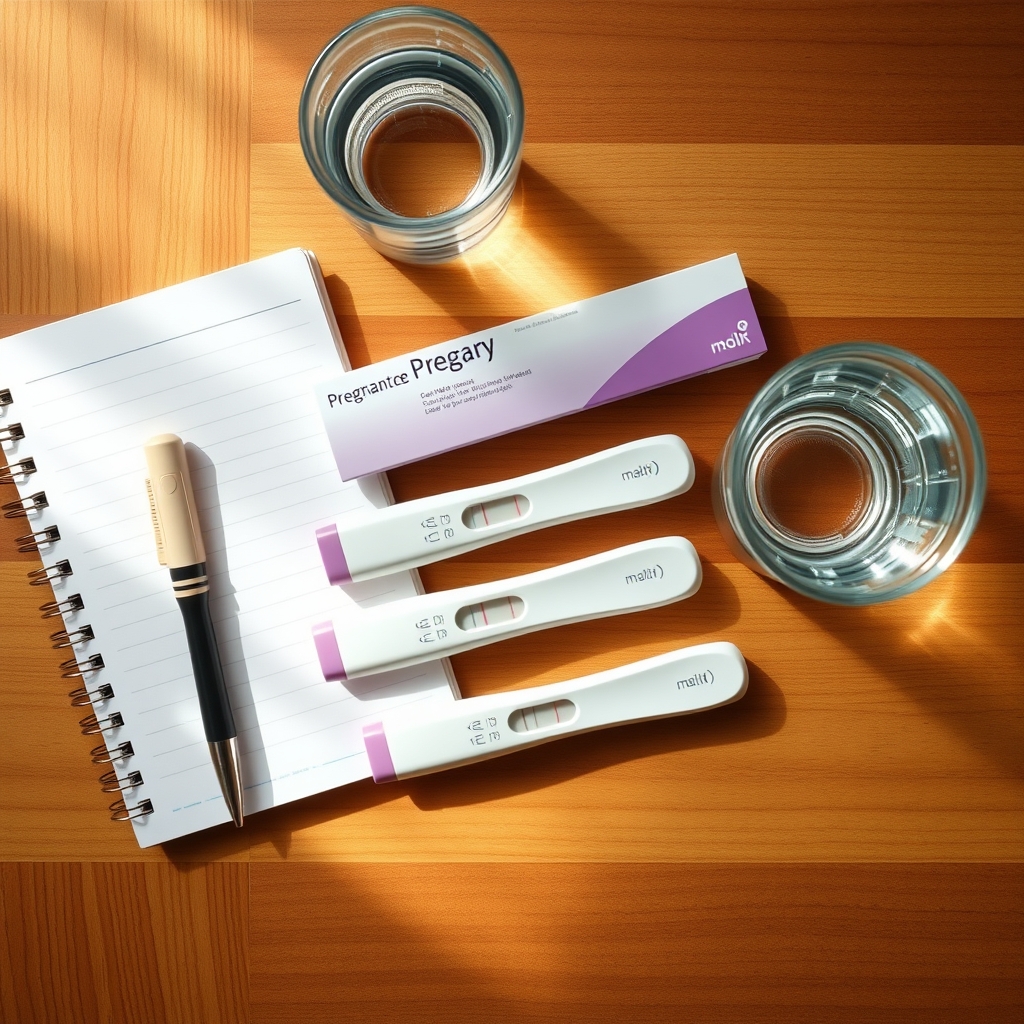
Set up a calm, well‑lit space for testing—first‑morning urine and a clean surface improve accuracy.
When to call your doctor
If you experience any of the following, contact your healthcare provider right away: heavy bleeding, severe abdominal pain, fever, dizziness, or a sudden change in pregnancy test results (positive turning negative). Remember, this article is for information only and does not replace personalized medical advice.
References
U.S. Food and Drug Administration. “Guidance for Industry and FDA Staff: Pregnancy Test Kits.” 2020.
American College of Obstetricians and Gynecologists (ACOG). “Early Pregnancy and hCG Testing.” ACOG Practice Bulletin No. 194, 2022.
National Health Service (NHS). “Pregnancy tests – how they work.” Updated 2023.
World Health Organization (WHO). “Standards for in‑vitro diagnostic devices: Pregnancy Tests.” 2021.
Journal of Clinical Laboratory Analysis. “Stability of over‑the‑counter pregnancy tests after expiration.” 2021.
Clearblue. “Early Detection Pregnancy Test – Sensitivity and Usage Guidelines.” Manufacturer literature, 2023.
First Response. “Early Result Pregnancy Test – Product Information.” 2023.
British Society for Fertility (BSF). “Impact of fertility medications on home pregnancy test results.” Clinical Review, 2022.
Not sure about the label on Are Dollar Store Pregnancy Tests Accurate products?
Snap the ingredients list and SafeFilter checks every ingredient for your stage — only 3 free scans this month, then you're locked until reset. Unlimited from $7/mo or $50/yr.
When Shubhra Mishra was expecting her first child in 2016, she was overwhelmed by conflicting food advice — one site said yes, another said never. By the time her second baby arrived in 2019, she realized millions of mothers face the same confusion.
That sparked a five-year journey through clinical nutrition papers, cultural diets, and expert conversations — all leading to BumpBites: a calm, compassionate space where science meets everyday motherhood.
Her long-term vision is to build a global community ensuring safe, supported, and free deliveriesfor every mother — because no woman should face pregnancy alone or uninformed. 🌿
🌍 Stand with mothers, shape safer guidance
Join a small circle of experts who review BumpBites articles so expecting parents everywhere can decide with confidence.