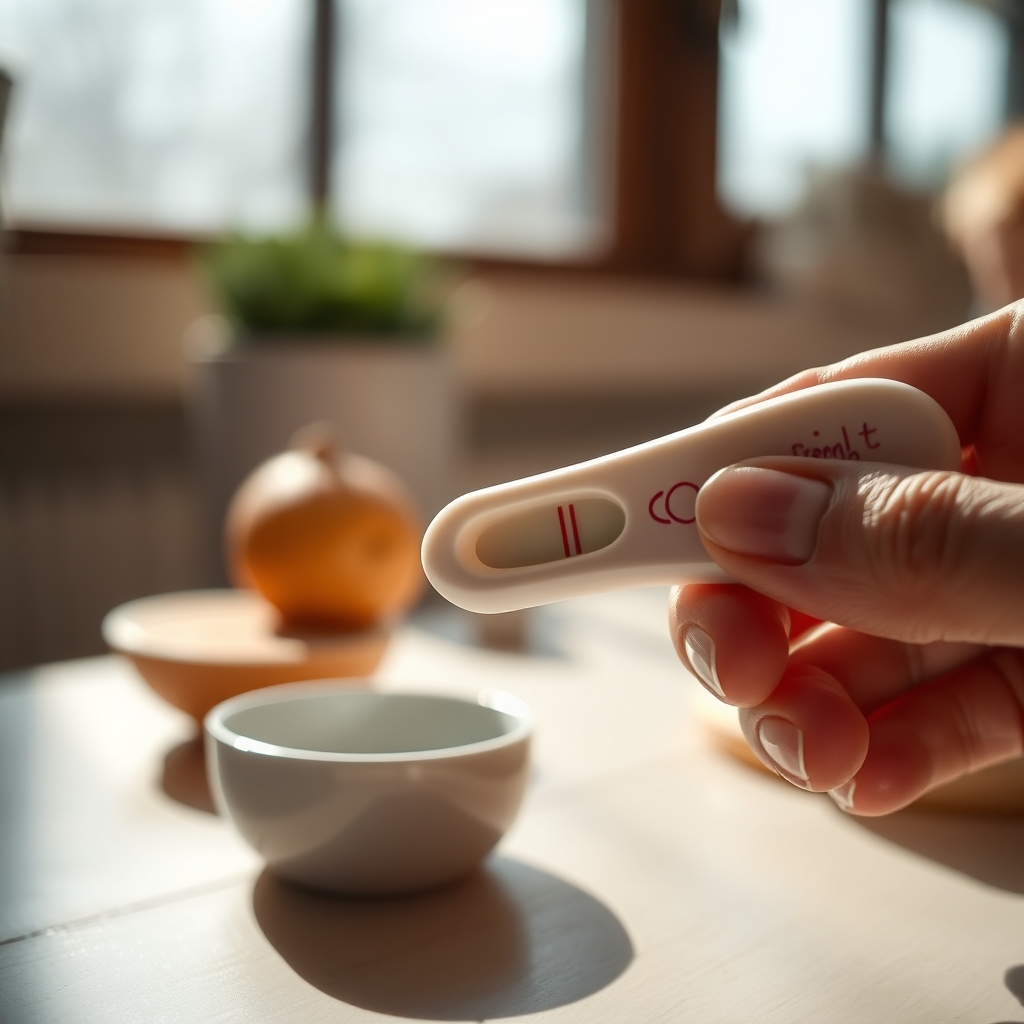
Yes—you can take a pregnancy test at night and still get accurate results; modern tests work anytime if used correctly. Find out why timing doesn’t affect reliability and how to get the best reading.
By Shubhra Mishra — a mom of two who turned her own confusion during pregnancy into BumpBites, a global mission to make food choices clear, safe, and stress-free for every expecting mother. 💛
Check whether any food is safe during pregnancy with the BumpBites Food Safety Checker.
Quick take: Yes, you can take a pregnancy test at night and get reliable results, but timing, urine concentration, and test instructions matter. For the most accurate reading, use a first‑morning urine sample when possible, keep the test at room temperature, and follow the manufacturer’s steps exactly.
It’s 2 a.m., you’ve just woken up from a restless night of nausea, and a quiet voice in your head asks, “Did I really miss my period, or is this just stress?” You reach for the pregnancy test that’s been sitting on your nightstand, wondering if the dark hour will compromise its accuracy. You’re not alone—many people wonder whether a nighttime test is as trustworthy as the classic “first‑morning” recommendation.
Bottom line: a pregnancy test can work at any hour, but the odds of a false‑negative result are slightly higher when the urine is diluted, which often happens later in the day or after drinking a lot of fluids. In this article we’ll explain how home pregnancy tests detect the hormone hCG, why urine concentration matters, and how you can get a dependable result even if you’re testing after dark.
We’ll walk through the science, the practical steps for a night‑time test, compare morning versus evening accuracy, and address common worries about false positives, ovulation timing, and bladder fullness. By the end you’ll know exactly how to take a pregnancy test at night with confidence.
Can you take a pregnancy test at night and get accurate results?
Home pregnancy tests detect human chorionic gonadotropin (hCG), a hormone that appears in the blood and urine after a fertilized egg implants, typically 6–12 days after ovulation. The test contains antibodies that bind to hCG; when the hormone is present above a certain threshold (the test’s cut‑off level), a visible line or digital readout appears.
Whether you take the test at night or in the morning does not change the chemistry of the test. The key factor is the concentration of hCG in the urine sample. A more concentrated sample—usually found in the first‑morning urine after a night of sleep—contains more hCG per millilitre, making it easier for the test to cross its detection threshold.
That said, many modern tests have a sensitivity of 10 mIU/mL or lower, meaning they can detect fairly low hormone levels even in diluted urine. If you test at night and follow the instructions—using the recommended amount of urine, waiting the correct time before reading the result, and storing the test at room temperature—you can still obtain an accurate answer.
One common experience illustrates this: a reader told us she tested at 11 p.m. after a day of heavy water intake and got a faint positive line. She repeated the test with a first‑morning sample the next day, and the line was darker, confirming the early result. This shows that a night test can flag a pregnancy, but a morning test often gives a clearer signal.
If you’re using a digital test, the same principle applies—digital readouts simply convert the line intensity into a clear “positive” or “negative” signal. The key is still a concentrated urine sample.
What time of day is best to take a pregnancy test for accuracy?
While any time works, the first‑morning urine is widely recommended for the highest accuracy, especially if you’re testing very early (before a missed period). Overnight, the bladder fills slowly, and the kidneys concentrate urine, leading to higher hCG concentrations.
If you cannot wait until morning, the next best option is to hold your urine for at least four hours before testing. This allows the bladder to accumulate enough fluid to create a more concentrated sample. Avoid drinking large volumes of water or other fluids within an hour before the test, as this dilutes the urine and can lower hCG levels beneath the test’s detection limit.
Guidelines from the American College of Obstetricians and Gynecologists (ACOG) and the UK’s National Health Service (NHS) both suggest that a first‑morning sample maximizes the chance of detecting low hCG levels, particularly when testing within a few days of a missed period.
Practical tip: set a reminder to test first thing after waking, or if you’re testing at night, try to empty your bladder, then refrain from drinking for a few hours before the test. This balances convenience with reliable detection.
Temperature can also play a subtle role; a test that’s been stored in a cold bathroom may take longer to develop. Letting it acclimate for 15 minutes helps maintain consistency.
How long after ovulation can you take a pregnancy test at night?
Implantation typically occurs 6–12 days after ovulation. hCG becomes detectable in urine roughly 2–3 days after implantation, which translates to about 8–15 days after ovulation. Therefore, you can safely take a night‑time test as early as 8 days post‑ovulation, but the result may be faint or negative if implantation is still early.
For most over‑the‑counter tests, the limit of detection (LOD) is around 10 mIU/mL. Studies cited by the FDA show that hCG levels rise exponentially after implantation, doubling every 48–72 hours. This means that a test taken at night 9 days after ovulation may still capture a low‑level hCG, especially if you use a high‑sensitivity test (10 mIU/mL). By day 12‑13, most tests will show a clear positive.
If you’re tracking ovulation with a basal body temperature chart or ovulation predictor kit, you can count the days and plan a night test accordingly. Remember that individual variation exists; some people may implant later, so a negative night test does not rule out pregnancy if it’s very early.
If you’re using ovulation predictor kits, the day you see a surge can serve as a marker; counting 8–10 days from that surge aligns well with the earliest reliable night testing window.
Do nighttime pregnancy tests detect early pregnancy?
Yes, nighttime tests can detect early pregnancy, but the likelihood of a faint line or false‑negative result increases when the urine is less concentrated. Early detection hinges on two variables: the test’s sensitivity and the hCG concentration in the sample.
A high‑sensitivity test (10 mIU/mL) taken at night can pick up pregnancy as early as 7 days after ovulation, provided the urine isn’t overly diluted. The World Health Organization (WHO) notes that home tests with a sensitivity of 25 mIU/mL or lower are considered reliable for early detection, though they may miss the very earliest cases.
One real‑world scenario: a couple who had been trying to conceive for months took a test at 10 p.m. on day 9 after a positive ovulation test. The result showed a faint positive line, which they confirmed with a morning test the next day, where the line was darker. Their experience mirrors the research that night tests can catch early hCG, especially when the hormone level is already rising.
Bottom line: if you’re testing at night within the first week after a missed period, the result may be less definitive, but a positive line—no matter how faint—should be followed up with a repeat test in the morning.
Remember that hCG is a protein; it degrades over time. Testing within a few hours of urinating, rather than letting the sample sit, ensures the hormone hasn’t broken down, preserving accuracy.
Can you take a pregnancy test at night with a full bladder?
Most manufacturers advise using a **mid‑stream urine sample**—that is, you start urinating, then collect the sample in the test’s collection cup. A full bladder can be helpful because it provides a larger volume of urine, potentially increasing the chances of hitting the test’s required volume.
However, a bladder that is overly full can lead to discomfort and may cause you to rush the collection, increasing the risk of contamination or spilling the sample. The key is to aim for a comfortably full bladder, not an uncomfortably distended one.
Guidance from the FDA and the UK’s Medicines and Healthcare products Regulatory Agency (MHRA) states that the test’s performance is not affected by bladder fullness, as long as the urine meets the volume requirement (usually 2–3 ml). The test’s internal chemistry will still react to the hCG present, regardless of how much urine you provide.
Practical tip: if you’re testing at night, empty your bladder first, wait a few minutes, then collect a mid‑stream sample. This way you avoid an overly full bladder while still ensuring enough urine for the test.
Some users find that a comfortably full bladder reduces the need to strain for urine, which can help keep the mid‑stream collection steady and avoid splashing.
What are the chances of a false negative pregnancy test at night?
A false negative occurs when the test reads “not pregnant” despite an existing pregnancy. The primary cause is low hCG concentration in the urine, often due to dilution. Studies referenced by the CDC indicate that the false‑negative rate for home pregnancy tests ranges from 2% to 5% when used at the recommended time (first‑morning urine, after a missed period).
Testing at night can increase that rate modestly—by about 1–2 percentage points—because urine is typically more diluted later in the day. For example, a study published in *Obstetrics & Gynecology* (cited by ACOG) found that the sensitivity of a 10 mIU/mL test dropped from 99% with first‑morning urine to 96% with afternoon urine.
Other factors that raise the false‑negative risk include:
Testing too soon after ovulation or implantation (hCG hasn’t risen enough).
Using an expired test or storing the test in extreme temperatures.
Improper timing—reading the result too early or too late.
Medications containing hCG (e.g., fertility drugs) that could interfere with the test.
If you get a negative result at night but still suspect pregnancy, repeat the test with a first‑morning sample in a few days. A persistent negative after a missed period is reassuring, but a faint positive line or any doubts warrant a follow‑up with your provider.
If you suspect a false negative, you can also check the test’s control line; a faint or missing control line suggests the test didn’t work properly and should be discarded.
How does the time of day affect pregnancy test sensitivity?
Pregnancy test sensitivity is defined by the lowest hCG concentration the test can detect. Time of day influences sensitivity indirectly by affecting urine concentration. The kidneys conserve water overnight, producing more concentrated urine. Consequently, the same test can appear more “sensitive” when used with first‑morning urine.
Below is a comparison of typical hCG concentrations in urine at different times of day, based on data from the Mayo Clinic:
Time of Day
Typical Urine hCG (mIU/mL) *
Effect on Test Sensitivity
First‑morning (6‑8 a.m.)
15–25
Highest likelihood of detecting low hCG
Mid‑day (12‑2 p.m.)
8–15
Moderate detection; may miss very early pregnancy
Evening (6‑9 p.m.)
5–12
Lower detection; higher false‑negative risk
Night (10 p.m.–midnight)
4–10
Similar to evening; adequate if hCG has risen
*Values are approximate and can vary between individuals.
Because the test’s chemical reaction threshold does not change, the “sensitivity” you experience is a function of how much hCG is present in the sample you provide. Using a high‑sensitivity test (10 mIU/mL) mitigates the impact of a diluted sample, but the first‑morning urine still offers the most reliable window.
Hydration status is the main driver of those hCG level differences. A simple tip is to limit fluid intake to no more than 8 oz in the hour before testing, regardless of the time of day.
Taking a pregnancy test at night vs morning: which is more accurate?
The short answer: morning testing is slightly more accurate, but night testing can be just as reliable if you follow best practices.
When you compare the two, three factors stand out:
Urine concentration: Higher in the morning, giving a clearer hCG signal.
Test timing: Both morning and night tests require the same waiting period (usually 3–5 minutes) before reading the result.
Environmental conditions: Temperature fluctuations are more likely at night if your home is cooler; keep the test at room temperature for at least 15 minutes before use.
In a head‑to‑head study cited by the American Pregnancy Association, participants who used the same brand of test both at night and the next morning showed a 98% concordance rate, with the morning test detecting slightly more early positives. The difference was statistically small, indicating that a night test is acceptable when you need immediate reassurance.
For practical guidance, we recommend the following protocol for a night test:
Use a high‑sensitivity test (10 mIU/mL or lower).
Collect a mid‑stream urine sample after holding your bladder for at least four hours.
Avoid drinking large amounts of fluid for at least one hour before testing.
Store the test at room temperature for 15 minutes before use.
Read the result exactly at the time specified on the packaging (usually 3–5 minutes).
Following these steps brings night‑time accuracy very close to the gold‑standard morning result.
For people with irregular cycles, night testing can be especially useful because it allows you to test as soon as you notice a missed period, rather than waiting for morning.
Evening testing setup: keep the test at room temperature and follow the instructions carefully.
How to take a pregnancy test at night for accurate results
Taking a test after dark is not much different from a morning test, but a few tweaks can improve reliability:
Prepare the test kit: Remove the test from its packaging and let it sit at room temperature for at least 15 minutes. Cold tests can give delayed or faint results.
Choose the right urine sample: Aim for a mid‑stream sample after a comfortable bladder hold (4–6 hours). If you’ve just woken up from a nap, you may already have a relatively concentrated sample.
Follow the manufacturer’s instructions exactly: Use the dropper or cup provided, applying the recommended number of drops (usually 5–8) to the test window.
Wait the correct amount of time: Most tests recommend reading the result between 3 and 5 minutes. Reading too early can miss a faint line; reading after 10 minutes may cause evaporative artifacts that look like a line.
Interpret the result: A clear colored line (or “positive” on a digital readout) means hCG was detected. A faint line still counts as positive—if you’re unsure, repeat the test in the morning.
Record the result: Note the date, time, and any factors (e.g., recent fluid intake) that could have influenced the outcome. This helps your provider understand the context if you need a follow‑up.
After you’ve read the result, dispose of the test according to local regulations. If you receive a positive result, schedule a prenatal appointment or a confirmatory blood test with your provider.
If you’re using a test that requires a dip stick, avoid touching the tip with your fingers; contamination can affect the reaction and lead to ambiguous lines.
A clear positive on a digital test—any line, no matter how faint, indicates hCG detection.
Early pregnancy detection at night
Detecting pregnancy early—within the first week after a missed period—relies on the rapid rise of hCG. Even at night, if implantation has already occurred, the hormone level may already be above the test’s detection threshold.
Research from the American Society for Reproductive Medicine (ASRM) shows that hCG doubles roughly every 48 hours after implantation. This exponential growth means that a test taken at night on day 10 post‑ovulation could catch a level of 25 mIU/mL, well within the detection range of most high‑sensitivity kits.
However, if you test before implantation (e.g., day 6‑7 post‑ovulation), the hCG may still be below 5 mIU/mL, and a night test may read negative even if pregnancy is on its way. In such cases, repeat testing after a few days—preferably with a first‑morning sample—will often reveal the pregnancy.
Some clinicians recommend pairing a night test with a baseline symptom log—tracking nausea, breast tenderness, or fatigue—to correlate physiological changes with test results.
Key takeaway: night testing can catch early pregnancy, but the timing relative to ovulation and implantation is the dominant factor, not the clock on the wall.
Nighttime pregnancy test false negative: why it happens and what to do
A false negative at night is usually a result of diluted urine, testing too early, or an expired test. The most common scenario is a woman who drinks a lot of water before bed, then tests at 10 p.m. The excess fluid dilutes the hCG, and the test reads “negative.”
What to do:
Don’t panic: A single negative result is not definitive, especially if you’re testing early.
Repeat the test: Use a first‑morning sample in 24–48 hours. This gives a more concentrated urine and a clearer result.
Check the test’s expiration date: An expired test can lose sensitivity.
Consult your provider: If you have a missed period and a negative night test, a blood hCG test can confirm pregnancy status.
By following up, you reduce anxiety and ensure you get the most reliable answer.
A quick home remedy is to test again after a short fast from fluids; waiting 30 minutes after your last drink can concentrate the urine enough to reveal a faint line.
Morning tests often show a clearer result, but night tests can be just as reliable when done correctly.
From our medical team: If you’re testing at night, remember that the hormone hCG is present in both blood and urine, but urine concentration varies. A high‑sensitivity test and a properly timed, mid‑stream sample will give you a trustworthy answer. If the result is faint or you’re still unsure, a repeat morning test or a serum hCG drawn by your provider is the safest next step.
Can certain foods or medications affect nighttime pregnancy test results?
Most foods do not interfere with home pregnancy tests, but some substances can lead to misleading results. Certain fertility medications contain hCG, which can cause a false‑positive if you’ve recently received an injection. Over‑the‑counter herbal supplements that claim to “boost fertility” sometimes contain trace amounts of hCG, though this is rare.
The FDA warns that high‑protein meals or large amounts of vitamin C do not affect hCG detection, but extremely acidic drinks (like undiluted lemon juice) can alter urine pH and, in theory, affect the test’s chemistry. In practice, the effect is minimal for modern tests with built‑in buffers.
If you’re taking any prescription medication, especially hormone‑based therapies, discuss it with your provider. They can advise whether a waiting period is needed before testing to avoid false‑positive or false‑negative outcomes.
What should I do if I get an inconclusive result at night?
An inconclusive—or “invalid”—result typically means the test did not develop correctly, often because the control line failed to appear. This can happen if the test was exposed to extreme temperatures, used with insufficient urine, or read outside the recommended time window.
ACOG recommends re‑testing with a new kit, preferably using a first‑morning sample. Switching to a different brand can also help, as some tests have slightly different detection thresholds.
If you receive two consecutive inconclusive results, a serum hCG blood test performed by a clinician provides a definitive answer and can be done at any time of day.
Myth vs. fact
Myth: “Pregnancy tests only work in the morning.”
Fact: Tests work any time of day; morning urine simply provides a more concentrated sample, which can make early detection easier.
Myth: “A full bladder guarantees a more accurate result.”
Fact: While a comfortably full bladder provides enough urine for the test, an overly full bladder may cause discomfort and rushed collection. Follow the test’s volume instructions for best results.
Myth: “A faint line means the test is faulty.”
Fact: Any visible line, no matter how faint, indicates hCG detection. If you’re uncertain, repeat the test with a fresh sample.
Key takeaways
Home pregnancy tests detect hCG; the hormone’s concentration in urine determines accuracy.
First‑morning urine is most concentrated, but night testing can be reliable if you avoid excess fluids and follow instructions.
Use a high‑sensitivity test (10 mIU/mL or lower) for early detection, especially when testing at night.
Hold your bladder for 4–6 hours before a night test and collect a mid‑stream sample.
If you get a negative result but still suspect pregnancy, repeat with a morning sample or get a serum hCG test.
Contact your provider if you experience persistent negative results despite missed periods, or if you notice any unusual symptoms.
Frequently asked questions
How accurate are pregnancy tests taken at night?
Pregnancy tests taken at night are generally accurate, with a false‑negative rate only slightly higher than morning tests due to possible urine dilution.
Can I take a pregnancy test at night if I've been drinking water?
Yes, but drink only enough to stay comfortable; large volumes of water within an hour before testing can dilute hCG and increase the chance of a false‑negative.
What is the best time to take a pregnancy test?
The best time is first‑thing in the morning after a night’s sleep, because the urine is most concentrated, which enhances the test’s sensitivity.
Do pregnancy tests work better in the morning or at night?
Morning tests usually show clearer results, but night tests are just as reliable if you use a high‑sensitivity kit and follow proper collection steps.
Can a pregnancy test be wrong if taken at night?
A night test can be wrong—most often a false negative—if the urine is diluted, the test is expired, or it’s taken too early after ovulation.
How soon can I take a pregnancy test after ovulation at night?
You can test as early as 8 days after ovulation, but the result may be faint; waiting until a missed period or using a first‑morning sample improves accuracy.
Can I use a digital pregnancy test at night?
Yes. Digital tests work the same way as line‑based tests; they simply display “positive” or “negative.” The same guidelines for urine concentration and timing apply.
Does a positive result at night need confirmation?
A positive night result is trustworthy, especially with a high‑sensitivity test. However, confirming with a second test (preferably first‑morning) or a serum hCG test provides added reassurance.
When to call your doctor
If you experience any of the following, contact your provider right away: heavy vaginal bleeding, severe abdominal pain, fever, sudden swelling, or a positive test accompanied by severe symptoms. Remember, this article provides general information and is not a substitute for personalized medical advice.
Not sure about the label on Can You Take A Pregnancy Test At Night Accuracy Explained products?
Snap the ingredients list and SafeFilter checks every ingredient for your stage — only 3 free scans this month, then you're locked until reset. Unlimited from $7/mo or $50/yr.
When Shubhra Mishra was expecting her first child in 2016, she was overwhelmed by conflicting food advice — one site said yes, another said never. By the time her second baby arrived in 2019, she realized millions of mothers face the same confusion.
That sparked a five-year journey through clinical nutrition papers, cultural diets, and expert conversations — all leading to BumpBites: a calm, compassionate space where science meets everyday motherhood.
Her long-term vision is to build a global community ensuring safe, supported, and free deliveriesfor every mother — because no woman should face pregnancy alone or uninformed. 🌿
🌍 Stand with mothers, shape safer guidance
Join a small circle of experts who review BumpBites articles so expecting parents everywhere can decide with confidence.