
The First Trimester Survival Guide: Weeks 1-13
Nausea, fatigue, food aversions, fear, joy + the long wait for the 12-week scan. A practical week-by-week walk through the most uncertain trimester — symptoms, what to eat, what to skip + when to call your midwife.

In a nutshell
- T1 is dominated by symptoms (nausea + fatigue) + uncertainty (no visible bump, no movement yet, miscarriage risk at its highest).
- Symptoms peak around weeks 8-10 + most ease after the 12-week mark.
- Calorie needs barely change — quality matters more than quantity. Folic acid + vitamin D are the only universally-recommended supplements.
- Morning sickness affects 80% of women + isn't 'morning' — most experience it all day. Ginger + small frequent meals + B6 are the evidence-based fixes.
- Call your midwife or maternity unit immediately for: heavy bleeding (more than a pad/hour), severe one-sided pain, fainting, persistent vomiting that prevents drinking, fever > 38°C, or a sense that something is very wrong.
The emotional arc of T1 — the strangest trimester
The first trimester is the strangest in pregnancy. You're growing a person — but to the outside world you look exactly the same. You may feel sick for weeks without bringing it up at work, because you haven't told anyone yet. You're holding the biggest secret of your life. And underneath it all is the question no one wants to say out loud: will this stick?

This guide is the trimester walk-through we wish someone had given us — practical week-by-week notes on symptoms + what to do + when to worry + how to tell people. It assumes nothing about your experience + works for first-time mothers, second-time mothers + everyone in between. It's also honest about the things glossy pregnancy media often skip: the loneliness of secret-keeping, the very real miscarriage risk, the gap between how amazing pregnancy is supposed to feel + how exhausted + nauseous it often actually feels.
80%
Experience nausea
Of women in T1 — usually all-day, not 'morning'
1 in 5
Known pregnancies
End in miscarriage — almost all in T1
8-10
Peak symptom weeks
Then most symptoms ease by 12-13
5 hrs → 15
Caffeine half-life
Triples in pregnancy — same coffee hits harder
Week-by-week — what happens + how it feels
Weeks 1-3: Before you know
You're not actually pregnant in week 1 (it's counted from your last period — pregnancy dating is from LMP, not conception). Conception happens around week 2-3. By week 3 the fertilised egg has implanted. Most women feel nothing. Some report a faint pull, an unusual sensitivity to smells, or a familiar premenstrual feeling that doesn't quite fit.
Week 4: The missed period + first test
If you have a 28-day cycle, your period is now late. Home pregnancy tests are reliable from day-of-missed-period. The line might be faint at first — re-test in 2-3 days if uncertain. hCG levels should roughly double every 48-72 hours.
Weeks 5-7: The hormone wave hits
hCG peaks. Most women start to feel pregnant — nausea, sore breasts, exhaustion, increased urination, food aversions, heightened sense of smell. Mood swings are normal + so are vivid dreams.
Weeks 8-10: Peak symptoms
Symptoms typically peak around week 8-10. If you're going to throw up, this is when. If you're going to be exhausted, this is when. Hang in there — it (usually) eases substantially by week 12.
Week 12: The dating scan
NHS dating scan happens at 11-13+6 weeks. You'll see the baby for the first time. Combined screening (NT scan + bloods) often happens at the same appointment. This is when most women breathe out + start to tell more people.
Week 13: The handover
End of T1. For most women symptoms have eased or are easing. Energy starts to return. The 'honeymoon trimester' (T2) is around the corner.
Morning sickness — what actually works

80% of pregnant women experience nausea / vomiting; 50% vomit. It's not 'morning' — most experience it all day, evening, or unpredictably. Evolutionary theories suggest it's protective (food aversions steer you away from spoiled or toxic foods at the most vulnerable developmental window). Whether that's reassuring depends on how you're feeling.
What's evidence-based
- Ginger — endorsed by RCOG + meta-analyses. 1-1.5g/day of fresh ginger or ginger capsules. Ginger biscuits + ginger tea also work, in lower doses.
- Vitamin B6 (pyridoxine) — 10-25 mg up to 3x/day. Available OTC.
- Combination B6 + doxylamine (Diclectin in Canada, Diclegis in US, Xonvea in UK) — first-line prescription antiemetic in pregnancy; very safe.
- Small frequent meals — every 2 hours instead of 3 large meals.
- Eating something before getting out of bed — plain crackers, dry toast — to avoid empty-stomach nausea.
- Avoiding strong smells — cooking, coffee, fish, perfume. Open windows. Have someone else cook.
- Sea-bands (acupressure wristbands) — modest evidence; no harm; cheap.
What's not evidence-based but also harmless
- Lemon — sucking lemon slices, smelling lemon, drinking lemon water.
- Cold foods — many women tolerate cold better than warm.
- Sparkling water with a slice of cucumber.
- Magnesium supplementation (some women report help).
Fatigue — what helps
Pregnancy fatigue is unlike any tiredness you've had before. Your body is doing enormous work — building a placenta, increasing blood volume by 40%, growing a person — while you're often also keeping a job + a household running. It's not weakness; it's biology.
- Sleep when you can — 9-10 hours/night isn't excessive in T1.
- Take naps without guilt. A 20-minute power nap restores more than coffee.
- Iron-rich foods every day — even if you're not anaemic, depletion contributes.
- Hydrate — dehydration amplifies fatigue.
- Light exercise paradoxically helps (see below).
- Tell your partner / family what you're going through — even before announcing — so the household burden adjusts.
- If exhaustion is debilitating + persists past T1, get blood work (iron, thyroid, vitamin D).
What to eat when nothing sounds good

What goes down when nothing else does
- Plain toast + butter, white rice, plain pasta — bland carbs settle the stomach.
- Mashed potato, congee, khichdi — soft + neutral.
- Crackers, pretzels, dry cereal — easy nibble through nausea.
- Watermelon, cucumber, plain yoghurt — cool + hydrating.
- Bone broth, miso soup, plain dal — protein + electrolytes when nothing else appeals.
- Smoothies (if blender doesn't trigger nausea) — pack vitamins into something you'll actually drink.
- Frozen grapes, ice lollies — cold tolerance often beats warm.
What to focus on (when you can)
- Folate-rich greens (spinach, methi), citrus, lentils.
- Iron-rich foods (red meat if you can stomach it; lentils, ragi, dates if not). Pair with vitamin C.
- Protein — even small amounts. An egg, a yoghurt, a handful of nuts.
- Water — aim 2-3 L/day. Add cucumber + lemon if plain water turns your stomach.
What to skip in T1
See our full Foods to Avoid guide for the comprehensive list. The T1-specific high-risk items:
- Alcohol — zero. T1 is the highest-risk window for fetal alcohol effects.
- Unripe papaya — uterine contraction risk (especially relevant for South Asian families).
- Pâté + liver — vitamin A excess is most teratogenic in T1.
- Soft mould-ripened cheese (Brie, Camembert, soft blue) — even pasteurised, listeria risk.
- Raw / undercooked meat + fish — toxoplasmosis can cause miscarriage in T1.
- Smoking + vaping — including 'just one' at parties.
- Caffeine over 200 mg/day.
- Recreational drugs of any kind.
Exercise in T1 — yes, but gently
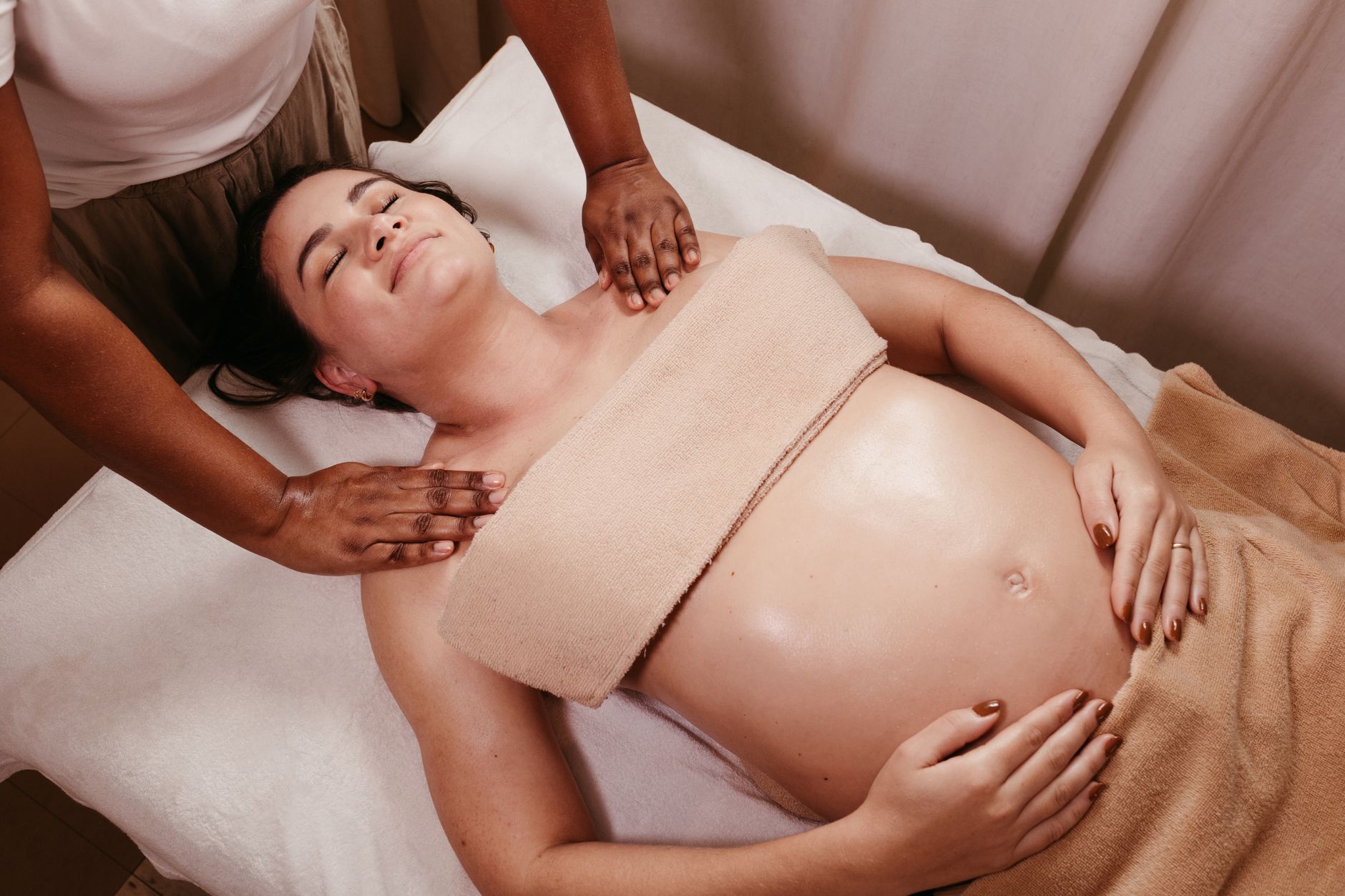
If you exercised before pregnancy, you can usually continue at moderate intensity in T1. If you didn't, this isn't the moment to start a HIIT programme — but walking, swimming + prenatal yoga are excellent starting points.
- Walking — 20-30 min/day is great, even broken into short walks.
- Swimming — supports the body, eases nausea for some women.
- Prenatal yoga — focuses on safe poses + pelvic floor.
- Light strength training — keep weights moderate; avoid lying flat on your back from T2 onwards.
- AVOID: contact sports, hot yoga, scuba diving, anything with fall risk (skiing, horseriding), high-altitude exercise without acclimation.
Miscarriage — facts + when to call

Up to 1 in 5 known pregnancies end in miscarriage; the actual rate including very early losses is closer to 1 in 3. The vast majority happen before week 12 + are caused by chromosomal abnormalities — nothing you did or didn't do. This is the hard truth that makes T1 emotionally loaded for so many women.
Signs that need same-day medical attention
- Heavy vaginal bleeding (more than a sanitary pad per hour) with or without clots.
- Severe one-sided abdominal or shoulder-tip pain (possible ectopic pregnancy).
- Severe cramping with bleeding.
- Fainting, dizziness, racing pulse.
- Sense that something is very wrong.
What can happen + still be OK
- Light spotting (pink or brown discharge, smaller than a tablespoon) — happens to ~25% of women in T1 + most go on to healthy pregnancies. Call your midwife the same day to be safe.
- Mild cramping — your uterus is growing. Normal unless severe or with bleeding.
- Symptoms easing — by weeks 10-12 hormones plateau + nausea often eases. Doesn't mean anything is wrong.
Telling people — the 12-week question
The tradition of waiting until the 12-week scan to announce comes from a place of self-protection — if the worst happens, you don't have to untell everyone. But that tradition also leaves many women suffering through T1 in silence.
Who to tell early (regardless of the 12-week rule)
- Your partner. Obviously.
- 1-2 close family or friends who can be your support if something goes wrong.
- Your GP / midwife — book the first appointment as soon as you test positive.
- Your manager if your job is physically demanding, involves chemical exposure, late nights, or strict attendance — UK + EU + US employment law protects you once they know.
Who to tell after the 12-week scan
- Wider family + friends.
- Wider workplace.
- Social media (if you do that sort of thing).
There's no right answer. Some women tell everyone from week 5; others wait until they're showing. Do what feels right for your situation. The protection of waiting cuts both ways — if miscarriage happens + you've told no one, you grieve alone.
Appointments + scans in T1
Booking appointment (weeks 8-10)
Your first formal NHS antenatal appointment. Long (60-90 min). Covers full medical history, bloods (blood type, full blood count, infection screening including HIV + hepatitis + syphilis + rubella immunity, sickle cell + thalassaemia), urine sample, blood pressure. Discussion of screening options. Ask all the questions.
12-week dating scan (weeks 11-13+6)
First ultrasound. Confirms dates (often more accurate than LMP), checks viability + counts babies. Combined screening (nuchal translucency + blood test) usually offered alongside — measures the risk of Down's, Edward's + Patau's syndromes. You can decline if you prefer.
NIPT (Non-Invasive Prenatal Test) — optional, from week 10
Cell-free fetal DNA blood test. More accurate than the standard combined screening. Available privately (~£300-500 UK / $400-1000 US) or in some NHS regions for high-risk pregnancies. Can also reveal sex from week 10 if you want to know.
Frequently asked questions
Is it normal to not have any symptoms?
Yes. About 20% of women have minimal or no nausea + fatigue. It doesn't mean anything is wrong. Some women never get morning sickness at all + have completely healthy pregnancies.
Can I drink decaf coffee?
Yes — decaf is around 5-15 mg caffeine per cup, well within limits even if you drink several. Some women find even decaf upsets their stomach in T1 — listen to your body.
Will my symptoms be the same as my last pregnancy?
Not necessarily. Each pregnancy is different. Common to be sicker (or less sick) than last time. Can be a girl or boy regardless of how sick you feel — symptom-based sex prediction is folklore.
Is light spotting a sign of miscarriage?
Not necessarily. Around 25% of women experience some spotting in T1 + go on to healthy pregnancies. Causes range from implantation bleed (week 4-5), cervical changes after sex, or sub-chorionic haematoma. Call your midwife to be safe — they can scan if needed.
Can I dye my hair?
Yes — semi-permanent + permanent hair dye are considered safe in pregnancy by NHS. Highlights (where dye doesn't touch scalp) are even safer. Many women still choose to wait until T2.
Should I avoid sex in T1?
No — sex is safe unless you have a specific complication (placenta previa, history of miscarriage, bleeding). Many women experience reduced libido in T1 from nausea + fatigue + that's normal too.
What about flying?
Generally safe through T1. Airlines usually require a fit-to-fly letter from 28 weeks. Increase water + walk regularly to avoid DVT. Avoid radiation-intense routes (very-long-haul polar routes) if other options exist.
Can I dye my hair / wear makeup / get my nails done?
All safe with normal salon products. Avoid: chemical peels with high-strength acids, formaldehyde-based hair straightening (Brazilian blowout), dental amalgam removal (mercury vapour). Standard makeup, manicures + pedicures are fine.
How early can I start prenatal yoga?
From confirmation of pregnancy. Many studios run pregnancy-specific classes — but check the teacher knows how to modify for T1 (some inversions, deep twists + lying-on-back poses are avoided).
Do I need to tell my employer immediately?
Legally no — UK / EU / US law usually requires notice by week 25-28. But informing earlier triggers protections (no firing for pregnancy, reasonable accommodations) + means risk assessments can be done. Talk to a sympathetic colleague if you're not ready to tell management.
Sources
- NICE NG201 — Antenatal care
- NHS — Your first midwife appointment
- RCOG — Pregnancy and exercise (Green-top Guideline)
- RCOG — Recurrent miscarriage (GTG 17)
- Pregnancy Sickness Support — Hyperemesis gravidarum information
- ACOG — Early pregnancy loss
- Matok I, et al. (2009). The safety of metoclopramide use in the first trimester. NEJM.
More guides
Indian & South Asian Pregnancy Foods: A Practical, Research-Backed Guide
A complete, culturally-rooted guide to eating well in pregnancy — Hindu, Muslim, Sikh, Jain + Christian traditions. Daal, dahi, ghee, paan, papaya, and 60+ everyday foods, decoded by trimester with NHS / NICE / RCOG safety guidance.
Read
Foods to Avoid During Pregnancy: The MD-Reviewed UK & US List
Every food you should skip — and why — in clear plain English. Listeria, mercury, toxoplasmosis, vitamin A excess, alcohol + caffeine. Cross-checked against NHS, NICE, ACOG + FDA.
Read
Prenatal Vitamins: A Buyer's Guide for 2026
Folic acid, choline, DHA, iron, vitamin D — what to look for, what to skip + what the major brands actually deliver. Side-by-side comparison + practical buying advice for the UK, US + India.
Read
Educational only — not medical advice. Always consult your midwife, GP or paediatrician for personalised guidance. Medical disclaimer.
Recommended picks
Prenatal pick
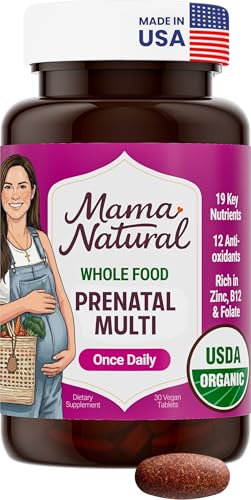
Mama Natural — Mama Natural Prenatal Multivitamin (90-count)
Whole-food prenatal — methylated folate + bioavailable iron.

Mama-approved pick
Mayo Clinic — Mayo Clinic Guide to a Healthy Pregnancy (2nd Edition)
Gold-standard pregnancy reference from Mayo Clinic obstetricians.