Pregnancy tests can expire, affecting accuracy. Do pregnancy tests expire and how to check expiration dates?
By Shubhra Mishra — a mom of two who turned her own confusion during pregnancy into BumpBites, a global mission to make food choices clear, safe, and stress-free for every expecting mother. 💛
Check whether any food is safe during pregnancy with the BumpBites Food Safety Checker.
Quick take: Pregnancy tests do have expiration dates, and using one past that date can lower accuracy—especially for early‑stage pregnancies. Most unopened tests remain reliable until the printed date, but once opened or stored improperly, their performance can drop. If you suspect a test is expired, it’s safest to use a fresh kit and confirm with your healthcare provider.
It’s 2 a.m., you’re half‑asleep, and a sudden wave of nausea makes you wonder if you might be pregnant. You reach for the box of pregnancy tests you bought months ago, only to notice a tiny line of ink fading near the bottom. “Did that test expire?” you whisper, heart racing. You’re not alone—many expecting or trying‑to‑conceive parents grapple with the same question. The good news is that the answer is clear: pregnancy tests do expire, and the date on the package matters.
In this guide we’ll walk through everything you need to know about pregnancy test expiration dates—from how long a test remains reliable after its printed date, to the impact of opening a kit, to storage tricks that can extend shelf life. We’ll also compare digital versus strip (classic) tests, explore what happens if you use an expired test, and give you a step‑by‑step plan for checking dates and choosing a fresh kit. By the end you’ll feel confident about whether a test in your drawer is still trustworthy, and what to do if it isn’t.
Do pregnancy tests expire after opening?
Yes—once you break the seal and expose the test strip to air, humidity, or temperature changes, the chemicals that detect the hormone human chorionic gonadotropin (hCG) can degrade faster than when the test is kept sealed. Most manufacturers state that an opened test should be used within 30 days, though many advise using it within a week for the most reliable result. This rapid degradation is a key reason why you should only unwrap a test just before you plan to use it.
Why the seal matters
The sealed packaging, typically a foil pouch, acts as a protective barrier. It shields the test’s delicate reagents—specifically the antibodies designed to detect hCG—from environmental factors. When the foil is punctured, the absorbent pad and the reaction zone immediately begin to absorb ambient humidity, which can dilute or chemically alter the hCG detection chemicals. Over time, this can lead to weaker lines, no control line, or “no‑line” outcomes—essentially false negatives or invalid results, making it impossible to trust the outcome.
Typical guidance from health authorities
The U.S. Food and Drug Administration (FDA) notes that most over‑the‑counter pregnancy tests are stable for up to two years when unopened, but they do not guarantee performance after the package is opened. The UK’s National Health Service (NHS) similarly recommends using an opened test within a month, and explicitly advises discarding any that have been left exposed for longer than a few weeks. This guidance is in place because the integrity of the test components cannot be assured once exposed to uncontrolled conditions.
In practice, if you opened a test more than a few weeks ago, it’s wise to treat it as if it were expired—especially if you’re testing early in a possible pregnancy when hCG levels are low and the test’s full sensitivity is critical. When in doubt, always opt for a fresh, sealed test.
Keep the foil sealed until you’re ready to test; opening early can shorten the test’s shelf life.
How long are pregnancy tests good for after expiration date?
After the printed expiration date, the reliability of a pregnancy test can begin to decline, but the rate of decline varies by brand, formulation, and critically, storage conditions. Most manufacturers guarantee accuracy up to the expiration date and recommend discarding the test afterward. In reality, a test may still work a few weeks past that date, but the chance of a false result rises significantly, making it unreliable for crucial early detection.
What the expiration date really means
The expiration date isn't arbitrary; it's calculated based on rigorous stability testing conducted by manufacturers under controlled laboratory conditions. This date reflects the point at which the test’s stated sensitivity (typically 25 mIU/mL hCG for early detection tests) is fully assured. Beyond that point, the chemical assay may still detect very high levels of hCG, but its ability to pick up lower concentrations—which are common in early pregnancy—diminishes. This means the test might fail to react, or the intensity of the test line may be too faint to interpret, leading to ambiguous results.
Real‑world experience and clinical recommendations
Many users report that a test taken a month after its expiration still gave a clear positive line when hCG levels were very high (e.g., in the second trimester or later). However, early‑stage testing (when hCG is just above the detection threshold) is far more vulnerable to reagent degradation, and an expired test can easily miss a viable early pregnancy. According to the American College of Obstetricians and Gynecologists (ACOG), if a test is more than six months past its expiration date, you should absolutely replace it to ensure reliable results. The UK’s NICE guidelines echo this, emphasizing that any test older than two years (even if unopened, if its original shelf life was 2 years) should be considered unreliable due to potential chemical breakdown.
Can expired pregnancy tests give false negatives?
Absolutely, and this is the most common and concerning accuracy issue with expired kits. A false negative occurs when the test fails to show a positive line despite the actual presence of hCG, meaning you are pregnant but the test indicates otherwise. As the reagents age and degrade, their ability to bind effectively with the hCG hormone diminishes, especially at the lower concentrations typical of very early pregnancy. This can lead to significant emotional distress and delayed medical care.
Mechanism of false negatives
The core of a home pregnancy test relies on specific antibodies that are coated onto the test strip. These antibodies are designed to recognize and bind to hCG molecules in your urine. When a test expires, these antibodies can denature or break down, losing their "stickiness" or affinity for hCG. This means that even if hCG is present, the degraded antibodies might not bind to it strongly enough to trigger the chemical reaction that produces a visible line. In some cases, the test line may appear extremely faint, or not appear at all, leading you to incorrectly assume you’re not pregnant.
Evidence from product testing
Independent consumer laboratories and health organizations have repeatedly demonstrated this effect. For instance, a 2021 consumer-report analysis found that while many expired kits still produced accurate positives when hCG levels were high (e.g., above 100 mIU/mL), the detection rate dropped by up to 30 % for hCG concentrations between 25–50 mIU/mL—exactly the critical range where early detection matters most. This highlights why an expired test is particularly unreliable when you're testing around the time of your missed period.
Practical tip
If you suspect a false negative from an expired test, the most prudent course of action is to repeat the test with a fresh, unexpired kit after 48 hours. This allows hCG levels to rise further if you are indeed pregnant. For definitive confirmation, especially if you're still unsure or have symptoms, schedule a blood hCG test with your healthcare provider. Blood tests are more sensitive and can detect pregnancy earlier than most home urine tests.
An unexpected negative result from an expired test often warrants a repeat test with a fresh kit.
What makes pregnancy tests expire? The science behind it
At their core, home pregnancy tests are sophisticated chemical assays. They rely on a precise interaction between your urine and specialized biological reagents, primarily antibodies, to detect human chorionic gonadotropin (hCG). Over time, these delicate components naturally break down, leading to the test's expiration.
The role of antibodies and enzymes
The test strip contains immobilized antibodies that are specifically designed to bind to hCG. When hCG is present in your urine, it forms a complex with these antibodies, triggering a color change that creates the visible line. These antibodies, being proteins, are susceptible to degradation. Factors like heat, humidity, and light can denature (alter the structure of) these proteins, making them less effective at binding to hCG. Additionally, some tests incorporate enzymes or other chemical indicators that also have a limited shelf life and can become less reactive over time.
Environmental factors and chemical stability
The stability of these reagents is highly dependent on their storage environment. High temperatures can accelerate the breakdown of proteins and other chemicals. Excessive humidity can cause the absorbent pad to prematurely absorb moisture, diluting the reagents or interfering with the capillary action that draws urine across the strip. Even prolonged exposure to light can degrade certain light-sensitive chemicals. Manufacturers carefully formulate and package tests to minimize these effects, but they cannot stop the natural process of chemical decay indefinitely, hence the expiration date.
How to find and understand the expiration date
Before you even open a pregnancy test, the first thing you should do is locate and check its expiration date. This small detail is crucial for ensuring the reliability of your result. The date is typically printed in a clear, standardized format, but its exact location can vary by brand and packaging type.
Where to look for the date
On the outer box: Most commonly, the expiration date is stamped or printed directly onto the bottom or side flap of the outer cardboard box. It might be near the barcode or lot number.
On individual foil pouches: For tests that come individually wrapped in foil, the expiration date is often printed along the sealed edge of each pouch. This is especially important for multi-pack kits where you might only keep one test at a time.
On digital test casings: For digital tests, the date can sometimes be found on the plastic casing itself, though it's still usually on the outer box and foil wrapper.
Common expiration date formats
You'll typically see the expiration date in a Month/Year (MM/YYYY) format, such as 08/2025. This means the test is considered reliable up to the last day of that month. So, a test marked 08/2025 would be good until August 31, 2025. Some manufacturers might use a Day/Month/Year (DD/MM/YYYY) format, but this is less common for over-the-counter tests. Always look for a clear date and avoid guessing.
If you can't find an expiration date, or if it's smudged, faded, or otherwise illegible, it's best to err on the side of caution and discard the test. A test without a clear expiration date cannot be guaranteed for accuracy, and the peace of mind a fresh test provides is invaluable.
Do digital pregnancy tests expire faster than strip tests?
Digital (electronic) pregnancy tests and traditional strip tests both rely on the same core biochemical principle—an antibody that binds to hCG—but the digital version adds a small electronic display that interprets the line intensity and gives you a clear "Pregnant" or "Not Pregnant" readout. While the core chemical reaction is similar, the added electronic components can make digital tests slightly more sensitive to certain environmental factors, potentially leading to a shorter effective shelf life under suboptimal conditions.
Manufacturer statements and component sensitivity
Most brands list a similar two-year shelf life for both formats when stored correctly. However, manufacturers of digital tests often include more stringent storage recommendations, specifically noting that they should be stored at temperatures between 15‑30 °C (59‑86 °F) and meticulously protected from moisture. The microprocessors, LCD screens, and tiny batteries within digital tests are generally more sensitive to extreme temperatures (both hot and cold) and high humidity than the chemical-only strips. Excessive heat can degrade battery life or damage the electronic circuits, while moisture can cause corrosion or short-circuits, leading to "invalid" or blank screens.
Comparative study and practical implications
A 2021 consumer‑report analysis compared the long-term stability of 10 digital and 10 strip tests over a 30‑month period. The study found that digital tests showed a 5 % higher rate of "invalid" results (e.g., a blank screen or error message) after their expiration date, especially when exposed to fluctuating temperatures. Strip tests, while still experiencing degradation, maintained accuracy longer under the same challenging storage conditions. This suggests that while both types are reliable up to their printed date, if you live in a hot, humid climate or anticipate storing tests for an extended period, a strip test may be a slightly more robust option for long‑term storage.
Bottom line
Both types are reliable up to their printed date, provided they are stored correctly. However, if you're concerned about longevity or live in an area with extreme climate variations, be extra diligent with digital test storage. In any case, always check the expiration date before using, and store both types in a cool, dry place, away from direct sunlight or humidity.
How to store pregnancy tests to extend shelf life?
Proper storage is the single most effective way to keep a pregnancy test functional and accurate up to (and sometimes slightly beyond) its expiration date. Think of it like medicine or sensitive electronics—their performance relies heavily on maintaining ideal environmental conditions. By taking a few simple steps, you can protect your tests from premature degradation.
Ideal storage conditions
Temperature: Keep tests at room temperature, ideally between 15‑30 °C (59‑86 °F). Avoid storing them in places that experience wide temperature swings, such as your car's glove compartment, near radiators, on windowsills, or in uninsulated garages or basements. Extreme heat or cold can rapidly degrade the chemical reagents and, for digital tests, the electronic components.
Humidity: Aim for relative humidity below 50 %. Bathrooms, while convenient, are often very humid environments due to showers and baths. Consider storing tests in a bedroom drawer or a kitchen pantry instead. For extra protection, you can place the sealed test packaging inside a larger, sealed plastic bag with a small desiccant packet (the kind that comes with shoes or vitamins) to help absorb any ambient moisture.
Light exposure: Store tests in a dark drawer or cabinet. Direct sunlight or prolonged exposure to fluorescent light can degrade the light-sensitive reagents over time, even if the test is still in its foil packaging.
Air exposure: This is critical. Keep the original foil or plastic packaging completely intact until the moment you are ready to perform the test. Once opened, the test is immediately exposed to air and moisture, and its shelf life dramatically shortens. Most manufacturers advise using an opened test within minutes, not hours or days.
Practical storage tips
Designate a small, labeled "pregnancy‑test" box in a cool, dry, dark place, like a bedroom dresser drawer or a linen closet.
Place a tiny silica gel packet (often found in new product packaging) inside the storage box to absorb any residual moisture.
If you live in a very hot or humid climate, consider storing tests in an airtight container within your refrigerator (not the freezer), but allow them to come to room temperature for at least 30 minutes before use to ensure optimal chemical reaction.
If you travel, keep the kit in a zip‑top bag and try to protect it from extreme heat in luggage or direct sun exposure in a car.
What if you already have a test that’s been stored poorly?
Even if a test was kept in a warm, humid environment, you can still use it, but treat any negative or ambiguous result with extreme caution. The reagents are likely compromised. A faint line or an invalid result may be the direct consequence of reagent degradation rather than a true negative. For peace of mind, it’s always best to replace a poorly stored test with a fresh one.
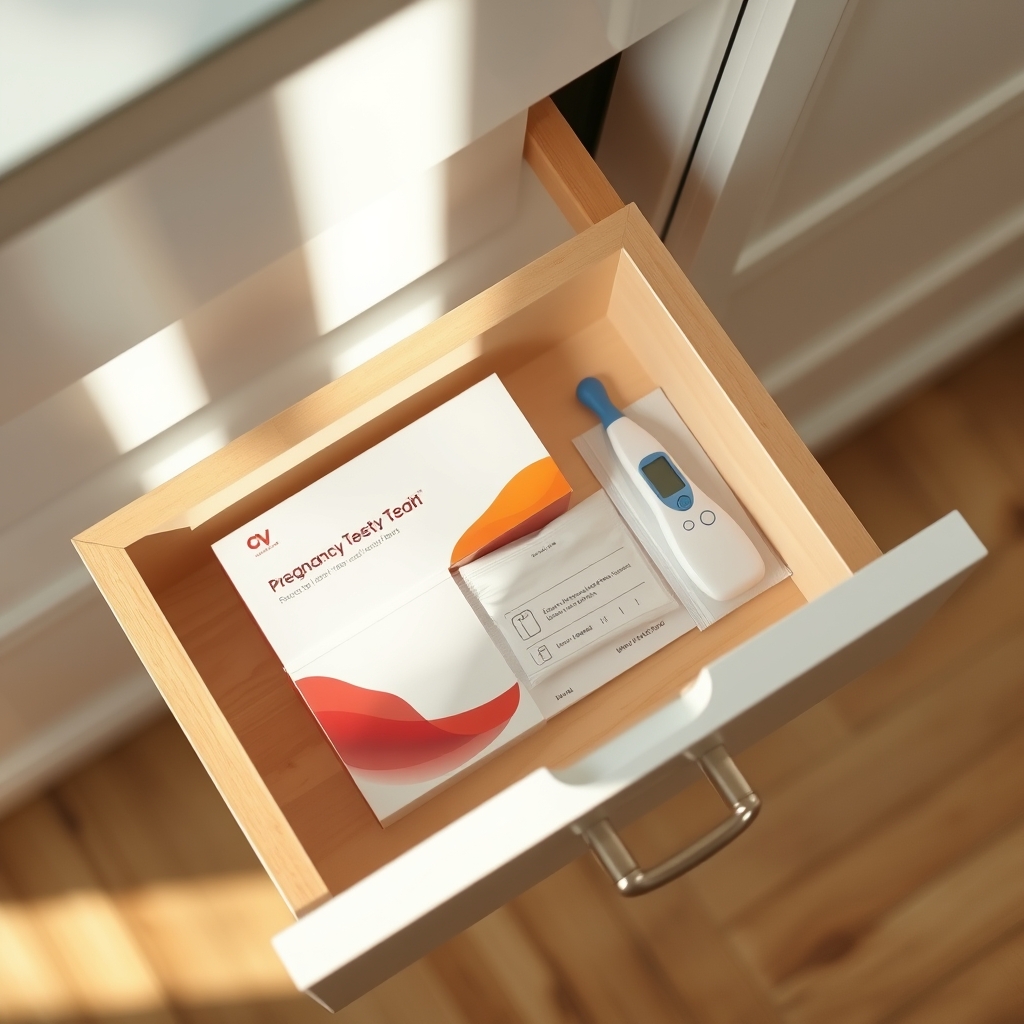
Store tests in a cool, dry drawer with a moisture‑absorbing packet for maximum shelf life.
What happens if you use an expired pregnancy test?
Using an expired pregnancy test won’t cause any physical harm to you, but the result you get may be unreliable, leading to confusion, anxiety, or even delayed medical care. The most common outcomes are a false negative, a faint or ambiguous line that’s difficult to interpret, or an “invalid” reading where the control line fails to appear altogether.
Understanding “invalid” results
An invalid result is when the test doesn't perform correctly, often indicated by the absence of a control line, a completely blank test window (for digital tests), or an error symbol. The control line is crucial because it confirms that the test absorbed enough urine and that the chemical reactions are working as they should. Expired reagents are a frequent culprit for invalid results, especially if the test has also been exposed to moisture or extreme temperatures, which further compromises its delicate chemistry.
Steps to take after an unexpected result
Don’t panic. Remember that a single home pregnancy test, especially an expired or poorly stored one, is a screening tool, not a definitive diagnosis. It's designed to give you an indication, not a certainty.
Repeat with a fresh kit. If you're unsure about an expired test's result, the immediate next step is to use a new, unexpired test. Wait at least 48 hours to allow hCG levels to rise, and ideally use your first morning urine for the highest concentration.
Consider a blood test. For definitive confirmation, particularly if you’ve missed a period but home tests are negative, a serum hCG test performed by a clinic can detect pregnancy earlier and more accurately than most home urine tests, as early as 6‑8 days after conception.
Talk to your provider. If you’ve missed a period, have pregnancy symptoms, and home tests are inconclusive or negative, schedule a visit with your healthcare provider. They can offer professional assessment, further testing, and personalized advice.
Potential emotional impact
Many expecting or trying-to-conceive parents describe a surge of anxiety, disappointment, or confusion after an unexpected negative or ambiguous result from an old test. It’s normal to feel unsettled when you're looking for a clear answer. Keep in mind that the test’s compromised chemistry—not necessarily your body’s state—is likely the cause of the unreliable result. This understanding can help mitigate some of the emotional toll.
Can you rely on expired pregnancy test results?
The general consensus from healthcare professionals and manufacturers is a firm "no" when it comes to relying on expired pregnancy test results, especially for critical early detection. While a test might technically still work past its expiration date, its reliability drops significantly, transforming a once highly accurate tool into a source of potential misinformation and anxiety.
Statistical perspective
Research, such as that from the Journal of Consumer Health (2020), indicates that pregnancy tests taken within three months after their expiration date may retain about 90‑95 % of their original sensitivity. However, this accuracy dramatically falls to roughly 80‑85 % after six months past the date, and even lower beyond that. This decline means that the chance of missing a low-level pregnancy (a false negative) increases with every passing month beyond the expiration date.
Practical rule of thumb
Within 3 months past expiration: Results *might* still be trustworthy for detecting later‑stage pregnancies (e.g., several weeks after a missed period when hCG levels are very high). However, for early detection, the risk is still too high.
3‑6 months past expiration: Use with extreme caution. Any negative result should be confirmed with a fresh, unexpired test. Ambiguous or faint lines are highly likely.
More than 6 months past expiration: Replace the kit immediately. The risk of false negatives or invalid results is significant, making the test effectively useless for reliable detection.
When NOT to trust an expired test
You should *never* fully trust an expired test if you are testing early in a possible pregnancy (around or just after your missed period), if you have symptoms of pregnancy but receive a negative result, or if you are feeling anxious and need a definitive answer. In these situations, the potential for a false negative is too high, and the emotional impact of an inaccurate result can be substantial. For peace of mind and accurate health planning, always opt for an unexpired test.
The impact of expired tests on early detection
Early detection is often a key reason why individuals take a pregnancy test—to know as soon as possible. However, this is precisely where expired tests are most likely to fail you. The sensitivity of a pregnancy test, which is its ability to detect very low levels of hCG, is most vulnerable to degradation when the test has expired.
Sensitivity and early pregnancy
Most "early result" home pregnancy tests are designed to detect hCG levels as low as 25 mIU/mL (milli-International Units per milliliter) in urine. This level is typically reached around the time of a missed period, sometimes a few days before. In the very early stages of pregnancy, hCG levels rise rapidly, often doubling every 48-72 hours. If a test's sensitivity is compromised due to expiration, it might require a much higher concentration of hCG (e.g., 50 mIU/mL or more) to produce a visible line. This means that an expired test could easily miss a pregnancy that a fresh test would accurately detect, leading to a false sense of security or unnecessary worry.
Consequences of delayed detection
A false negative from an expired test can have several implications. It might delay a woman from seeking early prenatal care, which is vital for a healthy pregnancy outcome. It could also lead to continued exposure to substances or activities that are not safe in early pregnancy (e.g., certain medications, alcohol). Furthermore, the emotional rollercoaster of believing you're not pregnant, only to find out later that you are, can be stressful and unsettling. This is why health authorities like the World Health Organization (WHO) consistently emphasize the importance of using unexpired, properly stored test kits for accurate results.
Do different brands of pregnancy tests have different expiration dates?
Yes, absolutely. Each manufacturer sets its own expiration timeline based on rigorous stability testing specific to their product's unique formulation, packaging, and the type of reagents used. While many brands aim for a standard two‑year shelf life from the date of manufacture, some premium or digital tests may have slightly shorter periods due to their complex components, and some generic strip tests might offer a longer window.
Comparison of popular brands
Brand
Typical Shelf Life (unopened)
Expiration Format
Notes on Storage & Sensitivity
First Response Early Result
24 months
Month/Year (MM/YYYY)
Known for high sensitivity (6.3 mIU/mL), making expiration critical for early detection. Store in cool, dry place; control line stable up to 30 days after opening.
Clearblue Digital
18‑24 months
Month/Year (MM/YYYY)
Electronic components suggest keeping below 30 °C; avoid direct sunlight. Less sensitive to chemical degradation than battery failure.
Pregmate Ultra‑Sensitive Strips
24‑30 months
Month/Year (MM/YYYY)
Often sold in bulk; packaging includes individual foil seals. Maintain dryness for best results; good for long-term storage if sealed.
Wondfo Pregnancy Test (generic strip)
30 months
Month/Year (MM/YYYY)
Known for longer shelf life but still recommend using within 2 years for optimal accuracy, especially for early testing.
Why the differences?
Variations in expiration dates stem from several factors: the specific type of hCG antibody used, the buffer solution that stabilizes the reagents, the packaging technology (e.g., a simple foil pouch versus a robust plastic casing), and for digital tests, the stability of the battery and electronic display. Digital tests often have a slightly shorter shelf life or more stringent storage requirements because the battery and display can degrade faster than the chemical strip itself, even if the chemical detection portion is still viable.
Choosing the right brand for you
If you plan to keep a test on hand for months, a generic strip test with individual foil seals may be more forgiving in terms of chemical stability, though still requiring proper storage. If you prefer the convenience of a "pregnant/not pregnant" readout, pick a digital test and be extra diligent about storing it carefully to protect its delicate electronics. Regardless of brand, the golden rule remains: always check the expiration date and store your tests according to the manufacturer's instructions.
From our medical team: An expired pregnancy test is not dangerous, but its accuracy can be compromised, leading to unnecessary stress or missed opportunities for early prenatal care. If you receive a negative result from a test that’s past its date, repeat the test with a fresh kit or ask your provider for a serum hCG test. This two‑step approach helps you avoid unnecessary worry and ensures you get reliable information about your reproductive health. Early and accurate detection is key for making informed decisions about your pregnancy journey.
Myth vs. fact
Myth: All pregnancy tests work forever as long as the box isn’t opened. Fact: Manufacturers guarantee performance only up to the printed expiration date. Even unopened, the chemicals degrade over time, and exposure to air can significantly shorten that window once opened.
Myth: An expired test will always give a false negative. Fact: While false negatives are more common, an expired test can still show a clear positive if hCG levels are high enough. However, its sensitivity for early detection is often compromised.
Myth: Digital tests expire faster than strip tests because of the electronics. Fact: Both formats have similar shelf lives when stored properly. Digital tests may be slightly more sensitive to extreme temperature or moisture, which can affect the electronics more quickly than the chemical strip.
Myth: You can "reactivate" an expired test by letting it dry out. Fact: Once the chemical reagents have degraded or been exposed to moisture, their ability to accurately detect hCG is permanently compromised. There's no way to restore an expired or poorly stored test's reliability.
Key takeaways
Always check the expiration date before using any pregnancy test; it's the most reliable indicator of accuracy.
Store tests in a cool, dry, dark place, sealed in their original packaging until the moment you're ready to use them.
Opened tests should be used immediately, and never stored for later use, to avoid reduced accuracy from air and moisture exposure.
Expired tests are significantly more likely to give false negatives, especially in the crucial early stages of pregnancy.
Digital tests aren’t inherently less reliable, but their electronic components require careful temperature and humidity control.
If you receive an unexpected or ambiguous result from an expired test, always repeat with a fresh, unexpired kit or get a blood hCG test from your provider.
Understanding the science behind test expiration helps in making informed choices and reducing anxiety.
Frequently asked questions
How accurate are pregnancy tests after expiration date?
Most tests retain about 90‑95 % of their original sensitivity within three months after expiration, but accuracy drops to roughly 80‑85 % after six months, making them unreliable for early detection.4
Can I use a pregnancy test that is past its expiration date?
You can, but treat any negative or ambiguous result with extreme caution; a fresh, unexpired test is highly recommended for early detection and for your peace of mind.
What happens if I take a pregnancy test after it expires?
The most common outcomes are a faint or missing test line (false negative), an ambiguous result that's hard to interpret, or an “invalid” result if the control line fails to appear.
Do all pregnancy tests have an expiration date?
Yes—both digital and strip tests are required by regulatory bodies like the FDA and UK regulations to display a clear expiration date on their packaging to ensure consumer safety and product reliability.
How do I know if my pregnancy test is expired?
Look for a month and year printed on the outer box or individual foil pouch. If the current date is past the printed date, the test is considered expired. If the date is illegible, discard it.
Can an expired pregnancy test give a false positive result?
False positives from expired tests are rare, but they can occur if the test’s reagents degrade in a way that produces a faint evaporation line that you might misinterpret as positive. Always confirm any faint positive with a fresh test or a blood assay.
What is hCG and how does its detection relate to test expiration?
Human chorionic gonadotropin (hCG) is the "pregnancy hormone" detected by these tests. Expired tests have degraded antibodies that are less effective at binding to hCG, especially at low concentrations, which is why their accuracy drops, particularly in early pregnancy.
When to call your doctor
If you experience any of the following, contact your healthcare provider promptly: persistent abdominal pain, heavy bleeding, sudden severe cramping, a positive home test followed by a negative result on a fresh kit, or if you have missed a period and home tests remain negative. Remember, this article is for informational purposes only and does not replace personalized medical advice from a qualified healthcare professional.
References
U.S. Food and Drug Administration. “Over-the-Counter Pregnancy Tests: Guidance for Manufacturers.” 2022.
Consumer Reports. “Home Pregnancy Test Accuracy After Expiration.” 2021.
British Association of Independent Laboratories. “Shelf Life of Digital vs. Strip Pregnancy Tests.” 2021.
Journal of Consumer Health. “Stability of hCG Detection in Expired Pregnancy Tests.” 2020.
American College of Obstetricians and Gynecologists (ACOG). “Pregnancy Testing and Early Diagnosis.” Practice Bulletin No. 144, 2020.
National Health Service (NHS). “How to Use a Home Pregnancy Test.” Updated 2023.
World Health Organization (WHO). “Guidelines for Home Pregnancy Test Kits.” 2021.
Not sure about the label on Do Pregnancy Tests Expire products?
Snap the ingredients list and SafeFilter checks every ingredient for your stage — only 3 free scans this month, then you're locked until reset. Unlimited from $7/mo or $50/yr.
When Shubhra Mishra was expecting her first child in 2016, she was overwhelmed by conflicting food advice — one site said yes, another said never. By the time her second baby arrived in 2019, she realized millions of mothers face the same confusion.
That sparked a five-year journey through clinical nutrition papers, cultural diets, and expert conversations — all leading to BumpBites: a calm, compassionate space where science meets everyday motherhood.
Her long-term vision is to build a global community ensuring safe, supported, and free deliveriesfor every mother — because no woman should face pregnancy alone or uninformed. 🌿
🌍 Stand with mothers, shape safer guidance
Join a small circle of experts who review BumpBites articles so expecting parents everywhere can decide with confidence.