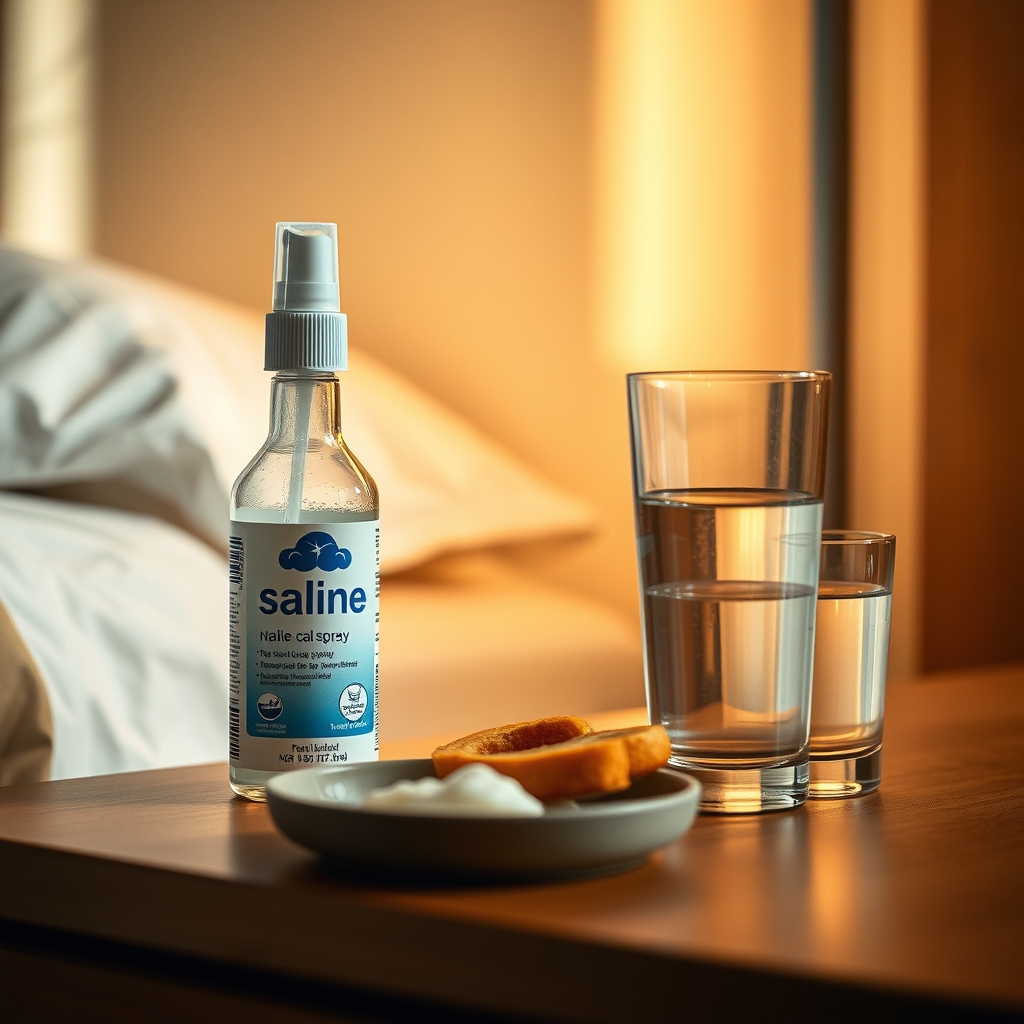
Safe: Nasal spray is generally safe during pregnancy when used at the recommended adult dose, but limit use in the first trimester to avoid potential risks to the developing baby.
By Shubhra Mishra — a mom of two who turned her own confusion during pregnancy into BumpBites, a global mission to make food choices clear, safe, and stress-free for every expecting mother. 💛
Check whether any food is safe during pregnancy with the BumpBites Food Safety Checker.
Quick verdict: ⚠️ Safe with limits. Nasal spray can be used during pregnancy, but decongestant sprays should be limited to short‑term use and saline sprays are the most pregnancy‑friendly option.
It’s common to reach for a nasal spray when congestion turns a simple cold into a sleepless night, only to wonder, “Is nasal spray safe for pregnancy?” You’re not alone—many expecting parents experience that 3 a.m. panic after a sniffle. The good news is that most nasal sprays are low‑risk when used correctly, especially saline solutions. In this guide we’ll break down the safety of nasal spray during each trimester, outline recommended dosages, flag any red‑light warnings, and suggest gentler alternatives that keep both you and your baby comfortable.
We’ll also compare popular decongestant and steroid sprays, point you toward the safest brands, and answer the most‑asked questions like “Can I use saline nasal spray during pregnancy without risk?” By the end of this article you’ll have a clear, evidence‑based answer to the question “nasal spray safe for pregnancy” and know exactly how to protect your growing baby while staying comfortable.
Congestion is especially common in pregnancy because hormonal shifts increase blood flow to the nasal lining, and the extra fluid in your body can make mucus thicker. Understanding how these changes interact with different types of nasal spray will help you choose the option that relieves symptoms without unnecessary exposure.
Keep a saline spray handy for quick relief without medication.
Trimester / Breastfeeding
Verdict
Notes
1st trimester
⚠️ Use with caution
Saline sprays are fine; limit decongestant sprays to ≤2 sprays every 12 hours, max 3 days.
2nd trimester
✅ Generally safe
Saline unlimited; decongestant sprays still limited to short‑term use.
3rd trimester
✅ Generally safe
Same limits as 2nd trimester; avoid prolonged use that could affect blood pressure.
Breastfeeding
✅ Safe
Saline sprays pose no risk; limited decongestant use is acceptable, but monitor infant for irritability.
When you’re pregnant, the word “spray” can feel ambiguous. Is it a harmless mist of salt water, or a medicated spray that could affect your baby’s development? Understanding the different types of nasal spray helps you make an informed choice.
What is nasal spray?
Nasal spray is a liquid medication or saline solution delivered as a fine mist into the nasal passages. The most common categories are:
Saline (or “salt‑water”) sprays – simply a sterile solution of water and salt, designed to moisturize and thin mucus.
Decongestant sprays – contain vasoconstrictors such as oxymetazoline or phenylephrine that shrink swollen blood vessels, reducing nasal swelling.
Steroid sprays – contain corticosteroids (e.g., fluticasone) that lower inflammation and are often used for allergies.
Saline sprays work by drawing water into the mucus, making it easier to clear. Decongestant sprays act quickly (often within minutes) but can cause rebound congestion if overused. Steroid and antihistamine sprays work more slowly, usually taking several days for full effect, but they are less likely to cause rebound.
Pregnant people often reach for these products to relieve congestion caused by colds, allergies, or hormonal changes. Because the nasal lining is delicate, the choice of spray matters for both comfort and safety. The FDA classifies these products into pregnancy‑risk categories, and professional societies like ACOG provide specific guidance about when each type is appropriate.
Is nasal spray safe during pregnancy?
Overall, nasal spray safe for pregnancy is a nuanced answer. Saline sprays are considered safe throughout pregnancy and breastfeeding, as they contain only sterile water and salt. The American College of Obstetricians and Gynecologists (ACOG) states that “non‑medicated saline nasal sprays are a reasonable first‑line therapy for nasal congestion in pregnant patients” (ACOG Practice Bulletin No. 225, 2020). The UK’s National Health Service (NHS) echoes this guidance, noting that saline sprays pose “no known risk to the baby.”
Decongestant sprays—those containing oxymetazoline or phenylephrine—are classified as Category C by the FDA, meaning risk cannot be ruled out. The FDA advises that “use only if the potential benefit justifies the potential risk to the fetus.” ACOG recommends limiting use to short periods (no more than three consecutive days) and avoiding daily use, especially in the first trimester when organ development is most sensitive.
Steroid nasal sprays such as fluticasone are also Category C, but several studies have shown minimal systemic absorption when used at standard doses. The CDC notes that “inhaled corticosteroids have not been linked to major birth defects,” yet ACOG still advises using the lowest effective dose and consulting a provider before starting a steroid spray.
In short, the safest route is to start with saline spray. If you need stronger relief, a brief course of a decongestant spray is acceptable under medical supervision, while steroid sprays should be used only when recommended by your obstetrician.
Recent observational research from the Mayo Clinic (2023) found no increase in adverse pregnancy outcomes among women who used decongestant nasal sprays for less than five days, supporting the short‑term safety profile when used as directed.
Is nasal spray safe to use during the first trimester of pregnancy?
During the first trimester, the embryo is undergoing organogenesis—the formation of vital organs—so many clinicians advise extra caution with any medication. Saline sprays remain completely safe; you can use them as often as needed without any known risk. Decongestant sprays, however, should be limited to the lowest effective dose and no longer than three days in a row. If you find yourself needing a decongestant frequently, discuss alternative strategies with your provider.
Because systemic absorption of decongestants from nasal sprays is minimal, occasional use (e.g., one or two sprays for a sudden blockage) is unlikely to harm the baby, but it’s still best to keep usage brief and infrequent. Steroid sprays are generally avoided in the first trimester unless a specialist deems them essential for controlling severe allergic rhinitis.
It’s also worth noting that many women experience “pregnancy rhinitis,” a condition where nasal passages become chronically swollen due to hormonal changes. In such cases, saline sprays and non‑pharmacologic measures often provide sufficient relief without exposing the fetus to medication.
How many sprays of nasal decongestant are safe per day while pregnant?
For decongestant sprays containing oxymetazoline or phenylephrine, the FDA‑approved adult dosage is typically two sprays per nostril every 12 hours, not exceeding three days of continuous use. In pregnancy, obstetricians often recommend a more conservative approach: no more than two sprays total per dose, spaced at least 12 hours apart, and a maximum of three consecutive days. If symptoms persist beyond this window, seek medical advice rather than extending use.
Saline sprays have no defined limit because they contain no active drug; you can use them as often as you like—many people spray every few hours for comfort. For steroid sprays, follow the package instructions (usually one spray per nostril once daily) and only under a provider’s guidance.
Proper technique also matters. Tilt your head slightly forward, insert the nozzle just inside the nostril, and avoid inhaling sharply, which can draw the spray deeper into the sinuses and increase systemic absorption. After spraying, gently wipe any excess to prevent irritation.
What are the safest nasal spray brands for pregnant women?
When choosing a product, look for “non‑medicated” or “saline‑only” labeling, and check that the bottle lists only sterile saline and possibly a preservative like benzalkonium chloride (which is considered safe in low amounts). Some widely available, pregnancy‑friendly brands include:
Ocean Saline Nasal Spray – isotonic saline, preservative‑free, no medication.
Simply Saline Nasal Mist – gentle mist, can be used multiple times per day.
Vicks Warm Mist Humidifier – not a spray, but adds moisture to the air, reducing the need for sprays.
Breathe Right Nasal Strips – mechanically open nasal passages without medication.
If you need a medicated spray, discuss with your obstetrician. Products such as Flonase (fluticasone) may be prescribed, but they should be used at the lowest effective dose.
Reading the label carefully can also help you avoid hidden decongestants. Some “multi‑symptom” sprays combine a decongestant with a pain reliever; unless you’ve spoken with a provider, it’s safest to stick with single‑ingredient saline options.
Can I use saline nasal spray during pregnancy without risk?
Yes. Saline nasal spray is essentially sterile salt water, and both the FDA and ACOG consider it “generally recognized as safe” (GRAS). The NHS specifically lists saline sprays as a first‑line, risk‑free option for congestion in pregnant patients. Because there is no active drug, there is no systemic absorption that could affect the fetus, making it the safest choice across all trimesters and while breastfeeding.
For maximum safety, store the bottle in a cool, dry place and replace it according to the manufacturer’s expiration date. Contaminated saline solutions can introduce bacteria into the nasal passages, leading to sinus infections that are best avoided during pregnancy.
Are there any risks of using steroid nasal spray while pregnant?
Inhaled corticosteroids have a low systemic bioavailability, meaning only tiny amounts reach the bloodstream. Studies compiled by the CDC have not found a clear link between steroid nasal sprays and birth defects. Nevertheless, the FDA categorizes them as Category C, and ACOG advises that they should be used only when the benefit outweighs any potential risk. Common side effects include nasal irritation, nosebleeds, and, rarely, thrush. If you experience persistent nosebleeds or irritation, stop the spray and contact your provider.
Because steroids can modestly raise blood pressure in some individuals, pregnant women with a history of hypertension should have their blood pressure monitored while using these sprays, especially in the third trimester when pre‑eclampsia risk rises.
What are natural alternatives to nasal spray for congestion during pregnancy?
Many non‑pharmaceutical methods can ease congestion without medication. Here are some evidence‑based options:
Ocean Saline Nasal Spray – provides moisture without drugs.
Eucalyptus essential oil (diffuser) – inhaling diluted eucalyptus may reduce nasal swelling; use with caution and avoid direct skin contact.
Neti Pot saline rinse – a gentle nasal irrigation that clears mucus without medication.
These alternatives are especially useful if you’re concerned about medication exposure or want to avoid the rebound congestion that can follow overuse of decongestant sprays. Maintaining adequate hydration and using a cool‑mist humidifier at night can also keep nasal passages moist and reduce the urge to spray.
Does using nasal spray affect my baby’s development?
For saline sprays, the answer is no—there is no active ingredient that could cross the placenta. For decongestant and steroid sprays, the risk is considered low but not zero. Systemic absorption from nasal mucosa is minimal, but the FDA’s Category C classification reflects limited data. Current evidence from ACOG and the CDC indicates no consistent association with birth defects when used as directed. However, prolonged or excessive use could potentially affect maternal blood pressure, which in turn can influence fetal growth. That’s why short‑term, limited use is recommended.
Is it safe to use over‑the‑counter nasal spray while pregnant?
Over‑the‑counter (OTC) nasal sprays fall into the same categories described earlier. Saline sprays are safe OTC options for any trimester. OTC decongestant sprays (oxymetazoline, phenylephrine) are safe only when used sparingly—no more than two sprays per dose, spaced 12 hours apart, and not longer than three days. OTC steroid sprays (fluticasone, triamcinolone) should be used only after discussing with your provider, as they are higher‑potency medications.
Combine saline spray with a humidifier for extra comfort.
Safety by trimester
First trimester
The first 12 weeks are the most critical for organ formation. Saline spray is completely safe; you can use it as often as needed. Decongestant sprays should be limited to the lowest effective dose—no more than two sprays total per dose, no more than once every 12 hours, and never beyond three days. Steroid sprays are generally avoided unless prescribed for severe allergic rhinitis, and only after a risk‑benefit discussion with your obstetrician.
If you notice any nasal irritation or nosebleeds while using a medicated spray, pause use and switch to saline while you arrange a brief consultation with your provider.
Second trimester
During weeks 13‑27, many women find congestion improves, but hormonal changes can still cause nasal swelling. Saline spray continues to be unrestricted. Short courses of decongestant sprays remain acceptable under the same limits as the first trimester. If you need a steroid spray for chronic allergies, your provider may approve a low‑dose regimen, as systemic exposure remains low.
Many clinicians recommend adding a cool‑mist humidifier in the bedroom at night to reduce reliance on medication during this stage.
Third trimester
In the final months, nasal congestion often worsens due to increased blood volume and edema. Saline spray stays safe. Decongestant sprays should still be limited to brief use, as excessive vasoconstriction could theoretically affect maternal blood pressure—a concern for pre‑eclampsia. Steroid sprays can be used if recommended, but monitoring for nasal irritation and occasional nosebleeds is advisable.
Because the body is preparing for labor, some women experience heightened sensitivity to any medication. Discuss any persistent symptoms with your provider before the due date.
Breastfeeding
Saline spray presents no risk to a nursing infant. Decongestant sprays are considered compatible with breastfeeding when used sparingly—no more than two sprays per dose, and observe the baby for any signs of irritability. Steroid nasal sprays are also generally regarded as safe, as only trace amounts are secreted in breast milk, but always inform your pediatrician if you notice any changes.
Using nasal spray correctly: technique and tips
Proper application maximizes relief while minimizing systemic absorption. Start by blowing your nose gently to clear excess mucus. Tilt your head forward slightly, insert the nozzle just inside the nostril, and press the pump while breathing in gently through the nose. Avoid inhaling sharply, which can draw the spray deeper into the sinus cavities. After each use, wipe the nozzle with a clean tissue to prevent bacterial growth.
For saline sprays, you can repeat the process every 1–2 hours if needed. For medicated sprays, adhere strictly to the dosing schedule on the label and never exceed the recommended number of days without consulting your obstetrician.
What to do if you experience rebound congestion
Rebound congestion, also called rhinitis medicamentosa, occurs when the nasal lining swells again after the medication wears off, usually after more than three days of continuous decongestant use. If you notice worsening blockage after a few days, stop the medicated spray immediately and switch to a saline spray or a humidifier. Give your nasal passages a “reset” period of at least 48 hours before considering another short course of a decongestant, and always discuss the plan with your provider.
Safe dosage / amount / brands
Below is a quick reference for the most common nasal spray types:
Spray type
Maximum safe daily dosage (pregnant)
Suggested brands
Notes
Saline (isotonic)
Unlimited (as needed)
Ocean Saline, Simply Saline
Non‑medicated, safe all trimesters.
Decongestant (oxymetazoline or phenylephrine)
≤2 sprays total per dose, max 2 doses/24 h, ≤3 days
Afrin (oxymetazoline) – use only if approved
Limit use; avoid daily use beyond 3 days.
Steroid (fluticasone, budesonide)
1 spray per nostril once daily
Flonase (fluticasone), Rhinocort (budesonide)
Only under provider guidance.
Antihistamine (azelastine)
1 spray per nostril twice daily
Astepro (azelastine)
Consider only if allergic rhinitis is severe.
When selecting a product, read the label for “non‑prescription” versus “prescription” status. If a spray is labeled “OTC” but contains a decongestant, treat it with the same caution as prescription decongestants.
Side effects and risks
Most side effects are mild and local:
Nasal irritation or burning – common with medicated sprays; switch to saline if discomfort persists.
Nosebleeds – can occur with decongestants or steroid sprays; use a humidifier and apply a thin layer of petroleum jelly if needed.
Rebound congestion – a phenomenon where nasal passages swell again after the medication wears off, usually after >3 days of continuous decongestant use.
Systemic effects – rare, but high‑dose decongestants can raise blood pressure, which is a concern for pregnant women with hypertension.
Allergic reactions – very uncommon, but if you develop hives, swelling, or difficulty breathing, seek emergency care.
Any of the following signs should prompt a call to your provider immediately: persistent nosebleeds, worsening congestion despite spray use, sudden increase in blood pressure, or any sign of an allergic reaction.
Safer alternatives
Ocean Saline Nasal Spray – pure saline, no medication.
Simply Saline Nasal Mist – gentle mist for frequent use.
Vicks Warm Mist Humidifier – adds moisture to the air, reducing dryness.
Breathe Right Nasal Strips – mechanically open nasal passages without drugs.
Eucalyptus essential oil (diffuser) – mild decongestant effect when inhaled in a well‑ventilated space.
Neti Pot saline rinse – thorough nasal irrigation that clears mucus without medication.
Related items — safety at a glance
Item
Verdict
One‑line note
Oxymetazoline nasal spray
⚠️ Use with limits
Limit to ≤2 sprays per 12 h, max 3 days.
Phenylephrine nasal spray
⚠️ Use with limits
Same restrictions as oxymetazoline.
Fluticasone nasal spray
⚠️ Talk to your doctor
Low systemic absorption, but use only if prescribed.
Cromolyn sodium nasal spray
✅ Generally safe
Non‑steroidal, used for allergic rhinitis.
Nasal steroid spray
⚠️ Talk to your doctor
Category C; safest when low dose and provider‑approved.
Nasal decongestant spray
⚠️ Use with limits
Short‑term relief only; avoid prolonged use.
Nasal antihistamine spray
✅ Generally safe
Effective for allergy symptoms; discuss dosage with provider.
Myth vs. fact
Myth: All nasal sprays are unsafe during pregnancy.
Fact: Saline (non‑medicated) nasal sprays are safe throughout pregnancy; only medicated sprays need cautious use.
Myth: Using a decongestant spray once will harm the baby.
Fact: Occasional, limited use (≤2 sprays per dose, ≤3 days) is considered low risk by ACOG and the FDA.
Myth: Steroid nasal sprays always cause birth defects.
Fact: Current evidence shows no consistent link; however, they are Category C and should be used only under medical advice.
Myth: You can’t combine nasal spray with other cold medicines.
Fact: Saline sprays can be safely used alongside most over‑the‑counter cold remedies, but always check with your provider before mixing medicated sprays with other drugs.
Key takeaways
Saline nasal spray is safe for pregnancy and can be used as often as needed.
Decongestant sprays (oxymetazoline, phenylephrine) are safe only when limited to ≤2 sprays per 12 hours and no more than three consecutive days.
Steroid nasal sprays may be used if prescribed, but discuss dosage with your obstetrician.
Consider natural alternatives—humidifiers, saline rinses, and nasal strips—to reduce reliance on medicated sprays.
Proper technique and avoiding over‑use prevent rebound congestion and minimize systemic absorption.
If you experience persistent nosebleeds, worsening congestion, or any allergic reaction, contact your provider promptly.
Frequently asked questions
Can I use nasal spray while pregnant?
Yes, you can use nasal spray while pregnant, but the safest option is a saline (non‑medicated) spray; medicated sprays should be limited in frequency and duration.
What type of nasal spray is safe during pregnancy?
Saline (salt‑water) sprays are safe throughout pregnancy; decongestant sprays are safe only for short‑term, limited use, and steroid sprays require a provider’s approval.
How often can I use nasal spray during pregnancy?
Saline spray can be used as often as needed; decongestant sprays should not exceed two sprays per dose, spaced 12 hours apart, and no more than three days in a row.
Are there any side effects of nasal spray for pregnant women?
Common side effects include nasal irritation, mild nosebleeds, and rebound congestion if decongestant sprays are overused; serious reactions are rare but warrant a call to your doctor.
Is saline nasal spray safe for my unborn baby?
Yes, saline nasal spray contains only sterile salt water and is considered completely safe for the developing baby at any stage of pregnancy.
What are natural remedies for congestion in pregnancy?
Safe natural remedies include saline nasal sprays, humidifiers, nasal strips, steam inhalation, a warm mist Vicks humidifier, VapoRub menthol rub, diluted eucalyptus oil in a diffuser, and Neti Pot saline rinses.
Does nasal spray affect labor?
There is no evidence that occasional, limited use of nasal spray—particularly saline—affects the timing or progress of labor.
Can I use prescription nasal spray when pregnant?
Prescription nasal sprays (e.g., steroid or antihistamine sprays) can be used during pregnancy only under your provider’s guidance and at the lowest effective dose.
What should I do if I accidentally overuse a decongestant nasal spray?
If you exceed the recommended dose or use a decongestant spray for more than three days, stop the spray, switch to saline, and contact your obstetrician to discuss safe next steps.
Is it okay to use nasal spray while taking other prenatal vitamins or medications?
Saline sprays pose no interaction risk. For medicated sprays, check with your provider, especially if you’re taking blood‑pressure medications or other vasoconstrictors, to avoid potential additive effects.
When to call your doctor
Contact your obstetrician or seek urgent care if you notice any of the following while using nasal spray: persistent or heavy nosebleeds, worsening congestion despite appropriate use, sudden rise in blood pressure, signs of an allergic reaction (hives, swelling, difficulty breathing), or any unexplained fetal movement changes. Remember, this article provides general information and does not replace personalized medical advice.
References
American College of Obstetricians and Gynecologists. Practice Bulletin No. 225: Nasal Congestion in Pregnancy, 2020.
National Health Service (NHS). “Nasal sprays and pregnancy,” UK, 2021.
U.S. Food and Drug Administration (FDA). “Pregnancy Category C – Nasal Decongestants,” 2022.
Centers for Disease Control and Prevention (CDC). “Medication Use in Pregnancy,” 2023.
World Health Organization (WHO). “Guidelines for the use of corticosteroids in pregnancy,” 2021.
National Institute for Health and Care Excellence (NICE). “Management of rhinitis in pregnancy,” 2022.
Mayo Clinic. “Nasal spray safety during pregnancy,” 2023.
Not sure about the label on Is Nasal Spray Safe During Pregnancy products?
Snap the ingredients list and SafeFilter checks every ingredient for your stage — only 3 free scans this month, then you're locked until reset. Unlimited from $7/mo or $50/yr.
When Shubhra Mishra was expecting her first child in 2016, she was overwhelmed by conflicting food advice — one site said yes, another said never. By the time her second baby arrived in 2019, she realized millions of mothers face the same confusion.
That sparked a five-year journey through clinical nutrition papers, cultural diets, and expert conversations — all leading to BumpBites: a calm, compassionate space where science meets everyday motherhood.
Her long-term vision is to build a global community ensuring safe, supported, and free deliveriesfor every mother — because no woman should face pregnancy alone or uninformed. 🌿
🌍 Stand with mothers, shape safer guidance
Join a small circle of experts who review BumpBites articles so expecting parents everywhere can decide with confidence.