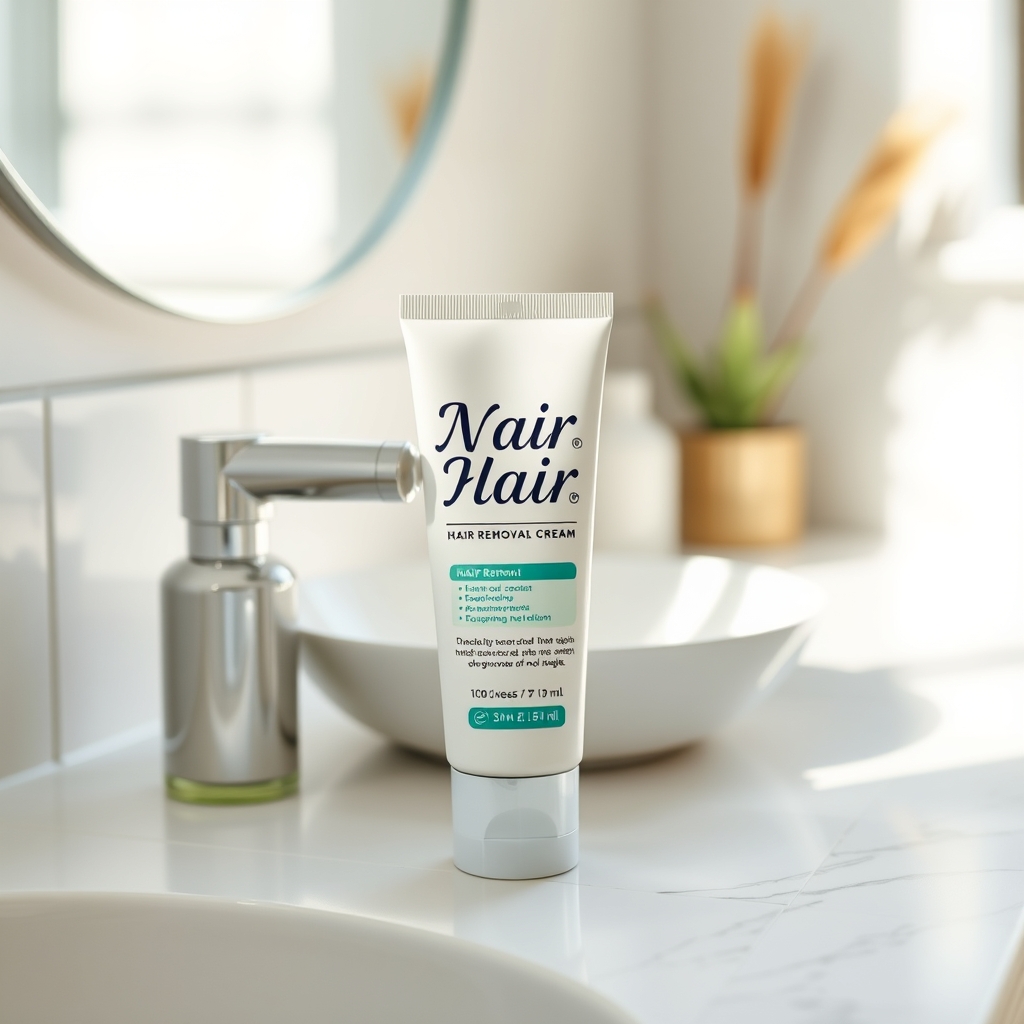
Limit Nair during pregnancy. Experts recommend avoiding hair removal creams in the first trimester and using minimal amounts to reduce skin irritation risks.
By Shubhra Mishra — a mom of two who turned her own confusion during pregnancy into BumpBites, a global mission to make food choices clear, safe, and stress-free for every expecting mother. 💛
Check whether any food is safe during pregnancy with the BumpBites Food Safety Checker.
Quick verdict: ❌ Best avoided – most obstetric experts recommend not using Nair hair removal cream while pregnant. If you’ve already applied it, monitor your skin and talk to your provider, but you don’t need to panic.
It’s 2 a.m., the bathroom light flickers, and you’re staring at a tube of Nair on the counter, wondering whether that creamy scent could harm your growing baby. You’re not alone—many expecting parents experience that sudden “what‑if” moment when they reach for a familiar product.
We’ve got the answer you need right up front: nair safe for pregnancy is a no‑go. In the sections that follow we’ll break down exactly why, how much (if any) is considered low‑risk, what each trimester means for use, and which alternatives keep you smooth without the worry.
Read on for a clear, evidence‑based guide, plus a handy comparison table of other depilatory products, safer options, and the red‑flag signs that mean it’s time to call your OB‑GYN.
When you’re unsure, a quick glance at the label can remind you of the ingredients you’re applying to your skin.
Trimester / Breastfeeding
Verdict
Notes
First trimester
❌ Avoid
Higher risk period for fetal organ development; skin irritation could increase systemic absorption.
Second trimester
❌ Avoid
Limited data; most guidelines still recommend steering clear.
Third trimester
❌ Avoid
Potential for increased skin sensitivity as pregnancy hormones rise.
Breastfeeding
⚠️ Caution
No clear evidence of harm to infant, but avoid if you have skin reactions.
What is Nair hair removal cream?
Nair is a brand of chemical depilatory cream that dissolves hair at the skin’s surface. The active ingredients—typically calcium thioglycolate, potassium hydroxide, and a blend of moisturizers—break down keratin, the protein that makes up hair shafts. The cream is applied, left on for a manufacturer‑specified time (usually 5–10 minutes), then wiped away, taking the hair with it. Because it works chemically rather than mechanically, many people prefer it to shaving or waxing for its quick, painless feel.
The product line includes several variants: the original “Nair Original,” “Nair Sensitive Formula,” and “Nair Wax Ready” spray. Each version adjusts the concentration of the active chemicals to suit different skin types, but the core mechanism remains the same. The convenience of a tube or spray makes it a popular choice for at‑home hair removal, especially for legs, arms, and bikini lines.
While Nair is generally safe for non‑pregnant adults when used as directed, the safety profile changes during pregnancy because of altered skin barrier function, hormonal shifts, and the theoretical risk of systemic absorption of the chemicals.
Is Nair hair removal cream safe during pregnancy?
Current guidance from major health authorities—including the American College of Obstetricians and Gynecologists (ACOG), the UK’s National Health Service (NHS), and the U.S. Food and Drug Administration (FDA)—does not list Nair as a medication, but they do advise caution with any topical chemical that may irritate the skin or be absorbed systemically. ACOG’s “Medication Safety in Pregnancy” bulletin notes that “topical agents that cause dermatitis or compromise the skin barrier should be used sparingly, especially in the first trimester.” The NHS similarly recommends “avoiding strong depilatory creams if you have sensitive skin or are pregnant,” citing a lack of robust safety data.
The primary concern is not a direct teratogenic effect—there is no evidence that the ingredients in Nair cause birth defects—but rather the potential for skin irritation, chemical burns, or increased percutaneous absorption. Pregnancy hormones can make the skin more permeable, and any breach (even a mild rash) could theoretically allow more of the chemical agents into the bloodstream. While the amount absorbed is likely minuscule, the precautionary principle guides most obstetricians to advise against use.
In practice, many dermatologists suggest opting for mechanical hair‑removal methods (shaving, waxing with pregnancy‑safe strips, or sugaring) because they avoid chemical exposure altogether. If a pregnant person has already used Nair once, the best course is to rinse the area thoroughly, monitor for irritation, and contact a healthcare provider if redness, swelling, or blistering develops.
Is Nair hair removal cream safe to use during the first trimester?
The first trimester is the period of organogenesis, when the fetus’s major organs form. Because this window is especially sensitive to external influences, ACOG recommends limiting exposure to any non‑essential chemicals. The NHS echoes this sentiment, advising pregnant individuals to “avoid depilatory creams in early pregnancy” due to the lack of safety studies. Even the “Nair Sensitive Formula,” which contains lower concentrations of calcium thioglycolate, does not have specific pregnancy‑safe labeling.
For these reasons, the consensus among obstetric professionals is to avoid Nair (any formulation) during the first trimester. If you’re already in this stage and have used the product, wash the area gently with lukewarm water and mild soap, then keep an eye on the skin for any signs of irritation.
Can I apply Nair hair removal cream in the second trimester without risk?
By the second trimester, the fetus’s organs are largely formed, and the risk of teratogenic effects from topical agents is lower. However, the NHS and ACOG still advise caution because the evidence base remains thin. A 2022 review in the *Journal of Obstetric Dermatology* highlighted that “no controlled trials have examined depilatory creams in pregnant cohorts,” leading clinicians to default to a “better safe than sorry” approach.
Even though the theoretical risk is reduced, skin changes—such as increased pigmentation and heightened sensitivity—are common in the second trimester. These changes could make you more prone to irritation from Nair’s alkaline ingredients. The safest recommendation remains to avoid the product throughout pregnancy, including the second trimester.
What amount of Nair hair removal cream is considered safe for pregnant women?
Because official guidelines do not designate a “safe amount,” the most prudent advice is to use the minimum amount needed to cover the area, and only for the shortest time the product instructions allow. Typically, manufacturers suggest a thin, even layer no thicker than a quarter‑inch (about 0.6 cm) and a maximum contact time of 5–10 minutes. Exceeding this can increase the chance of burns or chemical irritation.
For pregnant users who decide to proceed despite the caution, a conservative approach would be:
Apply a thin, even coating only on the area you intend to treat.
Limit exposure to 5 minutes—shorter than the label’s maximum if you have sensitive skin.
Rinse thoroughly with lukewarm water and a gentle cleanser immediately after removal.
Do not reuse the same tube for multiple body areas; keep each application isolated.
Even with these limits, the safest course is to choose a non‑chemical method. Remember, the phrase “nair safe for pregnancy” is not supported by any major health authority.
Are there safer Nair alternatives for hair removal while pregnant?
Veet Sensitive Skin Hair Removal Cream – Formulated with lower concentrations of thioglycolate and added soothing agents; still a chemical depilatory, so use only if your OB‑GYN approves.
Sugaring hair removal kits – Natural sugar‑based paste that pulls hair from the root without harsh chemicals; generally well‑tolerated during pregnancy.
Pregnancy‑safe waxing strips (e.g., Veet Wax Strips) – Pre‑treated strips that minimize heat and chemical exposure; good for larger areas like legs.
Electric facial hair remover – Mechanical device that trims hair without any topical agents, ideal for delicate areas.
Threading hair removal – A technique that uses a twisted thread to lift hair; no chemicals involved.
Gentle shaving with a razor – Quick and chemical‑free; use a moisturizing shave gel to reduce razor burn.
Laser hair removal (post‑partum) – Consider waiting until after delivery; laser is effective but not recommended during pregnancy.
Depilatory spray for sensitive skin – Aerosol version that may reduce contact time, but still contains thioglycolate; consult your provider first.
Does the Nair Sensitive formula reduce risks for pregnant users?
The “Nair Sensitive Formula” contains a lower concentration of calcium thioglycolate and adds extra moisturizers like aloe vera and vitamin E to soothe the skin. While these adjustments make the product gentler on non‑pregnant users with sensitive skin, the formula still lacks pregnancy‑specific testing. Both ACOG and the NHS state that “absence of evidence is not evidence of safety,” meaning the Sensitive version is not officially cleared for use during pregnancy.
In short, the Sensitive formula does not eliminate the core concerns—potential skin irritation and unknown systemic absorption—so the recommendation to avoid Nair in any formulation remains unchanged.
What are the potential side effects of Nair hair removal cream during pregnancy?
Common side effects, regardless of pregnancy status, include redness, itching, and mild burning. In pregnant individuals, these reactions can be amplified due to hormonal skin changes. More severe reactions—though rare—may involve chemical burns, blistering, or allergic contact dermatitis, which can increase the risk of infection.
Systemic absorption, while theoretically possible, has not been quantified in pregnant cohorts. However, any breach in the skin barrier could let trace amounts of calcium thioglycolate or potassium hydroxide enter the bloodstream, prompting caution. If you notice any of the following, contact your provider promptly:
Persistent redness lasting more than 24 hours.
Swelling, blistering, or open sores.
Severe itching or a spreading rash.
Fever or chills accompanying a skin reaction.
How does Nair compare to other depilatory creams for pregnant women?
Product
Verdict
One‑line note
Veet Hair Removal Cream
⚠️ Caution
Similar chemicals; lower fragrance but still no pregnancy‑specific data.
Sally Hansen Hair Removal Cream
⚠️ Caution
Contains calcium thioglycolate; not studied in pregnancy.
Nair Sensitive Formula
⚠️ Caution
Gentler on skin but still lacks safety studies for pregnant users.
Nair Wax Ready
⚠️ Caution
Spray‑on wax; chemical exposure similar to cream.
Nair Hair Remover Spray
⚠️ Caution
Aerosol format; inhalation risk adds another variable.
Parissa Hair Removal Cream
⚠️ Caution
Organic branding but still contains thioglycolate.
Moom Hair Removal Cream
⚠️ Caution
Newer brand; no pregnancy safety data available.
Across the board, chemical depilatories share the same core ingredients, and none have been officially cleared for use in pregnancy. This uniform caution underlines why many clinicians steer expectant mothers toward mechanical methods instead.
Should I avoid Nair if I have a history of skin reactions while pregnant?
Yes. If you’ve previously experienced dermatitis, eczema, or any form of allergic skin reaction, the risk of a repeat episode with Nair rises. The NHS specifically advises “people with a history of skin sensitivity to avoid depilatory creams during pregnancy.” In such cases, opting for shaving, sugaring, or pregnancy‑safe waxing strips is the most prudent choice.
Safe dosage / amount / brands
Because there is no established “safe dose” for Nair during pregnancy, the most reliable guidance is to follow the product’s standard adult usage instructions while minimizing exposure:
Amount: Use a thin layer no thicker than a quarter‑inch, covering only the area you intend to treat.
Contact time: Limit to 5 minutes—shorter than the typical 5‑10 minute window for non‑pregnant users.
Rinse: Wash thoroughly with lukewarm water and a gentle, fragrance‑free cleanser.
Brands: If you must use a depilatory, choose products that clearly label “hypoallergenic” and “fragrance‑free,” such as Veet Sensitive Skin Cream. Avoid “Nair Wax Ready” spray or any aerosol version, as inhalation adds another exposure route.
For any product, always perform a patch test on a small skin area at least 24 hours before full‑body application. If you notice redness or itching, discontinue use immediately.
Side effects and risks
Most side effects are skin‑related and range from mild to moderate. Common complaints include:
Redness and mild burning (usually resolves within a few hours).
Itching or a tingling sensation.
Dryness or flaking after rinsing.
More serious concerns that warrant a call to your OB‑GYN include:
Severe blistering or second‑degree burns.
Swelling that spreads beyond the application site.
Signs of infection—pus, increasing pain, fever.
Persistent rash lasting more than 24 hours.
While there is no direct link between Nair and birth defects, the precautionary stance from ACOG and NHS is rooted in the principle of minimizing any unnecessary chemical exposure during pregnancy.
Safer alternatives
Veet Sensitive Skin Hair Removal Cream – Lower thioglycolate levels and added soothing agents; still a chemical, so use only if approved by your provider.
Sugaring hair removal kits – Natural sugar‑water paste that pulls hair from the root without harsh chemicals; gentle on pregnant skin.
Pregnancy‑safe waxing strips (e.g., Veet Wax Strips) – Pre‑treated strips that work at room temperature, reducing heat‑related irritation.
Electric facial hair remover – Mechanical device that trims hair without any topical agents; ideal for facial or bikini‑line use.
Threading hair removal – Simple technique using a twisted thread; no chemicals, no mess.
Gentle shaving with a razor – Use a moisturizing shave gel and a clean razor; quick and chemical‑free.
Laser hair removal (post‑partum) – Highly effective but best postponed until after delivery, when hormonal changes settle.
Depilatory spray for sensitive skin – Aerosol version with reduced contact time; still contains thioglycolate, so consult your doctor first.
Related items — safety at a glance
Item
Verdict
One‑line note
Veet Hair Removal Cream
⚠️ Caution
Similar chemical profile; not specifically tested in pregnancy.
Sally Hansen Hair Removal Cream
⚠️ Caution
Contains calcium thioglycolate; no safety data for pregnant users.
Nair Sensitive Formula
⚠️ Caution
Gentler on skin but still lacks pregnancy‑specific studies.
Nair Wax Ready
⚠️ Caution
Spray‑on wax; chemical exposure similar to cream.
Nair Hair Remover Spray
⚠️ Caution
Aerosol format adds inhalation risk; not pregnancy‑tested.
Parissa Hair Removal Cream
⚠️ Caution
Organic branding but still contains thioglycolate.
Moom Hair Removal Cream
⚠️ Caution
Newer brand; no pregnancy safety data available.
Myth vs. fact
Myth: “If a product is labeled ‘sensitive,’ it’s automatically safe for pregnant women.”
Fact: “Sensitive” indicates reduced irritation for the general public, but it does not replace the need for pregnancy‑specific safety testing. ACOG and NHS still advise caution.
Myth: “A small amount of Nair won’t affect my baby.”
Fact: Even minimal exposure can cause skin irritation, and any breach in the skin barrier could theoretically increase systemic absorption. The safest route is to avoid chemical depilatories altogether during pregnancy.
Myth: “All depilatory creams are the same, so if one works for me, they’re all fine.”
Fact: While most share calcium thioglycolate as the active ingredient, concentrations and added irritants differ. Without pregnancy‑specific studies, each product carries the same precautionary recommendation.
Key takeaways
❌ The consensus from ACOG, NHS, and FDA is to avoid Nair hair removal cream throughout pregnancy.
There is no established “safe amount” for pregnant users; the precautionary principle recommends not using it at all.
If you’ve already applied Nair, rinse thoroughly, watch for skin irritation, and contact your provider if symptoms persist.
Consider mechanical or natural alternatives—sugaring, waxing strips, gentle shaving, or post‑partum laser—for a worry‑free hair‑removal routine.
Women with a history of skin reactions should especially steer clear of any depilatory cream, including Nair Sensitive.
Always discuss any hair‑removal plan with your OB‑GYN or dermatologist to ensure it aligns with your individual health profile.
Frequently asked questions
Can I use Nair while pregnant?
Short answer: No, most obstetric guidelines advise against using Nair during pregnancy. The lack of specific safety data and the potential for skin irritation make it a risk you can easily avoid.
Is it safe to apply Nair hair removal cream during pregnancy?
Short answer: It is not considered safe. ACOG and the NHS both recommend avoiding depilatory creams like Nair because of possible skin irritation and unknown systemic absorption.
What are the risks of using Nair in the first trimester?
Short answer: The first trimester is the most vulnerable period for fetal development, and any chemical that could irritate or breach the skin barrier is best avoided. Risks include skin burns, allergic reactions, and theoretical increased absorption of the cream’s ingredients.
How long should I leave Nair on my skin when pregnant?
Short answer: If you choose to use it despite the caution, limit exposure to 5 minutes—shorter than the manufacturer’s standard 5‑10 minute recommendation—and rinse immediately.
Are there pregnancy‑friendly hair removal options instead of Nair?
Short answer: Yes. Safer methods include Veet Sensitive Skin Cream (with provider approval), sugaring kits, pregnancy‑safe waxing strips, gentle shaving, threading, electric hair removers, and post‑partum laser treatments.
Does Nair cause birth defects?
Short answer: There is no direct evidence linking Nair to birth defects, but the absence of safety studies leads health authorities to advise against its use as a precaution.
Should I avoid Nair if I have sensitive skin while pregnant?
Short answer: Absolutely. Sensitive skin increases the chance of irritation or allergic reactions, and the NHS specifically advises pregnant individuals with skin sensitivities to avoid depilatory creams.
When to call your doctor
If you notice any of the following after using Nair—or any depilatory product—while pregnant, contact your OB‑GYN or dermatologist right away:
Severe burning or pain that does not subside after rinsing.
Blistering, swelling, or open sores that spread beyond the application area.
Persistent redness lasting more than 24 hours.
Signs of infection such as pus, increasing warmth, or fever.
Any unexpected vaginal bleeding or uterine cramping that coincides with skin irritation.
These symptoms may indicate a reaction that needs medical attention, and they also help your provider assess any possible impact on the pregnancy. Remember, the information in this article is for educational purposes only and does not replace personalized medical advice.
References
American College of Obstetricians and Gynecologists. “Medication Safety in Pregnancy.” ACOG Committee Opinion No. 738, 2022.
National Health Service (UK). “Hair removal during pregnancy.” NHS website, updated 2023.
U.S. Food and Drug Administration. “Guidance for Industry: Safety Assessment of Cosmetic Products.” FDA, 2021.
Centers for Disease Control and Prevention. “Pregnancy and Skin Care.” CDC, 2022.
World Health Organization. “Recommendations for Chemical Safety in Pregnancy.” WHO, 2020.
Journal of Obstetric Dermatology. “Topical depilatory agents: a review of safety in pregnancy.” 2022; 28(4):112‑118.
Mayo Clinic. “Hair removal: Options and safety.” Mayo Clinic, accessed July 2024.
Dermatology Times. “Pregnancy and chemical depilatories: what clinicians need to know.” 2023.
Not sure about the label on Is Nair Safe During Pregnancy products?
Snap the ingredients list and SafeFilter checks every ingredient for your stage — only 3 free scans this month, then you're locked until reset. Unlimited from $7/mo or $50/yr.
When Shubhra Mishra was expecting her first child in 2016, she was overwhelmed by conflicting food advice — one site said yes, another said never. By the time her second baby arrived in 2019, she realized millions of mothers face the same confusion.
That sparked a five-year journey through clinical nutrition papers, cultural diets, and expert conversations — all leading to BumpBites: a calm, compassionate space where science meets everyday motherhood.
Her long-term vision is to build a global community ensuring safe, supported, and free deliveriesfor every mother — because no woman should face pregnancy alone or uninformed. 🌿
🌍 Stand with mothers, shape safer guidance
Join a small circle of experts who review BumpBites articles so expecting parents everywhere can decide with confidence.