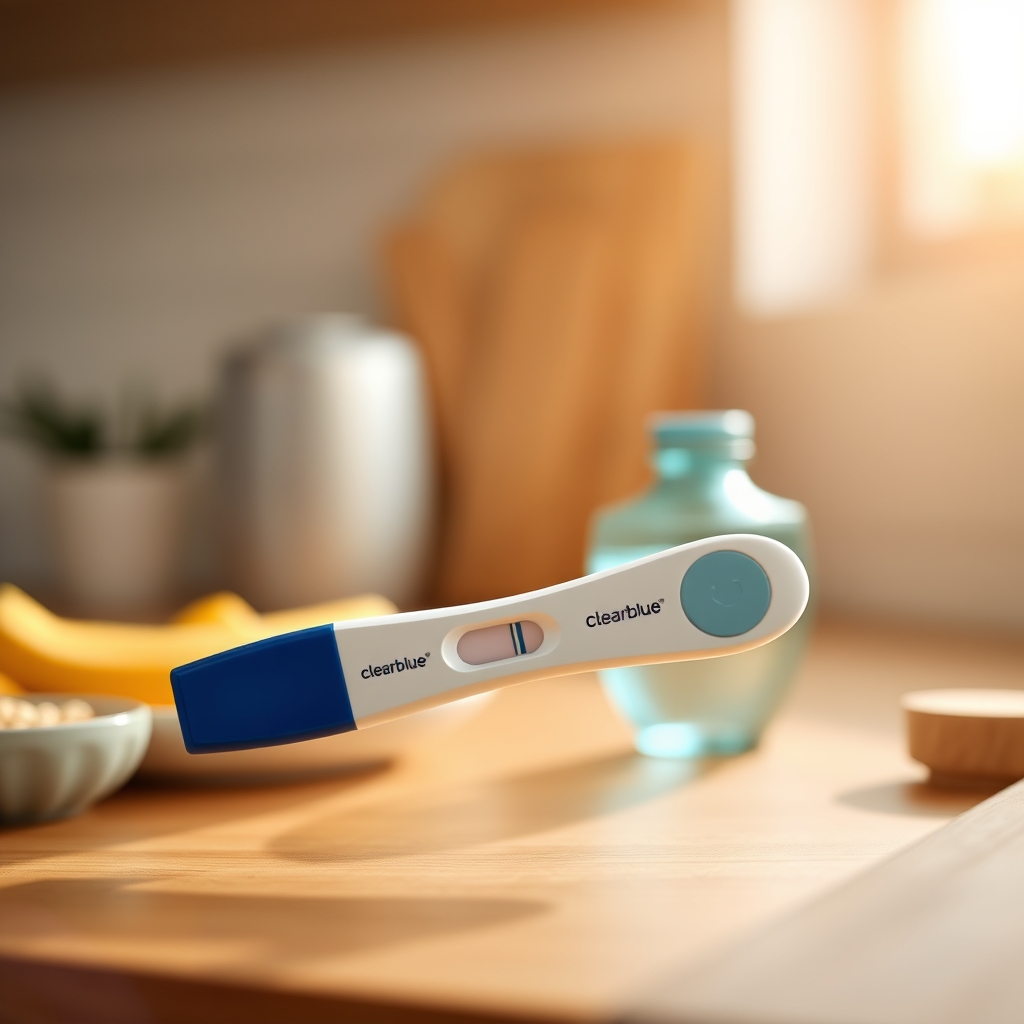
Clearblue digital pregnancy tests show results in minutes. Follow these step‑by‑step instructions to correctly use a Clearblue pregnancy test using digital technology and read the outcome confidently.
By Shubhra Mishra — a mom of two who turned her own confusion during pregnancy into BumpBites, a global mission to make food choices clear, safe, and stress-free for every expecting mother. 💛
Check whether any food is safe during pregnancy with the BumpBites Food Safety Checker.
Quick take: A Clearblue digital pregnancy test gives you a clear “positive,” “negative,” or “clear” result in about three minutes. For the most reliable answer, test after a missed period, follow the step‑by‑step instructions, store the test in a cool‑dry place, and check the expiration date. If you see an error or “invalid” message, repeat the test with a new kit and contact your provider if you keep getting unexpected results.
It’s 2 a.m., you’re curled up with a half‑finished novel, and a sudden wave of nausea makes you wonder if that missed period could be more than a stress symptom. You reach for the Clearblue digital test you bought on a whim, hoping the little screen will give you a definitive answer without a trip to the clinic. You’re not alone—many expectant parents turn to a home test for quick reassurance, and the digital version promises a simple, “positive” or “negative” readout.
Below we walk through everything you need to know: from unboxing the kit to interpreting the digital display, timing your test for peak accuracy, and troubleshooting any hiccups. We’ll also compare the digital version to the classic line test, discuss how medications or fertility treatments might influence results, and share best‑practice storage tips so your kit works when you need it most.
By the end of this guide you’ll feel confident about using Clearblue’s digital test, know exactly what each word on the screen means, and have a clear plan for the next steps—whether the result is “positive,” “negative,” or something in between.
Step‑by‑step guide for using a Clearblue digital test at home
Before you dive into the details of reading results, let’s start with the basics. Following the manufacturer’s instructions precisely minimizes the chance of an “invalid” or “error” result and ensures the test’s high accuracy.
1. Gather your supplies. You’ll need the Clearblue digital test kit, a clean cup (optional), a timer or watch, and a comfortable spot where you can sit upright for a few minutes.
2. Read the expiration date. The date is printed on the back of the test strip. Do not use a test that is past its expiration, as hormone‑detecting antibodies degrade over time.
3. Choose the right time of day. First‑morning urine contains the highest concentration of hCG, but the digital test works with any urine sample. If you test later in the day, you may want to wait a few minutes after drinking water for a fresh sample.
4. Prepare the test. Open the packaging, remove the test stick, and lay it on a flat surface with the digital screen facing up.
5. Collect urine. Either hold the stick in the urine stream for the recommended 5 seconds (as shown on the kit) or dip the absorbent tip into a cup of urine for the same duration. Avoid submerging the entire stick.
6. Start the timer. The test automatically begins processing as soon as it contacts urine. Most Clearblue digital tests display a countdown or a blinking symbol.
7. Wait for the result. In about three minutes the screen will show one of three messages:
Positive – hCG detected, indicating pregnancy.
Negative – hCG not detected, indicating no pregnancy.
Clear – the test did not detect enough hCG to be confident; this usually means it’s too early.
8. Record the result. Take a photo or write down the date, time, and result for future reference.
9. Dispose safely. Place the used stick in a sealed bag and discard it in the trash. Do not reuse the test.
Following these steps helps you avoid common pitfalls such as faint lines, missed readings, or “invalid” alerts that can happen when the test isn’t handled correctly. Tip: If you’re sharing the bathroom with a partner, keep the test away from any cleaning chemicals that could inadvertently contact the strip before use.
Even a small deviation—like a slightly shorter immersion time—can affect the sensor’s ability to capture enough urine, so it’s worth double‑checking each step before you start.
When is the earliest day I can use a Clearblue digital test after a missed period?
The key to early detection lies in the test’s sensitivity to human chorionic gonadotropin (hCG), the hormone produced after a fertilized egg implants. Clearblue digital tests are calibrated to detect hCG levels as low as 25 mIU/mL, which typically appear 8–10 days after fertilization—roughly the same time a missed period would be noticed.
According to the U.S. Food and Drug Administration (FDA) and the UK’s National Health Service (NHS), you can safely use a digital test as early as the first day after a missed period. Some users report a positive result a day or two before their period is due, but the reliability climbs dramatically after 24 hours of missed menses.
For those tracking ovulation, the “fertile window” ends about 24 hours after ovulation. If you conceive on that day, implantation usually occurs 6–12 days later, and hCG begins to rise. Testing before the missed period can lead to a “clear” or “negative” result simply because the hormone hasn’t built up enough yet.
Bottom line: For the most accurate answer, wait until at least the first day of a missed period. If you’re eager to know sooner, a “clear” result is a cue to retest in 48 hours. Clinical note: ACOG advises that a negative result before a missed period should be confirmed with a repeat test after 48 hours (ACOG, 2022).
Remember that stress, illness, or a recent urinary tract infection can temporarily alter hormone concentrations, so a calm, well‑hydrated morning sample is ideal.
How do I interpret the digital readout, including faint lines and “clear” messages?
Clearblue’s digital readout removes the guesswork of interpreting faint lines, but you may still see additional cues on the screen that warrant explanation.
Positive, Negative, and Clear messages
Positive: The test has detected hCG at or above its sensitivity threshold. The screen will display “Positive” in bold letters, often accompanied by a smiley face icon.
Negative: No hCG was detected above the threshold. The screen shows “Negative,” sometimes with a neutral face.
Clear: This message means the test did not find enough hCG to confidently label the result “positive.” It’s not a negative; it’s an indication that it’s too early.
What does a faint line mean on a digital test?
Unlike traditional line tests, the digital version does not show a visual line. However, during the early processing stage you might notice a faint glow or a brief “loading” symbol. This is normal and does not affect accuracy. If the screen flashes “Error” or “Invalid,” the test needs to be repeated with a new stick.
Understanding “clear” versus “negative”
Many users confuse “clear” with “negative.” A “clear” result tells you that the test’s sensor couldn’t confirm a pregnancy yet—it’s a prompt to retest later. A “negative” means the test’s sensor confidently found no hCG at the detection level.
When you receive a “clear,” consider the following:
Check the date of your missed period. If it’s only one day late, give it another 24–48 hours.
Ensure you used a first‑morning sample for the next test.
If you’re on fertility medication, discuss timing with your provider (see the section on medications).
In most cases, a “clear” result becomes “positive” or “negative” on a follow‑up test, confirming the pregnancy status. The NHS notes that “clear” results are common when testing before the hCG threshold is reached (NHS, 2023).
Because the digital display is binary, you won’t have to guess the shade of a line—just trust the word on the screen.
How long does it take for a Clearblue digital test to display a result?
The Clearblue digital test processes the urine sample and renders a result in approximately three minutes. The exact timing can vary slightly based on the temperature of the urine and ambient conditions.
Here’s the typical timeline:
0–30 seconds: The test absorbs urine; the screen may show a blinking “—” symbol.
30–90 seconds: The test begins analyzing hCG levels; you may see a short “processing” animation.
90–180 seconds: The final readout appears—either “Positive,” “Negative,” or “Clear.”
If the screen does not change after three minutes, the test may have encountered an error (e.g., insufficient urine, battery issue). In that case, repeat the test with a fresh stick. Pro tip: Keep the testing area at room temperature (20‑25 °C) to avoid temperature‑related delays, as recommended by the FDA (2023).
Most users find the three‑minute window fast enough to fit into a busy morning routine without needing to set a timer.
What should I do if the test shows an invalid, error, or won’t turn on?
Technical hiccups can be frustrating, especially when you’re anxious for an answer. Clearblue digital tests have built‑in error codes to guide you through troubleshooting.
Common error messages and solutions
“Invalid” or “Error” – This usually means the test did not receive enough urine or the sensor malfunctioned. Try the following:
Use a fresh, first‑morning urine sample.
Ensure the absorbent tip is fully immersed for the full 5‑second recommendation.
Check that the test isn’t past its expiration date.
Device won’t turn on – Some digital tests have a small battery that can run low after many uses. If the screen stays blank:
Press the power button (if applicable) for 2 seconds.
If there’s no response, discard the stick and use a new one from the same box.
Repeated invalid results – If you consistently get “invalid” with multiple sticks, consider:
Testing at a different time of day.
Ensuring you are not using diluted urine (excessive fluid intake right before testing).
Contacting Clearblue’s customer service for a replacement if you suspect a defective batch.
Can you reuse a digital test after an invalid result? No. Each test is single‑use only. Reusing a stick can compromise the sensor and lead to inaccurate readings.
If you encounter repeated errors, keep a log of the dates, times, and any environmental factors (e.g., humidity) that might help your provider troubleshoot.
How accurate is the Clearblue digital pregnancy test, and how does it compare to traditional Clearblue tests?
Clearblue’s digital test boasts a clinical accuracy of >99 % when used on the day of a missed period or later, according to FDA‑cleared data and the manufacturer’s own studies. Traditional line tests from the same brand have a similar accuracy rate, but the digital version reduces user error by displaying words instead of faint lines.
Feature
Clearblue Digital Test
Clearblue Traditional Line Test
Result format
Words (“Positive,” “Negative,” “Clear”)
Lines (one or two lines)
Detection threshold
25 mIU/mL hCG
25 mIU/mL hCG (similar)
Ease of interpretation
High – no line‑reading needed
Moderate – faint lines can be ambiguous
Typical result time
≈3 minutes
≈3–5 minutes
Clinical accuracy (≥ 1 day after missed period)
99 %
97‑99 %
Both tests share the same underlying antibody technology, so the main advantage of the digital version is clarity. The “Clear” message is unique to the digital test and serves as a built‑in early‑warning that pregnancy may be detectable soon.
In terms of sensitivity, the digital test can detect hCG at 25 mIU/mL, which is the standard for most over‑the‑counter pregnancy tests. Some ultra‑sensitive tests claim detection as low as 10 mIU/mL, but they often require more precise timing and can produce more false‑positive results (Mayo Clinic, 2024).
For most users, the convenience of a word‑based readout outweighs the marginal difference in detection limits.
Can medications, fertility treatments, or other factors affect the test’s accuracy?
Most over‑the‑counter pregnancy tests, including Clearblue’s digital version, are designed to detect hCG regardless of its source. However, certain circumstances can influence the result.
Fertility medications (e.g., clomiphene, gonadotropins) – These drugs stimulate ovulation and can raise hCG levels if a pregnancy occurs, but they do not cause a false‑positive. The test will still read “positive” only if hCG is truly present.
Assisted reproductive technologies (ART) such as IVF – After embryo transfer, hCG rises similarly to a natural conception, so the test remains reliable. Some clinics recommend waiting 10‑14 days post‑transfer before testing to avoid premature “clear” results (SART, 2022).
Blood‑derived hCG injections (rarely used for fertility) – If you receive an hCG injection, it can temporarily increase urine hCG and produce a false‑positive. Discuss timing with your provider.
Urine‑diluting substances – Excessive caffeine, alcohol, or large fluid intake shortly before testing can dilute urine, potentially leading to a “clear” or “negative” result even if you’re pregnant.
Medications containing hCG (e.g., certain weight‑loss drugs) – These are uncommon but can cause a false‑positive. Check the ingredient list if you’re on prescription medication.
Overall, the digital test’s accuracy remains high across most scenarios. If you’re undergoing fertility treatment, your reproductive endocrinologist can advise the optimal testing window.
Women on hormonal birth control sometimes wonder if the hormones could mask hCG. Current evidence suggests that combined oral contraceptives do not interfere with urine hCG detection, but a missed period while on the pill warrants a professional evaluation.
How should I store my Clearblue tests for optimal shelf life and what are the expiration guidelines?
Proper storage preserves the test’s sensitivity to hCG. The manufacturer’s package insert provides the following recommendations, which align with FDA and NHS guidance.
Temperature: Keep the tests between 15 °C and 30 °C (59 °F–86 °F). Extreme heat, such as in a car on a summer day, can degrade the antibodies.
Humidity: Store in a dry environment. Moisture can cause the test strip to swell, affecting performance.
Light exposure: Keep the test in its original opaque packaging until ready to use. Prolonged sunlight can weaken the chemical reagents.
Expiration date: Clearblue digital tests typically have a shelf life of 24 months from the date of manufacture. The exact expiration is printed on the back of each test strip. Do not use a test past this date, as sensitivity may be reduced.
For long‑term storage, you can place the unopened box in a sealed plastic bag with a desiccant packet (often included). If you notice the packaging is torn or the test strip appears discolored, discard it and use a fresh kit.
Storing the test in a refrigerator is not recommended, as condensation can affect the strip when it returns to room temperature.
When the screen reads “Positive,” the test has detected enough hCG to confirm pregnancy.
From our medical team: The Clearblue digital test is a reliable tool when used correctly. If you receive a “clear” result, it’s a prompt to wait 48 hours and test again. Persistent “invalid” messages or conflicting results should be discussed with your healthcare provider, who can order a serum hCG test for definitive confirmation.
Using the Clearblue digital test after a miscarriage or early pregnancy loss
After a miscarriage, hCG levels can linger in the body for days to weeks, depending on how far the pregnancy progressed. This residual hormone may cause a “positive” result even though the pregnancy has ended. The NHS advises waiting at least two weeks after a confirmed miscarriage before retesting, or until you have a follow‑up hCG blood test confirming levels have dropped below 5 mIU/mL (NHS, 2023).
If you need to know sooner—perhaps because you’re planning a new cycle of fertility treatment—talk to your provider about a serum hCG draw. A home digital test is still safe to use, but interpreting a “positive” result in the weeks following loss requires clinical context.
Emotional readiness is also important; many people find a short waiting period helpful for mental recovery before confronting another test.
What if you suspect a twin or multiple pregnancy? Does the test change?
hCG production is roughly proportional to the amount of placental tissue, so twins or higher‑order multiples often generate higher hCG levels earlier in pregnancy. The Clearblue digital test’s threshold (25 mIU/mL) is low enough that a twin pregnancy will still read “Positive” just as a singleton would. However, a very high hCG level can sometimes cause the test to display a “Positive” result even earlier than expected, which might surprise you if you test before a missed period.
While the test cannot tell you how many embryos you’re carrying, a markedly high hCG reading—especially when confirmed by a serum test—can be a clue that multiple gestation is possible. Your obstetrician can use ultrasound to confirm the number of fetuses and monitor growth appropriately (ACOG, 2022).
It’s worth noting that extremely high hCG levels can occasionally be associated with molar pregnancies, a rare condition that requires prompt medical attention.
Set up a calm space for testing—good lighting and a quiet moment can reduce anxiety.
Can I use the Clearblue digital test with a urine collection cup?
Yes. If you prefer not to hold the stick in the stream, you can collect a mid‑stream urine sample in a clean cup and then dip the absorbent tip for the recommended five seconds. This method is especially helpful for people with limited mobility or for those who need to test in a restroom without a convenient faucet.
Make sure the cup is free of soap residue, as detergents can interfere with the test chemistry. After dipping, place the stick on a flat surface and follow the standard timing instructions. The result time remains about three minutes, and accuracy is comparable to direct‑stream testing, according to the FDA’s home‑use guidelines.
Understanding hCG levels: What a “clear” result tells you about hormone concentrations
The “clear” message is essentially a quantitative cue: the test’s sensor detected hCG, but the concentration was below the 25 mIU/mL threshold. This often corresponds to early implantation, where hCG may be rising rapidly but has not yet peaked.
Because hCG doubles roughly every 48–72 hours in early pregnancy, a repeat test after a day or two can turn a “clear” into a definitive “positive.” If you receive consecutive “clear” results over a week, it may suggest that implantation has not yet occurred, and a follow‑up with your provider is advisable.
Women on certain fertility protocols may experience delayed hCG rise, so a “clear” result in that context should be interpreted with guidance from a reproductive specialist.
Myth vs. fact
Myth: A faint line on a digital test means you’re pregnant.
Fact: The digital test does not show a line; it displays words. Any faint glow during processing is normal and does not indicate a result.
Myth: You can reuse a digital test if the first attempt shows an error.
Fact: Each Clearblue test is single‑use only. An “invalid” result means you should discard the stick and try a new one.
Myth: The test will give a definitive answer the day before your missed period.
Fact: While the test can detect hCG early, the most reliable results come after the first day of a missed period. A “clear” result before then simply means it’s too early to tell.
Key takeaways
Use the Clearblue digital test after a missed period for the most reliable result.
The test detects hCG levels ≥ 25 mIU/mL and shows results in about three minutes.
“Positive,” “Negative,” and “Clear” are the only messages; a faint line is not part of the digital readout.
If you see “invalid” or the device won’t turn on, repeat with a fresh test and check the expiration date.
Store tests in a cool, dry place, away from direct sunlight, and respect the printed expiration.
Medications and fertility treatments rarely affect accuracy, but discuss timing with your provider if you’re on fertility drugs.
After a miscarriage, wait at least two weeks before retesting at home, or follow your clinician’s guidance.
Higher hCG from twins will still read “Positive”; only an ultrasound can confirm multiple gestations.
A “clear” result indicates low hCG; retest in 48 hours for a more definitive answer.
Frequently asked questions
How accurate is the Clearblue digital pregnancy test?
Clearblue reports a clinical accuracy of > 99 % when used on or after the day of a missed period, matching FDA‑cleared data and NHS guidance.
Can I take a Clearblue digital test before my missed period?
You can test earlier, but a “clear” result is common before the missed period; it means the test didn’t detect enough hCG yet, so retest in 48 hours.
What does a “clear” result mean on the Clearblue digital test?
“Clear” indicates the test cannot confirm pregnancy because hCG levels are below its detection threshold; it’s a prompt to wait and test again.
How many days after conception can the Clearblue digital test detect pregnancy?
hCG typically appears 8–10 days after fertilization, so the digital test can detect pregnancy about 10–12 days after conception, which aligns with a missed period.
Do I need to use the Clearblue digital test first thing in the morning?
First‑morning urine has the highest hCG concentration, which can improve early detection, but the digital test works with any urine sample if you follow the instructions.
What should I do if the Clearblue digital test shows a negative result but I still suspect pregnancy?
Wait 48 hours and test again with a fresh kit. If you continue to get negative results but still have symptoms, schedule a serum hCG blood test with your provider.
Can certain foods or drinks affect the test result?
Large amounts of caffeine, alcohol, or very high‑fluid intake shortly before testing can dilute urine and lower hCG concentration, potentially leading to a “clear” or “negative” result. A modest intake of water or juice is fine, but avoid binge drinking or excessive coffee right before testing (NHS, 2023).
Is it safe to use the Clearblue digital test while breastfeeding?
Yes. The test detects hCG in urine, not in breast milk, so breastfeeding does not affect accuracy. However, hormonal changes after delivery can sometimes cause fluctuating hCG levels; if you’re unsure, consult your provider (ACOG, 2022).
Can I use the Clearblue digital test if I am on hormonal birth control?
Hormonal contraceptives do not interfere with urine hCG detection, so the test remains reliable. If you miss a period while on the pill, it’s still worth testing, but follow up with your provider to rule out other causes.
What if I get a positive result but think it might be a false positive?
False positives are rare with urine hCG tests. If you suspect a false positive—perhaps because you’re on an hCG‑containing medication—contact your provider. They can order a serum hCG test to confirm the result and discuss any medication effects.
When to call your doctor
If you experience any of the following, contact your healthcare provider promptly: severe abdominal pain, heavy bleeding, fever, dizziness, or a persistent “positive” result that conflicts with a recent negative test. Remember, this article is for informational purposes only and does not replace personalized medical advice.
References
U.S. Food and Drug Administration (FDA). “Pregnancy Test Device Guidance.” 2023.
American College of Obstetricians and Gynecologists (ACOG). “Early Pregnancy Testing.” Practice Bulletin No. 194, 2022.
National Health Service (NHS). “Pregnancy tests: How to use them.” Updated 2023.
Clearblue (Swiss Precision Diagnostics). “Clearblue Digital Pregnancy Test – Instructions for Use.” 2022.
Mayo Clinic. “Pregnancy test: What the results mean.” Accessed 2024.
World Health Organization (WHO). “Guidelines on Antenatal Care.” 2021.
British Pregnancy Advisory Service (BPAS). “Home pregnancy testing.” 2023.
Society for Assisted Reproductive Technology (SART). “Timing of pregnancy testing after IVF.” 2022.
Not sure about the label on Clearblue Pregnancy Test Instructions Using Digital Tests products?
Snap the ingredients list and SafeFilter checks every ingredient for your stage — only 3 free scans this month, then you're locked until reset. Unlimited from $7/mo or $50/yr.
When Shubhra Mishra was expecting her first child in 2016, she was overwhelmed by conflicting food advice — one site said yes, another said never. By the time her second baby arrived in 2019, she realized millions of mothers face the same confusion.
That sparked a five-year journey through clinical nutrition papers, cultural diets, and expert conversations — all leading to BumpBites: a calm, compassionate space where science meets everyday motherhood.
Her long-term vision is to build a global community ensuring safe, supported, and free deliveriesfor every mother — because no woman should face pregnancy alone or uninformed. 🌿
🌍 Stand with mothers, shape safer guidance
Join a small circle of experts who review BumpBites articles so expecting parents everywhere can decide with confidence.