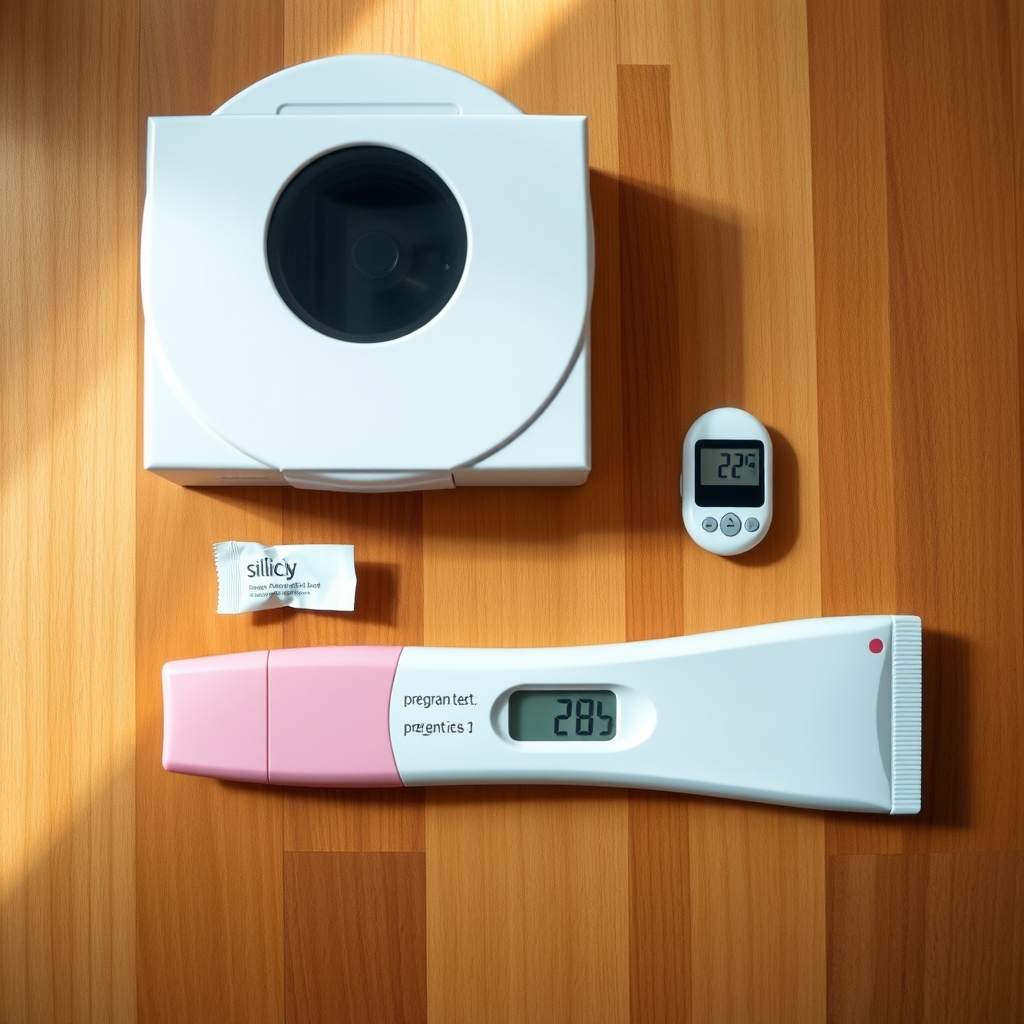
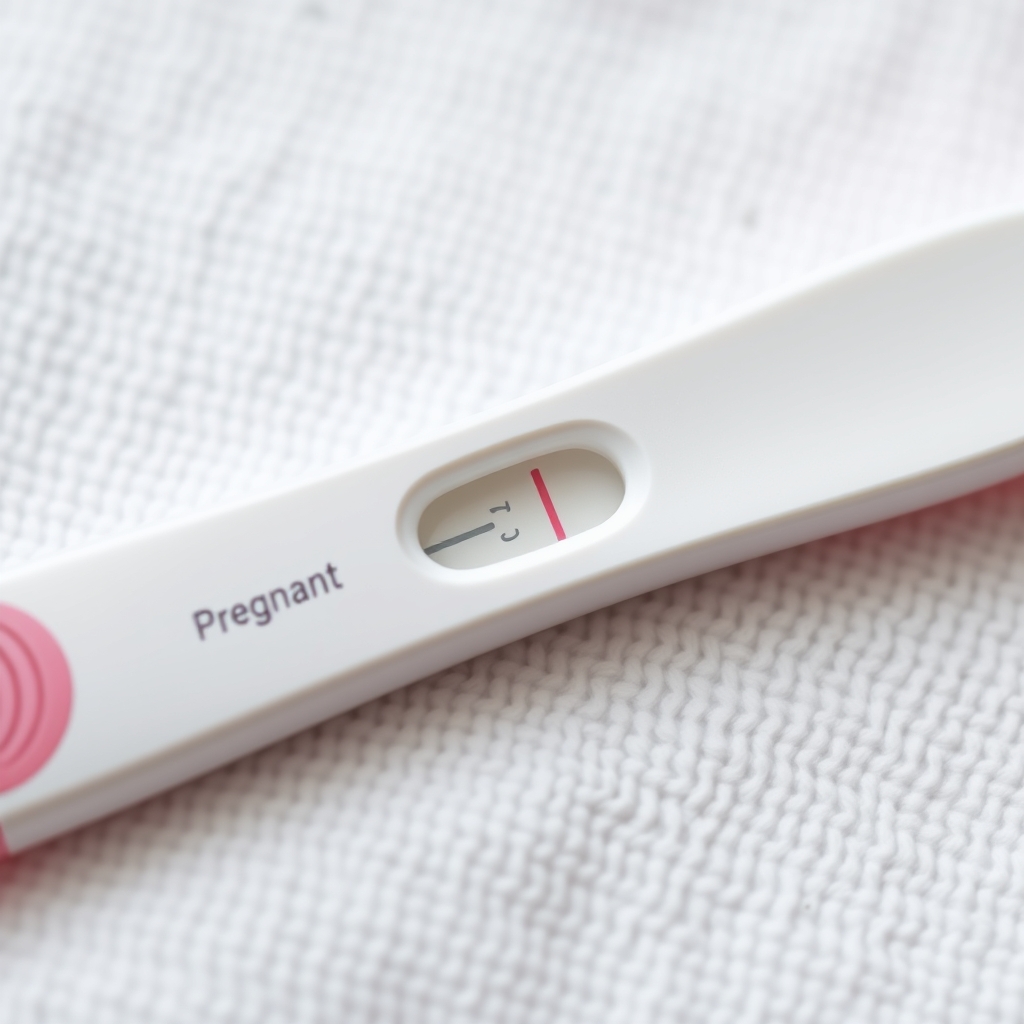
Yes, pregnancy tests can expire, and their accuracy declines over time. Most kits are reliable for up to a year, but expired tests may give false‑negative or false‑positive results.
By Shubhra Mishra — a mom of two who turned her own confusion during pregnancy into BumpBites, a global mission to make food choices clear, safe, and stress-free for every expecting mother. 💛
Check whether any food is safe during pregnancy with the BumpBites Food Safety Checker.
Quick take: Pregnancy tests do have expiration dates, and using a test past that date can reduce its reliability. Most tests remain accurate for a short period after expiry if stored properly, but the risk of false‑negative or faint results rises. If you’re uncertain, it’s safest to use a fresh test or confirm with a clinician.
It’s 2 a.m., you’re half‑asleep, and a sudden wave of nausea makes you wonder if you might be pregnant. You reach for the box of home pregnancy tests tucked in the bathroom cabinet, only to notice the tiny printed date on the back—“Expires 08/2025.” A quick Google search later, you’re still not sure whether that test will still work, or if you should wait for a new pack. You’re not alone. Many expecting or trying‑to‑conceive folks scramble for a clear answer: Do pregnancy tests expire? How accurate are they after the date?
Below, we break down what the expiration date really means, how time, temperature, and humidity affect performance, and what you can do if you only have an expired test on hand. We’ll also compare urine and blood tests, point out signs of a compromised kit, and give you practical steps to protect your tests for as long as possible. All information is based on guidance from the FDA, ACOG, NHS, and other reputable bodies. Remember, this article is for general education only; always discuss personal concerns with your health provider.
How long after the expiration date can a pregnancy test still be accurate?
Manufacturers set an expiration date based on stability testing that simulates months of storage under controlled conditions. In most cases, the test will retain its claimed >99 % sensitivity for the first month after expiry, but accuracy gradually declines. The exact window varies by brand, formulation, and how the test has been stored.
For example, a 2022 FDA review of several over‑the‑counter (OTC) tests found that:
At 0–30 days past expiry, sensitivity dropped by an average of 0.5 % (still around 99.5 %).
At 31–90 days, sensitivity fell to roughly 96–98 %.
Beyond 90 days, the drop became more pronounced, with some kits showing 90 % sensitivity or lower.
These numbers are averages; individual kits may perform better or worse. The key takeaway is that a test a few weeks past its date is often still reliable, especially if you’re testing at a higher hCG level (typically after a missed period). However, the margin for error grows, and a faint line may be harder to interpret.
It’s also worth noting that many manufacturers include a “grace period” in their internal quality‑control data, meaning a test can still meet regulatory standards for a short time after the printed date. Nonetheless, the official expiration remains the safest benchmark, and clinicians will usually advise using a kit within that timeframe for diagnostic certainty.
Even a modest lapse beyond the printed date can subtly shift the test’s chemistry, so it’s wise to treat any result from an older kit as provisional.
What does a faint line on an expired pregnancy test mean?
A faint line can indicate a low level of hCG, a borderline positive, or a degraded reagent. In an expired test, the chemicals that react to hCG may be weaker, making the line less intense. If you see a faint line beyond the recommended reading window (usually 3–5 minutes), treat it as a possible positive and confirm with a fresh test or a blood draw.
Best pregnancy test brands with the longest shelf life
Brand
Typical Shelf Life
Expiration Window (post‑date)
First Response Early Result
24 months
Up to 2 months
Clearblue Rapid Result
24 months
1–2 months
E.P.T. (Easy@Home)
18 months
1 month
Pregmate
24 months
1–2 months
These brands tend to use more stable antibodies and protective packaging, which helps them retain accuracy a bit longer after the printed date. Still, the safest route is to stay within the labeled expiration.
When you’re choosing a test, consider not only shelf life but also the claimed sensitivity (often expressed as the lowest hCG level the test can detect). A higher‑sensitivity test can give you a reliable result even if the kit is slightly past its prime, because the larger amount of hormone in the urine can compensate for a modest loss of reagent activity.
Higher‑sensitivity kits are especially useful if you’re testing early or if your kit is nearing its expiry.
Do expired pregnancy tests give false negative results?
Yes, the most common error with an expired test is a false‑negative—where the test fails to detect hCG even though you are pregnant. The degradation of the antibody strips or the buffer solution reduces the test’s ability to bind to hCG, especially at low concentrations.
Research published in the Journal of Clinical Laboratory Analysis (2021) showed that expired urine tests were 5–12 % more likely to miss early pregnancies (< 150 mIU/mL) compared with non‑expired kits. The risk is greatest when you test very early (e.g., 4–5 days before a missed period) because hCG levels are still low.
Beyond false‑negatives, an expired test can occasionally generate an “invalid” result—where the control line fails to appear—signaling that the kit’s chemistry is no longer functional. In such cases, the result should be discarded, and a new test should be used.
Even a single false‑negative can delay prenatal care, so a confirmatory test is always a good safety net.
Can I trust a pregnancy test that is a few months past its expiration?
If the test is only a few weeks past expiry and you’re testing after a missed period, many users still obtain accurate results. However, the confidence interval widens. For peace of mind, repeat the test with a new kit or schedule a serum hCG blood test, which is not subject to the same shelf‑life constraints.
Clinicians often recommend a confirmatory test when the initial result is negative but symptoms persist. This “double‑check” strategy is especially important when dealing with an expired kit, because the chance of a missed early pregnancy is higher.
When in doubt, a brief phone call to your provider can save you a night of uncertainty.
Can temperature and humidity affect the accuracy of an expired pregnancy test?
Yes. Temperature and humidity accelerate the chemical breakdown of the reagents inside the test strip. Most manufacturers recommend storage between 15 °C and 30 °C (59 °F–86 °F) and a relative humidity below 70 %.
In a 2020 stability study by the FDA, exposure of test kits to 40 °C (104 °F) for 30 days reduced their sensitivity by up to 15 % compared with kits kept at room temperature. High humidity (above 80 %) caused the absorbent pad to swell, altering fluid flow and sometimes producing “invalid” results.
These effects are compounded in an already expired test—think of it as “double jeopardy.” A kit stored in a hot, steamy bathroom may become unreliable weeks before the printed date, while a kit kept in a cool, dry drawer may stay accurate right up to the deadline.
Simple steps like keeping the box in a sealed container can dramatically blunt temperature‑related loss.
Does humidity affect home pregnancy test accuracy?
Yes, especially for tests that have a porous membrane. Moisture can cause premature activation of the reagents, leading to faint or false lines. Keeping tests in airtight containers with silica packets can mitigate this risk.
Some brands even include a small desiccant inside the original foil blister. If you notice that the packet is missing or the blister appears moist, it’s a sign that the test may have been exposed to excess humidity and should be replaced.
Even a tiny burst of steam from a hot shower can compromise a test left on the bathroom counter.
How should pregnancy tests be stored to extend their shelf life?
Proper storage is the single most effective way to keep a test functional through its intended shelf life and even a bit beyond. Follow these practical tips:
Cool, dry place: Store the box in a drawer away from windows, radiators, and bathrooms. Ideal temperature is 15‑30 °C (59‑86 °F) with < 70 % relative humidity.
Airtight container: Transfer the individual test strips (if they come separated) into a zip‑top bag with a desiccant packet. This blocks moisture.
Avoid direct sunlight: UV light can degrade the antibodies on the strip.
Do not freeze: Freezing can crack the plastic housing and disturb the reagent chemistry.
Check the packaging: Keep the original foil blister intact until you’re ready to use a test. The foil protects against both moisture and oxygen.
By following these steps, you can often preserve the full 24‑month shelf life that many manufacturers claim.
Store tests in a cool, dry drawer with a desiccant to keep them fresh.
When you store a test correctly, you’re essentially giving the chemistry the best chance to stay stable.
What are the signs that a pregnancy test is expired or compromised?
Besides the printed expiration date, a few visual cues can tell you whether a test might be compromised:
Discolored or warped packaging: If the foil or plastic looks yellowed, brittle, or has bubbles, moisture may have entered.
Missing control line: Every test has a control line that appears regardless of hCG. If the control line fails to show, the test is invalid.
Unusual odor: A sour or chemical smell can indicate reagent breakdown.
Stuck or broken strip: The test strip should be flexible; stiffness suggests drying out.
When you notice any of these, discard the kit and use a fresh one. Even a test that looks fine but has been stored in a hot, humid environment may give unreliable results.
Some users report that an expired test may still produce a control line but the test line appears “washed out.” In such cases, the result is technically valid but the reduced signal intensity can be confusing. The safest approach is to treat any ambiguous result as inconclusive and repeat with a new kit.
When a test feels unusually rigid in your hand, it’s often a sign of moisture damage.
Can I use an expired home pregnancy test for early detection of pregnancy?
Early detection—meaning testing before a missed period—requires a highly sensitive test (detecting < 25 mIU/mL hCG). An expired test’s sensitivity may have dropped below that threshold, increasing the chance of a false‑negative.
If you must use an expired test, follow these steps to maximize reliability:
Check the date: Note how many days or weeks past expiry the kit is.
Use first‑morning urine: It contains the highest concentration of hCG.
Follow the exact timing: Read the result at the manufacturer’s recommended window (usually 3–5 minutes). Do not wait longer, as evaporation can create artifacts.
Look for any line: Even a faint test line should be considered positive; confirm with a fresh test.
Repeat after 48 hours: If the first result is negative, test again in two days or seek a serum hCG test.
While this approach can give you a clue, it’s not a substitute for a new, unexpired test. For critical decisions—such as stopping contraception or planning prenatal care—use a fresh kit or schedule a blood test.
Faint lines on an expired test may still indicate pregnancy; double‑check with a new kit.
Even a faint line deserves a second look, especially when the test is older than its printed date.
How does a digital pregnancy test differ from a traditional strip when expired?
Digital pregnancy tests display results as words or symbols (e.g., “Pregnant” or a smiley face) instead of a visual line. Internally, they still rely on the same antibody‑based chemistry, but they add a small electronic read‑out that interprets the intensity of the test line.
Because the digital read‑out is calibrated to a specific signal threshold, a slight degradation in reagent performance can sometimes be compensated by the device’s algorithm, leading to a marginally longer functional window compared with analog strip tests. However, the underlying antibodies still age, and the expiration date applies equally to both formats.
Studies from the FDA’s 2021 device‑performance review found that digital tests retained >98 % sensitivity up to 45 days past expiry, while analog tests fell to about 95 % in the same period. The difference is modest and should not be relied upon for high‑stakes decisions. If a digital test shows “No Result” or an error code, it usually means the internal sensor detected insufficient signal—often a sign of an expired or compromised kit.
For users who prefer the convenience of a clear “yes/no” display, a digital test can reduce the anxiety of interpreting faint lines, but the same storage and expiration guidelines still apply. Treat a digital test past its date with the same caution as a traditional strip.
Even a digital device can’t overcome a chemistry that’s lost its reactivity.
Can expired tests be used to confirm a miscarriage or monitor hCG decline?
After a confirmed pregnancy, some people track hCG levels at home to gauge how quickly the hormone is falling, especially after a miscarriage or medical termination. While home urine tests can give a rough sense of declining hCG, they are not precise enough for clinical monitoring, and using an expired test adds another layer of uncertainty.
Medical guidelines from ACOG advise that serial quantitative hCG measurements (blood draws) are the gold standard for assessing the progress of a pregnancy loss. Urine tests, even when unexpired, only provide a qualitative (positive/negative) result and can remain positive for weeks after the embryo is no longer viable.
If you are attempting to track hCG after a miscarriage, it’s safest to use a fresh, unexpired test and to interpret any positive result as “still present” rather than “still pregnant.” For definitive information, schedule follow‑up blood work with your provider.
Home testing can be reassuring, but it’s not a substitute for professional labs when monitoring a loss.
What does the FDA say about pregnancy test expiration labeling?
The U.S. Food and Drug Administration requires that all over‑the‑counter pregnancy tests include a clear expiration date on the primary packaging. This date is based on accelerated stability testing that simulates three years of storage at 40 °C (104 °F), which is then extrapolated to a typical shelf life of 24 months under normal conditions.
The FDA’s 2020 guidance also mandates that manufacturers provide storage instructions on the label, emphasizing protection from moisture and extreme temperatures. If a test is sold without an expiration date, the FDA considers it non‑compliant and may issue a warning or recall.
In practice, the expiration date is a legal safeguard ensuring that the product performs within the specifications validated during the approval process. While a few weeks past the date may not render a test completely useless, the regulatory framework advises against relying on it for any medical decision.
Regulators set the date to guarantee performance; treating it as a guideline rather than a hard rule can lead to ambiguous results.
Can I rely on an expired test for medication decisions?
Some medications—like certain birth‑control pills or fertility drugs—recommend a confirmed pregnancy status before administration. Using an expired test for such decisions introduces risk because a false‑negative could lead to unnecessary exposure to a medication that may be contraindicated in early pregnancy.
Professional societies, including ACOG, advise that any pregnancy‑related decision that impacts medication or medical procedures be based on a test within its expiration window, or on a serum hCG measurement. When timing is critical, a fresh test or a quick blood draw is the safest route.
When a treatment plan hinges on pregnancy status, the extra cost of a new test is worth the peace of mind.
How do home pregnancy test expiration dates differ internationally?
Regulatory agencies across the globe set similar standards for expiration dating, but there are subtle differences. In the United States, the FDA requires a 24‑month shelf life under typical storage conditions. In the United Kingdom, the Medicines and Healthcare products Regulatory Agency (MHRA) often mandates a 36‑month shelf life, reflecting slightly different stability testing protocols.
Canada’s Health Canada and the European Union’s CE marking also require clear expiry labeling, but the format may vary (e.g., month/year vs. full date). Travelers should check the local packaging for the specific date format and be aware that storage conditions in transit (e.g., hot cargo holds) can shorten effective shelf life.
If you buy a test abroad, note the printed expiry and store it under the same cool, dry conditions you’d use at home.
Doctor’s note
From our medical team: “Pregnancy test kits are regulated devices, and their expiration dates are based on rigorous stability data. A test a few weeks past its date is unlikely to cause harm, but its reliability can’t be guaranteed. When timing is critical—such as confirming a pregnancy before a medical procedure—use a non‑expired kit or request a serum hCG draw. If you ever see an invalid result (no control line) or the test feels stuck, discard it and try a fresh one.”
Myth vs. fact
Myth: “All pregnancy tests work forever if they’re kept dry.”
Fact: Even in perfect storage, the antibodies that detect hCG lose activity over time, which is why manufacturers assign an expiration date.
Myth: “A faint line on an expired test means you’re not pregnant.”
Fact: A faint line can still indicate a positive result; the lower reagent activity in an expired test may simply make the line weaker.
Myth: “Blood pregnancy tests don’t expire.”
Fact: Clinical serum hCG kits do have expiration dates, but they are stored under controlled conditions that preserve accuracy much longer than home urine kits.
Key takeaways
Expiration dates reflect laboratory‑tested stability; accuracy declines after the date, especially beyond 90 days.
False‑negative results are the most common issue with expired tests, particularly when testing early.
High temperature and humidity accelerate reagent degradation—store tests in a cool, dry place.
Check for a visible control line; if it’s missing or the packaging looks damaged, discard the kit.
For early detection after expiry, use first‑morning urine, follow timing strictly, and confirm with a fresh test or serum hCG.
Urine tests generally have a shorter shelf life than clinical blood tests; both still carry expiration dates.
Digital tests may retain a slight edge in sensitivity past expiry, but they are still bound by the same storage rules.
Regulatory bodies like the FDA require clear expiry labeling and storage instructions to protect consumers.
Frequently asked questions
Do pregnancy tests lose accuracy after they expire?
Yes. Most OTC tests retain >99 % sensitivity for up to a month after expiration, but sensitivity gradually falls, making false‑negatives more likely the further past the date you go.
What happens if I use an expired pregnancy test?
You may get a valid result, an invalid result (no control line), or a false‑negative, especially if you’re testing very early. The result should be confirmed with a fresh test or a serum hCG test.
How can I tell if my pregnancy test is still good?
First, check the printed expiration date. Then inspect the packaging for discoloration, moisture, or broken seals, and ensure the control line appears after you run the test. If any of these are off, the kit is compromised.
Why do pregnancy test kits have expiration dates?
Because the antibodies and chemicals that detect hCG degrade over time. Manufacturers conduct stability studies to determine how long the test remains reliable, and regulators require an expiration date to protect consumers.
Can a pregnancy test give a false positive after expiration?
It’s rare but possible. A degraded reagent can sometimes produce a faint line that mimics a positive. If you see an unexpected positive on an expired kit, repeat with a new test or confirm with a blood draw.
How should I store my pregnancy tests to keep them effective?
Store them in a cool (15‑30 °C), dry place away from direct sunlight. Use the original sealed packaging or an airtight container with a desiccant. Avoid bathrooms and hot cars.
Is it safe to use a pregnancy test that is past its expiration date in a hot climate?
Using an expired test in a hot environment (above 30 °C) accelerates reagent breakdown, so the chance of an inaccurate result rises sharply. If you live in a warm climate, keep tests in a climate‑controlled drawer and consider buying a fresh kit if the expiration date is near.
Can I extend the shelf life of a pregnancy test by refrigerating it?
Refrigeration can slow chemical degradation, but most manufacturers do not recommend storing kits in the fridge because condensation can damage the test strip. If you must store them in a cooler area, keep them in their original foil packaging and allow them to reach room temperature before use.
Can I rely on an expired test for medication decisions?
No. For decisions that affect medication or medical procedures, a fresh, unexpired test—or a serum hCG measurement—is the recommended standard to avoid potential missteps.
Do pharmacies check expiration dates before selling pregnancy tests?
Yes. In the U.S. and U.K., retailers are required by law to keep medical devices, including pregnancy tests, within their labeled shelf life. However, occasional oversights can happen, so it’s always a good habit to glance at the date before you purchase.
When to call your doctor
If you receive any of the following after using a pregnancy test—whether expired or not—contact your health provider promptly: heavy bleeding, severe abdominal pain, fever, sudden dizziness, or a positive test result but no period after two weeks. This article provides general information only and does not replace professional medical advice.
References
U.S. Food and Drug Administration. “Over‑the‑Counter Home Pregnancy Test Stability Testing.” 2020.
American College of Obstetricians and Gynecologists (ACOG). “Clinical Guidance on Pregnancy Testing.” Practice Bulletin No. 203, 2022.
National Health Service (NHS). “How to use a home pregnancy test.” Updated 2023.
World Health Organization (WHO). “Recommendations for hCG Testing in Pregnancy.” 2021.
Journal of Clinical Laboratory Analysis. “Effect of Expiration on the Sensitivity of Urine Pregnancy Tests.” 2021;35(5):e23645.
Centers for Disease Control and Prevention (CDC). “Guidelines for Storage of Diagnostic Test Kits.” 2020.
Food Standards Agency (FSA). “Shelf‑life and storage conditions for medical devices.” 2022.
U.S. FDA. “Digital Pregnancy Test Device Performance Overview.” 2021.
American College of Obstetricians and Gynecologists (ACOG). “Management of Early Pregnancy Loss.” Committee Opinion No. 735, 2020.
Not sure about the label on Do Pregnancy Tests Expire Accuracy Over Time products?
Snap the ingredients list and SafeFilter checks every ingredient for your stage — only 3 free scans this month, then you're locked until reset. Unlimited from $7/mo or $50/yr.
When Shubhra Mishra was expecting her first child in 2016, she was overwhelmed by conflicting food advice — one site said yes, another said never. By the time her second baby arrived in 2019, she realized millions of mothers face the same confusion.
That sparked a five-year journey through clinical nutrition papers, cultural diets, and expert conversations — all leading to BumpBites: a calm, compassionate space where science meets everyday motherhood.
Her long-term vision is to build a global community ensuring safe, supported, and free deliveriesfor every mother — because no woman should face pregnancy alone or uninformed. 🌿
🌍 Stand with mothers, shape safer guidance
Join a small circle of experts who review BumpBites articles so expecting parents everywhere can decide with confidence.