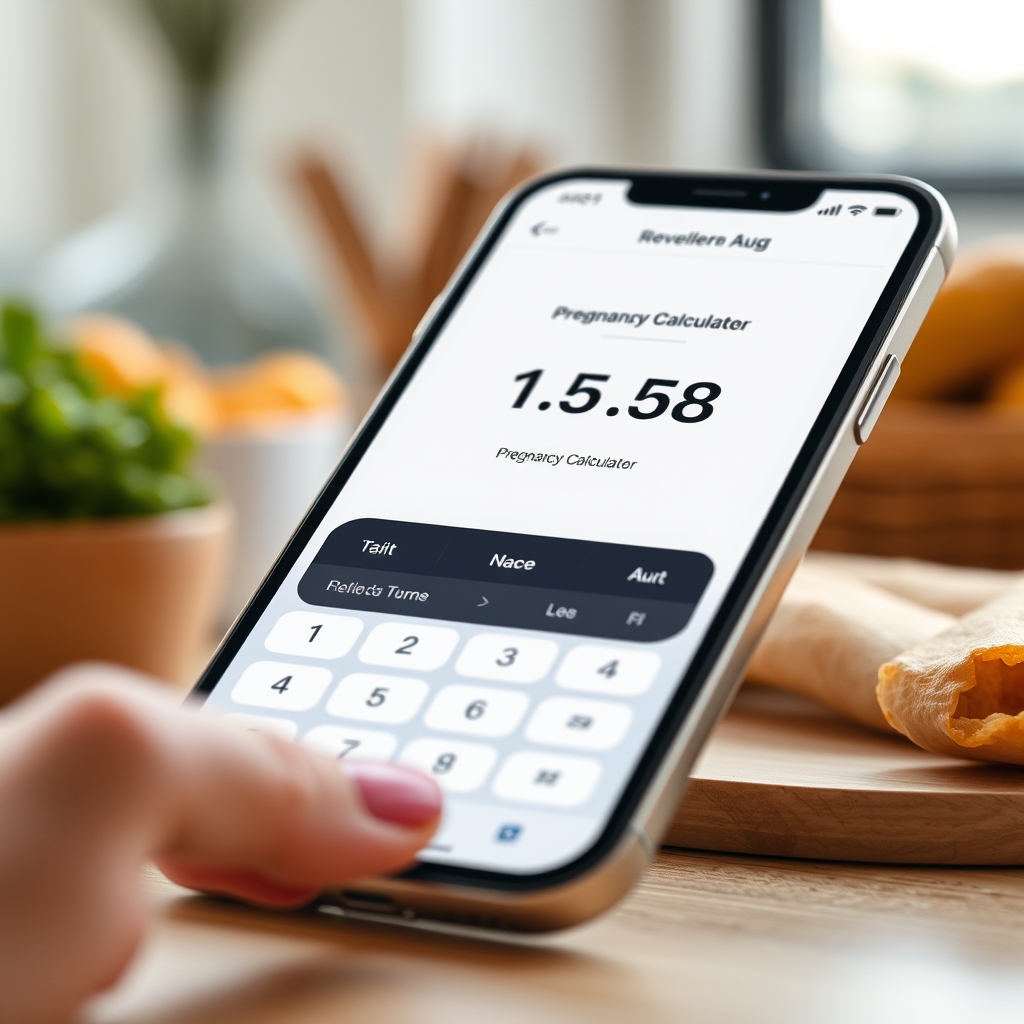
Wondering 'what week am I in' during your pregnancy? Use our simple calculator to determine your exact week, days, and percentage complete. Get clear answers and track your progress with ease from conception to due date.
By Shubhra Mishra — a mom of two who turned her own confusion during pregnancy into BumpBites, a global mission to make food choices clear, safe, and stress-free for every expecting mother. 💛
Check whether any food is safe during pregnancy with the BumpBites Food Safety Checker.
Quick take: You’re about 40 days (or roughly 5 weeks and 5 days) into pregnancy if your last menstrual period started on March 1 and today is April 10. The easiest way to know exactly which week you’re in, how many days are left until your due date, and what percentage of pregnancy you’ve completed is to count from your LMP or use a reliable online calculator.
It’s 2 a.m., you’ve just finished a glass of water, and a sudden wave of anxiety hits you: “What week am I in? Am I supposed to be feeling something by now?” You’re not alone. Many expecting parents stare at the calendar, try to add up weeks, and wonder whether they’re on track. The good news is that pregnancy dating follows a simple, medically‑standard method, and once you understand it, the numbers become crystal clear.
🔢 Calculate it for your situation: Use our Due Date Countdown for a personalized result in seconds.
In this guide we’ll walk you through how pregnancy weeks are counted, how to calculate them from your last menstrual period (LMP), why the exact week matters for prenatal care, and what each week means for your baby’s growth. We’ll also debunk common myths, explain factors that can shift the calculations, and point you to a trusted Due Date Countdown tool so you can see your own numbers in seconds.
By the end of this article you’ll be able to answer the question “what week am I in?” with confidence, know where you stand in the three trimesters, and feel prepared to talk about your gestational age at every appointment.
Marking each week on a calendar helps you visualize the journey.
Understanding pregnancy weeks and trimesters
Pregnancy is measured in weeks, not months, because fetal development changes dramatically from one week to the next. The standard system—used by ACOG, the NHS, and WHO—is called gestational age. It starts on the first day of your last menstrual period (LMP), even though conception usually occurs about two weeks later. This convention gives a uniform starting point for all pregnancies, regardless of the exact day of fertilization.
Gestational age is divided into three trimesters:
First trimester: Weeks 1 – 13. This is when the embryo implants, the placenta forms, and the risk of miscarriage is highest.
Second trimester: Weeks 14 – 27. Many women feel their best during this period; the baby’s organs continue to mature and you’ll likely feel the first kicks.
Third trimester: Weeks 28 – 40 (or sometimes a few weeks beyond). The baby gains weight rapidly, and you’ll prepare for labor and delivery.
Each week also corresponds to a specific percentage of pregnancy completed. For a typical 40‑week pregnancy, week 20 marks 50 % progress, while week 30 is about 75 % through. Knowing the exact week lets you track milestones, schedule ultrasounds, and anticipate the timing of prenatal tests recommended by ACOG and NICE.
Beyond the textbook division, many clinicians use the trimester framework to tailor counseling. For example, the NHS advises that most women begin taking a daily prenatal vitamin containing 400 µg of folic acid during the first trimester, because folate deficiency is linked to neural‑tube defects. In the second trimester, the focus shifts to iron supplementation to support the expanding blood volume, while the third trimester emphasizes calcium and vitamin D for fetal bone development.
Because each trimester carries its own set of typical symptoms—such as morning sickness in the first, “nesting” urges in the second, and shortness of breath in the third—understanding where you fall on the calendar helps you interpret what your body is telling you, and when to seek reassurance versus medical attention.
How to calculate pregnancy weeks from your last menstrual period (LMP)
The m
ost reliable way to answer “what week am I in?” is to count the number of weeks and days since the first day of your LMP. Here’s a step‑by‑step method you can do with a phone or a piece of paper:
Identify the first day of your LMP. This is the first day of bleeding of your most recent menstrual cycle before you became pregnant. If you’re unsure, think back to the start of your last period—not the day it ended.
Count the full weeks. Use a calendar to count how many whole weeks have passed. Each Sunday (or any chosen day) can serve as a checkpoint.
Add remaining days. After counting whole weeks, count the leftover days up to today. For example, if today is Thursday and the last full week ended on Monday, you’re 4 days into the new week.
Write it as weeks + days. The format “15 weeks + 3 days” is the standard way clinicians record gestational age.
Let’s illustrate with a real‑life example. Emma (a composite of many readers’ stories) remembered that her LMP began on March 1. She checked today’s date—April 10. Counting forward, March 1 to March 31 is four full weeks (28 days). Adding the first ten days of April gives a total of 38 days beyond the four weeks, which is 5 weeks + 3 days. So Emma is in her 6th week of pregnancy (because the counting starts at week 0). This matches the gestational age you’ll see on an ultrasound report.
Remember that the LMP method assumes a regular 28‑day cycle. If your cycles are longer or shorter, the calculation may be off by a few days, but most providers still use LMP as the baseline and adjust based on ultrasound measurements. The American College of Obstetricians and Gynecologists (ACOG) notes that a first‑trimester ultrasound can refine the dating by up to ±5 days, which is usually sufficient for planning prenatal care.
One practical tip: write the LMP date on the inside of your phone’s lock screen or on a sticky note on your fridge. Having it front‑and‑center removes the guesswork when you need to tell a provider, fill out paperwork, or simply satisfy that 2 a.m. curiosity.
Using a pregnancy week calculator for accurate gestational age
Manual counting works, but a digital pregnancy week calculator removes the guesswork and instantly shows you the exact week, days, and percentage completed. Most reputable calculators ask for:
The first day of your LMP.
Your typical cycle length (optional).
Whether you’d like the result in weeks + days or just weeks.
When you input those details, the tool instantly computes:
Input
Result
LMP
March 1, 2024
Today’s date
April 10, 2024
Gestational age
5 weeks + 5 days (≈ 41 % complete)
Estimated due date
December 6, 2024
Online calculators also factor in irregular cycles by using a “cycle length” field, which can shift the due date by a few days. The Due Date Countdown on BumpBites follows the same algorithm that obstetricians use: it starts with LMP, applies the standard 280‑day (40‑week) gestation, and then adjusts based on any cycle‑length input you provide.
Most importantly, a calculator gives you a “percent complete” figure. For Emma’s example, 5 weeks + 5 days equals 41 % of a typical 40‑week pregnancy. Seeing the percentage can be reassuring—it turns a vague feeling of “I’m somewhere in the middle” into a concrete, measurable stage.
Because calculators are automated, they eliminate rounding errors that sometimes creep into manual counts (for instance, forgetting to include leap days). The NHS recommends using a trusted digital tool for home use, especially when you’re tracking symptoms week by week.
Digital calculators provide instant, error‑free results.
Why knowing your exact pregnancy week matters for prenatal care
Healthcare providers schedule appointments, labs, and ultrasounds based on gestational age. Here’s how each trimester’s timeline aligns with standard prenatal care recommendations from ACOG and NHS:
First‑trimester visits (weeks 4‑12): Confirmation of pregnancy, initial blood work, dating ultrasound, and counseling on prenatal vitamins.
Second‑trimester screening (weeks 13‑28): Anatomy scan (usually at 18‑20 weeks), glucose tolerance test (24‑28 weeks), and fetal growth monitoring.
Third‑trimester monitoring (weeks 28‑40): Group B Streptococcus screening (35‑37 weeks), cervical checks, and birth‑plan discussions.
If you’re unsure of your week, you might miss the optimal window for a key test. For example, the anatomy scan is most accurate between 18 weeks + 0 days and 22 weeks + 6 days; scheduling it too early can lead to repeat appointments. Knowing “what week am I in” helps you and your provider plan ahead, avoid unnecessary anxiety, and ensure you’re receiving the right care at the right time.
Beyond medical appointments, the week count informs lifestyle decisions. Certain foods (like certain fish) are safe up to a specific week, while others (like raw eggs) are discouraged throughout. Exercise recommendations also shift: moderate‑intensity activity is encouraged throughout, but high‑impact sports may need to be avoided after week 20, according to the American College of Sports Medicine.
Finally, many insurance plans in the U.S. and the UK tie coverage authorizations to gestational age. Knowing your exact week can smooth paperwork, prevent claim denials, and make budgeting for prenatal classes or maternity wear less stressful.
Pregnancy weeks, fetal development, and milestones
Each week brings a new developmental milestone for the baby. Below is a snapshot of what typically happens during the three trimesters. These milestones are based on the ACOG fetal development chart and the UK’s NHS fetal growth guidelines.
Week Range
Key Fetal Milestones
4‑5
Implantation begins; embryo is about the size of a grain of rice.
8‑9
Heart starts beating; facial features become recognizable.
12‑13
Fingers and toes separate; placenta takes over hormone production.
20‑22
First movements (quickening) felt; gender can be identified via ultrasound.
28‑30
Lungs develop surfactant; baby can regulate body temperature.
36‑40
Brain fully formed; baby gains most of its birth weight.
These milestones matter for you, too. When you learn that at week 24 the baby’s lungs are producing surfactant, you might understand why doctors advise against smoking at that point—your lungs are preparing to help the baby breathe after birth.
Understanding the week‑by‑week timeline also helps you set realistic expectations for symptoms. For instance, many women experience “nesting” urges in the third trimester, while morning sickness often eases after week 14. Recognizing these patterns can reduce anxiety and give you a sense of control.
Because fetal growth is rapid, each week can mean a few centimeters or ounces difference. The NHS provides a handy “fetal size by week” chart that compares the baby’s length to everyday objects—like a lime at week 12 or an avocado at week 30—making abstract numbers easier to visualize.
Visualizing fetal size helps you grasp each week’s growth.
Common myths and misconceptions about calculating pregnancy weeks
Even seasoned parents sometimes run into misinformation. Two of the most persistent myths are:
Myth: “You can calculate weeks from conception, and that’s more accurate than LMP.”
Fact: While conception dating (often called “fertilization age”) is technically the embryo’s true age, most clinicians use LMP because it’s a date most people can recall. Ultrasound measurements in the first trimester can adjust the LMP estimate, but they still anchor to the LMP framework. So unless you had an assisted reproductive technology (ART) procedure with precise timing, LMP remains the standard.
Myth: “If my periods are irregular, I can’t know my pregnancy week at all.”
Fact: Irregular cycles can shift the estimated due date by a few days, but a first‑trimester ultrasound can provide a reliable gestational age regardless of cycle length. The calculator’s optional “average cycle length” field helps narrow the range, and most providers will confirm with an early scan.
Another frequent misunderstanding is that “the longer the pregnancy, the healthier the baby.” In reality, ACOG defines full term as 37 weeks + 0 days to 42 weeks + 6 days. Babies born after 42 weeks are at increased risk for stillbirth, so a precise week count helps avoid unnecessary extensions of pregnancy.
Factors that can affect the accuracy of pregnancy week calculations
While the LMP method is straightforward, several factors can introduce variability:
Irregular menstrual cycles: Women with cycles shorter than 21 days or longer than 35 days may have a due date that’s off by a week or more.
Late implantation: If the embryo implants later than the typical 6‑12 days after ovulation, the gestational age may be slightly overestimated.
Use of hormonal contraception or fertility treatments: These can alter the timing of ovulation, making LMP less reliable.
Early‑pregnancy bleedings: Spotting that occurs after conception can be mistaken for a new period, leading to a mis‑recorded LMP.
Ultrasound measurement error: While early ultrasounds are accurate within ±5 days, later scans have a larger margin of error (±7–10 days).
When any of these factors are present, your provider will likely schedule an early dating scan (typically between 8 and 12 weeks) to “anchor” the gestational age. The scan measures the crown‑rump length (CRL) of the embryo, which is the most precise method for dating a pregnancy in the first trimester.
In practice, most women end up with a due date that’s accurate within a week or two, which is sufficient for planning prenatal visits, maternity leave, and birth‑preparation classes. The key is to keep open communication with your care team and to bring any early‑ultrasound reports to subsequent appointments.
Using a pregnancy journal or app to track weeks and symptoms
Many parents find that a simple journal—whether paper‑based or a smartphone app—bridges the gap between the raw numbers and the lived experience of pregnancy. Recording the week, day, and percentage each day creates a timeline you can look back on, and it also gives your provider a snapshot of symptom patterns.
Apps such as Ovia, What to Expect, and the NHS Pregnancy Tracker let you log cravings, sleep quality, fetal movements, and even mood changes. Some even generate weekly “insight” emails that summarize what’s typical for your gestational age, reinforcing the connection between the calendar and your body’s signals.
From a clinical standpoint, a well‑kept journal can be a valuable tool during appointments. If you notice a sudden drop in fetal movement after week 28, having a log of when the change occurred helps your provider decide whether an immediate ultrasound is warranted. The ACOG recommends that patients start counting kicks daily once they reach 28 weeks, and a journal makes that habit easier.
Understanding the percentage of pregnancy completed
Seeing your progress as a percentage—like “41 % complete”—adds a visual cue that many find more motivating than weeks alone. Percentages translate the abstract concept of “weeks left” into a clear, quantifiable goal, similar to tracking a marathon training plan.
Because a typical pregnancy lasts 280 days, each percent represents roughly 2.8 days. When you’re at 50 % (around week 20), you’ve already passed the halfway point, which can be a psychological boost. Conversely, reaching 90 % (around week 36) signals that the final stretch is approaching, and it’s a good time to finalize birth‑plan details and pack a hospital bag.
International guidelines—such as those from NICE—use the percentage model to schedule certain screenings. For example, the 75‑gram oral glucose tolerance test is recommended at 24–28 weeks, which corresponds to about 60‑70 % of pregnancy. Understanding where you sit on the percentage scale can help you anticipate upcoming tests before they appear on your calendar.
What to expect when your due date shifts after an early scan
It’s common for the estimated due date (EDD) to shift after a first‑trimester ultrasound. The NHS explains that an early scan can adjust the EDD by up to ±7 days, while ACOG notes a possible shift of up to ±5 days. This adjustment reflects the high accuracy of crown‑rump length measurements compared with LMP‑based estimates.
If your due date moves forward, you might feel a mix of relief (“I have more time”) and anxiety (“Will I be late again?”). The important thing to remember is that the new date is simply a more precise anchor; it does not change the underlying health of your baby. Most providers will continue to use the revised EDD for scheduling future appointments and for timing the anatomy scan.
Should a later scan (mid‑second trimester) suggest a further shift, your provider may discuss the reasons—such as fetal growth patterns or maternal factors—and may recommend additional monitoring. In any case, the goal remains the same: ensuring the baby’s development stays on track and that you receive care at the appropriate gestational milestones.
From our medical team: If you’re ever unsure about your gestational age, bring your LMP information and any early‑ultrasound reports to your next appointment. Your provider can reconcile the dates and give you a clear picture of where you stand. Remember, the exact week is a guide—not a guarantee—so focus on how you feel and what your care plan recommends.
🔢 Ready to crunch your numbers? Use our Due Date Countdown for a personalized result in seconds.
Myth vs. fact
Myth: “You must be exactly 40 weeks pregnant to have a full‑term baby.”
Fact: Full term is defined as 37 weeks + 0 days to 42 weeks + 6 days. Babies born after 37 weeks have a very low risk of complications, while those born before 37 weeks are considered preterm.
Myth: “If I’m a week behind, something is wrong with my baby.”
Fact: Small variations in gestational age are common and rarely indicate a problem. Most obstetricians use ultrasound measurements to confirm growth trends rather than relying solely on calendar weeks.
Key takeaways
Gestational age starts on the first day of your last menstrual period, not on conception.
Count weeks + days or use a reliable pregnancy week calculator for exact results.
Each week aligns with specific fetal milestones and prenatal‑care checkpoints.
Irregular cycles, late implantation, or early bleeding can shift calculations, but an early ultrasound corrects most discrepancies.
Full term begins at 37 weeks; being a week early or late is usually normal.
Tracking weeks as a percentage and using a journal or app can make the journey feel more tangible.
Frequently asked questions
How do I calculate my due date?
The quickest answer: add 280 days (40 weeks) to the first day of your last menstrual period. Many tools, including our Due Date Countdown, do this automatically and also let you adjust for cycle length.
What week of pregnancy is considered full term?
Full term starts at 37 weeks + 0 days and extends to 42 weeks + 6 days. Babies born within this window have the best outcomes, according to ACOG and WHO guidelines.
Can I calculate my pregnancy weeks from conception?
You can estimate conception age by subtracting two weeks from gestational age, but most clinicians stick with LMP because it’s a date most people can remember. Early ultrasounds can confirm or adjust the estimate.
How accurate are pregnancy week calculators?
When you input an accurate LMP and, if applicable, your typical cycle length, calculators are accurate to within a few days. Their accuracy improves when paired with a first‑trimester ultrasound, which can narrow the estimate to ±5 days.
What is the difference between gestational age and fetal age?
Gestational age counts from the first day of your LMP, while fetal (or embryonic) age counts from the day of conception. Fetal age is typically two weeks less than gestational age.
Can I use a pregnancy week calculator if I have irregular periods?
Yes. Most calculators let you enter an “average cycle length” to adjust the estimate. If your cycles vary widely, an early dating ultrasound is the most reliable way to set your gestational age.
What if my due date changes after an ultrasound?
Early ultrasounds can shift the estimated due date by up to a week in either direction. This new date is considered more precise, and providers will use it for scheduling future appointments and tests. The shift does not indicate a problem—it simply reflects a more accurate measurement.
Should I trust a home ovulation test to date my pregnancy?
Ovulation tests can help pinpoint the day of ovulation, which is useful for timing conception. However, they do not replace the LMP method for gestational dating. If you use an ovulation test, you can add the two‑week gestational offset to estimate your due date, but confirm the result with a provider‑ordered ultrasound.
When to call your doctor
If you notice any of the following, contact your obstetrician or midwife right away: severe abdominal pain, heavy bleeding (soaking a pad in less than an hour), sudden swelling of face or hands, persistent fever, or a loss of fetal movements after week 28. This article provides general information only and does not replace personalized medical advice.
References
American College of Obstetricians and Gynecologists (ACOG). “Practice Bulletin: Estimated Due Date.” 2023.
National Health Service (NHS). “Pregnancy dating and due date calculator.” Updated 2022.
World Health Organization (WHO). “Recommendations for antenatal care for a positive pregnancy experience.” 2022.
Royal College of Obstetricians and Gynaecologists (RCOG). “Fetal growth standards.” 2021.
Centers for Disease Control and Prevention (CDC). “Preterm birth.” 2023.
National Institute for Health and Care Excellence (NICE). “Antenatal care guideline.” 2022.
Society for Maternal-Fetal Medicine (SMFM). “Timing of antenatal testing.” 2023.
American College of Sports Medicine. “Exercise guidelines for pregnant women.” 2022.
National Institute for Health and Care Excellence (NICE). “Fetal movement monitoring.” 2021.
Not sure about the label on What Week Am I In Calculate Weeks Days And Percent Complete products?
Snap the ingredients list and SafeFilter checks every ingredient for your stage — only 3 free scans this month, then you're locked until reset. Unlimited from $7/mo or $50/yr.
When Shubhra Mishra was expecting her first child in 2016, she was overwhelmed by conflicting food advice — one site said yes, another said never. By the time her second baby arrived in 2019, she realized millions of mothers face the same confusion.
That sparked a five-year journey through clinical nutrition papers, cultural diets, and expert conversations — all leading to BumpBites: a calm, compassionate space where science meets everyday motherhood.
Her long-term vision is to build a global community ensuring safe, supported, and free deliveriesfor every mother — because no woman should face pregnancy alone or uninformed. 🌿
🌍 Stand with mothers, shape safer guidance
Join a small circle of experts who review BumpBites articles so expecting parents everywhere can decide with confidence.