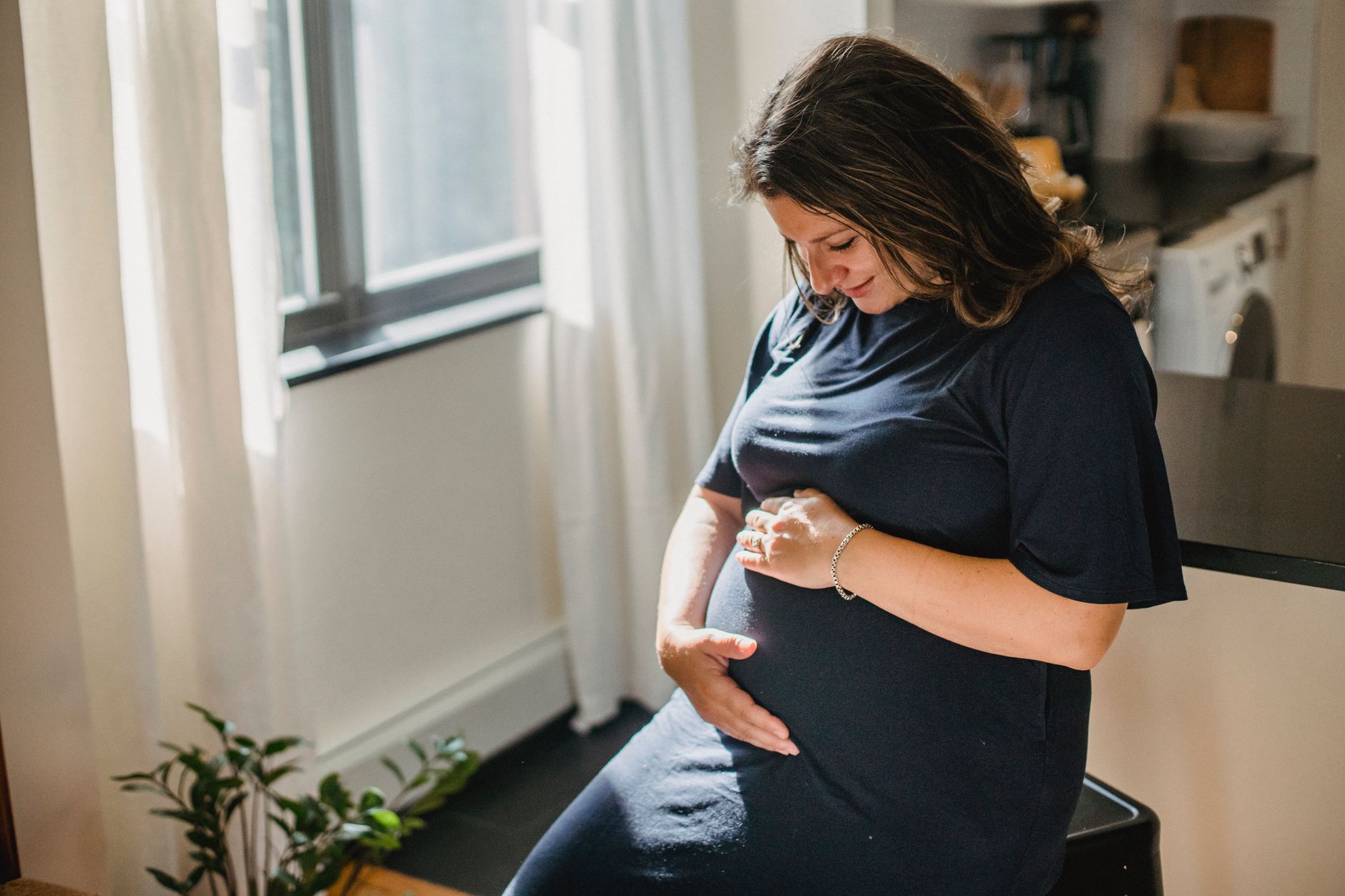
Your second pregnancy often shows earlier due to stretched abdominal muscles and a more relaxed uterus from your first. Learn why your bump appears sooner,
By Shubhra Mishra — a mom of two who turned her own confusion during pregnancy into BumpBites, a global mission to make food choices clear, safe, and stress-free for every expecting mother. 💛
Check whether any food is safe during pregnancy with the BumpBites Food Safety Checker.
Quick take: It's incredibly common and completely normal to start showing earlier in your second (or subsequent) pregnancy. This is largely due to your body's "muscle memory" from previous pregnancies, particularly the stretching of your abdominal muscles and uterus. While it might feel surprising, it doesn't necessarily mean you're having a bigger baby or that anything is wrong.
You’ve done this before. You know the drill: the early nausea, the fatigue, the anticipation of that first little bump. But this time, it feels different. You’re only a few weeks along, and suddenly, your jeans are feeling snug, or you’re catching a glimpse of a tiny curve in the mirror much sooner than you remember with your first. If you’re thinking, “Am I imagining this, or am I really showing earlier in my second pregnancy?” — take a breath. You’re not imagining it, and you’re certainly not alone.
Many moms find themselves in this exact situation, wondering if an earlier bump is normal or if it signifies something different about this pregnancy. The good news is, for most women, showing earlier the second time around is a normal physiological response. Your body is incredibly smart and remembers the changes it went through during your first pregnancy. This article will explore the fascinating reasons behind an earlier bump, what to expect, and when it’s a good idea to chat with your healthcare provider.
We’ll dive into the specific factors that contribute to this phenomenon, compare typical timelines, debunk common myths, and even offer practical tips for navigating your rapidly changing body. Our goal is to provide you with clear, reassuring, and scientifically grounded information so you can enjoy this unique stage of your motherhood journey with confidence.
Why Do You Show Earlier in a Second Pregnancy?
The sensation of your belly "popping" sooner in a second pregnancy is a widespread experience, and it’s rooted in some very practical physiological changes your body has already undergone. Think of it as your body being a seasoned pro, knowing exactly what to do and how to prepare for the growing baby within.
Uterine Memory and Stretching
One of the primary reasons you might show earlier is what's often referred to as "uterine memory." During your first pregnancy, your uterus, a powerful muscular organ, had to stretch significantly for the very first time to accommodate your growing baby. This initial stretch requires a lot of effort from your body.
With a second pregnancy, your uterus has already been through this expansion. It's like stretching a balloon for the second time; it inflates more easily and quickly. The uterine muscles and ligaments are pre-stretched and more pliable. This means your uterus doesn't have to work as hard to expand, and it often starts growing outward more visibly from an earlier stage compared to your first pregnancy.
Abdominal Muscle Laxity
Your abdominal muscles play a significant role in supporting your core and holding everything in place. During your first pregnancy, these muscles, particularly the rectus abdominis (your "six-pack" muscles), stretched and often separated in the middle, a condition known as diastasis recti. While these muscles may have recovered to some extent postpartum, they rarely return to their pre-pregnancy tautness.
In a second pregnancy, these already-stretched abdominal muscles offer less resistance to your expanding uterus. They are softer and more relaxed, allowing the uterus to protrude forward more readily and visibly. This isn't a sign of weakness; it's simply a natural consequence of the profound changes your body experienced previously. For many women, this laxity makes the bump apparent weeks earlier than in their first pregnancy.
The position of your uterus can also play a role. In a first pregnancy, the uterus often tilts backward slightly, known as retroverted, before straightening out as it grows. In subsequent pregnancies, it might be more likely to stay in an anterior (forward-facing) position from the start, contributing to an earlier visible bump.
Is It Normal to Have a Bump Earlier in a Second Pregnancy?
Absolutely, yes! Feeling like you're "showing" sooner the second time around is incredibly common and considered a perfectly normal part of subsequent pregnancies. If you've just started your second pregnancy and are already feeling or seeing changes, please know that this is a widely reported experience among expectant mothers.
The vast majority of women who have been pregnant before will notice their bump appearing earlier with each subsequent pregnancy. It’s a testament to your body’s incredible adaptability and efficiency. Your body has been there, done that, and knows exactly how to make space for a new life.
Reassurance and Individual Variation
It's easy to compare this pregnancy to your last, or even to what other pregnant women around you are experiencing. However, remember that every pregnancy is unique, even for the same woman. While an earlier bump is the norm for second pregnancies, there's still a wide range of normal. Some women might show only slightly earlier, while others might notice a significant difference of several weeks.
Don't let comparisons fuel anxiety. Your body is doing precisely what it needs to do. The key takeaway here is reassurance: an early bump is a sign that your body is already getting into gear for its important job, not a cause for concern. For more context on what to expect during this exciting time, you might find our article on Second Pregnancy Showing Earlier? helpful.
Why the Difference Matters
Understanding why you're showing earlier can help alleviate any worries. It’s not about having a "bigger" pregnancy or being "further along" than you think. It's about your body's physiological memory. The abdominal muscles, which were stretched during your first pregnancy, are simply more relaxed and allow the uterus to push forward more easily. Your uterus itself is also more accustomed to expanding, making the process more efficient.
This early visibility can sometimes lead to questions from well-meaning friends or family about how far along you are, especially if they remember your first pregnancy timeline. It's a great opportunity to educate them gently about the marvels of the female body and how it adapts to subsequent pregnancies.
What Factors Contribute to Showing Earlier in Subsequent Pregnancies?
While uterine memory and abdominal muscle laxity are the primary drivers, several other factors can contribute to an earlier visible bump in a second or subsequent pregnancy. These can range from temporary sensations to long-term physical changes.
Bloating and Gas
One of the earliest "bumps" many women experience, especially in the first trimester, isn't actually the baby or uterus growing significantly. It's often due to bloating and gas. Pregnancy hormones, particularly progesterone, can slow down digestion, leading to increased gas and constipation. This can make your belly feel and look distended much earlier than when the actual uterine growth becomes noticeable.
In a second pregnancy, your digestive system might already be more sensitive to these hormonal shifts, or you might simply be more attuned to the sensation of bloating, making you perceive an "early bump" even before your uterus has grown substantially. This type of bump often fluctuates throughout the day, being more prominent after meals or in the evening.
Diastasis Recti
As mentioned, diastasis recti, the separation of your abdominal muscles, is common after pregnancy. If you experienced this in your first pregnancy and your core muscles haven't fully recovered or reconnected, it can significantly contribute to showing earlier in subsequent pregnancies. The weakened midline of your abdominal wall provides less support, allowing the uterus to push forward more freely.
For some women, diastasis recti can be more pronounced after multiple pregnancies, further contributing to an earlier and more prominent bump. While a mild separation is often asymptomatic, significant diastasis recti can sometimes lead to back pain or pelvic floor issues. If you have concerns, speak with your healthcare provider or a physical therapist specializing in postpartum recovery.
Body Type and Weight Gain
Your individual body type plays a role in when you start to show. Women with a shorter torso or a naturally smaller frame might show earlier because there's less space for the uterus to grow upwards before it starts to push outwards. Conversely, taller women or those with a longer torso might carry their bump a bit longer before it becomes overtly visible.
While not a direct cause of showing earlier, previous weight gain or residual weight from a prior pregnancy can also influence the *perception* of an early bump. If you haven't fully returned to your pre-pregnancy weight, your abdominal area might already be softer, making the early uterine growth more apparent.
Uterus Position
The tilt or position of your uterus can also affect visibility. Some women have an anteverted uterus (tilted forward), while others have a retroverted uterus (tilted backward). In a first pregnancy, even an anteverted uterus might not show as early due to tighter abdominal muscles. However, in subsequent pregnancies, if your uterus is already in an anteverted position, it will naturally push forward and become visible sooner.
Ultimately, a combination of these factors, unique to your body and your pregnancy history, contributes to why you might be noticing a bump earlier this time around. It's a complex interplay of hormones, muscle changes, and individual anatomy.
How Much Earlier Do You Show in a Second Pregnancy Compared to the First?
There's no exact universal answer to "how much earlier," as it varies greatly from woman to woman. However, general trends and anecdotal evidence suggest that many women notice a visible bump anywhere from a few weeks to a couple of months sooner in their second pregnancy compared to their first.
Typical Timelines for Showing
In a first pregnancy, it's common for a noticeable bump to appear between 16 and 20 weeks, often closer to the end of the first trimester or beginning of the second. For some, especially those with strong core muscles or a retroverted uterus, it might even be closer to 20-24 weeks before it's undeniable.
With a second pregnancy, you might find yourself needing maternity clothes or noticing a distinct bump as early as 10 to 14 weeks. Some women report feeling "popped" even earlier than that, especially if they are particularly attuned to their body or have significant abdominal muscle laxity.
Here’s a general comparison to illustrate the difference:
Pregnancy Stage
First Pregnancy (Typical Showing)
Second Pregnancy (Typical Showing)
First Trimester (Weeks 0-12)
Little to no visible bump, maybe some bloating.
Often noticeable bloat, slight rounding or "popping" by 10-12 weeks for many.
Early Second Trimester (Weeks 13-16)
Subtle rounding, might be noticeable to you but not others.
Distinct bump becoming visible to others, maternity clothes may be needed.
Mid-Second Trimester (Weeks 17-20)
Clearly visible bump, maternity clothes usually necessary.
Well-established bump, often quite prominent.
Remember, these are averages. Your experience might fall outside these ranges, and that's perfectly fine. For example, if you're comparing your eighteen weeks pregnant experience in your second pregnancy to your first, you'll likely feel and look much further along this time.
The "Second Pregnancy Bump Comparison 12 Weeks" Scenario
Many women specifically search for "second pregnancy bump comparison 12 weeks" because it's around this time they start to feel significantly different. At 12 weeks in a first pregnancy, the uterus is typically just peeking above the pubic bone and might not be externally visible at all. However, in a second pregnancy, it's very common to already have a noticeable rounding or a distinct "bump" by 12 weeks, even if it's still small. This is often due to the factors we've discussed: relaxed abdominal muscles and a uterus that's already stretched.
This early visibility can sometimes make you feel like you're further along than you actually are, but it's important to rely on your due date from your healthcare provider, which is based on your last menstrual period and early ultrasound measurements, rather than just the size of your bump.
Does Showing Earlier in a Second Pregnancy Mean a Bigger Baby?
This is a common misconception, and it's important to clarify: no, showing earlier in a second pregnancy does not necessarily mean you are carrying a bigger baby. While it's true that subsequent babies can sometimes be slightly larger than firstborns, this correlation is not directly linked to when your bump becomes visible.
Debunking the Myth
The size of your bump on the outside is primarily influenced by the factors we've already discussed: the elasticity of your abdominal muscles, the "memory" of your uterus, and your body's overall structure. These are external and internal anatomical changes that allow your uterus to expand and protrude more easily, regardless of the baby's actual size.
A smaller baby can still be carried in a prominent bump if your abdominal muscles are particularly relaxed. Conversely, a larger baby might be carried by a woman with a strong core and long torso who doesn't show as early. The timing of your bump's appearance is more about your body's preparation than the size of the fetus.
What Actually Indicates Baby Size?
Your healthcare provider will monitor your baby's growth through several methods, none of which rely solely on the visual size of your bump:
Fundal Height: Starting around the second trimester, your doctor or midwife will measure your fundal height – the distance from your pubic bone to the top of your uterus. This measurement, usually taken in centimeters, should generally correspond to your week of pregnancy (e.g., 20 cm at 20 weeks). Significant deviations from this can sometimes indicate a baby that's growing larger or smaller than expected, or issues with amniotic fluid.
Ultrasound Scans: Ultrasound is the most accurate way to assess fetal size and growth. During your anatomy scan (usually around 18-22 weeks) and potentially later scans, measurements of the baby's head, abdomen, and femur will be taken to estimate size and weight.
Fetal Weight Estimates: Towards the end of pregnancy, ultrasounds can provide an estimated fetal weight, which helps providers determine if the baby is growing appropriately and to plan for delivery if there are concerns about size.
So, while it's natural to connect an earlier bump with a bigger baby, remember that your body is simply being more efficient this time around. Trust your healthcare team to monitor your baby's growth, and enjoy the visible sign that new life is on the way!
What If I'm Not Showing Earlier in My Second Pregnancy?
While showing earlier in a second pregnancy is very common, it's not a universal rule. If you find that you're *not* showing earlier, or even feel like you're showing later than you did the first time, there's usually no cause for concern. Just as every woman's body is unique, so is every pregnancy.
Reasons for Showing Later or at a Similar Time
There are several perfectly normal reasons why your bump might not appear significantly earlier in your second pregnancy:
Strong Core Muscles: If you've been diligent with postpartum core exercises (and have healed any diastasis recti) or are naturally very fit, your abdominal muscles might still provide significant support, holding the uterus in more effectively.
Uterus Position: While some women's uteruses are more anterior in subsequent pregnancies, others might still have a retroverted tilt that takes longer to "pop" forward.
Body Type: As mentioned, women with longer torsos might carry their babies higher or deeper, making the bump less immediately visible.
Individual Variation: Some bodies simply react differently. There's a wide spectrum of "normal," and your body might just be on the other end of that spectrum. Perhaps your first pregnancy involved more bloating, making that bump seem earlier than it physiologically was.
Less Bloating: You might be experiencing less initial bloating and gas in your second pregnancy, which could make it seem like your bump is appearing later, as the early "bump" from digestive issues isn't as prominent.
It's also possible that you're simply comparing yourself to a different standard, or your memory of your first pregnancy's timeline isn't perfectly accurate. Many women only vividly remember their bump from the mid-second trimester onwards.
When to Consult Your Doctor
In most cases, not showing earlier is just a variation of normal. However, if you have concerns about your baby's growth or your pregnancy progression, always reach out to your healthcare provider. They can assess your fundal height, perform an ultrasound, and reassure you that everything is developing as it should be. The key is to communicate any worries you have. Your doctor will always prioritize your peace of mind and your baby's health.
Remember, the health and growth of your baby are monitored through medical measurements and scans, not just by how big your belly looks to you or others. Trust your medical team to keep track of what truly matters.
Can You Feel Baby Move Earlier in a Second Pregnancy Too?
Yes, just like showing earlier, feeling your baby move earlier in a second or subsequent pregnancy is also a very common experience. This sensation, known as "quickening," is one of the most exciting milestones of pregnancy, and many experienced moms report feeling it sooner this time around.
The Phenomenon of Quickening
Quickening refers to the first time you feel your baby move. In a first pregnancy, this usually happens between 18 and 22 weeks. The sensations are often described as subtle flutters, gas bubbles, or butterflies in your stomach. It can be hard to distinguish from normal digestive movements, which is why it takes longer for first-time moms to recognize it.
In a second pregnancy, however, it's very common to feel quickening as early as 13 to 16 weeks. Some women even report feeling faint movements earlier than that. There are a few key reasons for this earlier perception:
Experience: You know what to look for! Having felt fetal movements before, you're more attuned to the unique sensations and can distinguish them from gas or other bodily functions much sooner. Your brain has a "memory" for these specific signals.
Uterine and Abdominal Sensitivity: Your uterus and abdominal wall have already been stretched and are more sensitive to internal movements. The nerves in these areas might be more responsive, allowing you to pick up on those tiny flutters more readily.
Baby's Position: Sometimes the baby's position can make a difference. If the baby is anterior (towards the front of your belly), you might feel movements sooner than if the placenta is anterior, which can cushion movements.
Feeling those first movements is a truly special connection, and it can be incredibly reassuring. Don't be surprised if you're experiencing those little taps and rolls much earlier than you did with your first child. It's another beautiful example of your body's amazing memory and efficiency.
Monitoring Fetal Movement
While early quickening is exciting, remember that consistent fetal movement patterns become more important later in pregnancy. Once you're further along, typically around 28 weeks, your healthcare provider might recommend doing "kick counts" to monitor your baby's well-being. This involves tracking how long it takes to feel a certain number of movements within a specific timeframe.
Even if you feel early movements, if you ever have concerns about a decrease in your baby's activity later in pregnancy, always contact your doctor or midwife immediately. While early movements are a bonus, consistent movements are a vital sign of your baby's health.
Tips for Dressing an Early Second Pregnancy Bump
When your bump makes an early appearance, your usual wardrobe might not feel quite right. You're not yet in full maternity gear, but your pre-pregnancy clothes are already uncomfortable. This in-between stage can be tricky, but with a few smart strategies, you can stay comfortable and stylish.
Embrace Comfort and Flexibility
Maternity Jeans with a Panel: Invest in a good pair of maternity jeans with a full panel early on. They are designed to grow with you and will be comfortable from the moment your bump starts showing through the end of your pregnancy. Many brands offer different panel types (under-the-bump, side-panel, full-panel) so you can find what feels best.
Stretchy Fabrics: Prioritize clothes made from stretchy, forgiving fabrics like jersey, knits, and blends with spandex. These materials will accommodate your changing shape without feeling restrictive.
Empire Waistlines: Dresses and tops with an empire waistline (where the waist gathers just under the bust) are incredibly flattering and comfortable for an early bump. They skim over your midsection without clinging.
Maxi Dresses and Skirts: These are often made from soft, stretchy fabrics and can be worn throughout pregnancy. They offer comfort and versatility, perfect for when you're not sure what your body will do next.
Leggings and Jeggings: A staple for many pregnant women, good quality maternity leggings are a lifesaver. They can be dressed up or down and provide unparalleled comfort.
Utilize Your Existing Wardrobe Creatively
Belly Bands: These clever bands can extend the life of your pre-pregnancy pants and jeans by covering an unbuttoned waistband. They provide a smooth look under tops and offer a little extra support.
Longer Tops and Tunics: Pair your unbuttoned regular pants (with a belly band) or maternity leggings with longer tops and tunics that cover your midsection. This creates a comfortable and stylish silhouette.
Open Cardigans and Jackets: Layering with open cardigans, jackets, or kimonos can help create vertical lines that flatter your changing shape and provide coverage if you feel self-conscious.
Loose-Fitting Dresses: Any A-line or shift dresses you already own might work for longer than you think, especially if they are not tightly fitted around the waist.
Don't Forget About Undergarments
As your body changes, so will your need for supportive undergarments. Consider investing in comfortable, non-underwire maternity bras that offer good support without constriction. Many women find they need to go up a cup and band size early in pregnancy. Also, seamless underwear can be more comfortable under a growing bump.
Remember, comfort is key. You're doing incredible work growing a human, and you deserve to feel good in your clothes. Don't be afraid to start exploring maternity wear earlier than you did last time. And while you're thinking about comfort, consider checking out our guide on Best Sleeping Position in Your Second Trimester: 2026 Guide to ensure you're getting the rest you need.
Myth vs. Fact
Let's clear up some common misconceptions about showing earlier in a second pregnancy.
Myth: Showing earlier means you're further along than your due date.
Fact: While your bump might appear sooner, your due date is determined by your last menstrual period and early ultrasound measurements, which are far more accurate indicators of gestational age. An early bump is a result of your body's previous experience, not an advanced timeline.
Myth: If you're showing earlier, it means you're having twins or multiples.
Fact: While carrying multiples will certainly lead to a larger and often earlier bump, showing early in a second pregnancy is a common occurrence even with a single baby. An ultrasound is the only definitive way to confirm if you're expecting multiples.
Myth: You can prevent showing early by doing extra core exercises.
Fact: While maintaining a strong core is beneficial for overall pregnancy comfort and postpartum recovery, you can't entirely prevent your body from showing earlier in a subsequent pregnancy. The physiological changes, like uterine stretching and abdominal muscle laxity, are natural and largely unavoidable responses to previous pregnancies. Focus on safe, pregnancy-appropriate exercises recommended by your doctor or physical therapist, rather than trying to "hide" your bump.
Key Takeaways
It is completely normal and very common to start showing earlier in your second or subsequent pregnancy.
The main reasons for an early bump include your uterus's "muscle memory" and the natural laxity of your abdominal muscles from previous pregnancies.
Bloating and gas, common in early pregnancy, can also contribute to the perception of an early bump.
Showing earlier does not mean you are having a bigger baby; actual fetal size is measured by fundal height and ultrasound.
You might also feel your baby's first movements (quickening) earlier in a second pregnancy because you know what to expect.
If you're not showing earlier, it's also usually normal and can be due to factors like strong core muscles or uterus position.
Embrace comfortable, stretchy clothing and maternity wear early to accommodate your changing body.
Frequently Asked Questions
Is it normal to show earlier in second pregnancy?
Yes, it's very normal. Your body has already been through the process of stretching and expanding during a previous pregnancy, so your uterus and abdominal muscles are more relaxed and adaptable, allowing a visible bump to appear sooner. It's a sign of your body's efficiency, not a cause for concern.
Why do I look bigger earlier in my second pregnancy?
You likely look bigger earlier due to a combination of factors. Your abdominal muscles have been stretched before and may be less taut, allowing your uterus to protrude more readily. Your uterus itself has "memory" and expands more quickly. Early pregnancy bloating and gas can also contribute to a distended appearance before significant uterine growth.
Does your uterus expand faster with a second baby?
Your uterus doesn't necessarily expand "faster" in terms of growth rate, but it does expand more easily and visibly. Because the uterine muscles and ligaments have already been stretched during a previous pregnancy, they are more pliable and ready to accommodate the new growth, leading to an earlier outward appearance of your bump.
When do most women start showing in their second pregnancy?
While individual experiences vary, many women start noticing a distinct bump in their second pregnancy between 10 to 14 weeks. This is significantly earlier than the typical 16 to 20 weeks for a first pregnancy. Some may even perceive changes earlier due to bloating or increased body awareness.
Can you feel baby movements earlier in a second pregnancy?
Yes, absolutely. Many women experience quickening (the first sensation of fetal movement) earlier in a second pregnancy, often between 13 and 16 weeks, compared to 18-22 weeks in a first pregnancy. This is usually because you're more attuned to the subtle sensations, having felt them before.
Does showing early in second pregnancy mean a larger baby?
No, showing early in a second pregnancy does not directly indicate that you will have a larger baby. The timing of your bump's appearance is primarily related to the physical changes your body underwent in previous pregnancies, such as stretched abdominal muscles and a more pliable uterus. Baby size is determined by factors like genetics and monitored through fundal height and ultrasounds.
When to See a Doctor or Specialist
While showing earlier in a second pregnancy is almost always normal, it's always wise to discuss any concerns with your healthcare provider. You should definitely reach out to your OB/GYN or midwife if:
You experience any pain, cramping, or unusual discharge accompanying your growing bump.
You have any bleeding or spotting.
You notice a significant change in your bump's size or shape that feels unusual or asymmetrical.
You are not feeling any movements by the expected time (around 16-20 weeks in a second pregnancy).
You have any other symptoms that worry you or seem out of the ordinary for your pregnancy.
Remember, this article is for informational purposes only and is not a substitute for professional medical advice, diagnosis, or treatment. Always seek the advice of your physician or other qualified health provider with any questions you may have regarding a medical condition.
References
American College of Obstetricians and Gynecologists (ACOG). (Patient Education).
Mayo Clinic. (Diastasis recti).
National Institutes of Health (NIH). (Pregnancy topics).
Not sure about the label on Second Pregnancy Showing Earlier Why products?
Snap the ingredients list and SafeFilter checks every ingredient for your stage — only 3 free scans this month, then you're locked until reset. Unlimited from $7/mo or $50/yr.
When Shubhra Mishra was expecting her first child in 2016, she was overwhelmed by conflicting food advice — one site said yes, another said never. By the time her second baby arrived in 2019, she realized millions of mothers face the same confusion.
That sparked a five-year journey through clinical nutrition papers, cultural diets, and expert conversations — all leading to BumpBites: a calm, compassionate space where science meets everyday motherhood.
Her long-term vision is to build a global community ensuring safe, supported, and free deliveriesfor every mother — because no woman should face pregnancy alone or uninformed. 🌿
🌍 Stand with mothers, shape safer guidance
Join a small circle of experts who review BumpBites articles so expecting parents everywhere can decide with confidence.