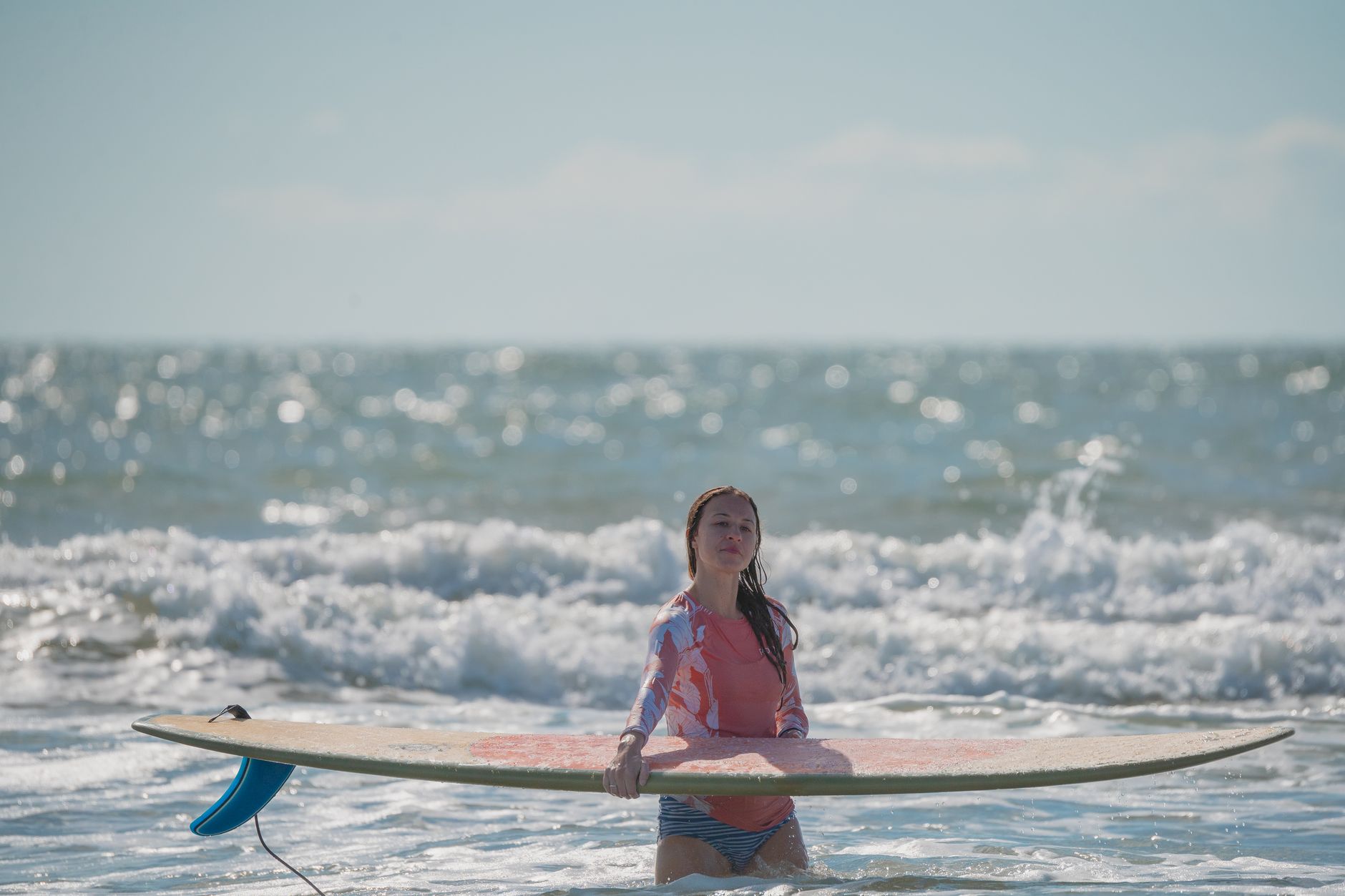
Limit surfing during pregnancy, especially in the first trimester. Avoid high waves and prioritize stability to reduce fall risks—consult your doctor first.
By Shubhra Mishra — a mom of two who turned her own confusion during pregnancy into BumpBites, a global mission to make food choices clear, safe, and stress-free for every expecting mother. 💛
Check whether any food is safe during pregnancy with the BumpBites Food Safety Checker.
Quick verdict: ⚠️ Surfing during pregnancy is not outright banned, but it’s high-risk and most obstetricians recommend avoiding it—especially if you’re not an experienced surfer. The biggest concerns are falls, abdominal trauma, dehydration, and exhaustion. If you choose to surf, stick to calm, waist-high waves, wear a leash and impact vest, and only do it in the second trimester if you’re already skilled. Always check with your provider first, especially if you have a high-risk pregnancy.
You’re staring at the ocean, board under your arm, salt still in your hair from yesterday’s session. But now there’s a tiny human growing inside you, and suddenly every wave feels like a question mark. Is surfing safe during pregnancy? The answer isn’t a simple yes or no—it depends on your skill level, trimester, and how your body’s handling the changes. If you’re an experienced surfer, you might be itching to paddle out. If you’re new to the sport, this isn’t the time to start. And if you’ve already taken a tumble? Take a breath—we’ll walk through what actually matters.
Surfing while pregnant isn’t just about balance. It’s about risk vs. reward—the thrill of riding a wave vs. the very real (if rare) risks of falls, impact, or overheating. Most doctors err on the side of caution, but some moms-to-be continue surfing with modifications. Below, we’ll break down the trimester-by-trimester safety, how to minimize risks, and safer alternatives that still give you that ocean fix. And if you’re panicking because you wiped out last week? We’ll cover that too.
Trimester
Verdict
Notes
First trimester (weeks 1–12)
❌ Best avoided
Highest risk of miscarriage; fatigue and nausea make balance harder. Falls could cause abdominal trauma.
Second trimester (weeks 13–26)
⚠️ Cautiously possible for experienced surfers
Energy levels are higher, but your center of gravity shifts. Stick to small, gentle waves and avoid crowded lineups.
Third trimester (weeks 27–40)
❌ Not recommended
Balance is compromised; risk of falls increases. Even minor abdominal trauma could trigger preterm labor.
Breastfeeding
✅ Generally safe
No direct risks to baby, but exhaustion or dehydration could affect milk supply. Listen to your body.
What is surfing—and why do people love it?
Surfing is a water sport where you ride waves on a board, either lying down (bodyboarding) or standing up (traditional surfing). It’s equal parts adrenaline, meditation, and physical workout—paddling builds upper-body strength, popping up engages your core, and balancing on the board works your legs. For many, it’s not just exercise; it’s a way to connect with nature, relieve stress, and feel alive.
But surfing also comes with inherent risks: wipeouts, collisions, strong currents, and marine life encounters. Even experienced surfers get injured. During pregnancy, those risks don’t disappear—they just become more complicated. Your body is already working overtime to grow a baby, and adding the physical demands of surfing (or the potential for a hard fall) can tip the scales from "thrilling" to "dangerous."
Is surfing safe during pregnancy?
The short answer? Most obstetricians recommend avoiding surfing during pregnancy, especially if you’re not already an experienced surfer. The American College of Obstetricians and Gynecologists (ACOG) and the UK’s Royal College of Obstetricians and Gynaecologists (RCOG) both classify surfing as a high-risk activity for pregnant people due to the potential for abdominal trauma, falls, and dehydration. That said, some providers may green-light gentle, modified surfing in the second trimester for skilled surfers—if you take precautions.
Here’s what the research and experts say:
Falls and abdominal trauma: A hard wipeout or collision with your board could cause placental abruption (where the placenta detaches from the uterus) or direct trauma to the baby. Even a minor fall in the first trimester could increase the risk of miscarriage, while a third-trimester tumble might trigger preterm labor.
Dehydration and overheating: Surfing is a full-body workout, and pregnant people are more prone to overheating (hyperthermia), which can be dangerous for the baby. Dehydration can also lead to dizziness, contractions, or preterm labor.
Exhaustion: Paddling out, catching waves, and staying balanced is physically demanding. Fatigue can increase your risk of injury and may leave you with less energy for your baby’s needs.
Marine hazards: Strong currents, rip tides, and marine life (like jellyfish or sharks) add another layer of risk. Even a minor sting or scare could cause stress or injury.
That said, not all surfing is created equal. A calm, waist-high wave in a controlled environment is very different from a big swell at a crowded break. If you’re determined to surf while pregnant, the second trimester is the safest window—but only if you’re already comfortable on a board and your provider gives you the okay.
If you choose to surf while pregnant, stick to calm, shallow water and wear protective gear like a rash guard and impact vest.
Is it safe to surf in the first trimester of pregnancy?
No—surfing in the first trimester is the riskiest time to paddle out. Here’s why:
High miscarriage risk: The first 12 weeks are when the risk of miscarriage is highest, and abdominal trauma (even minor) could potentially trigger one. A wipeout or collision with your board could cause bleeding or placental issues.
Fatigue and nausea: Morning sickness and exhaustion make it harder to stay balanced and alert. Even experienced surfers can feel off their game when they’re constantly queasy.
Hormonal changes: Relaxin, a hormone that loosens your ligaments, makes you more prone to sprains and falls. Your joints are less stable, which can throw off your balance on the board.
Baby’s development: This is when your baby’s major organs and neural tube are forming. While there’s no direct evidence that surfing harms development, the stress and physical strain of the sport could theoretically affect blood flow to the uterus.
If you’re an avid surfer and already pregnant, it’s understandable to want to keep doing what you love. But the first trimester is not the time to push your limits. If you’re trying to conceive, it’s also wise to avoid high-risk activities like surfing, as you might not know you’re pregnant until several weeks in. (And if you’re wondering about other activities during this time, check out our guide on whether Botox is safe during pregnancy.)
If you did surf in early pregnancy before you knew, don’t panic. Most miscarriages are caused by chromosomal abnormalities, not falls or exercise. But going forward, it’s best to switch to lower-impact activities until you’re further along.
Can you surf during the second trimester if you're an experienced surfer?
Possibly—but only if you’re already skilled, your pregnancy is low-risk, and your provider gives you the green light. The second trimester (weeks 13–26) is often called the "honeymoon phase" of pregnancy. Energy levels rebound, nausea fades, and your belly isn’t so big that it throws off your balance—yet. For experienced surfers, this can feel like the safest window to paddle out. But there are still major caveats.
When it *might* be okay
You’ve been surfing regularly for years and feel confident in your skills.
Your pregnancy is low-risk (no history of preterm labor, placenta previa, or cervical issues).
You stick to small, gentle waves (waist-high or less) in a calm, uncrowded spot.
You wear a leash, impact vest, and rash guard to protect your belly and reduce injury risk.
You stay hydrated and avoid surfing in hot or humid conditions to prevent overheating.
You stop immediately if you feel dizzy, short of breath, or experience cramping.
When to skip it
You’re a beginner or intermediate surfer—this isn’t the time to learn.
You have a high-risk pregnancy (e.g., placenta previa, preeclampsia, or a history of preterm labor).
The waves are big, powerful, or crowded—collisions are more likely.
You feel fatigued, dizzy, or off-balance. Pregnancy hormones can make you more prone to falls.
You’re surfing in cold water (below 70°F/21°C), which can cause vasoconstriction (narrowing of blood vessels) and reduce blood flow to the baby.
Even if you check all the boxes, listen to your body. If you’re constantly wiping out or feeling exhausted after a session, it’s time to switch to something gentler. And if you’re unsure, ask your provider—they can give you personalized advice based on your health history.
Is surfing in the third trimester dangerous for the baby?
Yes—surfing in the third trimester is the riskiest time to be on a board. Here’s why:
Balance is compromised: Your center of gravity shifts as your belly grows, making it harder to stay upright. Even a small wave can throw you off balance, increasing the risk of a hard fall.
Abdominal trauma risk: A wipeout or collision could cause placental abruption (where the placenta detaches from the uterus), which is a medical emergency that can lead to preterm labor or stillbirth.
Preterm labor risk: The physical stress of surfing—especially if you’re exhausted or dehydrated—could trigger contractions or early labor. Even a minor fall might be enough to kickstart the process.
Fatigue and exhaustion: Your body is working overtime to grow a baby, and surfing is a high-energy sport. Paddling out, catching waves, and staying balanced can leave you drained and overheated, which isn’t good for you or your baby.
Marine hazards: Strong currents, rip tides, and even jellyfish stings can add stress or injury. In late pregnancy, your body is less resilient to these kinds of shocks.
Most providers strongly recommend avoiding surfing after 26 weeks, even if you’re an experienced surfer. If you’re itching to be in the water, paddleboarding or swimming are much safer alternatives. And if you’re dealing with other third-trimester concerns (like whether laser treatments are safe), we’ve got you covered.
Paddleboarding is a low-impact, pregnancy-safe alternative to surfing that still lets you enjoy the water.
How many times a week is it safe to surf while pregnant?
If your provider clears you to surf at all, limit it to 1–2 short sessions per week—and only in the second trimester. Here’s a breakdown of what’s considered "safe" (with major caveats):
Trimester
Recommended Frequency
Notes
First trimester
❌ 0 sessions
Avoid entirely due to miscarriage risk and fatigue.
Second trimester
⚠️ 1–2 sessions/week
Only for experienced surfers; keep sessions short (30–45 mins max).
Third trimester
❌ 0 sessions
Risk of falls and preterm labor is too high.
Even in the second trimester, less is more. Surfing is a high-intensity, full-body workout, and your body is already working hard to grow a baby. Overdoing it can lead to:
Exhaustion: Paddling out and catching waves burns 400–700 calories/hour. Pregnant people need extra energy—don’t drain your reserves.
Dehydration: You’re more prone to overheating and dehydration during pregnancy. Drink plenty of water before, during, and after surfing.
Muscle strain: Your ligaments are looser due to relaxin, making you more prone to sprains or joint injuries.
Stress on the baby: While moderate exercise is healthy, extreme or prolonged exertion can reduce blood flow to the uterus.
If you’re used to surfing daily or in competitions, this might feel like a major adjustment. But remember: your body is building a human. It’s okay to dial it back for nine months.
What are the risks of surfing while pregnant and how to minimize them?
Surfing while pregnant comes with real risks—but if you’re determined to do it, there are ways to minimize them. Here’s what to watch for and how to stay as safe as possible:
Risk
Why It’s Dangerous
How to Minimize It
Falls and wipeouts
Can cause abdominal trauma, placental abruption, or miscarriage (especially in the first trimester). In the third trimester, falls may trigger preterm labor.
Stick to small, gentle waves (waist-high or less).
Avoid crowded lineups where collisions are more likely.
Wear a leash to keep your board close and reduce injury risk.
Consider an impact vest to protect your belly.
Dehydration and overheating
Pregnant people are more prone to hyperthermia (overheating), which can harm the baby. Dehydration can also cause dizziness, contractions, or preterm labor.
Surf in cooler parts of the day (early morning or late afternoon).
Avoid hot or humid conditions.
Drink water before, during, and after surfing.
Wear a rash guard to protect against sun and heat.
Exhaustion
Surfing is a high-energy sport. Fatigue can increase injury risk and leave you with less energy for your baby’s needs.
Keep sessions short (30–45 mins max).
Listen to your body—if you’re breathless or exhausted, stop.
Eat a snack before and after to maintain energy.
Marine hazards (rip currents, jellyfish, sharks)
Strong currents can pull you out to sea, while stings or bites can cause stress or injury. Even a minor scare could trigger contractions.
Surf in calm, familiar spots with lifeguards.
Avoid areas with known rip currents or marine life hazards.
Wear a rash guard to protect against jellyfish stings.
Impact from the board
A collision with your board (or someone else’s) can cause abdominal trauma or injury.
Always use a leash to keep your board close.
Wear an impact vest to protect your belly.
Avoid crowded lineups where collisions are more likely.
Even with these precautions, surfing while pregnant is never risk-free. If you’re unsure whether it’s safe for you, ask your provider. And if you’re looking for other ways to stay active, check out our guide to safe cosmetic treatments during pregnancy (spoiler: most aren’t recommended).
Are there any pregnancy-safe surfboards or gear for expecting mothers?
There’s no such thing as a "pregnancy-safe" surfboard—but there are ways to modify your gear to reduce risks. Here’s what to look for:
Soft-top or foam boards: These are more forgiving if you wipe out or collide with your board. They’re also lighter and easier to paddle, which can help conserve energy.
Wider, thicker boards: A wider board (like a longboard or funboard) gives you more stability, making it easier to balance as your center of gravity shifts. Thicker boards also provide better buoyancy, so you don’t have to paddle as hard.
Leash: Always wear a leash to keep your board close. This reduces the risk of collisions and makes it easier to get back on if you fall.
Impact vest: A neoprene impact vest can protect your belly from minor bumps or collisions. Look for one with light padding (not too bulky, so it doesn’t throw off your balance).
Rash guard: A long-sleeved rash guard protects against sunburn, jellyfish stings, and chafing. It also helps regulate your body temperature, reducing the risk of overheating.
Non-slip traction pad: A grippy traction pad on your board can help you stay balanced as your belly grows. Some brands make extra-wide pads for better stability.
Wetsuit (if in cold water): If you’re surfing in cold water, a wetsuit can help regulate your body temperature. Just make sure it’s not too tight around your belly.
While these modifications can help, they don’t eliminate the risks of surfing while pregnant. If you’re not already an experienced surfer, this isn’t the time to start. And if you’re in the third trimester, it’s best to avoid surfing entirely—even with the best gear.
What are the best low-impact alternatives to surfing during pregnancy?
If you’re missing the ocean (or just the thrill of riding a wave), don’t worry—there are plenty of pregnancy-safe alternatives that still give you that endorphin boost without the risks. Here are the best options, ranked by how closely they mimic surfing:
Paddleboarding (SUP):
Paddleboarding is the closest thing to surfing that’s still safe during pregnancy. It works your core, arms, and legs while keeping you low to the water. Stick to calm, flat water (like a lake or bay) and avoid big waves or strong currents. If you’re in the third trimester, kneel or sit on the board to reduce fall risk.
Bodyboarding:
Bodyboarding is less intense than surfing because you’re lying down, which reduces the risk of falls. It’s a great way to catch small waves without the balance challenges of standing up. Just avoid big swells or crowded lineups, and wear a rash guard to protect your belly.
Swimming:
Swimming is one of the safest and most effective exercises during pregnancy. It’s low-impact, full-body, and buoyant, which takes pressure off your joints. Try laps in a pool or gentle ocean swims in calm water. Avoid strong currents or cold water.
Prenatal yoga:
Prenatal yoga helps with balance, flexibility, and relaxation—all things that can make labor easier. Look for classes that focus on gentle stretches and breathing. Avoid hot yoga (overheating is dangerous for the baby) and deep twists or backbends.
Walking:
Walking is simple, free, and safe throughout pregnancy. It keeps your heart healthy without putting stress on your joints. Aim for 30 minutes a day, and mix it up with beach walks if you’re craving the ocean.
Stationary biking:
Stationary biking is a low-impact cardio option that’s easy on your joints. It’s safer than road biking (no fall risk) and lets you control the intensity. Avoid spinning classes with intense intervals—stick to a moderate pace.
Elliptical training:
The elliptical mimics the motion of running without the impact. It’s a great way to work your legs and arms while keeping your heart rate up. Just avoid holding the handles too tightly—your balance shifts as your belly grows.
Prenatal Pilates:
Prenatal Pilates focuses on core strength, stability, and posture—all of which can help with back pain and labor prep. Look for classes that use props like resistance bands or stability balls. Avoid moves that require lying flat on your back after the first trimester.
If you’re dealing with other pregnancy-related activity restrictions (like whether Kybella is safe during pregnancy), we’ve got guides for those too. The key is to listen to your body—if something doesn’t feel right, switch it up.
Prenatal yoga is a low-impact way to stay active and connected to your body during pregnancy.
Can you surf while pregnant if you have a high-risk pregnancy or complications?
No—if you have a high-risk pregnancy or complications, surfing is not safe. Here’s why:
Placenta previa: If your placenta is covering your cervix, even a minor fall or impact could cause severe bleeding, which is life-threatening for you and your baby.
Preterm labor risk: If you’ve had preterm labor before or are showing signs of it (like contractions or cervical changes), the physical stress of surfing could trigger early delivery.
Preeclampsia: Preeclampsia causes high blood pressure and organ damage. The exertion of surfing could worsen your symptoms and put you and your baby at risk.
Cervical insufficiency: If your cervix is weak or shortening, the pressure of paddling or balancing on a board could cause it to open prematurely, leading to miscarriage or preterm labor.
Multiples (twins/triplets): Carrying multiples puts you at higher risk for preterm labor and complications. The physical demands of surfing could increase those risks.
Gestational diabetes: If you’re managing blood sugar levels, the intense exercise of surfing could cause dangerous spikes or drops in glucose.
If you have any of these conditions, your provider will likely advise you to avoid all high-risk activities, including surfing. Even if you’re feeling fine, the risks outweigh the benefits. Instead, focus on low-impact activities like walking, swimming, or prenatal yoga.
And if you’re dealing with other high-risk pregnancy concerns (like whether Dysport is safe during pregnancy), we’ve got answers for those too.
What do doctors say about surfing during pregnancy?
Most doctors—including the American College of Obstetricians and Gynecologists (ACOG)—recommend avoiding surfing during pregnancy. Here’s what the experts say:
ACOG: ACOG classifies surfing as a "high-risk activity" for pregnant people due to the potential for falls, abdominal trauma, and dehydration. They recommend low-impact exercises like walking, swimming, or stationary biking instead.
Royal College of Obstetricians and Gynaecologists (RCOG): The RCOG advises against "contact sports and activities with a high risk of falling", which includes surfing. They emphasize that the risks to the baby outweigh the benefits.
Mayo Clinic: The Mayo Clinic warns that "activities with a high risk of falling or abdominal trauma—like surfing—should be avoided during pregnancy." They recommend gentler alternatives like swimming or prenatal yoga.
Sports medicine doctors: Many sports medicine specialists agree that surfing is too unpredictable for pregnancy. Even experienced surfers can wipe out, and the physical demands of the sport can be too much for a pregnant body.
That said, some providers may give the okay for modified surfing in the second trimester—but only if you’re already an experienced surfer, your pregnancy is low-risk, and you take precautions (like sticking to small waves and wearing protective gear).
If you’re unsure, ask your provider. They can give you personalized advice based on your health history and pregnancy. And if you’re dealing with other pregnancy-related questions (like whether Botox is safe), we’ve got you covered.
Is bodyboarding or paddleboarding a safer alternative to surfing while pregnant?
Yes—both bodyboarding and paddleboarding are safer than surfing during pregnancy, but they still come with risks. Here’s how they compare:
Not sure about the label on Is Surfing Safe During Pregnancy products?
Snap the ingredients list and SafeFilter checks every ingredient for your stage — only 3 free scans this month, then you're locked until reset. Unlimited from $7/mo or $50/yr.
When Shubhra Mishra was expecting her first child in 2016, she was overwhelmed by conflicting food advice — one site said yes, another said never. By the time her second baby arrived in 2019, she realized millions of mothers face the same confusion.
That sparked a five-year journey through clinical nutrition papers, cultural diets, and expert conversations — all leading to BumpBites: a calm, compassionate space where science meets everyday motherhood.
Her long-term vision is to build a global community ensuring safe, supported, and free deliveriesfor every mother — because no woman should face pregnancy alone or uninformed. 🌿
🌍 Stand with mothers, shape safer guidance
Join a small circle of experts who review BumpBites articles so expecting parents everywhere can decide with confidence.