
Quick verdict: ⚠️ Office printer fumes are generally safe in small amounts with good ventilation, but long-term or high exposure should be avoided during pregnancy. Most printers emit low levels of volatile organic compounds (VOCs) and ultrafine particles, which may cause mild irritation or headaches—but the risk of birth defects or miscarriage is very low at typical office exposures. If you work near a printer daily, take steps to reduce your exposure (like moving your desk or using an air purifier).
You’re at your desk, typing away, when the office printer whirs to life—again. The sharp smell of toner or ink fills the air, and suddenly, you freeze. Is this safe for my baby? If you’ve Googled “is office printer fumes safe during pregnancy” at 11 p.m., you’re not alone. Many pregnant people worry about the invisible chemicals they breathe in at work, especially in spaces with poor airflow. The good news? Most experts agree that occasional exposure to printer fumes isn’t a major cause for concern. But if you’re sitting next to a printer all day, every day, it’s worth taking a few precautions.
In this article, we’ll break down what’s actually in printer fumes, how much exposure is safe (and in which trimesters), and what you can do to minimize risks. We’ll also cover safer printer alternatives, red-flag symptoms to watch for, and how printer fumes compare to other common workplace exposures (like carpet cleaning fumes or paint vapors). By the end, you’ll know exactly when to relax—and when to ask your boss for a desk relocation.
Is Office Printer Fumes Safe During Pregnancy? A Safety Snapshot
| Trimester / Stage | Safety Verdict | Notes |
|---|---|---|
| First trimester | ⚠️ Caution advised | Organ development is most sensitive now. Limit exposure to strong fumes, especially from older or poorly maintained printers. |
| Second trimester | ✅ Generally safe | Risk is lower, but avoid sitting near printers for long periods without ventilation. |
| Third trimester | ✅ Generally safe | Your baby is fully formed, but overexposure may cause headaches or respiratory irritation. Prioritize fresh air. |
| Breastfeeding | ✅ Generally safe | Printer fumes are unlikely to pass into breast milk, but avoid high exposures to prevent respiratory discomfort. |
What Are Printer Fumes, and What’s in Them?
- Volatile organic compounds (VOCs): Chemicals like benzene, toluene, and styrene, which can evaporate into the air. These are also found in paint fumes and cleaning products. At high levels, VOCs may cause headaches, dizziness, or nausea—but typical office exposures are far below harmful thresholds.
- Ultrafine particles (UFPs): Tiny particles (smaller than 0.1 microns) released during printing, especially from laser printers. These can irritate the lungs and may contribute to respiratory discomfort, particularly in people with asthma or allergies.
- Ozone: Some laser printers emit small amounts of ozone, a lung irritant. Modern printers usually have filters to minimize this, but older models may release more.
- Toner dust: Fine powder used in laser printers, which can become airborne if the printer is damaged or poorly maintained. Inhaling large amounts may irritate the throat or lungs.
Most office printers release these substances in very low concentrations, far below the levels considered hazardous by the Occupational Safety and Health Administration (OSHA) or the Environmental Protection Agency (EPA). However, poorly ventilated spaces or frequent, prolonged exposure could increase your risk of mild symptoms like headaches or throat irritation.
Is Office Printer Fumes Safe During Pregnancy? What Experts Say
The short answer? Printer fumes are unlikely to harm your baby at typical office exposures, but it’s smart to minimize your risk. Here’s what leading health authorities say:
- American College of Obstetricians and Gynecologists (ACOG): ACOG doesn’t have specific guidelines on printer fumes, but they recommend avoiding exposure to high levels of VOCs and air pollutants during pregnancy. Since printer fumes contain low levels of VOCs, occasional exposure is considered safe, but prolonged or high exposure should be avoided.
- National Health Service (NHS) UK: The NHS notes that breathing in fumes from office equipment (like printers) is unlikely to harm your baby, but they advise pregnant people to work in well-ventilated areas and take breaks if they feel unwell.
- Centers for Disease Control and Prevention (CDC): The CDC states that VOCs can cause eye, nose, and throat irritation, headaches, and nausea, but the risk to pregnancy is low at typical indoor levels. They recommend reducing exposure to VOCs where possible.
- World Health Organization (WHO): The WHO highlights that long-term exposure to indoor air pollutants (like those from printers) may contribute to respiratory issues, but there’s no evidence linking typical office printer fumes to birth defects or miscarriage.
So, what’s the bottom line? If you’re occasionally near a printer, you’re likely fine. But if you’re sitting next to one all day in a stuffy office, it’s worth taking steps to reduce your exposure—especially if you’re in your first trimester or have asthma or allergies.
Are Printer Fumes Harmful During First Trimester Pregnancy?
The first trimester is the most critical window for your baby’s development. During weeks 3–12, their organs, brain, and spinal cord are forming, and this is when they’re most vulnerable to environmental toxins. So, is it safe to breathe printer fumes during this time?
Here’s what you need to know:
- Risk of birth defects or miscarriage: There’s no evidence that typical office printer fumes cause birth defects or miscarriage. The levels of VOCs and particles in printer emissions are far below what’s considered harmful in studies. For example, a 2018 study in Environmental Science & Technology found that laser printer emissions were not associated with adverse pregnancy outcomes at typical exposure levels.
- Irritation and discomfort: While the risk to your baby is low, printer fumes can cause headaches, nausea, or dizziness—symptoms that are already common in early pregnancy. If you’re sensitive to smells or have morning sickness, the fumes might make you feel worse.
- Ventilation matters: If your office has poor airflow, fumes can build up over time. A 2019 study in Indoor Air found that printers in poorly ventilated spaces released higher levels of VOCs and particles, which could increase irritation. If you’re in a small, windowless room with a printer running all day, consider asking for a desk relocation or an air purifier.
What should you do? If you’re in your first trimester, aim to limit prolonged exposure to printer fumes, especially if you’re already feeling nauseous or sensitive to smells. Open windows, use an air purifier, or take breaks outside if possible. But if you’ve already been exposed? Don’t panic—the risk to your baby is very low.
How Much Exposure to Printer Fumes Is Safe While Pregnant?
There’s no official “safe limit” for printer fume exposure during pregnancy, but experts recommend keeping exposure as low as possible. Here’s a practical guide to what’s considered safe:
| Exposure Level | Safety Verdict | Recommendation |
|---|---|---|
| Occasional exposure (e.g., walking past a printer a few times a day) | ✅ Generally safe | No action needed. The risk is negligible. |
| Moderate exposure (e.g., sitting near a printer for 1–2 hours/day) | ⚠️ Caution advised | Improve ventilation (open windows, use a fan) or move your desk if possible. Take breaks outside if you feel unwell. |
| High exposure (e.g., sitting next to a printer for 4+ hours/day, especially in a small room) | ❌ Best avoided | Ask for a desk relocation or use an air purifier with a HEPA and activated carbon filter. If your workplace won’t accommodate, talk to your OB-GYN about your options. |
| Acute exposure (e.g., strong fumes from a malfunctioning printer or toner spill) | ❌ Avoid | Leave the area immediately and get fresh air. If you experience dizziness, nausea, or difficulty breathing, call your doctor. |
If you’re unsure about your exposure level, ask yourself:
- Do I smell strong fumes when the printer is running?
- Do I get headaches or feel nauseous when I’m near the printer?
- Is the printer in a small, enclosed space with no ventilation?
- Is the printer old or poorly maintained (e.g., leaking toner, strange noises)?
If you answered “yes” to any of these, it’s worth taking steps to reduce your exposure. For most people, occasional or moderate exposure is fine, but high or prolonged exposure should be avoided—especially in the first trimester.
What Are the Safest Printer Brands for Pregnant Women to Use?
Not all printers are created equal. Some models emit far fewer fumes and particles than others, making them a safer choice for pregnant people. Here’s what to look for:
- Inkjet printers: Generally emit fewer VOCs and particles than laser printers, especially if they use water-based inks. However, some inkjet printers (particularly older models) may still release low levels of VOCs.
- EcoTank or supertank printers: These use refillable ink tanks instead of cartridges, which reduces the amount of plastic and packaging waste—and may also lower VOC emissions. Brands like Epson EcoTank and Canon MegaTank are popular options.
- Solid ink printers: Printers like the Xerox ColorQube use solid ink sticks instead of liquid ink or toner, which reduces VOC emissions. These are a great choice for offices with frequent printing needs.
- Low-VOC or soy-based ink printers: Some printers use soy-based or low-VOC inks, which emit fewer harmful chemicals. Look for printers labeled “low-VOC” or “eco-friendly.”
- Laser printers with HEPA filters: If you must use a laser printer, choose one with a built-in HEPA filter to capture ultrafine particles. Brands like Brother and HP offer models with advanced filtration.
Here are some of the safest printer brands and models for pregnant people:
| Printer Type | Brand/Model | Why It’s Safer |
|---|---|---|
| Inkjet (EcoTank) | Epson EcoTank ET-2800 | Uses refillable ink tanks, reducing VOC emissions from cartridges. Water-based inks are low-VOC. |
| Inkjet (Supertank) | Canon PIXMA G620 | Refillable ink system with low-VOC inks. Emits fewer particles than laser printers. |
| Solid Ink | Xerox ColorQube 8580 | Uses solid ink sticks instead of liquid ink or toner, reducing VOCs and ultrafine particles. |
| Laser (with HEPA filter) | Brother HL-L8360CDW | Built-in HEPA filter captures ultrafine particles. Lower VOC emissions than older laser models. |
| Low-VOC Inkjet | HP OfficeJet Pro 9025e | Uses HP’s “Original Ink,” which is designed to be low-VOC and eco-friendly. |
If you’re buying a printer for home use, opt for an EcoTank or solid ink model. If you’re stuck with an office printer, ask your IT department if they can upgrade to a safer model or move the printer to a better-ventilated area.
Can Laser Printer Fumes Cause Miscarriage or Birth Defects?
This is one of the biggest fears for pregnant people exposed to printer fumes. Can laser printer fumes really cause miscarriage or birth defects? Let’s look at what the science says.
What’s in Laser Printer Fumes?
Laser printers work by heating toner (a fine powder made of plastic, carbon, and metal oxides) to fuse it onto paper. This process releases:
- Ultrafine particles (UFPs): Tiny particles that can penetrate deep into the lungs. A 2017 study in Environmental Science & Pollution Research found that laser printers emit more UFPs than inkjet printers, but the levels are still far below what’s considered harmful in occupational settings.
- VOCs: Including benzene, toluene, and styrene. These are also found in paint fumes and cleaning products. However, the concentrations in printer fumes are much lower than in industrial settings.
- Ozone: Some laser printers emit small amounts of ozone, a lung irritant. Modern printers usually have filters to minimize this.
What Does the Research Say?
There’s no evidence that laser printer fumes cause miscarriage or birth defects at typical office exposures. Here’s what studies show:
- A 2018 study in Environmental Science & Technology analyzed data from over 10,000 pregnant people and found no link between printer fume exposure and adverse pregnancy outcomes, including miscarriage or birth defects.
- A 2020 review in Indoor Air concluded that the levels of VOCs and particles emitted by office printers are too low to pose a risk to pregnancy. The authors noted that poor ventilation was a bigger concern than the fumes themselves.
- The National Institute for Occupational Safety and Health (NIOSH) states that laser printer emissions are not a known cause of reproductive harm. They recommend good ventilation and regular printer maintenance to minimize irritation.
When Should You Be Concerned?
While the risk of miscarriage or birth defects is very low, there are a few scenarios where laser printer fumes could pose a higher risk:
- Malfunctioning or damaged printers: If a printer is leaking toner or emitting strong, unusual smells, it could release higher levels of VOCs or particles. In this case, stop using it immediately and report it to your IT department.
- Poorly ventilated spaces: If you’re in a small, windowless room with a laser printer running all day, fumes can build up. This might cause headaches, dizziness, or nausea, but it’s unlikely to harm your baby.
- Pre-existing conditions: If you have asthma, allergies, or a respiratory condition, you might be more sensitive to printer fumes. In this case, take extra precautions to reduce your exposure.
What’s the bottom line? Laser printer fumes are unlikely to cause miscarriage or birth defects at typical office exposures. However, if you’re concerned, opt for an inkjet or solid ink printer, improve ventilation, or move your desk away from the printer.
Are There Pregnancy-Safe Alternatives to Office Printers?
If you’re worried about printer fumes, there are plenty of safer alternatives to reduce your exposure. Here are some options to consider:
- EcoTank inkjet printers: These use refillable ink tanks instead of cartridges, reducing VOC emissions. Brands like Epson EcoTank and Canon MegaTank are great choices. They’re also more cost-effective in the long run.
- Solid ink printers (Xerox ColorQube): These printers use solid ink sticks instead of liquid ink or toner, which reduces VOC emissions. They’re ideal for offices with high printing volumes.
- Low-VOC or soy-based ink printers: Some printers use soy-based or low-VOC inks, which emit fewer harmful chemicals. Look for printers labeled “eco-friendly” or “low-VOC.”
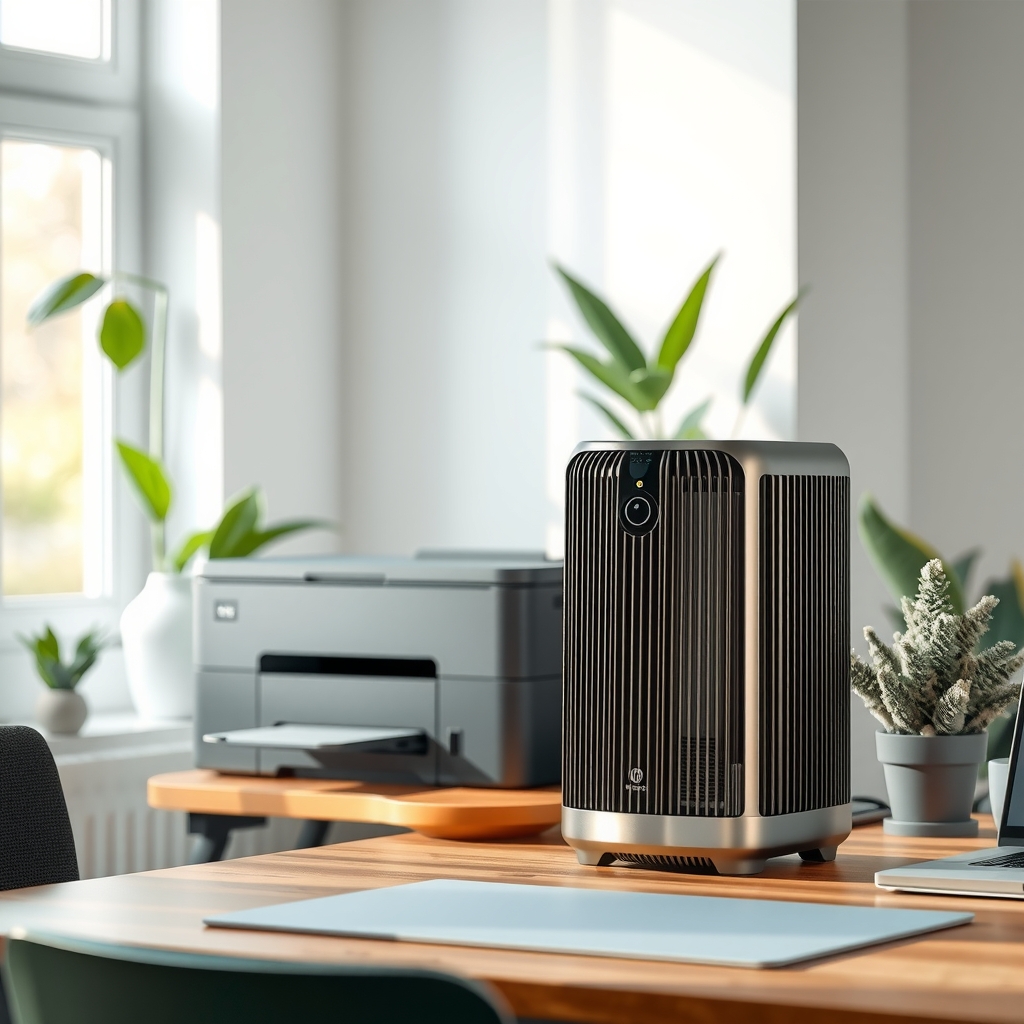
- Air purifiers with HEPA and activated carbon filters: If you can’t avoid a printer, an air purifier can help capture VOCs and ultrafine particles. Place it near the printer or your desk for maximum effectiveness. Look for models with HEPA and activated carbon filters, like the Coway Airmega or Levoit Core 400S.
- Outdoor or well-ventilated printing stations: If possible, move the printer to a well-ventilated area, like near an open window or in a room with a fan. If your office has an outdoor space, consider setting up a temporary printing station there.
- Digital document sharing: Reduce your need for printing by using digital tools like Google Drive, Dropbox, or Microsoft OneDrive. Share documents electronically instead of printing them.
- Handwritten notes for small tasks: For quick notes or reminders, use a notebook or sticky notes instead of printing. This is a great way to reduce your exposure to fumes.
- Third-party printing services: If you only need to print occasionally, consider using a third-party printing service like FedEx Office or Staples. This way, you can avoid the fumes altogether.
If you’re in a shared office, talk to your manager or IT department about upgrading to a safer printer or improving ventilation. Many companies are happy to accommodate pregnant employees—especially if it means a healthier workspace for everyone.
What Are the Symptoms of Printer Fume Toxicity in Pregnancy?
While printer fumes are unlikely to harm your baby, high or prolonged exposure can cause uncomfortable symptoms. Here’s what to watch for:
Mild Symptoms (Common, Not Usually Dangerous)
- Headaches
- Dizziness or lightheadedness
- Nausea (especially if you’re already prone to morning sickness)
- Eye, nose, or throat irritation
- Dry or scratchy throat
- Mild coughing or sneezing
These symptoms are usually temporary and go away once you leave the area or improve ventilation. If you experience them, try:
- Moving to a different part of the office
- Opening a window or using a fan
- Taking a break outside for fresh air
- Drinking water to stay hydrated
Moderate Symptoms (Uncommon, May Require Action)
- Persistent headache that doesn’t go away with fresh air
- Shortness of breath or wheezing
- Chest tightness or pain
- Severe nausea or vomiting
- Skin irritation or rash (if toner dust comes into contact with your skin)
If you experience any of these symptoms, leave the area immediately and get fresh air. If the symptoms persist, call your doctor. You may need to relocate your desk or ask your employer for accommodations.
Severe Symptoms (Rare, Seek Medical Attention Immediately)
- Difficulty breathing or severe wheezing
- Chest pain or rapid heartbeat
- Fainting or severe dizziness
- Seizures (extremely rare, but possible with very high VOC exposure)
These symptoms are very rare from printer fumes alone, but if you experience them, seek medical attention immediately. Call 911 or go to the nearest emergency room.
If you’re unsure whether your symptoms are related to printer fumes, keep a symptom diary. Note when and where you experience symptoms, how long they last, and what you were doing at the time. This can help your doctor determine if printer fumes are the cause—and what steps to take next.
Is It Safe to Use a Printer Daily During the Third Trimester?
By the third trimester, your baby is fully formed, and the risk of birth defects from environmental exposures is much lower. So, is it safe to use a printer daily during this time?
The short answer? Yes, but with some precautions. Here’s what you need to know:
- Your baby is protected: By the third trimester, your baby’s organs are fully developed, and the placenta provides a strong barrier against most environmental toxins. The risk of harm from printer fumes is very low at this stage.
- Your comfort matters: While your baby is safe, you might feel more sensitive to smells and fumes in the third trimester. Printer fumes could trigger headaches, nausea, or respiratory discomfort—especially if you’re already dealing with pregnancy-related congestion or heartburn.
- Ventilation is key: If you’re using a printer daily, make sure your workspace is well-ventilated. Open windows, use a fan, or place an air purifier near your desk. If the printer is in a small, enclosed space, ask to move it or relocate your desk.
- Listen to your body: If you feel unwell when the printer is running, take a break. Step outside for fresh air, or ask a coworker to handle the printing for you. Your comfort is important—especially as you approach your due date.
What should you do? If you’re in your third trimester, occasional or moderate printer use is fine. But if you’re sitting next to a printer all day, take steps to reduce your exposure. Use an air purifier, improve ventilation, or ask for a desk relocation if needed. And if you ever feel unwell, don’t hesitate to step away.

Do Inkjet Printers Emit Fewer Fumes Than Laser Printers for Pregnant Women?
If you’re trying to minimize your exposure to printer fumes, you might be wondering: Are inkjet printers safer than laser printers during pregnancy? The answer is yes—but with some caveats.
Inkjet vs. Laser Printers: What’s the Difference?
| Feature | Inkjet Printers | Laser Printers |
|---|---|---|
| How they work | Spray tiny droplets of liquid ink onto paper | Use heat to fuse toner (a fine powder) onto paper |
| Emissions | Emit fewer VOCs and ultrafine particles than laser printers. Some models use water-based inks, which are low-VOC. | Emit more ultrafine particles and VOCs due to the heating process. Older models may also release ozone. |
| VOC levels | Low to moderate (depends on ink type) | Moderate to high (depends on toner and printer age) |
| Particle emissions | Low | High (especially during warm-up and printing) |
| Best for pregnancy | ✅ Generally safer | ⚠️ Use with caution (improve ventilation, choose newer models) |
Why Inkjet Printers Are Usually Safer
Inkjet printers are generally considered safer for pregnant people because:
- Lower VOC emissions: Most inkjet printers use water-based inks, which emit fewer VOCs than the toner used in laser printers. Some eco-friendly inkjet printers use soy-based or low-VOC inks, which are even safer.
- Fewer ultrafine particles: A 2017 study in Environmental Science & Pollution Research found that laser printers emit significantly more ultrafine particles than inkjet printers. These particles can irritate the lungs, especially in people with asthma or allergies.
- No ozone emissions: Laser printers can emit small amounts of ozone, a lung irritant. Inkjet printers do not produce ozone.
When Laser Printers Might Be Okay
While inkjet printers are generally safer, some laser printers are fine to use during pregnancy—especially if:
- They’re newer models with built-in HEPA filters (e.g., Brother HL-L8360CDW).
- They’re well-maintained and not leaking toner.
- They’re used in a well-ventilated area with good airflow.
- You’re not sitting right next to them for long periods.
What’s the bottom line? If you have a choice, opt for an inkjet printer during pregnancy. But if you’re stuck with a laser printer, take steps to reduce your exposure, like improving ventilation or using an air purifier.
Office Printer Fumes vs. Other Workplace Exposures: Safety at a Glance
Printer fumes aren’t the only workplace exposure pregnant people worry about. How do they compare to other common office or home hazards? Here’s a quick safety snapshot:
| Exposure | Safety Verdict | Notes |
|---|---|---|
| Photocopier fumes | ⚠️ Similar to printer fumes | Photocopiers use similar technology to laser printers and emit comparable levels of VOCs and particles. Follow the same precautions as for printers. |
| Toner dust | ⚠️ Caution advised | Toner dust can irritate the lungs if inhaled in large amounts. Avoid handling toner cartridges, and report any spills to your IT department. |
| 3D printer fumes | ❌ Best avoided | 3D printers emit higher levels of VOCs and ultrafine particles than office printers. Avoid exposure, especially in poorly ventilated spaces. |
| New carpet off-gassing | ⚠️ Caution advised | New carpets can release VOCs for weeks or months. If your office has new carpet, improve ventilation or use an air purifier. |
| Paint fumes | ❌ Best avoided | Fresh paint emits high levels of VOCs. Avoid painting or being near fresh paint during pregnancy. If you must be around it, use low-VOC paint and improve ventilation. |
| Cleaning product chemicals | ⚠️ Caution advised | Many Editor's pick for this topic Not sure about the label on Is Office Printer Fumes Safe During Pregnancy products?Snap the ingredients list and SafeFilter checks every ingredient for your stage — only 3 free scans this month, then you're locked until reset. Unlimited from $7/mo or $50/yr. Informational only — not medical advice.  About the AuthorWhen Shubhra Mishra was expecting her first child in 2016, she was overwhelmed by conflicting food advice — one site said yes, another said never. By the time her second baby arrived in 2019, she realized millions of mothers face the same confusion. That sparked a five-year journey through clinical nutrition papers, cultural diets, and expert conversations — all leading to BumpBites: a calm, compassionate space where science meets everyday motherhood. Her long-term vision is to build a global community ensuring safe, supported, and free deliveriesfor every mother — because no woman should face pregnancy alone or uninformed. 🌿 🌍 Stand with mothers, shape safer guidanceJoin a small circle of experts who review BumpBites articles so expecting parents everywhere can decide with confidence. ⚠️ Always consult your doctor for medical advice. This content is informational only. Long-form pregnancy guidesHand-curated deep-dive guides — go beyond the article above. More Pregnancy guides
Recommended picks  Prenatal pick Ritual — Ritual Essential Prenatal Choline + DHA + folate from methylfolate (not synthetic).  Prenatal pick Nordic Naturals — Nordic Naturals Prenatal DHA (Strawberry Softgels) Premium fish-oil DHA in strawberry softgels — gentle on the stomach. |