Avoid Apixaban (Eliquis) during pregnancy due to potential fetal risks. Consult your doctor for safer alternatives, especially in the first trimester, to ensure a healthy pregnancy.
By Shubhra Mishra — a mom of two who turned her own confusion during pregnancy into BumpBites, a global mission to make food choices clear, safe, and stress-free for every expecting mother. 💛
Check whether any food is safe during pregnancy with the BumpBites Food Safety Checker.
Quick verdict: ❌ Apixaban (Eliquis) is best avoided during pregnancy. The drug crosses the placenta and has been linked to fetal bleeding and miscarriage, so most obstetric guidelines recommend using injectable heparins instead. If you’re already taking it, talk to your provider right away to discuss a safer alternative.
It’s completely understandable to feel a rush of anxiety the moment you realize you’ve been prescribed apixaban, especially when you hear the question “is apixaban eliquis safe during pregnancy?” You might be scrolling through medical forums at 2 a.m., wondering whether a single dose could harm your baby, or you could be facing a decision about starting a new anticoagulant therapy. First, take a deep breath. You’re not alone—many expecting parents have found themselves in the same spot, and the good news is that the medical community has clear guidance on how to protect both you and your developing baby.
In this article we’ll give you the bottom‑line answer to “is apixaban eliquis safe during pregnancy,” then break down the safety profile by trimester, discuss dosage considerations, compare apixaban to other blood thinners, and point you toward safer alternatives. We’ll also explore whether the brand name Eliquis changes the risk, highlight key side‑effects to watch for, and provide a quick‑reference table of related anticoagulants.
By the end of this guide you’ll know exactly what steps to take, which warning signs demand a call to your provider, and how to feel more confident about managing clot‑prevention while pregnant.
Stage of pregnancy
Verdict
Notes
First trimester
❌ Avoid
Apixaban crosses the placenta; animal data show fetal bleeding and skeletal malformations.
Second trimester
❌ Avoid
Risk of fetal hemorrhage persists; guidelines advise switching to heparin.
Third trimester
❌ Avoid
Increased risk of maternal bleeding at delivery; no safety data.
Breastfeeding
❌ Avoid
Apixaban is excreted in breast milk; infant exposure is unknown.
What is apixaban (Eliquis) and how does it work?
Apixaban, sold under the brand name Eliquis, belongs to a class of drugs called direct oral anticoagulants (DOACs). It works by specifically inhibiting factor Xa, a key enzyme in the clotting cascade that helps convert prothrombin to thrombin. By blocking factor Xa, apixaban reduces the formation of fibrin clots, which makes it useful for preventing stroke in atrial fibrillation, treating deep‑vein thrombosis (DVT), and managing pulmonary embolism (PE). Unlike older anticoagulants such as warfarin, apixaban has a predictable effect, does not require routine blood monitoring, and has fewer dietary restrictions.
Because it is taken orally—typically 5 mg twice daily—it offers convenience that many patients prefer over injectable heparins. However, the very properties that make it attractive for everyday use—rapid absorption, predictable anticoagulation, and a relatively short half‑life—also raise concerns for pregnant patients. The drug’s small molecular size allows it to cross the placenta, and the lack of extensive pregnancy‑specific safety data means clinicians err on the side of caution.
Is apixaban (Eliquis) safe during pregnancy?
Current guidance from major obstetric authorities—including the American College of Obstetricians and Gynecologists (ACOG), the U.S. Food and Drug Administration (FDA), and the United Kingdom’s National Health Service (NHS)—clearly advises against using apixaban during pregnancy. ACOG’s Committee Opinion on anticoagulation in pregnancy (2022) states that “direct oral anticoagulants are not recommended for use in pregnant patients because of insufficient safety data and potential for fetal harm.” The FDA classifies apixaban as a pregnancy‑category C drug, meaning risk cannot be ruled out, and the label specifically warns that “use in pregnancy may result in fetal harm.” The NHS also lists apixaban as “contraindicated” for pregnant women, recommending low‑molecular‑weight heparin (LMWH) as the preferred alternative.
The primary concern is placental transfer. Small‑molecule DOACs, including apixaban, have been detected in fetal circulation, and animal studies have shown increased rates of fetal bleeding and skeletal abnormalities. Human data are limited, but case reports have documented spontaneous abortions and neonatal hemorrhage in women who continued apixaban after conception. Because the drug’s effect cannot be reversed quickly (unlike warfarin, which can be antagonized with vitamin K), any unexpected bleeding during labor or delivery could pose a serious risk to both mother and baby.
In short, the answer to “is apixaban eliquis safe during pregnancy” is a firm no. The safest course is to transition to a heparin‑based regimen under the supervision of a maternal‑fetal medicine specialist.
Is apixaban (Eliquis) safe to use during the first trimester of pregnancy?
The first trimester is the period of organogenesis, when the fetus’s major organs are forming. During this window, exposure to teratogenic substances—agents that can cause birth defects—poses the greatest risk. Apixaban’s ability to cross the placenta means that even low doses could reach the developing embryo. While definitive human studies are lacking, the precautionary principle adopted by ACOG and the FDA leads to a recommendation to avoid apixaban entirely in the first trimester.
If you were already taking apixaban before learning you were pregnant, do not panic. Contact your obstetric provider promptly. They will likely switch you to low‑molecular‑weight heparin, which does not cross the placenta and has a well‑established safety record throughout pregnancy.
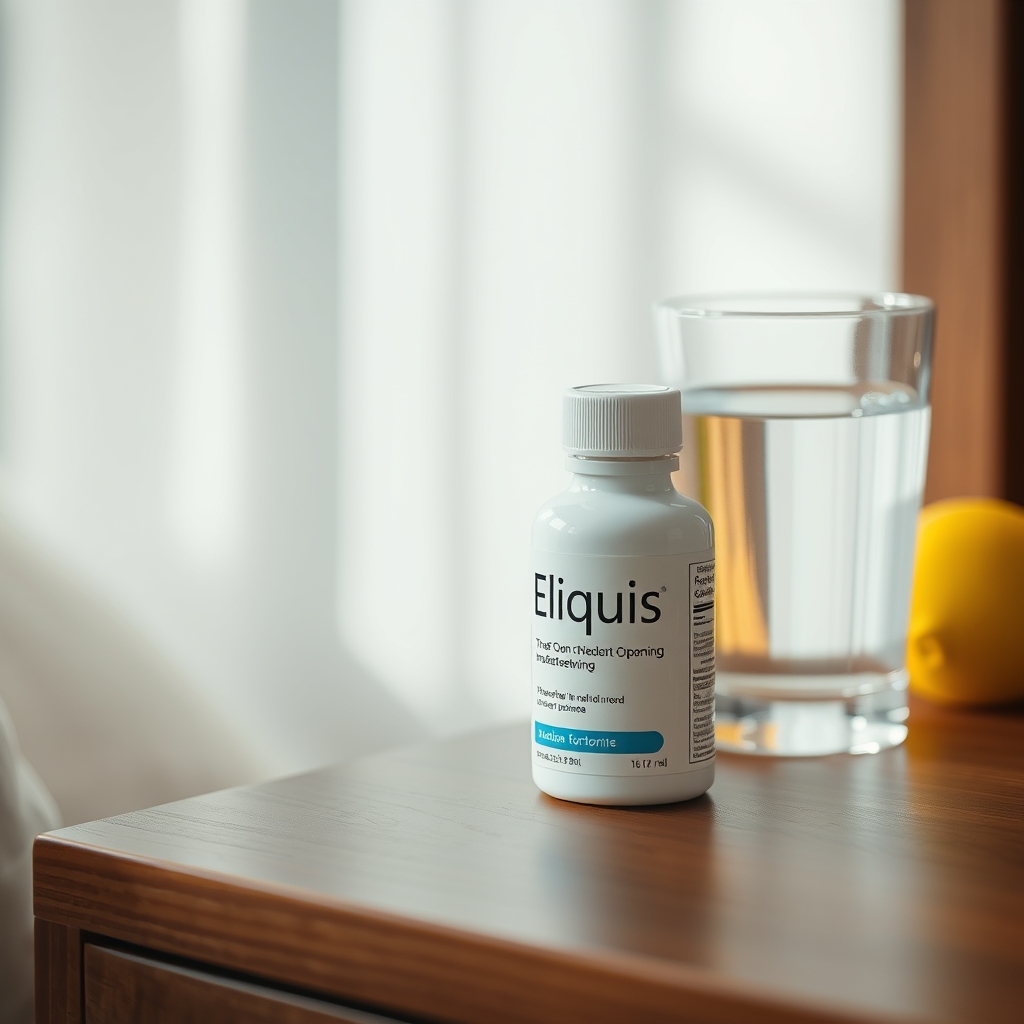
When you spot your Eliquis bottle, take a moment to review the safety guidance for pregnancy.
Can I take a lower dose of apixaban (Eliquis) while pregnant?
Reducing the dose does not eliminate the core safety concerns. The risk of placental transfer is related to the drug’s pharmacokinetics, not simply the amount taken. Even a single 2.5 mg dose can appear in fetal blood, and there is no evidence that a “lower‑dose” regimen reduces fetal bleeding risk. Because the therapeutic window for anticoagulation is narrow, clinicians generally avoid dose‑adjustment strategies in pregnancy and instead switch to an injectable heparin that can be more precisely managed.
For patients with severe clotting disorders, the priority is to maintain adequate anticoagulation while protecting the fetus. The consensus among obstetric specialists is that low‑molecular‑weight heparin (e.g., enoxaparin) offers both efficacy and safety, allowing dose titration based on anti‑Xa levels without exposing the baby to a direct‑acting oral agent.
What are the risks of using apixaban (Eliquis) in the second and third trimesters?
In the second and third trimesters, the placenta is fully functional, which means any drug that crosses it can affect the fetus directly. Studies of other DOACs have shown an increased incidence of fetal hemorrhage, low birth weight, and, in rare cases, stillbirth. For apixaban specifically, case series have reported neonatal intracranial bleeding when the mother continued the medication close to delivery. Additionally, because apixaban is cleared renally, the increased glomerular filtration rate of pregnancy can alter drug levels unpredictably, potentially leading to sub‑therapeutic anticoagulation or excessive bleeding.
Maternal risks also rise in later pregnancy. Apixaban’s anticoagulant effect can complicate labor, increasing the chance of postpartum hemorrhage. Since there is no specific reversal agent approved for use in pregnancy, obstetricians prefer heparin products that can be stopped a few hours before delivery and, if needed, reversed with protamine sulfate.
Are there safer anticoagulant alternatives to apixaban (Eliquis) for pregnant women?
Yes. The standard of care for pregnant patients who need anticoagulation is low‑molecular‑weight heparin (LMWH) or unfractionated heparin (UFH). Both agents have large molecular weights that prevent placental passage, and extensive data support their use for conditions such as deep‑vein thrombosis, pulmonary embolism, and mechanical heart valves during pregnancy. Below is a short list of commonly recommended alternatives:
Enoxaparin (Lovenox) – once‑ or twice‑daily subcutaneous injection; dose adjusted by anti‑Xa levels.
Dalteparin (Fragmin) – similar to enoxaparin, often used when renal function is reduced.
Unfractionated Heparin (UFH) – intravenous or subcutaneous; short half‑life allows rapid reversal before delivery.
Tinzaparin (Innohep) – another LMWH with a well‑established pregnancy safety profile.
Low‑dose aspirin (81 mg) – sometimes added for pre‑eclampsia prevention; does not replace therapeutic anticoagulation.
Heparin Calcium Injection – a UFH formulation used in many obstetric protocols.
All of these options are considered safe by ACOG, the FDA, and NHS guidelines when used under specialist supervision.
How does apixaban (Eliquis) compare to other blood thinners like warfarin during pregnancy?
Warfarin has a long history of use in pregnancy, but it is also known to be teratogenic, especially during the first trimester, where it can cause fetal warfarin syndrome (nasal hypoplasia, stippled epiphyses, and skeletal abnormalities). Because of this risk, warfarin is generally avoided in early pregnancy and switched to heparin. However, in the second and third trimesters, some clinicians may continue low‑dose warfarin if the maternal clotting risk is very high, monitoring INR closely.
Apixaban differs from warfarin in that it does not require INR monitoring, but its unknown fetal safety profile and lack of a reversal agent make it less favorable. In contrast, heparins have an extensive safety record, can be reversed quickly, and do not cross the placenta, positioning them as the preferred choice throughout pregnancy.
What side effects does apixaban (Eliquis) pose for the developing fetus?
The primary fetal concerns are bleeding complications and potential developmental abnormalities. Documented case reports have linked apixaban exposure to:
Intra‑uterine fetal demise (miscarriage).
Neonatal intracranial hemorrhage, which can lead to long‑term neurodevelopmental deficits.
Possible skeletal malformations observed in animal studies.
Because the drug’s pharmacodynamics are not fully understood in the fetal environment, any exposure is considered a red‑flag situation warranting immediate obstetric review.
Is apixaban (Eliquis) safe for women with a history of clotting disorders during pregnancy?
Even for women with a strong personal or family history of thrombosis, the consensus remains to avoid apixaban. The risk of fetal harm outweighs the convenience of an oral agent. Instead, a tailored LMWH regimen—often initiated at therapeutic doses and adjusted based on anti‑Xa monitoring—is the recommended approach. This strategy provides effective clot prevention while maintaining a proven safety record for both mother and baby.
Does the brand name Eliquis affect the safety of apixaban in pregnancy?
No. The safety profile is determined by the active ingredient, apixaban, not the brand name. Whether the medication is labeled Eliquis, a generic version, or a compounded preparation, the same pharmacologic properties apply. Therefore, the “Eliquis” branding does not confer any additional safety advantage during pregnancy.
Switching to injectable heparins or low‑dose aspirin can protect your baby while still managing clot risk.
Safe dosage / amount / brands
Apixaban is typically prescribed at 5 mg twice daily for most indications, with a reduced dose of 2.5 mg twice daily for patients with renal impairment or certain weight criteria. However, because the drug is contraindicated in pregnancy, the exact dosage is irrelevant for fetal safety—the recommendation is to discontinue use entirely and transition to a heparin regimen under medical supervision.
If you are currently on Eliquis and discover you are pregnant, do not attempt to self‑adjust the dose. Contact your obstetrician or hematologist immediately. They will arrange a switch to an injectable heparin—most commonly enoxaparin 1 mg/kg subcutaneously every 12 hours—adjusted to maintain an anti‑Xa level of 0.2–0.6 IU/mL for therapeutic anticoagulation.
When selecting a heparin product, look for reputable manufacturers with consistent quality. In the United States, Lovenox (enoxaparin) and Fragmin (dalteparin) are widely used and meet FDA standards. In the United Kingdom, the NHS prefers generic enoxaparin formulations that have been approved by the Medicines and Healthcare products Regulatory Agency (MHRA).
Side effects and risks
For the mother, apixaban’s main adverse effect is bleeding, which can be minor (e.g., bruising, gum bleeding) or severe (e.g., gastrointestinal hemorrhage, intracranial bleeding). In pregnancy, any bleeding episode warrants careful evaluation because it may signal placental abruption or fetal compromise.
Fetal-specific risks include:
Placental transfer: Apixaban reaches the fetal circulation, increasing the chance of fetal hemorrhage.
Potential teratogenicity: Animal studies suggest skeletal abnormalities, though human data are limited.
Neonatal bleeding: Cases of intracranial hemorrhage have been reported when apixaban was continued close to delivery.
If you notice any of the following, contact your provider immediately: unexplained vaginal bleeding, severe headache, visual changes, abdominal pain, or signs of fetal distress such as decreased movement.
Safer alternatives
Enoxaparin (Lovenox) – proven safe, does not cross placenta, easily monitored.
Dalteparin (Fragmin) – similar safety profile, suitable for patients with renal concerns.
Unfractionated Heparin (UFH) – short half‑life allows rapid reversal before delivery.
Tinzaparin (Innohep) – another LMWH with extensive obstetric use.
Low‑dose aspirin (81 mg) – useful for pre‑eclampsia prevention; not a substitute for therapeutic anticoagulation.
Heparin Calcium Injection – widely used in labor and delivery units for immediate anticoagulation.
Related items — safety at a glance
Anticoagulant
Verdict
One‑line note
Rivaroxaban (Xarelto)
❌ Avoid
Like apixaban, it crosses the placenta and lacks safety data.
Dabigatran (Pradaxa)
❌ Avoid
Direct thrombin inhibitor; fetal bleeding reported in case series.
Edoxaban (Savaysa)
❌ Avoid
Limited data, but animal studies show fetal hemorrhage.
Warfarin (Coumadin)
⚠️ Use with caution
Teratogenic in 1st trimester; may be used later with close monitoring.
Heparin
✅ Safe
Large molecule; does not cross placenta; reversible.
Low Molecular Weight Heparin
✅ Safe
Standard of care for anticoagulation in pregnancy.
Fondaparinux (Arixtra)
⚠️ Limited data
May be considered in rare cases; limited human data.
Myth vs. fact
Myth: “Because apixaban is a newer, more precise blood thinner, it must be safer than older drugs for a pregnant woman.”
Fact: The newer class of DOACs, including apixaban, lacks robust pregnancy safety data and is actually contraindicated; older agents like heparins have decades of evidence supporting their safety.
Myth: “A lower dose of Eliquis will protect the baby while still preventing clots.”
Fact: Even reduced doses cross the placenta, and there’s no evidence that a lower dose reduces fetal risk. Switching to an injectable heparin is the recommended strategy.
Myth: “The brand name matters—Eliquis is safer than generic apixaban.”
Fact: Safety is determined by the active ingredient, apixaban, not by branding. All formulations carry the same pregnancy risk.
Key takeaways
❌ Apixaban (Eliquis) is not safe at any stage of pregnancy; avoid it.
Switch to low‑molecular‑weight heparin or unfractionated heparin under specialist guidance.
Dosage reduction does not mitigate fetal risk—any exposure is concerning.
Monitor for signs of bleeding in both mother and fetus; seek urgent care if they occur.
Brand name does not affect safety; all apixaban products share the same risk profile.
Consult your obstetrician or maternal‑fetal medicine specialist promptly to arrange a safe anticoagulation plan.
Frequently asked questions
Can I take Eliquis while pregnant?
No. Current guidelines from ACOG and the FDA advise against using Eliquis (apixaban) at any point during pregnancy because it can cross the placenta and increase the risk of fetal bleeding.
What are the dangers of Apixaban during pregnancy?
Apixaban can cross the placenta, leading to fetal hemorrhage, possible skeletal abnormalities, and even miscarriage. Maternal bleeding complications at delivery are also a concern.
Is it safe to switch from warfarin to Apixaban during pregnancy?
Switching to Apixaban does not improve safety; both drugs carry risks, but apixaban lacks a reversal agent and has no established pregnancy safety data, so it is not recommended.
How long after stopping Apixaban can I try to conceive?
Apixaban’s half‑life is about 12 hours, and it is cleared from the body within 2–3 days. However, most clinicians advise waiting at least one week after discontinuation before attempting conception to ensure complete elimination.
What are the alternatives to Apixaban for pregnant women with blood clots?
Low‑molecular‑weight heparins such as enoxaparin or dalteparin, and unfractionated heparin, are the standard, evidence‑based alternatives that do not cross the placenta.
Does Apixaban cross the placenta?
Yes. Studies have detected apixaban in fetal circulation, confirming that it can cross the placental barrier and potentially affect the developing fetus.
Are there any studies on Apixaban use in pregnancy?
Human studies are limited to case reports and small series, which have documented adverse outcomes such as fetal bleeding and miscarriage. The lack of robust data is why professional societies advise against its use.
When to call your doctor
If you experience any of the following while taking or after stopping apixaban, contact your obstetric provider or go to the nearest emergency department immediately:
Unexplained vaginal bleeding or spotting.
Severe headache, visual changes, or neurological symptoms.
Sudden abdominal or pelvic pain.
Reduced fetal movement (less than 10 movements in 2 hours).
Signs of maternal bleeding (e.g., blood in urine, black stools, excessive bruising).
These symptoms could indicate serious maternal or fetal complications that require prompt medical evaluation. Remember, this article provides general information and is not a substitute for personalized medical advice.
References
American College of Obstetricians and Gynecologists. Committee Opinion No. 771: Anticoagulation in Pregnancy. 2022.
U.S. Food and Drug Administration. Apixaban (Eliquis) Prescribing Information. Updated 2023.
National Health Service (NHS). Anticoagulants in Pregnancy: Guidance for Clinicians. 2021.
Mayo Clinic. Apixaban (Oral Route) – Uses, Side Effects, Interactions. Accessed July 2024.
British Committee for Standards in Haematology. Management of Anticoagulation in Pregnancy. 2020.
World Health Organization. WHO Model List of Essential Medicines – Anticoagulants. 2022.
American Society of Hematology. Guidelines for the Use of Anticoagulants in Pregnancy. 2021.
National Institute for Health and Care Excellence (NICE). Anticoagulation in Pregnancy. 2023.
Not sure about the label on Is Apixaban Eliquis Safe During Pregnancy products?
Snap the ingredients list and SafeFilter checks every ingredient for your stage — only 3 free scans this month, then you're locked until reset. Unlimited from $7/mo or $50/yr.
When Shubhra Mishra was expecting her first child in 2016, she was overwhelmed by conflicting food advice — one site said yes, another said never. By the time her second baby arrived in 2019, she realized millions of mothers face the same confusion.
That sparked a five-year journey through clinical nutrition papers, cultural diets, and expert conversations — all leading to BumpBites: a calm, compassionate space where science meets everyday motherhood.
Her long-term vision is to build a global community ensuring safe, supported, and free deliveriesfor every mother — because no woman should face pregnancy alone or uninformed. 🌿
🌍 Stand with mothers, shape safer guidance
Join a small circle of experts who review BumpBites articles so expecting parents everywhere can decide with confidence.