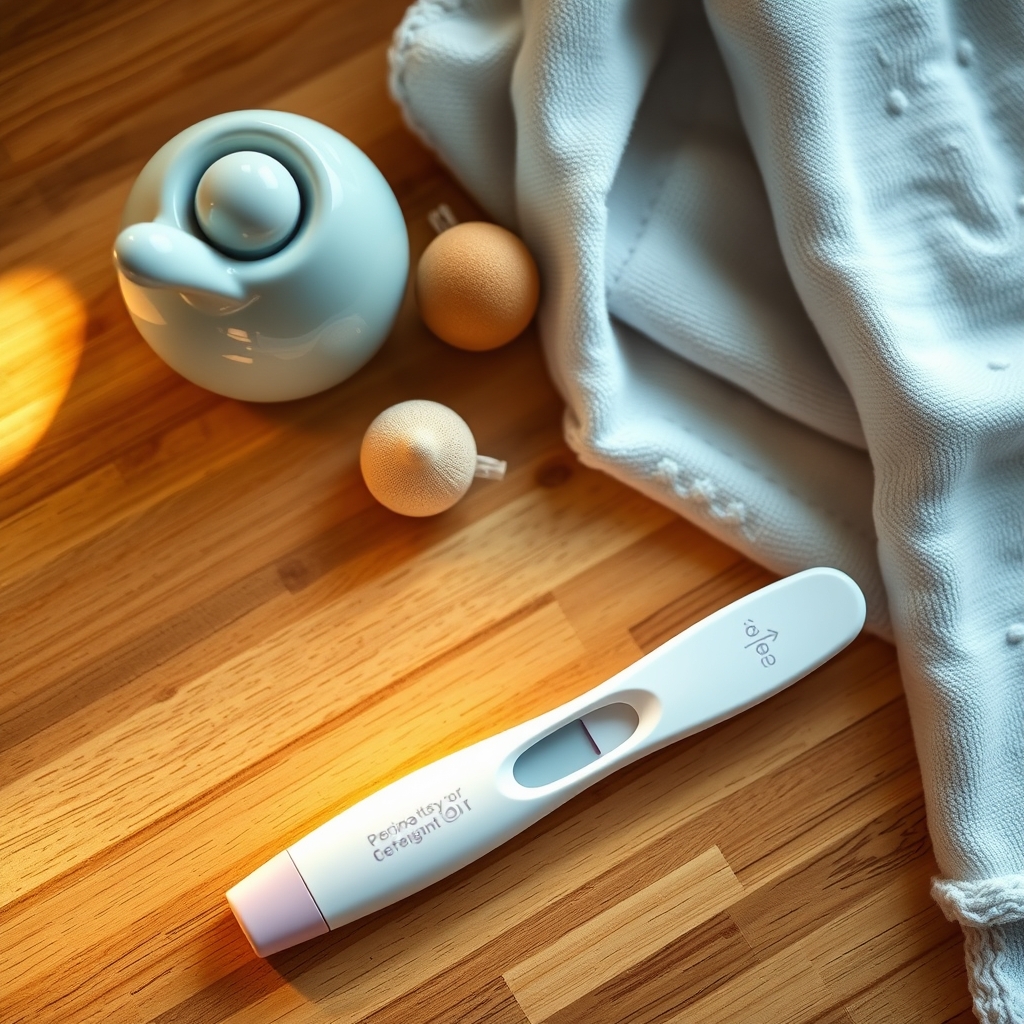
Yes, false positive pregnancy tests can occur due to various factors, learn the common causes of false positive pregnancy test results
By Shubhra Mishra — a mom of two who turned her own confusion during pregnancy into BumpBites, a global mission to make food choices clear, safe, and stress-free for every expecting mother. 💛
Check whether any food is safe during pregnancy with the BumpBites Food Safety Checker.
Quick take: Yes—pregnancy tests can occasionally give a false‑positive result. Most false positives are caused by chemical pregnancies, certain medications, or user‑error such as misreading an evaporation line. A quick repeat test, timing it correctly, and a follow‑up blood hCG test from your provider will confirm whether you’re truly pregnant.
It’s 2 a.m., you’re half‑asleep, and a faint pink line appears on the stick you just bought at the pharmacy. Your heart flutters—could this be the news you’ve been hoping for? Before you start planning a nursery, you might wonder whether the test could be “lying.” You’re not alone. A false‑positive pregnancy test is a real, though uncommon, scenario that can leave you feeling confused, excited, or even anxious.
In this guide we’ll unpack what a false‑positive result actually means, why it happens, and how you can tell the difference between a genuine early pregnancy and a misleading result. We’ll walk through the most common causes, the role of medications and medical conditions, what an evaporation line looks like, and exactly when you should retest. By the end you’ll have a clear roadmap for confirming your results and a list of next steps to take with your health‑care team.
What are the main causes of a false positive pregnancy test?
A “false positive” occurs when a test indicates the presence of human chorionic gonadotropin (hCG) even though a viable pregnancy is not established. hCG is a hormone produced by the placenta after a fertilized egg implants. Most over‑the‑counter tests detect hCG in urine using antibodies that bind to the hormone; a visible line appears when enough hCG is present.
The most frequent culprits behind a false‑positive reading fall into three broad categories:
Chemical pregnancy: A fertilized egg implants but the pregnancy ends within the first two weeks, often before a woman even knows she’s pregnant. The brief surge of hCG can trigger a positive test.
Evaporation or “phantom” line: As urine dries, a faint gray or colorless line may appear, which can be mistaken for a faint positive.
User‑error: Reading the test outside the recommended window (too early or too late), using diluted urine, or misinterpreting the control line can all create the illusion of a positive.
Other less common contributors include certain medications that contain hCG or similar proteins, and specific medical conditions that elevate hCG levels without a pregnancy. Understanding these nuances helps you avoid unnecessary worry and guides you toward the most reliable follow‑up testing.
Laboratories use quantitative assays that can differentiate minute differences in hCG concentration, which is why a home test that shows a faint line can sometimes be clarified by a blood draw. Most modern kits also include a built‑in control line to assure the test is working correctly, reducing the chance of a misleading result caused by a faulty device.
Below is a quick reference table that summarizes these causes, how they affect the test, and typical clues that help you differentiate them.
Cause
How it mimics hCG
Typical test pattern
Key clue
Chemical pregnancy
Transient rise in hCG
Faint line that may disappear on repeat
Positive on first test, negative on follow‑up
Evaporation line
Crystallization of salts as urine dries
Grey‑white line, appears after 10‑15 min
Only visible after recommended reading time
Medication (e.g., hCG injections)
Exogenous hCG in bloodstream → urine
Positive regardless of pregnancy status
Recent fertility treatment or weight‑loss drug
Medical condition (e.g., certain cancers)
hCG‑producing tumors
Consistently positive, often higher hCG
Accompanying symptoms, abnormal labs
User‑error
Improper timing, diluted urine
Variable line intensity
Inconsistent results, early testing
Can certain medications lead to a false positive pregnancy test?
Yes. Some drugs either contain hCG or cause your body to produce substances that cross‑react with the antibodies in home pregnancy tests. The most notable examples include:
Fertility treatments: Injectable or nasal hCG (often prescribed to trigger ovulation) can remain in your system for days, leading to a positive urine test even if implantation has not occurred.
Weight‑loss medications: Certain glucagon‑like peptide‑1 (GLP‑1) agonists have been reported to cause faint positive results, likely due to structural similarity to hCG.
Antipsychotics and antihistamines: Rarely, drugs like chlorpromazine or diphenhydramine have been linked to false positives, though the mechanism is not fully understood.
Immune‑modulating therapy: Some monoclonal antibodies used in cancer therapy can interfere with immunoassays, causing spurious hCG detection.
When you’re on any of these medications, the American College of Obstetricians and Gynecologists (ACOG) advises you to inform your provider before taking a home test. A blood hCG level measured by a laboratory can differentiate between exogenous hCG and a true pregnancy, because the lab can quantify the exact concentration and sometimes distinguish the source.
Timing matters, too. For example, after an hCG injection for IVF, waiting at least 48 hours before testing can reduce the likelihood of a false positive. Over‑the‑counter “fertility supplements” that claim to boost ovulation rarely contain hCG, but they may include herbs that alter urine pH, which can affect test chemistry.
What medical conditions can cause a false positive on a pregnancy test?
Although rare, several health issues can elevate hCG without a pregnancy. The hormone is produced by some tumors and by the pituitary gland under certain circumstances. Conditions that have been documented to cause false‑positive results include:
Trophoblastic disease: Gestational trophoblastic neoplasia (e.g., hydatidiform mole) can produce very high hCG levels, but these are typically associated with clear pregnancy signs and often cause a strong positive.
Non‑gestational cancers: Certain cancers—especially choriocarcinoma, germ cell tumors, and some lung or gastrointestinal cancers—can secrete hCG.
Pituitary hCG production: Post‑menopausal women sometimes have low‑level hCG released by the pituitary, which can be enough to register a faint line.
Kidney disease: Severe renal impairment can reduce hCG clearance, leading to elevated serum levels that may be reflected in urine.
If you have a known medical condition that could affect hCG, the NHS recommends confirming a positive home test with a quantitative blood test and a clinical evaluation. This helps rule out false‑positive causes and guides appropriate follow‑up care. In practice, doctors may order imaging (ultrasound or CT) if a tumor is suspected, alongside the hCG measurement.
It’s also worth noting that chronic liver disease and certain endocrine disorders can subtly alter hormone metabolism, but these rarely produce a false positive strong enough to be seen on a standard home test.
Even a faint line can be a real positive—always read the test within the manufacturer’s timeframe.
Are evaporation lines considered a false positive pregnancy test?
Evaporation lines are not true positives. As urine dries, salts and other residues can leave a faint gray‑white streak where the test’s detection zone was. Because the line lacks the pink or blue coloration that indicates hCG binding, it is technically an “invalid” result rather than a false positive.
Key ways to distinguish an evaporation line from a faint positive:
Color: Evaporation lines are usually colorless or very pale; true hCG lines are pink (urine‑based) or blue (serum‑based).
Timing: Evaporation lines appear after the recommended reading window (usually >10 minutes). The test instructions typically say to read the result within 3–5 minutes.
Location: The evaporation line will appear in the same spot as the test line but may be blurry or uneven.
If you’re unsure, wait the full 5 minutes, then take a fresh test with a new stick. Consistently seeing a colored line after the proper window is a stronger sign of a genuine positive.
Many newer digital tests display a word (“Pregnant” or “Not Pregnant”) instead of a line, which eliminates the evaporation‑line confusion entirely. If you’re prone to misreading lines, a digital test may be a safer choice.
How common are false positive pregnancy tests?
False positives are uncommon. Large studies conducted by the CDC and FDA estimate that less than 2 % of over‑the‑counter urine tests yield a false‑positive result in the general population. The rate rises slightly among women undergoing fertility treatments (up to 5 % due to exogenous hCG) and is higher in post‑menopausal women because of low‑level pituitary hCG.
In everyday practice, most women who receive a positive home test are indeed pregnant. The rarity of false positives is why health professionals often advise a repeat test or a serum hCG measurement before making major decisions.
A 2022 FDA post‑market surveillance report examined over 10 million home test results and found only 1.8 % were false positives, confirming that the technology is highly reliable when used as directed.
What is a chemical pregnancy and can it cause a false positive?
A chemical pregnancy is an early loss that occurs before the embryo can be detected by ultrasound, typically within the first two weeks after conception. The fertilized egg implants, producing a brief rise in hCG, but the pregnancy fails to progress.
Because hCG is present, a chemical pregnancy will generate a positive result on a urine test. However, the hCG level may plateau or decline rapidly, leading to a negative result on a subsequent test taken a few days later. This pattern—positive followed quickly by negative—is a hallmark of a chemical pregnancy and can be misinterpreted as a false positive if the follow‑up test is not performed.
If you suspect a chemical pregnancy, a quantitative blood hCG test can chart the hormone’s rise and fall, providing reassurance and a clear clinical picture. Emotional support is also key; many women never know they experienced a chemical pregnancy because it resolves before any symptoms appear.
When should you retest after a suspected false positive pregnancy test?
Timing is crucial. The best practice is to:
Wait at least 24 hours after the initial test before retesting. This allows any lingering hCG from a chemical pregnancy or medication to clear enough to give a more accurate result.
Use the first‑morning urine for the repeat test. Morning urine is most concentrated, increasing the likelihood of detecting low hCG levels.
Choose a test with a sensitivity of 25 mIU/mL or lower. High‑sensitivity tests can detect earlier pregnancies, which is helpful if you’re still uncertain.
If the second test is negative and you still have symptoms of early pregnancy (missed period, breast tenderness, nausea), schedule a blood hCG test with your provider. A serum test can detect hCG at levels as low as 5 mIU/mL, clarifying whether a true early pregnancy is present.
Some digital tests now incorporate a built‑in timer that alerts you when the result window has closed, reducing the chance of reading an evaporation line. Smartphone‑linked apps can also store the image of your test for later comparison, which is handy if you need to show your provider the exact result.
Keeping a simple log of test dates, results, and any medications can help your provider pinpoint the cause of an unexpected line.
What steps should you take if you get a false positive pregnancy test result?
Discovering that a positive test was not a true pregnancy can be an emotional roller‑coaster. Here’s a practical roadmap to navigate the situation:
Stay calm and avoid jumping to conclusions. A single result is rarely definitive.
Retest in 24–48 hours. Use a fresh test, follow the instructions precisely, and read the result within the recommended window.
Check the expiration date. Expired kits can produce inaccurate lines, including faint positives.
Review recent medications. If you’ve taken fertility drugs, hCG injections, or certain weight‑loss medications, note the timing.
Schedule a blood hCG test. A quantitative serum test will confirm whether any hCG is present and, if so, at what level.
Discuss any medical conditions. Bring up known cancers, pituitary issues, or kidney disease with your provider.
Document your symptoms. Keep a short diary of menstrual changes, breast tenderness, nausea, or other early‑pregnancy signs. This helps the clinician interpret test results.
Ask your provider about next steps. If a false positive is confirmed, you may need follow‑up imaging or labs to rule out rare hCG‑producing tumors.
Remember, a false positive does not mean you’re “doing something wrong.” Hormone fluctuations, medications, and even the chemistry of the test itself can create misleading results. Your health‑care team is there to interpret the data, not to judge.
Emotional support matters, too. Many women find it helpful to talk with a trusted friend, join a fertility‑support forum, or seek counseling if the uncertainty feels overwhelming. You’re not alone, and professional guidance is always within reach.
How does a quantitative blood hCG test confirm a false positive?
A quantitative serum hCG test measures the exact concentration of the hormone in your blood, usually expressed in milli‑International Units per milliliter (mIU/mL). Because the blood sample is not diluted by urine volume, the result is more precise than a urine test, especially when hCG levels are low.
When a home test is positive but you suspect a false positive, a serum test can differentiate three scenarios:
True early pregnancy: hCG levels rise predictably (roughly doubling every 48–72 hours) until about 10 weeks gestation.
Chemical pregnancy: hCG may rise initially but then plateaus or drops, indicating that implantation did not continue.
Exogenous hCG from medication: The level may be detectable but will not follow the typical doubling pattern, and the timing of the medication can be cross‑checked with the lab result.
Guidelines from ACOG and the NHS recommend a repeat serum measurement 48 hours after the first draw if the pattern is unclear. This follow‑up can reassure you quickly and guide any needed further evaluation.
Modern labs often use chemiluminescent immunoassays, which are highly specific and can distinguish between intact hCG and its free subunits. This level of detail helps clinicians pinpoint whether the hormone is coming from a pregnancy, a tumor, or an injection.
Can lifestyle factors like diet, hydration, or recent exercise affect home pregnancy test results?
Yes, although the impact is usually modest. Urine concentration is the biggest variable. Drinking large amounts of fluid before testing can dilute hCG, potentially leading to a false‑negative result, but it rarely creates a false positive.
Certain foods and supplements (e.g., high‑dose vitamin C, herbal teas with phytoestrogens) have been anecdotally linked to altered test lines, but scientific evidence is limited. The FDA’s guidance on home pregnancy tests notes that extreme pH changes in urine—such as from a very acidic or alkaline diet—can occasionally interfere with the immunoassay chemistry, though this is uncommon.
To minimize uncertainty, aim for a mid‑stream urine sample taken first thing in the morning, avoid excessive fluid intake right before testing, and wait at least an hour after intense exercise or a sauna session. These simple steps help ensure the urine is representative of your body’s baseline hCG level.
Some athletes who follow very low‑carbohydrate diets report occasional “false‑positive” lines, likely due to ketone bodies slightly altering urine composition. While not a major concern, it underscores the value of consistent testing conditions.
Understanding the sensitivity and specificity of different pregnancy test brands
Not all home pregnancy tests are created equal. Sensitivity refers to the lowest hCG concentration a test can detect; a test that detects 10 mIU/mL is more sensitive than one that detects 50 mIU/mL. Specificity, on the other hand, reflects how well the test avoids false positives caused by substances that cross‑react with the antibodies.
Studies published by the FDA and independent labs have shown that most major brands exceed 99 % specificity, meaning they rarely misidentify non‑hCG substances as positive. However, highly sensitive tests (≤25 mIU/mL) can pick up the brief hCG spike from a chemical pregnancy or from a recent hCG injection, increasing the chance of a false positive in those contexts.
If you are on fertility medication or have a known medical condition that could raise hCG, you might opt for a test with slightly lower sensitivity (e.g., 50 mIU/mL) to reduce the likelihood of detecting exogenous hormone. Always read the package insert for the exact sensitivity and follow the manufacturer’s timing recommendations.
Brands such as First Response Early Result and Clearblue Early Detection claim “early detection” capabilities, but they also provide clear instructions on avoiding false positives by testing after a missed period and using first‑morning urine. Digital models that show “Pregnant” or “Not Pregnant” avoid line‑interpretation errors entirely, which can be reassuring for users who are prone to confusion.
Can a urinary tract infection affect pregnancy test results?
Urinary tract infections (UTIs) can alter the pH and chemical composition of urine, sometimes leading to a faint discoloration in the test window. While UTIs rarely produce enough hCG to cause a false positive, the altered urine environment can affect the immunoassay reaction, potentially giving a faint line that looks like a positive.
The NHS notes that a highly alkaline urine (pH > 8) can occasionally generate a weak line on some low‑specificity tests. If you have symptoms of a UTI—such as burning on urination, frequent urges, or cloudy urine—it’s wise to treat the infection first and then repeat the pregnancy test after a full day of symptom resolution.
In practice, clinicians often recommend confirming a positive result with a serum hCG test whenever a UTI is present, because the blood assay is not influenced by urinary pH or infection.
Does the timing within your menstrual cycle influence false‑positive results?
Testing too early in your cycle—before a missed period—can produce a faint line that is actually a low‑level hCG from a very early implantation, or it could be an evaporation line. The hormone surge in the first few days after ovulation is typically too low to be detected, but some ultra‑sensitive tests can pick up minute amounts, leading to what appears to be a false positive.
Additionally, the luteinizing hormone (LH) surge that triggers ovulation does not cross‑react with hCG‑specific antibodies, but certain “early‑detection” tests have been shown to be slightly more prone to cross‑reactivity due to broader antibody binding. For this reason, ACOG recommends waiting until at least the first day of a missed period before relying on a home test for a definitive answer.
If you’re tracking your cycle with an app and notice a positive result before your expected period, consider the possibility of a very early pregnancy or a chemical pregnancy, and follow up with a repeat test in 48 hours or a serum hCG.
How do different home pregnancy test brands handle false‑positive risk?
Manufacturers address false‑positive risk in several ways. Analog tests (those that show lines) often include a control line that confirms the test has functioned correctly, reducing the chance that a faulty strip yields a misleading result. Digital tests replace lines with a clear word, eliminating the evaporation‑line confusion altogether.
Some brands, such as Clearblue, incorporate a “digital indicator” that only lights up when the hCG concentration exceeds the test’s threshold, which helps filter out low‑level hCG spikes from chemical pregnancies or medication. First Response offers a “Early Result” version that claims detection as early as five days before a missed period, but the package insert warns users to confirm any early positive with a second test or a blood draw.
Regardless of brand, the FDA requires that all home pregnancy tests meet a minimum specificity of 99 % and a sensitivity of at least 25 mIU/mL. Reading the instructions carefully and using the test within the recommended window are the most reliable ways to avoid false‑positive confusion.
From our medical team: If you receive a positive home test but the result feels off, a repeat urine test followed by a serum hCG measurement is the fastest way to get clarity. Most false positives resolve on a second test, and a blood draw can differentiate a chemical pregnancy from an exogenous hCG source. Always share any recent medications or health conditions with your provider—they can affect the test’s accuracy.
Myth vs. fact
Myth: “If I see any line at all, I’m definitely pregnant.”
Fact: A faint line can be an evaporation line, a user‑error artifact, or a true early positive. Always read the test within the manufacturer’s window and confirm with a second test or blood work.
Myth: “Expired pregnancy tests always give false positives.”
Fact: Expired kits more commonly produce false negatives, but they can also give unreliable faint lines. Check the expiration date and consider using a fresh test if the kit is past its date.
Myth: “If I’m not pregnant, a positive test must be a mistake.”
Fact: Certain medications (like hCG injections) and medical conditions can legitimately cause a positive result without an actual pregnancy.
Key takeaways
A false‑positive pregnancy test is rare (<2 % of home tests) but can happen due to chemical pregnancy, medication, medical conditions, or user‑error.
Evaporation lines are colorless and appear after the recommended reading time; they are not true positives.
Retest after 24 hours using a fresh, unexpired test and first‑morning urine for the most reliable result.
If uncertainty remains, a quantitative serum hCG test from your provider will confirm whether hCG is present and at what level.
Always inform your health‑care team about recent fertility drugs, weight‑loss medications, or any known hCG‑producing conditions.
Call your provider promptly if you experience severe abdominal pain, heavy bleeding, or any sudden change in symptoms.
Frequently asked questions
Can a false positive pregnancy test happen in the first trimester?
Yes—false positives can occur at any stage, but they are most often identified in the first weeks when hCG levels are low and tests are most sensitive.
How do I tell if my pregnancy test is a false positive?
First, check the timing and color of the line. A faint, colorless line that appears after the recommended reading window is likely an evaporation line. Then, retest in 24 hours; a true positive will persist, while a false positive often becomes negative.
Is an evaporation line considered a false positive?
No. Evaporation lines are not true positives; they are a physical artifact of the drying urine. They should be ignored in favor of the result read within the test’s specified time frame.
Can a cyst cause a false positive pregnancy test?
Ovarian cysts themselves do not produce hCG, so they generally do not cause false positives. However, if a cyst is part of a larger condition that raises hCG (such as a trophoblastic tumor), a false positive could result.
What should I do after a false positive pregnancy test?
Retest after 24 hours, verify the test’s expiration date, avoid diluted urine, and schedule a blood hCG test with your provider for definitive confirmation.
Can I trust an over‑the‑counter test if I’m on fertility medication?
Fertility medications that contain hCG can trigger a positive home test even before implantation. In this scenario, a serum hCG test is the most reliable way to differentiate between medication‑induced hCG and a true pregnancy.
Do diet and hydration affect the accuracy of a home pregnancy test?
Excessive fluid intake can dilute urine and potentially mask low hCG levels, leading to false‑negative results rather than false positives. A concentrated first‑morning sample is best for accurate detection.
How quickly does a quantitative blood hCG test show results?
Most labs can report a serum hCG level within a few hours to one business day. The result includes the exact hCG concentration, allowing your provider to assess whether the level matches a normal early pregnancy, a chemical loss, or an exogenous source.
Can a recent blood transfusion cause a false positive pregnancy test?
Blood transfusions do not contain hCG, so they generally do not cause a false positive. However, if the donor had recently been pregnant or receiving hCG therapy, trace amounts could theoretically be transferred, though this is exceedingly rare. A serum hCG test can clarify any lingering concerns.
Do over‑the‑counter fertility supplements affect home pregnancy tests?
Most fertility supplements sold without a prescription do not contain hCG, but some may include herbal extracts that slightly alter urine pH. While this rarely leads to a false positive, it’s wise to check the ingredient list and, if you’re unsure, repeat the test after a few days or ask your provider for a serum hCG.
When to call your doctor
If you experience any of the following, contact your health‑care provider right away:
Severe abdominal or pelvic pain
Heavy vaginal bleeding (soaking a pad in less than an hour)
Sudden fever, chills, or signs of infection
Persistent positive test despite a clear negative blood hCG
Known medical conditions that could produce hCG (e.g., cancer, pituitary disorders)
This article is for informational purposes only and does not replace personalized medical advice. Always discuss test results and next steps with your doctor or midwife.
References
American College of Obstetricians and Gynecologists (ACOG). “Practice Bulletin: Early Pregnancy.” 2023.
U.S. Food and Drug Administration (FDA). “Home Pregnancy Test Guidance for Industry.” 2022.
Centers for Disease Control and Prevention (CDC). “Pregnancy Test Accuracy.” 2021.
National Health Service (NHS). “Understanding Evaporation Lines on Pregnancy Tests.” 2023.
World Health Organization (WHO). “Guidelines on hCG Assay Standardization.” 2022.
Mayo Clinic. “Chemical pregnancy: Causes, symptoms, and treatment.” Updated 2024.
British National Formulary (BNF). “Human Chorionic Gonadotropin (hCG) – Uses and Side Effects.” 2023.
Society of Reproductive Medicine. “Impact of Fertility Medications on Home Pregnancy Test Results.” 2022.
National Institute for Health and Care Excellence (NICE). “Fertility treatments and hCG testing.” 2023.
Not sure about the label on Can You Have A False Positive Pregnancy Test Causes products?
Snap the ingredients list and SafeFilter checks every ingredient for your stage — only 3 free scans this month, then you're locked until reset. Unlimited from $7/mo or $50/yr.
When Shubhra Mishra was expecting her first child in 2016, she was overwhelmed by conflicting food advice — one site said yes, another said never. By the time her second baby arrived in 2019, she realized millions of mothers face the same confusion.
That sparked a five-year journey through clinical nutrition papers, cultural diets, and expert conversations — all leading to BumpBites: a calm, compassionate space where science meets everyday motherhood.
Her long-term vision is to build a global community ensuring safe, supported, and free deliveriesfor every mother — because no woman should face pregnancy alone or uninformed. 🌿
🌍 Stand with mothers, shape safer guidance
Join a small circle of experts who review BumpBites articles so expecting parents everywhere can decide with confidence.