Quick take: If your baby is suddenly launching sweet potato across the kitchen, take a breath—it’s a normal (if messy) phase. Most babies start throwing food between 8 and 18 months as they explore cause-and-effect, test boundaries, or signal they’re done eating. The key is to stay calm, set clear limits, and redirect their energy. We’ll walk you through exactly how to respond, when to worry, and which high chair setups can save your sanity.
You’re scraping mashed peas off the floor for the third time this week, and your 11-month-old is grinning like it’s the best game ever invented. You’ve tried gentle reminders, firm “no’s,” and even ignoring it—yet here you are, living in a Jackson Pollock painting of pureed carrots. If this sounds familiar, you’re not alone. Food throwing is one of those parenting rites of passage that no one warns you about (right after the first time they yank off their diaper mid-change).
The good news? This phase is temporary, and it’s not a sign you’re doing anything wrong. Babies throw food for a mix of developmental, emotional, and sensory reasons—and with the right strategies, you can guide them toward mealtime manners without turning dinner into a power struggle. In this guide, we’ll break down why it happens, how to respond in the moment, and when to check in with your pediatrician. Plus, we’ll share the high chair hacks that actually work (spoiler: the $20 silicone placemat is a game-changer).
One mom, Sarah, put it this way: “I used to dread mealtime. Now, I see it as a chance for my son to practice self-control—and for me to practice patience. Some days we nail it; other days, we’re back to square one. But knowing it’s just a phase makes it easier to laugh (and keep the mop handy).”
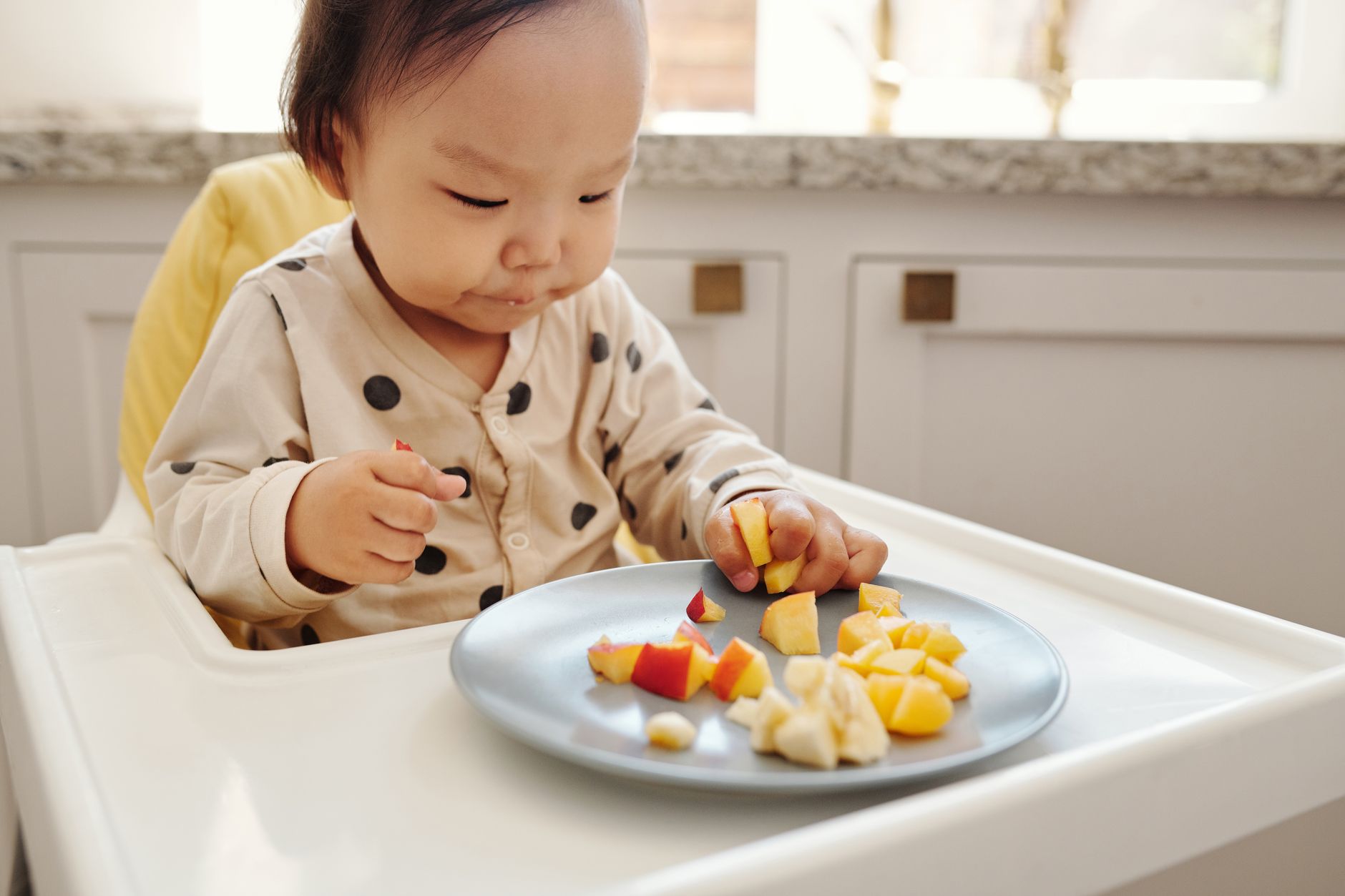
At what age do babies start throwing food and why?
Most babies start throwing food between 8 and 12 months, with the behavior peaking around 12 to 18 months. This timing aligns with key developmental milestones: your baby is discovering cause-and-effect (“If I drop this, Mommy picks it up!”), testing boundaries (“What happens if I do this?”), and refining their fine motor skills. Throwing food is often their way of experimenting with the world—and, let’s be honest, getting a reaction from you.
But why food? For starters, it’s one of the few things they can control. “Babies this age are learning autonomy,” explains Dr. Laura Markham, clinical psychologist and author of Peaceful Parent, Happy Kids. “Food is something they can move, drop, or launch—unlike the spoon you’re holding or the chair they’re strapped into.” It’s also a sensory experience: the sound of a spoon clattering to the floor, the splat of yogurt on tile, the way their hands feel when they squeeze a handful of oatmeal. For some babies, throwing food is pure play.
Developmentally, this phase overlaps with the object permanence milestone (the understanding that things exist even when they’re out of sight). Around 9 months, babies start to realize that when they drop their cup, it doesn’t vanish—it’s still there, and you’ll pick it up. This can turn mealtime into a fun (for them) game of “fetch.” By 12 months, many babies are also experimenting with social cues: they watch your face for a reaction, then repeat the behavior if it gets a rise out of you. Even a stern “no” can feel like a reward to a baby craving attention.
Here’s a quick breakdown of the most common reasons babies throw food, by age:
It’s worth noting that food throwing isn’t limited to solids. Many babies start by tossing their sippy cup, spoon, or even their bib—anything within arm’s reach is fair game. If your baby is throwing food earlier than 8 months, it’s usually just a sign they’re still working on their grip. If it starts later (after 18 months), it might be more about testing limits or seeking attention.
One reader, Priya, shared: “My daughter started throwing food at 10 months, right when she figured out how to take off her socks. It was like she realized she could control something in her world—and food was the easiest target. We had to baby-proof the high chair like it was a Fort Knox for snacks.”
Is it normal for my 1-year-old to throw food on the floor every meal?
Yes—completely normal. In fact, if your 1-year-old isn’t throwing food occasionally, they might be the exception. A 2023 survey by the American Academy of Pediatrics (AAP) found that 78% of parents reported their child threw food at least once a week between 12 and 18 months. For many families, it’s a daily (or multiple-times-a-day) occurrence.
But “normal” doesn’t always mean “easy.” When every meal feels like a battle, it’s exhausting. You might worry that your child is being defiant, or that you’re failing at teaching manners. Here’s the reassuring truth: food throwing at this age is rarely about defiance. It’s about exploration, communication, and developmental leaps. Your 1-year-old isn’t trying to upset you—they’re trying to figure out how the world works.
That said, there’s a difference between occasional food throwing and constant food throwing. If your child is launching food at every meal, it might be a sign they’re:
- Bored: Mealtime is taking too long, or they’ve lost interest in the food.
- Frustrated: They want more (or less) food, but can’t communicate it.
- Sensory-seeking: They enjoy the sound, texture, or visual effect of food hitting the floor.
- Testing limits: They’re learning what they can (and can’t) get away with.
- Full: They’re done eating but don’t know how to tell you.
One mom, Jamie, described her son’s food-throwing phase like this: “It was like he had two modes: eat or launch. If he wasn’t shoveling food into his mouth, he was sending it to the floor. We tried everything—smaller portions, shorter meals, ignoring it—but nothing worked until we realized he was just done. Now, we watch for the signs: if he starts playing with his food instead of eating it, we call it quits.”
So how do you know if your child’s food throwing is “normal” or something to address? Ask yourself:
- Is it happening at every meal, or just occasionally?
- Does your child seem happy or frustrated when they throw food?
- Are they growing and developing on track (weight, milestones, energy levels)?
- Is the behavior escalating (e.g., throwing harder, targeting people)?
If the answer to the first three questions is “yes, sometimes” and “no” to the last one, you’re likely in the normal range. If you’re seeing signs of frustration, sensory overload, or developmental delays (more on that later), it might be time to dig deeper.
And remember: this phase will pass. Most children outgrow constant food throwing by 24 months, as they develop better communication skills and self-control. In the meantime, focus on consistency (same rules every meal) and patience (this too shall pass).
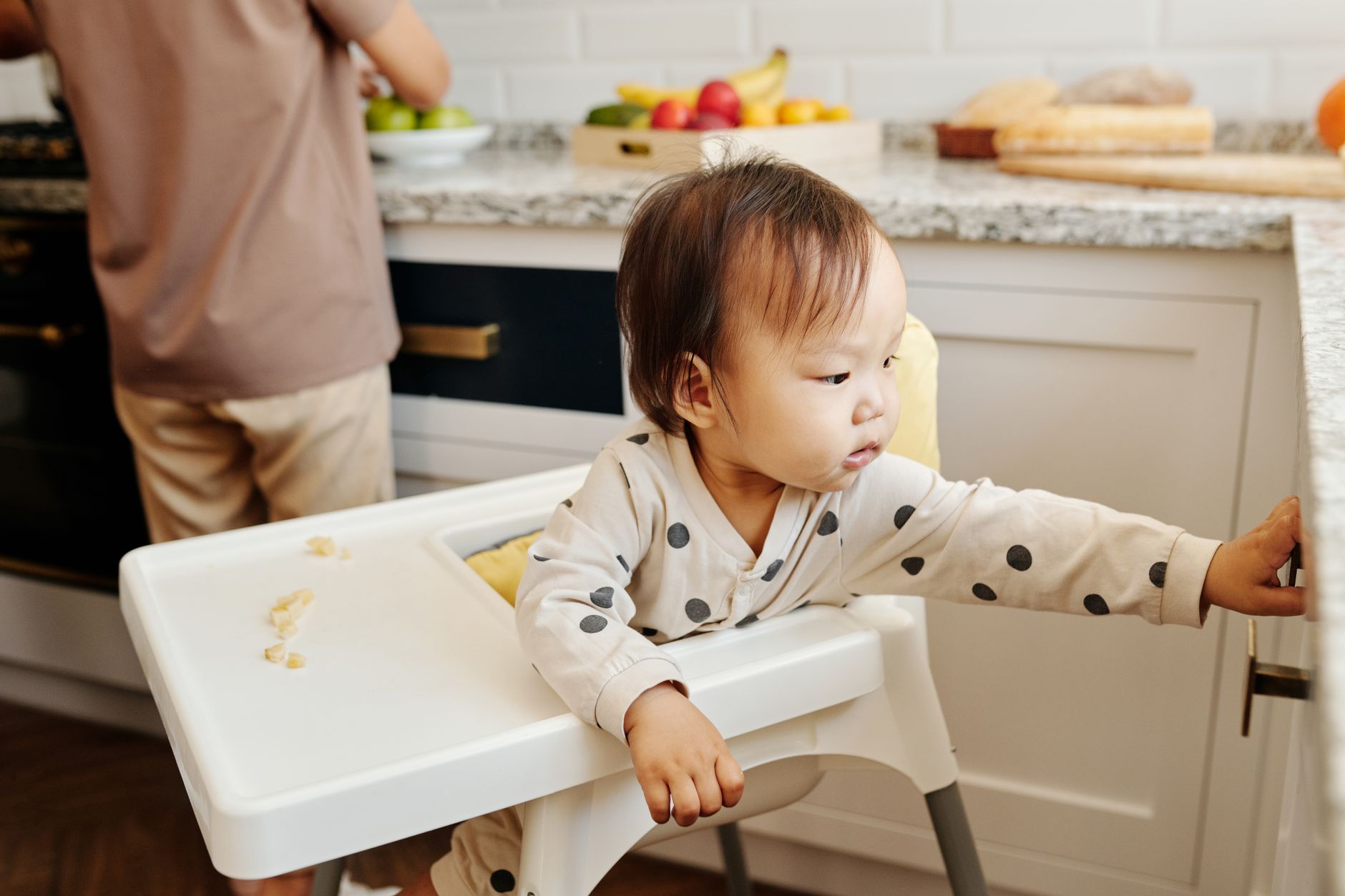
How to stop a baby from throwing food at the table without punishment
You’ve tried the stern “no,” the dramatic sigh, and the silent cleanup—none of it’s working. The good news? You can reduce food throwing without punishment, time-outs, or turning mealtime into a battleground. The key is to address the root cause (boredom, frustration, attention-seeking) and teach alternative behaviors. Here’s a step-by-step plan that actually works:
1. Rule out hunger and fullness first
Before assuming your baby is misbehaving, check if they’re actually hungry or actually full. Babies throw food for different reasons at different times:
- When hungry: They might throw food because they’re frustrated they can’t feed themselves fast enough, or they don’t like what’s offered. Solution: Offer smaller, easier-to-eat pieces, and let them practice self-feeding with a spoon or their hands.
- When full: Throwing food is often their way of saying, “I’m done.” Solution: Watch for cues like turning their head away, playing with food instead of eating, or slowing down. When you see these signs, calmly say, “All done?” and remove the food.
One trick that works for many parents: serve food in courses. Start with a small portion (2–3 tablespoons of each food), and only offer more if your baby is still showing interest. This prevents overwhelm and gives them a clear “end” to the meal.
2. Set up the environment for success
Minimize opportunities for food throwing by making it harder (or less fun) to do. Try these tweaks:
- Use a suction plate or bowl: These stick to the high chair tray, making it harder to flip or toss. Look for ones with deep sides to contain messes.
- Serve food in a muffin tin: The small compartments keep foods separate and make it harder to grab handfuls. It also gives your baby a sense of control over what they eat.
- Try a silicone placemat: These grip the tray and catch fallen food, making cleanup easier. Some even have raised edges to contain spills.
- Limit distractions: Turn off screens and keep toys away from the table. If your baby is overstimulated, they’re more likely to throw food for entertainment.
If you’re dealing with a serial food thrower, consider a baby-proofing upgrade to your high chair. Some parents swear by the IKEA Antilop high chair with a removable tray cover—it’s easy to clean, and the tray is shallow enough that food doesn’t fly as far. Others prefer a floor seat (like the Fisher-Price SpaceSaver) for younger babies, as it puts them at table height and reduces the “launch pad” effect of a high chair.
3. Teach an alternative behavior
Babies throw food because they don’t know what else to do with it. Give them a better option:
- “All done” bowl: Place a small bowl on the tray and say, “If you’re done, put it in here.” Praise them when they use it.
- Hand them a napkin: Say, “Here, you can wipe your hands,” and show them how. Some babies love the sensory input of wiping.
- Offer a “throwable” toy: Keep a soft ball or fabric block nearby. When they reach for food to throw, hand them the toy instead and say, “You can throw this!”
One mom, Lisa, shared: “My son used to throw his sippy cup every time he was done drinking. We started handing him a small stuffed animal instead and saying, ‘You can toss Mr. Bear!’ It took a few weeks, but now he does it automatically. It’s like he needed something to throw—we just gave him a better option.”
4. Respond consistently (and calmly)
Your reaction sets the tone. If you laugh, scold, or give a big reaction, your baby will keep throwing food for the entertainment. Instead:
- Stay neutral: When food hits the floor, say, “Food stays on the tray,” in a calm, firm voice. Avoid eye contact or big reactions.
- End the meal if needed: If throwing continues, say, “Throwing food means we’re all done,” and remove the tray. Do this every time to establish a clear consequence.
- Praise the behavior you want: When your baby eats without throwing, say, “Great job keeping your food on the tray!”
Consistency is key. It might take weeks for your baby to connect the dots, but they will learn. One dad, Mark, put it this way: “The first few times we ended the meal early, my daughter screamed. But after a week, she started putting her hands in her lap when she was done. It was like she finally understood the rule.”
5. Adjust your expectations
Remember: your baby isn’t throwing food to spite you. They’re learning, testing, and exploring. Some days will be better than others, and that’s okay. Instead of aiming for zero food throwing, aim for less food throwing. Celebrate small wins, like a meal where only half the food ends up on the floor instead of all of it.
And if all else fails? Embrace the mess. Keep a small broom and dustpan nearby, or lay a splash mat under the high chair for easy cleanup. Some parents even find it helpful to schedule food throwing: set aside 5 minutes at the end of the meal for “toss time,” where your baby can throw a few pieces of food into a bowl or onto a tray. It gives them the sensory input they crave while keeping the rest of the meal intact.
What are safe high chair alternatives to prevent food throwing?
If your high chair is turning mealtime into a food fight, it might be time to rethink your setup. The right seating can minimize messes, reduce throwing, and make cleanup easier. Here are the safest and most effective high chair alternatives, ranked by how well they prevent food throwing:
Top picks for messy eaters
If your baby is a champion food thrower, these setups can help:
- Hook-on chair + silicone placemat: The Inglesina Fast Table Chair clamps to your table, eliminating the high chair tray entirely. Pair it with a silicone placemat (like the Munchkin Silicone Placemat) to catch spills and make cleanup a breeze. Since there’s no tray to flip, food stays closer to the table—and your baby can’t launch it as far.
- Floor seat + muffin tin: The Fisher-Price SpaceSaver sits low to the ground, so food doesn’t have far to fall. Serve meals in a muffin tin to keep portions small and contained. The compartments make it harder for your baby to grab handfuls of food to throw.
- Montessori weaning table + “all done” bowl: A small table and chair (like the Sprout Kids Weaning Table) gives your baby independence while keeping them at a comfortable height. Place an “all done” bowl on the table and teach them to put food in it when they’re finished. Without a tray to flip, there’s less temptation to throw.
Pro tips for any setup
- Add a footrest: A stable footrest (like the one on the Stokke Tripp Trapp) helps your baby feel secure and reduces wiggling, which can lead to food throwing.
- Use a tray cover: If you’re using a high chair with a tray, look for a removable tray cover (like the IKEA Antilop’s). It’s easier to clean than the whole tray, and you can swap it out mid-meal if it gets too messy.
- Try a splash guard: Some high chairs (like the Abiie Beyond) come with a splash guard that attaches to the tray. It won’t stop food throwing entirely, but it can contain some of the mess.
- Go tray-free: If your baby is old enough (12+ months), try removing the tray and pulling their chair up to the table. They’ll feel more like part of the family, and there’s less to throw.
One dad, Ryan, shared his hack: “We switched to a hook-on chair when our son was 10 months old, and it cut food throwing in half. He still drops stuff, but it lands on the table instead of the floor. Plus, he loves sitting with us instead of in his ‘baby jail’ high chair.”
What to avoid
- High chairs with shallow trays: Food slides right off, making it easy to throw. Look for trays with raised edges or suction bases.
- Chairs without straps: If your baby can wiggle out, they’re more likely to toss food. Always use the 5-point harness.
- Overloading the tray: Too much food = more to throw. Stick to 2–3 small portions at a time.
- Reactive cleanup: If you rush to pick up every dropped piece, your baby will keep throwing for the attention. Wait until the end of the meal to clean up.
Remember: no setup will completely eliminate food throwing, but the right one can make it less frequent and easier to manage. Experiment to find what works best for your baby—and don’t be afraid to switch things up as they grow.
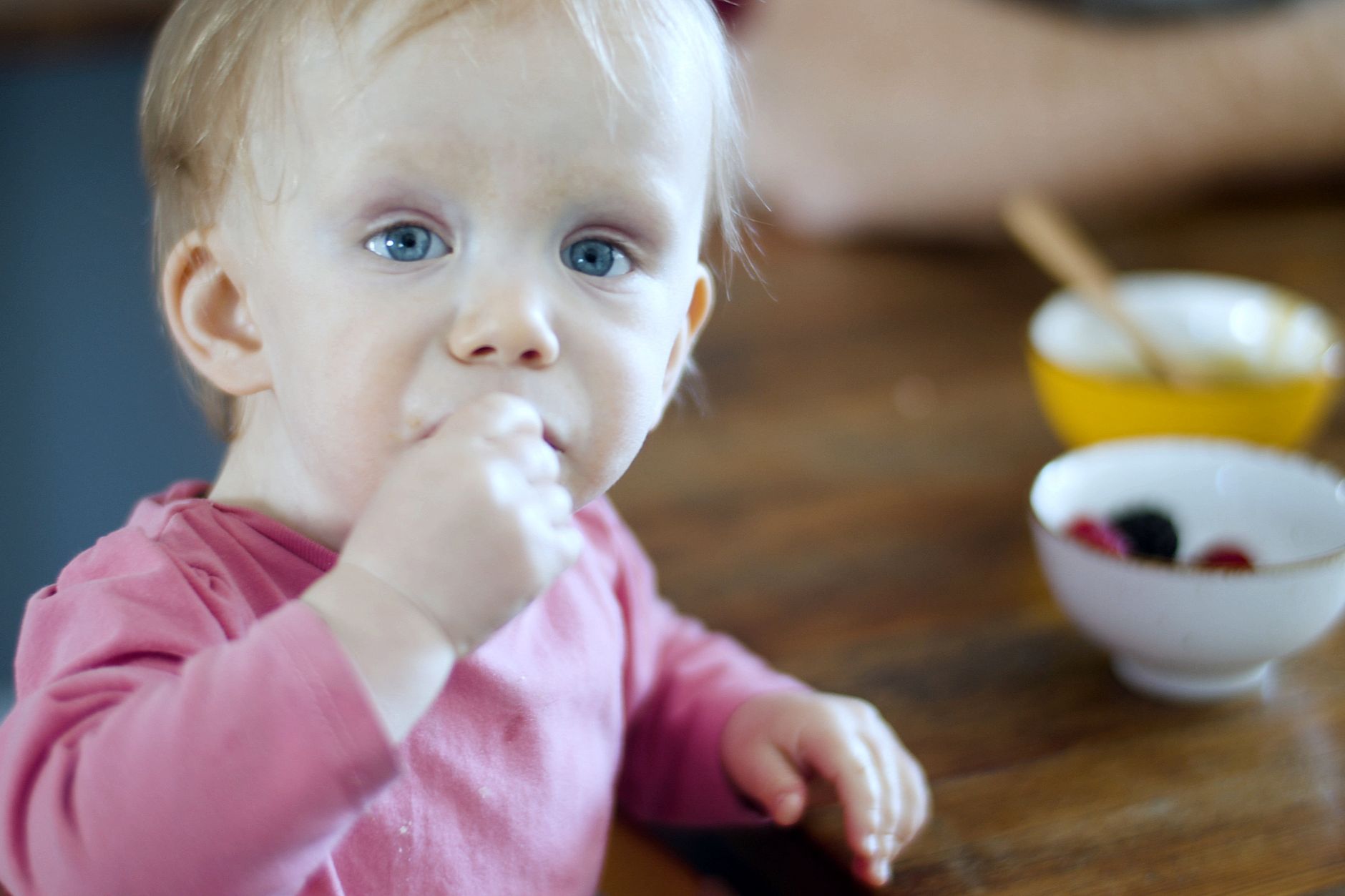
Why does my baby throw food when full vs. when hungry or frustrated?
Your baby’s food-throwing habits can change dramatically depending on whether they’re hungry, full, or frustrated. Understanding the why behind the throw can help you respond in a way that meets their needs—and reduces the mess. Here’s how to decode their cues:
Throwing food when full
This is the most common reason babies throw food. When they’re done eating, they don’t have the words to say, “I’m full,” so they communicate through action. Signs your baby is throwing food because they’re full:
- They’ve slowed down or stopped eating.
- They’re playing with food instead of putting it in their mouth.
- They turn their head away when you offer more.
- They start throwing after eating most of their meal.
- They seem content or distracted, not upset.
How to respond:
- Say, “All done?” and remove the food. Keep your tone neutral—no praise or scolding.
- Offer an “all done” bowl or napkin to give them a way to “finish” the meal.
- Watch for their fullness cues earlier in the meal to prevent throwing. If they start playing with food, it’s time to wrap it up.
One mom, Emily, noticed her daughter would throw food when she was full—but only if the meal dragged on. “We started setting a timer for 20 minutes. When it went off, we’d say, ‘Time’s up!’ and end the meal. It cut down on the throwing and the mealtime battles.”
Throwing food when hungry
Yes, babies throw food when they’re hungry, too. This usually happens when they’re frustrated—they want more food, but they can’t feed themselves fast enough, or they don’t like what’s offered. Signs your baby is throwing food because they’re hungry:
- They throw food early in the meal, before eating much.
- They seem agitated or upset (crying, whining, reaching for more).
- They throw food and then immediately reach for more.
- They’re extra clingy or fussy before the meal.
How to respond:
- Offer smaller, easier-to-eat pieces to help them self-feed faster.
- Give them a spoon or fork to practice with (even if they’re messy).
- If they throw food and reach for more, say, “More food? Here you go,” and offer another small portion.
- Check if they’re actually hungry or just bored. If they’re not eating much, they might not be ready for solids yet.
One dad, Jake, shared: “My son would throw his food when he was hungry because he wanted to feed himself, but he couldn’t hold the spoon steady. We switched to pre-loaded spoons (like the NumNum GOOtensil), and the throwing stopped. He felt more in control.”
Throwing food when frustrated
Frustration is a big trigger for food throwing. Babies this age are learning to communicate, but their language skills are still limited. When they can’t say what they want (or don’t want), they act out—often by throwing food. Signs your baby is throwing food because they’re frustrated:
- They throw food hard or with force.
- They seem angry or upset (crying, arching their back, stiffening their body).
- They throw food and then look at you for a reaction.
- It happens when they’re tired, overstimulated, or overwhelmed.
How to respond:
- Stay calm. If you react with frustration, it’ll escalate the behavior.
- Say, “I see you’re frustrated. Let’s take a break,” and remove the food for a minute.
- Offer a comfort item (a lovey, pacifier, or favorite toy) to help them regulate.
- If they’re throwing because they don’t like the food, say, “You don’t have to eat it,” and offer something else.
One reader, Priya, noticed her daughter would throw food when she was frustrated—but only at dinner. “We realized she was overtired by then. Now, we do dinner earlier, and the throwing has stopped. It was as simple as adjusting the schedule.”
Some babies throw food because they enjoy the sensory experience: the sound of it hitting the floor, the way it feels in their hands, or the visual effect of food splattering. This is especially common in babies who are sensory-seeking or have sensory processing differences. Signs your baby is throwing food for sensory input:
- They throw food repeatedly, even after you’ve removed it.
- They seem excited or curious, not upset.
- They watch the food fall or listen to the sound it makes.
- They throw other objects (toys, cups, utensils) in the same way.
How to respond:
- Offer sensory-friendly foods (e.g., cooked pasta, soft fruit, or yogurt) that are fun to squish and explore.
- Give them a “throwable” toy (like a soft ball) to redirect the behavior.
- Let them play with food in a controlled way (e.g., finger painting with yogurt or squishing bananas).
- If sensory-seeking is a big part of their personality, talk to your pediatrician about occupational therapy for more strategies.
One occupational therapist, Maria, shared: “For sensory-seeking babies, food throwing is often about input, not defiance. I tell parents to lean into it—give them a bowl of cooked spaghetti to squish, or let them drop soft foods into a bucket. It satisfies their sensory needs without turning mealtime into a battle.”
Quick reference: Why is my baby throwing food?
When should I worry about my baby throwing food—signs of sensory or developmental issues
For most babies, food throwing is a normal, temporary phase. But in some cases, it can be a sign of an underlying sensory processing issue, developmental delay, or autism spectrum disorder (ASD). How do you know when to worry? Here’s what to watch for—and when to check in with your pediatrician.
Red flags: When food throwing might signal a bigger issue
Talk to your pediatrician if your baby’s food throwing is accompanied by any of these signs:
- Sensory sensitivities:
- Gags or vomits at certain textures, temperatures, or smells.
- Refuses to touch or eat foods with specific textures (e.g., mushy, crunchy, sticky).
- Overreacts to sounds (e.g., chewing, crunching) or lights during meals.
- Developmental delays:
- Not meeting motor milestones (e.g., sitting up, grasping objects, self-feeding by 12 months).
- Not using gestures (pointing, waving, shaking



