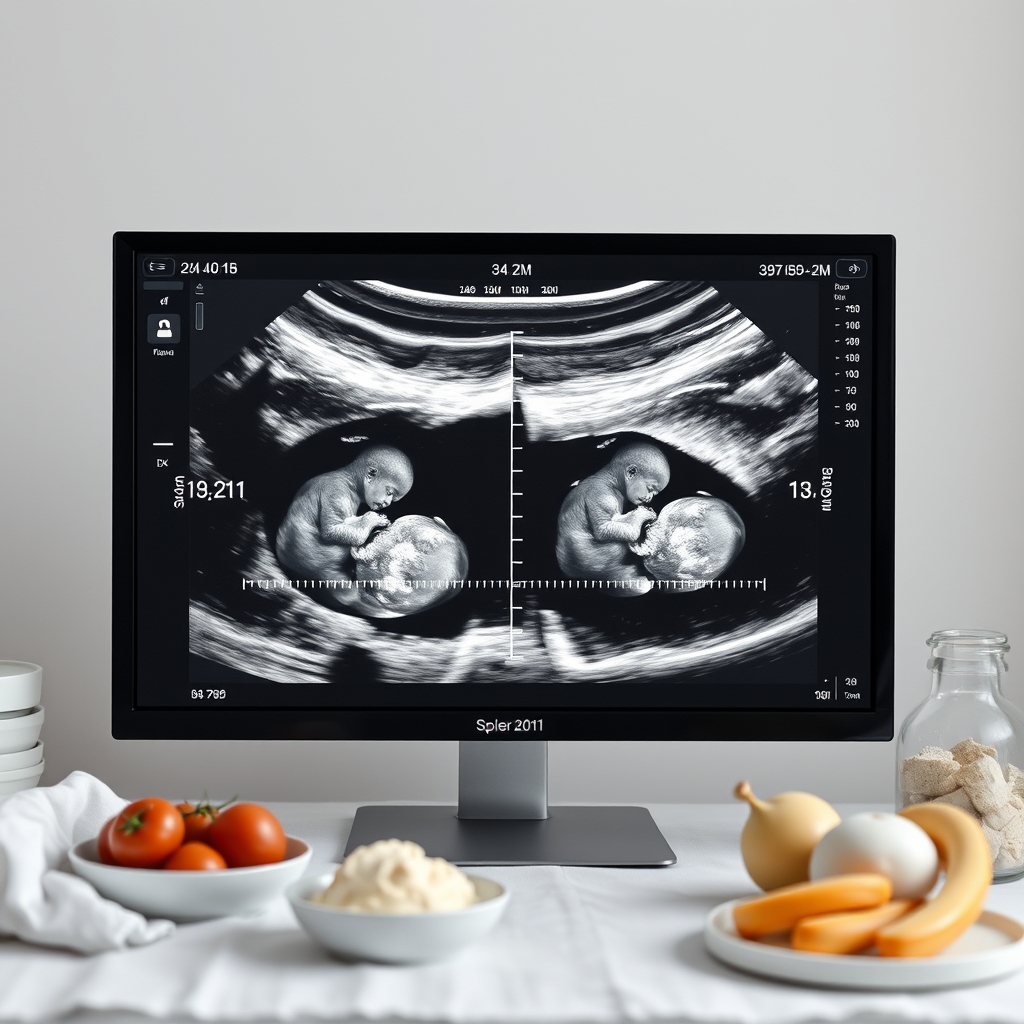
Ultrasound weight estimate: How accurate is it really? Ultrasound weight estimates are around 85-90% accurate, but can vary depending on several factors
By Shubhra Mishra — a mom of two who turned her own confusion during pregnancy into BumpBites, a global mission to make food choices clear, safe, and stress-free for every expecting mother. 💛
Check whether any food is safe during pregnancy with the BumpBites Food Safety Checker.
Quick take: Ultrasound weight estimates are useful guides, but they usually have a margin of error of ±10–15 percent. In most pregnancies the estimate is close enough to help plan delivery, yet it’s not a definitive prediction of the baby’s exact birth weight.
It’s 2 a.m., you’ve just felt another flutter, and the pregnancy app on your phone tells you it’s time for a “growth scan.” You wonder: “Will the ultrasound tell me how big my baby really is?” You’re not alone. Many expectant parents ask the same question, hoping the numbers will give certainty about a safe delivery.
🔢 Calculate it for your situation: Use our Fetal Weight Calculator for a personalized result in seconds.
The short answer is that ultrasound weight estimates are reasonably accurate, especially in the third trimester, but they are not exact measurements. They are tools that help clinicians anticipate potential complications, schedule a delivery plan, and decide whether additional monitoring is needed.
In this article we’ll explain what an ultrasound weight estimate is, how it’s calculated, what factors influence its precision, and how to interpret the results you receive. We’ll also compare typical ultrasound estimates with actual birth weights, discuss the role they play in pregnancy care, and give you practical tips for talking with your provider.
What is an ultrasound weight estimate and how is it performed?
An ultrasound weight estimate, also called an estimated fetal weight (EFW), is a calculation derived from measurements taken during a standard prenatal ultrasound. During the scan, the sonographer measures three to four key fetal dimensions:
Head circumference (HC)
Abdominal circumference (AC)
Femur length (FL)
Sometimes biparietal diameter (BPD) for additional precision
These measurements are entered into a formula—most commonly the Hadlock equations—to generate a weight estimate in grams or pounds. The process is non‑invasive, takes only a few minutes, and is usually done alongside other routine assessments such as amniotic fluid volume and placental location.
Because the ultrasound machine captures a two‑dimensional image, the software assumes the fetus is roughly symmetrical and that the measured dimensions represent the whole body. The resulting EFW is then compared to standardized growth charts that adjust for gestational age, allowing the provider to see whether the baby is growing as expected.
It's also important to note that the accuracy of the EFW can be influenced by the quality of the ultrasound machine and the skill of the sonographer. High‑quality machines with advanced technology can provide more accurate measurements, while experienced sonographers can better position the fetus for optimal measurement.
Why it matters: The growth scan is often the first time you see a concrete number for your baby's size, turning a vague feeling into a data point you can discuss with your care team. Even though the number isn’t exact, it gives both you and your provider a shared reference for tracking growth over time.
How fetal weight is calculated during pregnancy
The m
ost widely used formulas were developed in the 1980s by Dr. Hadlock and colleagues, who correlated ultrasound measurements with actual birth weights from thousands of deliveries. The classic Hadlock 4‑parameter equation looks like this:
EFW = 10(0.0325 × HC + 0.0457 × AC + 0.0144 × FL – 0.0080 × HC × AC + 0.0005 × HC × FL – 0.0002 × AC × FL + 0.0001 × HC × AC × FL – 5.307)
Modern ultrasound machines embed this equation (and variations) into their software, automatically delivering an EFW after the sonographer records the required measurements. Some devices also offer “custom” algorithms that factor in maternal weight, ethnicity, and fetal sex, but the core principle remains the same: three linear dimensions predict overall mass.
Because the formula is based on statistical averages, it works best for “average‑sized” fetuses. Extremely small or large babies can fall outside the range where the equation is most reliable, leading to larger errors. Additionally, the formula may not account for other factors that can affect fetal growth, such as maternal nutrition or underlying medical conditions.
Several alternative formulas—such as the Hadlock 3‑parameter model (using HC, AC, and FL) or the Shepard formula—are sometimes used when one measurement is unavailable. Research shows that no single formula consistently outperforms the others across all gestational ages; clinicians often rely on the machine’s built‑in algorithm, which selects the most appropriate model based on the data entered.
Factors that can affect the accuracy of ultrasound weight estimates
Several variables influence how close the EFW will be to the baby’s true weight. Understanding these helps you put the numbers in context.
Gestational age: Accuracy improves as the pregnancy progresses. In the second trimester the margin of error can be ±15–20 percent, while in the third trimester it typically narrows to ±10 percent.
Fetal position: If the baby is curled, has its arms over its head, or is lying on a side that hides the abdomen, the AC measurement may be underestimated, leading to a lower EFW.
Maternal habitus: Higher maternal BMI can reduce image clarity, making it harder to obtain precise measurements.
Operator skill: Experienced sonographers who follow standardized protocols tend to produce more reliable estimates than less‑trained technicians.
Equipment quality: High‑resolution machines with newer transducers give clearer images, while older units may produce fuzzier data.
Fetal growth pattern: Babies that grow at a rapid or unusually slow rate between scans can cause the formula to mis‑predict weight because it assumes a steady growth curve.
Maternal conditions such as diabetes, hypertension, or anemia can also alter fetal composition, making the standard assumptions about tissue density less accurate. Likewise, fetal conditions like hydrops (excess fluid) or congenital anomalies can skew measurements, prompting clinicians to interpret the EFW with extra caution.
Even with all these variables, most providers consider the estimate a valuable clinical tool, especially when combined with other assessments such as Doppler studies. It's also important to note that the American College of Obstetricians and Gynecologists (ACOG) recommends that ultrasound weight estimates be used in conjunction with other clinical assessments to ensure accurate fetal weight estimation.
Typical accuracy rates at different stages of pregnancy
Researchers have studied thousands of ultrasound‑estimated weights and compared them with the actual birth weight recorded after delivery. The findings consistently show a pattern that depends on the timing of the scan.
Gestational age
Average error margin
Typical confidence interval (±)
20 weeks
±15–20 %
≈ 250–350 g
30 weeks
±10–15 %
≈ 200–300 g
36 weeks
±8–12 %
≈ 150–250 g
38 weeks
±5–10 %
≈ 120–200 g
In practical terms, a 3 kg baby measured at 36 weeks might be reported as anywhere from 2.7 kg to 3.3 kg. The closer the scan is to delivery, the tighter the range becomes, which is why many clinicians repeat the estimate in the last few weeks if a precise weight is critical for delivery planning.
These data also explain why a single scan at 20 weeks is rarely used to make major decisions about mode of delivery; it’s simply not accurate enough at that stage. However, the National Institute for Health and Care Excellence (NICE) recommends that women with a high‑risk pregnancy should have more frequent ultrasound scans to monitor fetal growth and well‑being.
Clinicians use the reported error margins to decide when additional testing is warranted. For example, an estimate that falls just outside the 90th percentile but is still within the expected ±10 % range may be monitored rather than acted upon immediately, reducing unnecessary interventions.
How ultrasound weight estimates are used to predict birth weight and plan for delivery
Even with its inherent uncertainty, an EFW influences several key aspects of prenatal care:
Identifying growth restriction: If the estimate falls below the 10th percentile for gestational age, clinicians may order additional Doppler studies to assess placental function and consider early delivery if the baby appears compromised.
Detecting macrosomia: An estimate above the 90th percentile raises concern for a large‑for‑gestational‑age (LGA) baby, which can increase the risk of shoulder dystocia, cesarean delivery, and maternal hemorrhage. In such cases, providers may discuss induction timing, maternal diet, or even the possibility of a planned cesarean.
Scheduling a birth center or hospital: Certain facilities have weight limits for vaginal birth after cesarean (VBAC) or for low‑risk birthing centers. Knowing the approximate size helps match the mother‑baby dyad with the appropriate setting.
Preparing for neonatal care: If a baby is expected to be very low birth weight, the team can arrange for neonatal intensive care unit (NICU) resources ahead of time.
When you receive an estimate, you might ask your provider: “Based on this weight, what are the chances my baby will need a cesarean?” or “Do we need extra monitoring because the baby is growing slowly?” Those conversations translate the numbers into a concrete care plan.
Shared decision‑making is especially important when cultural or personal preferences influence delivery choices. Some families may prefer a vaginal birth if possible, while others might feel more comfortable scheduling a cesarean if the estimate suggests a very large baby. Your provider can help balance the statistical risk with your values and birth goals.
For those who want a quick, personalized snapshot, our Fetal Weight Calculator lets you input your own measurements and see an estimate in real time. The World Health Organization (WHO) also provides guidelines on fetal weight estimation, emphasizing the importance of using a combination of ultrasound and clinical assessments to ensure accurate estimation.
Comparing ultrasound estimates to actual birth weights
Large cohort studies from the United States, United Kingdom, and Australia have consistently reported that about 70–80 % of ultrasound estimates fall within ±10 % of the newborn’s actual weight. The remaining 20–30 % are split between under‑estimates and over‑estimates, each with its own clinical implications.
One 2022 meta‑analysis of 42 studies (over 30,000 pregnancies) found that the mean absolute error (MAE) of EFW at 36 weeks was 210 g, while at 30 weeks the MAE rose to 340 g. Importantly, the study highlighted that errors were larger in twins, in cases of maternal obesity, and when the fetus was positioned unfavorably.
When estimates are markedly off—say, a baby thought to be 4 kg at 38 weeks actually delivering at 2.8 kg—providers usually look back at the scan images to identify measurement issues. In most cases, the discrepancy is within the expected margin of error, and no adverse outcome follows.
Population differences matter, too. Studies have shown that formulas derived from predominantly Caucasian cohorts can be less accurate for infants of Asian or African descent, prompting some clinics to apply ethnicity‑adjusted correction factors. This nuance underscores why your provider’s experience and local guidelines are key to interpreting the numbers.
Overall, the data support the view that ultrasound weight estimates are a reliable screening tool but should never be the sole basis for major clinical decisions without corroborating evidence. The Centers for Disease Control and Prevention (CDC) also provide data on birth weight statistics, which can help healthcare providers identify trends and patterns in fetal growth and development.
Understanding and interpreting your ultrasound weight estimate results
When you receive the EFW, you’ll likely see a number (e.g., 3,200 g) along with a percentile (e.g., 55th percentile). Here’s how to make sense of it:
Percentile matters more than the raw number. A 3,200 g baby at 40 weeks is average (≈ 50th percentile). The same weight at 38 weeks would be larger relative to peers.
Consider the confidence interval. Some reports include a range (e.g., 3,200 g ± 200 g). This reflects the ±10 % error margin.
Track trends over time. A single estimate is a snapshot; a series of scans showing steady growth is reassuring, even if one reading appears slightly high or low.
Ask about complementary tests. If the estimate is near a concerning threshold, providers may order Doppler flow studies, repeat the scan, or schedule a growth‑monitoring appointment.
Many clinics provide visual charts that plot your baby’s estimated weight against standard growth curves. Seeing the line move upward week by week can be reassuring, and it also gives you a concrete way to discuss any concerns with your provider.
Remember, the goal of the estimate is to guide safe care, not to predict the exact number on the birth certificate. If you’re ever unsure, ask your provider to explain what the estimate means for your birth plan.
It's also important to note that the Royal College of Obstetricians and Gynaecologists (RCOG) recommends that women with a history of fetal growth restriction should have regular ultrasound scans to monitor fetal growth and well‑being.
During a growth scan, the sonographer captures key measurements that feed into the weight estimate formula.
Ultrasound weight estimates in twin and multiple pregnancies
Estimating fetal weight becomes more complex when there are two or more babies. Each fetus must be measured separately, and the sonographer must obtain clear images of both heads, abdomens, and femurs—often while the babies are moving independently. The resulting EFWs are usually reported as individual weights and as a combined total, which can influence delivery planning.
Guidelines from ACOG and the International Society of Ultrasound in Obstetrics and Gynecology (ISUOG) recommend that twin pregnancies receive a dedicated growth scan in the third trimester, typically between 28‑32 weeks and again at 36‑38 weeks. The margin of error is slightly larger (±12‑15 %) compared with singletons, but the information is still valuable for identifying discordant growth (when one twin is significantly smaller) and for anticipating potential complications such as preterm labor or the need for a cesarean delivery.
Estimating weight for each baby in a twin pregnancy adds complexity, but modern scanners can handle it.
Alternative ways to estimate fetal weight
When an ultrasound isn’t available—or when a quick bedside check is needed—clinicians often rely on clinical measurements. The most common is fundal height, the distance from the top of the uterus to the pubic bone, measured in centimeters. This “symphysis‑fundal height” (SFH) correlates roughly with gestational age and can give a ball‑park estimate of fetal size.
SFH is less precise than ultrasound, with a typical error of ±15 % in the third trimester, but it’s useful for spotting trends. In low‑resource settings, providers may also use maternal weight gain patterns, the “Hadlock” formula adapted for clinical use, or even handheld Doppler devices that assess blood flow as indirect signs of growth. However, whenever an abnormal SFH is noted, an ultrasound is usually ordered to confirm the finding and refine the weight estimate.
Emerging technologies: 3‑D/4‑D ultrasound and AI
Recent advances in imaging have introduced 3‑D and 4‑D (real‑time 3‑D) ultrasound, which capture volumetric data of the fetus. These techniques can measure fetal volume directly, potentially improving weight estimation accuracy, especially for irregularly shaped babies. Early studies suggest that 3‑D volume‑based estimates may reduce the error margin to ±5‑7 % in the late third trimester.
Artificial intelligence (AI) algorithms are being trained on large datasets of ultrasound images and birth outcomes. By recognizing subtle patterns that human operators might miss, AI‑enhanced systems aim to provide more consistent measurements and flag scans that need repeat imaging. While promising, these tools are still undergoing validation, and professional societies such as the American College of Radiology advise that AI should augment—not replace—clinical judgment.
Doctor’s note
From our medical team: Ultrasound weight estimates are a valuable part of prenatal surveillance, especially when they are used alongside other indicators such as fundal height, Doppler flow, and maternal health factors. If your estimate falls outside the normal range, your provider will likely increase monitoring rather than jump straight to intervention. Always discuss the context of the number—percentile, confidence interval, and trend—so you can make informed decisions about delivery planning.
🔢 Ready to crunch your numbers? Use our Fetal Weight Calculator for a personalized result in seconds.
Myth vs. fact
Myth: An ultrasound can tell you the exact birth weight down to the gram.
Fact: The technology provides an estimate with a typical error of ±10–15 percent, meaning the actual weight can differ by several hundred grams.
Myth: A low estimated weight always means the baby is unhealthy.
Fact: Small estimates can be normal for a given gestational age; persistent growth restriction is identified by patterns over multiple scans, not a single reading.
Myth: If the estimate is high, a cesarean is automatically required.
Fact: Large‑for‑gestational‑age estimates prompt closer monitoring for shoulder dystocia, but many women with LGA babies deliver vaginally without complications.
Key takeaways
Ultrasound weight estimates are most accurate (±8–12 %) in the late third trimester.
Factors such as fetal position, maternal BMI, and sonographer experience can affect precision.
Estimates guide clinical decisions—identifying growth restriction, macrosomia, and planning delivery—but are not definitive predictions.
Look at percentiles and confidence intervals, not just the raw weight number.
Regular monitoring and trend analysis are more important than a single scan.
If you have concerns, ask your provider about the estimate’s meaning for your birth plan.
Frequently asked questions
How do doctors estimate fetal weight during pregnancy?
Doctors use ultrasound measurements of the head, abdomen, and femur, applying formulas such as the Hadlock equations to generate an estimated fetal weight (EFW) and a percentile for gestational age.
What is the most accurate way to estimate fetal weight?
The most accurate method combines a late‑third‑trimester ultrasound with clinical assessments like fundal height and, when needed, Doppler flow studies; this multimodal approach reduces the margin of error.
Can an ultrasound weight estimate predict a large baby?
Yes, an EFW above the 90th percentile suggests a large‑for‑gestational‑age (LGA) baby, which may increase the risk of shoulder dystocia and influence delivery planning, though the estimate still carries a ±10 % uncertainty.
How does gestational age affect ultrasound weight estimate accuracy?
Accuracy improves as pregnancy progresses: estimates at 20 weeks can be off by ±15–20 %, while those at 36 weeks usually fall within ±8–12 % of the actual birth weight.
What are the limitations of ultrasound weight estimates?
Limitations include dependence on fetal position, maternal body habitus, operator skill, and equipment quality; extreme fetal sizes and rapid growth changes can reduce precision.
How often should I get an ultrasound weight estimate during pregnancy?
Most providers perform a growth scan once in the third trimester (around 32–36 weeks) if there are risk factors; otherwise, routine scans are typically scheduled at 20 weeks and 28 weeks for anatomy and growth checks.
What if my baby is estimated to be small for gestational age?
If your baby is estimated to be small for gestational age, your provider may recommend additional monitoring, such as non‑stress tests or biophysical profiles, to ensure the baby is healthy and growing normally.
Can I use a fetal weight calculator to estimate my baby's weight?
Yes, you can use a fetal weight calculator, such as our Fetal Weight Calculator, to get an estimate of your baby's weight. However, keep in mind that these calculators are not always accurate and should be used in conjunction with clinical assessments and ultrasound measurements.
Can maternal weight gain affect the ultrasound weight estimate?
Maternal weight gain itself doesn’t change the ultrasound measurements, but excessive weight can make imaging more difficult, potentially increasing the error margin. Your provider may adjust the scanning technique or use a higher‑frequency probe to improve clarity.
What should I do if the estimate changes dramatically between scans?
A sudden shift—such as a 500‑gram increase or decrease over a short interval—warrants a repeat scan and possibly additional testing (e.g., Doppler studies) to rule out measurement error or emerging growth concerns. Discuss the change promptly with your provider.
When to call your doctor
If you notice any of the following, contact your provider promptly: sudden decrease in fetal movements, persistent abdominal pain, bleeding, signs of pre‑eclampsia (severe headache, vision changes, swelling), or if a recent ultrasound estimate shows a drastic change from previous measurements. This article is for informational purposes only and does not replace personalized medical advice.
References
American College of Obstetricians and Gynecologists (ACOG). “Ultrasound in Pregnancy.” Clinical Guidance, 2023.
National Institute for Health and Care Excellence (NICE). “Fetal growth monitoring.” NG25, 2022.
Hadlock FP, et al. “Estimation of fetal weight with abdominal circumference.” Radiology, 1984.
World Health Organization (WHO). “WHO recommendations on antenatal care for a positive pregnancy experience.” 2022.
Royal College of Obstetricians and Gynaecologists (RCOG). “Guidelines on fetal growth restriction.” 2021.
Study: “Accuracy of third‑trimester ultrasound estimated fetal weight: a systematic review.” Ultrasound in Obstetrics & Gynecology, 2022.
Centers for Disease Control and Prevention (CDC). “Birth weight statistics.” 2023.
National Health Service (NHS). “Fetal growth scans and what they show.” Updated 2023.
International Society of Ultrasound in Obstetrics and Gynecology (ISUOG). “Guidelines for the use of ultrasound in twin pregnancies.” 2021.
American College of Radiology (ACR). “AI in medical imaging: Recommendations for clinical use.” 2022.
Not sure about the label on Ultrasound Weight Estimate How Accurate Is It Really products?
Snap the ingredients list and SafeFilter checks every ingredient for your stage — only 3 free scans this month, then you're locked until reset. Unlimited from $7/mo or $50/yr.
When Shubhra Mishra was expecting her first child in 2016, she was overwhelmed by conflicting food advice — one site said yes, another said never. By the time her second baby arrived in 2019, she realized millions of mothers face the same confusion.
That sparked a five-year journey through clinical nutrition papers, cultural diets, and expert conversations — all leading to BumpBites: a calm, compassionate space where science meets everyday motherhood.
Her long-term vision is to build a global community ensuring safe, supported, and free deliveriesfor every mother — because no woman should face pregnancy alone or uninformed. 🌿
🌍 Stand with mothers, shape safer guidance
Join a small circle of experts who review BumpBites articles so expecting parents everywhere can decide with confidence.