Quick take: All U.S. employees have a federal right to break time and a private space for pumping, but many states add paid‑break guarantees, longer durations, or stricter enforcement. In 2026, California, New York, Illinois, Texas, Florida, and other states each have distinct rules. Knowing your state’s requirements, how to request accommodations, and what penalties employers face can protect your right to stay nourished at work.
Imagine you’re in a conference room at 2 p.m., the baby’s next feeding is due, and you’re scrambling for a clean, private spot to pump. The anxiety spikes, and suddenly the whole day feels off‑balance. You’re not alone. Thousands of working moms face this exact moment, and the law is meant to make it easier—not harder.
In this guide we walk through the latest pumping at work laws by state for 2026, from California’s robust paid‑break mandate to Florida’s penalty structure. We’ll break down federal basics, compare state requirements, show how to request accommodations, and explain what happens if an employer falls short. Whether you’re in a large corporate office, a tiny boutique, or working remotely, you’ll find clear, actionable steps.
By the end you’ll know exactly what your rights are, how many minutes you can legally take per session, what documentation you should keep, and how to protect yourself from retaliation. Let’s get started.

What are the pumping at work laws in California for 2026?
California has long been a leader in supporting nursing mothers. As of 2026, the state law (California Labor Code § 226.7) requires:
- Paid break time: Employees receive up to 30 minutes of paid break for each pumping session, up to four times per 8‑hour shift.
- Private space: Employers must provide a dedicated, clean, and private lactation area that is not a bathroom. The space must have a lockable door, a flat surface, a power outlet, and a sink or sanitary disposal.
- Equipment: While the employer isn’t required to supply pumps, they must allow employees to use existing electrical outlets and refrigeration for stored milk.
- Coverage: The law applies to all employers with five or more employees, regardless of industry.
California also protects employees from retaliation. If you feel you’ve been denied a break or faced adverse action after requesting a lactation space, you can file a complaint with the California Labor Commissioner's Office.
Because California’s statutes are so detailed, many employers go beyond the minimum. For example, some companies provide on‑site lactation consultants, ergonomic chairs, and even “pump‑and‑store” lockers that keep milk at the correct temperature. These extras aren’t required by law, but they can make a huge difference in day‑to‑day comfort.
How many minutes per pumping session does California allow?
The law doesn’t set a strict minute limit; it simply guarantees 30 minutes of paid break time per session. Most mothers find 15–20 minutes sufficient, but the extra time covers set‑up, cleaning, and any unexpected delays.
Best lactation rooms for working moms in California
Many California employers go beyond the minimum. Companies such as Google, Apple, and Kaiser Permanente have “wellness suites” with reclining chairs, privacy curtains, and on‑site lactation consultants. If your employer’s space feels cramped, you can request upgrades citing state law requirements.
When evaluating a lactation room, look for a comfortable chair, a nearby sink, a power outlet within reach, and a lock that guarantees privacy. If any of these elements are missing, note it in writing and ask for a quick fix—your request is backed by law.
How does New York enforce lactation break requirements for employees?
N
ew York’s law, known as the New York State Human Rights Law amendment (2024), mandates that employers provide unpaid break time for nursing mothers, but the law is reinforced by strong enforcement mechanisms.
- Break duration: Employees are entitled to up to 30 minutes per break, not limited by the number of sessions per shift.
- Private space: A room that is not a bathroom, with a lockable door, seating, and a power outlet is required.
- Enforcement: The New York State Department of Labor can levy fines up to $5,000 per violation, and repeated offenses may trigger civil penalties.
New York also requires employers to post a clear notice about lactation rights in a conspicuous location, and to keep records of requests for at least two years.
Because the state emphasizes documentation, many HR departments keep a “lactation log” that tracks each employee’s requested break times. This log can be a useful reference if a dispute ever arises, and it helps employers demonstrate compliance during an audit.
Can an employer refuse to provide a lactation room in New York?
Only if the employer can demonstrate that providing a room would cause an undue hardship—for example, a physically impossible space in a historic building. The burden of proof lies with the employer, and the employee can appeal to the Department of Labor.
Legal rights for breastfeeding employees in remote work (New York)
Remote workers are still covered. Employers must provide reasonable accommodations, which can include a stipend for a home pump, flexible break scheduling, and a virtual lactation support line. Documentation should be submitted through the same HR channels as on‑site employees.
Many remote employees find it helpful to keep a simple spreadsheet noting the time taken for each pumping session, the equipment used, and any issues encountered. This record not only satisfies the law’s “reasonable” requirement but also makes it easier to claim expenses if the employer offers a reimbursement.
State‑by‑state comparison of paid lactation break duration in 2026
Below is a snapshot of each state’s paid‑break policy as of 2026. “Paid” indicates whether the break time must be compensated at the employee’s regular hourly rate. “Minutes” reflects the typical minimum per session that the law guarantees.
States not listed either follow the federal Fair Labor Standards Act (FLSA) amendment, which requires unpaid break time but no minimum paid minutes. Always verify the latest statutes, as state legislatures may amend requirements annually.
For example, the Department of Labor in Washington recently issued an advisory reminding employers that “reasonable” break time should be calibrated to the average pumping duration for their workforce, which is typically 15‑20 minutes. This advisory isn’t a law, but it can be cited in a dispute to show that the employer’s policy is out of step with state expectations.
Do private companies have to follow state pumping at work regulations?
Yes. State lactation laws apply to all private employers within that state, regardless of size (except for specific small‑business exemptions discussed later). Public sector entities must also comply, though some states have separate statutes for government agencies.
Even if a company’s internal policies are more generous, they cannot be less protective than the law. For example, a boutique with three employees in California still must provide a private lactation space and paid break time if it meets the five‑employee threshold; otherwise, the federal law applies (unpaid break).
Compliance is not just a legal checkbox—it can affect a company’s reputation and its ability to attract talent. A recent survey by the Society for Human Resource Management (SHRM) found that 68 % of job seekers consider lactation support a “must‑have” benefit when evaluating potential employers.
Federal vs state lactation break laws
The federal amendment to the Fair Labor Standards Act (effective 2010) requires reasonable break time and a private, non‑bathroom space but does not mandate payment for that time. States like California and Massachusetts go further, mandating paid** breaks and setting explicit minute limits. When both apply, the stricter rule wins.
Impact of lactation laws on employee retention
Studies from the Society for Human Resource Management (SHRM) indicate that companies with comprehensive lactation policies see a 10‑15 % higher retention rate among new mothers. Employees cite “feeling supported” as a key factor. While exact numbers vary, the trend is clear: better lactation support = happier, longer‑tenured staff.
Beyond retention, a supportive lactation environment can reduce absenteeism. The American College of Obstetricians and Gynecologists (ACOG) notes that mothers who have adequate workplace accommodations are less likely to miss work due to breastfeeding‑related complications, which translates into lower overall costs for the employer.
How to request a lactation break under Texas workplace law
Texas follows the federal FLSA amendment without an additional state‑mandated paid break. However, Texas law requires employers to provide “reasonable break time” and a private space.
Here’s a step‑by‑step guide you can use:
- Identify the appropriate HR contact. If your company has a lactation coordinator, address the request to them; otherwise, use your direct manager or HR email.
- Submit a written request. Include your anticipated pumping schedule (e.g., “30‑minute break at 10 a.m. and 2 p.m.”) and note that the request is made under the FLSA amendment.
- Ask for a specific location. Reference the requirement for a “private, non‑bathroom space with a lockable door.” If none exists, request a temporary solution (e.g., a conference room).
- Document the response. Keep a copy of the email and any employer reply. If the request is denied, note the reason in writing.
- Follow up. If you do not receive a response within five business days, send a polite reminder citing Texas Labor Code § 103.001.
Remember, retaliation is illegal. If you notice any change in your job duties, scheduling, or performance reviews after making a request, note the dates and discuss them with HR or a labor attorney.
Many Texas employers now provide a “pump‑and‑store” kit that includes a small cooler and a power strip, even though the state does not require it. Asking for these items can be framed as a “reasonable accommodation” that supports your productivity.
What penalties do employers face for violating pumping at work laws in Florida?
Florida does not have a statewide lactation law, but it enforces the federal FLSA requirements. Additionally, the Florida Department of Business and Professional Regulation (DBPR) can impose penalties for violations of state occupational health statutes.
- Fines: Up to $1,000 per violation for failing to provide break time or a private lactation space.
- Back pay: Employers may be required to compensate employees for unpaid break time retroactively.
- Legal fees: If a lawsuit is filed, the employer may be ordered to pay the employee’s reasonable attorney fees.
- Public notice: Repeated violations can lead to a public posting requirement, which can affect a company’s reputation.
If you suspect a violation, you can file a complaint with the U.S. Department of Labor’s Wage and Hour Division (WHD). They will investigate and may levy civil penalties.
The Department of Labor also advises that employers keep a written policy outlining lactation break procedures. Having a documented policy can demonstrate good‑faith effort to comply, which may mitigate fines if a violation is found.
Are there exemptions for small businesses under state lactation laws?
Most states set a minimum employee threshold for their lactation statutes. Here’s a quick look:
- California: Applies to employers with five or more employees.
- Massachusetts: No employee minimum; all employers must comply.
- Colorado: Applies to employers with five or more employees.
- Illinois: Applies to employers with five or more employees.
- Texas: Follows federal law, which has no size exemption.
Small businesses that fall below a state’s threshold still must follow the federal FLSA amendment, which means they must provide reasonable break time and a private space, though the break can be unpaid. Some states, like New York, have no size exemption at all.
Exemptions for unionized workplaces
If a collective bargaining agreement (CBA) already includes lactation provisions, those terms will govern. However, the CBA cannot reduce the minimum protections required by law. In practice, many unions negotiate for even more generous break times and dedicated rooms.
Unionized workplaces often have a “lactation liaison” on the bargaining committee, which can be a useful point of contact if you encounter resistance from management.
How to find a certified lactation space in the workplace in Illinois
Illinois law (2025 amendment) requires a private, lockable lactation space for employers with five or more employees. “Certified” isn’t a formal state designation, but many workplaces pursue certification through the International Lactation Consultant Association (ILCA) or adhere to the International Board Certified Lactation Consultant (IBCBC) standards.
Steps to locate or verify a certified space:
- Check your employee handbook or intranet for a “Lactation Room Locator.” Companies often map these rooms on their internal sites.
- Ask HR for the room’s IBCBC certification or any external audit reports.
- Inspect the room: it should have a lockable door, a comfortable chair, a flat surface, a power outlet, and a sink or sanitary disposal.
- If the space isn’t certified, request that your employer arrange a certification audit. Many employers welcome the added credibility.
Having a certified space not only meets legal requirements but also signals that the employer values evidence‑based lactation support.
In addition to certification, Illinois encourages employers to provide a small refrigerator for milk storage. The state’s occupational health guidelines, aligned with the National Institute for Occupational Safety and Health (NIOSH), note that proper refrigeration helps maintain milk quality and reduces the risk of bacterial growth.
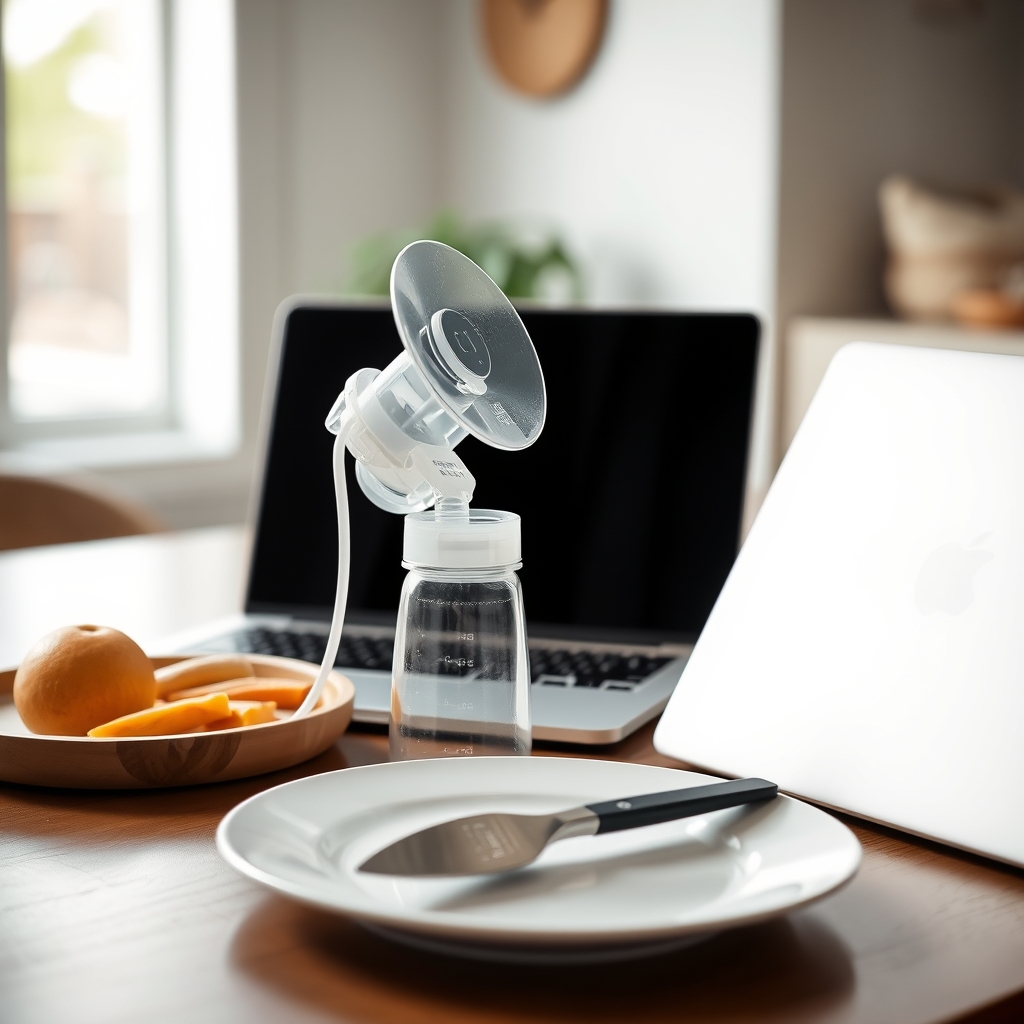
Documenting lactation break requests for legal protection
Keeping a clear paper trail can make the difference between a quick resolution and a drawn‑out legal dispute. When you request a lactation break, follow these best practices:
- Use email. Written requests create a timestamped record. If you must speak in person, follow up with an email summary.
- Include details. State the dates, times, and duration you need, and reference the specific state law (e.g., “California Labor Code § 226.7”).
- Save acknowledgments. If your manager replies with “Approved,” keep that email. If they say “We’ll look into it,” note the date and follow up.
- Maintain a personal log. A simple spreadsheet with columns for date, time, duration, and any issues can be useful if you need to prove “reasonable” break time.
The U.S. Equal Employment Opportunity Commission (EEOC) recommends that employees retain these records for at least three years. Doing so not only protects you but also helps HR address systemic gaps in their lactation policies.
State lactation laws for remote and hybrid workers
Remote work has exploded since 2020, and many state statutes now explicitly address the needs of employees who split time between home and the office. In 2026, New York, California, and Washington have issued guidance that “reasonable accommodations” can include:
- Stipends for purchasing a high‑quality pump (up to $150 per year in some states).
- Flexible scheduling that allows a mother to extend her workday to make up for pumping breaks.
- Virtual lactation support, such as video calls with an IBCLC.
For example, the Washington State Department of Labor published a 2025 bulletin stating that “remote employees should be afforded the same break duration as on‑site staff, and employers may allocate a portion of paid time off for pumping if the employee chooses.” This flexibility can be especially important for mothers in states without paid‑break mandates.
If you work a hybrid schedule, treat each location as a separate “worksite” for compliance purposes. Request a written policy from your employer that outlines how lactation breaks will be handled at the office versus at home. Having this clarity prevents misunderstandings and ensures you receive the same protections wherever you work.
Employer‑provided lactation supplies and equipment
While most state laws only require space and break time, many employers voluntarily provide pumps, storage containers, or even “pump‑and‑store” kits. The FDA regulates breast pumps as Class II medical devices, meaning they must meet safety and performance standards. If your employer offers a pump, ask for the model number and verify that it’s FDA‑approved.
Some companies partner with third‑party vendors to give employees a subsidy toward a personal pump. In 2025, a national survey by the American Academy of Pediatrics (AAP) found that 42 % of large employers offered such subsidies, and mothers reported higher satisfaction when they could choose a pump that fit their lifestyle.
When evaluating an employer‑provided pump, consider the following:
- Portability. A lightweight, battery‑operated pump is easier to move between work and home.
- Noise level. Quiet models help maintain privacy, especially in shared spaces.
- Warranty and support. Ensure the device comes with at least a one‑year warranty and that the employer’s health benefits cover repairs.
If the employer does not provide a pump, you can still request a stipend under “reasonable accommodation” provisions. Many state labor agencies, including the New York Department of Labor, have issued guidance that a modest stipend is a permissible way to meet the law’s intent.
Myth vs. fact
Myth: You can only pump for 15 minutes per break.
Fact: State laws vary, but many (including California and New York) allow up to 30 minutes per session. The actual time needed depends on your pump and milk supply.
Myth: Small businesses don’t have to provide a lactation room.
Fact: While some states exempt businesses with fewer than five employees from paid‑break mandates, the federal law still requires a private, non‑bathroom space for any employer.
Myth: Remote workers are exempt from lactation accommodations.
Fact: Remote employees are covered under both federal and most state laws, which may require flexible scheduling, home‑pump stipends, or virtual lactation support.
Key takeaways
- All U.S. workers have a federal right to reasonable break time and a private, non‑bathroom lactation space.
- States like California, Massachusetts, and Colorado add paid‑break guarantees and explicit minute limits.
- Small businesses must still provide a private space, even if they’re exempt from paid‑break rules.
- Document every request in writing; keep copies of employer responses for potential complaints.
- Penalties range from $1,000 per violation (Florida) to $5,000 (New York) plus back pay and possible legal fees.
- Remote employees can request flexible scheduling, home‑pump stipends, or virtual lactation support.
- Employer‑provided pumps must be FDA‑approved; ask for model details and warranty information.
Frequently asked questions
What is the federal law regarding pumping at work?
The federal amendment to the Fair Labor Standards Act (effective 2010) requires employers to provide “reasonable break time” and a private, non‑bathroom space for employees to express milk. The break does not have to be paid unless state law adds that requirement.
Do all states require paid break time for lactation?
No. Only a handful of states—California, Massachusetts, Colorado, Washington, and a few others—mandate paid lactation breaks. Most states follow the federal standard of unpaid but reasonable break time.
Can an employer refuse to provide a lactation room?
Only if they can prove an “undue hardship,” such as a physical impossibility in a historic building. The burden of proof lies with the employer, and employees can appeal to state labor agencies.
How long can a mother pump during her work shift?
Under state laws that specify minutes, most allow up to 30 minutes per session. Federal law simply requires “reasonable” time, which is typically interpreted as sufficient to pump, clean, and store milk—often 15‑30 minutes per session.
Are there penalties for employers who violate lactation break laws?
Yes. Penalties vary by state: up to $5,000 per violation in New York, $1,000 in Florida, and civil fines plus back pay under federal enforcement. Repeat offenders may face higher fines and mandatory corrective actions.
Can a part‑time employee claim lactation break rights?
Absolutely. Both federal and most state laws apply to part‑time workers, as long as they meet the employee threshold for the state. Part‑time employees are entitled to the same break duration, though the number of sessions may be proportional to their schedule.
How many minutes of break per pumping session are allowed in Texas?
Texas follows the federal standard, which does not set a specific minute limit. Employers must provide “reasonable” break time—most companies grant 15‑20 minutes per session, but you can negotiate based on your pump’s needs.
What if my employer doesn’t have a lactation room?
If no dedicated space exists, the employer must still provide a “reasonable” alternative—such as a vacant conference room, a private office, or a portable screen. Document the request and any offered alternative; if the solution is inadequate, you can file a complaint with the state labor agency or the U.S. Department of Labor.
Can I use paid time off (PTO) for lactation breaks?
Under federal law, lactation breaks cannot be counted against PTO, vacation, or sick leave. However, some states allow employers to treat the break as paid time if they choose. If your employer deducts from PTO, that may be a violation of the law, and you can raise the issue with HR or a labor attorney.
When to see a doctor or specialist
If you experience persistent breast pain, clogged ducts, or signs of mastitis (fever, redness, swelling), seek medical care promptly. A lactation consultant (IBCLC) can also help you optimize pumping technique, troubleshoot equipment, and ensure you’re maintaining milk supply while navigating workplace accommodations. For legal concerns, consider contacting an employment attorney familiar with labor law.
References
- U.S. Department of Labor, Wage and Hour Division. “Fair Labor Standards Act (FLSA) Amendment – Break Time for Nursing Mothers,” 2010.
- California Labor Code § 226.7, “Lactation Breaks,” 2026 amendment.
- New York State Human Rights Law, Lactation Accommodation Regulations, 2024.
- Illinois Labor and Employment Act, Lactation Break Provision, 2025.
- Massachusetts General Laws, Chapter 149, Section 5, Lactation Breaks, 2026.
- Colorado Department of Labor and Employment, “Lactation Breaks – Paid Requirements,” 2026.
- Florida Department of Business and Professional Regulation, “Occupational Health Standards,” 2026.
- Society for Human Resource Management (SHRM), “Impact of Lactation Policies on Employee Retention,” 2025.
- International Board Certified Lactation Consultant (IBCLC) Standards, 2025.
- U.S. Equal Employment Opportunity Commission (EEOC), “Retaliation and Enforcement of Lactation Rights,” 2025.
- American College of Obstetricians and Gynecologists (ACOG), “Breastfeeding and Workplace Accommodations,” 2024.
- National Institute for Occupational Safety and Health (NIOSH), “Guidelines for Milk Storage in the Workplace,” 2025.
- U.S. Food and Drug Administration (FDA), “Breast Pump Device Classification and Requirements,” 2023.
- American Academy of Pediatrics (AAP), “Employer Lactation Support Programs,” 2025.
- Washington State Department of Labor, “Remote Work Lactation Guidance,” 2025.



