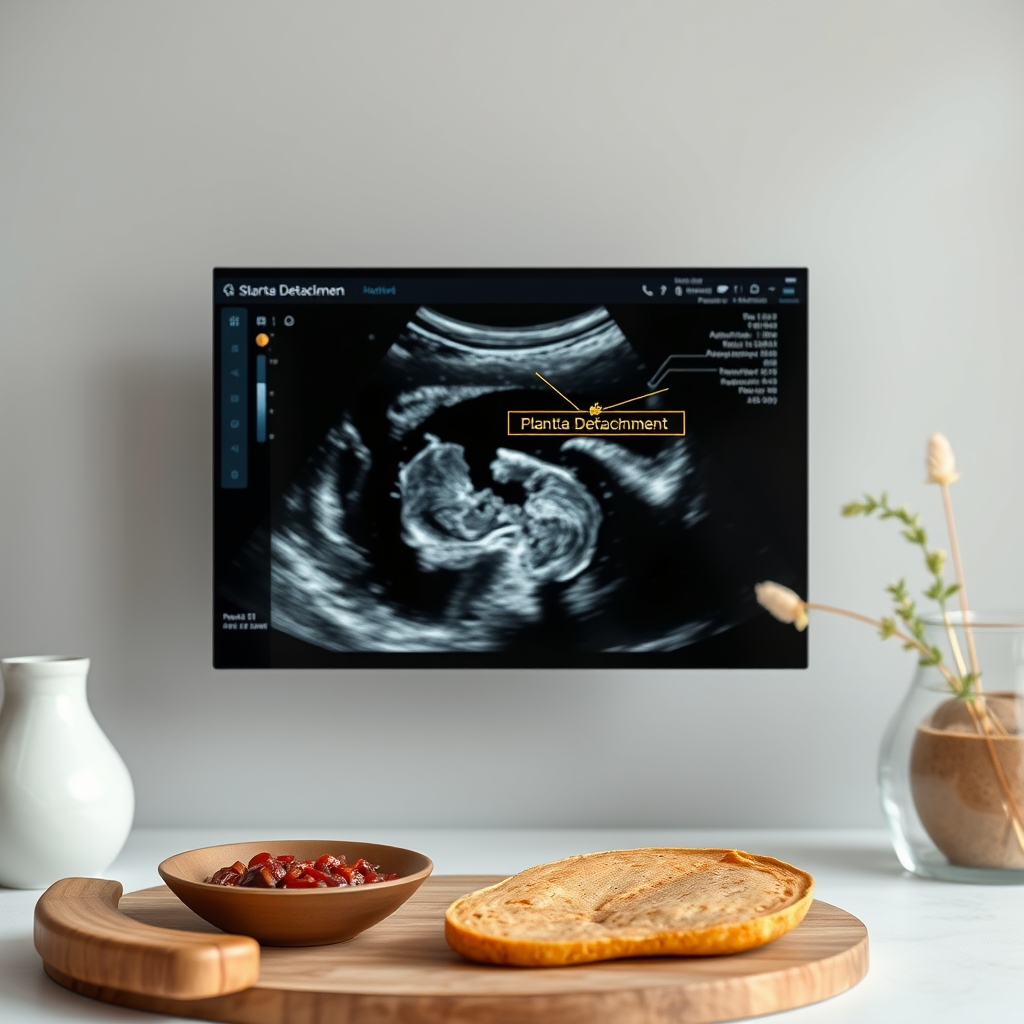
Discover the signs of placental abruption, a serious pregnancy condition where the placenta separates from the uterus, and learn what to do if you experience them, including placental abruption signs
By Shubhra Mishra — a mom of two who turned her own confusion during pregnancy into BumpBites, a global mission to make food choices clear, safe, and stress-free for every expecting mother. 💛
Check whether any food is safe during pregnancy with the BumpBites Food Safety Checker.
Quick take: Placental abruption usually shows sudden, severe abdominal pain, vaginal bleeding, and a rapid change in fetal movement. If you notice any of these signs, especially with a hard or tender uterus, seek emergency care right away. Early detection can improve outcomes for both you and your baby.
It’s 3 a.m., you’re lying in bed feeling a sharp, unexpected ache in your lower belly, and your heart races as you wonder, “Is this a labor contraction or something worse?” You’re not alone—many expectant mothers face that exact moment of uncertainty. The good news is that recognizing the warning signs of placental abruption can help you act quickly and protect both you and your baby.
Placental abruption is a serious but relatively rare condition where the placenta separates partially or completely from the uterine wall before delivery. While most pregnancies progress without incident, understanding the early cues, risk factors, and when to call for help empowers you to make the safest choices.
In this guide we’ll walk through the most common signs, how they differ from labor or other pregnancy complications, what tests doctors use, and what you can do right now if you suspect something is wrong. We’ll also cover special situations—like twins, recent car accidents, and even lifestyle tweaks that may lower your risk.
What are the early signs of placental abruption during pregnancy?
Early warning signs often appear suddenly and can include:
Sudden, intense abdominal or lower back pain that doesn’t subside with rest.
Vaginal bleeding, which may be bright red or darker, and sometimes the bleeding is minimal or absent.
Uterine tenderness or a firm, “hard” uterus that feels different from the usual soft, relaxed feel.
Changes in fetal movement—either a noticeable decrease or an abrupt increase.
Rapid onset of contractions that feel different from typical Braxton‑Hicks or early labor.
These symptoms can develop at any gestational age but most commonly arise after the 20th week. If you notice any combination of pain, bleeding, or an unusually firm uterus, treat it as an emergency until a healthcare professional evaluates you.
One mother we spoke with described the moment: she was in her kitchen making tea when a sharp, cramping pain struck her lower abdomen, followed by a faint pink spotting. She called her midwife, who instructed her to go to the hospital immediately—a decision that led to a timely delivery and a healthy baby.
Because the placenta supplies oxygen and nutrients, even a brief interruption can affect fetal well‑being. The American College of Obstetricians and Gynecologists (ACOG) advises that any abrupt, severe pain accompanied by uterine rigidity should trigger an urgent evaluation, regardless of bleeding amount.
How can I differentiate placental abruption pain from labor contractions?
Both placental abruption and labor can produce painful uterine cramps, but there are key differences:
Onset: Abruption pain typically starts suddenly and feels like a tearing or ripping sensation, whereas labor contractions usually begin gradually and become more regular over time.
Pattern: Labor contractions follow a predictable rhythm (e.g., every 5–10 minutes) and often increase in intensity and frequency. Abruption pain may be constant or come in irregular spikes without a clear pattern.
Uterine tone: During abruption the uterus often feels hard and rigid, even between pains. In early labor, the uterus may remain relatively soft between contractions.
Bleeding: Any vaginal bleeding accompanying the pain leans strongly toward abruption, though some women experience painless bleeding.
Fetal movement: A sudden drop in baby kicks is more common with abruption, while labor usually does not affect movement until later stages.
If you’re unsure, it’s safest to assume it could be abruption and seek immediate evaluation. A quick phone call to your provider can help you decide whether to head to the hospital or monitor at home.
Remember that Braxton‑Hicks are usually irregular, mild, and do not cause a hard uterus. When pain is sharp, persistent, and paired with tenderness, the NHS recommends treating it as a possible emergency.
Which risk factors increase the chances of placental abruption?
Understanding what puts you at higher risk can guide prevention and monitoring strategies. Common risk factors include:
High blood pressure (chronic hypertension or pre‑eclampsia) – the leading maternal risk factor identified by the American College of Obstetricians and Gynecologists (ACOG).
Smoking – nicotine constricts blood vessels, increasing the chance of placental separation.
Trauma – car accidents, falls, or any blunt abdominal injury raise the odds, especially in the third trimester.
Previous placental abruption – a history of abruption raises recurrence risk to about 5‑10%.
Multiparity (having had several pregnancies) and multiple gestations – larger uterine size can stress the placental attachment.
Cocaine or illicit drug use – vasoconstriction from these substances can precipitate a separation.
Advanced maternal age (35+ years) and uterine anomalies – structural changes can affect placental implantation.
While you can’t change factors like age or a prior history, lifestyle modifications—quitting smoking, managing blood pressure, and avoiding high‑impact activities—can lower your overall risk.
Guidelines from the UK’s NICE emphasize tight blood‑pressure control and regular prenatal visits for anyone with hypertension, as early detection of placental issues can be lifesaving.
What tests diagnose placental abruption?
Because the condition can progress quickly, doctors rely on a combination of clinical assessment and imaging:
Physical exam: Palpation of a tender, firm uterus and evaluation of bleeding.
Fetal heart rate monitoring (CTG): An abnormal tracing—such as late decelerations—suggests fetal distress from reduced placental blood flow.
Ultrasound: While not always definitive, a bedside transabdominal ultrasound can reveal retro‑placental clots, decreased placental thickness, or a “separated” placenta.
Maternal blood tests: Hemoglobin level, coagulation profile, and platelet count help gauge blood loss and guide management.
In many cases, the diagnosis is clinical, meaning the doctor’s judgment based on symptoms and exam findings. Prompt imaging, when available, can confirm the extent of separation and assist in planning delivery.
According to ACOG’s 2022 Practice Bulletin, the sensitivity of ultrasound for detecting abruption improves when the operator looks for retro‑placental hematoma and uses high‑frequency probes, but a normal scan does not rule out the condition.
When should I call emergency services for suspected placental abruption?
Time is critical. Call emergency services (911 in the U.S., 999 in the UK) or go to the nearest labor and delivery unit if you experience any of the following:
Sudden, severe abdominal or back pain that does not improve with rest.
Vaginal bleeding—especially if it’s bright red, dark, or accompanied by clots.
A hard, tender uterus that feels “rock‑hard” even when you’re not contracting.
Rapid change in fetal movement—either a sudden decrease or a noticeable increase.
Signs of shock: dizziness, rapid heartbeat, pale skin, or feeling faint.
Even if you’re unsure, err on the side of caution. Early evaluation can lead to interventions that protect both mother and baby.
The CDC notes that delayed presentation after trauma is associated with higher maternal morbidity, underscoring the need for prompt action.
What are placental abruption symptoms in the third trimester?
The third trimester (weeks 28‑40) is when the uterus is largest and the placenta is most stressed, making abruption more common. Symptoms during this stage can be more pronounced:
Intense, continuous abdominal pain that may radiate to the back or hips.
Heavy vaginal bleeding that can be bright red or dark and may be accompanied by clots.
Uterine rigidity—the belly feels unusually firm even when you’re not contracting.
Fetal distress signs such as reduced kicking, a sudden increase in movements, or an abnormal heart rate on a home Doppler.
Signs of maternal shock like sweating, nausea, or feeling light‑headed.
Because these symptoms can mimic other third‑trimester issues (like pre‑eclampsia), it’s essential to contact your care team right away for a professional assessment.
In the United States, ACOG reports that third‑trimester abruptions account for roughly 70% of all cases, highlighting the importance of vigilance during these weeks.
How do placental abruption signs differ in twins or multiple pregnancies?
Carrying twins or higher‑order multiples places extra strain on the uterine wall and placenta. While the core symptoms—pain, bleeding, and a hard uterus—remain the same, some nuances appear:
More pronounced abdominal pain due to greater uterine distension.
Higher likelihood of painless bleeding because the placenta may separate partially without causing immediate pain.
Faster changes in fetal heart patterns on monitoring, as each baby’s circulation can be compromised.
Increased risk of pre‑term delivery as clinicians may opt for earlier delivery to protect both babies.
Because twins already raise the baseline risk of abruption, your obstetrician will monitor you closely with more frequent ultrasounds and non‑stress tests.
Research published by the Royal College of Obstetricians and Gynaecologists (RCOG) indicates that the incidence of abruption in twin pregnancies is roughly double that of singleton pregnancies.
How does placental abruption affect fetal heart rate?
The fetus relies on the placenta for oxygen and nutrients. When the placenta detaches, blood flow can be reduced, leading to characteristic changes on a fetal heart rate monitor:
Late decelerations: A dip in the heart rate that occurs after a uterine contraction, indicating compromised oxygen delivery.
Variable decelerations: Sudden dips that vary in shape, often reflecting cord compression from a clot.
Bradycardia: A sustained low heart rate (<110 bpm) that signals more severe distress.
These patterns alert clinicians that the baby may be in jeopardy, prompting rapid delivery—often via cesarean section—to restore oxygenation.
Continuous electronic fetal monitoring is recommended by NICE for any suspected abruption after 24 weeks gestation, as it provides real‑time insight into fetal well‑being.
Can mild placental abruption be treated at home?
Even a “mild” abruption is a medical emergency. While some women may experience minimal bleeding, the risk of rapid progression to a more severe separation remains. Home management—such as rest and monitoring—is not recommended without direct supervision.
Current guidelines from ACOG and the NHS state that any suspected abruption warrants immediate hospital evaluation. The safest approach is to seek professional care promptly, where you can receive continuous fetal monitoring and rapid intervention if needed.
Attempting to “wait and see” can delay lifesaving treatment. In a 2021 CDC analysis, delayed hospital presentation was linked to a 15% increase in perinatal mortality.
How does placental abruption differ from placenta previa symptoms?
Feature
Placental Abruption
Placenta Previa
Typical onset
Sudden, painful
Gradual, painless
Bleeding
May be bright red or dark; can be heavy or light
Usually painless bright red bleeding
Uterine tone
Hard, tender uterus
Uterus remains soft
Fetal movement
May decrease or become erratic
Usually unchanged
Management
Urgent delivery, often cesarean
Depends on gestational age; often scheduled cesarean
While both conditions involve the placenta, abruption is a separation emergency, whereas previa is a low‑lying placenta that causes bleeding but usually does not involve pain. Accurate diagnosis is critical because the treatment pathways differ dramatically.
The ACOG Practice Bulletin emphasizes that a bedside ultrasound is the quickest way to distinguish these two entities when bleeding occurs.
How long after a car accident can placental abruption occur?
Trauma can trigger an abrupt placental detachment instantly or with a delay of hours to days. Studies cited by the CDC note that most trauma‑related abruptions happen within 24 hours, but clinicians remain vigilant for up to a week after a significant impact.
If you’ve been in a motor vehicle collision—especially with a direct blow to the abdomen—watch for the classic signs (pain, bleeding, uterine firmness) and contact your obstetric provider even if you feel fine initially. Early ultrasound can help rule out a silent abruption.
In the UK, the NHS advises a follow‑up scan within 48 hours after any abdominal trauma occurring after 20 weeks gestation.
What is the recovery time after a placental abruption delivery?
Recovery varies based on the severity of the abruption and the delivery method:
Vaginal delivery: Hospital stay typically 2‑3 days; most women feel ready to resume light activities within 2 weeks.
Cesarean section: Hospital stay 3‑5 days; full recovery may take 6‑8 weeks, similar to other C‑sections.
Blood loss or complications: If significant hemorrhage occurred, additional monitoring and a longer stay may be required.
Post‑delivery, your provider will monitor hemoglobin levels, blood pressure, and uterine healing. Follow‑up appointments usually occur at 2 weeks and 6 weeks postpartum.
Emotional recovery is also important. Many parents experience anxiety after an abrupt event; seeking counseling or a support group can aid mental health, as recommended by the AAP.
Are there dietary changes that can reduce the risk of placental abruption?
While no food can guarantee prevention, a balanced diet supports vascular health and may lower risk:
Increase omega‑3 fatty acids (found in salmon, walnuts, flaxseed) to help maintain healthy blood vessels.
Consume plenty of fruits and vegetables for antioxidants that protect endothelial function.
Limit caffeine and processed sugars, which can elevate blood pressure in susceptible women.
Stay hydrated—dehydration can contribute to uterine irritability.
Maintain adequate iron to reduce anemia‑related stress on the placenta.
These recommendations align with guidance from the World Health Organization (WHO) and the NHS on overall pregnancy nutrition.
Additionally, the NHS suggests a modest intake of calcium‑rich foods to help regulate blood pressure, another key factor in abruption risk.
Is it safe to exercise if I have signs of placental abruption?
Exercise is generally beneficial during pregnancy, but if you experience any of the hallmark signs of abruption—especially sudden pain, bleeding, or a hard uterus—you should stop activity immediately and seek medical attention. Light, low‑impact movement (e.g., walking) may be permissible after a thorough evaluation, but high‑intensity or contact sports are contraindicated until a clinician clears you.
Always discuss any new or worsening symptoms with your provider before resuming a workout routine.
Guidelines from the American College of Sports Medicine (ACSM) note that pregnant women with unexplained abdominal pain should be evaluated before continuing any exercise program.
What are the statistics of placental abruption in first pregnancies?
Placental abruption occurs in about 0.5‑1 % of all pregnancies, according to ACOG. For women experiencing their first pregnancy (nulliparous), the incidence is slightly lower—roughly 0.4 %—but the risk rises with each subsequent pregnancy, especially when other risk factors are present.
Even though the numbers are small, the potential impact on mother and baby makes awareness crucial for every expectant parent.
Data from the CDC’s 2022 perinatal statistics confirm that the majority of abruptions (about 60 %) happen in women over 30, reinforcing the importance of age‑related counseling.
How is placental abruption managed in the hospital?
Once you arrive at a labor‑and‑delivery unit, the care team follows a stepwise protocol. First, continuous fetal monitoring is placed to assess the baby’s heart rate. If the tracing shows severe distress, the team will prepare for an expedited delivery, most often by cesarean section because the placenta may no longer be able to support the fetus.
For women with less severe bleeding and stable fetal status, a trial of labor may be considered, but the decision hinges on how quickly the uterus stabilizes. Intravenous fluids, blood products, and medications to control blood pressure are administered as needed. The American College of Obstetricians and Gynecologists advises that massive hemorrhage should be treated with a massive transfusion protocol, mirroring trauma guidelines.
Post‑delivery, the mother is observed for signs of coagulopathy (a clotting disorder) and for uterine atony (failure of the uterus to contract), both of which can cause ongoing bleeding. A multidisciplinary team—including obstetricians, anesthesiologists, and neonatologists—collaborates to ensure both mother and baby receive optimal care.
What are the long‑term maternal health implications after placental abruption?
Surviving an abruption does not guarantee a trouble‑free future pregnancy, but most women recover without chronic complications. However, a few long‑term considerations deserve attention:
Increased risk of recurrence: A prior abruption raises the chance of another event in a subsequent pregnancy to roughly 5‑10% (ACOG).
Potential for hypertension: Women who develop pre‑eclampsia during an abruption may have a higher lifetime risk of chronic hypertension.
Uterine scarring: Surgical repair after a cesarean or severe uterine rupture can affect future placental implantation.
Psychological impact: Some parents experience post‑traumatic stress or anxiety about future pregnancies; counseling is recommended.
Follow‑up care typically includes blood pressure monitoring, a postpartum pelvic exam, and a discussion about birth spacing. The NHS suggests waiting at least 12–18 months before attempting another pregnancy, allowing the uterus to heal fully.
Can certain medications increase the risk of placental abruption?
Most routine prenatal vitamins are safe, but a few medication classes have been linked to higher abruption rates. For example, non‑steroidal anti‑inflammatory drugs (NSAIDs) taken late in pregnancy can affect platelet function and may increase bleeding risk. Likewise, selective serotonin reuptake inhibitors (SSRIs) have been associated with a modest rise in placental complications, though the data are not definitive.
Conversely, low‑dose aspirin (81 mg) prescribed for women at high risk of pre‑eclampsia is generally considered protective and is endorsed by ACOG and NICE. Always discuss any prescription or over‑the‑counter medication with your obstetric provider before starting or stopping it.
The FDA’s pregnancy labeling system (the “Pregnancy and Lactation Labeling Rule”) requires manufacturers to provide clear information about known risks, making it easier for clinicians to weigh benefits versus potential harm.
From our medical team: If you ever feel a sudden, severe abdominal pain or notice unexpected bleeding, treat it as an emergency. Prompt evaluation, even if the symptoms turn out to be something less serious, is the safest route. Your provider will use a combination of physical exam, fetal monitoring, and ultrasound to determine the best course of action. Remember, early detection dramatically improves outcomes for both you and your baby.
Myth vs. fact
Myth: “Mild placental abruption can be managed at home with rest.”
Fact: Any suspected abruption is a medical emergency; even mild cases can progress quickly and require hospital monitoring.
Myth: “If there’s no bleeding, it can’t be placental abruption.”
Fact: Up to 25 % of abruptions present with little or no external bleeding, especially if the detachment is partial.
Myth: “Exercise is always safe during pregnancy, even with pain.”
Fact: Sharp abdominal pain or a hard uterus signals the need to stop activity and seek care immediately.
Key takeaways
Sudden, severe abdominal or back pain with a hard uterus is the hallmark sign of placental abruption.
Any vaginal bleeding, especially with pain, warrants immediate medical evaluation.
High blood pressure, smoking, trauma, and prior abruption increase your risk.
Diagnosis relies on clinical exam, fetal heart monitoring, and often a bedside ultrasound.
If you suspect abruption, call emergency services—time is critical for both mother and baby.
Lifestyle choices like a balanced diet and avoiding high‑impact activities can help lower risk, but they do not replace professional monitoring.
Hospital management may involve rapid delivery, blood‑product support, and multidisciplinary care to protect both you and your baby.
After an abruption, discuss future pregnancy plans with your provider, as recurrence risk and long‑term health considerations need careful monitoring.
Frequently asked questions
What are the most common signs of placental abruption?
Most women notice a sudden, intense abdominal pain, a hard or tender uterus, and either visible vaginal bleeding or a rapid change in fetal movement. These symptoms can appear with or without external bleeding.
Can placental abruption cause bleeding?
Yes. While many abruptions present with bright red or dark vaginal bleeding, up to a quarter of cases may have little to no external bleeding, making pain and uterine firmness especially important clues.
How quickly do symptoms of placental abruption appear?
Symptoms usually develop suddenly, within minutes to a few hours. In trauma‑related cases, the onset can be immediate or delayed up to 24 hours, so ongoing monitoring after injury is essential.
Is severe abdominal pain always a sign of placental abruption?
No. Severe pain can also indicate labor, uterine rupture, or other gastrointestinal issues. However, when pain is accompanied by a hard uterus, bleeding, or altered fetal movement, abruption must be ruled out urgently.
What should I do if I suspect placental abruption?
Call emergency services or go to the nearest labor and delivery unit right away. Do not wait to see if symptoms improve, as the condition can worsen rapidly.
Can placental abruption be prevented?
While you can’t eliminate all risk, controlling blood pressure, quitting smoking, avoiding illicit drugs, and taking precautions to prevent abdominal trauma can reduce the likelihood of abruption.
Will a cesarean section always be required?
Not always, but many cases—especially those with fetal distress or heavy bleeding—are delivered by cesarean because it allows the baby to be born quickly while minimizing further placental separation.
How does a prior abruption affect my next pregnancy?
Having had an abruption raises the chance of recurrence to about 5‑10 %. Your provider will likely schedule more frequent ultrasounds and non‑stress tests to monitor placental health early on.
When to call your doctor
If you experience any of the following, seek emergency care immediately: sudden severe abdominal or back pain, vaginal bleeding (bright red or dark), a hard/tender uterus, rapid change in fetal movement, or signs of maternal shock such as dizziness or rapid heartbeat. This article provides general information and is not a substitute for personalized medical advice—always consult your healthcare provider for any concerns.
References
American College of Obstetricians and Gynecologists (ACOG). “Placental Abruption.” Practice Bulletin No. 202, 2022.
National Health Service (NHS). “Placental Abruption.” Updated 2023.
Centers for Disease Control and Prevention (CDC). “Trauma and Pregnancy.” 2021.
World Health Organization (WHO). “Nutrition for Pregnancy.” 2020.
Mayo Clinic. “Placental Abruption.” Accessed July 2026.
Royal College of Obstetricians and Gynaecologists (RCOG). “Management of Placental Abruption.” 2022.
American Heart Association (AHA). “Hypertension in Pregnancy.” 2021.
National Institute for Health and Care Excellence (NICE). “Maternal and Fetal Monitoring.” 2023.
American Academy of Pediatrics (AAP). “Post‑traumatic Stress after Obstetric Emergencies.” 2022.
American College of Sports Medicine (ACSM). “Exercise Prescription for Pregnant Women.” 2021.
When sudden pain strikes, a calm moment of assessment can make all the difference.Bedside ultrasound helps clinicians see the separation that may not be obvious on exam alone.Omega‑3 rich foods and fresh vegetables support vascular health during pregnancy.
Not sure about the label on Placental Abruption Signs products?
Snap the ingredients list and SafeFilter checks every ingredient for your stage — only 3 free scans this month, then you're locked until reset. Unlimited from $7/mo or lock $50/yr through Aug 31 (16 days left).
When Shubhra Mishra was expecting her first child in 2016, she was overwhelmed by conflicting food advice — one site said yes, another said never. By the time her second baby arrived in 2019, she realized millions of mothers face the same confusion.
That sparked a five-year journey through clinical nutrition papers, cultural diets, and expert conversations — all leading to BumpBites: a calm, compassionate space where science meets everyday motherhood.
Her long-term vision is to build a global community ensuring safe, supported, and free deliveriesfor every mother — because no woman should face pregnancy alone or uninformed. 🌿
🌍 Stand with mothers, shape safer guidance
Join a small circle of experts who review BumpBites articles so expecting parents everywhere can decide with confidence.