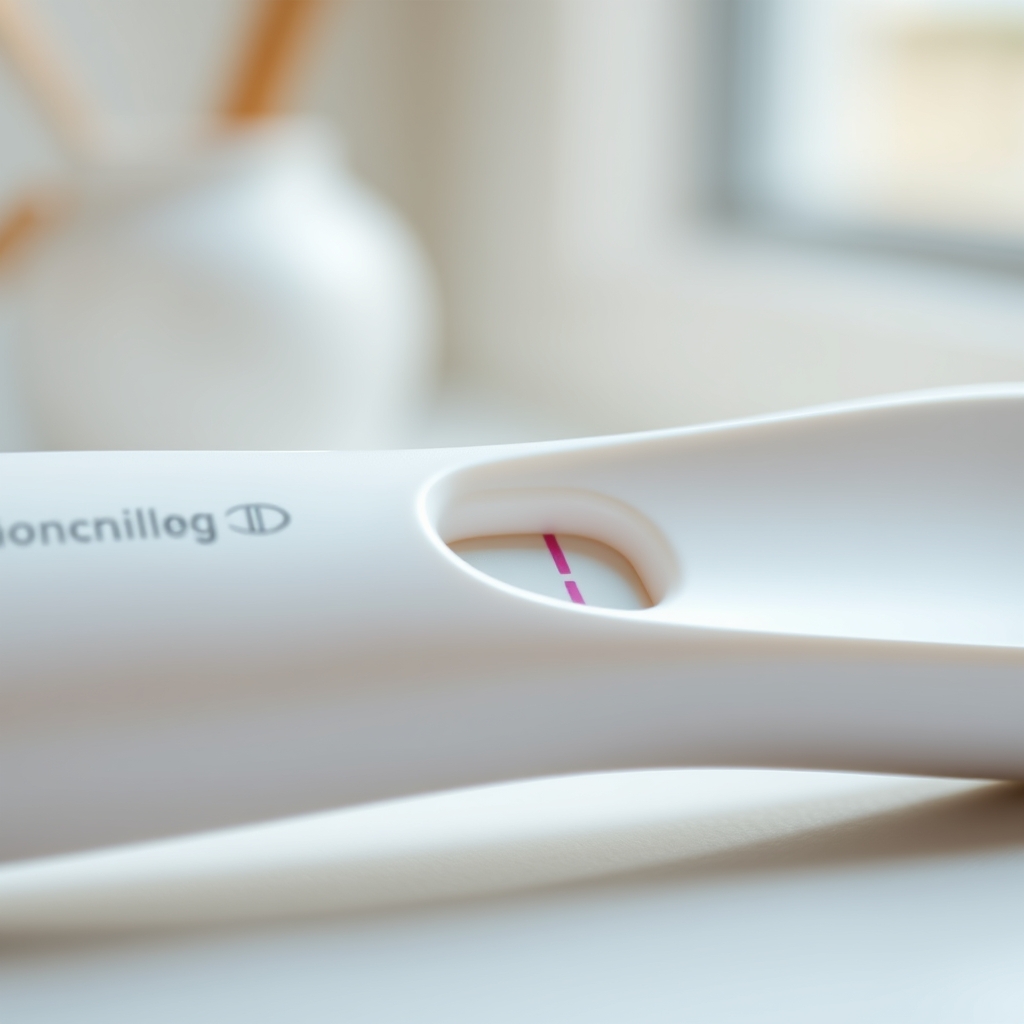
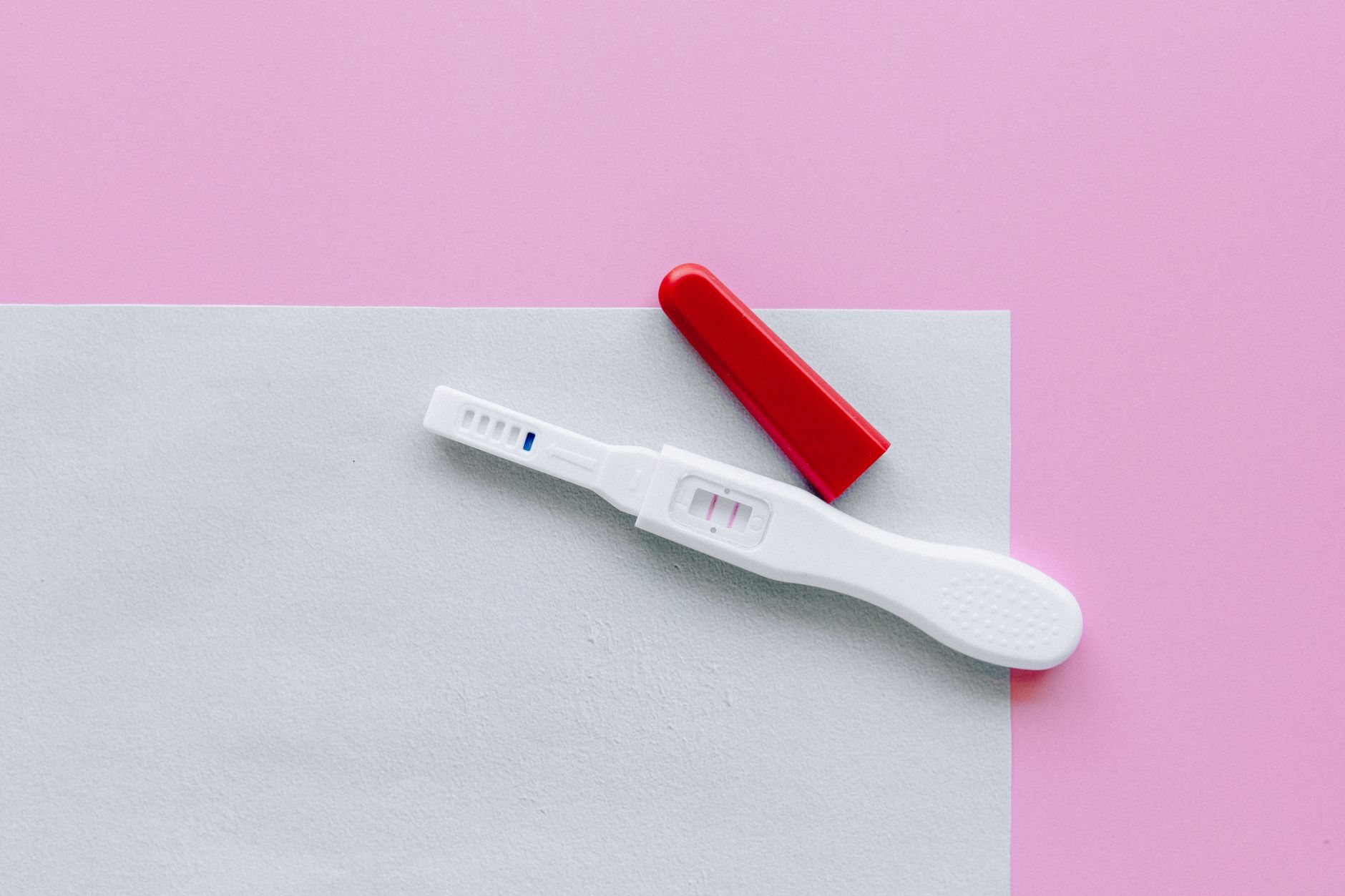
A pale line on a pregnancy test indicates a weak positive result, meaning the hCG level is low but rising. This suggests early pregnancy or a diluted sample.
By Shubhra Mishra — a mom of two who turned her own confusion during pregnancy into BumpBites, a global mission to make food choices clear, safe, and stress-free for every expecting mother. 💛
Check whether any food is safe during pregnancy with the BumpBites Food Safety Checker.
Quick take: A pale line on a home pregnancy test usually means there is a low level of the pregnancy hormone hCG in your urine. It can be an early true positive, a chemical pregnancy, or a diluted sample. Retesting in a day or two and, if needed, confirming with a blood test will give you the clearest picture.
It’s 2 a.m. and you’re still half‑asleep, cradling a warm mug of tea while the bathroom light flickers on. You’ve just taken a pregnancy test because that tiny “maybe” feeling in your gut won’t go away. When you stare at the result, the test line is there—but it’s barely pink, almost ghost‑like. Your heart skips. Is this a sign you’re pregnant, or just a trick of the light?
You’re not alone. Many people see a faint, pale line and wonder if it’s a false alarm or the start of a new chapter. The good news is that the line does give us information—just not as loudly as a dark, bold stripe. Below we break down exactly what a pale line means, why it shows up, and what steps you can take to be certain.
In this guide we’ll cover the chemistry behind the test, the timing of hCG rise, how different brands and digital tests handle faint lines, and when a pale line could signal a chemical pregnancy. We’ll also give you a step‑by‑step plan for confirming the result, plus a quick checklist of red‑flag symptoms that warrant a call to your provider.
What does a pale line on a pregnancy test mean?
A pale line indicates that the test has detected the pregnancy hormone human chorionic gonadotropin (hCG) in your urine, but at a low concentration. Most over‑the‑counter tests use a colorimetric reaction: when hCG binds to antibodies on the test strip, a dye changes color. The intensity of that color depends on how much hCG is present.
When the hormone level is just above the test’s detection threshold, the resulting line may be faint, pinkish, or gray rather than the deep pink or blue most people expect. This does not automatically mean the result is “negative”; it means the test is picking up a signal that is weaker than usual.
The science behind it is fascinating: the test strip contains two main lines. One is the control line, which confirms the test is working correctly. The other is the test line, which contains antibodies specifically designed to react with hCG. When your urine passes over these antibodies, if hCG is present, it binds to them and triggers a chemical reaction that releases a colored dye, forming a visible line. A pale line simply means there wasn't a huge amount of hCG to trigger a super strong dye release.
Why does the line appear pale? Several factors influence the visual strength of the result:
hCG concentration. In early pregnancy, hCG can be as low as 5–25 mIU/mL, which is barely enough to trigger the reaction.
Urine dilution. Drinking a lot of water before testing dilutes the urine, lowering the detectable hCG level.
Test sensitivity. Different brands have different “detection limits” (often 10 mIU/mL for the most sensitive tests).
Timing of the test. Testing before the embryo has fully implanted can produce a faint line.
In short, a pale line is a biochemical signal that hCG is present, but you’ll need more information to know whether it reflects a viable pregnancy. It's important to remember that even a very faint line suggests that *some* hCG is in your system, which is the first step towards a positive result.
Is a faint positive pregnancy test line a true positive?
Yes, a faint line can be a true positive. The phrase “true positive” simply means the test correctly identified the presence of hCG. Because home tests are designed to be highly specific, a faint line is rarely a false positive caused by the test itself.
Studies from the American College of Obstetricians and Gynecologists (ACOG) show that when a faint line appears at least 5 minutes after the test is taken, the likelihood of a genuine pregnancy is high—especially if you’re testing after a missed period or have a known ovulation date.
False positives are exceedingly rare with modern home pregnancy tests, especially when read within the recommended time frame. While certain fertility medications containing hCG can lead to a false positive, and very rare medical conditions can also interfere, for the vast majority of people, a faint line means hCG is present due to pregnancy. The question then becomes whether that pregnancy is progressing as expected.
However, a faint line can also accompany a chemical pregnancy (an early loss) or a very early viable pregnancy that has not yet produced enough hCG to darken the line. That’s why most clinicians recommend a repeat test in 24–48 hours or a serum hCG measurement for confirmation.
How early can a faint line appear on a home pregnancy test?
Home pregnancy tests can detect hCG as early as 6–8 days after ovulation (about 3–4 days before a missed period). At that point, the hormone level is often just above the test’s detection threshold, so the line may be faint.
It's worth noting that implantation, the process where the fertilized egg attaches to the uterine wall, typically occurs 6 to 12 days after ovulation. hCG production only begins *after* implantation, meaning the earliest you could possibly detect it is around 6 days post-ovulation. This makes early testing a bit of a gamble, as hCG levels are still very low.
Here’s a typical timeline:
Days after ovulation
Typical serum hCG (mIU/mL)
Typical home test line intensity
6‑8
5‑25
Pale/faint
9‑11
25‑100
Medium‑intensity
12‑14
100‑500
Dark, clear
Because the exact timing varies from person to person, a faint line on day 8 may turn into a darker line by day 10. If you catch the line early, it’s a sign that you’re on the cusp of a detectable pregnancy.
Why is my pregnancy test line pale but still visible?
A pale line can be visible for three main reasons:
Low hCG levels. The embryo may have just implanted, releasing only a small amount of hormone.
Urine concentration. If you’re well‑hydrated, the urine is more diluted, which weakens the line.
Test brand characteristics. Some tests have a “high‑contrast” design that makes even a low‑level line visible, while others require a stronger signal for a dark line.
Most manufacturers advise reading the result after a specific time window (usually 3–5 minutes). If you wait longer, the line can fade or appear paler, which is why you might see a line that looks “ghostly” after 10 minutes. This is often referred to as an "evaporation line" and can be confusing. The best practice is to read the test within the recommended window.
Another factor could be the test itself. Pregnancy tests have an expiration date, and using an expired test can sometimes lead to unreliable or faint results due to degraded reagents. Always check the expiration date on the packaging. Additionally, how the test was stored (e.g., in a humid bathroom) can also impact its performance, though this is less common.
In practice, many people notice a pale line on the first test and then a clearer line on a second test taken a day later. This is a normal pattern that reflects the rapid rise of hCG in early pregnancy.
A faint pink line can appear as early as a few days after implantation.
Evaporation Lines vs. Faint Positive: How to Tell the Difference
One of the most common sources of confusion when seeing a pale line is distinguishing it from an evaporation line. An evaporation line is a colorless, faint mark that appears in the test area after the urine has dried, typically *after* the recommended reading window.
A true faint positive line, on the other hand, will usually have some color (pink, blue, or gray, depending on the test dye) and will appear within the specified time frame (usually 3-5 minutes). Evaporation lines are caused by the urine drying on the test strip, leaving behind a faint indentation or residue where the test line would normally appear. They are not indicative of hCG presence.
Here's a quick comparison to help you tell them apart:
Feature
Faint Positive Line
Evaporation Line
Appearance Time
Within 3-5 minute window
After 10-30 minutes (or longer)
Color
Pink, blue, or gray (matches dye)
Colorless, gray, or faint white
Thickness
Usually consistent with control line
Often thinner, uneven, or smudged
Location
Clear, defined test line area
May be slightly off-center or irregular
If you're unsure, the best approach is always to retest with a new test, ideally with first-morning urine, and discard the first test after the recommended reading time to avoid misinterpreting an evaporation line. When in doubt, a blood test from your doctor can provide definitive answers.
Can a pale pregnancy test line indicate a chemical pregnancy?
A chemical pregnancy is a very early loss that occurs before the embryo can be seen on an ultrasound, usually within the first three weeks of gestation. Because the embryo implants and produces hCG, a chemical pregnancy often starts with a faint positive line.
When the pregnancy ends, hCG levels begin to drop quickly. If you retest a few days later, the line may become even paler or disappear altogether. This pattern—initial faint positive followed by a negative result—is a classic sign of a chemical pregnancy.
While a chemical pregnancy can be emotionally disappointing, it’s also fairly common. Research from the CDC estimates that up to 30 % of recognized pregnancies end before a gestational sac is visible, many of those being chemical pregnancies. It's important to remember that a chemical pregnancy does not usually impact your ability to conceive in the future; it simply means that for this particular cycle, the embryo didn't develop past the very earliest stages.
If you suspect a chemical pregnancy, you might notice other subtle signs: a brief burst of nausea that fades quickly, mild spotting, or a sudden drop in breast tenderness. These symptoms, combined with a fading test line, can help you make sense of what’s happening. It's okay to feel sad or confused; allow yourself to process these emotions, and know that you are not alone in this experience.
Differences between faint and pale pregnancy test lines
Although “faint” and “pale” are often used interchangeably, there’s a subtle distinction in how users describe them:
Faint line. Usually refers to a line that is thin or barely thick enough to be seen. It may be darker than a “pale” line but still weaker than a normal positive.
Pale line. Refers to a line that has the correct thickness but lacks color intensity, appearing washed‑out or grayish.
Both indicate low hCG, but the visual cue can affect how you interpret the result. Some brands label any line that isn’t fully dark as “positive,” while others say “positive if any line appears.” Understanding your test’s instructions is key.
Ultimately, whether you describe it as faint or pale, the underlying message is the same: hCG has been detected, but at a low concentration. The best course of action remains consistent regardless of the exact visual nuance of the line. Your focus should be on confirming the presence and rise of hCG rather than fixating on the precise shade.
Below is a quick comparison of how faint versus pale lines are typically handled by major brands:
Brand
Faint line interpretation
Pale line interpretation
Recommended follow‑up
First Response
Any visible line = positive
Any visible line = positive
Retest in 48 h or serum hCG
Clearblue Digital
Digital readout; faint line not shown
Digital readout; pale line not shown
Repeat test; if still negative, consider serum test
Pregmate
Line must be dark to read “+”
Line considered negative if not dark
Retest in 24 h if unsure
In practice, if you see a line that you can’t clearly categorize, treat it as a possible positive and follow up with another test.
Should I retake a pregnancy test after seeing a pale line?
Yes—retesting is the simplest way to gain clarity. Here’s a step‑by‑step plan:
Wait 24–48 hours. hCG roughly doubles every 48 hours in early pregnancy, so a repeat test should show a darker line if the pregnancy is progressing.
Use first‑morning urine. Overnight urine is more concentrated, increasing the chance of detecting hCG.
Follow the instructions exactly. Use the same brand, same amount of urine, and read the result within the recommended window.
Consider a serum hCG test. A blood test can quantify hCG levels, distinguishing between early pregnancy, chemical pregnancy, or a false‑positive result.
If the second test shows a darker line, you can be more confident that you’re pregnant. If it stays pale or disappears, you may be experiencing a chemical pregnancy, a false positive, or simply a very early stage that hasn’t yet produced enough hormone. This waiting period can be incredibly difficult, but it's often the most reliable way to get a clearer picture without immediate medical intervention.
Testing with first‑morning urine can make a faint line clearer.
How sensitive are digital pregnancy tests to faint lines?
Digital pregnancy tests (e.g., Clearblue, First Response Digital) read the result electronically and display “Pregnant,” “Not Pregnant,” or “Early Pregnancy” on a screen. Because they rely on an internal sensor rather than visual color intensity, they often set a higher detection threshold than analog strip tests.
Most digital tests report a detection limit of 25 mIU/mL, which means a very low hCG level may be reported as “Early Pregnancy” rather than a full “Pregnant.” This is the digital equivalent of a pale line on a traditional strip. The advantage is that the result is less subjectively interpreted.
While digital tests remove the guesswork of interpreting a faint line, they may not always be the best choice for the absolute earliest detection. If you test very early and get a "Not Pregnant" on a digital test, but still suspect pregnancy, it might be worth trying a highly sensitive analog strip test (some detect as low as 10 mIU/mL hCG) before retesting with a digital one in a few days. The digital test's internal mechanism still uses similar antibody technology, but its electronic reader requires a stronger signal to register a positive.
Factors that affect digital test sensitivity include:
Sample volume. Insufficient urine can reduce sensor accuracy.
Temperature. Extreme cold or heat can interfere with the electronic readout.
Device age. Batteries or internal circuitry that degrade over time may be less responsive.
Overall, digital tests are reliable, but if you get an “Early Pregnancy” reading and still see a faint line on a parallel analog test, it’s wise to confirm with a serum hCG.
What hormones cause a weak positive pregnancy test line, and can dehydration affect intensity?
Human chorionic gonadotropin (hCG) is the only hormone that pregnancy tests are designed to detect. In the first weeks after implantation, hCG levels rise exponentially, but they start low enough that a test may only produce a weak line.
Dehydration—or conversely, over‑hydration—affects the concentration of hCG in urine. If you drink a lot of fluids before testing, the hormone becomes diluted, which can make a line appear paler. On the other hand, testing with very concentrated urine (first‑morning sample) can make a faint line look darker.
It's important to understand that while hydration affects the *concentration* of hCG in your urine, it doesn't change the *amount* of hCG your body is producing. Your blood hCG levels remain the same regardless of how much water you drink. Therefore, while a diluted urine sample can make a faint line even fainter, it won't cause a negative test if your blood hCG is high enough to register a positive. Similarly, dehydration won't *create* hCG if you're not pregnant.
Other hormones such as luteinizing hormone (LH) or estrogen are not detected by pregnancy tests, so they do not influence line intensity. However, certain medications that contain hCG (e.g., fertility drugs) can artificially raise hCG levels and cause a stronger line earlier than natural conception would.
Factors That Can Affect Pregnancy Test Line Intensity (Beyond hCG)
While hCG levels are the primary driver of line intensity, several other factors can subtly influence how dark or faint your test line appears. Understanding these can help you interpret your results more accurately and avoid unnecessary worry.
One common factor is the **dye concentration** in the specific test strip. Different brands and even different batches within the same brand can have slight variations in the amount of color dye available to bind with hCG. This means that two tests with the exact same hCG level could still show slightly different line intensities. It's why comparing tests from different brands side-by-side isn't always reliable.
Another consideration is **test sensitivity**, as mentioned earlier. A test designed to detect hCG at 10 mIU/mL will likely show a fainter line than a test designed for 25 mIU/mL if your hCG is, for example, 15 mIU/mL. The more sensitive test is picking up a lower threshold, which naturally leads to a lighter color reaction. Finally, **improper storage or expired tests** can also impact the reagents on the strip, potentially leading to fainter or unreliable results. Always check the expiration date and store tests as recommended by the manufacturer.
Different brands and types of tests can show varying line intensities even with similar hCG levels.
Steps to confirm a faint positive pregnancy test result
When you see a pale line, follow these steps to confirm whether you’re pregnant:
Record the date and time. Note when you first saw the line and the brand of test used. This helps track progression.
Retest in 24–48 hours. Use first‑morning urine and the same brand. This allows hCG levels to rise, ideally leading to a darker line.
Compare results. A darker line or a digital “Pregnant” reading suggests a progressing pregnancy. If the line is fainter or gone, it could indicate a chemical pregnancy.
Schedule a serum hCG test. A blood draw can measure exact hormone levels; values above 25 mIU/mL confirm pregnancy, while lower values may indicate a very early stage or a chemical pregnancy. Your provider may order two blood tests 48 hours apart to check for appropriate hCG doubling.
Visit your provider. Bring the test strips and discuss any symptoms (nausea, breast tenderness, spotting). They can offer personalized advice and further testing if needed.
Most clinicians will ask you to come in for a follow‑up ultrasound if the serum hCG is above 1,000 mIU/mL, which typically occurs about 5 weeks after the last menstrual period. This is when a gestational sac and potentially a yolk sac can usually be seen.
When to see a darker line on a pregnancy test
If the pale line is an early true positive, you’ll usually see a darker line within 48–72 hours as hCG doubles. For most women, the line becomes fully dark (the “+” sign) by the time their period is missed.
It's natural to want to see that line get darker quickly, but try not to compare your test results obsessively, especially if you're using different brands or even different batches of tests. The progression might not be perfectly linear or as dramatic as you hope every single day. Focus instead on the overall trend over a few days: is the line consistently getting darker, even if subtly?
Factors that can speed up this darkening include:
Higher baseline hCG production (some pregnancies naturally produce more hormone).
Testing with less diluted urine (first‑morning sample).
Using a highly sensitive test (detection limit ≤10 mIU/mL).
If the line stays pale after two days, consider the possibility of a chemical pregnancy or a false positive, and discuss next steps with your provider.
Emotional Impact of a Faint Line: Navigating Uncertainty
Seeing a faint line on a pregnancy test can trigger a whirlwind of emotions—hope, excitement, anxiety, and confusion. This period of uncertainty, often called the "two-week wait" or the "limbo phase," can be incredibly challenging. It's perfectly normal to feel overwhelmed as you wait for a definitive answer.
Many expecting parents describe feeling caught between wanting to celebrate and fearing disappointment. This emotional rollercoaster is a valid part of the early pregnancy journey. During this time, it can be helpful to lean on your partner, a trusted friend, or family member for support. Share your feelings, but also set boundaries if you need space from well-meaning but potentially intrusive questions.
Remember to practice self-care. Engage in activities that help you manage stress, whether it's gentle exercise, meditation, reading, or simply resting. Try to focus on what you *can* control, like following the retesting guidelines, and release the need to control the outcome. This period requires patience and resilience, and acknowledging your feelings is an important first step.
Interpretation guide for pale lines on early pregnancy tests
Below is a quick reference you can keep on your fridge or phone:
Scenario
What a pale line likely means
Next step
Testing 4‑5 days after ovulation
Very low hCG – early pregnancy
Retest in 48 h with first‑morning urine
Testing after missed period
Low‑to‑moderate hCG – viable pregnancy
Confirm with serum hCG or ultrasound
Pale line then disappears
Possibly chemical pregnancy
Discuss with provider; monitor symptoms
Pale line persists for >5 days
Low hCG, may need further evaluation
Serum hCG and possible fertility work‑up
Remember that every body is different. The same line intensity can mean slightly different things depending on your cycle length, ovulation timing, and overall health.
From our medical team: A pale line is not a cause for panic, but it is a signal that your body is producing the pregnancy hormone. We recommend waiting at least 24 hours before retesting, using first‑morning urine, and, if the line remains pale, getting a quantitative blood test. This approach balances reassurance with the most accurate information.
Myth vs. fact
Myth: A pale line always means you’re not pregnant.
Fact: A pale line means low hCG is present; it can be an early true positive, a chemical pregnancy, or a diluted sample.
Myth: All pregnancy tests treat faint lines the same way.
Fact: Brands differ in how they define a “positive.” Some consider any visible line positive, while others require a darker line. Always read the specific test’s instructions.
Myth: Dehydration can cause a false‑positive pale line.
Fact: Dehydration actually concentrates urine, potentially making a line darker. Over‑hydration dilutes hCG and can lead to a pale line, but it does not create a false positive.
Myth: Any line that appears after the reading window is a positive.
Fact: Lines appearing after the recommended reading time are usually evaporation lines, which are colorless marks left by drying urine and are not a positive result. Always read your test within the instructed time frame.
Key takeaways
A pale line indicates low‑level hCG; it’s often an early true positive.
Retest in 24–48 hours with first‑morning urine to see if the line darkens.
Consider a serum hCG test if the line stays pale or disappears.
Digital tests report “Early Pregnancy” when hCG is low, which is the electronic equivalent of a pale line.
Dehydration dilutes hCG; a concentrated sample (first‑morning urine) gives the clearest result.
Evaporation lines are colorless and appear after the reading window; a true faint positive has color and appears within the window.
If you experience spotting, severe cramping, or sudden loss of the line, contact your provider.
Frequently asked questions
Can a pale line on a pregnancy test be a false positive?
Most home tests have very high specificity, so a pale line is rarely a false positive caused by the test itself. However, certain medications containing hCG or rare medical conditions can produce a faint line even without pregnancy.
How many days before a missed period can a faint line appear?
A faint line can show up as early as 6–8 days after ovulation, which is roughly 3–4 days before a missed period. At this stage, hCG levels are just above the detection threshold, producing a pale line.
Do different brands of pregnancy tests show pale lines differently?
Yes. Some brands (e.g., First Response) label any visible line as positive, while others require a darker line for a clear “+.” Digital tests may show “Early Pregnancy” instead of a visual line. Always follow the specific brand’s guidance.
What should I do if I get a pale line on my first test?
Wait 24–48 hours and retest using first‑morning urine. If the line darkens, you likely have a progressing pregnancy. If it stays pale or disappears, consider a serum hCG test and discuss the result with your provider.
Can a chemical pregnancy cause a weak positive line?
Yes. Chemical pregnancies often start with a faint or pale line because the embryo produces only a small amount of hCG before the pregnancy ends. The line may fade or disappear within a few days.
Is it normal for the test line to fade after a few minutes?
Most tests are designed to be read within a specific window (usually 3–5 minutes). After that period, the line can naturally fade, especially if it was pale to begin with. Always read the result within the manufacturer’s recommended time.
What is an evaporation line and how can I tell it apart from a faint positive?
An evaporation line is a colorless, faint mark that appears on a pregnancy test after the urine has dried, typically well beyond the recommended reading window. A true faint positive line will have a distinct color (pink, blue, or gray) and will appear within the 3-5 minute reading window.
Can certain medications cause a faint positive?
Only medications that contain hCG itself, such as some fertility treatments (e.g., Ovidrel, Pregnyl), can cause a false positive or a faint line on a pregnancy test. Most other medications, including antibiotics, birth control pills, or pain relievers, do not affect pregnancy test results.
When to call your doctor
If you experience any of the following after seeing a pale line, contact your provider promptly:
Severe abdominal pain or cramping
Heavy vaginal bleeding or passing clots
Fever over 100.4 °F (38 °C)
Persistent dizziness or fainting
Rapid disappearance of the test line after a positive result
This information is for general educational purposes only and does not replace personalized medical advice. Always consult your healthcare professional with any concerns about pregnancy testing or symptoms.
References
American College of Obstetricians and Gynecologists (ACOG). “Early Pregnancy Testing.” 2023 clinical guidance.
Centers for Disease Control and Prevention (CDC). “Pregnancy Loss: Definitions and Statistics.” 2022.
National Institute for Health and Care Excellence (NICE). “Pregnancy Testing and Early Pregnancy Care.” Updated 2024.
First Response® Product Information Sheet. Sensitivity 10 mIU/mL. 2024.
Clearblue® Digital Pregnancy Test Instructions. FDA‑cleared 2023.
World Health Organization (WHO). “Guidelines on Maternal Health.” 2022.
Mayo Clinic. “hCG Levels in Early Pregnancy.” 2023.
British Pregnancy Advisory Service (BPAS). “Understanding Early Pregnancy Test Results.” 2023.
National Institutes of Health (NIH). “Human Chorionic Gonadotropin (hCG) and Pregnancy.” 2023.
Not sure about the label on Pale Pregnancy Test Line Weak Positive Meaning products?
Snap the ingredients list and SafeFilter checks every ingredient for your stage — only 3 free scans this month, then you're locked until reset. Unlimited from $7/mo or $50/yr.
When Shubhra Mishra was expecting her first child in 2016, she was overwhelmed by conflicting food advice — one site said yes, another said never. By the time her second baby arrived in 2019, she realized millions of mothers face the same confusion.
That sparked a five-year journey through clinical nutrition papers, cultural diets, and expert conversations — all leading to BumpBites: a calm, compassionate space where science meets everyday motherhood.
Her long-term vision is to build a global community ensuring safe, supported, and free deliveriesfor every mother — because no woman should face pregnancy alone or uninformed. 🌿
🌍 Stand with mothers, shape safer guidance
Join a small circle of experts who review BumpBites articles so expecting parents everywhere can decide with confidence.