Discover effective micro self care for busy moms with practical, honest tips. Learn how even tiny moments can recharge your energy and well-being without
By Shubhra Mishra — a mom of two who turned her own confusion during pregnancy into BumpBites, a global mission to make food choices clear, safe, and stress-free for every expecting mother. 💛
Check whether any food is safe during pregnancy with the BumpBites Food Safety Checker.
Quick take: Micro self-care is about intentionally weaving tiny, restorative moments into your busy day, even when you feel like you have no time. It's not about grand gestures but small, consistent actions (under 10 minutes) that cumulatively boost your mental well-being, reduce stress, and help you show up as your best self for your family. This approach helps combat mom guilt by reframing self-care as essential, not selfish.
If you're a mom, you know the feeling: the never-ending to-do list, the constant demands, the feeling of being pulled in a dozen directions at once. You might scroll past glossy images of self-care — long baths, spa days, silent retreats — and feel a pang of longing, quickly followed by a sigh. "Who has time for that?" you wonder, as you juggle work, childcare, household chores, and the mental load of managing it all.
Many of us have been there, feeling that self-care is just another unattainable item on an already impossible list. But what if self-care didn't require hours, or even 30 uninterrupted minutes? What if it could be woven into the cracks of your day, in moments so small they seem almost insignificant, yet powerful enough to make a real difference?
That's the heart of micro self-care: small, intentional pauses designed to recharge your mind and body, even when you have exactly zero extra minutes. This guide will help you understand why these tiny moments are so crucial for your well-being, offer practical ways to integrate them into your chaotic schedule, and help you shed the mom guilt that often comes with putting yourself first.
What Is Micro Self-Care for Overwhelmed Moms?
Micro self-care is exactly what it sounds like: self-care in miniature. It's the practice of taking incredibly short, intentional breaks throughout your day to nourish your mind, body, or spirit. Unlike traditional self-care, which often conjures images of luxurious, time-consuming activities, micro self-care embraces the reality of a busy mom's life, focusing on small, actionable steps that can be done in a minute, or even just a few seconds.
Think of it as tiny emotional and physical pit stops. Instead of waiting for a full tank (which, for most moms, rarely happens), you're topping up your energy and calm in small, consistent increments. The philosophy behind it is simple: consistency in small acts is more sustainable and often more effective than infrequent, grand gestures. For an overwhelmed mom, a five-minute mindful breathing exercise is far more achievable than an hour-long yoga class, and its cumulative effect can be profoundly beneficial.
These moments aren't about adding another item to your already packed schedule; they're about transforming existing moments or carving out slivers of time that are often overlooked. It might be taking a deep breath before responding to a toddler tantrum, savoring a sip of coffee before the day truly begins, or simply noticing the warmth of the sun on your face for 30 seconds. The key is intention and presence – truly being in that small moment for yourself.
Why Is Micro Self-Care Essential for Busy Mothers?
T
he unique pressures on modern mothers make micro self-care not just a nice-to-have, but an absolute necessity. Moms face a perfect storm of challenges that can quickly lead to burnout, stress, and a depleted sense of self. These include:
Time Scarcity: Every minute is accounted for, often by the needs of others. Finding an hour for self-care feels like a fantasy.
The Mental Load: Beyond physical tasks, moms often bear the invisible burden of planning, remembering, and managing everyone's schedules, appointments, and needs. This constant mental activity is exhausting.
Mom Guilt: There's a pervasive societal expectation (and often an internal one) that moms should always prioritize their children's needs above their own. Taking time for oneself can feel selfish or indulgent.
Physical Exhaustion: Broken sleep, constant movement, and the physical demands of childcare leave many moms chronically tired.
Loss of Identity: It's easy to lose sight of who you are outside of your role as "mom," leading to feelings of emptiness or being overwhelmed.
Against this backdrop, micro self-care offers a lifeline. It acknowledges these realities and provides a practical framework for self-preservation. When you consistently integrate these small moments, they begin to add up, creating a significant positive impact on your overall well-being. Think of it like a dam with tiny leaks – if you keep patching the leaks, you prevent a flood. Each micro self-care act is a small patch, keeping your emotional reservoir from running dry.
Research consistently shows that chronic stress negatively impacts both physical and mental health, increasing risks for anxiety, depression, and even physical ailments. The American Psychological Association (APA) highlights the importance of stress management techniques for overall well-being. Micro self-care acts as a proactive stress management tool, helping to regulate your nervous system and bring you back to a state of calm. It's an essential strategy for maintaining your well-being without needing a full spa day.
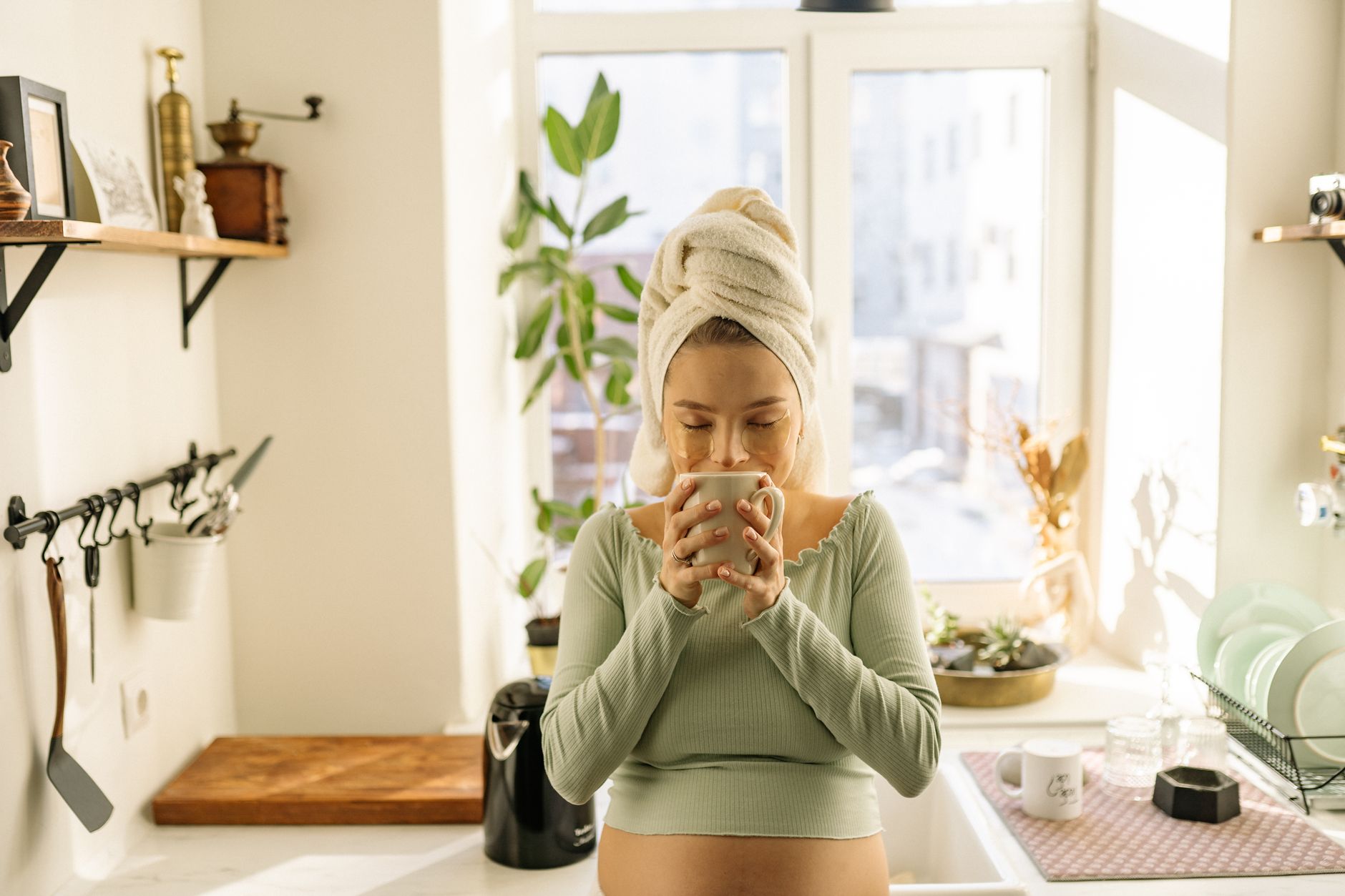
Finding a moment of calm can be as simple as mindfully enjoying a warm drink.
How to Start Practicing Micro Self-Care When You Have No Time?
The biggest hurdle for many moms isn't willingness, but knowing how to actually *do* something when every second feels accounted for. The trick to integrating micro self-care isn't to find more time, but to use the time you already have differently and more intentionally. Here's how to begin:
1. Identify Your Micro-Moments
Your day is full of transitions and small pockets of time that often go unnoticed or are filled with mindless scrolling. These are your opportunities:
Waiting for the kettle to boil.
While your child is buckling into their car seat.
When you're stopped at a red light.
Waiting for the microwave to finish.
Standing in line at the grocery store.
Before you open the bedroom door in the morning.
After you've tucked the kids into bed, before you pick up your phone.
Start by observing your day for a few days. Where are these tiny gaps? What do you usually do in those moments? Can you replace a mindless activity with an intentional micro self-care act?
2. Start Small (Really Small)
Don't try to implement ten new habits at once. Pick one or two micro self-care practices that appeal to you and seem genuinely achievable. For instance, commit to taking three deep breaths whenever you wash your hands, or savoring your first sip of coffee each morning. Once that feels natural, add another.
3. Stack Your Habits
This powerful strategy involves attaching a new habit (micro self-care) to an existing one. For example:
"After I brush my teeth, I will look in the mirror and offer myself one kind thought."
"Before I start dinner, I will put on one song that makes me happy."
"When I sit down to feed the baby, I will take five slow, deep breaths."
By linking micro self-care to routines you already do, you remove the need for extra willpower or remembering, making it much easier to stick with.
4. Lower Your Expectations
Micro self-care isn't about achieving a blissful state of zen every time. It's about a small shift, a brief moment of peace, a tiny reset. Some days, your "micro" moment might be just sighing deeply. That's okay. The goal is consistency and intention, not perfection. Embrace the idea that even a 30-second pause is a victory.
5. Prioritize with Intention
It's easy to let the urgent overshadow the important. While your child's needs are often urgent, your own well-being is important for your entire family. Remind yourself that prioritizing these tiny moments isn't selfish; it's a foundational step in being a more patient, present, and resilient mom. Just as you might plan out your 30-minute dinners for the family, plan out your micro-moments with similar intention.
Quick Micro Self-Care Ideas for Moms (Under 1, 5, and 10 Minutes)
Here are practical, actionable ideas for micro self-care, categorized by how much time they take. Remember, the key is presence and intention, not just going through the motions.
Time Frame
Examples of Micro Self-Care Activities
How it Helps
Under 1 Minute
3 deep breaths
Mindful sip of water/coffee
Quick stretch (neck roll, shoulder shrug)
Notice 3 things you're grateful for
Splash cold water on your face
Look out a window and truly see something
Immediate reset, nervous system regulation, presence, gratitude boost.
Tidy one small area (e.g., clear the kitchen counter)
Stare at a plant or a piece of art
Mental break, sensory input, creative outlet, feeling of accomplishment, connection to nature.
Under 10 Minutes
Short guided meditation or body scan
Read a few pages of a book/magazine
Call or text a friend
Quick walk around the block
Gentle stretching routine
Listen to a short podcast segment
Quick doodle or sketch
Deeper relaxation, social connection, mental escape, physical release, creative expression.
Under 1 Minute: Instant Resets
The Mindful Breath: Close your eyes (if safe) and take three slow, deep breaths, inhaling through your nose and exhaling slowly through your mouth. Notice the sensation of the air. This is a powerful nervous system regulator.
Sensory Anchor: Take a mindful sip of water, truly tasting and feeling it. Or simply notice the texture of your clothes, the temperature of the air, or the sound of birds outside.
Quick Stretch: Roll your shoulders back and down three times, or gently tilt your head side to side to release neck tension.
Gratitude Flash: Briefly think of one small thing you're genuinely grateful for in that exact moment (the warm cup in your hand, the quiet hum of the fridge).
Cold Water Splash: A quick splash of cold water on your face can instantly wake you up and regulate your vagal nerve, helping to calm anxiety.
Under 5 Minutes: Small Bursts of Joy and Calm
One Song Serenade: Put on your favorite song and truly listen, letting yourself feel the music. Don't do anything else.
Nature Nook: Step outside for 2-3 minutes. Feel the sun, notice a tree, breathe the fresh air. Even a quick glance out a window with full attention can work wonders.
Journaling Light: Grab a notebook and write down 2-3 sentences about how you're feeling, or one thing you want to let go of. This is a mini version of Morning Pages for Moms, offering a quick mental clear-out.
Scent & Sight: Light a candle (safely!) and watch the flame, or diffuse an essential oil you love. Engage your senses.
Mindful Movement: Do 10 squats or 10 push-ups against a counter. Get your blood flowing for a moment.
Under 10 Minutes: Deeper Dips into Restoration
Guided Meditation: Use a meditation app (like Calm or Headspace) for a 5-10 minute guided session. Many have specific meditations for stress or sleep.
Reading Retreat: Read a chapter or a few pages of a book you enjoy. Escape into another world for a brief moment.
Connection Call: Send a quick text or make a short call to a friend or family member who lifts you up. Human connection is vital for well-being.
Bullet Journal Brain Dump: Spend 5-7 minutes doing a quick brain dump in your bullet journal for busy moms to clear mental clutter and organize priorities.
Gentle Stretch Routine: Follow a short online stretching video or do a few simple yoga poses to release tension.
Quick Tidy & Reset: Focus on tidying one small, high-impact area, like your nightstand or desk. A clutter-free space can help create a clutter-free mind.
Overcoming Mom Guilt About Taking Time for Yourself
Mom guilt is a heavy, invisible weight that many mothers carry. It whispers doubts and criticisms, telling you that any time spent on yourself is time stolen from your children or family. It's one of the biggest barriers to practicing self-care, micro or otherwise. But here's the truth: letting go of mom guilt isn't selfish; it's essential for your well-being and, by extension, the well-being of your family.
Reframing Self-Care as a Necessity, Not a Luxury
The first step is a mindset shift. Self-care isn't a reward for good behavior or an indulgence; it's a non-negotiable part of maintaining your physical, mental, and emotional health. Think of it like charging your phone: if you don't charge it, it dies, and then it's useless. You are the emotional battery for your family. When you're depleted, you have less patience, less energy, and less joy to share.
The National Alliance on Mental Illness (NAMI) emphasizes that self-care is a vital component of managing stress and preventing mental health challenges. When you prioritize your own needs, even in tiny ways, you're investing in your capacity to be a more present, patient, and joyful parent. You're showing up as your best self, not just your surviving self.
Modeling for Your Children
One of the most powerful reasons to practice self-care is to model healthy habits for your children. When your kids see you taking small moments to recharge, they learn that it's okay, and even important, to care for oneself. They learn that their parents are whole people with needs, not just providers. This teaches them valuable lessons about emotional regulation, boundaries, and self-respect that they will carry into their own lives.
Imagine your child growing up believing that self-sacrifice is the only path to being a "good" parent. By showing them a different way, you're breaking a potentially unhealthy cycle and teaching them resilience.
Communicating Your Needs
You don't have to carry the burden alone. Talk to your partner, a trusted friend, or family members about your need for these small moments. Explain that micro self-care helps you manage stress and be a better parent. For example, "I'm going to take five minutes to just breathe before dinner so I can be more present with you all." This helps them understand and support your efforts.
It can feel vulnerable to express these needs, but often, partners and family members are more willing to help than we assume, especially when they understand the positive impact it has on everyone.
Setting Boundaries
Learning to say "no" or "not right now" can be incredibly liberating. This might mean saying no to an extra commitment, or simply setting a boundary around your micro self-care time. For example, "For the next five minutes, I'm going to listen to a song. I'll be available for questions after that." Clear boundaries protect your small pockets of restorative time.
When you prioritize your well-being, you bring more joy and presence to your interactions with your children.
Benefits of Consistent Micro Self-Care for Maternal Mental Health
The cumulative effect of consistently weaving micro self-care into your daily life can have profound and lasting benefits for your mental and emotional well-being. These aren't just fleeting moments of calm; they build resilience and create a stronger foundation for managing the inevitable stresses of motherhood.
Reduced Stress and Burnout
Each micro self-care moment acts as a mini-reset button, helping to lower cortisol levels and activate your parasympathetic nervous system (your "rest and digest" mode). Over time, this consistent regulation prevents the build-up of chronic stress, which is a major contributor to maternal burnout. The American Institute of Stress notes that even short breaks can significantly improve focus and reduce stress levels.
Instead of constantly running on fumes, these tiny pauses help you recalibrate, making you less reactive and more able to handle daily challenges with a sense of calm. Think of it as preventative maintenance for your mental health, much like building a realistic 5 AM club routine for moms to start the day with intention.
Improved Mood and Emotional Regulation
When you regularly engage in activities that bring you even a sliver of joy or peace, you naturally boost your mood. These moments provide a break from negative thought patterns and allow for positive emotions to emerge. This improved emotional baseline helps you regulate your feelings more effectively, leading to fewer meltdowns (for you!) and a greater sense of emotional stability.
One reader described it this way: "Before micro self-care, I felt like a tightly wound spring, ready to snap. Now, even a minute of quiet breathing helps me loosen that spring just enough to respond rather than react."
Increased Patience and Presence
When your cup is constantly empty, it's incredibly difficult to be patient with a demanding toddler or a bickering sibling. Micro self-care helps to refill your cup, allowing you to approach challenging situations with more calm and understanding. It also helps you be more present in your interactions, truly listening and engaging with your children rather than just going through the motions.
A mom who feels more regulated and rested is better equipped to connect deeply with her children, enjoying the precious moments rather than being overwhelmed by them.
Enhanced Resilience
Life as a mom is unpredictable. There will be sick days, sleepless nights, and unexpected challenges. Consistent micro self-care builds your emotional resilience, making you better equipped to bounce back from setbacks. You learn that you have tools to support yourself, even when things are tough, fostering a sense of inner strength and self-efficacy.
Better Family Dynamics
A happier, less stressed mom often means a happier, more harmonious household. When you're calmer, more patient, and more present, this positive energy ripples through the entire family. Children thrive when their primary caregiver is well-regulated and emotionally available. Your well-being isn't just about you; it profoundly impacts everyone around you.
Setting Realistic Expectations and Avoiding Perfectionism
The beauty of micro self-care lies in its flexibility and low barrier to entry. However, it's crucial to approach it with realistic expectations to avoid turning it into another source of stress or guilt. This isn't about achieving perfection; it's about progress and embracing imperfection.
It's Not Another To-Do Item
The goal of micro self-care is to simplify and soothe, not to add more pressure. If a particular micro self-care practice feels like a chore, it defeats the purpose. Be flexible and choose activities that genuinely resonate with you in the moment. It's okay if your micro self-care changes day-to-day based on your energy levels and needs.
Remember that the intention is what truly matters. A 30-second mindful stretch performed with presence is more impactful than a five-minute activity done begrudgingly.
Flexibility is Key
Some days, you might seamlessly integrate several micro self-care moments. Other days, you might be lucky to get one deep breath in. That's life with kids! Don't let a "bad" day derail your efforts. Just acknowledge it, let it go, and start fresh the next moment or the next day. There's no failing at micro self-care, only learning and adjusting.
Acknowledge that motherhood is dynamic. What works one week might not work the next. Be kind to yourself and adapt your practices as needed.
Progress, Not Perfection
Micro self-care is a practice, not a destination. You won't suddenly become a perfectly calm, perpetually zen mom. What you will find is a gradual shift towards greater resilience, more moments of peace, and a deeper connection to your own needs. Celebrate the small victories – the days you remembered to take that mindful sip, the times you chose a quick stretch over mindless scrolling.
As the Mayo Clinic notes, self-care is a continuous process of self-awareness and intentional action. It's not about being perfect, but about consistently showing up for yourself in small ways.
Don't Compare Your Journey
It's easy to look at other moms (especially online) and feel like you're not doing enough. Remember that everyone's journey is unique. Your micro self-care might look different from someone else's, and that's perfectly fine. Focus on what feels good and sustainable for *you* and your family's unique rhythm.
Myth vs. Fact
Myth: Self-care needs to be a big, luxurious event, like a spa day or a weekend getaway.
Fact: While those things are wonderful, self-care doesn't have to be grand or expensive. Micro self-care proves that even 30 seconds of intentional breathing or savoring a warm drink can be incredibly restorative and impactful for busy moms.
Myth: Taking time for yourself as a mom is selfish and means you're neglecting your children.
Fact: Prioritizing your well-being, even in tiny increments, is essential for your mental health and actually makes you a more patient, present, and effective parent. It's an investment in your family's overall happiness and a vital example for your children about healthy self-care.
Myth: You need to buy special products or go to specific classes to practice self-care.
Fact: Many effective micro self-care practices are free and accessible, like deep breathing, stepping outside, or listening to a favorite song. While products can enhance self-care, they are by no means a prerequisite.
Key Takeaways
Micro self-care involves intentional, very short (under 10 minute) moments of self-nurturing woven into your daily routine.
It's essential for busy moms facing time scarcity, mental load, and mom guilt, acting as a crucial preventative measure against burnout.
Start by identifying tiny pockets of time and stacking micro self-care habits onto existing routines.
Examples range from 30-second deep breaths to 10-minute guided meditations or quick walks.
Reframing self-care as a necessity, not a luxury, and modeling it for your children helps overcome mom guilt.
Consistent micro self-care reduces stress, improves mood, increases patience, and positively impacts overall family dynamics.
Approach micro self-care with realistic expectations, embracing flexibility and progress over perfection.
Frequently Asked Questions
What is micro self-care?
Micro self-care is the practice of integrating very brief, intentional moments of self-nurturing into your daily life. These are usually activities that take less than 10 minutes, often just a few seconds, designed to provide small bursts of calm, joy, or mental clarity, especially for those with limited time like busy moms.
How do you practice micro self-care?
To practice micro self-care, identify small, otherwise unproductive moments in your day (like waiting for coffee or at a red light). Then, intentionally fill that moment with a quick, restorative activity such as taking three deep breaths, mindfully sipping water, doing a quick stretch, or listening to one favorite song. The key is to be present and intentional, making it a conscious act of self-care rather than a mindless filler.
What are some quick self-care ideas for moms?
Quick self-care ideas for moms include taking 60 seconds for mindful breathing, stepping outside for a breath of fresh air, listening to one uplifting song, doing a quick neck or shoulder stretch, writing 2-3 sentences in a journal, or simply savoring a warm drink. Even tidying one small area can provide a sense of accomplishment and calm.
How do moms find time for self-care?
Moms find time for self-care not by adding more to their schedule, but by transforming existing moments. This involves habit stacking (attaching self-care to an existing routine), utilizing transition times (like waiting in line), and intentionally carving out slivers of time that are usually overlooked. It's about being strategic and consistent with tiny moments, rather than waiting for large blocks of free time.
Why is self-care important for mothers?
Self-care is crucial for mothers because it helps prevent burnout, reduces stress, improves mental health, and increases patience and presence. By regularly recharging, even in small ways, mothers are better equipped to handle the demands of parenting, model healthy habits for their children, and foster a more positive and harmonious family environment.
What are examples of self-care for busy people?
For busy people, effective self-care examples include short bursts of activity such as a 5-minute guided meditation, a quick walk around the block, reading a few pages of a book, listening to a short podcast, or engaging in a brief creative outlet like doodling. The focus is on achievable, low-barrier activities that offer mental or physical relief without requiring significant time commitments.
When to See a Doctor or Specialist
While micro self-care can significantly support your mental well-being, it's not a substitute for professional medical or mental health care. If you find that despite consistent self-care practices, you are experiencing persistent feelings of overwhelming sadness, anxiety, hopelessness, extreme irritability, a loss of interest in activities you once enjoyed, changes in sleep patterns (insomnia or excessive sleep), significant changes in appetite or weight, or thoughts of self-harm, please reach out for professional help.
These symptoms could indicate a more serious mental health condition, such as postpartum depression, general anxiety disorder, or clinical depression, which require professional assessment and treatment. You should contact your primary care provider, an OB/GYN, or a mental health professional like a therapist or psychiatrist. They can provide an accurate diagnosis and discuss appropriate treatment options, which may include therapy, medication, or a combination of approaches. Your well-being is paramount, and seeking help is a sign of strength.
References
American Psychological Association (APA). Stress in America Survey.
National Alliance on Mental Illness (NAMI). Self-Care.
Mayo Clinic. Stress management: How to reduce, prevent, and cope with stress.
The American Institute of Stress. Stress Management.
Not sure about the label on Micro Self Care For Busy Moms products?
Snap the ingredients list and SafeFilter checks every ingredient for your stage — only 3 free scans this month, then you're locked until reset. Unlimited from $7/mo or $50/yr.
When Shubhra Mishra was expecting her first child in 2016, she was overwhelmed by conflicting food advice — one site said yes, another said never. By the time her second baby arrived in 2019, she realized millions of mothers face the same confusion.
That sparked a five-year journey through clinical nutrition papers, cultural diets, and expert conversations — all leading to BumpBites: a calm, compassionate space where science meets everyday motherhood.
Her long-term vision is to build a global community ensuring safe, supported, and free deliveriesfor every mother — because no woman should face pregnancy alone or uninformed. 🌿
🌍 Stand with mothers, shape safer guidance
Join a small circle of experts who review BumpBites articles so expecting parents everywhere can decide with confidence.