Avoid Rivaroxaban (Xarelto) during pregnancy unless medically necessary. Experts warn of risks, especially in the first trimester, and suggest safer alternatives.
By Shubhra Mishra — a mom of two who turned her own confusion during pregnancy into BumpBites, a global mission to make food choices clear, safe, and stress-free for every expecting mother. 💛
Check whether any food is safe during pregnancy with the BumpBites Food Safety Checker.
Quick verdict: ❌ Best avoided. Rivaroxaban (Xarelto) is not considered safe at any stage of pregnancy, and most obstetric guidelines recommend switching to a heparin‑based anticoagulant if you need blood‑thinning therapy while pregnant.
It’s normal to feel a surge of anxiety the moment you realize you’ve taken—or might need to take—rivaroxaban (Xarelto) while pregnant. You’re not alone; many expecting parents have stared at a prescription bottle in the pharmacy aisle, wondering, “is rivaroxaban xarelto safe during pregnancy?” The short answer is that it isn’t. In this article we’ll walk you through why the drug is generally avoided, how the risk profile changes across the three trimesters, what dosage considerations matter (spoiler: none are recommended), and which safer blood‑thinners you can discuss with your provider.
We’ll also compare the brand‑name Xarelto to its generic counterpart, explore what the FDA, ACOG, and NHS say about its use, and give you a clear plan for managing a pre‑existing clotting disorder during pregnancy. By the end you’ll have a concise “what to do next” checklist, a list of safer alternatives, and reassurance that you can make an informed decision with your healthcare team.
Stage of pregnancy
Verdict
Notes
First trimester
❌ Avoid
Highest risk period for organ formation; animal studies show embryotoxicity.
Second trimester
❌ Avoid
Potential for placental bleeding and fetal growth restriction.
Third trimester
❌ Avoid
Increased risk of maternal hemorrhage and neonatal bleeding at delivery.
Breastfeeding
❌ Avoid
Rivaroxaban is excreted in breast milk; infant exposure not studied.
What is rivaroxaban (Xarelto) and how does it work?
Rivaroxaban is an oral direct Factor Xa inhibitor. It blocks a key enzyme in the clotting cascade, preventing the conversion of prothrombin to thrombin and ultimately reducing the formation of fibrin clots. Because it works without the need for routine blood‑test monitoring, it quickly became a popular alternative to warfarin for conditions such as deep‑vein thrombosis (DVT), pulmonary embolism (PE), and atrial fibrillation. The medication is sold under the brand name Xarelto, but several generic versions contain the same active ingredient—rivaroxaban.
For most non‑pregnant adults, the standard dose is 10 mg or 20 mg once daily, depending on the indication. The drug reaches peak plasma levels within 2–4 hours and has a half‑life of about 5‑9 hours, which means it clears relatively quickly after the last dose. However, its anticoagulant effect can linger in the bloodstream, especially in patients with renal impairment, and it does not have a readily available reversal agent approved in the United States.
Is rivaroxaban (Xarelto) safe during pregnancy?
C
urrent guidance from the American College of Obstetricians and Gynecologists (ACOG), the UK’s National Health Service (NHS), and the U.S. Food and Drug Administration (FDA) all advise against using rivaroxaban during pregnancy. The FDA classifies it as a Category C medication—meaning animal studies have shown adverse fetal effects, but there are no well‑controlled studies in pregnant women. ACOG’s practice bulletin on anticoagulation in pregnancy (2023) specifically recommends low‑molecular‑weight heparin (LMWH) over any direct oral anticoagulant (DOAC) because the latter lack safety data and have been associated with placental bleeding and fetal loss.
The primary mechanism of risk is the drug’s ability to cross the placenta and inhibit Factor Xa in the developing fetus, potentially interfering with normal clot formation that is essential for organ development. Small case series have reported increased rates of miscarriage, intrauterine growth restriction, and postpartum hemorrhage when rivaroxaban was continued into the third trimester.
Because the evidence is limited to observational reports and animal studies, no dosage can be deemed “safe.” The consensus among obstetric specialists is that the safest course is to stop rivaroxaban as soon as pregnancy is confirmed and transition to a heparin‑based regimen under medical supervision.
Is Xarelto safe to take during the first trimester of pregnancy?
The first trimester is the period of organogenesis, when the fetus’s major organs form. Exposure to anticoagulants that cross the placenta can disrupt normal vascular development. Animal studies of rivaroxaban have shown embryotoxic effects, and human case reports link first‑trimester use to early pregnancy loss. ACOG advises that any DOAC, including Xarelto, should be discontinued before 6 weeks gestation if possible and replaced with LMWH.
If you discover you’re pregnant while taking Xarelto, the recommended action is to contact your obstetrician immediately. They will likely switch you to therapeutic‑dose enoxaparin (Lovenox) and monitor anti‑Xa levels to ensure adequate anticoagulation without compromising fetal safety.
Can I take rivaroxaban in the second trimester?
In the second trimester, the placenta is fully functional, and the drug can pass through it more readily. Reports have documented placental hemorrhage and fetal growth restriction when rivaroxaban is used beyond the first 12 weeks. The NHS guideline on anticoagulation in pregnancy (2022) states that DOACs are contraindicated after the first trimester because the potential for maternal and fetal bleeding outweighs any convenience benefits.
For women who develop a new clotting event in the second trimester, the standard of care is to start therapeutic LMWH (e.g., dalteparin or enoxaparin) and continue it until a few weeks after delivery. This approach has been shown in large cohort studies to reduce both maternal thrombotic risk and adverse fetal outcomes.
What is the recommended dosage of Xarelto for pregnant women?
There is no recommended dosage of rivaroxaban for pregnant women. The drug’s safety profile has not been established for any dose, and the FDA’s Category C classification reflects the uncertainty. Even low doses (5 mg) have been associated with placental transfer in animal models. Consequently, professional societies such as ACOG and NICE (National Institute for Health and Care Excellence) advise against any use of Xarelto during pregnancy.
If you are already on rivaroxaban for a chronic condition, the safest plan is to stop it as soon as pregnancy is confirmed and transition to a heparin‑based regimen. Your provider will calculate the appropriate LMWH dose based on your weight and the indication (e.g., 1 mg/kg twice daily for therapeutic dosing).
Are there safer blood thinners than Xarelto for pregnancy?
Yes. The anticoagulants with the most robust safety data in pregnancy are the injectable heparins:
Enoxaparin (Lovenox) – a low‑molecular‑weight heparin with extensive pregnancy safety data.
Dalteparin (Fragmin) – another LMWH option, often used when enoxaparin is not tolerated.
Unfractionated Heparin (UFH) – preferred in women at high risk of bleeding or when rapid reversal may be needed during delivery.
Fondaparinux (Arixtra) – a synthetic pentasaccharide with limited but reassuring data for use in the second and third trimesters.
Low‑Molecular‑Weight Heparin (LMWH) regimens – tailored dosing protocols that are the standard of care for most thrombotic conditions in pregnancy.
These agents do not cross the placenta in clinically significant amounts, and their effects can be monitored with anti‑Xa levels if needed. They also have reversal agents (protamine sulfate for UFH; partial reversal for LMWH) that make them safer around the time of delivery.
Does the brand Xarelto differ from generic rivaroxaban in pregnancy safety?
No meaningful difference has been documented. Both brand‑name Xarelto and generic rivaroxaban contain the same active ingredient and share identical pharmacokinetic properties. Regulatory agencies, including the FDA, require generics to demonstrate bioequivalence to the brand product, meaning they deliver the same amount of drug into the bloodstream. Consequently, the safety warnings apply equally to both forms.
Some clinicians note that certain generic formulations may contain different inactive excipients, but none of these have been shown to affect placental transfer or fetal outcomes. Therefore, whether you have a branded pill or a generic version, the recommendation remains: avoid it during pregnancy.
What are the risks of using rivaroxaban while pregnant?
Maternal risks include excessive bleeding during labor, postpartum hemorrhage, and delayed wound healing. Because rivaroxaban lacks an approved reversal agent, managing acute bleeding can be challenging. Fetal risks involve placental hemorrhage, impaired fetal growth, and possible teratogenic effects—though definitive human data are lacking, the animal evidence is concerning.
Specific reported complications include:
Spontaneous abortion, particularly when exposure occurs in the first trimester.
Intrauterine growth restriction (IUGR) noted in second‑trimester case series.
Neonatal bleeding disorders when the mother continues the drug up to delivery.
Given these potential outcomes, most obstetric providers will treat any exposure as a high‑risk scenario and will closely monitor both mother and fetus throughout the pregnancy.
Can women with a history of blood clots use Xarelto during pregnancy?
Women with a prior history of venous thromboembolism (VTE) or other clotting disorders need anticoagulation, but Xarelto is not the preferred choice during pregnancy. ACOG’s 2023 guideline recommends therapeutic LMWH for pregnant women with a history of VTE, as it has proven efficacy and a well‑characterized safety profile. Transitioning from rivaroxaban to LMWH before conception, or as soon as pregnancy is confirmed, is the standard approach.
If you are already on Xarelto and become pregnant, do not stop anticoagulation abruptly—contact your provider immediately. They will arrange a safe switch, typically overlapping the last dose of rivaroxaban with the first dose of LMWH for a brief period to maintain continuous anticoagulation.
How does rivaroxaban affect fetal development?
Rivaroxaban’s ability to cross the placenta raises concerns about interference with fetal coagulation pathways, which are essential for normal vascular development. Animal studies in rats and rabbits have shown dose‑dependent embryotoxicity, including skeletal malformations and reduced fetal weight. Human data are limited, but the few case reports linking first‑trimester exposure to miscarriage suggest a possible teratogenic effect.
Because the drug can alter the delicate balance of clotting and bleeding in the developing fetus, most experts advise treating any exposure as a potential risk factor for adverse outcomes. Ongoing fetal ultrasound monitoring is often recommended if exposure cannot be avoided, but prevention remains the best strategy.
Safety by trimester
First trimester (weeks 1‑12)
During organogenesis, the fetus is most vulnerable to teratogens. Rivaroxaban’s placental transfer has been documented in animal models, and case reports associate first‑trimester exposure with early pregnancy loss. ACOG advises immediate cessation of the drug and initiation of therapeutic LMWH, typically enoxaparin 1 mg/kg subcutaneously twice daily. Close follow‑up with serial ultrasounds is recommended to assess viability.
Second trimester (weeks 13‑27)
In the second trimester, the placenta is fully functional, and the drug can cause placental bleeding and fetal growth restriction. The NHS explicitly lists DOACs, including rivaroxaban, as contraindicated after 12 weeks. Switching to LMWH (e.g., dalteparin 100 IU/kg once daily for prophylaxis or twice daily for treatment) is the standard of care. Monitoring anti‑Xa levels may be useful for dose adjustment.
Third trimester (weeks 28‑40)
Near term, the biggest concern is maternal hemorrhage at delivery. Rivaroxaban’s half‑life means residual anticoagulant effect can persist for up to 24 hours after the last dose, increasing the risk of postpartum bleeding. Guidelines recommend stopping rivaroxaban at least 24‑48 hours before planned induction or cesarean section and substituting LMWH until a few hours before delivery, then switching to UFH for easier reversal.
Breastfeeding
Rivaroxaban is excreted in breast milk, and infant exposure has not been studied. The FDA and ACOG both advise against breastfeeding while on the medication. If you need anticoagulation while nursing, LMWH remains the safest option because it is minimally secreted in milk.
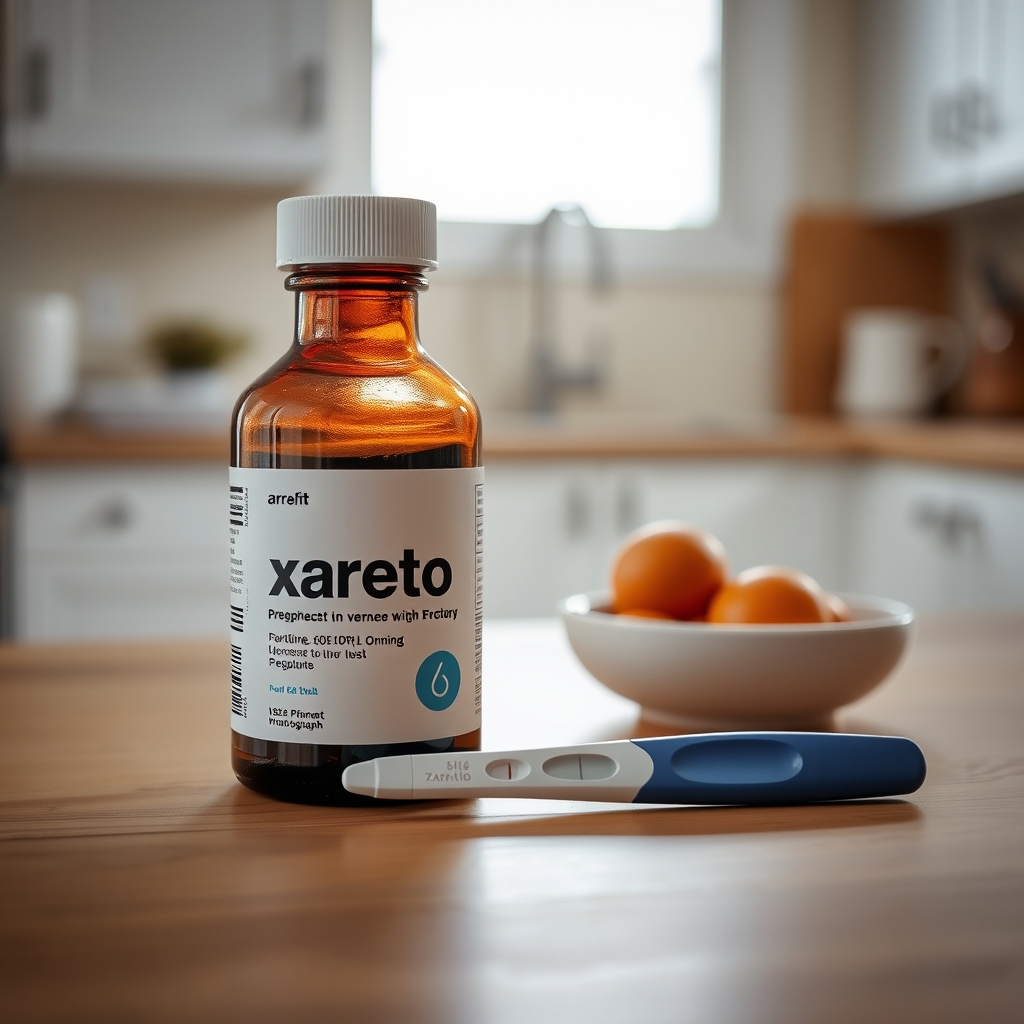
Seeing a pregnancy test next to your medication bottle can trigger a flood of worries—take a breath and read on for a clear plan.
Safe dosage / amount / brands
Because no dose of rivaroxaban is considered safe in pregnancy, the focus shifts to “how to stop safely.” If you are on a 20 mg daily regimen, the standard approach is:
Contact your obstetrician or hematologist immediately.
Begin a transition plan to therapeutic LMWH (e.g., enoxaparin 1 mg/kg twice daily).
Discontinue rivaroxaban at least 24 hours before the first LMWH dose to avoid overlapping anticoagulant peaks.
Both the brand‑name Xarelto and generic rivaroxaban tablets share the same dosing schedule, so there is no “safer” brand to choose. The only “safe” approach is to stop the drug and use a heparin‑based alternative.
Side effects and risks
While on rivaroxaban, the most common side effects in non‑pregnant patients include mild gastrointestinal upset and occasional bruising. In pregnancy, the stakes are higher:
Bleeding at delivery: Uncontrolled maternal hemorrhage may require blood transfusion.
Placental abruption: Sudden separation of the placenta can jeopardize fetal oxygen supply.
Miscarriage: Early loss has been reported in several case series.
Neonatal bleeding: Newborns exposed in utero may present with intracranial hemorrhage.
If you experience any of the following, call your provider right away: heavy vaginal bleeding, severe abdominal pain, sudden swelling of the legs, or signs of a stroke (e.g., facial droop, sudden weakness). These symptoms may indicate a serious complication that requires urgent medical attention.
Safer alternatives
Enoxaparin (Lovenox) – the most studied LMWH for pregnancy; easy dosing and partial reversibility.
Dalteparin (Fragmin) – an LMWH with a similar safety profile; useful if enoxaparin is not tolerated.
Unfractionated Heparin – preferred when rapid reversal is needed during labor.
Fondaparinux (Arixtra) – a synthetic pentasaccharide; limited but reassuring data for second/third trimester use.
Low‑Molecular‑Weight Heparin (LMWH) regimens – tailored dosing based on weight and indication, the gold standard for anticoagulation in pregnancy.
Related items — safety at a glance
Anticoagulant
Verdict
One‑line note
Apixaban (Eliquis)
❌ Avoid
Another DOAC with no pregnancy safety data.
Dabigatran (Pradaxa)
❌ Avoid
Direct thrombin inhibitor; contraindicated in pregnancy.
Edoxaban (Savaysa)
❌ Avoid
Lacks any human pregnancy safety studies.
Warfarin (Coumadin)
⚠️ Use with caution
Teratogenic in first trimester; may be used in second/third with close monitoring.
Betrixaban
❌ Avoid
Insufficient data; not recommended for pregnant patients.
Rivaroxaban (Xarelto)
❌ Avoid
No safe dose; switch to LMWH.
Myth vs. fact
Myth: “A low dose of Xarelto is safe because the amount is tiny.”
Fact: Even the lowest therapeutic dose (5 mg) crosses the placenta in animal models, and no human data confirm safety. All doses are considered unsafe.
Myth: “If I stop Xarelto after the first month, the baby will be fine.”
Fact: Exposure at any point can affect placental health, and risks such as miscarriage or growth restriction can persist beyond the exposure window. Immediate transition to a safer anticoagulant is recommended.
Myth: “The brand name Xarelto is safer than generic rivaroxaban.”
Fact: Both contain the same active ingredient; safety concerns apply equally to brand and generic forms.
Key takeaways
❌ Rivaroxaban (Xarelto) is not safe at any stage of pregnancy; avoid it completely.
Switch to a heparin‑based anticoagulant (LMWH or UFH) as soon as pregnancy is confirmed.
There is no safe dosage for Xarelto during pregnancy—any exposure warrants close monitoring.
Brand‑name and generic versions have identical risk profiles; choose none.
Discuss a transition plan with your provider to maintain clot‑prevention while protecting your baby.
Frequently asked questions
Is Xarelto safe during pregnancy?
No. Current guidelines from ACOG, NHS, and the FDA advise against using Xarelto at any point in pregnancy because of potential maternal bleeding and fetal developmental risks.
Can I take Xarelto while pregnant?
It is strongly discouraged. If you are already prescribed Xarelto, contact your healthcare provider immediately to arrange a switch to a pregnancy‑safe anticoagulant such as enoxaparin.
What are the risks of Xarelto for a fetus?
Potential risks include miscarriage, placental hemorrhage, intrauterine growth restriction, and neonatal bleeding disorders. Animal studies also suggest possible teratogenic effects.
What blood thinners are safe in pregnancy?
The most widely accepted safe options are low‑molecular‑weight heparins (e.g., enoxaparin, dalteparin) and unfractionated heparin, which do not cross the placenta in significant amounts.
How long should I wait after stopping Xarelto before getting pregnant?
Rivaroxaban’s half‑life is about 9 hours, so it clears within 48 hours. However, clinicians usually advise a washout period of at least 2‑3 days and a transition to LMWH before attempting conception.
Can rivaroxaban cause birth defects?
While definitive human data are lacking, animal studies have shown embryotoxicity and skeletal malformations, leading experts to treat any exposure as a potential teratogenic risk.
Is there a safe dose of Xarelto during pregnancy?
No. No dose—high or low—has been proven safe for pregnant patients, so the recommendation is to avoid the drug entirely.
What are alternatives to Xarelto for pregnant women with clotting disorders?
Therapeutic low‑molecular‑weight heparin (enoxaparin or dalteparin) is the first‑line alternative, followed by unfractionated heparin if rapid reversal is needed. Fondaparinux may be considered in later trimesters under specialist supervision.
Switching to enoxaparin can protect both mother and baby while still managing clotting risk.
When to call your doctor
If you notice any of the following while on rivaroxaban during pregnancy, seek medical attention promptly:
Uncontrolled vaginal bleeding or spotting.
Severe abdominal or pelvic pain.
Sudden swelling of the legs or arms.
Signs of stroke (e.g., facial droop, arm weakness, speech difficulty).
Fever, chills, or sudden shortness of breath.
These symptoms could indicate a serious complication such as placental abruption, maternal hemorrhage, or a thrombotic event. Even if you have already stopped Xarelto, let your provider know about any new symptoms.
This information is for educational purposes only and does not replace personalized medical advice. Always discuss your specific situation with a qualified healthcare professional.
References
American College of Obstetricians and Gynecologists. “Practice Bulletin: Thromboembolism in Pregnancy.” ACOG, 2023.
National Health Service (NHS). “Anticoagulants in Pregnancy.” NHS Clinical Guidance, 2022.
U.S. Food and Drug Administration. “Drug Safety Communication: Rivaroxaban (Xarelto) Use in Pregnancy.” FDA, 2021.
Mayo Clinic. “Rivaroxaban (Xarelto) – Uses, Side Effects, Interactions.” Mayo Clinic, accessed 2024.
World Health Organization (WHO). “Guidelines for the Management of Venous Thromboembolism.” WHO, 2020.
National Institute for Health and Care Excellence (NICE). “Anticoagulation in Pregnancy.” NICE Guideline NG123, 2022.
Centers for Disease Control and Prevention (CDC). “Pregnancy and Blood Clotting Disorders.” CDC, 2023.
British Society for Haematology. “Management of Anticoagulation in Pregnancy.” BSH, 2021.
Not sure about the label on Is Rivaroxaban Xarelto Safe During Pregnancy products?
Snap the ingredients list and SafeFilter checks every ingredient for your stage — only 3 free scans this month, then you're locked until reset. Unlimited from $7/mo or $50/yr.
When Shubhra Mishra was expecting her first child in 2016, she was overwhelmed by conflicting food advice — one site said yes, another said never. By the time her second baby arrived in 2019, she realized millions of mothers face the same confusion.
That sparked a five-year journey through clinical nutrition papers, cultural diets, and expert conversations — all leading to BumpBites: a calm, compassionate space where science meets everyday motherhood.
Her long-term vision is to build a global community ensuring safe, supported, and free deliveriesfor every mother — because no woman should face pregnancy alone or uninformed. 🌿
🌍 Stand with mothers, shape safer guidance
Join a small circle of experts who review BumpBites articles so expecting parents everywhere can decide with confidence.