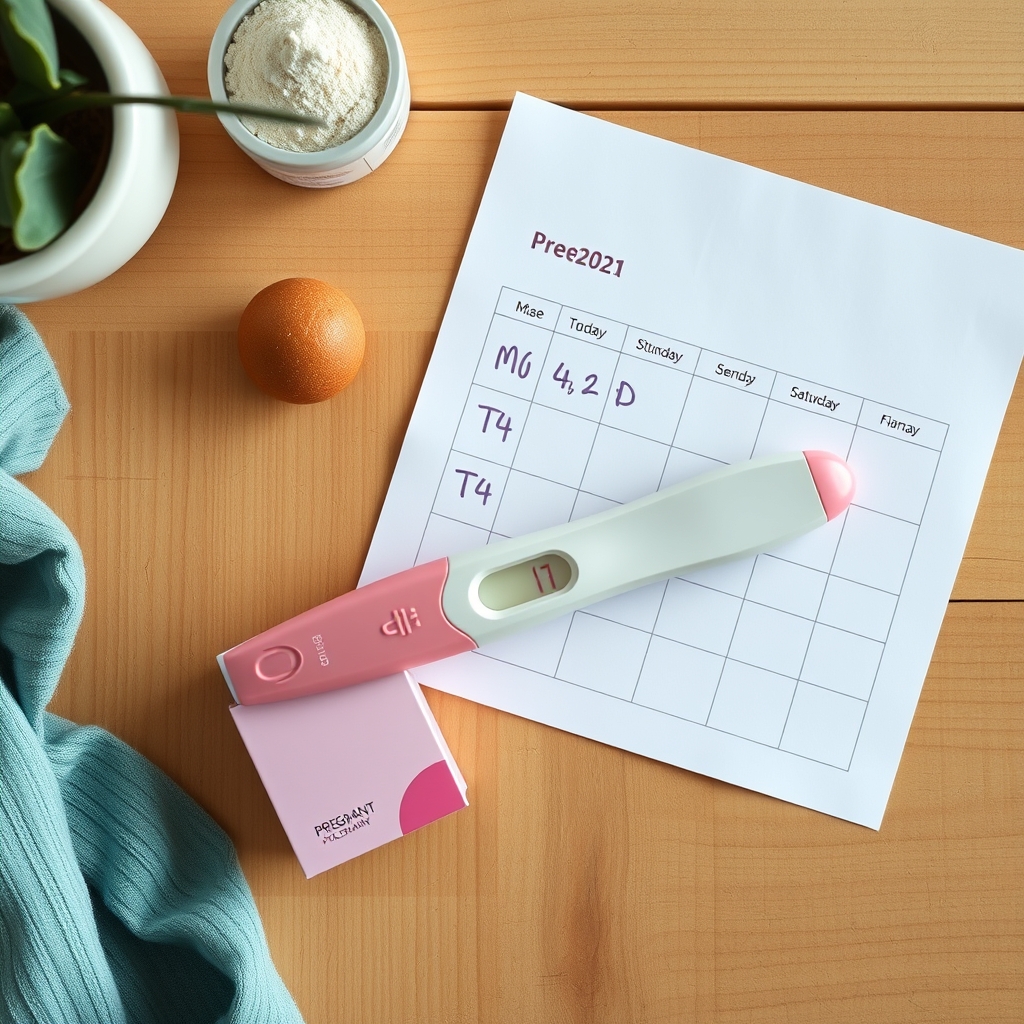
False positive pregnancy tests are rare, occurring in less than 1% of cases, but they can happen. Discover the common reasons for a false positive pregnancy test, from user error to medical conditions, and what to do next if you get one.
By Shubhra Mishra — a mom of two who turned her own confusion during pregnancy into BumpBites, a global mission to make food choices clear, safe, and stress-free for every expecting mother. 💛
Check whether any food is safe during pregnancy with the BumpBites Food Safety Checker.
Quick take: A false‑positive pregnancy test is rare—generally less than 2 % of all positive results. It usually stems from certain medications, recent medical procedures, or a mis‑timed test, rather than a true pregnancy. If you suspect a false positive, repeat the test in a few days and talk with your provider for a blood hCG check.
It’s 2 a.m., you’ve just taken a home pregnancy test after a missed period, and the line appears pink. Your heart races. You’ve imagined the baby bump for months, but now you’re wondering—could this be a mistake? You’re not alone; many people experience that mix of excitement and anxiety when a test says “positive” and the reality feels uncertain.
In this guide we’ll explain exactly what a false‑positive result means, how often it happens, why it can occur, and how you can confidently confirm whether you’re truly pregnant. We’ll walk through the science of hCG, compare urine‑based home kits with clinical blood tests, and give you a clear step‑by‑step plan if you need to double‑check the result.
By the end you’ll know the odds of a false positive, the common culprits, and the safest next steps—so you can move from worry to certainty, whatever the outcome.
What causes a false positive pregnancy test?
A false positive occurs when a test indicates pregnancy even though a viable embryo is not present. The most common mechanisms involve the detection of human chorionic gonadotropin (hCG) or substances that mimic its activity.
Medical conditions such as certain cancers (especially trophoblastic disease, ovarian or testicular tumors) can secrete hCG. Rarely, a pituitary gland that continues to produce low‑level hCG after menopause can trigger a positive result.
Recent pregnancy events also play a role. After a miscarriage, abortion, or delivery, residual hCG can linger in the bloodstream and urine for up to three weeks, leading to a positive test even though a new pregnancy has not begun.
Other triggers include:
Fertility treatments that involve hCG injections (e.g., IVF protocols).
Certain medications that contain hCG or LH‑like compounds.
Interfering substances in the urine, such as proteinuria, hematuria, or high concentrations of certain vitamins (e.g., vitamin C in large doses).
Cross‑reactivity with luteinizing hormone (LH) can also produce a faint line on some brands, especially when LH levels are unusually high due to ovarian cysts. In very rare cases, heterophile antibodies—immune proteins that bind to test reagents—can generate a false‑positive signal. Understanding the cause is the first step toward deciding whether to repeat the test, seek a blood draw, or simply wait for a clearer picture.
How accurate are home pregnancy tests compared with clinical blood tests?
H
ome urine tests are designed to detect hCG at a threshold of about 20–25 mIU/mL, which is roughly the level found 10‑14 days after ovulation. When used correctly, most over‑the‑counter kits boast a sensitivity of 99 % for detecting pregnancy after a missed period.
Clinical blood tests, however, can measure hCG down to 1 mIU/mL and differentiate between quantitative (exact level) and qualitative (positive/negative) results. This makes serum testing the gold standard for early or ambiguous cases.
Below is a quick comparison of key performance metrics:
Test type
Sensitivity (lowest hCG detected)
Specificity (false‑positive rate)
Typical use
Home urine (early‑detect)
20 mIU/mL
≈ 98 % (≈ 2 % false positives)
First‑line, at‑home screening
Clinic urine (lab‑processed)
5 mIU/mL
≈ 99 % (≈ 1 % false positives)
Confirmatory after home test
Serum quantitative hCG
1 mIU/mL
≈ 99.9 % (≈ 0.1 % false positives)
Early detection, monitoring
Because home kits are less sensitive, testing too early (before hCG reaches the detection threshold) can yield a false negative, while a false positive is usually linked to the factors discussed above. In practice, a positive home test followed by a serum hCG measurement provides the most reliable confirmation. The U.S. Food and Drug Administration (FDA) requires manufacturers to demonstrate ≥ 99 % sensitivity after a missed period, but user error—such as testing with diluted urine or using an expired kit—can still affect performance (FDA, 2021).
Can certain medications or medical conditions cause a false positive result?
Yes. Medications that contain hCG, such as those used in assisted reproductive technology (ART), are the most direct culprits. Even a single injection of hCG for ovulation induction can produce a positive urine test for up to a week.
Other drugs that may interfere include:
Fertility drugs that contain LH‑like activity (e.g., clomiphene citrate can occasionally cross‑react).
Antiepileptic medications like carbamazepine, which have been reported to cause weak false‑positive lines.
High‑dose vitamin C or D supplements, which can alter urine pH and affect test chemistry.
Medical conditions that elevate hCG without pregnancy include:
Trophoblastic disease (e.g., choriocarcinoma).
Germ cell tumors of the ovary or testis.
Pituitary hCG production in perimenopausal women.
Rare adrenal cortical tumors that secrete hCG‑like molecules.
If you’re on any of these medications or have a known condition, it’s worth discussing the timing of the test with your provider. A serum hCG drawn at the same time can differentiate between medication‑induced hCG and a true pregnancy. The National Institute for Health and Care Excellence (NICE) advises clinicians to take a detailed medication history when interpreting unexpected positive results (NICE, 2022).
How soon after a missed period can a false positive occur, and what is a chemical pregnancy?
A “false positive” can appear as early as the first day after a missed period if residual hCG from a recent pregnancy event is still present. This is especially common after a miscarriage or after a birth control method that caused a brief implantation that never progressed (often called a chemical pregnancy).
A chemical pregnancy is an early loss that occurs before the embryo can be detected on ultrasound, typically within the first 5‑6 weeks. hCG rises enough to trigger a positive test, but the pregnancy fails to develop further. Because the hCG level may start to decline quickly, a repeat test taken a few days later can turn negative, creating the impression of a “false positive.”
Early implantation can start producing detectable hCG as soon as 6‑7 days after fertilization, but most home tests require at least 10 days of hCG accumulation. If you test on the very first day of a missed period, you may be catching the tail end of a prior hCG surge rather than a new gestation. Tracking your cycle with a calendar or an app can help you pinpoint the most reliable testing window.
Marking your cycle helps you interpret early test results more accurately.
How often do false positive pregnancy tests happen – statistics by age and situation?
Overall, false positives occur in roughly 1‑2 % of all positive home tests. Age, recent fertility treatment, and contraceptive history can shift those odds.
Women under 25 generally have the lowest false‑positive rate (~0.8 %), reflecting fewer underlying hCG‑producing conditions.
Women aged 35‑40 see a modest increase (≈ 1.5 %) due to higher incidence of certain ovarian tumors that can secrete hCG.
After IVF or other ART cycles, the false‑positive rate climbs to about 3‑4 % because hCG injections are part of the protocol.
Following recent birth control (especially a copper IUD insertion or hormonal switch), residual hCG from a very early implantation can cause a 2‑3 % false‑positive rate.
After miscarriage, up to 5 % of women may test positive for up to two weeks while the body clears remaining hCG.
These numbers come from pooled data from the American College of Obstetricians and Gynecologists (ACOG) and the UK’s National Institute for Health and Care Excellence (NICE). Large population studies in the NHS system report a similar overall false‑positive range of 1‑2 % but note higher rates among patients with known endocrine disorders (NHS, 2022). While the percentages are small, they highlight that a positive result is usually reliable, but certain contexts warrant a confirmatory blood test.
What do hCG levels tell us about a false positive pregnancy test?
Human chorionic gonadotropin (hCG) is the hormone that pregnancy tests detect. In a typical early pregnancy, serum hCG doubles approximately every 48‑72 hours. When a test shows a positive but the hCG level is low (<5 mIU/mL) or not rising, it suggests a false positive or a very early pregnancy that may not be viable.
Key patterns:
Very low hCG (<5 mIU/mL) – unlikely to be a true pregnancy; consider a false positive, especially if you’re on hCG‑containing medication.
Stable or slowly rising hCG (increase < 50 % over 48 hours) – may indicate a chemical pregnancy or early loss.
Rapidly rising hCG (doubling every 48 hours) – consistent with a viable intrauterine pregnancy.
Quantitative serum hCG is reported with reference ranges that differ by laboratory; many labs provide a “trend” graph to visualize the rise or fall over 48‑hour intervals. Interpreting these trends alongside ultrasound findings gives clinicians a clearer picture of whether an apparent positive is genuine, a chemical pregnancy, or a medication‑related false positive.
What should you do after a false positive pregnancy test?
First, take a breath. A single positive result is not a diagnosis. Here’s a practical plan:
Check the timing. Make sure you used the test on the first‑morning urine, which contains the highest hCG concentration.
Repeat the test. Wait 48 hours and use a new kit. A consistent positive line suggests a true pregnancy; a negative or faded line points toward a false positive.
Consult your provider. Ask for a quantitative serum hCG. This blood draw will confirm whether hCG is present at a level that matches pregnancy.
Review recent medications. Inform your clinician about any fertility drugs, hormonal treatments, or supplements you’ve taken.
Consider your recent reproductive history. If you’ve had a miscarriage, abortion, or birth‑control change within the past few weeks, discuss those details—they can explain lingering hCG.
Beyond the medical steps, it’s normal to feel a mix of disappointment, relief, or lingering anxiety. Many people find comfort in talking with a partner, a trusted friend, or a support group. The American Psychological Association notes that brief counseling can help manage the emotional roller‑coaster that sometimes follows unexpected test results (APA, 2023). If you’re feeling overwhelmed, consider reaching out to a mental‑health professional who specializes in reproductive health.
How to confirm a false positive result – repeat testing and doctor evaluation
Confirmation relies on two pillars: repeat urine testing and a serum hCG measurement.
Repeat urine testing is inexpensive and can be done at home. Use a fresh test, follow the instructions precisely (same time of day, no excess fluid), and read the result within the manufacturer’s window (usually 3‑5 minutes).
Serum hCG testing provides a numeric value. If the level is below 5 mIU/mL, pregnancy is highly unlikely. If it’s between 5‑25 mIU/mL, the result is equivocal and your provider may repeat the test in a couple of days to observe the trend.
In rare cases, a false positive can also arise from a faulty test batch. Laboratories can run a quality control check on the kit you used. If a defect is identified, the manufacturer may issue a recall. The FDA’s post‑market surveillance program tracks such incidents and publishes recalls on its website.
Finally, if you have an underlying condition that can produce hCG (e.g., a tumor), your provider may order imaging studies or tumor‑marker panels to rule out non‑pregnancy sources. Most insurance plans cover a single quantitative hCG test when a clinician documents medical necessity, so the cost barrier is usually low.
Can certain foods or supplements interfere with pregnancy test results?
Dietary factors rarely cause a false‑positive result, but a few substances can affect the chemistry of urine‑based kits. Large doses of vitamin C (more than 2 grams at once) can lower urine pH, potentially altering the way the test’s antibodies bind to hCG. Similarly, excessive vitamin D supplements have been reported anecdotally to cause “faint” lines, though robust data are limited.
Herbal supplements that contain phytoestrogens—such as red clover, fenugreek, or black cohosh—may influence hormone metabolism, but they do not typically produce measurable hCG. The safest approach is to avoid taking high‑dose vitamins or herbal extracts within 24 hours of testing, and to stay well‑hydrated, as concentrated urine can sometimes give stronger lines.
The NHS advises that normal dietary intake of foods like pineapple, citrus fruits, or soy does not affect pregnancy test outcomes (NHS, 2022). If you suspect a supplement is interfering, pause its use for a day and repeat the test. Documenting any supplement changes can also help your provider interpret the result.
High‑dose vitamins can change urine chemistry; pause them before testing.
Understanding the difference between a false positive and a false negative pregnancy test
A false positive means the test shows pregnancy when there is none, usually because of hCG‑like substances, recent medical events, or cross‑reactivity. A false negative occurs when the test fails to detect an existing pregnancy, most often because testing was done too early or the urine was diluted.
Both scenarios can be unsettling. With a false negative, you might miss early prenatal care; with a false positive, you might undergo unnecessary anxiety or medical appointments. The key distinction lies in timing and hCG levels: a false negative typically shows an hCG level below the test’s detection threshold, while a false positive shows detectable hCG that originates from another source. If you receive conflicting results—one positive, one negative—repeat testing and a serum hCG draw are the fastest ways to resolve the discrepancy (ACOG, 2023).
How a false positive result can affect fertility planning and IVF cycles
For couples undergoing assisted reproductive technology, a false positive can temporarily pause an IVF cycle. Clinics rely on serum hCG to confirm that a fresh embryo transfer is occurring at the right stage. If a home test shows positive before the scheduled trigger injection, clinicians may delay the hCG trigger to avoid “ovulation” that could compromise egg retrieval.
Conversely, a false positive after embryo transfer can cause unnecessary worry about a potential ectopic pregnancy. In such cases, doctors will order a quantitative hCG and an early transvaginal ultrasound to differentiate between a true implantation and residual hCG from the trigger dose. The American Society for Reproductive Medicine (ASRM) recommends that patients inform their fertility team of any unexpected positive home test, even if they suspect a false result, so the clinic can adjust medication timing safely.
From our medical team: A single positive home test is usually correct, but if you have any doubt—especially after IVF, recent miscarriage, or recent hormone therapy—getting a serum hCG is the fastest way to gain clarity. It’s a simple blood draw, and the result will guide you on whether you need further monitoring or can safely dismiss the test.
Myth vs. fact
Myth: “All home pregnancy tests are 100 % accurate.”
Fact: Most kits are >99 % accurate when used after a missed period, but false positives can still occur due to medications, recent pregnancy events, or rare medical conditions.
Myth: “A faint line means you’re not pregnant.”
Fact: Any visible line, even faint, indicates the presence of hCG. The intensity of the line does not correlate with pregnancy health; follow‑up testing is needed to interpret the result.
Key takeaways
False‑positive pregnancy tests are uncommon—about 1‑2 % of positives.
Medications, recent IVF, birth‑control changes, and lingering hCG after miscarriage are the main triggers.
Serum hCG testing is the most reliable way to confirm or rule out a false positive.
Repeat a home test after 48 hours before assuming a true pregnancy.
Contact your provider if hCG levels are low, not rising, or if you have concerning symptoms.
Dietary supplements in very high doses can affect urine chemistry; pause them before testing.
Frequently asked questions
Can a pregnancy test be wrong?
Yes. While most home tests are >99 % accurate after a missed period, false positives can happen due to certain medications, recent fertility treatments, or lingering hCG from a prior pregnancy.
What can cause a false positive pregnancy test?
Common causes include hCG‑containing fertility drugs, recent miscarriage or abortion, certain cancers that secrete hCG, and rare pituitary hCG production. Even some over‑the‑counter supplements can interfere with the test chemistry.
How accurate are home pregnancy tests?
When used correctly at least one week after a missed period, home urine tests detect over 99 % of pregnancies. Their specificity is about 98 %, meaning roughly 2 % of positives may be false.
Can certain medications cause a false positive pregnancy result?
Yes. Fertility drugs that contain hCG, some antiepileptics, and high‑dose vitamin C or D can give a false‑positive line. Always tell your provider about any recent medication changes.
What does a false positive pregnancy test mean?
It means the test detected hCG, but the hCG is not from a viable intrauterine pregnancy. It may be from medication, a recent pregnancy event, or a rare medical condition.
How soon can a false positive result appear after a missed period?
A false positive can appear as early as the first day after a missed period if residual hCG from a recent miscarriage, abortion, or early chemical pregnancy is still present.
Can a urinary tract infection cause a false positive pregnancy test?
UTIs themselves do not produce hCG, but the presence of blood (hematuria) or high protein levels in urine can sometimes interfere with the test’s chemistry, leading to a weak false‑positive line. If you have a UTI, repeat the test after the infection clears or have a serum hCG drawn for confirmation.
Is it safe to use a pregnancy test while on hormonal birth control?
Hormonal contraceptives (the pill, patch, ring) do not contain hCG, so they do not cause a false positive. However, they can suppress the natural rise of hCG in early pregnancy, potentially leading to a false negative if you test very early. Waiting until after a missed period and using first‑morning urine gives the most reliable result.
When to call your doctor
If you experience any of the following, seek medical attention promptly: heavy vaginal bleeding, severe abdominal pain, fever, dizziness, or signs of ectopic pregnancy (sharp side pain, shoulder pain). Remember, this article provides general information and is not a substitute for personalized medical advice. If you have concerns about your test result, contact your provider.
References
American College of Obstetricians and Gynecologists (ACOG). “Early Pregnancy Testing.” Clinical Guidance, 2023.
National Institute for Health and Care Excellence (NICE). “Pregnancy testing and early diagnosis.” NG23, 2022.
U.S. Food and Drug Administration (FDA). “Home Pregnancy Test Guidance for Industry.” 2021.
World Health Organization (WHO). “Guidelines on hCG testing in early pregnancy.” 2020.
Centers for Disease Control and Prevention (CDC). “Assisted Reproductive Technology (ART) Success Rates.” 2022.
Mayo Clinic. “False-positive pregnancy test results.” Patient Education, 2023.
Royal College of Obstetricians and Gynaecologists (RCOG). “Investigation of abnormal hCG levels.” 2021.
National Health Service (NHS). “Understanding pregnancy test results.” 2022.
American Association of Clinical Endocrinologists (AACE). “Pituitary hCG production in perimenopause.” 2020.
International Federation of Gynecology and Obstetrics (FIGO). “Chemically detected pregnancies and early loss.” 2021.
American Psychological Association (APA). “Managing reproductive health anxiety.” 2023.
American Society for Reproductive Medicine (ASRM). “Guidelines for IVF cycle monitoring.” 2022.
Not sure about the label on How Likely Is A False Positive Pregnancy Test products?
Snap the ingredients list and SafeFilter checks every ingredient for your stage — only 3 free scans this month, then you're locked until reset. Unlimited from $7/mo or $50/yr.
When Shubhra Mishra was expecting her first child in 2016, she was overwhelmed by conflicting food advice — one site said yes, another said never. By the time her second baby arrived in 2019, she realized millions of mothers face the same confusion.
That sparked a five-year journey through clinical nutrition papers, cultural diets, and expert conversations — all leading to BumpBites: a calm, compassionate space where science meets everyday motherhood.
Her long-term vision is to build a global community ensuring safe, supported, and free deliveriesfor every mother — because no woman should face pregnancy alone or uninformed. 🌿
🌍 Stand with mothers, shape safer guidance
Join a small circle of experts who review BumpBites articles so expecting parents everywhere can decide with confidence.