Learn how to calculate ovulation if your cycle isn't 28 days by tracking key fertility signs like basal body temperature, cervical mucus, and using OPKs. Get accurate predictions.
By Shubhra Mishra — a mom of two who turned her own confusion during pregnancy into BumpBites, a global mission to make food choices clear, safe, and stress-free for every expecting mother. 💛
Check whether any food is safe during pregnancy with the BumpBites Food Safety Checker.
Quick take: Calculating ovulation when your menstrual cycle isn't a perfect 28 days is absolutely possible, and a crucial step in understanding your fertility. The key is to shift focus from a fixed cycle length to tracking your body's specific ovulation signs and understanding the consistent length of your luteal phase. With the right tools and a little patience, you can pinpoint your fertile window.
It's 2 AM, and you're staring at your phone, deep down a rabbit hole of "how to get pregnant fast" articles. You've heard all about the "typical" 28-day cycle, with ovulation around day 14, but your body just doesn't follow that script. Maybe your periods are a bit unpredictable, or consistently longer or shorter than average. If you've ever wondered how on earth you're supposed to calculate ovulation when your cycle isn't a neat 28 days, take a deep breath. You're not alone, and it's completely understandable to feel a bit lost.
🔢 Calculate it for your situation: Use our Ovulation Calculator for a personalized result in seconds.
The good news? A 28-day cycle is actually more of an average than a strict rule, and many healthy, fertile women have cycles that vary. The even better news? You absolutely can pinpoint your ovulation and fertile window, even with an irregular or non-standard cycle. It just takes a slightly different approach than simply counting days on a calendar.
Here at BumpBites, we understand that every body is unique. We're here to walk you through the science, the methods, and the practical steps to decode your body's signals and calculate ovulation, regardless of your cycle length. Let's empower you with the knowledge to understand your fertility journey.
Understanding Your Menstrual Cycle Beyond 28 Days
Before we dive into tracking, let's quickly review the basics of the menstrual cycle. It's much more than just your period; it's a complex, beautifully orchestrated hormonal dance designed for reproduction. A typical cycle has two main phases, separated by ovulation:
Follicular Phase: This phase begins on the first day of your period and lasts until ovulation. During this time, your body prepares an egg for release. Hormones like Follicle-Stimulating Hormone (FSH) encourage follicles in your ovaries to mature. One dominant follicle emerges, and as it grows, it produces estrogen, which thickens the uterine lining.
Ovulation: Triggered by a surge in Luteinizing Hormone (LH), the mature egg is released from the dominant follicle into the fallopian tube. This is the moment your body is primed for conception.
Luteal Phase: After ovulation, the ruptured follicle transforms into the corpus luteum, which produces progesterone. Progesterone further thickens and prepares the uterine lining for a potential pregnancy. If pregnancy doesn't occur, the corpus luteum breaks down, progesterone levels drop, and your period begins, marking the start of a new cycle.
While the overall process is the same for everyone, the length of these phases can vary significantly from person to person, and even from cycle to cycle within the same person. This variability is often what makes predicting ovulation challenging when your cycle length isn't consistent.
Why a "Standard" 28-Day Cycle Isn't Universal
You m
ight have heard that a "normal" menstrual cycle is 28 days long, and that ovulation always happens on day 14. While this is a common average, it's far from the only healthy pattern. According to the American College of Obstetricians and Gynecologists (ACOG), a healthy menstrual cycle can range from 21 to 35 days. Anything outside this range, or significant variability (more than 7-9 days difference between your shortest and longest cycles), is generally considered irregular.
Many factors can influence your cycle length, making it longer or shorter. Stress, diet, exercise, travel, illness, sleep patterns, weight changes, and certain medical conditions (like Polycystic Ovary Syndrome, or PCOS, and thyroid disorders) can all play a role. Even as you get older, cycle length can change, often becoming shorter in your late 30s and then longer and more irregular leading up to menopause. So, if your cycles aren't exactly 28 days, there's usually no need to panic – it's just your unique body doing its thing.
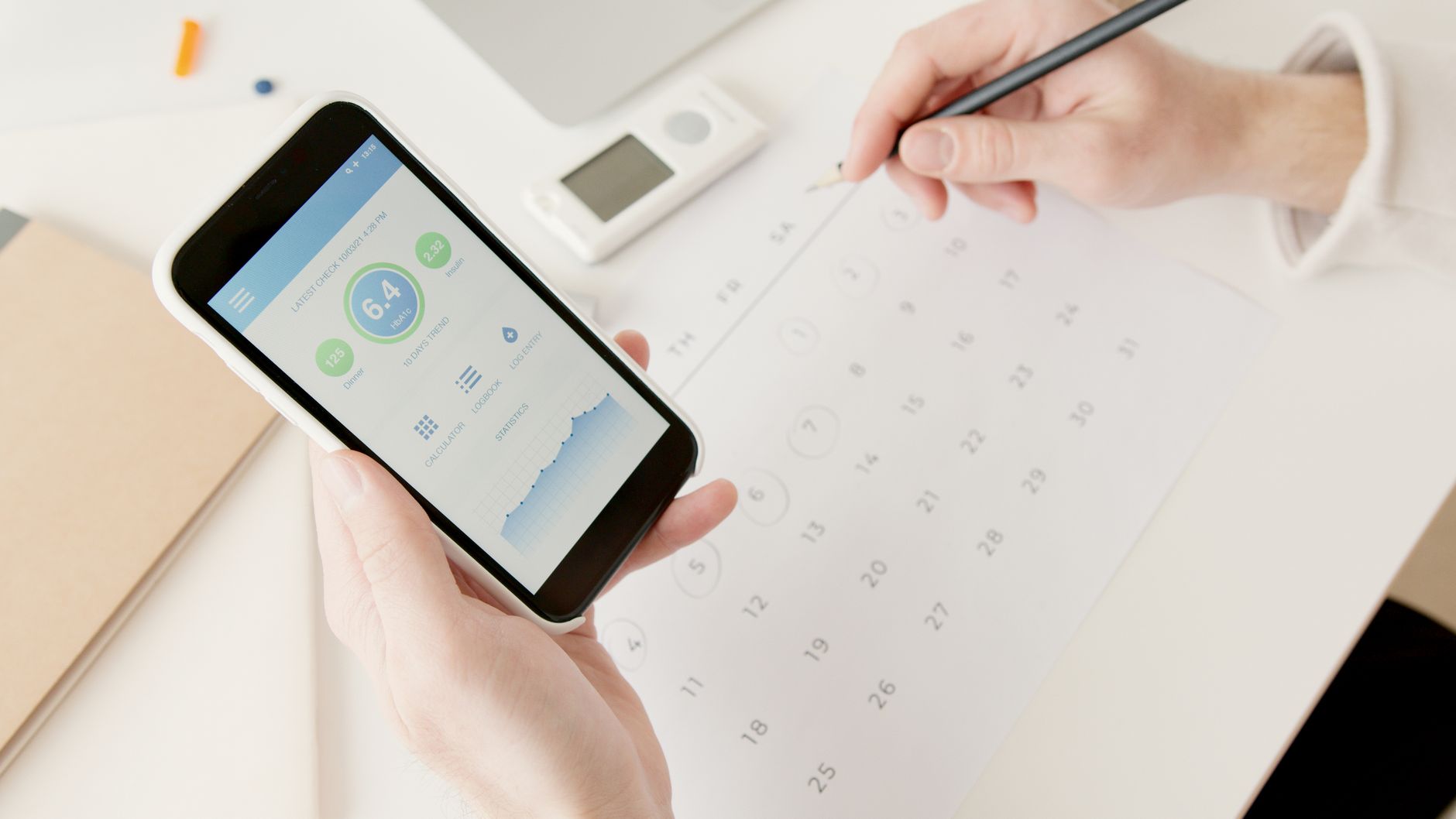
Tracking your cycle details in an app or on a calendar is the first step to understanding your unique pattern.
The Luteal Phase: Your Consistent Clue
Here's the critical piece of information that unlocks ovulation prediction for irregular cycles: **the luteal phase is usually very consistent in length.** While the follicular phase (the time from your period to ovulation) can vary greatly, the luteal phase (the time from ovulation to your next period) typically stays the same for an individual, usually lasting between 12 and 16 days. For most women, it's around 14 days.
This consistency is a huge advantage. If you know how long your luteal phase typically is, you can work backward from the start of your next period to estimate when you ovulated. For example, if your luteal phase is consistently 14 days long, and your period starts on day 30 of your cycle, you likely ovulated around day 16 (30 minus 14). This principle is fundamental to calculating ovulation with non-standard cycles.
A luteal phase that is consistently shorter than 10 days might be a concern (a "luteal phase defect") as it might not allow enough time for a fertilized egg to implant. If you suspect your luteal phase is consistently short, it's a good idea to discuss this with your healthcare provider.
Decoding Ovulation: Signs and Symptoms to Watch For
Your body provides several clues that ovulation is approaching or has just occurred. Learning to recognize these signs is key, especially if your cycle length varies. No single sign is foolproof, but when combined, they paint a clearer picture.
Cervical Mucus Changes
This is one of the most reliable and direct indicators of your fertile window. As ovulation approaches, your cervix produces more estrogen-driven mucus, which changes in consistency:
Early Follicular Phase (after period): Little to no mucus, or sticky/gummy mucus.
Mid-Follicular Phase (approaching ovulation): Mucus becomes creamy, then watery, increasing in quantity.
Ovulation (Peak Fertility): Mucus resembles raw egg white — clear, slippery, and stretchy. This "egg white cervical mucus" (EWCM) is ideal for sperm survival and transport. It typically lasts for 1-2 days right around ovulation.
Post-Ovulation (Luteal Phase): Mucus often becomes sticky, thick, or dries up again.
To check, simply wipe with toilet paper before urinating or insert a clean finger into your vagina. Observe the color, consistency, and how far you can stretch it between your fingers. Charting these changes daily can reveal a pattern over time.
Basal Body Temperature (BBT) Shift
Your basal body temperature (BBT) is your lowest resting body temperature. After ovulation, the hormone progesterone causes a slight but sustained rise in your BBT, typically by 0.5 to 1.0 degree Fahrenheit (0.2 to 0.5 degrees Celsius). This rise confirms that ovulation has occurred, but it doesn't predict it.
To track BBT, you need a special basal thermometer (more sensitive than a regular one). Take your temperature orally every morning at the same time, before getting out of bed, eating, or drinking. Charting your BBT over several cycles helps you identify your typical temperature shift and, crucially, the length of your luteal phase. We'll delve deeper into BBT tracking shortly.
Ovulation Pain (Mittelschmerz)
Some women experience a dull ache or sharp pain on one side of their lower abdomen around the time of ovulation. This pain, called "mittelschmerz" (German for "middle pain"), is thought to be caused by the rupture of the follicle and the release of the egg. It can last from a few minutes to a few hours. While not everyone experiences it, or consistently, it can be a useful sign for those who do.
Other Possible Signs
You might also notice other subtle changes around ovulation, though these are less consistent and reliable than cervical mucus or BBT:
Light spotting or discharge
Breast tenderness or sensitivity
Increased libido (sex drive)
Bloating
Heightened sense of smell, taste, or vision
Changes in cervical position or firmness (cervix may become softer, higher, and more open)
By consistently tracking these signs, you'll start to recognize your body's unique pattern and get closer to predicting your fertile window, even with an irregular cycle.
Your Toolkit for Tracking Ovulation with Irregular Cycles
When your cycle isn't regular, relying solely on a calendar can be misleading. Instead, a combination of tracking methods provides the most accurate picture. Here are the key tools and how to use them:
Basal Body Temperature (BBT) Tracking
BBT is excellent for confirming ovulation *after* it happens and for determining your luteal phase length. For women with irregular cycles, this is invaluable for calculating ovulation in future cycles.
How to track:
Get a basal thermometer (digital or mercury, specifically designed for BBT).
Take your temperature orally (or vaginally/rectally for more accuracy, but consistently use the same method) every morning immediately upon waking, before any activity (even sitting up or talking).
Take it at the same time each day, or as close as possible.
Record the temperature in a fertility charting app or on a paper chart.
Look for a sustained temperature shift (at least 3 consecutive days of temperatures higher than the previous 6 days).
Challenges with irregular cycles:
BBT confirms ovulation only *after* it occurs, so it doesn't help you time intercourse *before* ovulation in the current cycle.
Disrupted sleep, illness, alcohol, and travel can all affect BBT readings, making interpretation tricky.
Tips for accuracy:
Be consistent: same time, same method, every day.
Chart other factors: note illness, poor sleep, alcohol, or stress.
Look for the pattern: focus on the overall trend and shift, not individual temperature spikes.
Ovulation Predictor Kits (OPKs)
OPKs detect the surge in Luteinizing Hormone (LH) that precedes ovulation. LH levels typically rise 24-36 hours before an egg is released, making OPKs a great predictive tool.
How they work:
LH is always present in your body, but it surges dramatically just before ovulation.
OPK strips or digital tests detect this surge in your urine.
A positive result means ovulation is likely to occur within the next 1-2 days.
Types of OPKs:
Standard strips: Dip-and-read strips, compare a test line to a control line. Often cost-effective.
Digital readers: Provide a clear "yes" or "no" for the LH surge, or even track estrogen rises for a wider fertile window (advanced OPKs).
When to start testing with irregular cycles:
This is where it gets tricky. If your cycles are irregular, you might not know when to start testing. You could end up using a lot of strips, or missing your surge entirely.
For longer cycles: You might need to start testing later. If your shortest cycle is 30 days, and your luteal phase is 14 days, you wouldn't expect to ovulate before day 16. So, you might start testing around day 12-14.
For shorter cycles: You'll need to start testing earlier. If your shortest cycle is 21 days, and your luteal phase is 14 days, you could ovulate as early as day 7. You'd need to start testing very early, maybe day 5.
For highly variable cycles: Consider using less expensive strip tests and testing more frequently (e.g., twice a day) during your suspected fertile window to avoid missing the surge. Also, use cervical mucus as a guide – start testing when you notice watery or creamy mucus.
Challenges with irregular cycles:
Cost: If you have long or highly variable cycles, you might need to use many tests, which can get expensive.
False positives: Some conditions (like PCOS) can cause elevated baseline LH, leading to multiple "positive" OPK results without actual ovulation.
Missing the surge: If your surge is short or you test only once a day, you might miss it.
Tips for use:
Test in the afternoon, not first-morning urine (LH builds up during the day).
Reduce fluid intake for a few hours before testing to avoid diluted urine.
Test at roughly the same time each day.
If you have very irregular cycles, consider testing twice a day (morning and evening) once you start seeing signs of approaching ovulation (like watery cervical mucus).
Cervical Mucus Monitoring (Again, It's That Important!)
As mentioned, cervical mucus is a direct sign of your body's fertility status. It's free, non-invasive, and provides real-time information about your fertile window. Many women find it the most helpful primary indicator, especially when combined with other methods.
How to check:
Observe after using the restroom or by inserting clean fingers.
Note color, consistency, and stretchiness.
Record your observations daily.
Benefits for irregular cycles:
It tells you *when your body is actively preparing for ovulation*, not just confirming it afterward (like BBT) or detecting a hormone surge (like OPKs).
It can help you know *when to start using OPKs* or increase intercourse frequency.
Combining Methods for Best Accuracy
For truly accurate ovulation prediction with irregular cycles, **combining methods is key.**
Cervical Mucus + OPKs: Use cervical mucus to identify your fertile window beginning, then start using OPKs when you see fertile mucus (watery or egg-white). This saves money on OPKs and helps you narrow down your testing window.
Cervical Mucus + BBT: Use cervical mucus to predict your fertile window, and BBT to confirm that ovulation occurred. This gives you both predictive and confirmatory data.
All three: The gold standard. Cervical mucus to identify the start of fertility, OPKs to pinpoint the LH surge, and BBT to confirm ovulation and determine luteal phase length.
Charting your BBT consistently helps you identify the temperature shift that confirms ovulation.
Calculating Ovulation with Longer Cycles (30, 35, 40+ Days)
If your cycles are consistently longer than 28 days, your ovulation will simply occur later than day 14. The key, as we've discussed, is the consistent luteal phase. Let's assume a typical luteal phase of 14 days (you'll confirm your own through BBT tracking).
If your cycle is 30 days:
Ovulation is likely around Day 16 (30 days - 14-day luteal phase = 16). Your fertile window would typically be days 12-16.
If your cycle is 35 days:
Ovulation is likely around Day 21 (35 days - 14-day luteal phase = 21). Your fertile window would typically be days 17-21.
If your cycle is 40 days:
Ovulation is likely around Day 26 (40 days - 14-day luteal phase = 26). Your fertile window would typically be days 22-26.
For longer cycles, you'll start observing cervical mucus changes a bit later. If you're using OPKs, you'll also start testing later, perhaps a few days before your estimated ovulation day, to catch the LH surge.
Calculating Ovulation with Shorter Cycles (21, 24 Days)
Conversely, if your cycles are consistently shorter than 28 days, your ovulation will occur earlier. Again, using that consistent 14-day luteal phase as our example:
If your cycle is 21 days:
Ovulation is likely around Day 7 (21 days - 14-day luteal phase = 7). Your fertile window would typically be days 3-7. This means you could ovulate very soon after your period ends, or even while you're still bleeding!
If your cycle is 24 days:
Ovulation is likely around Day 10 (24 days - 14-day luteal phase = 10). Your fertile window would typically be days 6-10.
For shorter cycles, it's crucial to start tracking cervical mucus and potentially using OPKs very early in your cycle. You might even need to consider intercourse during your period if you have very short cycles and a short follicular phase, as sperm can live for up to 5 days.
When to Consider Professional Help
While cycle irregularities are common, sometimes they signal an underlying issue that might impact fertility or overall health. Here's when to talk to your doctor or midwife:
Consistently very irregular cycles: If your cycle length varies by more than 7-9 days cycle to cycle, or if your cycles are consistently shorter than 21 days or longer than 35 days.
No period for 3 months or more: This is called amenorrhea and warrants investigation.
Cycles suddenly become irregular: If you've always had regular cycles and they suddenly change significantly.
Heavy, painful, or prolonged periods: These could indicate other conditions.
No signs of ovulation after consistent tracking: If you're diligently tracking BBT, cervical mucus, and OPKs for several months and never see a clear ovulation pattern.
Known medical conditions: If you have conditions like PCOS, thyroid disorders, endometriosis, or premature ovarian insufficiency, which can affect ovulation.
After 6-12 months of trying to conceive: If you're under 35 and have been trying for a year without success, or over 35 and trying for 6 months, it's time to consult a fertility specialist.
Your healthcare provider can perform tests to identify the cause of irregular cycles and recommend appropriate treatments, which might include lifestyle changes, medications to induce ovulation, or other fertility treatments.
Tips for Improving Ovulation Prediction Accuracy
Even with irregular cycles, you can significantly improve your chances of pinpointing ovulation with a few best practices:
Consistency is Key: Whatever methods you choose, stick with them every single day. Daily charting of BBT, cervical mucus, and OPK results builds a comprehensive picture over time.
Chart Everything: Don't just record temperatures or OPK results. Note sleep quality, illness, stress levels, travel, alcohol consumption, and any medications you're taking. These can all influence your cycle and help you interpret anomalies.
Use a Fertility App: Many apps (like Fertility Friend, Ovia, Flo) can help you log your data, interpret patterns, and predict your fertile window. They can learn from your unique cycle history.
Look at the Big Picture: Don't get discouraged by one "off" reading or cycle. It takes a few cycles to truly understand your body's rhythm. Look for trends rather than isolated data points.
Educate Your Partner: Share what you're learning about your cycle. Understanding when you're fertile and why it's important to have intercourse during that window can reduce stress and improve cooperation.
Reduce Stress: While easier said than done, high stress levels can sometimes delay or even prevent ovulation. Practice relaxation techniques like meditation, yoga, or deep breathing.
Prioritize Sleep and Nutrition: A healthy lifestyle supports hormonal balance. Aim for 7-9 hours of quality sleep and eat a balanced diet rich in whole foods.
Can You Get Pregnant with Irregular Cycles?
Absolutely, yes! An irregular cycle doesn't mean you can't ovulate or get pregnant. It simply means your ovulation might not happen on the same day each cycle, making it harder to predict without active tracking. Many women with irregular cycles successfully conceive. The challenge is identifying your fertile window, not necessarily a lack of ovulation itself.
The fertile window is typically about 6 days long: the 5 days leading up to ovulation and the day of ovulation itself. Since sperm can live inside the female reproductive tract for up to 5 days, having intercourse during those days before ovulation significantly increases your chances. Tracking your ovulation helps you identify this window, even if it shifts from month to month.
For example, a woman with PCOS might have very irregular cycles, but by consistently tracking her BBT and cervical mucus, she can identify when she *does* ovulate and time intercourse accordingly. The key is perseverance and understanding your unique body.
Using the BumpBites Ovulation Calculator with Irregular Cycles
While traditional ovulation calculators often assume a 28-day cycle, the Ovulation Calculator on BumpBites is designed to be more flexible. It works best if you have a general idea of your shortest and longest cycle lengths, and ideally, your luteal phase length (which you can determine through BBT tracking). By entering your typical cycle length range and the date of your last period, our calculator can provide a more personalized estimate for your fertile window. Remember, it's a guide, and combining it with your body's physical signs will give you the most accurate prediction.
Tracking Method
What it Detects
Best for Irregular Cycles
Pros
Cons
Cervical Mucus
Changes in mucus consistency due to estrogen rise
Excellent (predictive)
Free, non-invasive, direct sign of fertility, helps pinpoint start of fertile window.
Subjective, requires daily checking and interpretation.
Basal Body Temperature (BBT)
Slight temperature rise due to progesterone surge
Excellent (confirmatory & luteal phase)
Confirms ovulation, determines luteal phase length, inexpensive over time.
Confirms *after* ovulation, requires strict consistency, affected by external factors.
Ovulation Predictor Kits (OPKs)
Luteinizing Hormone (LH) surge
Good (predictive)
Predicts ovulation 24-36 hours in advance, objective result.
Can be costly, may give false positives with PCOS, can miss short surges.
Calendar Method
Assumes ovulation on day 14 of 28-day cycle
Poor (unreliable)
Simple, no cost.
Highly inaccurate for irregular cycles, can lead to missed fertile windows.
A healthy diet and lifestyle can support overall hormonal balance and potentially more regular cycles.
From our medical team: "Understanding your unique cycle, even if it's not a textbook 28 days, is one of the most empowering steps you can take on your fertility journey. Don't get discouraged by variations; instead, see them as an opportunity to get to know your body better. Consistent tracking using multiple methods like BBT and cervical mucus is often more effective than relying on standard calculators. If you have concerns about your cycle regularity or are struggling to conceive, please don't hesitate to reach out to your doctor – we're here to support you."
🔢 Ready to crunch your numbers? Use our Ovulation Calculator for a personalized result in seconds.
Myth vs. Fact
Let's clear up some common misconceptions about irregular cycles and ovulation:
Myth: If your cycle isn't 28 days, you're not ovulating or can't get pregnant.
Fact: Many healthy, fertile women have cycles outside the 28-day average. You can absolutely ovulate and conceive with shorter or longer cycles. The key is understanding *when* you ovulate, which can vary from cycle to cycle.
Myth: Ovulation predictor kits (OPKs) are always accurate, even with very irregular cycles.
Fact: OPKs detect an LH surge, which usually precedes ovulation. However, if your cycles are very long or irregular, you might miss the surge, or in some cases (like with PCOS), you might get multiple false positives. Combining OPKs with cervical mucus monitoring and BBT tracking provides a much clearer picture.
Myth: You always ovulate exactly 14 days before your period.
Fact: While the average luteal phase is 14 days, it can vary from 12 to 16 days for different individuals, but it's usually consistent for *your* body. This consistency is why knowing *your* typical luteal phase length is so important for calculating ovulation backward from your period.
Key Takeaways
A 28-day cycle is an average; healthy cycles can range from 21 to 35 days.
The luteal phase (from ovulation to your period) is usually consistent (12-16 days) and is key for calculating ovulation.
Track your body's signs: cervical mucus changes, basal body temperature (BBT) shifts, and ovulation pain.
Use a combination of methods (BBT, OPKs, cervical mucus) for the most accurate prediction, especially with irregular cycles.
Work backward from your expected period using your consistent luteal phase length to estimate ovulation.
Don't hesitate to seek professional medical advice if you have significant cycle irregularities or concerns about fertility.
Frequently Asked Questions
How do you calculate ovulation with an irregular cycle?
The most effective way to calculate ovulation with an irregular cycle is to rely on active tracking methods rather than just a calendar. Focus on monitoring your basal body temperature (BBT) to confirm ovulation and determine your luteal phase length, observing changes in your cervical mucus, and using ovulation predictor kits (OPKs) to detect your LH surge. Once you know your consistent luteal phase length, you can subtract that from your total cycle length to estimate your ovulation day.
What is the best way to track ovulation with irregular periods?
The best way to track ovulation with irregular periods is to combine multiple methods. Start by diligently tracking your cervical mucus changes, as this is a real-time indicator of rising estrogen. When you notice fertile-quality mucus (watery or egg-white), begin using ovulation predictor kits (OPKs) to catch your LH surge. Simultaneously, chart your basal body temperature (BBT) daily to confirm ovulation has occurred and to establish your unique luteal phase length over several cycles.
Can you ovulate on day 21 of a 30-day cycle?
Yes, you absolutely can ovulate on day 21 of a 30-day cycle. If your total cycle length is 30 days and you have a typical luteal phase of 9 days (30 - 21 = 9), or a luteal phase of 14 days (30 - 14 = 16), then ovulation on day 21 is perfectly plausible. The day of ovulation is determined by the length of your follicular phase, which varies, while the luteal phase remains relatively consistent for each individual.
Is it harder to get pregnant with an irregular cycle?
It can be harder to *predict* ovulation with an irregular cycle, which in turn can make it harder to time intercourse for conception. However, having an irregular cycle does not necessarily mean you are infertile. Many women with irregular cycles successfully get pregnant. The key is to diligently track your ovulation using methods like BBT, OPKs, and cervical mucus monitoring to identify your fertile window, even if it shifts from cycle to cycle.
What are the signs of ovulation if your cycle is irregular?
The signs of ovulation remain the same even if your cycle is irregular. These include changes in cervical mucus (becoming clear, slippery, and stretchy like egg white), a slight rise in basal body temperature (BBT) that stays elevated after ovulation, a positive result on an ovulation predictor kit (OPK), and sometimes mild lower abdominal cramping (mittelschmerz). Learning to recognize these physical signs is crucial when your cycle length varies.
How accurate are ovulation predictor kits with irregular cycles?
Ovulation predictor kits (OPKs) can be accurate in detecting an LH surge, but their effectiveness with irregular cycles can vary. If your cycles are very long or unpredictable, you might need to use many tests, increasing cost, or you might miss your surge if it's brief. Additionally, conditions like PCOS can cause elevated baseline LH, leading to false positives. For best accuracy with irregular cycles, combine OPKs with cervical mucus monitoring and BBT tracking.
When to Call Your Doctor
While many cycle variations are normal, it's wise to contact your healthcare provider if:
Your cycles consistently vary by more than 7-9 days between your shortest and longest cycles.
Your cycles are consistently shorter than 21 days or longer than 35 days.
You've been tracking for several months and consistently observe no signs of ovulation.
You have concerns about underlying medical conditions (e.g., PCOS, thyroid issues).
You're under 35 and have been trying to conceive for 12 months without success, or over 35 and have been trying for 6 months without success.
You experience unusually heavy bleeding, severe pain, or a sudden change in your cycle pattern.
Remember, this article provides general information and is not a substitute for personalized medical advice. Always consult with your doctor or midwife for any health concerns or before making decisions about your care.
References
American College of Obstetricians and Gynecologists (ACOG). (2020). Irregular Periods.
Centers for Disease Control and Prevention (CDC). (2023). Infertility FAQs.
National Health Service (NHS). (2023). How to get pregnant.
Mayo Clinic. (2023). Basal body temperature: What it is and how it works.
Mayo Clinic. (2023). Ovulation methods: How to track ovulation.
World Health Organization (WHO). (2024). Family planning/Contraception.
National Institute of Child Health and Human Development (NICHD). (2017). How do irregular periods affect fertility?
Not sure about the label on How To Calculate Ovulation If My Cycle Isn T 28 Days products?
Snap the ingredients list and SafeFilter checks every ingredient for your stage — only 3 free scans this month, then you're locked until reset. Unlimited from $7/mo or $50/yr.
When Shubhra Mishra was expecting her first child in 2016, she was overwhelmed by conflicting food advice — one site said yes, another said never. By the time her second baby arrived in 2019, she realized millions of mothers face the same confusion.
That sparked a five-year journey through clinical nutrition papers, cultural diets, and expert conversations — all leading to BumpBites: a calm, compassionate space where science meets everyday motherhood.
Her long-term vision is to build a global community ensuring safe, supported, and free deliveriesfor every mother — because no woman should face pregnancy alone or uninformed. 🌿
🌍 Stand with mothers, shape safer guidance
Join a small circle of experts who review BumpBites articles so expecting parents everywhere can decide with confidence.