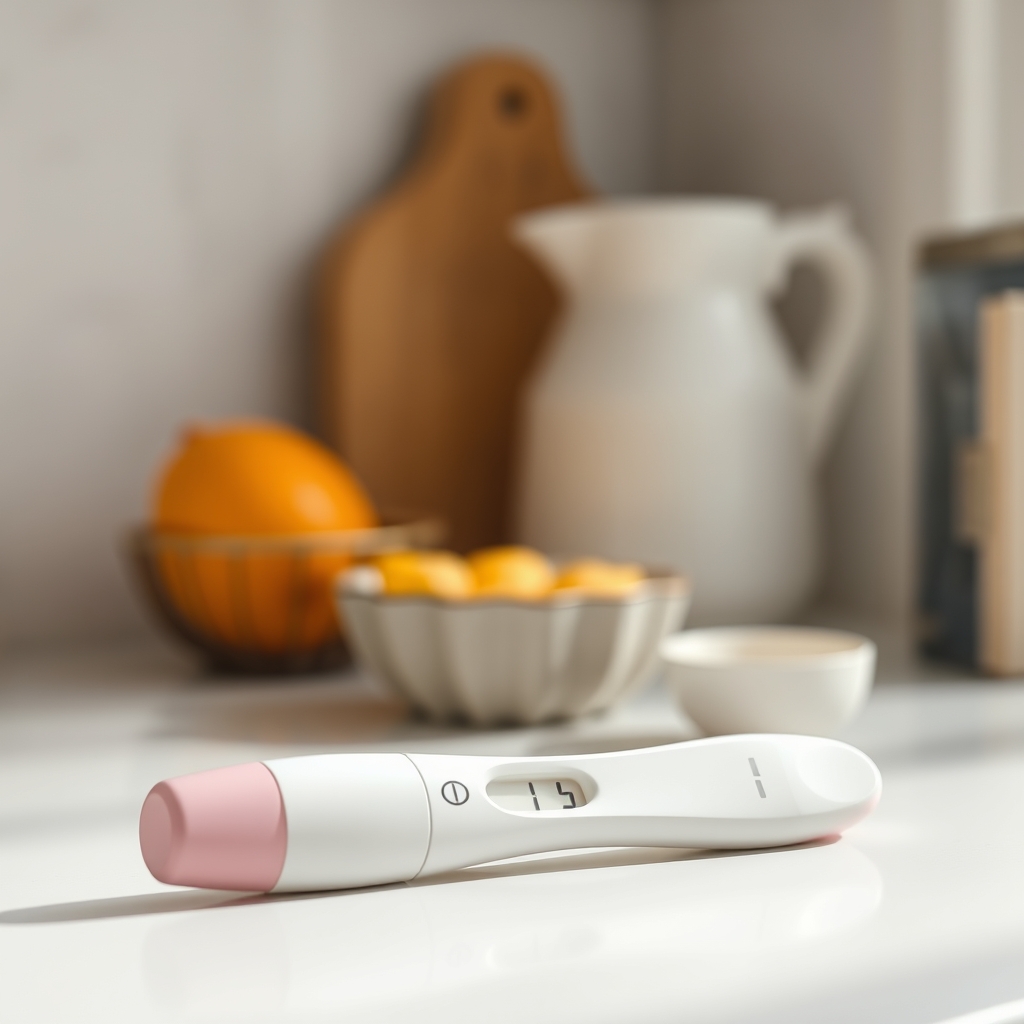
Find out how soon after ovulation you can take a pregnancy test and get accurate results, including the best time to test and what to expect
By Shubhra Mishra — a mom of two who turned her own confusion during pregnancy into BumpBites, a global mission to make food choices clear, safe, and stress-free for every expecting mother. 💛
Check whether any food is safe during pregnancy with the BumpBites Food Safety Checker.
Quick take: You can usually start testing about 10 days after ovulation, but the most reliable results appear 14 days (or 4 days after a missed period). Testing earlier may give a false‑negative because the embryo hasn’t implanted enough hCG yet. If you test too soon, use a first‑morning urine sample, follow the test’s instructions, and retest a few days later.
It’s 2 a.m., you’ve just checked your calendar, and the days since you had intercourse are counting down. You wonder, “Can I find out tonight if I’m pregnant?” The urge to test right away is understandable—especially after a month of trying—but the science of early pregnancy detection has a few timing rules you’ll want to know.
In this guide we’ll walk through exactly how soon after ovulation you can take a pregnancy test, why the hormone hCG matters, which days (or “days post‑ovulation,” DPO) give the best accuracy, and what to do if the early test is negative but you still suspect pregnancy. We’ll also compare urine and blood tests, explain test sensitivity, and give you a clear plan for retesting and when to call your provider.
By the end you’ll have a step‑by‑step timeline, a handy chart of accuracy by DPO, and practical tips to keep anxiety low while you wait for that first positive line.
Using a first‑morning urine sample can help you catch the faintest hCG signal.
When is the absolute earliest I can take a pregnancy test after ovulation?
The short answer: you can technically test as early as 6 DPO, but most commercially available tests won’t turn positive until about 10 DPO. Ovulation marks the release of the egg, and fertilization can happen within the next 12‑24 hours. After fertilization, the embryo travels down the fallopian tube and implants into the uterine lining—a process that generally takes 6‑12 days. Only after implantation does the placenta begin secreting human chorionic gonadotropin (hCG), the hormone that pregnancy tests detect.
Because hCG first appears in the bloodstream, a blood test can pick it up a day or two before a urine test. However, the earliest urine‑based detection usually requires at least 8‑10 days after ovulation, depending on the test’s sensitivity. Tests that claim “early detection” often have a sensitivity of 10 mIU/mL, but real‑world performance still depends on when implantation occurs.
For most people, the absolute earliest reliable window is around 10 DPO. Testing before then risks a false‑negative result because the hCG concentration is still below the test’s detection threshold. If you do test earlier, keep expectations realistic: a faint line may appear, but it could be a “chemical” pregnancy that does not progress.
Individual variability matters—a later implantation or a slower hormonal rise can shift the optimal testing day by a couple of days, so if you’re on the borderline, consider waiting an extra 24‑48 hours before retesting.
Early pregnancy test accuracy by DPO chart
DPO
Typical hCG (mIU/mL)
Urine test detection rate
Blood test detection rate
6‑7
0‑5
~5 %
~15 %
8‑9
5‑25
~20 %
~45 %
10‑11
25‑50
~45 %
~70 %
12‑13
50‑100
~70 %
~90 %
14 + (≈ missed period)
100 +
≥ 95 %
≥ 99 %
The table reflects data compiled by the American College of Obstetricians and Gynecologists (ACOG) and the UK National Health Service (NHS). Individual results vary, but the trend is clear: accuracy climbs sharply after 12 DPO.
Keep in mind that “typical hCG” ranges are averages; some people produce hormone more quickly, while others may have a slower rise. That variability is why many clinicians advise a “wait‑and‑see” approach if you’re testing before the 10‑day mark.
What is the recommended DPO to take a pregnancy test for best accuracy?
Most clinicians recommend waiting until at least 14 DPO (which is roughly 4 days after a missed period) for a home urine test. At this point, the average hCG level exceeds the detection threshold of even the most sensitive tests (10 mIU/mL), giving a reliability of 95 % or higher.
If you’re eager to test earlier, aim for 10‑12 DPO and use a test labeled “10 days before your period.” These tests have a higher sensitivity (as low as 5 mIU/mL) and are designed for early detection. Remember to use the first‑morning urine, which contains the highest concentration of hCG because overnight the kidneys have concentrated urine.
Guidelines from the CDC and the World Health Organization (WHO) both suggest that a negative result before 12 DPO should be confirmed with a repeat test after a few days, especially if you have irregular cycles or suspect luteal phase defects. The extra day or two often makes the difference between a faint line and a clear positive.
When you see a faint line, treat it as a positive until proven otherwise, but verify with a second test after 48 hours to rule out a false‑positive caused by a lingering hormone surge.
Another practical tip: set a reminder on your phone for the day you plan to test. This helps you avoid the temptation to test at a suboptimal time, such as late in the afternoon after drinking several glasses of water.
Can you get a positive pregnancy test at 7 or 8 DPO?
It’s possible, but rare. At 7‑8 DPO, implantation may have just begun, and hCG levels are typically still below 5 mIU/mL. Some ultra‑sensitive urine tests (detecting 5 mIU/mL) have reported positive results at 8 DPO, but the reliability is low—often under 20 %.
A positive line at 7 DPO usually indicates either a very early implantation or a false‑positive caused by a chemical pregnancy (an early loss before the embryo fully implants). Chemical pregnancies can produce a brief hCG rise that disappears within a few days, leading to a transient positive.
If you see a positive at 7 or 8 DPO, keep the test, note the result, and retest in a few days. A second positive, especially after 12 DPO, confirms a viable pregnancy. If the second test is negative, it’s likely a chemical pregnancy, and you can discuss the experience with your provider for reassurance.
Women who undergo fertility treatments, such as intrauterine insemination (IUI), sometimes experience earlier implantation because the embryo is placed closer to the uterus. In those cases, a positive at 8 DPO is slightly more common, but the same principle of confirming with a later test still applies.
How do hCG levels relate to early pregnancy test results?
Human chorionic gonadotropin (hCG) is the hormone that pregnancy tests detect. After implantation, the syncytiotrophoblast cells of the placenta begin secreting hCG into the maternal bloodstream. The hormone then diffuses into the urine, where a test’s antibodies can capture it.
hCG rises exponentially—doubling roughly every 48‑72 hours in early pregnancy. This rapid rise is why a test taken just a day or two later can change from negative to positive. The exact level needed for detection depends on the test’s sensitivity:
10 mIU/mL – most “early detection” urine tests.
5 mIU/mL – premium tests marketed for use 6‑8 days before a missed period.
1‑2 mIU/mL – blood serum tests; can detect pregnancy as early as 6‑7 DPO.
Because hCG is a hormone, its concentration can fluctuate slightly throughout the day. That’s why the first‑morning sample is recommended: it captures the peak hCG level after an overnight buildup.
In addition to the absolute number, clinicians sometimes look at hCG isoforms (like hyperglycosylated hCG) that can give clues about implantation quality, though most home tests do not differentiate these.
What factors can affect the accuracy of an early pregnancy test?
Several variables can skew your result, especially when testing early:
Timing of implantation: Implantation can occur anywhere from 6‑12 days after ovulation. A later implantation means later hCG production.
Urine dilution: Drinking large amounts of fluid before testing can dilute hCG, leading to a false‑negative.
Test sensitivity: Not all tests are created equal. A 10 mIU/mL test is less likely to pick up early hCG than a 5 mIU/mL test.
Medications: Certain fertility drugs (e.g., hCG injections) can produce a false‑positive if taken within a few days of testing.
Recent miscarriage or pregnancy loss: Residual hCG can linger for up to two weeks, potentially causing a false‑positive.
Improper test usage: Not following the instructions—such as reading the result too early or too late—can mislead you.
Environmental factors like high humidity or extreme temperatures can also affect the test’s chemistry, though most modern kits are designed to be robust. If you suspect a test malfunction, try a new test from a different batch.
Some over‑the‑counter tests contain surfactants that can be interfered with by certain antihistamines, so always check the ingredient list if you’re on regular medication.
Finally, some medical conditions (e.g., certain cancers) can produce hCG, but those are rare and usually involve much higher hormone levels than early pregnancy. If you have an unexplained positive and no pregnancy, your provider will investigate further.
What are the chances of a false negative when testing early?
False negatives are most common before 12 DPO. According to a systematic review published by the Cochrane Collaboration, the pooled false‑negative rate for home urine tests taken before 10 DPO is about 30‑40 %. By 14 DPO, the false‑negative rate drops to under 5 %.
Key reasons for a false negative include:
Testing before implantation has produced enough hCG.
Using diluted urine (e.g., after a large glass of water).
Using a test with lower sensitivity than your hCG level.
Reading the result outside the manufacturer’s recommended window.
If you receive a negative result but still suspect pregnancy—because of missed periods, breast tenderness, or mild nausea—repeat the test in 48‑72 hours. The exponential rise in hCG means a small increase can turn a faint line into a clear positive.
A 2022 cohort study of 1,200 women found that retesting after a negative result at 9 DPO caught 22 % of pregnancies that were missed initially, underscoring the value of a follow‑up test.
What should I do if my early pregnancy test is negative but I still suspect pregnancy?
First, stay calm. A single negative result does not rule out pregnancy, especially if you tested before 12 DPO. Follow these steps:
Wait 48 hours. hCG doubles every 2‑3 days, so a repeat test after a couple of days is more likely to be accurate.
Use first‑morning urine. Collect the sample as soon as you wake up, before you drink any fluids.
Choose a high‑sensitivity test. Look for “5 mIU/mL” on the packaging.
Follow instructions precisely. Pay attention to the timing for reading the result.
Consider a blood test. A serum hCG test can detect pregnancy as early as 6‑7 DPO and will give you a numeric value.
If you’ve missed a period and symptoms persist, schedule an appointment with your OB‑GYN or midwife. They can perform a quantitative serum hCG test and an early ultrasound if needed.
While waiting, keep a symptom diary. Note any changes in breast tenderness, fatigue, mild cramping, or mood swings. This record can help your provider interpret the timeline and decide whether additional testing is warranted.
Remember that anxiety can amplify perceived symptoms, so try grounding techniques—deep breathing, a warm cup of tea, or a short walk—to keep stress levels low while you await results.
Seeing that first line can be emotional—make sure you’re testing at the right time.
How soon after implantation can I take a pregnancy test?
Implantation typically occurs 6‑12 days after ovulation. The earliest detectable hCG in urine appears roughly 2‑3 days after implantation, which translates to about 8‑10 DPO for most cycles. However, because hCG levels are still low, a standard urine test may not turn positive until a day or two later.
Blood tests detect hCG sooner because they measure the hormone directly in the bloodstream. A quantitative serum test can reliably show hCG as early as 6 DPO, with levels usually above 1 mIU/mL. This is why many fertility clinics recommend a serum test if you need an early confirmation.
In summary, after implantation you have a narrow window:
Day 0‑2 post‑implantation (≈ 8‑10 DPO): hCG may be present but often below urine test thresholds.
Day 3‑4 post‑implantation (≈ 10‑12 DPO): High‑sensitivity urine tests begin to show positive results.
Day 5+ post‑implantation (≈ 14 DPO): Most tests, including lower‑sensitivity ones, will be reliably positive.
Because implantation timing can vary widely, many women notice their first missed period about two weeks after ovulation, which aligns with the most reliable testing window.
From our medical team: If you’re testing before 10 DPO and get a negative, don’t panic. Hormone levels rise quickly, so a repeat test a couple of days later often provides a clear answer. If you’re on fertility medication, let your provider know, because certain drugs can influence hCG readings and may require a serum test for accurate confirmation.
How does a urine test compare to a serum (blood) test in early detection?
Urine tests are convenient, inexpensive, and can be done at home, but they rely on the hormone passing from the bloodstream into the urine—a process that adds a small delay. Serum (blood) tests, on the other hand, measure hCG directly in the bloodstream, so they can detect lower concentrations earlier.
According to the Mayo Clinic, a quantitative serum hCG test can reliably detect pregnancy as early as 6‑7 DPO, whereas most over‑the‑counter urine tests need at least 8‑10 DPO to reach their detection threshold. Serum tests also provide a numeric value, which allows clinicians to track the rate of hCG rise and assess early pregnancy viability.
While serum testing is more accurate early on, it requires a visit to a clinic or lab, and results may take a few hours to a day. For most people who are not in a high‑risk pregnancy or undergoing fertility treatment, a high‑sensitivity urine test after 10 DPO offers a good balance of convenience and reliability.
Cost is another factor: a home urine test typically costs $5‑$15, while a serum hCG test ranges from $30‑$80 depending on insurance coverage.
Can irregular cycles or conditions like PCOS change when you should test?
Irregular menstrual cycles, often seen in polycystic ovary syndrome (PCOS) or thyroid disorders, can make pinpointing ovulation—and therefore the optimal testing window—more challenging. When cycles are irregular, the “day of ovulation” is less predictable, so many clinicians suggest using ovulation predictor kits (OPKs) or basal body temperature tracking to identify the LH surge.
Once you’ve identified the likely ovulation day, apply the same DPO guidelines: aim for a home urine test at 10‑12 DPO, and wait until 14 DPO for the most reliable result. If you’re unsure about the timing, a serum hCG test performed 8‑10 DPO after the suspected ovulation can provide clarity without the guesswork.
Women with PCOS may also have higher baseline levels of certain hormones that can interfere with some home tests, though this is rare. If you have a known endocrine condition, discuss the best testing strategy with your provider, who may recommend a serum test as the first line.
What do faint or “early” lines on a pregnancy test mean?
A faint line on a home urine test usually indicates a low level of hCG—often the result of testing very early or using a highly sensitive test. The line may appear gray rather than deep pink, and it can be easy to miss. According to the ACOG, any visible line, no matter how faint, should be considered a positive until proven otherwise.
When you see a faint line, keep the test in a well‑lit area and compare it to the control line (the “C” line). If the test’s instructions state that a faint line is a positive, you can trust that result. However, because early hCG levels can still rise rapidly, it’s wise to retest in 48‑72 hours with a fresh test to see if the line darkens.
Some users experience “early” lines that disappear on a repeat test—this can happen with chemical pregnancies or with a test that was read outside the recommended window. If the line vanishes, it’s a sign that the hormone level was very low and likely not sustained.
Digital pregnancy tests work the same way biochemically; they just display “pregnant” or “not pregnant” instead of a line, so they don’t inherently improve early detection.
How do stress and sleep affect early pregnancy test results?
While stress and sleep don’t change the amount of hCG your body produces, they can influence when you choose to test. Fatigue may lead you to test later in the day, after drinking fluids that dilute urine, while stress can make you more likely to test before the recommended DPO.
Keeping a consistent routine—testing first thing in the morning after a night of restful sleep—helps standardize urine concentration and reduces the chance of a false‑negative caused by dilution.
Can you test while on hormonal birth control or after a miscarriage?
Hormonal birth‑control methods that contain estrogen or progestin do not produce hCG, so they won’t cause a false‑positive. However, some women who have recently stopped a hormonal method may experience a delayed return of normal menstrual timing, which can make it harder to interpret a missed period versus a pregnancy.
After a miscarriage, residual hCG can linger for up to two weeks. Testing too soon may therefore give a false‑positive. Most providers recommend waiting at least 14 days after a confirmed loss before taking a home test, or using a serum hCG test to confirm clearance.
Myth vs. fact
Myth: You can get a definitive “yes” or “no” result the day after ovulation.
Fact: hCG isn’t produced until after implantation, which occurs 6‑12 days after ovulation. Testing too early often yields a false‑negative.
Myth: All home pregnancy tests are equally accurate.
Fact: Sensitivity varies widely (1‑10 mIU/mL). Tests labeled “early detection” have higher sensitivity, but they still need enough hCG to be present.
Myth: A negative test means you’re definitely not pregnant.
Fact: A negative result before 12 DPO can be false‑negative. Repeat testing after a few days or get a serum hCG test for confirmation.
Key takeaways
Wait at least 10 DPO for a home urine test; 14 DPO gives ≥ 95 % accuracy.
Use first‑morning urine and a high‑sensitivity (≤ 5 mIU/mL) test for the best early results.
Implantation usually occurs 6‑12 days after ovulation; hCG appears 2‑3 days later.
If a test is negative but you still suspect pregnancy, retest in 48‑72 hours or ask for a serum hCG test.
Factors such as diluted urine, low‑sensitivity tests, and early implantation can cause false negatives.
Contact your provider if you have persistent symptoms, a missed period, or any concerning signs.
Frequently asked questions
Can you test positive at 8 DPO?
It’s uncommon but possible with an ultra‑sensitive test (5 mIU/mL). Most urine tests won’t detect hCG until at least 10 DPO, so a positive at 8 DPO should be confirmed with a repeat test.
What is the earliest DPO to test positive?
The earliest reliable positive on a home urine test is around 10 DPO. Blood tests can show a positive as early as 6‑7 DPO because they detect lower hCG concentrations.
What DPO is most accurate?
Testing at 14 DPO (≈ 4 days after a missed period) provides the highest accuracy—≥ 95 % for most over‑the‑counter tests.
How early can a blood test detect pregnancy?
A quantitative serum hCG test can detect pregnancy as early as 6‑7 DPO, often before any symptoms appear.
What are the signs of implantation?
Typical signs include mild cramping, light spotting (often called “implantation bleed”), and a subtle rise in basal body temperature. These symptoms often appear 6‑12 days after ovulation.
How long after implantation can I test?
hCG becomes detectable in urine about 2‑3 days after implantation. For the most reliable home test result, wait until at least 4 days post‑implantation (≈ 10‑12 DPO).
Can a digital pregnancy test detect pregnancy earlier than a standard line test?
Digital tests use the same biochemical principle as line tests, so their detection threshold is similar. They may feel easier to read, but they don’t usually detect hCG earlier than a high‑sensitivity line test.
Should I avoid certain foods or drinks before testing?
There’s no evidence that specific foods affect hCG levels. However, drinking large amounts of water or caffeine right before testing can dilute urine, making a faint line harder to see. Stick to a normal fluid intake and test with first‑morning urine for the most accurate result.
Is it safe to use a home test while on fertility medication?
Most fertility drugs that contain hCG can cause a false‑positive if taken within a few days of testing. If you’re on such medication, ask your provider whether a serum hCG test is preferred for early confirmation.
What should I do if I get a faint line but the test says “negative”?
Treat any visible line as a positive until proven otherwise. Retest in 48 hours with a fresh test; if the line darkens, you’ve likely confirmed a pregnancy. If it disappears, it may have been a chemical pregnancy.
When to call your doctor
If you experience any of the following, seek medical attention promptly: heavy vaginal bleeding, severe abdominal pain, fever, dizziness, or signs of ectopic pregnancy (sharp side pain, shoulder pain, faintness). Remember, this article provides general information and is not a substitute for personalized medical advice. Always discuss your specific situation with your healthcare provider.
References
American College of Obstetricians and Gynecologists (ACOG). “Early Pregnancy: Testing and Diagnosis.” 2023 clinical guidance.
National Health Service (NHS). “Pregnancy tests: when to use them.” Updated 2022.
Centers for Disease Control and Prevention (CDC). “Human Chorionic Gonadotropin (hCG) and Pregnancy Testing.” 2021.
World Health Organization (WHO). “Guidelines on the Use of Pregnancy Tests.” 2020.
Cooper, R. et al. “Accuracy of home pregnancy tests: a systematic review.” Cochrane Database of Systematic Reviews, 2022.
National Institute for Health and Care Excellence (NICE). “Fertility problems: assessment and treatment.” 2021.
Mayo Clinic. “hCG blood test.” 2023.
Royal College of Obstetricians and Gynaecologists (RCOG). “Early Pregnancy Assessment.” 2022.
U.S. Food and Drug Administration (FDA). “Pregnancy Test Device Performance Guidance.” 2021.
British Fertility Society. “Timing of ovulation and early pregnancy testing for patients undergoing IVF.” 2022.
Not sure about the label on How Soon After Ovulation Can I Take A Pregnancy Test products?
Snap the ingredients list and SafeFilter checks every ingredient for your stage — only 3 free scans this month, then you're locked until reset. Unlimited from $7/mo or $50/yr.
When Shubhra Mishra was expecting her first child in 2016, she was overwhelmed by conflicting food advice — one site said yes, another said never. By the time her second baby arrived in 2019, she realized millions of mothers face the same confusion.
That sparked a five-year journey through clinical nutrition papers, cultural diets, and expert conversations — all leading to BumpBites: a calm, compassionate space where science meets everyday motherhood.
Her long-term vision is to build a global community ensuring safe, supported, and free deliveriesfor every mother — because no woman should face pregnancy alone or uninformed. 🌿
🌍 Stand with mothers, shape safer guidance
Join a small circle of experts who review BumpBites articles so expecting parents everywhere can decide with confidence.