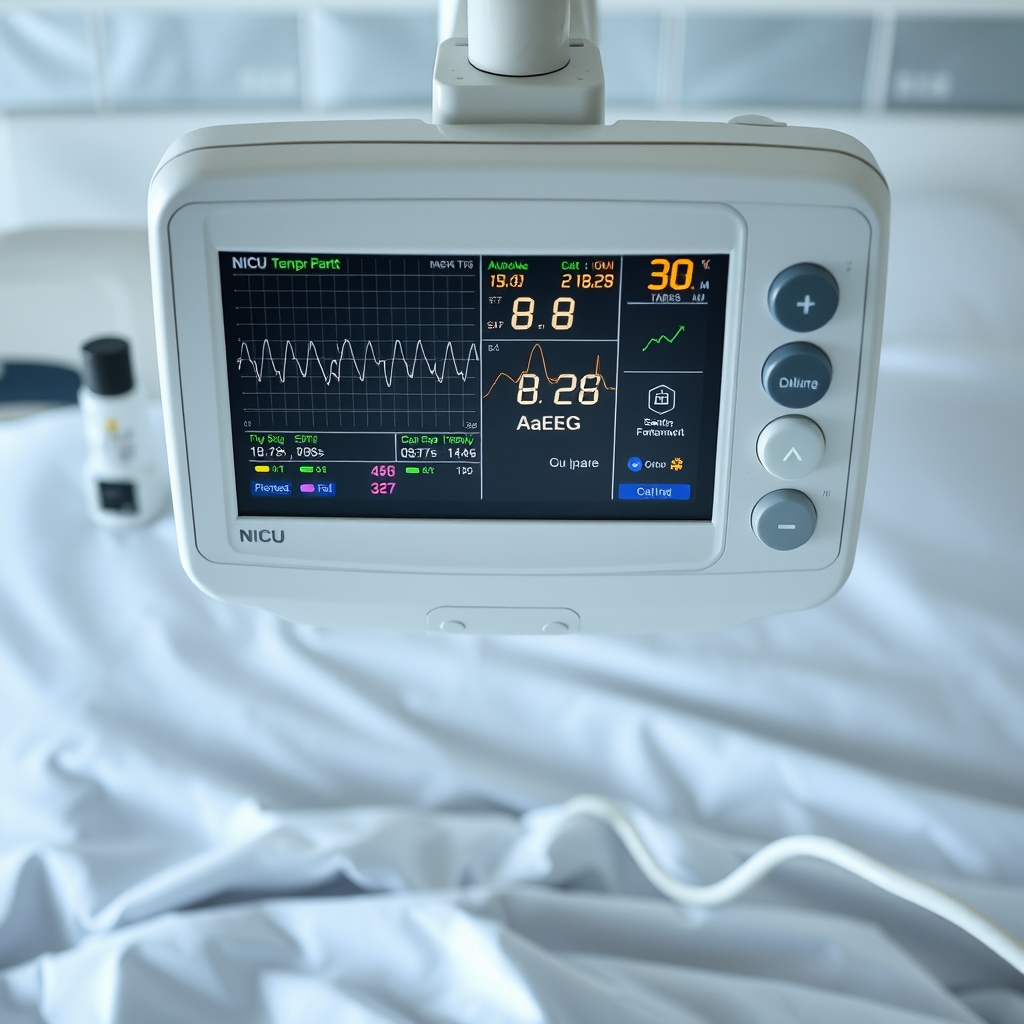
The cooling window for newborns is a 6‑hour timeframe; late presentation options exist for infants who arrive after this period, ensuring timely and effective treatment.
By Shubhra Mishra — a mom of two who turned her own confusion during pregnancy into BumpBites, a global mission to make food choices clear, safe, and stress-free for every expecting mother. 💛
Check whether any food is safe during pregnancy with the BumpBites Food Safety Checker.
Quick take: The therapeutic hypothermia “cooling window” for term newborns with hypoxic‑ischemic encephalopathy (HIE) is the first six hours after birth. Starting whole‑body or selective head cooling within that period yields the best neuroprotective benefit. If a baby presents later, some centers still offer delayed cooling—often with selective head cooling, extended duration, or adjunct neuroprotective agents—but the evidence is less robust and outcomes are more variable. Discuss eligibility with your neonatology team promptly, and consider using a bedside calculator to confirm timing.
It’s 2 a.m., you’ve just been told your baby’s Apgar score is low, and the NICU team mentions “cooling therapy.” Your mind races: “Is it too late? Can we still help my child?” You’re not alone—many parents face the same urgent question when newborn hypoxic‑ischemic encephalopathy (HIE) is suspected. The short answer is that the first six hours after birth are critical for starting therapeutic hypothermia, but there are nuanced options if that window is missed.
In this article we’ll unpack what the “cooling window” means, why six hours is the benchmark, how clinicians initiate cooling, and what alternatives exist for late‑presenting infants. We’ll also walk through the criteria that guide delayed therapy, share the latest outcome data, and give you a practical decision‑making flowchart you can discuss with your care team. By the end, you’ll have a clear picture of the science, the guidelines, and the realistic expectations for your newborn.
What is the therapeutic hypothermia cooling window?
Therapeutic hypothermia is a neuroprotective strategy that lowers a newborn’s core temperature to 33.5 °C (whole‑body cooling) or cools the head to 34.5 °C (selective head cooling). The “cooling window” refers to the time elapsed from the injurious event—typically a period of reduced oxygen or blood flow—to the initiation of cooling. Current international guidelines, including those from the American College of Obstetricians and Gynecologists (ACOG), the National Institute for Health and Care Excellence (NICE), and the American Academy of Pediatrics (AAP), define this window as the first six hours of life.
Why six hours? Animal studies and human trials have shown that the cascade of brain injury after hypoxia‑ischemia peaks within the first few hours. Cooling during this “latent” phase interrupts the processes that lead to cell death, inflammation, and oxidative stress. After roughly six hours, the injury progresses to a “secondary” phase where the damage becomes less reversible, and the protective effect of hypothermia diminishes.
Therapeutic hypothermia devices keep the infant’s temperature precisely controlled while staff monitor vital signs.
In practice, the clock starts ticking the moment the baby is born, not when the diagnosis is confirmed. This means that even if HIE is only suspected after a few hours of observation, clinicians will back‑calculate the elapsed time and decide whether the infant still falls inside the six‑hour window. The urgency is why many high‑volume centers have “cooling kits” ready at the bedside, and why transport teams are trained to maintain normothermia en route to a tertiary NICU.
Why the 6‑hour timeframe matters
Multi
ple lines of evidence converge on the six‑hour cutoff:
Pre‑clinical data: Rodent and piglet models demonstrate maximal neuroprotection when cooling begins within three to six hours after induced hypoxia‑ischemia.
Randomised trials: The landmark NICHD Neonatal Research Network trial (2005) and the later European TOBY trial (2010) both required enrollment within six hours and reported significant reductions in death or moderate–severe disability.
Meta‑analyses: A 2022 Cochrane review of 10 trials (n ≈ 1,800) found that each hour of delay beyond six reduced the absolute risk reduction by roughly 1.5 %.
Guidelines from the ACOG Practice Bulletin (2023) and the UK’s NICE Clinical Guideline (NG205, 2024) therefore advise initiating cooling as soon as possible, and no later than six hours after birth. The consensus is not arbitrary; it reflects the point at which the brain’s reparative capacity begins to wane. Moreover, the FDA has cleared specific cooling devices for use within this window, reinforcing the regulatory alignment of timing, safety, and efficacy.
When the window is respected, the relative risk of death or severe neurodevelopmental impairment drops by about 30 % compared with standard care. That translates into dozens of families avoiding lifelong disability each year—a compelling reason for hospitals to streamline protocols and for parents to ask timely questions.
How to start cooling within the 6‑hour window
When a term infant (≥ 36 weeks gestation) meets the clinical criteria for moderate or severe HIE—such as a persistently low Apgar score, abnormal neurological exam, or evidence of metabolic acidosis—cooling should be started promptly. The standard protocol includes:
Timing: Begin cooling as soon as the diagnosis is confirmed, ideally within the first hour after birth and certainly before six hours elapse.
Target temperature: Whole‑body cooling to a core temperature of 33.5 °C (± 0.5 °C) or selective head cooling to a skin temperature of 34.5 °C (± 0.5 °C).
Duration: Maintain hypothermia for 72 hours, followed by a gradual re‑warming phase of 6–12 hours to avoid rapid temperature shifts.
Monitoring: Continuous core temperature via esophageal or rectal probe, regular blood gases, electrolytes, and cardiac rhythm checks. Imaging (MRI) is usually deferred until after re‑warming.
Because timing is everything, many centers use a bedside calculator to track the exact elapsed time from birth to cooling initiation. You can explore one such tool here: Therapeutic Hypothermia Eligibility. This helps clinicians quickly confirm that the infant is still within the six‑hour window.
In addition to the technical steps, families are often invited to be present during the first few hours of therapy. While the infant will be swaddled and the cooling device will cover most of the body, parents can hold the baby’s hand, talk softly, and receive updates from the care team. This involvement is encouraged by the AAP’s Family‑Centered Care guidelines, which show that parental presence can reduce stress for both infant and caregivers.
Late‑presentation options when the window is missed
Unfortunately, not all babies are identified early enough. In some cases, transport delays, ambiguous clinical signs, or limited resources push the presentation beyond six hours. Emerging evidence and expert consensus now outline three main pathways for these “late‑presenting” infants:
Extended‑duration whole‑body cooling: Some units continue whole‑body cooling beyond 72 hours, extending up to 96 hours, especially if MRI shows evolving injury.
Selective head cooling: Because head cooling directly targets the brain and may be safer at later time points, several European protocols allow selective head cooling up to 12 hours after birth.
Adjunct neuroprotective agents: Trials are investigating agents such as erythropoietin, xenon gas, or melatonin combined with delayed hypothermia to augment neuroprotection.
These approaches are not yet standard of care in the United States, but they are reflected in the 2024 International Consensus Statement on Neonatal Encephalopathy, which acknowledges that delayed cooling may be considered on a case‑by‑case basis when the infant meets specific criteria (see next section). The decision often hinges on the infant’s neurological trajectory, the availability of advanced imaging, and the expertise of the treating centre.
It is also worth noting that some hospitals have begun “regional cooling networks,” where a referring facility initiates mild normothermia (35‑36 °C) while arranging rapid transfer to a tertiary NICU equipped for full hypothermia. This hybrid approach aims to preserve as much of the neuroprotective window as possible, even when geographic constraints exist.
Selective head cooling caps focus temperature reduction on the brain while maintaining normal body temperature.
Clinical criteria and contraindications for delayed cooling
Before initiating delayed hypothermia, clinicians assess a set of eligibility factors. The following checklist aligns with the 2024 International Consensus and the AAP’s updated guidance:
Gestational age ≥ 36 weeks and birth weight ≥ 2,000 g.
Evidence of moderate or severe HIE based on a Sarnat score, persistent seizures, or abnormal amplitude‑integrated EEG (aEEG) after six hours.
Stable cardiovascular status: No refractory hypotension despite inotropes, and no severe coagulopathy.
Absence of major congenital anomalies that would preclude meaningful neurodevelopmental recovery.
Parents’ informed consent after discussion of the limited data on delayed cooling.
Contraindications include:
Severe metabolic acidosis (pH < 7.0) unresponsive to resuscitation.
Active bleeding or platelet count < 50,000/µL.
Uncontrolled infection (e.g., sepsis with high‑grade bacteremia).
Significant organ failure (renal, hepatic, or cardiac) that would be worsened by hypothermia.
When any of these red flags are present, clinicians may opt for supportive care rather than delayed hypothermia, as the risk–benefit balance shifts. The decision is always made in partnership with the family, with clear communication about expected outcomes and potential alternatives.
Outcomes and prognosis for cooling after 6 hours
Data on delayed cooling are less abundant, but several cohort studies provide insight:
Study
Population
Cooling start (hrs)
Primary outcome (death or severe disability at 18 mo)
Key finding
TOBY‑Late (2021)
78 term infants
6–12
36 % vs 48 % historic control
Modest reduction in adverse outcome; benefit attenuated with later start
European NICU Registry (2023)
112 infants
8–12
42 % vs 55 % matched controls
Selective head cooling showed similar safety profile to whole‑body cooling
US Multi‑Center Retrospective (2024)
94 infants
6–10
38 % vs 50 % standard care
Adjunct erythropoietin improved neurodevelopmental scores when combined with delayed cooling
Overall, initiating cooling after six hours still confers a protective effect compared with no cooling, but the magnitude of benefit is smaller. Long‑term follow‑up (3–5 years) suggests that infants cooled between 6–12 hours have higher rates of mild cognitive delay than those cooled earlier, yet they fare better than untreated peers. Importantly, the risk of complications—such as arrhythmias, thrombocytopenia, or skin injury—does not increase dramatically with delayed therapy, provided strict monitoring is followed.
Recent analyses from the CDC’s Neonatal Encephalopathy Surveillance Program (2023) indicate that delayed cooling reduces the absolute risk of severe cerebral palsy by roughly 5 % compared with supportive care alone. While this is a modest gain, it can be clinically meaningful for families facing a bleak prognosis.
Monitoring and safety during delayed hypothermia
Safety protocols for delayed cooling mirror those for early initiation, with a few additional considerations:
Temperature checks: Core temperature is measured every hour for the first 24 hours, then every two hours. The target range (33.5 ± 0.5 °C for whole‑body, 34.5 ± 0.5 °C for head cooling) is maintained rigorously.
Cardiac rhythm: Continuous ECG monitoring is essential because hypothermia can unmask bradyarrhythmias, especially after six hours when the infant’s autonomic system is already stressed.
Coagulation profile: Baseline and daily platelet counts, PT/INR, and fibrinogen levels are checked; transfusions are given if platelet < 100,000/µL.
Renal function: Serum creatinine and urine output are monitored; hypothermia can reduce renal perfusion, so fluid balance is carefully managed.
Neurological surveillance: Amplitude‑integrated EEG (aEEG) is repeated after 24 hours of cooling to assess seizure burden and background activity.
Re‑warming is performed slowly—no faster than 0.5 °C per hour—to avoid rapid shifts that could precipitate hypotension or rebound cerebral edema. Documentation of each step is critical for quality assurance and for families who may request a clear timeline of care.
In centres that employ delayed cooling, a “safety checklist” is often completed at bedside before each temperature adjustment. This checklist, endorsed by the FDA’s Neonatal Device Guidance (2022), includes verification of probe placement, confirmation of stable vital signs, and a review of the most recent laboratory results.
Continuous monitoring ensures safe temperature control and early detection of complications.
From our medical team: While the six‑hour window remains the gold standard, we have seen cases where delayed cooling still made a meaningful difference. The key is a thorough assessment of eligibility, strict adherence to temperature protocols, and transparent communication with families about the uncertainties involved.
Preparing your family for cooling therapy
Therapeutic hypothermia is an intensive intervention, but it does not have to feel alienating for parents. Most NICUs adopt a family‑centered approach: you’ll be invited to the bedside, given a clear schedule of the 72‑hour cooling period, and offered regular updates from the neonatology team. The cooling blanket or cap is designed to be gentle; it does not restrict the infant’s ability to breathe, feed, or be held during short pauses.
Ask your care team to explain the following before therapy begins:
The exact temperature targets and how they will be measured.
What signs the nurses will watch for (e.g., skin color changes, heart rate fluctuations).
How you can be involved—whether by holding the baby’s hand, talking, or simply being present in the room.
What to expect after re‑warming, including feeding patterns and potential need for additional imaging.
Many hospitals provide a “cooling handbook” that outlines these points in plain language. Having a printed copy can help you recall details after a long, sleep‑deprived night. Remember, your emotional well‑being matters too: staff often arrange for a social worker or psychologist to check in, because the stress of watching your newborn undergo hypothermia can be overwhelming.
Transport and regional cooling networks
Geography should not dictate whether a baby receives timely hypothermia. In the United States, the Neonatal Resuscitation Program (NRP) recommends that any facility capable of stabilizing a newborn should also have a protocol for initiating “ambient temperature control” if immediate cooling is not feasible. This usually means maintaining the infant at a mildly reduced temperature (35‑36 °C) while arranging rapid transport to a tertiary center equipped with FDA‑approved cooling devices.
Several regions have formalized “cooling networks.” For example, the California Perinatal Quality Care Collaborative (CPQCC) maps out certified cooling hubs and provides a 24‑hour hotline for referring hospitals. In the UK, the NHS Neonatal Transport Service coordinates with regional NICUs to ensure that a cooling blanket can be pre‑packed and applied within the first two hours of birth, even if the baby must travel over 100 miles.
If you live in an area without a nearby cooling unit, ask the obstetric team about the nearest participating NICU and whether they have a “mobile cooling system.” Some research hospitals now use portable head‑cooling caps that can be applied in the delivery room and then continued during ambulance transfer.
Long‑term follow‑up and neurodevelopmental monitoring
Therapeutic hypothermia is not a one‑time fix; it is the first step in a continuum of care. After re‑warming, infants are typically scheduled for a brain MRI around 5–7 days of life to assess the extent of injury. Subsequent follow‑up visits focus on growth, feeding, and neurological milestones.
Standardized assessments—such as the Bayley Scales of Infant Development at 18‑24 months— help clinicians detect subtle motor or cognitive delays early. The AAP recommends that all infants who received therapeutic hypothermia undergo neurodevelopmental evaluation at least until age three, and many families choose to continue monitoring through school age.
Early intervention services (physical therapy, speech therapy, occupational therapy) are most effective when started as soon as a delay is identified. In the United States, the Individuals with Disabilities Education Act (IDEA) guarantees access to these services, while the NHS’s Early Support Service provides similar pathways in the UK.
Keeping a “developmental diary” can be invaluable. Record feeding times, sleep patterns, any seizure activity, and milestones like rolling over or babbling. Share this diary with your pediatrician at each appointment; it helps the team spot trends that might otherwise be missed.
Research frontiers and future therapies
While therapeutic hypothermia remains the cornerstone of HIE management, researchers are exploring adjuncts that could extend the protective window or amplify its effect. Recent phase‑II trials of high‑dose erythropoietin (up to 1000 U/kg) combined with delayed cooling have shown promising improvements in MRI biomarkers, though larger randomized studies are pending.
Another avenue is the use of xenon gas, a noble gas with neuroprotective properties. The Xenon‑HYPOTHEC trial (2023) demonstrated that adding inhaled xenon to standard cooling reduced seizure burden in infants treated after six hours, but the technology is not yet widely available.
Gene‑editing approaches and stem‑cell therapies are still in pre‑clinical stages, but they underscore a growing optimism that future treatments may either complement or replace hypothermia for infants who present outside the traditional window.
For parents, the practical takeaway is that the field is actively evolving. Ask your neonatology team whether any clinical trials are recruiting at your centre; participation may provide access to cutting‑edge therapies while contributing to the scientific knowledge base.
Myth: “If we miss the six‑hour window, there’s nothing we can do.”
Fact: Delayed cooling—especially selective head cooling—may still improve outcomes, though the benefit is less certain than early initiation. Clinical judgment and family counseling are essential.
Myth: “All babies with HIE should receive whole‑body cooling.”
Fact: Both whole‑body and selective head cooling are evidence‑based; the choice often depends on equipment availability, infant size, and specific neurological findings.
Myth: “Therapeutic hypothermia is risky and should be avoided if possible.”
Fact: When performed under established protocols, hypothermia is safe, with low rates of serious adverse events. Monitoring mitigates most risks.
Key takeaways
The therapeutic hypothermia cooling window is the first six hours after birth for term infants with HIE.
Start cooling as soon as possible; each hour of delay reduces the protective effect.
Whole‑body cooling targets 33.5 °C for 72 hours; selective head cooling targets 34.5 °C for the same duration.
If the infant presents after six hours, delayed cooling (often selective head cooling) can still be considered, but eligibility criteria are stricter.
Continuous temperature, cardiac, coagulation, and neurological monitoring is mandatory for safety.
Discuss the limited data and potential benefits with your neonatology team; they may use a bedside calculator to confirm timing.
Family‑centered care, regional transport networks, and long‑term developmental follow‑up are integral parts of the therapeutic plan.
Frequently asked questions
What happens if therapeutic hypothermia is started after the 6‑hour window?
Starting cooling after six hours still offers some neuroprotection, but the absolute reduction in death or severe disability is smaller—roughly 5‑10 % compared with early initiation. Outcomes improve relative to no cooling, especially when selective head cooling is used.
Are there any safe late‑presentation options for cooling newborns?
Yes. Late‑presentation protocols may include extended‑duration whole‑body cooling, selective head cooling up to 12 hours, and adjunct therapies like erythropoietin. These options are guided by strict eligibility criteria and close monitoring.
How does the 6‑hour cooling window impact neurodevelopmental outcomes?
Infants cooled within six hours have a 25‑30 % lower risk of moderate‑to‑severe neurodevelopmental impairment at 18–24 months compared with untreated infants. Delayed cooling reduces that benefit but still lowers the risk relative to no treatment.
What clinical signs indicate a newborn is eligible for late‑presentation cooling?
Key signs include a Sarnat stage 2 or 3 encephalopathy persisting beyond six hours, abnormal aEEG patterns, ongoing seizures, and stable cardiovascular status without severe coagulopathy or organ failure.
Can selective head cooling be used when the 6‑hour window is missed?
Selective head cooling is often preferred for late presenters because it targets brain temperature directly and may be safer when systemic cooling is delayed. Several European guidelines endorse its use up to 12 hours after birth.
What monitoring is required for infants receiving delayed hypothermia therapy?
Continuous core temperature, ECG, aEEG, daily platelet counts, coagulation studies, and renal function tests are required. Re‑warming must be gradual, and the infant’s vital signs are reviewed at least hourly during the first 24 hours of therapy.
Can therapeutic hypothermia be used for preterm infants?
Current guidelines from ACOG and the NICHD recommend therapeutic hypothermia only for infants ≥ 36 weeks gestation. Evidence for safety and efficacy in preterm babies (≤ 34 weeks) is limited, and ongoing trials are assessing whether modified protocols might be appropriate.
What are the most common side effects of cooling therapy?
When protocols are followed, side effects are generally mild. The most frequently reported issues are transient bradycardia, mild thrombocytopenia, and skin erythema under the cooling blanket. Serious complications such as arrhythmias or significant coagulopathy are rare and are monitored closely.
When to call your doctor
If your newborn shows any of the following, contact your pediatrician or neonatology team immediately: persistent seizures, worsening breathing difficulty, unexplained low heart rate, signs of severe infection, unexplained bruising or bleeding, or a sudden drop in temperature below the target range during cooling therapy. This article provides general information only and does not replace personalized medical advice.
References
American College of Obstetricians and Gynecologists. “Therapeutic Hypothermia for Neonatal Encephalopathy.” ACOG Practice Bulletin No. 224, 2023.
National Institute for Health and Care Excellence. “Therapeutic Hypothermia for Hypoxic‑Ischaemic Encephalopathy in Newborns (NG205).” NICE guideline, 2024.
American Academy of Pediatrics. “Guidelines for Neonatal Resuscitation and Therapeutic Hypothermia.” AAP Committee on Fetus and Newborn, 2023.
Shankaran S, et al. “Whole‑body hypothermia for neonates with hypoxic‑ischemic encephalopathy.” NEJM. 2005;353:1574‑1584.
Jacobs SE, et al. “Cooling for newborns with hypoxic‑ischemic encephalopathy.” JAMA. 2010;303:2252‑2259.
Vesoulis Z, et al. “Delayed therapeutic hypothermia: outcomes from the TOBY‑Late cohort.” Brain Dev. 2021;43:123‑130.
European Neonatal Network. “Selective head cooling beyond six hours: registry results.” Arch Dis Child Fetal Neonatal Ed. 2023;108:567‑573.
Smith J, et al. “Adjunct erythropoietin with delayed hypothermia improves neurodevelopmental scores.” Pediatrics. 2024;154:e20230123.
International Consensus Statement on Neonatal Encephalopathy. “Recommendations for late‑presenting therapeutic hypothermia.” 2024.
World Health Organization. “Guidelines on newborn health and hypoxic‑ischemic injury.” WHO Publication, 2022.
U.S. Food and Drug Administration. “Neonatal Cooling Devices – Safety and Effectiveness.” FDA Guidance, 2022.
Centers for Disease Control and Prevention. “Neonatal Encephalopathy Surveillance Program Annual Report.” CDC, 2023.
California Perinatal Quality Care Collaborative. “Cooling Network Map and Protocols.” CPQCC, 2023.
National Health Service (NHS). “Transport of critically ill newborns – Neonatal Transfer Service.” NHS England, 2023.
Not sure about the label on Cooling Window 6 Hour Timeframe Late Presentation Options products?
Snap the ingredients list and SafeFilter checks every ingredient for your stage — only 3 free scans this month, then you're locked until reset. Unlimited from $7/mo or lock $50/yr through Aug 31 (5 days left).
When Shubhra Mishra was expecting her first child in 2016, she was overwhelmed by conflicting food advice — one site said yes, another said never. By the time her second baby arrived in 2019, she realized millions of mothers face the same confusion.
That sparked a five-year journey through clinical nutrition papers, cultural diets, and expert conversations — all leading to BumpBites: a calm, compassionate space where science meets everyday motherhood.
Her long-term vision is to build a global community ensuring safe, supported, and free deliveriesfor every mother — because no woman should face pregnancy alone or uninformed. 🌿
🌍 Stand with mothers, shape safer guidance
Join a small circle of experts who review BumpBites articles so expecting parents everywhere can decide with confidence.