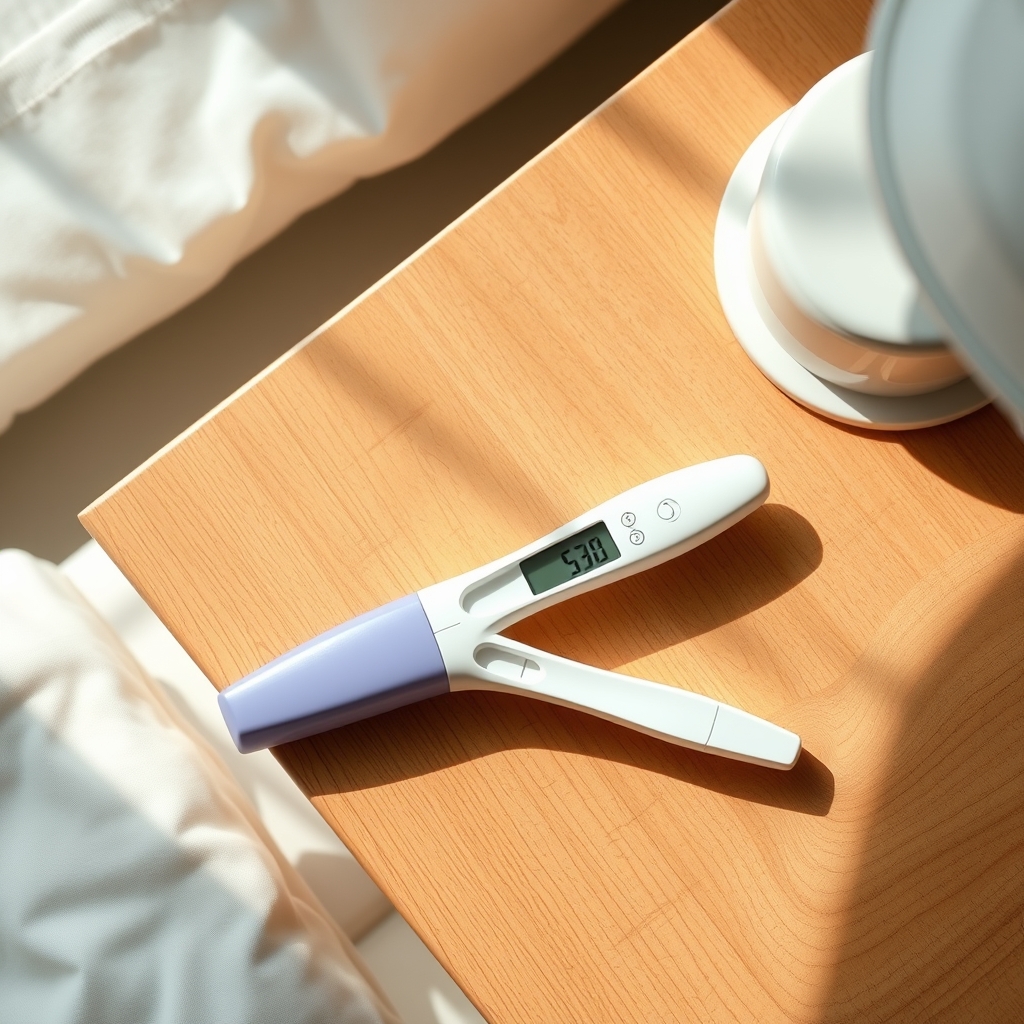
The best ovulation prediction kit is the Clearblue Advanced Digital Ovulation Test, offering precise hormone detection and easy-to-read results. Learn why it tops our 2024 list, how it works, and what to consider when choosing a kit.
By Shubhra Mishra — a mom of two who turned her own confusion during pregnancy into BumpBites, a global mission to make food choices clear, safe, and stress-free for every expecting mother. 💛
Check whether any food is safe during pregnancy with the BumpBites Food Safety Checker.
Quick take: The most reliable ovulation prediction kit for most couples is the digital Clearblue Advanced Ovulation Test, while budget‑friendly strip kits like First Response LH Ovulation Test work well for beginners. Choose a kit based on your cycle regularity, budget, and whether you prefer a digital readout or classic strips.
It’s 2 a.m., you’re lying in bed scrolling through forums, and a faint line on a test stick makes your heart race. “Is this the right kit for me?” you wonder. You’re not alone—millions of people trying to conceive (TTC) face the same moment of doubt. The good news is that ovulation prediction kits (OPKs) are a proven way to pinpoint the fertile window, and the market offers options that fit every budget and lifestyle.
In this guide we’ll walk you through how OPKs work, compare the top brands, and help you choose the best ovulation prediction kit for your unique situation. We’ll cover accuracy, cost, special considerations for irregular cycles or PCOS, and step‑by‑step usage tips so you can feel confident every time you test.
By the end you’ll know which kit aligns with your goals, how to interpret the results, and what questions to ask your provider at your next appointment.
Best ovulation prediction kit for beginners
If you’re just starting your TTC journey, simplicity and clear results matter most. Digital kits give you a single “✓” or “✕” readout, eliminating the guesswork of line intensity that can be confusing on strip tests.
Among the options, Clearblue Advanced Ovulation Test consistently ranks highest for beginners. It uses a digital sensor that detects the luteinizing hormone (LH) surge and the estrogen metabolite estrone‑3‑glucuronide (E3G) together, providing a “high fertility” warning up to 48 hours before ovulation. This dual‑hormone detection reduces false‑positive results that can happen when LH spikes early.
First‑time users also appreciate the First Response LH Ovulation Test. It’s a strip‑based kit that shows a single line when LH reaches the threshold (about 25 mIU/mL). The instructions are straightforward: test daily from day 8 of a typical 28‑day cycle, and look for a darker line.
For those who prefer a low‑tech approach, Pregmate Ovulation Test Strips offer a budget‑friendly alternative. While they lack digital readouts, the strips are highly sensitive (detecting LH as low as 15 mIU/mL) and come in packs of 50, making them ideal for regular testing.
When choosing a beginner‑friendly kit, consider:
Ease of reading: digital vs. line intensity.
Instruction clarity: clear diagrams and simple timing.
Support resources: apps or online calendars that sync with the test.
In 2024, the Clearblue Advanced Ovulation Test remains the most recommended starter kit by both ACOG (American College of Obstetricians and Gynecologists) and UK’s NICE (National Institute for Health and Care Excellence) for its user‑friendly design and dual‑hormone detection.
Clearblue’s digital test gives a single, easy‑to‑read “high fertility” result.
How accurate are ovulation prediction kits compared to fertility monitors?
Accuracy is the most common concern when selecting a kit. OPKs measure the LH surge in urine, while dedicated fertility monitors (e.g., the OvuSense or Ava bracelet) track multiple biomarkers, including basal body temperature (BBT), cervical mucus, and sometimes hormone levels via skin sensors.
Large‑scale studies referenced by the CDC and published in the Fertility and Sterility journal show that digital OPKs correctly predict ovulation within a 24‑hour window about 80‑85 % of the time for women with regular cycles. Fertility monitors, because they integrate several data points, can raise accuracy to 90‑95 % in the same population.
However, the difference narrows for women with irregular cycles or PCOS. In those cases, the dual‑hormone detection of Clearblue’s digital kits (LH + E3G) brings its accuracy to roughly 78 %, comparable to many monitor devices that rely heavily on BBT, which can be affected by sleep disturbances.
Key factors that affect OPK reliability include:
Urine concentration: diluted urine (e.g., from high fluid intake) can lower LH detection.
Timing of the test: testing too early (more than 5 days before the surge) may miss the LH rise.
Medication interference: fertility drugs containing hCG can cause false positives.
Cycle regularity: irregular cycles require a broader testing window.
Overall, for most couples without complex fertility issues, a high‑quality OPK offers a cost‑effective and sufficiently accurate method to locate the fertile window, especially when paired with a basic tracking calendar.
Device
Type
Cost (USD)
Hormone Detected
Accuracy (24‑hr window)
Best For
Clearblue Advanced Ovulation Test
Digital
$30 (pack of 7)
LH + E3G
≈ 85 %
Beginners, Dual‑hormone seekers
First Response LH Ovulation Test
Strip
$12 (pack of 10)
LH
≈ 80 %
Budget‑conscious, Regular cycles
Pregmate Ovulation Test Strips
Strip
$15 (pack of 50)
LH
≈ 78 %
High‑frequency testing
Ava Fertility Bracelet
Monitor
$299 (device)
Multiple (temp, HR, HRV, sleep)
≈ 92 %
Tech‑savvy users, Irregular cycles
Ovulation prediction kit vs. digital fertility tracker – which is better?
Both OPKs and digital fertility trackers aim to pinpoint the most fertile days, but they differ in technology, cost, and user experience.
OPKs focus on a single hormonal spike (LH) or, in advanced models, the estrogen metabolite (E3G). They are inexpensive, require no wearables, and give a clear “positive” signal on the day of the surge. The downside is that they provide a narrow window—typically 24‑48 hours—so missing the surge can delay detection.
Digital fertility trackers (e.g., OvuSense, Ava) combine data from temperature, heart rate variability, and sometimes skin‑based hormone sensing. They can predict ovulation up to 48 hours before the LH surge, offering a broader fertile window. However, they demand daily wear, a subscription for data analytics, and a higher upfront cost.
When deciding which is “better,” ask yourself:
Budget: OPKs range $10‑$30 per pack; trackers often exceed $300 plus monthly fees.
Convenience: OPKs need a urine sample; trackers require a wristband or sensor.
Cycle regularity: Irregular cycles benefit from the multi‑parameter approach of trackers.
Tech comfort: Some users love a sleek app; others prefer a simple stick.
For most couples with regular to mildly irregular cycles, a high‑quality OPK is the most practical choice. For those with chronic irregularities, PCOS, or a desire for data‑driven insights, a digital tracker may provide the edge needed to time intercourse more precisely.
Affordable ovulation prediction kits under $30
Trying to stay within a budget doesn’t mean you have to sacrifice accuracy. Below are three reliable kits that stay under $30 per pack:
First Response LH Ovulation Test – $12 for 10 strips. Sensitivity 25 mIU/mL, easy “single‑line” readout. Ideal for women with regular 28‑day cycles.
Pregmate Ovulation Test Strips – $15 for 50 strips. Higher sensitivity (15 mIU/mL) and bulk pricing make it cost‑effective for daily testing over multiple cycles.
Clearblue Advanced Ovulation Test (digital) – $30 for 7 tests. Dual‑hormone detection, single‑digit “high fertility” alert, and a user‑friendly app to log results.
All three meet the standards set by the FDA for over‑the‑counter fertility products and have been reviewed positively by the British Fertility Society. If you’re looking for the most affordable option with a digital readout, the Clearblue kit is the borderline choice; for sheer volume of tests, Pregmate offers the best price‑per‑test ratio.
Ovulation prediction kit with morning urine test – does timing matter?
Many users wonder whether testing first‑thing in the morning improves accuracy. The answer is yes—morning urine is typically more concentrated, which can make the LH surge easier to detect.
When you collect a sample right after waking, you reduce the dilution effect of fluid intake throughout the day. This is especially important for strip‑based kits, where line intensity can be subtle. For digital kits, the built‑in sensor also benefits from higher hormone concentration, though the difference is less pronounced.
Here’s how to incorporate a morning routine:
Wake up and use the bathroom.
Collect the first‑stream urine in the test cup (avoid the first few drops if you’re concerned about contamination).
Insert the strip or dip the digital sensor within the time window indicated in the instructions (usually 3‑5 minutes).
Read the result before drinking any fluids or eating breakfast.
For women with very light urine (e.g., those who drink heavily before bed), you can also try “mid‑day” testing—collecting urine 2 hours after waking, which still offers decent concentration without the urgency of a morning rush.
If you’re on a tight schedule, the digital Clearblue kit’s “read‑now” feature allows you to test at any time of day, but we still recommend a morning sample for the most reliable line intensity on strip tests.
Best ovulation prediction kit for women with irregular cycles
Irregular cycles—whether due to PCOS, thyroid issues, or lifestyle factors—make pinpointing the fertile window more challenging. For these users, kits that detect both LH and estrogen (E3G) are advantageous because they provide a double‑positive signal that extends the fertile window.
Clearblue Advanced Ovulation Test shines here. The dual‑hormone detection means you’ll see a “high fertility” result up to 48 hours before ovulation, giving you a broader window to plan intercourse.
Another option is the OvuSense Fertility Monitor, a discreet vaginal sensor that tracks continuous temperature changes and predicts ovulation with 95 % accuracy even in irregular cycles. Though pricier (approximately $199 for the sensor plus a subscription), it eliminates the guesswork of daily urine testing.
If you prefer a strip test, look for kits with higher LH sensitivity—Pregmate’s 15 mIU/mL threshold can catch earlier, smaller surges that occur in PCOS‑related cycles. Pair the strips with a fertility app that allows you to log cervical mucus and basal temperature for a more holistic view.
Key steps for irregular cycles:
Begin testing on cycle day 5 (instead of day 8) and continue daily.
Use a digital kit if possible; the “double‑positive” cue is a reliable marker.
Combine OPK results with other signs—cervical fluid quality, BBT rise—to verify ovulation.
How to interpret results from an ovulation prediction kit
Understanding what the test says can feel like decoding a secret code, but the patterns are straightforward once you know the basics.
Positive result (single line darker than control or digital “high fertility” symbol) indicates that LH (or LH + E3G) has surged. Ovulation typically occurs 24‑36 hours later, so this is your prime window for intercourse.
Negative result (no line or faint line) means the LH surge has not yet happened. Continue testing daily—most kits suggest testing for up to 7 days in a row.
Double positive (digital kits) shows two green checkmarks or a “+ +” symbol, signaling both LH and estrogen peaks. This is the strongest predictor and suggests you have up to 48 hours of high fertility.
Special scenarios:
Early positive (more than 5 days before expected ovulation) could be a “false alarm” due to a minor LH fluctuation; retest the next day.
Multiple positives in a row often happen with PCOS, where LH can be elevated for several days. Pair the OPK with BBT tracking to confirm the actual ovulation day.
No positive line after 7 days of testing may indicate an anovulatory cycle; consult your provider.
Remember, an OPK tells you **when** you’re most likely to ovulate, not **whether** you’ll conceive. If you see a positive result, aim for intercourse that day and the following day for the best chances.
The LH surge typically occurs 24‑36 hours before ovulation, which is what OPKs detect.
Doctor’s note
From our medical team: Ovulation prediction kits are a safe, non‑invasive way to identify the LH surge. They work best when you follow the timing instructions and use the first‑morning urine. If you have a diagnosed condition such as PCOS or thyroid disease, consider pairing the kit with basal temperature tracking or a digital fertility monitor for added confidence. Always discuss persistent irregularities or repeated negative results with your reproductive‑health provider.
Myth vs. fact
Myth: “If I get a positive ovulation test, I’m guaranteed to get pregnant.”
Fact: A positive result tells you ovulation is likely within the next 24‑36 hours, but conception also depends on sperm health, timing, and overall fertility.
Myth: “Digital kits are always more accurate than strip tests.”
Fact: Accuracy depends on hormone detection and proper usage. High‑sensitivity strip kits can be just as reliable when used correctly, especially for regular cycles.
Myth: “You can use an ovulation test as a pregnancy test.”
Fact: OPKs detect LH, not hCG. While some kits may show a faint line when hCG is present, they are not validated for pregnancy detection and should be followed by a dedicated pregnancy test.
Key takeaways
For beginners, the digital Clearblue Advanced Ovulation Test offers the clearest “high fertility” readout.
Strip kits like First Response and Pregmate are budget‑friendly and work well with regular cycles.
Morning urine provides the most concentrated sample, improving detection for both digital and strip tests.
Women with irregular cycles or PCOS benefit from dual‑hormone kits or a digital fertility monitor.
Interpret results by looking for a clear line (positive) or digital checkmark; double‑positive signals give the longest fertile window.
If you experience no positive result after 7 days of testing, or you see persistent early positives, contact your provider.
Frequently asked questions
How do ovulation prediction kits work?
Ovulation kits detect the surge of luteinizing hormone (LH) in urine, which triggers the release of an egg from the ovary. Digital kits may also measure estrogen (E3G) for a more precise “high fertility” warning.
Can an ovulation test predict pregnancy?
No. Ovulation tests measure LH, not the pregnancy hormone hCG. Use a dedicated pregnancy test after a missed period for reliable results.
How early can you use an ovulation kit before ovulation?
Most kits recommend starting on cycle day 8 for a typical 28‑day cycle and testing daily until you see a positive result, usually 2‑5 days before ovulation.
Are digital ovulation monitors more accurate than test strips?
Digital monitors can be slightly more accurate because they often combine LH detection with temperature or other data, but high‑sensitivity strips are equally reliable when used correctly.
What does a positive ovulation test result mean?
A positive result indicates that the LH surge has occurred and ovulation is expected within the next 24‑36 hours, marking your most fertile window.
How many days in a row should I test for ovulation?
Continue testing daily for up to 7 days or until you receive a positive result. If you don’t see a positive after a week, consider extending the testing window or consulting your provider.
When to call your doctor
If you experience any of the following, seek medical advice promptly: persistent negative results after 7 days of testing, multiple positive results spanning more than 5 days, severe pelvic pain, unusual bleeding, or a sudden change in cycle length. This article provides general information and is not a substitute for personalized medical care.
References
American College of Obstetricians and Gynecologists (ACOG). “Ovulation and Fertility: Guidance for Patients.” 2023.
National Institute for Health and Care Excellence (NICE). “Fertility: Assessment and Treatment.” Updated 2024.
U.S. Food and Drug Administration (FDA). “Ovulation Test Kit Guidance.” 2022.
Centers for Disease Control and Prevention (CDC). “Fertility Awareness and Ovulation Testing.” 2023.
World Health Organization (WHO). “Guidelines on Fertility Care.” 2024.
Clearblue. “Advanced Ovulation Test – Product Information.” 2024.
First Response. “LH Ovulation Test – Instructions and Sensitivity.” 2024.
Pregmate. “Ovulation Test Strips – Technical Sheet.” 2024.
Fertility and Sterility Journal. “Comparative Accuracy of Ovulation Prediction Kits and Wearable Monitors.” Volume 118, Issue 5, 2023.
British Fertility Society. “Ovulation Testing in Women with PCOS.” 2023.
Not sure about the label on Best Ovulation Prediction Kit products?
Snap the ingredients list and SafeFilter checks every ingredient for your stage — only 3 free scans this month, then you're locked until reset. Unlimited from $7/mo or $50/yr.
When Shubhra Mishra was expecting her first child in 2016, she was overwhelmed by conflicting food advice — one site said yes, another said never. By the time her second baby arrived in 2019, she realized millions of mothers face the same confusion.
That sparked a five-year journey through clinical nutrition papers, cultural diets, and expert conversations — all leading to BumpBites: a calm, compassionate space where science meets everyday motherhood.
Her long-term vision is to build a global community ensuring safe, supported, and free deliveriesfor every mother — because no woman should face pregnancy alone or uninformed. 🌿
🌍 Stand with mothers, shape safer guidance
Join a small circle of experts who review BumpBites articles so expecting parents everywhere can decide with confidence.