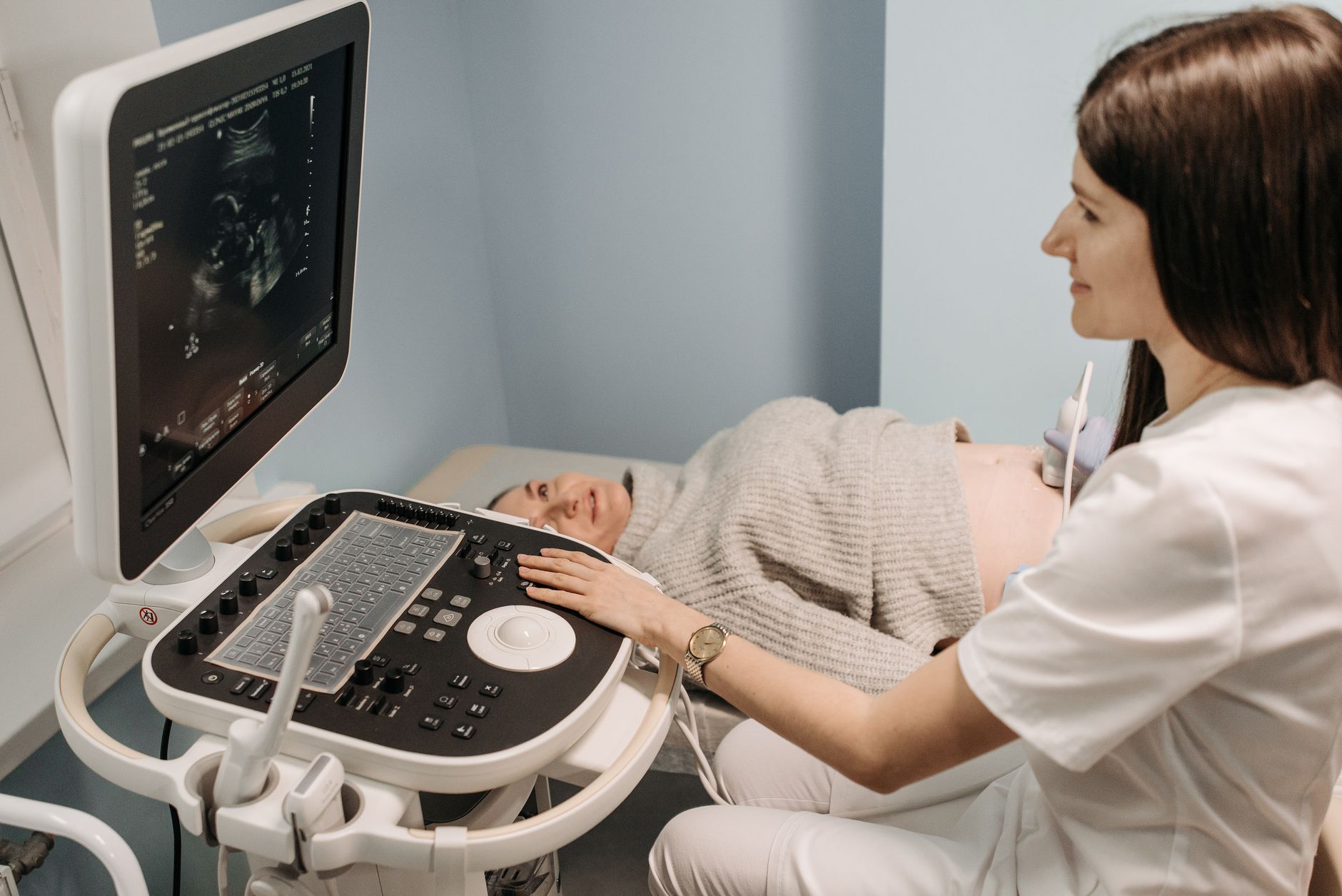
Feeling movements high in pregnancy is common and usually means the baby is active and growing. Learn why this happens, what’s normal, and when to seek care.
By Shubhra Mishra — a mom of two who turned her own confusion during pregnancy into BumpBites, a global mission to make food choices clear, safe, and stress-free for every expecting mother. 💛
Check whether any food is safe during pregnancy with the BumpBites Food Safety Checker.
Quick take: Feeling fetal kicks high up near your ribs is usually normal, especially as the baby grows and changes position. Most women notice the pattern shift in the second half of pregnancy. However, if the movements feel unusually strong, sudden, or are accompanied by other warning signs, contact your provider promptly.
Imagine you’re sitting at your kitchen table, a cup of tea cooling beside you, when a sudden “tap‑tap‑tap” rattles your ribs. Your heart skips a beat and you wonder, “Why am I feeling movements high during pregnancy?” You’re not alone—many expectant moms experience this shift in where they feel their baby’s activity. In this article we’ll walk through what those high‑up kicks mean, how baby position influences what you feel, when the pattern is reassuring, and when it’s time to call your provider.
We’ll cover the science behind fetal movement locations, answer the most common questions (including “Is it normal to feel baby movements high up in the ribs?”), and give you practical tips for tracking movements safely. By the end you’ll know what’s typical, what to watch for, and how to enjoy those little reminders that your baby is thriving.
Is it normal to feel baby movements high up in the ribs during pregnancy?
Yes, it is normal for many women to feel fetal movements near the upper abdomen, especially after the midway point of pregnancy. As the uterus expands upward, the baby’s head and torso can press against the rib cage, transmitting kicks, rolls, and stretches that you perceive as “high” movements.
Why does the uterus grow upward?
During the first trimester the uterus sits deep in the pelvis. By about 20 weeks it reaches the level of the belly button, and by 28‑32 weeks it can extend up toward the rib cage. This upward growth is a natural part of accommodating a growing fetus, as explained by the American College of Obstetricians and Gynecologists (ACOG). The expanding uterus also pushes the diaphragm slightly upward, which can amplify the sensation of a kick against the rib cage.
Typical weeks for high‑up kicks
28 weeks: Many women report feeling kicks under the ribs for the first time. The baby’s head is now large enough to reach the upper abdomen.
32 weeks: Movements often feel strongest in the upper belly because the baby’s limbs are more active and the uterus is pressing against the diaphragm.
Third trimester: As the baby settles into its final position, the location of movements can shift again, sometimes moving lower as the head descends.
What you’re actually feeling
Most of the sensations are fetal movements—quick jerks (kicks), gentle pushes (rolls), or stretches (wiggles). These differ from maternal muscle twitches or gastrointestinal noises, which are usually less rhythmic and more localized. Fetal movements tend to have a “bounce‑back” quality, because the baby’s body is cushioned by amniotic fluid.
Why do I feel kicks under my ribs instead of lower in my belly?
The answer lies in the baby’s position and the shape of your uterus. When the baby’s head or torso is oriented upward, the movements are transmitted higher. Conversely, if the baby’s legs point toward the pelvis, you’ll feel more activity lower down.
Baby position and “high” movements
There are several common fetal positions that affect where you feel activity:
Head‑up (vertex) position: The head rests near the rib cage, causing kicks that you feel under the ribs.
Transverse (lying sideways) position: Movements may be felt on both sides of the abdomen, often higher on the side where the baby’s back faces.
Breech (feet‑down) position: Kicks can feel lower, but if the baby’s legs are curled up, you might still sense activity higher up.
How the uterus’s shape influences perception
In the later second trimester the uterus takes on a more rounded “balloon” shape. The upper part of the uterus pushes against the diaphragm and ribs, acting like a drumhead that amplifies the baby’s movements. This is why many women describe a “flutter” or “tap” near the ribs.
Distinguishing kicks from gas or indigestion
Gas or indigestion can feel similar to fetal kicks, especially if you’re prone to bloating. However, fetal movements are typically rhythmic, increase after meals (when the baby is more active), and are felt on both sides of the abdomen. If you’re unsure, try counting the beats for a few minutes; a consistent pattern likely indicates fetal activity.
What does it mean when baby movements are high during the third trimester?
High‑up movements in the third trimester can signal a few different things, most of which are normal. The baby’s head may still be near the rib cage while the body settles into the pelvis for birth. This is often a sign of a healthy, active baby.
Typical third‑trimester movement patterns
According to the Mayo Clinic, fetal movements usually become more pronounced and frequent as the baby grows, peaking in the third trimester. Many mothers notice a “rolling” sensation as the baby shifts weight, especially when the baby’s head is still high.
When high movements suggest a breech presentation
If the baby is breech, the kicks may feel lower, but it’s not a guarantee. Some breech babies still generate high‑up movements because their torso remains elevated. An ultrasound is the definitive way to confirm presentation. If you suspect breech based on movement patterns, discuss an ultrasound with your provider.
Why some women feel fewer movements lower down
As the baby’s head descends into the pelvis (a process called “lightening”), you may feel fewer kicks in the lower abdomen because the head blocks the transmission of movement. Meanwhile, the baby’s arms and legs continue to move, sending sensations upward.
Can feeling movements high up mean my baby is breech?
Feeling kicks near the ribs does not automatically indicate a breech position. While breech presentations can affect where you feel activity, many breech babies still generate high‑up movements because their torso remains elevated.
How to differentiate breech from head‑up presentations
Key clues include:
Location of kicks: In breech, kicks may feel more pronounced near the hips and lower abdomen, though high‑up kicks are still possible.
Frequency of movements: Breech babies may move less often once the head settles low, but this varies.
Ultrasound confirmation: The only reliable method to determine presentation is a professional ultrasound, typically performed at 32‑36 weeks.
When to ask for a scan
If you consistently feel kicks only high up and have no sensation in the lower abdomen after 32 weeks, it’s reasonable to request an ultrasound to confirm positioning. Your provider may also perform a manual “Leopold’s maneuver” to assess fetal lie.
How to tell if high movements are normal or a cause for concern
Most high‑up movements are benign, but certain patterns can signal a problem. The key is to monitor changes in intensity, frequency, and associated symptoms.
Red‑flag signs
Sudden decrease in movement: If you notice a dramatic drop in activity for several hours, contact your provider.
Painful contractions that feel like kicks: Distinguish true contractions (regular, get closer together) from fetal movements.
Accompanying vaginal bleeding, fluid loss, or severe abdominal pain: These require immediate medical attention.
Persistent, very strong blows that feel like a hard punch: Could indicate cord compression or other issues and should be evaluated.
Tracking fetal movements
Many clinicians recommend a “kick count” after 28 weeks. Choose a time when you’re relaxed (e.g., after a snack), lie on your left side, and count each distinct movement. A typical benchmark is 10 movements within two hours. If you consistently fall short, call your provider.
When to call your provider
Use the following guidelines:
If you feel fewer than 10 movements in two hours on two consecutive days.
If movements become unusually strong, painful, or are accompanied by bleeding.
If you notice a sudden shift from low to high‑up sensations after 32 weeks without an obvious reason.
Does the position of baby movements change as pregnancy progresses?
Absolutely. As the baby grows, its limbs and head shift, altering where you feel activity. Early in pregnancy (around 18‑22 weeks), movements are often felt low in the pelvis. By the third trimester, the head may be high, causing upper‑abdomen sensations.
Timeline of movement perception
Gestational Age
Typical Movement Location
Common Description
16‑20 weeks
Lower abdomen / pelvis
Gentle “flutter” near the pubic area
24‑28 weeks
Mid‑abdomen, sometimes under ribs
More distinct “kick” or “punch”
28‑32 weeks
Upper abdomen, near ribs
Strong taps, often felt on both sides
32‑36 weeks
Varies – head may descend
Mixed sensations, sometimes lower as baby “lights”
36+ weeks
Lower abdomen, pelvis
Rolls and shifts as baby prepares for birth
Why the shift occurs
The baby’s head is the heaviest part. Early on it sits near the top of the uterus, pressing upward. As the baby descends, the head moves lower and the limbs become the primary source of movement, shifting sensations downward.
Factors that influence movement location
Maternal body type: A smaller abdomen may make high‑up kicks feel more pronounced.
Placenta position: A low‑lying placenta can cushion movements, altering perception.
Activity level: After meals or exercise, babies often become more active, changing where you feel them.
What are the signs that high movements might indicate a problem?
While most high‑up kicks are harmless, certain signs warrant a professional evaluation.
Potential concerns linked to high‑up activity
Persistent, unusually strong blows: May suggest cord compression or fetal distress.
Sudden shift from low to high without a corresponding change in baby’s position: Could indicate uterine irritation or abnormal fluid levels.
Accompanying symptoms: Vaginal bleeding, leaking fluid, severe abdominal pain, or fever.
When high movements mimic other conditions
Some women mistake digestive issues for fetal kicks. Gas, indigestion, or constipation can cause sharp, localized sensations that feel like kicks. If the sensation is accompanied by bloating, belching, or changes in bowel habits, it’s likely gastrointestinal rather than fetal.
Steps to take if you’re worried
Stop any activity and lie on your left side for a few minutes.
Count movements for two hours. If you reach 10, note the time.
If you still feel fewer than 10, call your provider or go to the nearest labor‑and‑delivery unit.
How to differentiate fetal kicks from other abdominal sensations
Understanding the subtle differences between fetal activity and common non‑fetal sensations can reduce anxiety. Fetal kicks are usually rhythmic, last a few seconds, and may be felt on both sides of the abdomen. They often increase after you eat or drink a cold beverage because the baby becomes more active.
Conversely, gastrointestinal noises are often accompanied by a feeling of fullness, bloating, or the urge to pass gas. They tend to be brief, localized, and may be relieved by a change in posture or a walk. If you experience a sudden, sharp jab that feels like a punch and is not accompanied by the “flutter” pattern, it may be a uterine contraction or, rarely, a sign of cord compression—both of which merit a call to your provider.
Practical tip: the “pause‑and‑listen” method
When you feel a movement, pause for 10‑15 seconds and note the rhythm. A repeated, spaced‑out pattern (e.g., one kick every 20‑30 seconds) is typical of fetal activity. A single, isolated sharp pain that does not repeat is more likely to be muscular or gastrointestinal.
Tips for tracking fetal movements effectively
Accurate tracking helps you notice subtle changes early. While the classic “count‑to‑10” method works for many, you can personalize the approach to fit your daily routine.
Choosing the right time
Pick a quiet moment when you’re relaxed, such as after a light snack or before bedtime. Lying on your left side improves blood flow to the uterus and often makes kicks easier to feel.
Using technology wisely
Smartphone apps and wearable devices can provide a visual log of movement counts, but they should supplement—not replace—your own counting. Some apps allow you to tap each time you feel a movement, creating a timestamped record that you can share with your provider.
Movement‑tracking comparison
Method
Pros
Cons
Traditional kick count (paper)
Simple, no battery needed, easy to share
Can be forgotten, no automatic reminders
Smartphone app (e.g., “Kick Tracker”)
Digital log, alerts, easy to review trends
Requires phone, may cause screen anxiety
Smartwatch with fetal‑movement feature
Hands‑free, integrates with daily activity tracking
Costly, may have limited accuracy
When to seek help based on tracking
If you record three consecutive days of fewer than 10 movements in two hours, or if you notice a sudden, dramatic change in the pattern, call your OB‑GYN. Early evaluation can rule out issues such as reduced amniotic fluid or placental insufficiency.
Impact of maternal factors on how you feel fetal movements
Every body is different, and several maternal factors can influence whether you feel kicks high up or low down.
Body habitus and abdominal wall thickness
Women with a thinner abdominal wall often perceive fetal movements more sharply, especially in the upper abdomen. Conversely, higher body mass index (BMI) can muffle sensations, making high‑up kicks feel more like a gentle flutter.
Placental location
A low‑lying (anterior) placenta can act as a cushion over the lower uterus, redirecting the perception of movement upward toward the ribs. If your placenta is posterior, you may feel more of the activity lower in the pelvis.
Maternal activity and hydration
Physical activity increases blood flow to the uterus, often prompting the baby to become more active. Staying well‑hydrated also supports amniotic fluid volume, which can affect how movements are transmitted through the uterine wall.
Myth vs. fact
Myth: Feeling kicks under the ribs always means the baby is in a breech position.
Fact: High‑up movements are common in both head‑up and breech presentations; an ultrasound is needed to confirm baby’s position.
Myth: If you feel any movement high up, you should be worried about cord compression.
Fact: Most high‑up kicks are normal. Cord compression usually presents with reduced movement, not increased intensity.
Myth: Once you feel kicks, you no longer need to track fetal movements.
Fact: Ongoing movement tracking remains important, especially after 28 weeks, to ensure the baby’s well‑being.
Key takeaways
High‑up fetal movements are typical after 24 weeks as the uterus expands.
The baby’s position (head‑up, transverse, breech) influences where you feel kicks.
Track movements daily; 10 movements in two hours is a common benchmark.
Contact your provider if you notice a sudden drop in activity, painful blows, or accompanying bleeding.
Ultrasound is the definitive way to confirm breech or other presentations.
Distinguish fetal kicks from gas or indigestion by noting rhythm and location.
Frequently asked questions
Is it normal to feel baby movements high up in pregnancy?
Yes. By the third trimester many women notice kicks near the ribs as the baby’s head rises and the uterus expands upward. This is a sign of normal growth and activity.
What does it mean if my baby is kicking my ribs?
It usually indicates that the baby’s head or torso is positioned higher in the uterus. It does not automatically signal a problem, but if the kicks feel unusually strong or are accompanied by other symptoms, you should call your provider.
Can a baby's position cause high movements in the stomach?
Absolutely. A head‑up (vertex) or transverse position can place the baby’s head near the rib cage, leading to upper‑abdomen sensations. Breech babies can also produce high‑up kicks, so position alone isn’t diagnostic.
Should I be worried if I feel kicks under my ribs?
Most of the time no. However, watch for red‑flag signs such as a sudden decrease in movement, painful blows, or any bleeding. If any of these occur, contact your provider right away.
How can I tell if my baby is breech based on movement?
Movement alone isn’t reliable for diagnosing breech. If you feel more activity near the hips and less in the upper abdomen after 32 weeks, it could suggest a breech presentation, but an ultrasound will give a definitive answer.
What week do baby movements start feeling lower?
Most women notice a shift toward lower‑abdomen sensations around 34‑36 weeks as the baby “lights” and the head descends into the pelvis.
How do I encourage my baby to move lower in the womb?
Gentle techniques like lying on your left side, drinking a glass of cold water, or lightly tapping your abdomen can stimulate movement. If you’re concerned about positioning, discuss safe positioning exercises with your provider.
Can stress or anxiety affect where I feel fetal movements?
Stress can heighten your awareness of bodily sensations, making you more attuned to every kick. While anxiety doesn’t change the actual location of movements, it can make you interpret normal activity as alarming. Practicing relaxation techniques and maintaining a regular kick‑count routine can help keep perspective.
Is it safe to use a smartphone app to track fetal movements?
Yes, apps can be a helpful supplement to traditional counting, especially if they let you log the time of each movement. However, they should not replace the simple “10 movements in two hours” benchmark recommended by ACOG. Always discuss any concerning trends with your OB‑GYN.
When to see a doctor or specialist
If you experience any of the following, seek medical attention promptly:
Less than 10 distinct movements in two hours on two consecutive days.
Sudden, sharp, or painful blows that feel different from your usual kicks.
Vaginal bleeding, fluid leakage, fever, or severe abdominal pain.
Persistent high‑up movements accompanied by a feeling of “pressure” or “tightness.”
For concerns about fetal position or movement patterns, schedule an appointment with your OB‑GYN or midwife. They may perform an ultrasound, a Leopold’s maneuver, or refer you to a maternal‑fetal medicine specialist if needed.
Remember, this article is for informational purposes only and does not replace personalized medical advice. Always discuss any worries with your healthcare provider.
References
American College of Obstetricians and Gynecologists (ACOG). “Fetal Movement Counting.” ACOG Practice Bulletin No. 130, 2023.
Mayo Clinic. “Fetal Movement.” Updated 2024.
National Institute of Child Health and Human Development (NICHD). “Fetal Position and Presentation.” 2022.
Harvard T.H. Chan School of Public Health. “Understanding Fetal Activity.” 2023.
World Health Organization (WHO). “Maternal Health Guidelines.” 2021.
American Academy of Pediatrics (AAP). “Normal Fetal Movement Patterns.” 2022.
National Health Service (NHS). “Kick Counting in Pregnancy.” Updated 2023.
U.S. Food and Drug Administration (FDA). “Guidance on Pregnancy‑related Medical Devices.” 2022.
Feeling high‑up fetal kicks is common as the uterus expands.Creating a quiet space can help you notice subtle movements.Ultrasound is the definitive way to determine if your baby is breech.
Not sure about the label on Why Am I Feeling Movements High During Pregnancy products?
Snap the ingredients list and SafeFilter checks every ingredient for your stage — only 3 free scans this month, then you're locked until reset. Unlimited from $7/mo or $50/yr.
When Shubhra Mishra was expecting her first child in 2016, she was overwhelmed by conflicting food advice — one site said yes, another said never. By the time her second baby arrived in 2019, she realized millions of mothers face the same confusion.
That sparked a five-year journey through clinical nutrition papers, cultural diets, and expert conversations — all leading to BumpBites: a calm, compassionate space where science meets everyday motherhood.
Her long-term vision is to build a global community ensuring safe, supported, and free deliveriesfor every mother — because no woman should face pregnancy alone or uninformed. 🌿
🌍 Stand with mothers, shape safer guidance
Join a small circle of experts who review BumpBites articles so expecting parents everywhere can decide with confidence.