Quick take: Most children stay in a rear‑facing car seat until they’re at least 4 years old or weigh 40 lb, then move to a forward‑facing seat with a harness until they hit the seat‑belt limits. A booster seat is the next step once they’re 8–12 years old, at least 40 lb, and tall enough for the vehicle’s lap‑and‑shoulder belt to sit low on the hips and across the chest. Check your state’s law, watch the height‑vs‑weight chart, and always install the booster according to the manufacturer’s guide.
It was 3 a.m., the car lights glowed on the kitchen floor, and you were wrestling with the question, “Is my kid ready for a booster seat?” You weren’t alone. Many parents stare at the car’s backseat, feeling the tug of safety guidelines, state laws, and a never‑ending stream of advice from friends, grandmothers, and online forums. The good news? The answer isn’t a mystery—there are clear age, weight, and height markers, plus practical tips that keep your child protected on every road trip.
In this guide we’ll walk through exactly when to switch to a booster seat based on age, weight, and height; decode state‑by‑state legal requirements; compare high‑back and backless models; and give you a step‑by‑step installation checklist. We’ll also bust common myths, point out frequent pitfalls, and share a quick‑reference chart you can print and keep in the glove compartment. By the end you’ll feel confident that you’re making the safest choice for your growing driver‑in‑training.
All recommendations follow the American Academy of Pediatrics (AAP) and the National Highway Traffic Safety Administration (NHTSA). If you ever wonder whether a specific situation warrants a pediatrician’s input—like a recent car‑seat‑related injury—look at the red‑flag list at the end of the article.

What age should a child transition from a car seat to a booster seat?
Age is the most visible marker, but it’s not the only one. The AAP recommends keeping a child in a rear‑facing car seat until at least age 4 years, or until they reach the seat’s maximum height or weight limit—whichever comes first. After that, a forward‑facing seat with a harness is usually required until the child meets the booster‑seat criteria.
Because children develop at different rates, many pediatricians use age as a convenient reminder but always double‑check growth charts. The CDC’s child development guidelines note that motor‑skill maturity typically aligns with the ability to sit upright without slouching, a key booster‑seat prerequisite.
Why age matters
Children’s neck muscles and spinal cords develop rapidly in the first three years. A rear‑facing position distributes crash forces across the back of the body, which is far stronger than the front. Waiting until age 4 gives the child the best chance of surviving a frontal collision without severe head or neck injury.
Typical age range for boosters
Most children make the switch to a booster between 8 and 12 years old. In practice, you’ll see three overlapping groups:
- Early switchers (8‑9 years): Often those who have outgrown the forward‑facing harness seat but are still under 40 lb.
- Mid‑range (10‑11 years): Most children fall here. They meet the weight requirement (40 lb) and are tall enough for the vehicle’s seat belt to rest correctly.
- Late switchers (12‑13 years): Kids who are taller but lighter may stay in a forward‑facing seat with a harness until they reach the belt height limit.
Remember, age alone isn’t enough—always double‑check weight and height.
What weight limits determine when to switch to a booster seat?
The weight threshold is the most concrete metric. The AAP and NHTSA set the minimum weight for a booster at 40 lb (about 18 kg). Below this, a forward‑facing seat with a five‑point harness provides better protection.
Weight limits also tie into vehicle‑manufacturers’ crash‑test data. The NHTSA reports that when a child under 40 lb is placed in a booster, the lap belt often rides too high, increasing the risk of abdominal injury in a crash.
Weight ranges for different seat types
Some booster models advertise higher weight capacities, but the safety margin is best when the child is near the lower end of the range. A 40‑lb child using a booster is still protected because the vehicle’s seat belt can now be positioned correctly.
Why weight matters more than age
Weight correlates directly with the body’s ability to absorb crash forces. A 3‑year‑old who weighs 45 lb may be ready for a booster, while a 9‑year‑old at 35 lb should stay in a harness seat. Always prioritize the scale over the birthday cake.
How to know if my child is ready for a booster seat?
Readiness is a combination of weight, height, and the ability to sit upright without slouching for the entire trip. Below are the three objective signs you can check in your own home.
Three “ready” checkpoints
- Weight ≥ 40 lb (18 kg). Use a kitchen scale or a pediatric growth chart.
- Height meets the belt guideline. The lap belt should sit low on the upper thighs (the “high water mark”), and the shoulder belt should cross the middle of the chest, not the neck or abdomen.
- Can sit upright for the duration of the ride. No slouching, no “feet dangling” (the child’s knees should be bent at a comfortable angle, with feet flat on the floor).
The NHS’s child‑safety resources echo these three criteria, noting that a proper fit reduces the risk of “submarining” (sliding under the lap belt) by more than 60 % in crash simulations.
Hands‑on test
Place the booster on a flat surface, have your child sit, and pull the vehicle’s lap‑and‑shoulder belt through the slots. The lap belt should rest snugly on the thighs, and the shoulder belt should cross the chest. If there’s any slack, the child isn’t ready.
When height trumps weight
In some cases a child may be over 40 lb but still too short for the seat belt to sit correctly. The typical height cutoff is about 4 ft 9 in (145 cm). If your child is under that, keep them in a forward‑facing harness seat until they grow taller.
Booster seat laws by state for age and weight requirements
Legal requirements vary, but every state mandates a minimum age, weight, or height—or a combination—before a child can use just a seat belt. Below is a concise state‑by‑state snapshot of the most common rules, updated to 2024 guidelines.
Because state statutes can change, the CDC recommends checking the most recent version of your state’s motor‑vehicle handbook each year, especially if you move or buy a used car.
If you live in a state not listed above, the safest bet is to follow the AAP’s 40‑lb and 4 ft 9 in guideline, which aligns with the majority of regulations. Always keep a copy of your state’s motor‑vehicle handbook in the car.
Differences between high‑back and backless booster seats
Both high‑back and backless boosters serve the same core purpose: to position the vehicle’s seat belt correctly. The design differences affect comfort, compatibility, and safety in certain crash scenarios.
High‑back boosters
These have a full back and side wings, which provide head and neck support in side‑impact crashes. They are especially useful in vehicles with low seat backs or no headrests. Most high‑back models also include built-in lap‑and‑shoulder belt guides to help keep the belt in the correct position.
Backless boosters
Backless boosters are lighter, easier to transfer between cars, and often cheaper. They rely on the vehicle’s seat back for head support, so they’re best suited for cars with high, well‑padded seat backs. Because they lack side‑impact protection, they may be less ideal for older vehicles or for children who spend a lot of time in the back seat.
Safety comparison table
Both types meet federal safety standards when installed correctly. Choose based on your vehicle’s seat design, how often you’ll switch cars, and your child’s comfort preferences.
Safety tips for installing and using a booster seat correctly
Even the best booster seat can’t protect your child if it’s installed wrong. Follow these step‑by‑step guidelines every time you place a booster in the car.
The FDA’s consumer safety bulletins emphasize that a correctly tightened seat belt reduces the risk of “belt‑rollover” injuries by up to 70 %. Treat each installation as a chance to double‑check that the belt is snug and properly positioned.
Step‑by‑step installation checklist
- Read the manual. Every model has unique belt routing or LATCH points.
- Position the booster on the vehicle seat. Center it for optimal belt geometry.
- Thread the vehicle’s lap‑and‑shoulder belt through the designated slots. For high‑back seats, use the belt guides; for backless, ensure the belt runs straight.
- Tighten the belt. Pull the belt to eliminate any slack, then click the latch.
- Check the “tightness” test. Grab the booster at the base and give a firm shake—there should be no more than an inch of movement.
- Fit the child. The lap belt must sit low on the thighs, shoulder belt across the chest, and the child’s back should be flush against the seat back (high‑back) or the vehicle seat (backless).
- Re‑check after each trip. Seats can shift during travel; a quick visual check before you drive can catch a loose belt.
How to install a booster in a rear‑facing car
While boosters are designed for forward‑facing use, some parents wonder if a booster can be installed in a rear‑facing position for a short period. The answer is no—boosters lack the rigid shell needed to protect a child in a rear‑facing crash. Keep your child in a rear‑facing infant seat until they meet the forward‑facing requirements.
Additional safety pointers
- Never place a booster in the front passenger seat unless the airbag is permanently deactivated.
- Make sure the child’s “chin” is not resting on the lap belt; this can cause a “submarining” effect.
- Remove any bulky clothing (winter coats, heavy jackets) before buckling; they can compress and create slack.
- Replace the booster when any part shows cracking, broken buckles, or excessive wear.
- Never use a booster seat that has been in a previous crash unless a certified technician confirms it’s still safe.
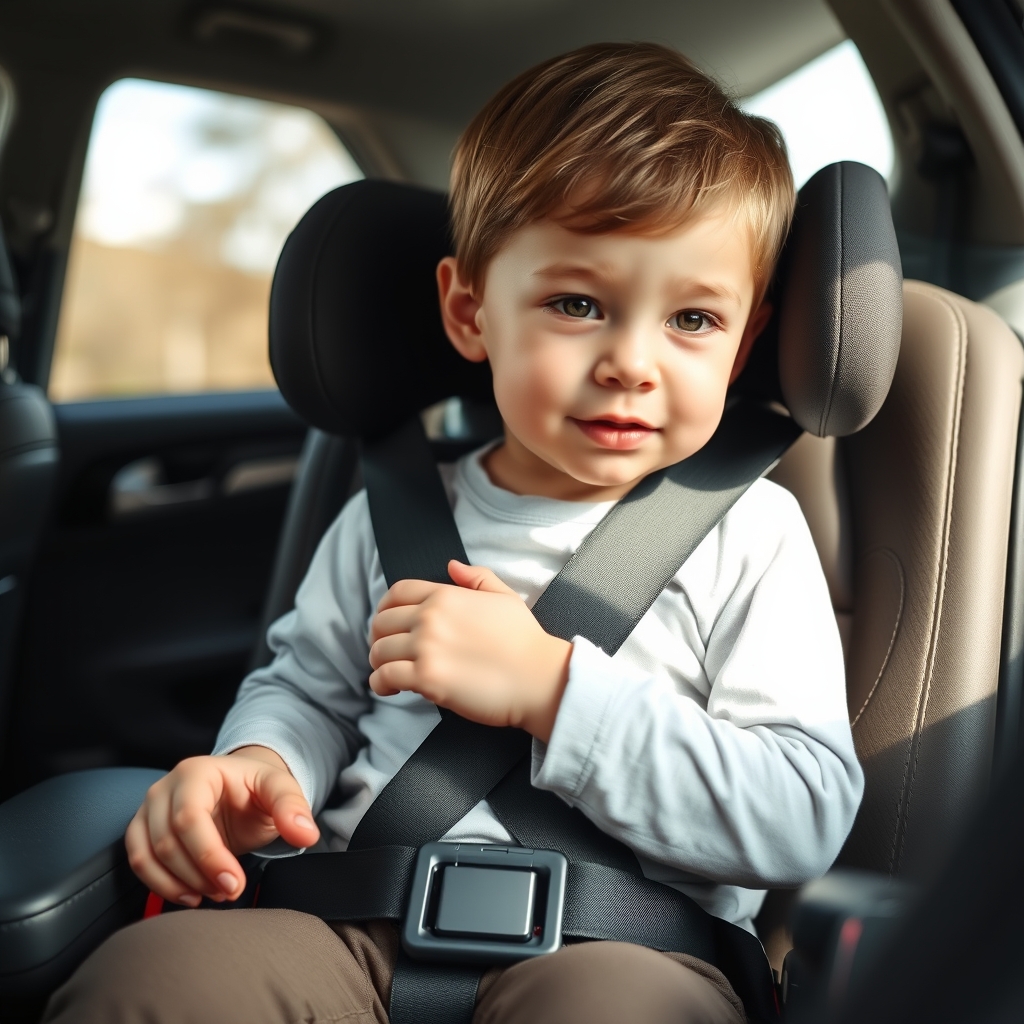
Common mistakes parents make when switching to a booster seat
Even well‑meaning parents can slip up during the transition. Below are the most frequent errors and how to avoid them.
Mistake #1: Switching based solely on age
Age is a convenient marker, but a 9‑year‑old who weighs 35 lb is still safer in a forward‑facing harness seat. Always verify weight and height first.
Mistake #2: Using a booster that’s too small for the child’s height
If the child’s hips are near the top of the booster, the lap belt will sit too high on the abdomen, increasing injury risk. Choose a booster with a higher weight capacity or a “large‑size” model.
Mistake #3: Forgetting to adjust the seat belt
Many parents think the vehicle’s belt automatically fits. In reality, you must pull the belt snugly and use the booster’s belt guides (if available) to keep the shoulder strap across the chest.
Mistake #4: Leaving the booster in the front seat with the airbag on
Airbags are designed for adult bodies. If a child is in the front seat, the airbag can cause severe injury. Keep boosters in the rear seats unless the front passenger airbag can be turned off.
Mistake #5: Over‑relying on “backless” boosters for side‑impact protection
Backless boosters provide no side‑impact cushioning. In vehicles with low side‑impact protection, a high‑back booster is the safer choice.
Mistake #6: Ignoring the “no‑slouch” rule
Children who slouch or slide down can have the belt sit on the abdomen. Use a booster with a “seat belt guide” or a built‑in “belt path” to keep the child upright.
By checking each of these items, you’ll dramatically reduce the chance of a preventable injury.

Best booster seat for a 40‑pound child
When your child hits the 40‑lb milestone, you want a seat that balances safety, comfort, and adaptability. The following model consistently scores high across safety tests and parent reviews:
- Britax Marathon ClickTight Convertible Car Seat – While technically a convertible seat, it functions as a high‑back booster from 40‑120 lb, offering ClickTight installation, side‑impact protection, and a 10‑year weight range.
- Graco TurboBooster High‑Back – Affordable, with built‑in belt guides and a 40‑100 lb capacity. Ideal for families that switch cars often.
- Clek Olli Forward‑Facing Booster – Premium, sleek design, 40‑100 lb capacity, and a rigid shell that offers excellent side‑impact protection.
All three meet or exceed NHTSA standards. Choose based on your vehicle’s seat geometry, your budget, and any specific features you value (e.g., fabric that’s easy to clean).
Booster seat height vs weight guidelines chart
Below is a quick‑reference chart you can print and keep in the glove compartment. It combines the two most common criteria—height and weight—to tell you exactly when a booster is appropriate.
These ranges are guides, not hard rules. Always verify the belt fit on the vehicle and consult your state’s law for any additional requirements.
Booster seat safety statistics and crash‑test results
Data from the National Highway Traffic Safety Administration (NHTSA) show that children using an age‑ and size‑appropriate booster seat have a 45 % lower risk of fatal injury compared with those who use only a seat belt before the belt fits properly. In side‑impact tests, high‑back boosters reduced head‑injury risk by an additional 20 % over backless models.
These figures reinforce why the AAP and CDC recommend staying in a forward‑facing harness seat until the child meets the 40‑lb threshold, then transitioning to a booster that matches the vehicle’s belt geometry.
Choosing the right booster seat for different vehicle types
Not every booster works equally well in every car. Compact cars often have lower seat backs, making a high‑back booster the safer option because it adds its own head support. Larger SUVs and minivans usually have higher, padded seat backs, so a backless booster can be a comfortable, portable choice.
The FDA’s vehicle‑safety guidance notes that side‑impact protection is most critical in vehicles with thin door panels, which are common in older compact models. When shopping, check the seat’s width and belt‑guide compatibility with your specific make and model to avoid a poor fit.
Myth vs. fact
Myth: “If my child is 8 years old, they can use a regular seat belt.”
Fact: Most 8‑year‑olds are still too short for a lap‑and‑shoulder belt to sit correctly. The AAP recommends staying in a booster until the belt lies low on the hips and across the chest.
Myth: “Backless boosters are just as safe as high‑back boosters.”
Fact: High‑back boosters provide side‑impact protection that backless models lack. In vehicles with low seat backs, a high‑back booster is the safer choice.
Myth: “If my child has a car seat certificate, I can skip the booster.”
Fact: Certificates indicate the seat met safety standards at the time of manufacture, but they don’t replace the need for a properly fitted booster once the child exceeds the seat’s weight or height limits.
Key takeaways
- Keep children rear‑facing until at least age 4 or until they hit the seat’s weight/height limit.
- Switch to a booster when they reach ≥ 40 lb and can sit upright with the vehicle belt low on the thighs and across the chest.
- State laws vary, but the 40‑lb/4 ft 9 in guideline is a universal baseline.
- High‑back boosters add side‑impact protection; backless models work best in cars with high seat backs.
- Install the booster using the vehicle’s lap‑and‑shoulder belt, tighten securely, and re‑check after each trip.
- Avoid common pitfalls: relying on age alone, using a booster that’s too short, forgetting belt adjustments, and placing boosters in the front seat with an active airbag.
Frequently asked questions
At what age should a child move from a car seat to a booster seat?
Age alone isn’t the deciding factor. The AAP advises staying in a rear‑facing seat until at least 4 years old, then in a forward‑facing harness seat until the child is ≥ 40 lb and tall enough for the seat belt to sit low on the hips. Most children transition to a booster between 8 and 12 years, depending on their growth.
What weight does a child need to be to use a booster seat?
The minimum weight is 40 lb (≈ 18 kg). Below this, a forward‑facing seat with a five‑point harness offers superior protection. Keep the child in the harness seat until they meet the weight requirement and can sit upright without slouching.
Can a child use a booster seat before they are 4 years old?
It’s not recommended. Children under 4 years typically need the added protection of a rear‑facing seat. Some specialized “booster‑style” rear‑facing seats exist, but they are still classified as car seats and must meet rear‑facing requirements.
Do all states have the same booster seat requirements?
No. While most states align with the 40‑lb/4 ft 9 in benchmark, some have lower age thresholds (e.g., Florida at 5 years) or specific height rules. Always verify your state’s motor‑vehicle handbook for the exact legal requirements.
Is a high‑back booster seat safer than a backless one?
High‑back boosters provide side‑impact protection and built‑in headrests, making them safer in crashes, especially in vehicles with low seat backs. Backless boosters are adequate when the vehicle’s seat back offers sufficient side protection, but they lack the added cushioning of a high‑back model.
How do I know if my booster seat is installed correctly?
After threading the vehicle’s lap‑and‑shoulder belt through the booster’s designated slots, pull the belt tight so there’s no slack. The booster should not move more than an inch when you give it a firm shake. Finally, verify that the lap belt lies low on the child’s thighs and the shoulder belt crosses the middle of the chest.
When can a child stop using a booster seat and move to a regular seat belt?
When the lap belt lies low on the upper thighs (the “high water mark”) and the shoulder belt crosses the middle of the chest, the child can sit without a booster. This typically occurs between 10‑13 years old and 80‑100 lb, depending on the child’s height and the vehicle’s seat design.
Can a child use a booster seat on an airplane?
Yes, but the FAA requires that the child be at least 40 lb and able to sit upright for the duration of the flight. Most airlines provide a seat‑belt extender, and the booster’s belt guides can help achieve the correct fit. Always check the airline’s specific policy before you travel.
Do booster seats have expiration dates?
All booster seats come with a manufacturer‑stated expiration, usually 6–10 years from the date of purchase. Over time, plastic can degrade, and safety standards evolve. The FDA advises discarding any seat past its expiration or that has been involved in a crash, even if it appears undamaged.
When to see a doctor or specialist
If your child experiences any of the following after a car‑seat or booster‑seat incident, seek medical attention right away:
- Neck or back pain that persists beyond a few hours.
- Unexplained bruising, swelling, or tenderness around the hips or abdomen.
- Difficulty walking, standing, or moving the arms.
- Any loss of consciousness, vomiting, or confusion after a crash.
- Persistent headache or dizziness.
In such cases, an evaluation by a pediatrician or a trauma specialist is essential. Even if the child feels fine, a follow‑up visit can rule out hidden injuries. This article is for informational purposes only and does not replace personalized medical advice.
References
- American Academy of Pediatrics. “Car Seats: AAP Policy Statement.” 2023.
- National Highway Traffic Safety Administration. “Child Passenger Safety.” Updated 2024.
- Centers for Disease Control and Prevention. “Child Passenger Safety.” 2024.
- Harvard T.H. Chan School of Public Health. “Vehicle Safety and Child Injury Prevention.” 2022.
- State Department of Motor Vehicles publications (California, Texas, New York, Florida, Illinois, Georgia, Washington, Massachusetts, Alaska). 2024.
- American Society for Testing and Materials (ASTM). “Standard Specification for Child Restraint Systems.” 2023.
- Britax. “Marathon ClickTight Convertible Car Seat User Manual.” 2023.
- Graco. “TurboBooster High‑Back Booster Seat Instructions.” 2023.
- Clek. “Olli Forward‑Facing Booster Seat Technical Specs.” 2023.
- U.S. Food and Drug Administration. “Consumer Safety: Child Car Seats and Boosters.” 2023.



