Quick take: Most babies begin to sleep through a 6‑hour stretch sometime between 4 and 6 months old, but “sleeping through the night” can mean different things at different ages. Establish a consistent bedtime routine, keep the sleep environment safe, and respond to night wakings with a calm, brief approach. Expect some setbacks—growth spurts, teething, and sleep regressions are normal—so be patient and flexible.
It’s 2 a.m. and you’re staring at the ceiling, wondering why your little one is still waking up. You’ve tried soothing, feeding, and countless lullabies, yet the night feels endless. You’re not alone. Many parents ask, “when do babies sleep through night?” The answer isn’t a single age, but a range of milestones, habits, and safety guidelines that together shape a baby’s night‑time rhythm.
In this guide we’ll walk through the typical ages when babies start to stay asleep, the signs that they’re ready, how much sleep they truly need, and practical tips—from newborn soothing to gentle sleep‑training methods. We’ll also demystify common myths, explain safe‑sleep standards, and give you a clear plan for handling night wakings, teething, and transitions to a crib.
By the end you’ll have a toolbox of evidence‑based strategies, a realistic timeline, and confidence to answer the question “when do babies sleep through night” for yourself and anyone else who asks.

At what age do babies start sleeping through the night?
The phrase “sleep through the night” usually means a continuous stretch of at least 6‑8 hours without requiring a feeding. For most infants, this milestone appears somewhere between 4 and 6 months of age, though there is wide individual variation.
According to the American Academy of Pediatrics (AAP), about 50 % of babies will manage a 6‑hour stretch by 4 months, and roughly 75 % by 6 months. By the end of the first year, many children can sleep 9‑10 hours, though occasional night wakings remain common.
Key factors that influence the timing include:
- Feeding method: Breast‑fed infants often wake more frequently because breast milk is digested faster.
- Growth spurts: Babies may temporarily need extra calories, leading to night feeds.
- Temperament and self‑soothing ability: Some infants develop the skill to settle themselves earlier.
It’s also important to differentiate between chronological age and developmental readiness. A 5‑month‑old who has established a predictable routine may already be sleeping through the night, while a 7‑month‑old who still relies heavily on nighttime feeds may not yet be ready.
Beyond the raw numbers, the context of each baby’s environment matters. A quiet, dimly lit room with a consistent bedtime can accelerate the ability to stay asleep, whereas frequent nighttime disruptions (e.g., loud household activity, temperature swings) can delay progress. Understanding both the biological timeline and the environmental factors gives you a clearer picture of what to expect.
Signs your baby is ready to sleep through the night
Before you jump into a sleep‑training plan, look for these readiness cues. When a baby consistently shows these signs, the odds of successful, sustained night sleep increase dramatically.
- Consistent nap pattern: Regular daytime naps (usually 3‑4 per day for a 4‑month‑old) suggest the baby’s sleep‑wake cycle is maturing.
- Increasing stretch at night: If the baby can stay asleep for 3‑4 hours without a feed, they are likely approaching the 6‑hour threshold.
- Self‑soothing cues: The baby can briefly calm themselves by sucking a thumb, rubbing a blanket, or turning over.
- Weight gain: A steady weight gain (about 5‑7 oz per week in the first 6 months) indicates adequate nutrition, reducing the need for night feeds.
- Calm morning demeanor: Waking up refreshed rather than cranky can be a sign of adequate nighttime rest.
One mother we spoke with shared, “When my daughter started taking longer naps during the day and could calm herself with a pacifier, the night finally got easier. It felt like a switch had flipped.”
In addition to these observable signs, parents can also watch for subtle behavioral cues: a baby who seems less irritable during daytime feedings, who maintains eye contact, and who exhibits a predictable “sleepy yawning” cue before bedtime often signals that their internal clock is aligning with a longer night stretch.
How many hours of sleep does a 6‑month‑old need?
A 6‑month‑old typically requires 14‑15 hours of total sleep per 24 hours, split between nighttime sleep and daytime naps. The breakdown often looks like this:
- Nighttime sleep: 10‑11 hours (often in one or two stretches)
- Daytime naps: 3‑4 hours total, usually 2‑3 naps
Because sleep needs evolve quickly, it’s helpful to understand the broader sleep trajectory:
These numbers come from the National Sleep Foundation and are echoed by the AAP’s sleep guidelines. If your baby is consistently within these ranges, they are likely getting enough sleep for healthy growth.
Regarding bedtime, the CDC recommends a bedtime that allows for the total sleep need, typically between 7 pm and 8 pm for a 6‑month‑old. Adjust gradually based on your family’s schedule, but keep the bedtime consistent.
It’s also worth noting that sleep quality matters as much as quantity. A baby who wakes briefly but returns to sleep on their own can still meet the recommended total hours, whereas frequent prolonged awakenings can erode restorative sleep even if the total clock time looks adequate.
Tips to help a newborn sleep through the night
Newborns (0‑3 months) rarely sleep through the night, but you can lay a foundation that will pay off later. Here are evidence‑based practices you can start now.
1. Establish a calming pre‑sleep routine
Even at 2 months, a short routine—dim lights, a gentle song, a brief cuddle—signals to the brain that bedtime is approaching. Keep it under 10 minutes to avoid overtiring.
2. Optimize the sleep environment
- Room temperature: Aim for 68‑72 °F (20‑22 °C) to reduce the risk of overheating.
- White‑noise: A soft, steady sound can mask household noise and mimic the womb’s hum.
- Darkness: Use blackout curtains; a low‑intensity nightlight is acceptable if you need to check on the baby.
3. Feed strategically
If you’re breastfeeding, try a “dream feed” around 10‑11 pm, where you gently feed while the baby is still asleep. This can stretch the night interval by a few hours.
4. Respond consistently
When the newborn cries, wait a brief moment (30‑60 seconds) to see if they settle on their own. If they continue, offer a quick soothing—rock, shush, or brief feed—then lay them back down awake whenever possible to encourage self‑soothing.
These steps won’t guarantee a full night of sleep immediately, but they create the cues that later help your infant achieve longer stretches.
In addition, consider a gentle “tummy‑time” routine during the day. Regular tummy‑time builds core strength, which can reduce the startle reflex that often wakes newborns during REM sleep.
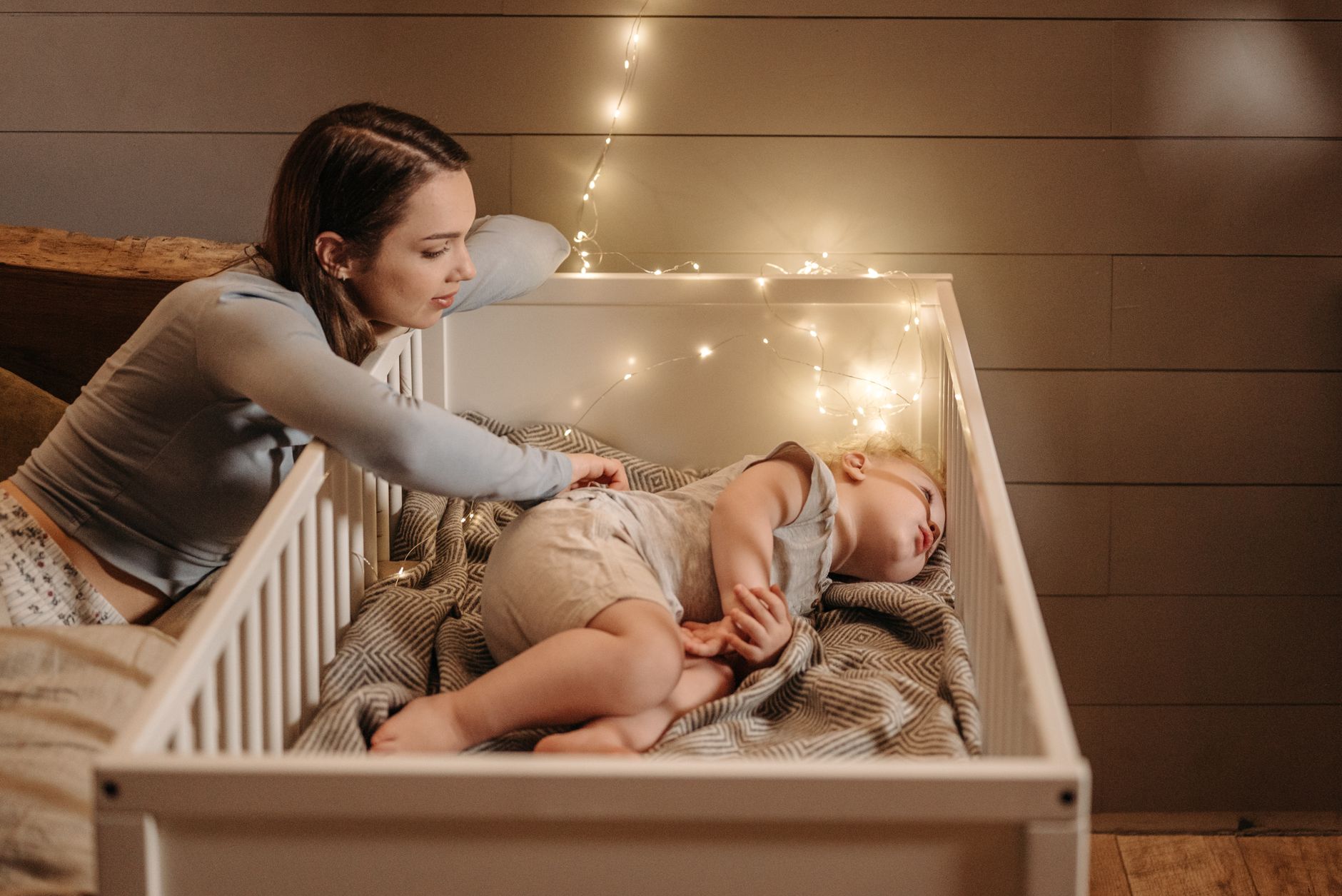
Why does my 9‑month‑old still wake up at night?
Even after the typical 6‑month milestone, many babies experience night wakings up to 12 months or beyond. The most common culprits for a 9‑month‑old include:
- Teething: Discomfort from emerging teeth can cause brief awakenings. Offer a chilled teething ring before bedtime.
- Sleep regression: Developmental leaps (crawling, standing) often trigger a 2‑week regression, temporarily breaking sleep.
- Separation anxiety: Around 9 months, many infants develop a stronger attachment to caregivers, leading to night‑time reassurance seeking.
Addressing these issues usually involves a combination of comfort and consistency. For teething, a pediatric‑approved pain reliever (acetaminophen or ibuprofen) can be used after consulting your pediatrician. For regression, maintain the same bedtime routine and avoid introducing new sleep‑training methods during the regression period.
1. Offer a cold, wet washcloth or teething toy 30 minutes before bed.
2. Keep the baby’s head slightly elevated (a gentle wedge) to reduce pressure on sore gums.
3. If a fever or significant discomfort arises, follow your pediatrician’s guidance for medication dosing.
Handling separation anxiety
Gradual reassurance works best. When your baby cries, pause for a moment, then enter the room, offer a brief cuddle, and leave while they are still drowsy. Over time they learn that night‑time crying does not always mean a feed.
Another useful technique is “the bedtime story anchor.” Choose a short, repeated story that you read only at bedtime. The narrative becomes a cue that signals it’s safe to settle, helping the infant feel secure even when you’re not immediately present.
Difference between night sleep and nap schedule for infants
Understanding the distinction helps you plan a balanced 24‑hour sleep schedule.
What counts as “night” for a baby?
The AAP defines “night” as the period between 7 pm and 7 am. However, infants’ internal clocks often align with light cues, so the exact start time can shift slightly based on family routines. In practice, most families consider the window from when the baby is placed down for the final stretch of sleep until they naturally awaken in the morning.
Nap schedule basics
Infants typically transition from multiple short naps to fewer longer ones as they age:
- 0‑3 months: 0‑2 naps, total 4‑6 hours.
- 4‑6 months: 3‑4 naps, total 3‑4 hours.
- 7‑12 months: 2‑3 naps, total 2‑3 hours.
For a 4‑month‑old, aim for three naps spread roughly 2‑3 hours apart. This supports the development of a consolidated night sleep later on.
How many naps should a 4‑month‑old have?
At 4 months, most babies thrive on three naps: a morning nap (about 1‑1.5 hours), a mid‑day nap (1‑1.5 hours), and an early‑afternoon nap (30‑45 minutes). Over‑napping can push bedtime later, while under‑napping can lead to overtiredness and night trouble.
Keeping nap lengths consistent also helps regulate the infant’s circadian rhythm. If a nap extends beyond the recommended window, gently rouse the baby and offer a brief feed before returning them to a calm environment to maintain the overall schedule.
How to create a bedtime routine for a baby to sleep through night
A predictable routine sets the stage for a calm night. Here’s a step‑by‑step plan you can adapt to your family’s rhythm.
- Wind‑down (30 minutes before bedtime): Dim lights, turn off televisions, and lower household noise.
- Bath (optional): A warm (not hot) bath can be soothing, but keep it brief to avoid overstimulation.
- Massage: A gentle infant massage with a fragrance‑free oil can promote relaxation.
- Feeding: Offer a final feed, ensuring the baby is comfortably full but not overly distended.
- Story or lullaby (5‑10 minutes): Choose a short book or a soft song; keep the voice calm and low‑pitch.
- Sleep cue: Place a consistent object (a soft blanket or a plush toy) in the crib so the baby associates it with sleep.
- Put down drowsy, not asleep: This helps the baby learn to self‑soothe.
Consistency is key. Aim to start the routine at the same clock time each evening. Over weeks, the baby’s internal clock will align with the routine, making night sleep more predictable.
Transitioning from co‑sleeping to a crib
If you’ve been co‑sleeping, move gradually:
- Start with the crib in your bedroom for a week.
- Use a wearable blanket or swaddle that mimics the closeness of your bed.
- Gradually increase the distance from your bed, moving the crib to the nursery after 2‑3 weeks.
Patience is essential—some babies may protest initially, but the majority adjust within a month.
During the transition, keep the bedtime routine identical to what you used while co‑sleeping. The familiarity of the routine often outweighs the change in sleeping surface, helping the infant feel secure.
Best sleep training methods for infants and when to start
Sleep training is a set of techniques that help babies learn to fall asleep independently and return to sleep after night wakings. The AAP suggests that most families can start gentle methods after the infant is at least 4 months old, once the risk of sudden infant death syndrome (SIDS) has decreased.
Choose a method that aligns with your parenting style and your baby’s temperament. If you’re unsure, start with the “sleep‑scheduling” approach—maintaining consistent nap times and bedtime—before moving to a more structured method.
Regardless of the method you select, keep communication open with your pediatrician. They can help you monitor weight gain, ensure that night feedings are still appropriate, and confirm that any chosen strategy complies with safe‑sleep guidelines.
How to support your baby’s circadian rhythm with daylight and darkness
Light exposure is one of the most powerful regulators of an infant’s internal clock. During the day, natural sunlight helps set a clear distinction between “awake” and “sleep” periods. In the evening, dim lighting cues the brain that bedtime is approaching.
Practical steps include:
- Morning sunlight: Open curtains as soon as you wake your baby. A few minutes of bright light (even indirect) can boost alertness and help synchronize the circadian rhythm.
- Daytime naps in a dimly lit room: Keep nap areas slightly less bright than the main living space, reinforcing the idea that daylight equals activity and darkness equals rest.
- Evening wind‑down: Begin dimming lights 30‑45 minutes before bedtime. Use a low‑intensity nightlight if needed, but avoid blue‑light emitting devices.
Research from the National Sleep Foundation notes that infants with consistent light exposure patterns tend to achieve longer night stretches earlier than those with irregular lighting cues. If you live in a region with limited daylight during winter months, consider a light‑therapy box for short, supervised sessions after consulting your pediatrician.
Safe sleep practices for different infant ages
Safe‑sleep guidelines evolve as babies grow, reflecting changes in mobility, developmental milestones, and physiological needs. Following age‑specific recommendations reduces the risk of SIDS and other sleep‑related hazards.
- 0‑3 months: Place baby on their back on a firm mattress, without pillows, blankets, or stuffed animals. Use a wearable blanket or swaddle that does not cover the face.
- 4‑6 months: Continue back‑sleeping. If the baby begins to roll over, ensure the sleep surface remains clear of loose items, and consider a sleep sack that allows free arm movement.
- 7‑12 months: As the baby becomes more mobile, keep the crib free of toys, and ensure the mattress height is lowered to prevent falls. Transition to a toddler‑size bed only when the child can safely climb out of the crib.
The American Academy of Pediatrics (AAP) and the UK’s NHS both stress that the sleep environment should be smoke‑free, and that room‑sharing (but not bed‑sharing) is recommended for the first six months to reduce SIDS risk. If you’re using a bassinet or co‑sleeping arrangement, verify that the surface is firm and that no gaps exist where the baby could become trapped.
In addition to the physical environment, keep the baby’s temperature in check. Overheating is a known risk factor for SIDS; a good rule of thumb is to dress the baby in one more layer than an adult would find comfortable in the same room.

When to see a doctor or specialist about your baby’s sleep
Most night‑time awakenings are part of normal development, but certain signs warrant a professional evaluation.
- Frequent apnea or gasping during sleep.
- Persistent difficulty falling asleep after 12 months despite consistent routines.
- Excessive daytime sleepiness (e.g., difficulty staying awake during feeds).
- Weight loss or poor weight gain associated with night feeding.
- Any concern about SIDS risk—such as unsafe sleep environments.
If you notice any of these red‑flags, schedule an appointment with your pediatrician. For persistent sleep‑related breathing concerns, a pediatric sleep specialist or a pediatric pulmonologist may be consulted.
Disclaimer: This article provides general information and is not a substitute for personalized medical advice. Always consult your healthcare provider for concerns specific to your baby.
Myth vs. fact
Myth: Babies should sleep through the night by the time they’re 3 months old.
Fact: Most infants develop a 6‑hour stretch between 4 and 6 months; earlier expectations can lead to unnecessary stress.
Myth: Night feedings always mean the baby is hungry.
Fact: Babies often wake out of habit or for comfort; offering a brief soothing without a feed can sometimes resolve the waking.
Myth: A “cry it out” method harms a baby’s emotional development.
Fact: Research from the AAP indicates that graduated “cry it out” methods do not cause long‑term emotional or attachment problems when used appropriately after 4 months.
Key takeaways
- Most babies begin to stay asleep for 6‑8 hours between 4‑6 months, but night‑time wakings can continue into the first year.
- Look for readiness signs: longer night stretches, self‑soothing cues, steady weight gain, and consistent nap patterns.
- Establish a calming bedtime routine, keep the sleep environment safe (room temp 68‑72 °F, firm mattress, no loose bedding), and use white‑noise if helpful.
- Address teething, growth spurts, and sleep regressions with targeted comfort strategies.
- Choose a sleep‑training method that matches your family’s comfort level; start after 4 months.
- Seek medical advice if you notice breathing pauses, excessive daytime sleepiness, or poor weight gain.
Frequently asked questions
How many nights does it take for a baby to sleep through the night?
On average, once a baby shows readiness cues, most families see consistent 6‑hour stretches within 5‑10 days using a consistent routine. However, individual timelines vary, and occasional setbacks (e.g., teething) are normal.
Is it normal for a 6‑month‑old to still wake up at night?
Yes. While many 6‑month‑olds can achieve a 6‑hour stretch, about 30‑40 % still require a nighttime feed or soothing. Continue a predictable routine and monitor growth; night waking often resolves by 9 months.
What are the signs that a baby is ready to sleep through the night?
Key signs include: staying asleep for at least 3‑4 hours without feeding, regular daytime naps, ability to self‑soothe briefly, steady weight gain, and waking in the morning refreshed.
Can a baby sleep through the night without a bedtime routine?
While some babies may eventually settle without a routine, a consistent pre‑sleep ritual dramatically improves the odds of night‑time sleep continuity by signaling the brain that it’s time to rest.
How many hours of sleep does a newborn need?
Newborns (0‑2 months) need 14‑17 hours of sleep per day, spread across multiple short stretches. They typically sleep 4‑6 hours at night, with frequent feedings every 2‑4 hours.
Should I feed my baby if they wake up at night?
If your baby is under 4 months, feeding is usually recommended because they need calories for growth. After 4 months, assess whether the waking is due to hunger or habit; offering comfort without a feed can often reduce night wakings.
When can I stop night feedings for my baby?
Most babies can reduce or eliminate night feeds between 4‑6 months, once they gain weight steadily and can sustain a 6‑hour stretch. Discuss your baby’s specific growth chart with your pediatrician before making changes.
What is a normal bedtime for a 4‑month‑old?
A 4‑month‑old typically benefits from a bedtime between 7 pm and 8 pm, aligning with the recommended 13‑15 hours of total sleep. Consistency is more important than the exact hour; aim for the same time each night.
Can a pacifier help my baby sleep through the night?
Many parents find that a pacifier can soothe a baby back to sleep after brief night wakings. The AAP notes that offering a pacifier at nap time and bedtime is safe, provided it does not replace feeding when the baby is truly hungry.
References
- American Academy of Pediatrics. “Sleep Duration Recommendations for Infants.” AAP Policy Statement, 2022.
- Centers for Disease Control and Prevention. “Safe Sleep for Babies.” CDC, 2023.
- National Sleep Foundation. “Sleep Needs Across the Life Span.” NSF, 2021.
- Harvard T.H. Chan School of Public Health. “Infant Sleep Patterns.” Harvard Health Publishing, 2022.
- American Academy of Pediatrics. “Guidelines for Infant Sleep Training.” AAP Clinical Report, 2023.
- World Health Organization. “Recommendations on Infant Feeding and Sleep.” WHO, 2022.
- National Institute of Child Health and Human Development. “Understanding Infant Sleep Development.” NICHD, 2021.
- British National Health Service. “Safe Sleep for Babies.” NHS, 2023.
- American Academy of Pediatrics. “Room‑Sharing and Sleep Safety.” AAP Clinical Report, 2021.



