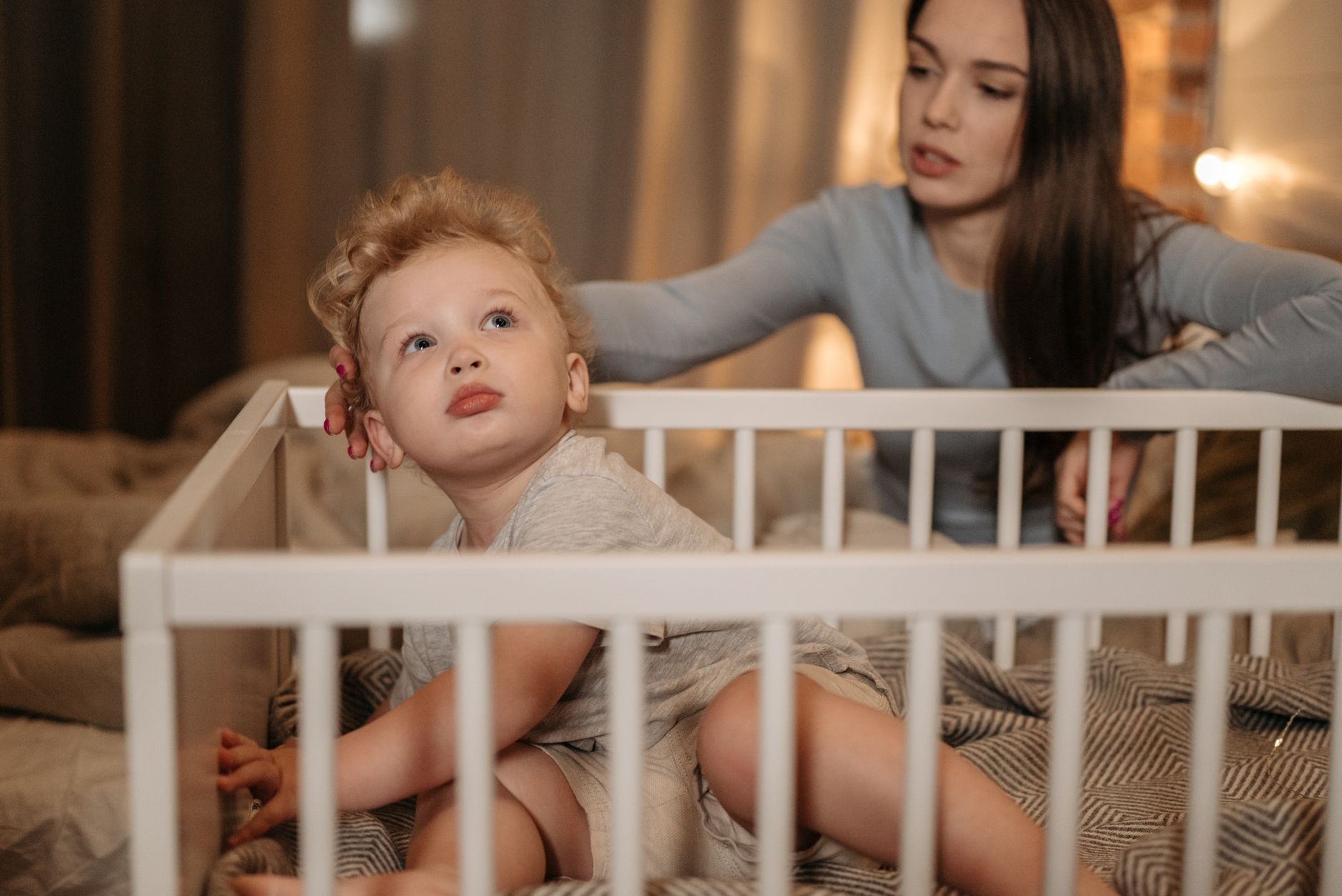
The AAP recommends room-sharing for at least 6 months, ideally up to 1 year, to reduce SIDS risk. Learn when your baby can safely sleep in their own room and how to make the transition smooth and safe.
By Shubhra Mishra — a mom of two who turned her own confusion during pregnancy into BumpBites, a global mission to make food choices clear, safe, and stress-free for every expecting mother. 💛
Check whether any food is safe during pregnancy with the BumpBites Food Safety Checker.
Quick take: The American Academy of Pediatrics (AAP) recommends that babies sleep in the same room as their parents, but in their own separate safe sleep space (like a crib or bassinet), for at least the first 6 months of life, and ideally for 12 months. This recommendation is a key strategy for reducing the risk of Sudden Infant Death Syndrome (SIDS). While the desire for independent sleep is understandable, prioritizing safe sleep guidelines is crucial for your baby's health.
There's a special kind of exhaustion that comes with new parenthood, a deep weariness that makes even the simplest decisions feel monumental. Among the many questions swirling in your mind, "When can my baby sleep in their own room?" often rises to the top. You might be dreaming of reclaiming your space, or perhaps you're simply curious about what's considered safest for your little one. It's a question filled with hopes for better sleep, but also tinged with anxiety about doing the right thing.
We understand the conflicting feelings. On one hand, you cherish every tiny breath and movement, wanting your baby close. On the other, the thought of uninterrupted sleep in your own bed, without the gentle creaks and stirring sounds of a nearby bassinet, can feel like a distant dream. The good news is that there are clear guidelines from leading medical experts, like the American Academy of Pediatrics (AAP), to help you navigate this important milestone. These recommendations are rooted in extensive research focused on keeping your baby safe and healthy.
In this article, we'll dive deep into the AAP's official stance on when babies can transition to their own room, explaining the crucial 'why' behind their guidelines. We'll explore the potential risks of moving your baby too early, discuss the signs of readiness for independent sleep, and offer practical, compassionate advice for making the transition smooth and safe for everyone involved. Our goal is to empower you with accurate information so you can make informed decisions with confidence and peace of mind.
Room-sharing, with baby in their own safe sleep space, is recommended by the AAP for at least the first six months.
What are the AAP's official recommendations for baby sleeping in their own room?
The American Academy of Pediatrics (AAP) provides clear, evidence-based recommendations to help families ensure their babies sleep safely and reduce the risk of Sudden Infant Death Syndrome (SIDS). When it comes to where your baby should sleep, the AAP strongly advises **room-sharing for at least the first 6 months of life, and ideally for 12 months.** This means your baby should sleep in your bedroom, close to your bed, but in their own separate sleep space. This separate space could be a crib, bassinet, or play yard that meets current safety standards.
It's important to understand the distinction between room-sharing and bed-sharing. Room-sharing, as recommended by the AAP, is when your baby sleeps in the same room as you, but in a separate, safe sleep environment. Bed-sharing, where the baby sleeps in the same bed as a parent or caregiver, is *not* recommended by the AAP due to significantly increased risks of SIDS and accidental suffocation. The goal of room-sharing is to keep your baby within sight and sound, making it easier for you to monitor them and respond to their needs, while still providing them with their own safe sleeping area.
These guidelines are part of the AAP's broader safe sleep recommendations, which also include placing babies on their backs to sleep for every sleep, using a firm sleep surface (like a crib mattress covered by a fitted sheet), and keeping the sleep area free of soft objects, loose bedding, bumper pads, and toys. The room-sharing recommendation is a cornerstone of these guidelines because studies have consistently shown its effectiveness in significantly lowering the risk of SIDS.
Why does the AAP recommend room-sharing for the first 6-12 months?
The AAP's recommendation for room-sharing isn't arbitrary; it's a critical component of their safe sleep guidelines, primarily aimed at reducing the risk of Sudden Infant Death Syndrome (SIDS). Research indicates that room-sharing can lower the risk of SIDS by as much as 50%. This significant reduction is attributed to several factors that increase parental awareness and facilitate quicker intervention if needed.
One of the main reasons for this recommendation is the increased proximity and ease of monitoring. When your baby is in the same room, you're more likely to hear if they are in distress, if their breathing changes, or if they need attention. This constant, subtle monitoring, even while you're asleep, is thought to play a protective role. Parents are also more likely to respond quickly to awakenings, which can help regulate the baby's sleep-wake cycles and potentially prevent deep, prolonged sleep states that some theories link to SIDS.
Beyond SIDS prevention, room-sharing also makes nighttime feedings and comforting much easier. Imagine waking up to feed your baby and only needing to reach over to pick them up from their bassinet, rather than walking to another room. This convenience can be a lifesaver for sleep-deprived parents and helps establish feeding routines, especially for breastfeeding mothers. The presence of parents in the same room also offers a sense of security and connection for the baby, fostering healthy attachment and emotional development during those crucial early months.
SIDS is defined as the sudden, unexplained death of an infant younger than 1 year of age that remains unexplained after a thorough case investigation, including a complete autopsy, examination of the death scene, and review of the clinical history. While the exact cause of SIDS isn't fully understood, certain factors are known to increase risk. Room-sharing, alongside other safe sleep practices, helps mitigate these risks. The peak incidence of SIDS occurs between 2 and 4 months of age, but the risk remains elevated through the first year, underscoring the importance of adhering to the 6-12 month recommendation.
Here's a look at some factors associated with SIDS risk and protection:
Appropriate clothing, comfortable room temperature
Smoking during pregnancy or exposure to secondhand smoke
No smoking during pregnancy or around baby
Bed-sharing (sleeping in the same bed as parents/caregivers)
Room-sharing (baby in own safe sleep space in parent's room)
Prematurity or low birth weight
Breastfeeding (reduces risk, even for short durations)
Lack of prenatal care
Immunizations (routine immunizations may be protective)
A safe sleep environment means a firm mattress, a fitted sheet, and no loose bedding, pillows, or toys in the crib.
What are the risks of moving your baby to their own room too early?
Understanding the AAP's recommendations isn't just about knowing *when* to move your baby, but also understanding the *risks* associated with moving them too soon. The primary and most significant risk of transitioning your baby to their own room before the recommended 6-12 month mark is an increased risk of Sudden Infant Death Syndrome (SIDS).
As discussed, the proximity afforded by room-sharing allows parents to more easily monitor their baby's breathing, sounds, and movements. When a baby is in a separate room, this immediate oversight is lost. Even with a baby monitor, which can be helpful for hearing sounds, it doesn't offer the same level of close monitoring and subtle cues that being in the same room provides. A monitor cannot alert you to all potential issues, nor can it prevent SIDS. The critical factor is the parent's presence and ability to quickly intervene or simply provide a regulating presence.
Moving a baby to their own room at 3 months or 4 months, for instance, goes against the AAP's explicit guidance and places the infant in a period of heightened SIDS susceptibility without the protective benefits of room-sharing. The peak age for SIDS is between 2 and 4 months, making this early period particularly vulnerable. While it might seem that a baby sleeping soundly and independently is a sign of readiness, "sleeping well" does not negate the underlying SIDS risk factors present in early infancy.
Beyond the SIDS risk, early independent sleep can also lead to increased parental anxiety. Many parents who move their baby out early find themselves constantly checking the monitor, or even going into the baby's room multiple times a night, negating any perceived benefit of separate sleeping arrangements. This can disrupt parental sleep further and create additional stress. For the baby, early isolation might also disrupt natural feeding cues, especially for breastfed infants, potentially impacting milk supply or feeding frequency that is still important for growth and development in the first year.
It's natural to desire more personal space or to encourage independent sleep, but for the first 6-12 months, safety must be the top priority. The potential risks of moving your baby to their own room too early far outweigh the perceived benefits of earlier independent sleeping.
When is it truly safe to transition your baby to their own bedroom?
The question of "when can baby sleep in crib in own room safely" hinges on both the AAP's time-based recommendations and your baby's individual developmental readiness. While the AAP advises room-sharing for at least 6 months and ideally up to 12 months, the *timing within that window* can vary for each family and baby. There isn't a single "best age for baby to sleep in own room" that applies to every child, but rather a range within which it becomes safer.
Developmental milestones play a significant role in determining readiness. By 6 months, many babies have better head and neck control, are starting to roll over (and can often roll back), and have more established sleep patterns. They might also be less dependent on frequent nighttime feeds. Some key signs of readiness include:
Consistent sleep through longer stretches: Your baby is regularly sleeping for 5-6 hours or more at night without needing to be fed or resettled.
Strong head and neck control: They can easily lift their head and move it from side to side.
Rolling over reliably: Your baby can roll from back to front and front to back independently.
No longer needing frequent night feeds: Many babies, especially breastfed ones, still need night feeds past 6 months. Discuss with your pediatrician when your baby can safely go longer between feeds.
Settling themselves: Your baby can fall asleep independently without needing to be held or rocked to sleep. This is a skill that can be gently encouraged.
It's crucial to reiterate that even if your baby exhibits these signs earlier than 6 months, the AAP's recommendation still stands due to the elevated SIDS risk in the first half of the first year. A baby sleeping in their own room at 4 months, for example, is still considered to be at a higher risk than one room-sharing, regardless of how well they seem to be sleeping. The 6-month mark is a critical safety threshold, and waiting until 12 months offers even greater protection.
Ultimately, the decision to transition should be made in consultation with your pediatrician, who can assess your baby's individual development and health. They can provide personalized advice based on your baby's specific needs and your family's circumstances, ensuring that safety remains the paramount concern. Many parents find that somewhere between 6 and 9 months feels like a natural and safe time, once their baby has met developmental milestones and they feel comfortable with the move.
What are the benefits of baby sleeping independently in their own room?
While room-sharing is crucial for safety during the early months, there comes a time when transitioning your baby to their own room can offer significant benefits for both the baby and the parents. Once your baby has passed the critical SIDS risk period and shows signs of developmental readiness, independent sleep can contribute to improved sleep quality for the entire family.
For parents, the most immediate and often desired benefit is **improved sleep quality and quantity**. Sharing a room, even with a quiet baby, can mean lighter sleep for parents who are constantly attuned to every sigh, rustle, or feeding cue. Moving your baby to their own room can allow you to sleep more deeply, leading to greater restfulness, reduced fatigue, and improved mental well-being. This can positively impact your mood, energy levels, and ability to cope with the demands of parenthood.
Beyond sleep, having a separate nursery offers a sense of **reclaimed personal space and privacy**. Many couples find that room-sharing impacts intimacy and their ability to relax fully in their own bedroom. Moving the baby allows parents to have their bedroom back as a sanctuary, fostering a healthier environment for their relationship. It can also reduce the feeling of constantly being "on call," even if you're still waking for feeds, as the physical separation can create a psychological boundary.
For the baby, sleeping independently in their own room, once they are developmentally ready, can encourage the development of **self-soothing skills and independent sleep habits**. While room-sharing doesn't inherently prevent independent sleep, some babies might become more reliant on parental presence to fall back asleep when they are constantly aware of their parents nearby. In their own room, babies learn to settle themselves more effectively when they wake briefly between sleep cycles, which can lead to longer, more consolidated stretches of sleep.
One BumpBites reader shared her experience: "We room-shared until 7 months, and while I loved having her close, I was such a light sleeper. Every little sound she made woke me. The night we finally moved her to her nursery, I slept for almost 6 uninterrupted hours for the first time in forever. It was amazing for my mental health, and she seemed to sleep better too, without us rustling around." This common sentiment highlights the mutual benefits that can arise once the timing is right and the transition is made safely.
How to safely and smoothly transition your baby to their own room?
Once you and your pediatrician have determined it's a safe time to transition your baby to their own room (after the AAP's recommended 6-12 month window), a thoughtful and gradual approach can make the process smoother for everyone. Here's a step-by-step guide to help your baby adjust to their new sleeping environment:
Start with a Familiar Sleep Space: If your baby has been sleeping in a bassinet or mini-crib, consider moving that familiar sleep space into their nursery first, before introducing them to the full-sized crib. This can be a less jarring change than a brand-new room and a brand-new bed all at once.
Introduce the Nursery During Playtime: Before it's time to sleep, let your baby spend time in their nursery during the day. Play with them on the floor, read books, or do diaper changes in the room. This helps them associate the space with positive experiences and familiarity, not just with being left alone.
Establish a Consistent Bedtime Routine: A predictable routine signals to your baby that sleep is coming. This might include a warm bath, a gentle massage, reading a story, singing a lullaby, and then putting them down "drowsy but awake." Consistency, regardless of the room, is key to helping them feel secure.
Gradual Nighttime Transition:
Option A (Camp Out): For the first few nights or a week, consider sleeping in the nursery yourself, perhaps on a floor mattress or comfortable chair. This allows you to be present while your baby adjusts to the new environment.
Option B (Incremental Distance): If your baby's bassinet was right next to your bed, try moving it a few feet away each night within your room, before eventually moving it to the nursery. This is a very gentle way to increase distance.
Maintain a Safe Sleep Environment: This is non-negotiable, regardless of the room. Always place your baby on their back to sleep. Ensure the crib has a firm mattress and a fitted sheet. Keep the crib free of all loose bedding, blankets, pillows, bumper pads, and soft toys. The room temperature should be comfortable, not too hot, and your baby should be dressed appropriately for the temperature, typically in a sleep sack.
Be Prepared for Setbacks: It's common for babies to have a few rough nights as they adjust. They might wake more frequently or cry for you. Respond to their needs, but try to stick to your chosen sleep training method (if you're using one) and routine. Reassurance and consistency are vital.
Use a Baby Monitor (Optional, Not a Substitute for Room-Sharing): Once your baby is in their own room, a reliable audio or video monitor can provide peace of mind and allow you to hear or see your baby without having to enter the room. Remember, a monitor is a tool for convenience and reassurance, not a SIDS prevention device, and it does not replace the protective benefits of room-sharing during the recommended period.
Remember, every baby is different. What works for one might not work for another. Be patient, flexible, and responsive to your baby's cues, while always prioritizing their safety according to AAP guidelines.
What if your baby is sleeping well in their own room before the AAP's recommended age?
It's a common scenario: you have a "unicorn" baby who seems to be sleeping soundly through the night in their crib, and you're contemplating moving them to their own room even before the 6-month mark. Perhaps they're 3 or 4 months old, and you feel confident they're ready. While it's wonderful when a baby is a good sleeper, it's crucial to understand that **a baby sleeping well in their own room before the AAP's recommended age does not negate the increased risk of SIDS.**
The AAP's 6-12 month room-sharing recommendation is not based on a baby's sleep habits or perceived independence. It's based on extensive research into SIDS risk factors, which are highest in the first few months of life and remain elevated throughout the first year. Even if your baby is sleeping soundly, their physiological vulnerability to SIDS is still present. The protective effect of room-sharing, which allows for easier parental monitoring and intervention, is still vital during this period.
If you find yourself in this situation, and your baby is sleeping in their own room before 6 months, the safest course of action, according to the AAP, is to **move your baby's crib or bassinet back into your bedroom.** We know this might feel counterintuitive, especially if you've already enjoyed the peace of having them in their own space. You might worry about disrupting their good sleep habits or feel a pang of guilt about "undoing" progress. However, prioritizing your baby's safety during this critical developmental window is paramount. Their long-term health and well-being are far more important than any temporary inconvenience to your sleep routine.
One parent shared, "My daughter was sleeping 7-hour stretches at 4 months, and we were so tempted to move her. My pediatrician gently but firmly reminded me about SIDS risk. So, we brought her bassinet back into our room, and honestly, the peace of mind was worth it. She still slept well, and I worried less." This experience highlights that you can still maintain good sleep habits while adhering to safe sleep guidelines.
Remember, the goal of these guidelines is to reduce preventable tragedies. While a good night's sleep for parents is important, it should never come at the expense of established safety protocols for infants. Talk to your pediatrician if you have concerns or questions about your baby's sleep habits and the AAP's guidelines.
A consistent bedtime routine helps signal to your baby that it's time to sleep, whether in your room or their own.
Myth vs. Fact
When it comes to baby sleep, there's a lot of advice floating around, some of it conflicting. Let's separate common myths from scientific facts regarding baby sleeping arrangements.
Myth: Moving your baby to their own room early will help them sleep through the night faster.
Fact: While some parents report improved sleep after the transition, there's no scientific evidence that moving a baby to their own room *earlier* than the AAP's recommendation necessarily leads to faster independent sleep or longer stretches. In fact, doing so before 6 months increases SIDS risk. Sleep development is complex and individual, influenced by many factors beyond room location. The primary purpose of room-sharing is safety, not sleep training.
Myth: Room-sharing stifles a baby's independence and prevents them from learning to self-soothe.
Fact: Room-sharing, when done safely (baby in their own separate sleep space), does not inherently hinder a baby's ability to develop self-soothing skills or independent sleep. Many babies who room-share for a year still learn to fall asleep on their own. The key is how you respond to your baby's awakenings and whether you consistently place them down drowsy but awake, even when they're in your room. Room-sharing provides a safe environment while your baby develops these crucial skills at their own pace.
Myth: A baby monitor is just as effective as room-sharing for preventing SIDS.
Fact: This is a dangerous misconception. While baby monitors can be useful for convenience and peace of mind, they are not a substitute for room-sharing and do not prevent SIDS. The AAP explicitly states that "home cardiorespiratory monitors are not recommended as a strategy to reduce the risk of SIDS." The protective effect of room-sharing comes from the parent's immediate proximity and ability to respond to subtle cues, which a monitor cannot fully replicate. Monitors are not designed to detect or prevent SIDS.
Key Takeaways
The American Academy of Pediatrics (AAP) recommends babies room-share (sleep in the same room, but in their own safe sleep space) for at least 6 months, and ideally 12 months, to reduce SIDS risk.
Room-sharing can lower the risk of Sudden Infant Death Syndrome (SIDS) by up to 50% due to increased parental monitoring and easier response to baby's needs.
Moving your baby to their own room before 6 months significantly increases their SIDS risk, even if they appear to be sleeping well.
Signs of readiness for transitioning to independent sleep include consistent longer sleep stretches, strong head control, rolling over reliably, and not needing frequent night feeds, but these should only be considered after the 6-month safety window.
Benefits of independent sleep (after the safe period) include improved sleep quality for parents, reclaimed personal space, and the development of baby's self-soothing skills.
A gradual and consistent approach, including a solid bedtime routine and familiarizing your baby with their nursery, can help make the transition smooth and safe.
Always maintain a safe sleep environment: back to sleep, firm mattress, fitted sheet only, no loose bedding or soft objects in the crib.
Frequently Asked Questions
Is it OK for baby to sleep in own room at 3 months?
No, it is not recommended for a baby to sleep in their own room at 3 months. The American Academy of Pediatrics (AAP) strongly advises room-sharing for at least the first 6 months of life, and ideally for 12 months. The risk of Sudden Infant Death Syndrome (SIDS) is highest between 2 and 4 months, and room-sharing significantly reduces this risk by allowing parents to more easily monitor their baby.
What is the best age for baby to sleep in own room?
The best age for a baby to sleep in their own room, according to the AAP, is after 6 months of age, and ideally closer to 12 months. This timeframe aligns with a decrease in SIDS risk and often coincides with a baby's developmental readiness, such as more consistent sleep patterns and improved self-soothing abilities. Always consult with your pediatrician for personalized advice.
Is it bad to move baby to own room at 4 months?
Yes, moving your baby to their own room at 4 months is considered against safe sleep guidelines and is associated with an increased risk of SIDS. While your baby might seem to be sleeping well, the protective benefits of room-sharing are still crucial during this period of heightened vulnerability. Prioritizing safety by keeping your baby in your room until at least 6 months is the safest choice.
What are the pros and cons of baby sleeping in own room?
Pros (after 6-12 months): Improved parental sleep, regained privacy, and encouragement of baby's independent sleep skills. Cons (especially before 6-12 months): Significantly increased risk of SIDS, difficulty monitoring baby, and potential for increased parental anxiety. The safety benefits of room-sharing in early infancy far outweigh the potential benefits of earlier independent sleep.
How do you transition a baby to their own room?
To transition your baby, introduce the nursery during playtime to create positive associations. Establish a consistent bedtime routine. You can try a gradual approach, like sleeping in the nursery yourself for a few nights, or slowly moving their bassinet further away before placing it in the nursery. Always maintain a safe sleep environment in their new room, with a firm mattress and no loose bedding.
Does room sharing prevent SIDS?
Room-sharing does not completely prevent SIDS, as the exact cause of SIDS is unknown. However, extensive research shows that room-sharing (with baby in their own separate sleep space) can reduce the risk of SIDS by up to 50%. It's a critical protective factor within the comprehensive AAP safe sleep guidelines, which also include back sleeping, a firm sleep surface, and keeping the sleep area clear.
When to see a doctor / specialist
While this article provides general guidelines, every baby and family is unique. We recommend discussing any specific concerns about your baby's sleep or the transition to their own room with your pediatrician. You should definitely consult your pediatrician if:
Your baby has any underlying health conditions that might affect their sleep or SIDS risk.
You are struggling with your baby's sleep patterns, and they are not sleeping for age-appropriate stretches even after implementing safe sleep practices.
You have moved your baby to their own room before 6 months and are experiencing increased anxiety or worry.
You are unsure about your baby's developmental readiness for independent sleep.
You have questions about safe sleep practices, crib safety, or appropriate sleepwear for your baby.
Your pediatrician is your best resource for personalized medical advice and can help you navigate these decisions with your baby's health and safety as the top priority. This article is for informational purposes only and does not constitute medical advice.
Not sure about the label on When Can Baby Sleep In Own Room Aap products?
Snap the ingredients list and SafeFilter checks every ingredient for your stage — only 3 free scans this month, then you're locked until reset. Unlimited from $7/mo or $50/yr.
When Shubhra Mishra was expecting her first child in 2016, she was overwhelmed by conflicting food advice — one site said yes, another said never. By the time her second baby arrived in 2019, she realized millions of mothers face the same confusion.
That sparked a five-year journey through clinical nutrition papers, cultural diets, and expert conversations — all leading to BumpBites: a calm, compassionate space where science meets everyday motherhood.
Her long-term vision is to build a global community ensuring safe, supported, and free deliveriesfor every mother — because no woman should face pregnancy alone or uninformed. 🌿
🌍 Stand with mothers, shape safer guidance
Join a small circle of experts who review BumpBites articles so expecting parents everywhere can decide with confidence.