Quick take: Walking is one of the safest, most effective exercises during pregnancy—backed by the American College of Obstetricians and Gynecologists (ACOG)—and can ease discomfort, prep your body for labor, and keep you energized. Start with 20–30 minutes daily in the first trimester, adjust as your bump grows, and listen to your body. But stop immediately if you experience severe dizziness, contractions, vaginal bleeding, or shortness of breath. Postpartum? Resume walking as soon as cleared by your provider—even short strolls help with recovery. Bonus: Walking can also help manage gestational diabetes by improving insulin sensitivity and lowering blood sugar levels.
Is walking safe during pregnancy in the first trimester?
Picture this: You’re 8 weeks pregnant, curled up on the couch with a steaming cup of tea, when you remember the ACOG exercise guidelines you read last week. Can I really walk? The answer is a resounding yes—and it’s one of the kindest gifts you can give your body and baby right now.
First-trimester pregnancy is often a whirlwind of nausea, fatigue, and existential questions about whether you’ll ever enjoy a warm shower again. But walking—even short, slow loops around the block—can be a lifeline. It’s gentle on your joints, boosts circulation to combat morning sickness, and helps regulate blood sugar, says Dr. Sarah Marvell, a maternal-fetal medicine specialist. Many moms tell us they rediscover joy in tiny movements during this phase, like walking to the mailbox or pacing while on a call.
That said, listen to your body—especially if you’re dealing with hyperemesis gravidarum (severe nausea) or dizziness. If walking makes you feel worse, take it easy or swap it for seated leg lifts or prenatal yoga. And avoid overheating: opt for early-morning or evening walks when temperatures are cooler. Pro tip: Try cooling wrist wraps (like chilled gel packs) to help with nausea—some moms swear by them during walks.

What are the signs walking is too intense during pregnancy?
Your body is doing a lot right now, and it’s okay if walking feels harder than usual. Here’s how to tell if you’re pushing too hard:
- Vaginal bleeding or spotting—Stop walking and call your provider immediately.
- Severe dizziness or lightheadedness that doesn’t improve with hydration.
- Headaches that won’t go away with rest and water.
- Contractions or uterine tightness (even if they feel mild).
- Shortness of breath that persists after stopping or a racing heart.
- Excessive fatigue that leaves you unable to complete daily tasks.
If you experience any of these, rest and reassess. Walking should leave you feeling better, not worse. Mom brain might make it harder to remember these cues, so set a gentle alarm to check in with yourself mid-walk.
How to walk safely with morning sickness during pregnancy
Morning sickness doesn’t discriminate—it hits at 3 p.m. just as hard as it does in the morning. Here’s how to make walking work:
- Walk after eating a small, bland snack (like crackers or toast) to stabilize blood sugar.
- Carry a small water bottle and sip frequently—dehydration worsens nausea.
- Opt for flat, familiar routes to avoid disorientation if you feel lightheaded.
- Try slow, shallow breathing (inhale for 4 counts, exhale for 6) if you feel queasy.
- Bonus: Chew ginger candies or carry a ginger tea packet in your pocket for quick relief.
---
How many minutes of walking per day is ideal for pregnant women?
You’ve heard the mantra “move more, sit less”, but how much is enough when you’re pregnant? The ACOG recommends 150 minutes of moderate exercise per week—which breaks down to about 30 minutes of brisk walking, 5 days a week. But pregnancy isn’t a one-size-fits-all season, so let’s break it down by trimester—and by you.
Many moms-to-be underestimate how their bodies will change, especially in the second trimester when energy levels can spike. Think of walking as a tool, not a chore. Some days, 10 minutes around the house counts. Other days, you’ll power through a 45-minute loop. The key is consistency over intensity. Pro tip: If you’re struggling with motivation, try the “5-minute rule”: Commit to just 5 minutes of walking. Often, you’ll keep going once you start!

A trimester-by-trimester walking guide
Pro tip: Use a pregnancy-friendly app like Bloom or What to Expect to track your steps and sync with your provider’s recommendations. Many apps also include breathwork exercises to help with labor prep—double duty! Bonus: Try audio-guided walking meditations to make your walks more mindful and relaxing.
---
How to adjust your walking routine as pregnancy progresses (1st vs 2nd vs 3rd trimester)
Your body is a marvel of adaptation, but it’s also not a machine. What felt manageable in the first trimester might leave you gasping by the third. Here’s how to evolve your walking routine like a pro:
First Trimester: Laying the Foundation
This is your test run. Start with short, leisurely walks—even 10 minutes counts. Focus on:
- Posture: Keep your head up, shoulders back, and engage your core gently. Think of walking like you’re carrying a book on your head.
- Pace: You should be able to hold a conversation. If you’re wheezing, slow down.
- Hydration: Sip water every 10–15 minutes, even if you’re not thirsty.
- Bonus: Try pregnancy-safe resistance bands for gentle strength training on your walks.
Second Trimester: Embracing the Energy Surge
Many women experience a second-trimester glow—more energy, clearer skin, and a renewed sense of capability. Use this window to build stamina. Try these tweaks:
- Add intervals: Walk briskly for 2 minutes, then slow for 1 minute. Repeat 10x.
- Try incline training: Find a gentle hill or stairs (if safe) to strengthen your legs for labor.
- Listen to pregnancy-safe podcasts or audiobooks to make walks more engaging.
- Bonus: Incorporate pelvic tilts during walks to strengthen your core and reduce back pain.
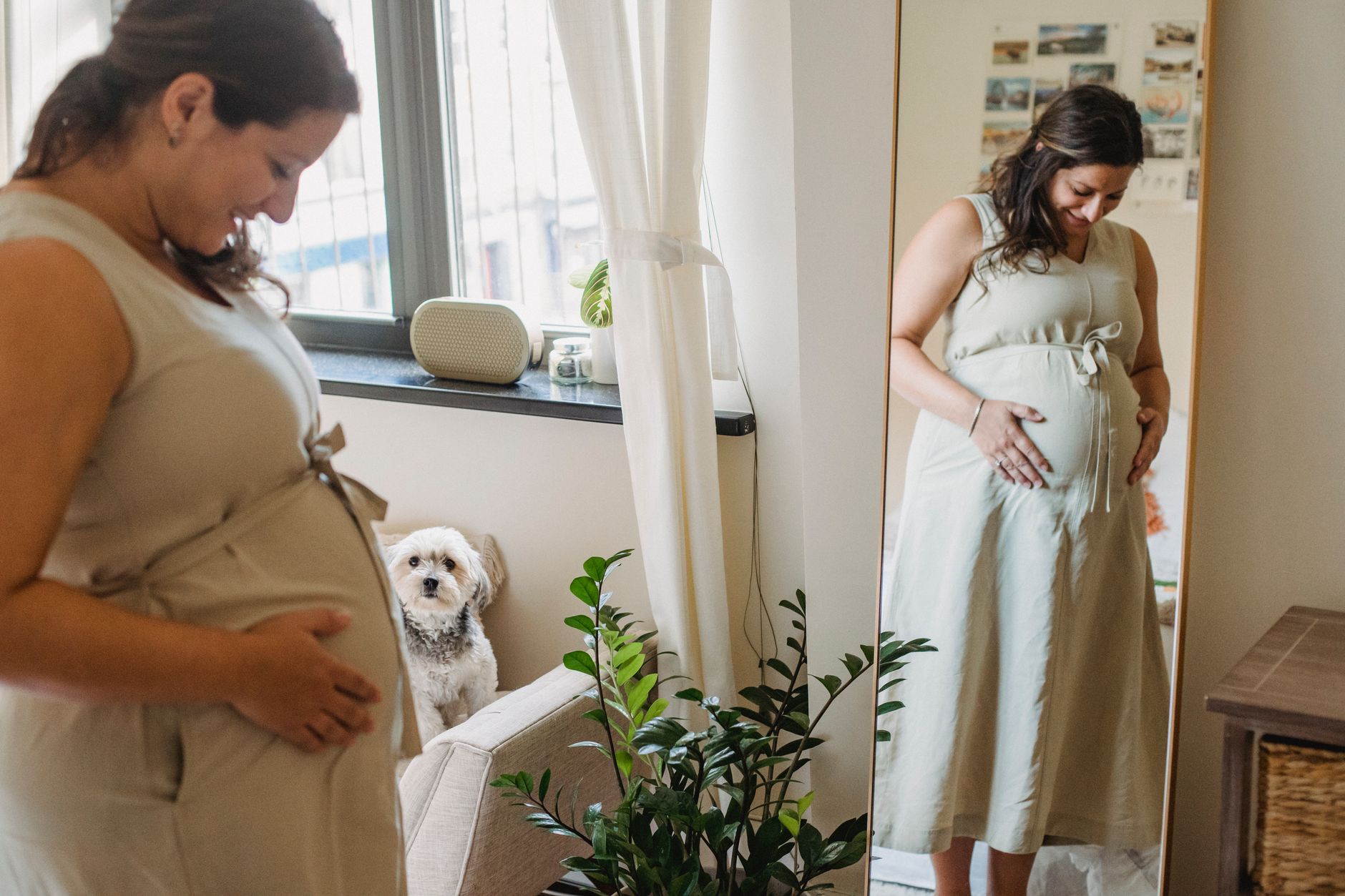
Third Trimester: Prioritizing Comfort and Core Engagement
Your center of gravity shifts, your joints loosen, and your bladder has opinions. Walking in the third trimester is about gentle movement and preparation:
- Shorten your walks: 20–30 minutes max. Focus on quality over quantity.
- Engage your pelvic floor: Practice Kegels during walks to support labor and postpartum recovery.
- Avoid lying flat: If you’re walking near a bench or park, use it to rest with your feet elevated.
- Walk with a partner: Someone to chat with or hold your hand can make walks feel safer and more enjoyable.
- Bonus: Try walking with a pregnancy support belt to reduce strain on your lower back.
When to stop walking during pregnancy
There’s no one-size-fits-all rule, but here are the red flags that mean it’s time to take a break:
- Vaginal bleeding or spotting—Call your provider immediately.
- Severe dizziness or fainting that doesn’t resolve with rest and hydration.
- Persistent contractions (more than 6 per hour).
- Leaking fluid (could indicate preterm labor).
- Swelling in hands/face (sign of preeclampsia).
- Shortness of breath at rest or chest pain.
If you’re unsure, err on the side of caution. Your provider can give you personalized guidance based on your health history and current pregnancy.
---
Walking vs. running vs. yoga: Which is best exercise for moms-to-be?
Let’s be real: not all exercise is created equal when you’re pregnant. You might be tempted to swap your usual Almond Mom yoga flow for a power walk—or vice versa. But which is best? The answer depends on your energy, your body, and your goals. Let’s compare:
Here’s the bottom line:
- Walking is the gold standard for most pregnant women—it’s safe, accessible, and adaptable.
- Running can be an option if you were already active pre-pregnancy, your provider approves, and you avoid overheating.
- Yoga is fantastic for mobility and stress relief, but stick to prenatal classes led by certified instructors.
Many moms weigh the pros and cons of different approaches, but the truth is, variety is your friend. Mix it up! Try a 20-minute walk one day and a gentle yoga session the next. Your body—and your baby—will thank you.
---
Can you walk with a high-risk pregnancy or complications like gestational diabetes?
If your pregnancy is considered high-risk—whether due to gestational diabetes, preeclampsia, or another complication—your provider may have specific recommendations. But walking is almost always encouraged with modifications. Here’s what the research says:
According to a study in Diabetologia, supervised walking programs can improve glucose control in women with gestational diabetes. However, intensity and duration must be tailored to your condition.
Walking with gestational diabetes
- Walk after meals to help lower blood sugar spikes.
- Keep walks 20–30 minutes and at a moderate pace.
- Monitor your blood sugar before and after walks to gauge your response.
- Avoid walking alone if you’re prone to low blood sugar.
- Bonus: Pair walking with complex carbs like whole grains to stabilize blood sugar.
Walking with preeclampsia
- Stick to short, slow walks (10–15 minutes).
- Rest with your feet elevated after walking.
- Avoid overheating—opt for early morning or evening walks.
- Listen for headaches or swelling, which could indicate worsening preeclampsia.
- Bonus: Use cooling towels to help regulate your body temperature during walks.
Walking with a history of miscarriage
If you’ve had a history of miscarriage, your provider may recommend avoiding high-impact activities and focusing on gentle movement. Walking is still safe—just keep these tips in mind:
- Walk at a leisurely pace—no need to power through.
- Avoid sudden stops or turns to reduce fall risk.
- Stay hydrated and well-rested before walks.
- If you experience cramping or spotting, stop immediately.
- Bonus: Try walking meditation to stay mindful and reduce stress.
Always check with your provider before starting or modifying your routine, especially if you have a high-risk pregnancy. Your safety—and your baby’s—comes first.
---
How to stay motivated to walk consistently while pregnant
Let’s be honest: Pregnancy is not the time to start a fitness challenge. Between the mundane of morning sickness, the existential dread of missing your old life, and the sheer weight of your growing bump, motivation can feel like a myth. But walking doesn’t have to be a chore—it can be a joyful habit. Here’s how to make it stick:
1. Make it social
Walking with a friend (or even your partner!) turns a solo activity into a shared experience. Many moms find that walking pods—groups of pregnant women who meet to walk together—create a sense of community. If that’s not an option, try:
- Walking while listening to a pregnancy podcast or audiobook.
- Joining a virtual walking challenge with friends.
- Inviting your partner to join you for even just 10 minutes.
- Bonus: Try walking meetups at local parks or community centers.
2. Track your progress
Apps like Bloom or What to Expect let you log your walks, track your mood, and even share updates with your provider. Seeing your personal bests can be incredibly motivating. Celebrate small wins—like walking for 15 minutes straight or trying a new route.
3. Listen to your body (not your guilt)
Some days, walking feels like a miracle. Other days, it feels like too much. Both are okay. If you miss a day—or a week—don’t guilt-trip yourself. Pregnancy is a marathon, not a sprint.
4. Focus on the benefits
Remind yourself why you’re doing this:
- Walking can reduce back pain and improve sleep.
- It may shorten labor time by improving circulation.
- You’ll feel more energized and less bloated.
- It’s a great way to bond with your baby—their heart rate may even sync with yours!
- Bonus: Walking can help with postpartum weight loss by maintaining muscle tone.

---
What are the best walking shoes for pregnant women with swollen feet?
Let’s talk about the elephant in the room: Pregnancy swelling. One day, your feet fit into size 8. The next, they’re suddenly size 12. And your favorite sneakers? Not so comfortable anymore. Choosing the right shoes can make—or break—your walking routine. Here’s what to look for:
Key features of pregnancy-friendly walking shoes
- Wide toe box: Gives your feet room to expand.
- Arch support: Helps with the extra weight and shifting center of gravity.
- Cushioned sole: Absorbs impact to protect your joints.
- Breathable material: Prevents blisters and odor from sweat.
- Adjustable straps: Ensures a snug (but not tight) fit.
Top picks for pregnant women
- Go shopping in the afternoon when feet are at their fullest.
- Try on shoes with both socks and compression socks if you wear them.
- Look for removable insoles—you can add custom orthotics if needed.
- Avoid high heels or flip-flops—they worsen swelling and strain your feet.
- Consider compression socks to reduce swelling during walks.
- Bonus: Use ice rollers for your feet after walks to reduce inflammation.
---
How to create a pregnancy-friendly walking playlist
Music can transform a simple walk into an uplifting experience, but not all songs are pregnancy-approved. The right playlist can boost your mood, keep your energy up, and even help you stay in rhythm. Here’s how to curate one that works for you:
What to look for in pregnancy-safe music
- Upbeat tempos: Aim for 120–140 BPM to match your walking pace.
- Positive lyrics: Avoid songs with negative or triggering themes.
- Variety: Mix genres to keep it interesting—think indie folk, pop, or even classical.
- Pregnancy-themed playlists: Many streaming platforms have curated lists for moms-to-be.
Sample pregnancy walking playlist
Here’s a mix of songs that are safe, uplifting, and energizing:
- “Can’t Stop the Feeling!” – Justin Timberlake (upbeat and fun)
- “Rivers and Roads” – The Head and the Heart (calm and reflective)
- “Happy” – Pharrell Williams (instant mood booster)
- “Breathe” – Faith Hill (soothing and pregnancy-friendly)
- “Landslide” – Fleetwood Mac (gentle and calming)
- “Shake It Off” – Taylor Swift (great for a quick energy boost)
- “Sunflower” – Post Malone (upbeat and positive)
Where to find more ideas
- Spotify’s “Pregnancy Playlist” or “Walking Workout” playlists.
- Apple Music’s “Pregnancy Moods” or “Gentle Movement” collections.
- YouTube’s “Prenatal Yoga Music” or “Pregnancy Meditation Music” playlists.
- Ask friends or join online communities for recommendations.
---
How to incorporate walking into your busy mom life
Between work, chores, and errands, finding time to walk can feel impossible. But with a few clever strategies, you can turn everyday tasks into opportunities for movement. Here’s how to make walking a natural part of your day:
Turn errands into walks
Instead of driving everywhere, try walking to nearby destinations:
- Walk to the grocery store or pharmacy for small items.
- Take a leisurely stroll to the post office or library.
- Park farther away from stores to add extra steps.
Walk during calls or podcasts
Use your phone calls or audiobooks as an excuse to move:
- Walk around the house or yard while on a work call.
- Take a short walk outside while listening to a podcast.
- Pace while waiting for an appointment or while your coffee brews.
Make walking a family activity
Involve your partner, kids, or even pets in your walks:
- Take your kids to the park for a family walk.
- Walk the dog together—it’s great for both of you!
- Invite your partner to join you for a short walk after dinner.
--- Myth vs. Fact: Walking During Pregnancy
Myth: “Walking is too intense and could harm my baby.”
Fact: Walking is one of the safest exercises during pregnancy when done at a moderate pace. The ACOG recommends 150 minutes of moderate exercise per week, and walking fits the bill perfectly. Your baby is protected by amniotic fluid and your uterus, so movement is safe as long as you’re not overexerting yourself.
Myth: “I should avoid walking if I have a big belly.”
Fact: A big belly doesn’t mean you can’t walk—it just means you need to adjust your form. Engage your core, take smaller steps, and avoid leaning forward. Many women find that walking helps distribute weight and reduces back pain. Listen to your body and modify as needed.
Myth: “Walking won’t help with labor prep.”
Fact: Walking does help prepare your body for labor! It improves circulation, strengthens your pelvic floor, and may shorten your labor time by keeping your body active. Plus, the rhythmic movement can mimic contractions and help you practice breathing techniques.
Myth: “I need to walk for hours to see benefits.”
Fact: Even 10–15 minutes of walking daily can make a difference. Consistency matters more than duration. Short walks add up over time and help you stay active without feeling overwhelmed.
---
Key Takeaways
- Walking is safe and beneficial for most pregnant women, with moderation and provider approval.
- Adjust your routine by trimester: Start with 20–30 minutes daily in the first trimester, taper to 20 minutes in the third.
- Listen to your body—stop if you experience dizziness, contractions, or bleeding.
- Modify for discomfort: Engage your core, wear supportive shoes, and stay hydrated.
- Walking can ease back pain, improve mood, and prep you for labor—but it’s not a substitute for medical care.
- Postpartum recovery starts with short walks—resume as soon as cleared by your provider.
- Incorporate walking into daily life by turning errands, calls, and family time into movement opportunities.
- Create a pregnancy-friendly playlist to keep your walks energizing and enjoyable.
---
Frequently Asked Questions
Is walking during pregnancy safe if I have a history of miscarriage?
Walking is generally safe even with a history of miscarriage, but avoid high-impact activities and focus on gentle movement. If you experience cramping, spotting, or severe fatigue during walks, stop immediately and consult your provider. Your safety—and your baby’s—is the priority.
How does walking affect my baby’s development?
Walking boosts circulation and oxygen flow to your baby, which supports healthy development. Studies suggest that maternal exercise—including walking—may help regulate your baby’s heart rate and even improve their motor skills later in life. Plus, the rhythmic movement can create a calming environment for your baby.
Can I walk if I’m bleeding during pregnancy?
No. Vaginal bleeding during pregnancy is never normal and could indicate complications like placenta



