

Quick take: Time blocking for stay at home moms isn’t about squeezing more into your day—it’s about creating predictable pockets of focus so you can actually enjoy motherhood instead of just surviving it. You’ll start small (even 15-minute blocks), use apps that sync with your mom brain, and build in buffers for the inevitable toddler meltdowns. Most moms see real relief within 2–3 weeks.
You’re standing in the kitchen at 3 p.m., surrounded by half-unloaded laundry, a sticky highchair tray, and a toddler who’s decided today is the day they hate all food except crackers. Your to-do list is a mile long, but the only thing you’ve actually crossed off is “brush teeth” (and even that was a negotiation). Sound familiar?
Time blocking for stay at home moms isn’t a productivity hack—it’s a lifeline. Unlike traditional to-do lists that leave you drowning in guilt over what you didn’t finish, time blocking gives you permission to focus on one thing at a time. It’s not about doing more; it’s about doing what matters without the constant mental load of “what’s next?”
In this guide, we’ll walk through exactly how to start time blocking (even if your current “schedule” is just “survive until nap time”), share realistic examples for different family sizes, and tackle the messy reality of interruptions. You’ll also find tools, apps, and strategies to adjust for holidays, summer breaks, and those days when everything falls apart—and still feel like you’re winning.
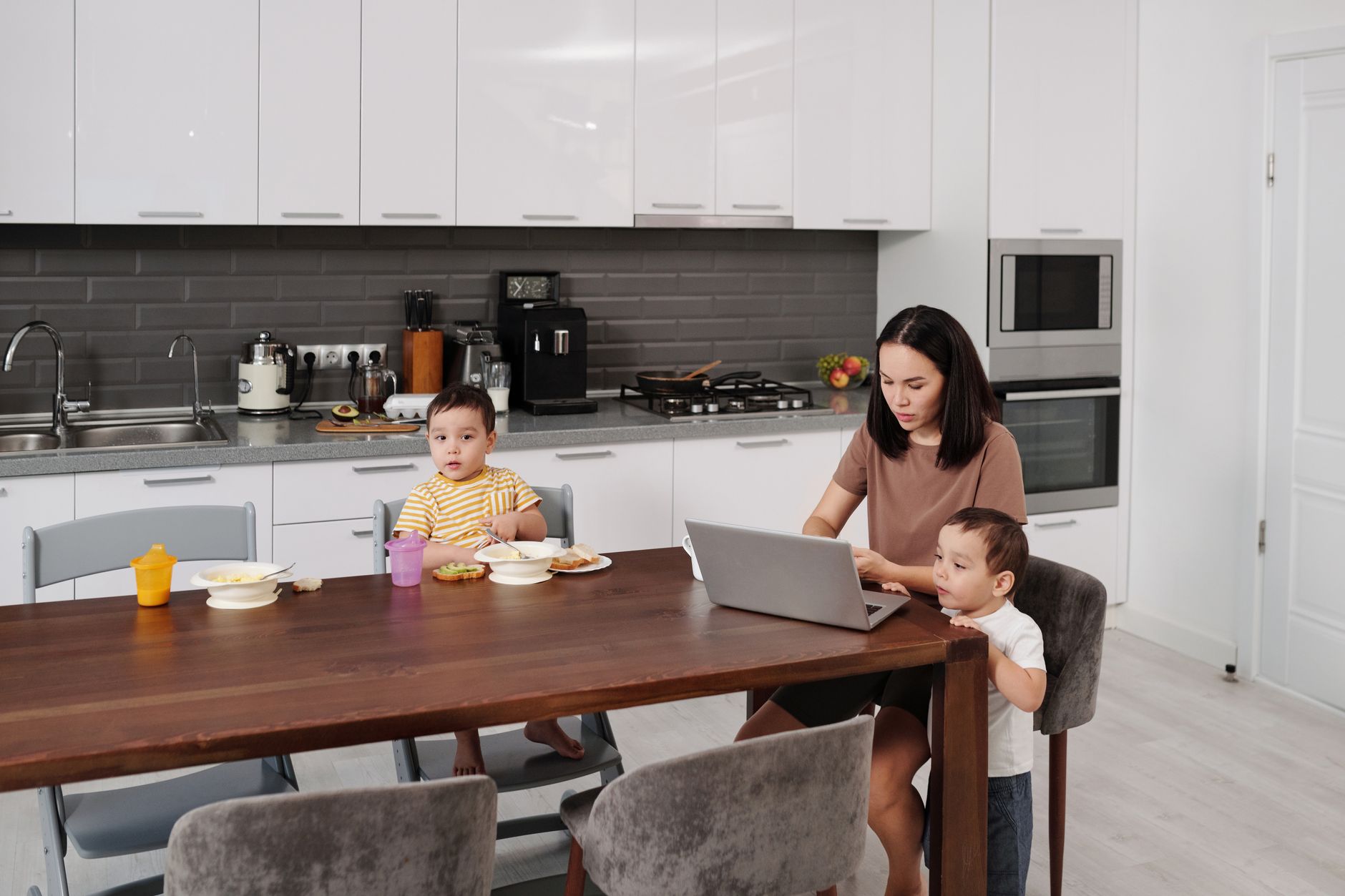
How to Start Time Blocking as a Stay at Home Mom with No Schedule
You don’t need a color-coded planner or a degree in time management to start time blocking. In fact, the less structure you have right now, the simpler your first steps should be. Here’s how to begin—without overwhelming yourself:
Step 1: Track Your Current Time (Without Judgment)
For 2–3 days, jot down what you actually do—no editing, no guilt. Use a notebook, your phone’s notes app, or even a voice memo. Include everything: scrolling Instagram, folding laundry, refereeing sibling fights, the 10 minutes you spent searching for a lost shoe. The goal isn’t to shame yourself; it’s to spot patterns. Most moms are shocked to realize how much time is lost to “transition fog” (the 5–10 minutes between tasks when you’re not sure what to do next).
Step 2: Identify Your “Non-Negotiables”
These are the tasks that must happen daily, no matter what. For most moms, this includes:
- Meal prep (even if it’s just throwing together sandwiches)
- Kid routines (meals, naps, bedtime)
- 1–2 household tasks (laundry, dishes, tidying)
- Self-care (even if it’s just 5 minutes to pee alone)
Write these down first. Everything else is bonus.
Step 3: Start with Just 3 Time Blocks
Pick three 30–60 minute blocks in your day where you can focus on one thing. For example:
- Morning (after breakfast): Household task (laundry, tidying)
- Midday (during nap time): Self-care or a side hustle
- Evening (after bedtime): Relaxation or planning for tomorrow
Use a timer (your phone works fine) and commit to just these three blocks for a week. The key is consistency, not perfection.
Step 4: Use the “Two-Minute Rule” for Transitions
If a task takes less than two minutes (wiping the counter, putting a toy away), do it immediately. This prevents small tasks from piling up and derailing your blocks. For everything else, jot it down on a “later list” and assign it to a future block.
Step 5: Review and Adjust Weekly
At the end of each week, ask yourself:
- Which blocks felt easiest? Which felt impossible?
- What interruptions kept happening? (We’ll tackle these in a later section.)
- Did I include time for myself? If not, where can I add it?
Adjust your blocks based on what worked and what didn’t. Remember: this is a flexible framework, not a rigid schedule.
One mom, Sarah, shared: “I started with just a 20-minute block after breakfast to tidy the living room. It felt silly at first—like I was pretending to be a ‘together mom.’ But after a week, I realized I wasn’t spending the rest of the day nagging my kids to clean up. That one block saved me hours of frustration.”
Best Time Blocking Apps for Stay at Home Moms in 2024
| App | Best For | Key Features | Cost | Mom Perk |
|---|---|---|---|---|
| Google Calendar | Beginners, moms who want simplicity | Color-coded blocks, recurring events, syncs with Gmail | Free | You can block time for “Mom’s sanity break” and set it to repeat daily |
| Toggl Track | Moms with side hustles or ADHD | One-click timer, tags for tasks, reports to see where time goes | Free (paid plans start at $10/month) | Great for tracking how long tasks actually take (vs. how long you think they take) |
| SkedPal | Moms who want AI help | AI schedules your tasks into time blocks based on priorities | $14.95/month | Lets you set “flexible” tasks that move around if your day gets derailed |
| Structured | Moms who love visual planning | Drag-and-drop blocks, color-coding, syncs with Apple Calendar | $4.99/month | Shows your day in a timeline view so you can see at a glance when you’re overbooked |
| Todoist | Moms who want task + time blocking in one | Tasks with due dates, recurring tasks, natural language input (“Every weekday at 9 a.m.”) | Free (paid plans start at $4/month) | You can turn tasks into time blocks with one click |
| Brili Routines | Moms with young kids | Visual timers for kids, step-by-step routines, parent/kid modes | $9.99/month | Kids can follow along with their own routines (e.g., “Brush teeth in 5 minutes”) |
How to Choose the Right App for You
Ask yourself:
- Do I want simplicity or features? If you’re overwhelmed, start with Google Calendar. If you love tech, try SkedPal or Structured.
- Do I need to involve my kids? Brili Routines is a game-changer for moms with toddlers or preschoolers.
- Do I have a side hustle? Toggl Track or Todoist can help you track work time separately from mom time.
- Do I struggle with ADHD? Look for apps with timers (Toggl Track) or AI scheduling (SkedPal).
Pro tip: Try one app for a week before committing. Most offer free trials or free versions. If it doesn’t feel intuitive after a few days, switch!
Jessica, a mom of three, said: “I resisted apps for months because I thought they’d just add to my mental load. But when I finally tried Google Calendar, it was like someone handed me a map for my day. I color-coded my blocks—pink for kids, blue for housework, green for me—and suddenly, I could see where my time was going.”
Time Blocking for Stay at Home Moms with Toddlers and Newborns
If you have a toddler and a newborn, your day probably feels like a series of interruptions punctuated by diaper changes. Time blocking might seem impossible—but it’s actually the best tool for this stage. The key? Flexibility, buffers, and lowering your expectations. Here’s how to make it work:
1. Work with Your Baby’s Rhythms
Newborns and toddlers thrive on predictability. Use their natural rhythms to structure your day:
- Newborns: Block time around feedings (every 2–3 hours) and naps (usually 30–90 minutes).
- Toddlers: Block time around meals, naps, and playtime. Toddlers do best with a loose routine (e.g., breakfast → playtime → snack → outdoor time).
Example schedule for a newborn + toddler:
| Time | Block | Notes |
|---|---|---|
| 6:30–7:30 a.m. | Wake up + breakfast | Toddler eats while you feed newborn |
| 7:30–8:30 a.m. | Playtime (toddler) + newborn nap | Set up a safe activity for toddler (e.g., coloring, blocks) |
| 8:30–9:30 a.m. | Household task (laundry, dishes) | Involve toddler if possible (“Can you help Mommy put socks in the basket?”) |
| 9:30–10:30 a.m. | Outdoor time or errands | Fresh air helps everyone’s mood |
| 10:30–11:30 a.m. | Snack + independent play (toddler) + newborn feed | Use a baby carrier if newborn is fussy |
| 11:30 a.m.–12:30 p.m. | Lunch + wind down for naps | Newborn may nap in stroller or carrier |
| 12:30–2:30 p.m. | Nap time (both kids) | This is your golden block—use it for you (shower, rest, side hustle) |
| 2:30–4:00 p.m. | Afternoon playtime + snack | Rotate toys to keep toddler engaged |
| 4:00–5:00 p.m. | Dinner prep | Involve toddler (e.g., washing veggies, stirring) |
| 5:00–6:30 p.m. | Dinner + bedtime routine (toddler) | Newborn may cluster feed—wear them in a carrier |
| 6:30–7:30 p.m. | Bedtime (newborn) | Use this time to tidy up or relax |
| 7:30–9:00 p.m. | “Me time” or couple time | Even 30 minutes of reading or TV counts! |
2. Build in Buffers
With a newborn and toddler, interruptions are inevitable. Add 15–30 minute buffers between blocks to account for:
- Diaper blowouts
- Tantrums
- Unexpected feedings
- Lost shoes/blankets/toys
Example: If you plan to do laundry from 9:30–10:00 a.m., block 9:30–10:30 a.m. instead. That way, if your toddler suddenly needs a snack or your newborn spits up, you’re not derailed.
3. Use the “5-Minute Rule” for Toddlers
Toddlers have short attention spans. If they interrupt your block, try:
- “I’ll play with you in 5 minutes.” (Set a timer.)
- “Can you build a tower while I finish this?” (Give them a task.)
- “Let’s do this together!” (Involve them in what you’re doing.)
Most toddlers will forget about their demand after 5 minutes—especially if they’re engaged in something else.
4. Lower Your Standards
This stage is temporary, but it’s also hard. Your blocks might look like:
- “Fold one load of laundry while toddler ‘helps’ (i.e., throws socks everywhere).”
- “Make a sandwich for lunch while holding newborn.”
- “Sit on the couch for 10 minutes while toddler watches a show.”
That’s okay. Progress > perfection.
5. Prioritize Sleep and Self-Care
When you’re running on empty, everything feels harder. Block time for:
- Sleep: Nap when your newborn naps, even if it’s just 20 minutes.
- Hydration: Keep a water bottle nearby and sip throughout the day.
- Movement: A 10-minute walk with the stroller counts as exercise and fresh air.
- Connection: Text a friend, call your partner, or join a mom group (even virtually).
Maria, a mom of a 2-year-old and a 3-month-old, shared: “I used to feel guilty for not ‘doing enough’ during the day. But once I started time blocking, I realized I was doing enough—it just didn’t look like what I expected. Some days, my biggest win was keeping everyone alive and fed. And that’s okay.”
Realistic Time Blocking Schedule Examples for Stay at Home Moms
Every family is different, so your time blocking schedule should reflect your priorities, your kids’ ages, and your energy levels. Below are realistic examples for different scenarios. Use these as templates, then tweak them to fit your life.
Example 1: Mom of a Newborn (0–3 Months)
With a newborn, your day revolves around feedings, naps, and survival. Focus on blocking time for essentials and self-care.
| Time | Block | Notes |
|---|---|---|
| 6:30–7:30 a.m. | Wake up + feed newborn | Use this time to drink water and eat breakfast |
| 7:30–8:30 a.m. | Quick tidy (10–15 min) + newborn nap | Focus on one area (e.g., kitchen counters) |
| 8:30–9:30 a.m. | Shower + self-care | Even a 5-minute shower counts! |
| 9:30–10:30 a.m. | Feed newborn + errands (if needed) | Wear baby in a carrier for hands-free errands |
| 10:30 a.m.–12:00 p.m. | Nap time (newborn) + rest | Lie down, read, or watch TV—no guilt |
| 12:00–1:00 p.m. | Lunch + feed newborn | Prep easy meals (e.g., sandwiches, leftovers) |
| 1:00–2:30 p.m. | Nap time (newborn) + light chores | Fold laundry, unload dishwasher, or prep dinner |
| 2:30–4:00 p.m. | Feed newborn + walk or fresh air | Even 10 minutes outside helps |
| 4:00–5:00 p.m. | Dinner prep + feed newborn | Use a baby carrier or bouncer |
| 5:00–6:30 p.m. | Dinner + wind down | Keep it simple (e.g., slow cooker meals) |
| 6:30–7:30 p.m. | Bedtime routine (newborn) | Dim lights, swaddle, white noise |
| 7:30–9:00 p.m. | “Me time” or couple time | Watch a show, read, or chat with your partner |
Example 2: Mom of a Toddler (1–3 Years)
Toddlers need structure, but they’re also unpredictable. Build in plenty of buffers and involve them in tasks when possible.
| Time | Block | Notes |
|---|---|---|
| 6:30–7:30 a.m. | Wake up + breakfast | Involve toddler in prep (e.g., pouring cereal) |
| 7:30–8:30 a.m. | Independent play (toddler) + quick tidy | Set up a safe activity (e.g., coloring, blocks) |
| 8:30–9:30 a.m. | Outdoor time or errands | Fresh air helps toddler’s mood (and yours!) |
| 9:30–10:30 a.m. | Household task (laundry, dishes) | Give toddler a “job” (e.g., putting clothes in the basket) |
| 10:30–11:30 a.m. | Snack + free play | Use this time to prep lunch |
| 11:30 a.m.–12:30 p.m. | Lunch + wind down for nap | Read a book or sing songs to help toddler relax |
| 12:30–2:30 p.m. | Nap time (toddler) | This is your golden block—use it for you (shower, rest, side hustle) |
| 2:30–4:00 p.m. | Afternoon playtime + snack | Rotate toys to keep toddler engaged |
| 4:00–5:00 p.m. | Dinner prep | Involve toddler (e.g., washing veggies, stirring) |
| 5:00–6:30 p.m. | Dinner + bedtime routine | Bath, pajamas, books, bed |
| 6:30–7:30 p.m. | Tidy up + relax | Put on music and make it fun |
| 7:30–9:00 p.m. | “Me time” or couple time | Even 30 minutes of reading or TV counts! |
Example 3: Mom of Multiple Kids (Ages 2, 5, and 7)
With multiple kids, your schedule needs to account for school drop-offs, activities, and varying nap times. Focus on blocking time for essentials and delegating when possible.
| Time | Block | Notes |
|---|---|---|
| 6:30–7:30 a.m. | Wake up + breakfast | Prep breakfast the night before (e.g., overnight oats) |
| 7:30–8:30 a.m. | School prep + drop-off (older kids) | Involve older kids in packing lunches |
| 8:30–9:30 a.m. | Playtime with toddler | Set up a safe activity (e.g., sensory bin, coloring) |
| 9:30–10:30 a.m. | Household task (laundry, tidying) | Involve toddler (e.g., sorting socks) |
| 10:30–11:30 a.m. | Snack + outdoor time | Park, backyard, or walk around the block |
| 11:30 a.m.–12:30 p.m. | Lunch + wind down for toddler’s nap | Read a book or sing songs |
| 12:30–2:30 p.m. | Nap time (toddler) + focused work/side hustle | Use this time for deep work or a side hustle |
| 2:30–3:30 p.m. | Afternoon playtime + snack | Rotate toys or do a craft |
| 3:30–4:30 p.m. | School pickup + homework help | Use this time to connect with older kids |
| 4:30–5:30 p.m. | Dinner prep | Involve kids (e.g., setting the table, washing veggies) |
| 5:30–6:30 p.m. | Dinner + family time | Keep it simple (e.g., sheet-pan meals) |
| 6:30–7:30 p.m. | Bedtime routine (toddler + older kids) | Bath, pajamas, books, bed |
| 7:30–8:30 p.m. | Tidy up + relax | Put on music and make it fun |
| 8:30–9:30 p.m. | “Me time” or couple time | Read, watch TV, or chat with your partner |
Example 4: Mom with a Side Hustle
If you’re running a side hustle from home, time blocking is essential to protect your work time. Focus on batching tasks and setting boundaries.
| Time | Block | Notes |
|---|---|---|
| 6:00–7:00 a.m. | Early morning work block | Use this time for deep work (e.g., writing, designing) |
| 7:00–8:00 a.m. | Breakfast + family time | Connect with kids before the day gets busy |
| 8:00–9:00 a.m. | School drop-off + errands | Batch errands to save time |
| 9:00–10:30 a.m. | Focused work block | Turn off notifications and use a timer |
| 10:30–11:30 a.m. | Household task (laundry, tidying) | Involve kids if they’re home |
| 11:30 a.m.–12:30 p.m. | Lunch + break | Step away from screens |
| 12:30–2:00 p.m. | Nap time (young kids) + work block | Use this time for admin tasks (emails, invoices) |
| 2:00–3:30 p.m. | Afternoon work block | Focus on creative or client-facing tasks |
| 3:30–4:30 p.m. | School pickup + snack | Use this time to connect with kids |
| 4:30–5:30 p.m. | Dinner prep | Involve kids (e.g., setting the table) |
| 5:30–6:30 p.m. | Dinner + family time | Keep it simple (e.g., slow cooker meals) |
| 6:30–7:30 p.m. | Bedtime routine | Bath, pajamas, books, bed |
| 7:30–8:30 p.m. | Tidy up + relax | Put on music and make it fun |
| 8:30–9:30 p.m. | “Me time” or couple time | Read, watch TV, or chat with your partner |
Amanda, a mom of two who runs an Etsy shop, said: “Before time blocking, I was always working or momming—never both well. Now, I protect my work blocks like they’re doctor’s appointments. My kids know that when Mom’s in her office, she’s working, and when she’s out, she’s all theirs. It’s made a huge difference in my stress levels.”

How to Handle Interruptions When Time Blocking as a Mom
Interruptions are the #1 reason moms give up on time blocking. But here’s the truth: interruptions are part of motherhood. The goal isn’t to eliminate them—it’s to handle them without derailing your entire day. Here’s how:
1. Expect Interruptions (and Plan for Them)
Some interruptions are predictable:
- Toddler meltdowns
- Diaper blowouts
- Sibling fights
- Unexpected phone calls
- Kids home from school early
Build buffers into your schedule (15–30 minutes between blocks) to account for these. If you finish a block early, use the extra time for:
- A quick tidy
- A snack or water break
- A few minutes of

