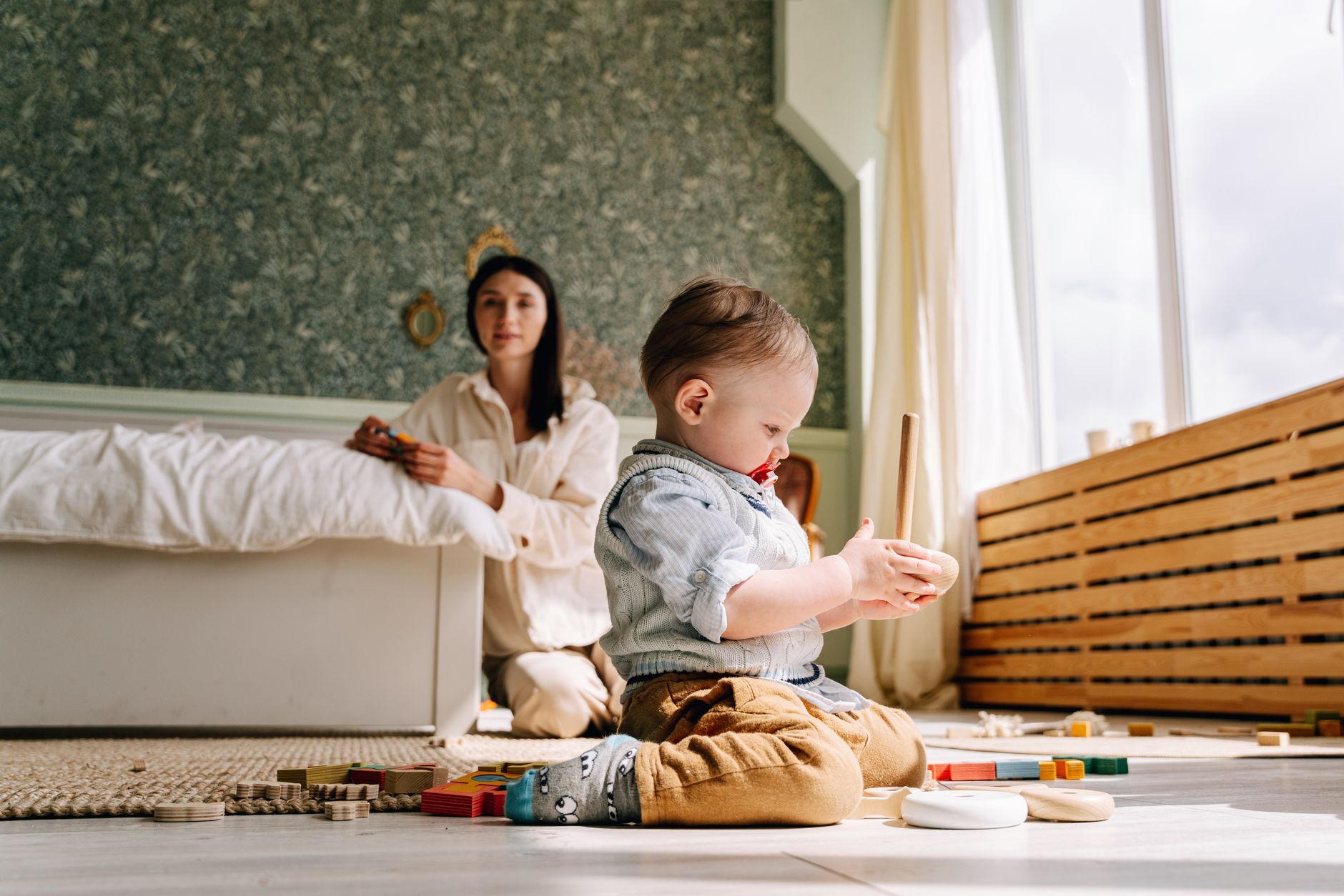
Let’s be honest: You’re exhausted. The new baby is demanding, and your toddler—who was once your little helper—suddenly wants to be held every five minutes. It’s easy to feel like you’re failing, but the truth is, you’re doing better than you think. The key is to focus on consistency and connection—two things that feel harder to maintain when you’re sleep-deprived.
Here’s how to create a plan that works:
- Keep routines intact: Toddlers thrive on predictability. If bedtime was at 7 PM before the baby, try to keep it close—even if it’s just 7:15 PM for a few weeks. The same goes for meals, naps, and quiet time. Small consistency goes a long way.
- Schedule one-on-one time: Even 10–15 minutes of undivided attention—whether it’s reading a book, building blocks, or just sitting on the floor and chatting—helps your toddler feel special. Use this time to praise their efforts and remind them they’re still your favorite.
- Acknowledge their feelings: If they’re upset about the baby, don’t dismiss it. Instead, say something like, “I know it’s hard when the baby is crying, and I miss playing with you too. Let’s do [activity] together.” This validates their emotions without making the baby the “bad guy.”
- Involve them in baby care (age-appropriately): Toddlers love feeling helpful. Let them “help” with diaper changes (handing you a wipe), “feeding” the baby (with a sippy cup), or even “talking” to the baby. This gives them a sense of control and connection.
- Use positive reinforcement: Praise good behavior immediately. If they share a toy with the baby, say, “You’re such a kind big sister!” If they’re gentle with the baby, acknowledge it. Toddlers crave approval, and this helps them feel secure.
- Watch for overstimulation: Too much baby time can overwhelm a toddler. If they’re acting out, it might be time for a break. Try a “quiet time” where they can have a snack or play independently while you tend to the baby.
And if you’re feeling overwhelmed? It’s okay to ask for help. Whether it’s a family member watching the toddler for an hour or hiring a postpartum doula to assist with both kids, support makes a difference. Many parents don’t realize how much relief a few hours of help can provide—both for them and their older child.
But what if the regression feels more intense than usual? When is it time to worry?
---
When is sibling regression after a new baby normal versus a sign of deeper issues?
Here’s the reality: Most sibling regression is temporary and resolves within a few weeks to a few months. But some behaviors can signal deeper concerns, like anxiety, attachment issues, or even developmental delays. How do you know the difference?
The American Academy of Pediatrics (AAP) suggests watching for these red flags:
- Prolonged regression (6+ months): If your child is still bedwetting, refusing to eat certain foods, or acting clingy after half a year, it’s worth discussing with your pediatrician.
- Extreme aggression or fear: If your child is consistently aggressive toward the baby (hitting, kicking, or refusing to be near them) or shows extreme fear (crying uncontrollably when the baby cries), this could indicate deeper anxiety or attachment issues.
- New separation anxiety: If your toddler suddenly refuses to go to daycare, school, or even leave your side for more than a few minutes, this might signal separation anxiety that needs professional attention.
- Regression in major milestones: If your child stops talking, loses previously acquired skills (like walking or using the potty), or shows signs of regression in cognitive development, consult your pediatrician.
- Withdrawal or sadness: If your child seems consistently sad, withdrawn, or loses interest in activities they once enjoyed, this could be a sign of depression or anxiety.
“Most of the time, regression is a normal part of adjustment,” says Dr. Harvey Karp, pediatrician and author of The Happiest Baby on the Block. “But if it’s lasting longer than a few months or seems to be getting worse, it’s important to rule out other issues, like sleep deprivation, anxiety, or even hormonal changes in toddlers (yes, they can experience mood swings too!).”
If you’re unsure, trust your gut. As the saying goes, “When in doubt, check it out.” A quick chat with your pediatrician can provide peace of mind—or point you toward the right support.
But what if the regression feels like it’s never going to end? How long should this last?
---
How long does sibling regression last after a new baby?
If you’re scrolling through parenting forums, you’ll see a wide range of answers: “A few weeks!” “A few months!” “It never really goes away!” The truth? It varies.
Most experts agree that sibling regression typically peaks within the first 2–4 weeks after the new baby arrives. For some kids, it fades quickly—especially if they’re used to helping with younger siblings or have a strong bond with the new baby. For others, it can linger for 3–6 months, particularly if the older child is younger (under 2 years old) or if the parents are struggling with postpartum stress.
“The timeline depends on how secure the older child feels in their role as a big sibling,” explains Dr. Jane Nelsen, co-author of The Positive Discipline Parenting Tools. “If they feel loved, involved, and reassured that they’re still important, they’ll adjust faster. But if they feel neglected or like they’ve been replaced, it can take longer.”
Here’s what to expect in the first few months:
If your child is still regressing after 6 months, it’s worth discussing with your pediatrician. But for most families, the hardest part is the first few weeks—when you’re sleep-deprived and emotional. That’s why consistency and patience are your best tools.
Now, you might be wondering: Is there anything I can do to speed this up? The answer is yes—and it starts with understanding the why behind the regression.
---
Why does my toddler regress after baby arrives?
Let’s cut to the chase: Your toddler isn’t trying to drive you crazy. They’re feeling overwhelmed, insecure, and left out. Here’s why:
- Loss of attention: Before the baby, you were all theirs. Now, their world has shifted, and they may feel like they’ve been replaced. Even if you’re trying to give them equal love, they might not realize it yet.
- Fear of abandonment: Babies cry a lot, and toddlers can misinterpret that as “Mommy/Daddy doesn’t love me anymore.”
- Change in routine: Naps, meals, and bedtime might have changed, and toddlers thrive on predictability.
- Hormonal shifts in parents: Toddlers are sensitive to their parents’ emotions. If you’re stressed or exhausted, they’ll pick up on it—and act out.
- Jealousy or competition: Some toddlers feel like the baby is “stealing” their parents’ love or attention.
- Developmental leaps: Toddlers are growing fast, and some regression is just a sign they’re processing big changes in their own development.
“It’s not about the baby,” Dr. Markham emphasizes. “It’s about the parent-child relationship. Your toddler needs to feel secure that you’re still there for them, even when the baby is around.”
So how do you help them feel that security? The answer lies in strategies that support their emotional development—and we’ll dive into those next.
---
Effective strategies to support a child’s emotional development during sibling regression
When your toddler is acting out, it’s easy to react in frustration. But remember: This is a teaching moment. The goal isn’t to “fix” the regression overnight—it’s to help your child feel secure, loved, and capable. Here’s how:
- Use “I” statements: Instead of saying, “Stop being so mean to your brother!” try, “I feel worried when you hit. Let’s find another way to tell me you’re upset.” This helps your child feel heard without blame.
- Teach empathy: When they’re calm, talk about how the baby feels when they’re gentle or rough. Say, “When you pat the baby’s tummy, they smile! That’s because they like it.”
- Praise effort, not just results: Instead of just saying, “Great job sharing!” try, “I love how you asked nicely for the toy. That’s so kind!”
- Create a “big sibling” role: Give them a special job, like “helping Mommy with the baby’s diaper” or “singing to the baby at naptime.” This makes them feel important.
- Use books and stories: Reading books about big siblings (like The Invisible String by Patrice Karst or Sister, Brother, Sister by Nancy Carlson) can help them process their feelings.
- Model healthy coping: If you’re stressed, take a deep breath and say, “I’m feeling overwhelmed. Let’s take a break.” Toddlers learn how to handle emotions by watching you.
And if you’re feeling stuck? Therapy or counseling can help. Many parents assume therapy is only for “big” issues, but it can also be a supportive space for kids (and parents!) to work through transitions. We’ll dive deeper into that next.
---
Can sibling regression after a new baby be treated with therapy or counseling?
If your toddler’s regression feels intense—or if you’re just feeling overwhelmed as a parent—you might wonder if therapy could help. The short answer? Absolutely. While most sibling regression resolves on its own, therapy can provide tools for both you and your child to navigate the transition more smoothly.
Here’s what to consider:
- Play therapy for toddlers: Many therapists specialize in working with young children through play. They might use dolls, puppets, or games to help your child express their feelings about the new baby in a safe way.
- Parent-child interaction therapy (PCIT): This approach helps parents learn how to respond to their child’s behavior in ways that build security and reduce tantrums.
- Counseling for parents: If you’re feeling stressed or anxious, therapy can help you manage your emotions—so your child doesn’t pick up on your tension.
- Group support: Parenting groups (in-person or online) can provide a safe space to share experiences and strategies with other families going through the same thing.
“Therapy isn’t just for ‘big’ issues,” says Dr. Laura Markham. “It can be a great way to get personalized support, especially when you’re feeling like you’re doing everything ‘wrong.’ Sometimes, just having someone validate your feelings can make a world of difference.”
If you’re curious about therapy, start by asking your pediatrician for recommendations or checking with your insurance provider for in-network options. Many therapists offer a free consultation to see if they’re a good fit.
But what if you’d rather try natural, at-home strategies first? Let’s talk about how to manage sibling rivalry—and keep regression from spiraling.
---
How to manage sibling rivalry and regression when a new baby arrives?
Sibling rivalry is a fact of life, but it can feel especially intense when a new baby enters the picture. The good news? With the right strategies, you can reduce conflict and help your kids bond as a team. Here’s how:
- Avoid comparisons: Never say things like, “Your brother was potty-trained at 2!” or “She’s so much easier to handle.” This only fuels jealousy. Instead, focus on what each child does well.
- Give one-on-one time: Even if it’s just 10 minutes a day, make sure each child has undivided attention. Rotate so neither feels left out.
- Encourage teamwork: Instead of saying, “Go play with your brother,” try, “Let’s see if you can help each other build this block tower!” This fosters cooperation.
- Use “we” language: Instead of, “Your sister is crying,” say, “We’re all a little tired today. Let’s take turns holding the baby.”
- Create special traditions: A “big sibling” breakfast, a monthly outing just for them, or a special handshake when they greet the baby can make them feel unique.
- Address conflicts calmly: If they’re fighting, don’t take sides. Instead, say, “I see you’re both upset. Let’s take a break and talk about it later.” Then, when they’re calm, help them problem-solve together.
And if you’re feeling like you need a break from the chaos? It’s okay to ask for help. Whether it’s a family member watching the kids for an hour or hiring a postpartum doula to assist with both kids, support makes a difference. Many parents don’t realize how much relief a few hours of help can provide—both for them and their older child.
But what if you’re worried about the long-term effects? Will this regression impact their relationship with their sibling later on? Let’s explore what the research says about long-term outcomes.
---
How long does sibling regression last after a new baby, and what are the long-term outcomes?
One of the biggest concerns parents have is whether sibling regression will affect their child’s relationship with their new sibling long-term. The good news? Research shows that most kids who experience regression go on to have healthy sibling relationships. In fact, many parents report that their older child becomes even more protective and loving toward their sibling after the initial adjustment period.
Studies, including those published in the Journal of Family Psychology, suggest that:
- Most regression resolves within 6 months, with many kids bouncing back in just a few weeks.
- Kids who feel secure in their role as a big sibling (through involvement, praise, and one-on-one time) are more likely to have positive sibling dynamics later on.
- Parental consistency and emotional availability are the biggest predictors of long-term sibling harmony.
- Older siblings often develop a protective, nurturing role as they grow, especially if they were involved in baby care early on.
“The key is to help your child see themselves as a helper, not a competitor,” says Dr. Nelsen. “When they feel like they’re contributing to the family in a positive way, they’re more likely to bond with their sibling over time.”
But what if your child is still struggling after months? How can you prevent regression from happening in the future?
---
How to prevent sibling regression when a new baby arrives
While you can’t completely prevent regression—it’s a normal part of adjustment—you can take steps to minimize its intensity and duration. Here’s how:
- Involve your older child in pregnancy and baby prep: Let them pick a onesie, help decorate the nursery, or even “practice” being a big sibling with a doll. This builds anticipation and excitement.
- Start early with baby care practice: Before the baby arrives, let your toddler “help” with tasks like holding a washcloth (for bath time), rocking a doll, or “feeding” the baby with a sippy cup.
- Keep routines as stable as possible: Even if things change after the baby arrives, try to maintain naps, meals, and bedtime as much as you can.
- Give them a “big sibling” role: Assign them a special job, like “helping Mommy with the baby’s diaper” or “singing to the baby at naptime.” This makes them feel important.
- Schedule one-on-one time before the baby arrives: If possible, plan special outings or activities just for you and your older child in the months leading up to the baby’s arrival.
- Prepare them for the baby’s arrival: Read books about new babies, talk about how the baby will need help, and let them ask questions. This helps them feel more in control.
And if you’re feeling overwhelmed by the idea of adding another baby to the mix? Remember: You’re doing great. Every parent feels like they’re failing at some point—it’s part of the journey. The fact that you’re asking these questions means you’re already a thoughtful, engaged parent.
Now, let’s address some common myths about sibling regression—because what we believe can shape how we react.
---
Myth vs. Fact: Sibling Regression After a New Baby
Myth: “Sibling regression means my child doesn’t love the baby.”
Fact: Regression is rarely about the baby. It’s usually a sign your child is feeling insecure, overwhelmed, or left out. Their behavior isn’t a reflection of their feelings for the baby—it’s a sign they need more love and attention from you.
Myth: “If I ignore the regression, it will go away on its own.”
Fact: While some regression does fade with time, ignoring it can make it worse. Acknowledging their feelings and providing consistency helps them feel secure and adjust more quickly.
Myth: “Only younger siblings regress after a new baby.”
Fact: Older siblings (even teens) can experience regression. The key is adjusting your approach to their developmental stage. A 5-year-old might need more cuddles, while a 10-year-old might need more independence and explanation.
Myth: “Sibling regression is a sign of poor parenting.”
Fact: Regression is a normal part of adjustment for most kids. Even the most attentive parents see it. The goal isn’t to prevent it—it’s to help your child navigate it with love and patience.
Myth: “Therapy is only for kids with ‘big’ issues.”
Fact: Therapy can be a helpful tool for both parents and kids during transitions. It provides strategies, support, and a safe space to process emotions.
---
Key Takeaways: Sibling Regression After a New Baby
- Regression is normal—it’s your child’s way of saying they need you.
- Consistency is key: Keep routines intact and give one-on-one attention.
- Involve your older child in baby care to help them feel important.
- Watch for red flags: Prolonged regression, extreme aggression, or withdrawal may need professional attention.
- Therapy can help if you or your child are feeling overwhelmed.
- Most kids adjust within 6 months, and many go on to have strong sibling bonds.
- You’re not alone—this is a common challenge, and support is available.
---
Frequently Asked Questions About Sibling Regression After a New Baby
What is sibling regression after a new baby?
Sibling regression is when an older child temporarily reverts to earlier behaviors—like bedwetting, clinginess, or defiance—after a new baby arrives. It’s a normal response to feeling overwhelmed, insecure, or left out as their world changes.
Is it normal for toddlers to regress after a new baby?
Yes! Most toddlers experience some form of regression after a new sibling arrives. It’s their way of processing the big changes in their routine and attention. The key is to stay patient and consistent.
How long does sibling regression last?
Most regression peaks within the first 2–4 weeks and resolves within 3–6 months. However, the timeline varies depending on the child’s age, temperament, and how secure they feel in their role as a big sibling.
What causes sibling regression after a new baby?
Regression happens because your toddler feels like they’ve lost your attention, is afraid of being replaced, or is overwhelmed by the baby’s needs. It’s not about the baby—it’s about their need for reassurance that they’re still your priority.
How can I help my child stop regressing after a new baby?
Focus on consistency, one-on-one time, and involvement in baby care. Praise their efforts, acknowledge their feelings, and remind them they’re still your favorite. If regression persists, consider therapy or counseling for support.
Should I seek professional help for sibling regression?
If regression lasts longer than 6 months, involves extreme aggression or withdrawal, or affects major milestones (like talking or potty training), it’s worth discussing with your pediatrician. Therapy can also help if you or your child are feeling overwhelmed.
---
When to see a doctor or specialist
While sibling regression is usually temporary, there are times when it’s important to seek professional advice. Contact your pediatrician if:
- Regression lasts longer than 6 months without improvement.
- Your child shows extreme aggression or fear toward the baby.
- They regress in major developmental skills (like talking, walking, or potty training).
- They seem consistently sad, withdrawn, or lose interest in activities they once enjoyed.
- You’re feeling overwhelmed and struggling to cope with both kids.
If you suspect your child might need extra support, your pediatrician can refer you to a therapist specializing in child development or family dynamics. And if you’re just feeling like you need a break? That’s okay too. Parenting is hard, and asking for help is a sign of strength.
---
References
- American Academy of Pediatrics. (2021). Sibling Rivalry and Adjustment to a New Baby.
- Markham, L. (2016). Peaceful Parent, Happy Kids. Ballantine Books.
- Journal of Family Psychology. (2019). Sibling Relationships and Adjustment to a New Baby.
- Karp, H. (2018). The Happiest Baby on the Block. Little, Brown Spark.
- Nelsen, J. (2013). The Positive Discipline Parenting Tools. Ballantine Books.