Quick take: Yes, you can safely shop for second‑hand baby gear—if you know the right standards, how to inspect items, and where to buy from reputable sources. Follow the step‑by‑step inspection checklist, clean everything thoroughly, and double‑check recall lists before bringing any used product home.
Imagine it’s 2 a.m.; you’ve just spotted a barely‑used crib on an online marketplace that’s a perfect fit for your nursery, and your heart races between excitement and worry. You’re not alone—millions of moms juggle the desire to save money and reduce waste with the need to protect their baby’s safety.
That’s why we created this second hand baby gear safety guide. In the next few minutes you’ll learn the exact standards that every piece of gear should meet, a practical inspection checklist for cribs, strollers, car seats, and more, how to clean and sanitize used items, where to find trustworthy sellers, and the real cost‑saving versus safety trade‑offs.
We’ll also cover myths that often cause anxiety, give you a quick‑reference table, and point out the red‑flag signs that mean you should walk away or call a professional. By the end, you’ll feel confident buying pre‑owned gear without compromising your baby’s well‑being.
How to inspect used cribs for safety hazards
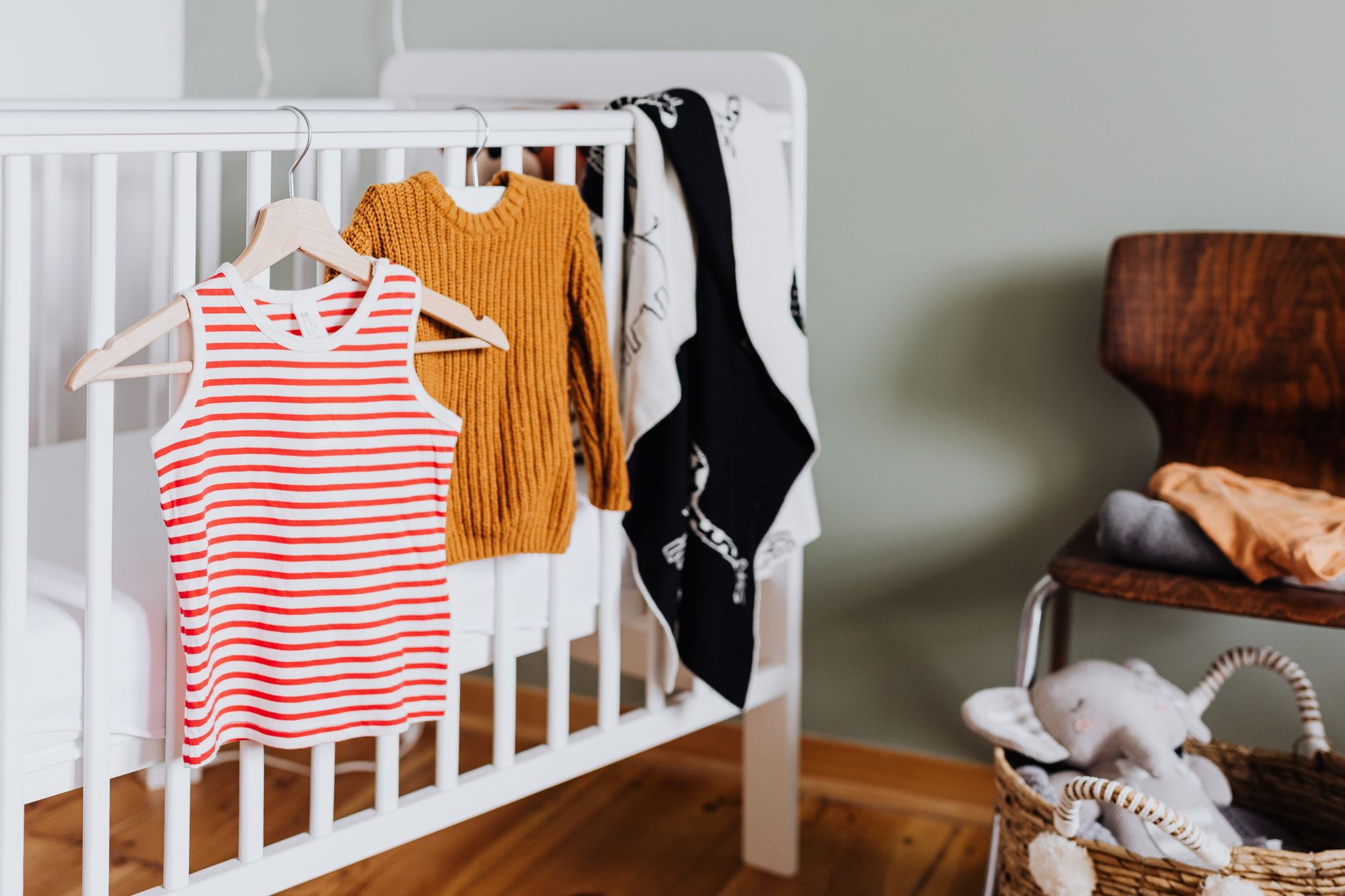
First‑time parents often wonder, “Can I trust a used crib?” The answer is yes—if you perform a thorough visual and physical inspection. The American Academy of Pediatrics (AAP) and the U.S. Consumer Product Safety Commission (CPSC) outline clear safety criteria for cribs, and those same standards apply to pre‑owned units.
Step‑by‑step crib inspection checklist
- Verify the model year. Cribs manufactured after June 2011 must meet the CPSC’s “new safety standards.” If the crib predates this, it may lack the required slat spacing (no more than 2 ½ inches apart) or the reinforced side rails.
- Check slat spacing. Use a ruler or a credit card; the gap should be no wider than 2 ½ inches. Wider gaps could allow a baby’s head to slip through.
- Examine the hardware. Look for loose screws, missing washers, or stripped threads. Tighten any loose bolts with a screwdriver; if threads are stripped, the crib is unsafe.
- Test the mattress fit. The mattress should sit snugly without any gaps larger than a finger’s width on all sides. Gaps can lead to suffocation hazards.
- Inspect the finish. Paint should be lead‑free (post‑1978). Look for chipping or peeling; exposed wood or metal can be a choking hazard.
- Stability test. Gently push the crib from side to side. It should wobble minimally and not tip. A wobbling crib can collapse under a baby’s weight.
- Check for recalls. Enter the serial number on the CPSC recall database (cpsc.gov/Recalls) to confirm the model isn’t part of an active recall.
If any of these items raise a red flag, it’s safest to walk away. Remember, a few minutes of inspection now can prevent a tragedy later.
What are the safety standards for secondhand baby strollers?
Strollers are a daily companion for many families, so they must meet stringent safety rules. In the United States, the CPSC’s “Standard for Infant and Toddler Strollers” (ASTM F833) applies, while the U.K. follows the British Standard BS 7110. Both require a five‑point harness, a locked‑brake system, and a sturdy frame that can support at least 40 lb (18 kg).
Key features to verify on a used stroller
- Five‑point harness integrity. Ensure the straps are not frayed, the buckles click securely, and the latch releases smoothly.
- Brake functionality. Test both the rear and front brakes. They should lock firmly and release without resistance.
- Wheel condition. Look for cracks, excessive wear, or missing spokes. Spin each wheel; it should rotate freely without wobbling.
- Canopy and fabric. Check for tears, stains, or missing snaps. Stroller fabric should be free of mildew, especially if stored in a damp environment.
- Frame joints. Tighten any loose bolts and inspect welds for cracks. The frame should feel solid, not squeaky or flimsy.
- Weight capacity. Verify the advertised capacity on the label and ensure it meets or exceeds your child’s current weight.
When in doubt, compare the model against the latest CPSC checklist on their website. Even a well‑maintained used stroller must still meet today’s standards to be considered safe.
Signs a secondhand car seat is unsafe
Car seats are non‑negotiable when it comes to safety—there’s no room for compromise. The National Highway Traffic Safety Administration (NHTSA) and the American Academy of Pediatrics (AAP) stress that any car seat with a history of a crash, or that is older than six years, may have hidden damage.
Red‑flag indicators
- Crash history. Never accept a car seat that has been in a collision, even if it looks untouched. The internal structure can be compromised.
- Expired certification. Car seats typically have a manufacturing date stamped on the shell. Most manufacturers set a 6‑year usage limit; after that, the plastics may degrade.
- Missing or altered parts. Look for absent tether straps, damaged buckles, or non‑original accessories. Counterfeit seats often lack proper labeling.
- Label wear. The label with the model number, manufacturing date, and safety standard should be legible. If it’s faded or missing, you can’t verify compliance.
- Corrosion or rust. Any signs of rust on metal components indicate exposure to moisture, which can weaken the frame.
- Recall status. Cross‑reference the model on the NHTSA recall database (nhtsa.gov/recalls). If the seat is part of a recall, avoid it unless the issue has been professionally repaired.
If you spot any of these concerns, it’s best to keep looking. A properly functioning car seat protects your child in a crash; a compromised one can do the opposite.
Where to buy certified pre‑owned baby gear (including best websites with safety reviews)
Finding a trustworthy marketplace can feel like hunting for a needle in a haystack. Fortunately, several platforms specialize in vetted, safety‑checked baby gear. Below, we break down the most reliable options and what each offers in terms of safety verification.
Top vetted marketplaces
When you browse any site, always request the serial number and ask the seller to confirm that the item is not part of an active recall. A reputable seller will gladly provide this information.
How to clean and sanitize used baby bottles and pacifiers
Even after a thorough visual inspection, any used feeding item must be sanitized. The Centers for Disease Control and Prevention (CDC) and the Food and Drug Administration (FDA) recommend specific steps to eliminate bacteria, especially for infants under six months.
Cleaning protocol
- Disassemble. Separate nipples, caps, rings, and any silicone parts.
- Rinse. Run each piece under warm water to remove milk residue.
- Soak. Place all components in a basin of hot (≥ 70 °C/158 °F) water mixed with a mild dish soap for 5 minutes.
- Scrub. Use a bottle brush for the interior and a small silicone brush for nipples. Pay special attention to the base of the nipple where milk can pool.
- Rinse again. Ensure no soap residue remains; residual soap can irritate a baby’s gut.
- Sanitize. Boil the parts for 5 minutes or run them through a dishwasher’s “sanitize” cycle. For silicone pacifiers, a 30‑second steam cycle in a baby‑bottle sterilizer works well.
- Dry. Air‑dry on a clean towel or a silicone mat. Avoid cloth towels that can introduce lint.
If you cannot boil or sterilize a piece, it’s safest to discard it. The cost of a new bottle is far less than the risk of a bacterial infection.
Budget‑friendly tips for buying used baby monitors safely (including privacy considerations)
Baby monitors give peace of mind, but older models may pose privacy risks. The Federal Trade Commission (FTC) warns that some legacy analog monitors can be intercepted, while older Wi‑Fi monitors may store data on insecure servers.
How to pick a safe, affordable monitor
- Prefer newer digital or encrypted models. Look for monitors that list “AES‑256 encryption” or “Secure Wi‑Fi.”
- Check firmware updates. Even a used monitor can be safe if the manufacturer still provides security patches.
- Test the range. In the store or at home, walk away from the monitor with the receiver; there should be no drop‑out of the video feed within the advertised range.
- Reset to factory settings. Before use, perform a full reset to erase any prior pairing information.
- Read the privacy policy. Ensure the brand does not sell video data to third parties. If the policy is vague, choose another model.
- Budget tip. Many reputable brands release “refurbished” units directly from the manufacturer with a limited warranty—often 20‑30 % cheaper than new.
By following these steps, you can protect both your wallet and your baby’s privacy.
Differences between new and used baby swings safety (including common defects)
Baby swings are comforting for many infants, yet the mechanical nature of swings means wear can become a hidden hazard. The CPSC’s “Standard for Infant and Toddler Swings” (ASTM F833) applies to both new and used models, but older swings often show specific wear patterns.
Common defects to spot
- Worn or frayed cords. Look for any nicks, exposed threads, or discoloration.
- Loose joints. Swing arms and the seat base should move smoothly without creaking. Any wobble may indicate weakened metal.
- Motor overheating. Plug the swing in and let it run for a few minutes; the motor housing should stay cool to the touch.
- Seat fabric integrity. Check for tears, especially around the seams where the baby’s head could get caught.
- Recall status. Some swing models have been recalled for faulty locking mechanisms. Verify the serial number on the CPSC recall list.
New swings come with a manufacturer’s warranty and guarantee compliance with the latest safety standards. Used swings can be safe if they pass the inspection checklist, but they typically lack a warranty, making the decision a trade‑off between cost and peace of mind.
How to check expiration dates on secondhand baby products (including 2024 recall list)
Many baby items—especially items that come into direct contact with a baby’s mouth or skin—carry expiration dates. The FDA requires manufacturers to label these dates on products like pacifiers, bottle nipples, and certain toys.
Steps to verify freshness
- Locate the date stamp. It’s usually printed on the underside of the product, on the packaging, or etched into the silicone.
- Interpret format. Dates may appear as “MM/YY,” “Month Year,” or a Julian code. If you’re unsure, check the manufacturer’s website for decoding instructions.
- Cross‑check with recall information. For 2024, the CPSC and FDA have listed recalls for:
- Infant pacifiers with toxic bisphenol‑A (BPA) contamination (model XYZ‑123).
- Reusable silicone bottle nipples that may leach phthalates after 2023.
- Plush toys with small detachable parts that pose choking hazards.
Visit the official recall pages (cpsc.gov/Recalls and fda.gov/recalls) and search using the product’s serial number.
- Discard if expired. Even if the product appears pristine, an expired pacifier or nipple can harbor bacteria or degrade, increasing choking or infection risk.
When you buy second‑hand gear, always request the exact manufacturing date and keep a digital copy of the recall check for future reference.
Step‑by‑step guide to testing a used baby carrier (including legal and eco‑friendly considerations)
Baby carriers are beloved for keeping infants close, but a faulty carrier can cause spinal strain or even a fall. The International Carriers Association (ICA) and the CPSC outline durability standards that apply to both new and used carriers.
Testing protocol
- Verify the model and year. Most carriers have a label inside the strap with a manufacturing date. Ensure the model complies with the latest safety standards (generally post‑2015).
- Inspect stitching. Look for loose threads, broken seams, or frayed edges. Any sign of wear could weaken load‑bearing capacity.
- Test the buckles and clips. Buckles should snap shut with a firm click and release without excessive force. Clips should lock securely and not detach when pulled.
- Load test. If possible, gently apply pressure equivalent to your baby’s weight (e.g., a 12‑lb weight) to the carrier’s straps. The fabric should not stretch beyond 10 % of its original length.
- Check for recalls. Use the serial number on the CPSC recall search. In 2024, several soft‑structured carriers were recalled for broken buckles.
- Legal note. When reselling a carrier, you must disclose any known defects and provide the recall status. In some states (e.g., California), failure to disclose can be considered a consumer fraud violation.
- Eco benefit. By extending the life of a carrier, you reduce textile waste. The EPA estimates that each reusable baby product saves roughly 2 kg of landfill material per year.
Following this checklist helps you feel confident that the carrier will support your baby safely and sustainably.
Myth vs. fact
Myth: “All used baby gear is unsafe because it’s older.”
Fact: Many pre‑owned items meet current safety standards if they have been properly inspected, cleaned, and are not subject to a recall.
Myth: “If a crib looks solid, it’s automatically safe.”
Fact: Visual appearance can be deceiving; slat spacing, hardware integrity, and recall status are critical factors that require verification.
Myth: “Second‑hand car seats are always cheaper and just as safe as new ones.”
Fact: Car seats have a limited lifespan (typically six years) and any history of a crash invalidates their safety, regardless of price.
Key takeaways
- Always cross‑check the serial number against CPSC, NHTSA, or FDA recall databases before purchasing.
- Use a detailed inspection checklist for cribs, strollers, car seats, swings, and carriers.
- Sanitize all feeding items with boiling or steam sterilization; discard anything you cannot fully clean.
- Buy from vetted platforms that conduct safety inspections and provide clear return policies.
- Remember that cost savings are real—used gear can be 15‑45 % cheaper—but never sacrifice safety for price.
- Consider the environmental impact: reusing gear reduces waste and conserves resources.
Frequently asked questions
Can you use a secondhand car seat after a crash?
No. A car seat that has been in a collision may have unseen structural damage. The NHTSA advises discarding any seat that has experienced a moderate or severe crash, even if it appears undamaged.
How do I know if a used crib meets current safety standards?
Check the manufacturing date (post‑June 2011 in the U.S.) and verify slat spacing, hardware integrity, and recall status. If the crib passes the step‑by‑step inspection checklist, it meets today’s standards.
Is it safe to buy used baby gear online?
Yes, provided you verify the seller’s reputation, request serial numbers, confirm no active recalls, and inspect the item (or arrange a local pickup for a hands‑on check). Trusted platforms with safety reviews add an extra layer of protection.
What should I look for when inspecting a used stroller?
Focus on harness functionality, brake operation, wheel condition, frame stability, and any signs of wear or missing parts. Also, ensure the model complies with the latest CPSC or BS 7110 standards.
Do secondhand baby monitors have privacy risks?
Older analog monitors can be intercepted, and some early Wi‑Fi models may store video on insecure servers. Choose monitors with encryption, reset them to factory settings, and verify that the manufacturer provides ongoing firmware updates.
Are there any recalls on used baby gear?
Yes. In 2024, recalls included certain pacifiers with BPA, reusable bottle nipples prone to leaching, and soft‑structured carriers with faulty buckles. Always search the product’s serial number on the CPSC or FDA recall sites before buying.
How much can I actually save by buying used gear versus new?
On average, families save 20‑45 % across major categories: cribs (30 % off), strollers (35 % off), car seats (15 % off due to shorter lifespan), and swings (40 % off). The exact savings depend on condition, brand, and market demand.
When to see a doctor or specialist
If you notice any of the following after purchasing used gear, contact a pediatrician or the appropriate specialist immediately:
- Persistent skin irritation or rashes that could indicate a chemical exposure from outdated plastics.
- Unexplained breathing difficulties after using a used crib or swing, which may signal a hidden structural defect.
- Any injury or suspected choking related to a used product.
For car seat concerns, reach out to a certified child passenger safety technician (CPST) through the National Highway Traffic Safety Administration’s website. For any recall‑related anxiety, your pediatrician can help verify safety and guide you toward reputable alternatives.
References
- U.S. Consumer Product Safety Commission (CPSC). “Crib Safety Standard (ASTM F1169).” 2023.
- American Academy of Pediatrics (AAP). “Safe Sleep Recommendations.” 2022.
- National Highway Traffic Safety Administration (NHTSA). “Car Seat Recall Database.” 2024.
- Food and Drug Administration (FDA). “Recall of Infant Pacifiers Containing BPA.” 2024.
- Centers for Disease Control and Prevention (CDC). “Cleaning and Sanitizing Baby Feeding Items.” 2023.
- International Carriers Association (ICA). “Carrier Safety Guidelines.” 2022.
- British Standards Institution. “BS 7110: Safety Requirements for Strollers.” 2021.
- Federal Trade Commission (FTC). “Privacy and Security of Baby Monitors.” 2023.
- Environmental Protection Agency (EPA). “Benefits of Reusing Consumer Goods.” 2022.


