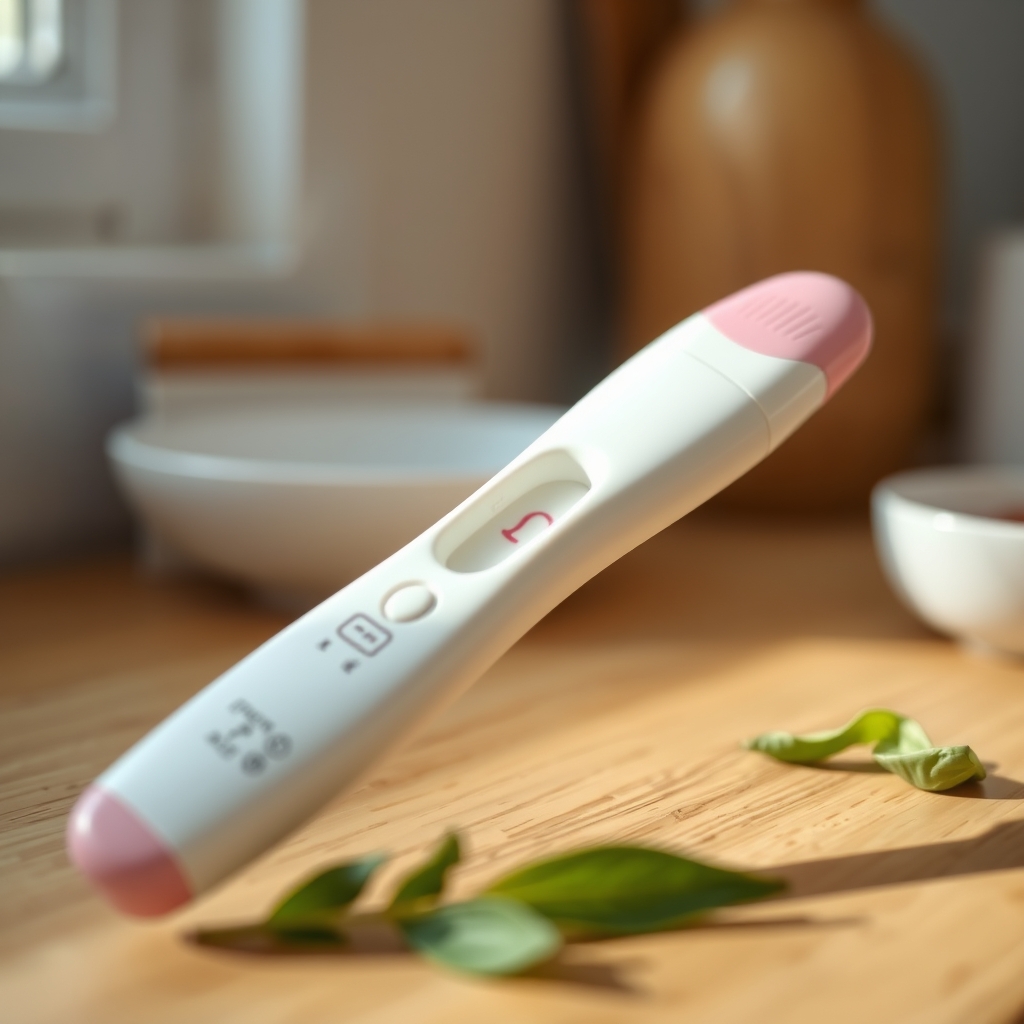
Find out when to repeat a pregnancy test for accurate results, including the best time and frequency to retest for a reliable outcome with Repeat Pregnancy Test When to Test Again
By Shubhra Mishra — a mom of two who turned her own confusion during pregnancy into BumpBites, a global mission to make food choices clear, safe, and stress-free for every expecting mother. 💛
Check whether any food is safe during pregnancy with the BumpBites Food Safety Checker.
Quick take: If your first home pregnancy test is negative but you still haven’t gotten your period, wait 48–72 hours and test again with first‑morning urine. Use a test that detects at least 10 mIU/mL of hCG, and if two tests in a row are negative while your cycle remains absent, schedule a visit with your provider.
It’s 2 a.m., you’ve just finished a cup of tea, and the empty test strip in your hand is staring back at you with a faint line that looks more like a shadow than a clear “positive.” You’re not alone—many people wonder whether they should keep testing, how long to wait, and what a negative result really means when their period is late.
In this guide we’ll walk through everything you need to know about repeat pregnancy testing: why a second test can be useful, the safest timing, what can skew results, and exactly what steps to take whether the next test is positive or still negative. We’ll also give you a quick checklist, bust a few myths, and answer the most common follow‑up questions you’ll find on Google.
By the end of the article you’ll feel confident about the next step—whether that’s ordering another test, calling your doctor, or simply waiting a little longer.
Why should I take a repeat pregnancy test?
Repeating a test isn’t just about being extra cautious; it’s often the most reliable way to catch a pregnancy that was too early to detect the first time. Human chorionic gonadotropin (hCG)—the hormone pregnancy tests look for—starts at very low levels just after implantation and roughly doubles every 48 hours. If you test before hCG reaches the test’s detection threshold (usually 10–25 mIU/mL), the result will be negative even though pregnancy has begun.
Beyond the biology, a repeat test gives you a chance to correct any user error that might have slipped in the first round. For example, many kits require a specific amount of urine and a set waiting time before you read the result. Missed steps can turn a true positive into a faint line that’s hard to interpret. A second, correctly‑performed test can therefore turn uncertainty into clarity.
Other common reasons for a repeat test include:
User error: Not following the instructions, using the wrong amount of urine, or reading the result outside the recommended window.
Faint line: A barely visible line can be hard to interpret, especially on a digital test that only shows “positive” or “negative.”
Uncertainty: If you’re feeling “pregnant” symptoms (fatigue, breast tenderness) but the first test says no, a second test can bring peace of mind.
One of our readers, “M,” described a similar situation: she took a test two days after a missed period, saw a faint line, and felt uneasy. She waited three days, used first‑morning urine, and the second test showed a clear positive. “I wish I’d known about the 48‑hour rule,” she wrote, “because the extra wait saved me a week of anxiety.”
In short, a repeat test is a low‑effort way to increase accuracy when you’re on the fence.
How long should I wait before taking another pregnancy test?
Most experts, including the American College of Obstetricians and Gynecologists (ACOG), recommend waiting at least 48 hours after a negative result before testing again. This interval allows hCG levels, if rising, to double and become detectable by most over‑the‑counter tests.
Some clinicians suggest a slightly longer wait—up to 72 hours—especially if you used a test with a higher detection threshold (25 mIU/mL). The key is consistency: test at the same time of day, using the same brand, so you can compare results reliably. Consistency also helps you spot any subtle changes in the intensity of the test line, which can be an early clue that hCG is climbing.
Below is a quick reference for common retest intervals:
Time since first test
Recommended wait before retest
Reason
Same day (early testing)
48–72 hours
hCG may still be below detection threshold
24 hours later
48 hours
Allows at least one doubling of hCG
48 hours later
Immediate (same day)
If you have a high‑sensitivity test (10 mIU/mL)
Remember, “waiting” doesn’t mean you have to stare at the calendar. Use the time to track any new symptoms, stay hydrated, and keep a symptom diary for your upcoming appointment. Noting when you first noticed breast tenderness or mild nausea can give your clinician valuable clues about how far along a potential pregnancy might be.
In practice, many women find that a 48‑hour interval aligns nicely with their routine—testing on a Saturday night and then again on Monday morning after a good night’s sleep.
What if my first pregnancy test was negative but I still haven’t gotten my period?
A missed period after a negative test can be unsettling. The most common explanations are:
Late implantation: Fertilization can occur up to five days after intercourse, and the embryo may not implant until several days later, delaying hCG production.
Hormonal fluctuations: Stress, significant weight changes, or intense exercise can alter the menstrual cycle without affecting fertility.
Technical issues: Expired tests, diluted urine (too much fluid before testing), or using a test that isn’t sensitive enough.
In many cases, a second test taken 48–72 hours later will provide a clearer answer. If the second test is still negative and your period remains absent for more than a week, consider these next steps:
Schedule a visit with your primary care provider or obstetrician.
Ask for a serum hCG blood test, which can detect much lower hormone levels (as low as 1 mIU/mL).
Discuss other potential causes of amenorrhea, such as thyroid disorders, polycystic ovary syndrome (PCOS), or premature ovarian insufficiency.
One couple we spoke with, “J & L,” experienced exactly this. After two negative home tests spaced three days apart, they still hadn’t gotten their period. Their doctor ordered a serum hCG, which came back at 12 mIU/mL—confirming a very early pregnancy. The early detection allowed them to start prenatal vitamins right away.
It’s also worth noting that the NHS advises women to seek medical advice if they have missed two periods in a row or experience persistent irregularities, because underlying endocrine conditions can sometimes masquerade as a “late” period.
Can a negative pregnancy test turn positive later?
Yes. A negative result can become positive within days as hCG rises. This is why the “repeat” approach is standard practice. The probability of a false‑negative result is highest when testing too early—before the embryo has implanted or before hCG reaches the test’s detection limit.
Research from the Centers for Disease Control and Prevention (CDC) notes that home pregnancy tests have a sensitivity of 97 % when used after a missed period, but that drops to around 70 % when taken three days before the expected period. In practical terms, if you test on day 1 of a missed period and get a negative, a retest on day 3 or 4 often yields a positive if you are pregnant.
However, a negative that later turns positive does not guarantee a healthy pregnancy. It simply means hCG is now detectable. You should still schedule an early prenatal appointment to confirm the viability of the pregnancy and discuss any concerns.
ACOG’s 2023 Practice Bulletin emphasizes that any positive home test, even if faint, should be followed by a serum hCG and an early ultrasound to assess gestational age and rule out ectopic pregnancy.
What is the best time of day to take a second pregnancy test?
First‑morning urine is the gold standard for home pregnancy testing. Overnight, your bladder becomes more concentrated, which means higher hCG levels per milliliter of urine. This concentration boost can make the difference between a faint line and a clear positive.
If you can’t test in the morning, aim to wait at least four hours after your last bathroom visit and avoid drinking large amounts of fluid beforehand. Some digital tests claim to work with any urine sample, but the underlying principle remains: the more concentrated the urine, the more reliable the result.
Our editorial team often hears from readers who tried a “mid‑day” test and got a negative, only to see a positive later in the morning. The pattern underscores why timing matters more than the brand you choose.
For women who work night shifts or have irregular sleep schedules, the “first‑morning” sample can be taken after the longest sleep period, even if that occurs in the afternoon. The key is that the urine has had time to concentrate.
What factors can affect a repeat pregnancy test result?
Even with perfect timing, several variables can skew your outcome:
Hydration level: Over‑hydration dilutes hCG, potentially leading to a false‑negative.
Medications: Certain fertility drugs, antihistamines, or diuretics can interfere with test chemistry.
Expired or stored improperly: Tests lose sensitivity after their expiration date or if kept in a hot, humid environment.
Urine temperature: Extremely hot or cold urine can affect the reaction on some test strips.
Stress: While stress itself doesn’t change hCG, it can delay your period, making you test earlier than optimal.
To minimize these influences:
Check the expiration date and store tests in a cool, dry place.
Use the first‑morning sample and avoid excessive fluids for at least an hour before testing.
Follow the manufacturer’s instructions exactly—especially the amount of urine and the waiting time before reading the result.
For digital tests that display “negative” or “positive” on a screen, the same principles apply. A “digital negative retest” is still subject to the same hCG detection limits and timing considerations.
Even a faint line can be a clue—use first‑morning urine and wait 48 hours before retesting.
Can digital pregnancy tests improve accuracy for repeat testing?
Digital pregnancy tests display a clear “Positive” or “Negative” result on a screen, removing the ambiguity of faint lines. For many users, this can reduce anxiety and the need to interpret a borderline line. However, the underlying chemistry is the same as that of traditional strip tests, so the detection threshold (often 10–25 mIU/mL) still applies.
Studies cited by the FDA’s Pregnancy Test Device Guidance (2021) show that digital tests are not inherently more sensitive than well‑manufactured analog tests. They are simply easier to read. If you choose a digital test for a repeat, make sure it meets the low‑threshold (≤10 mIU/mL) standard, and still use first‑morning urine for the best chance of detection.
One practical tip: keep the digital test’s screen away from direct sunlight while reading the result, as glare can sometimes make a faint “positive” harder to notice. The same “wait 48–72 hours” rule applies regardless of format.
How do hormonal birth control methods influence repeat test results?
Hormonal contraceptives—pills, patches, injections, or intrauterine systems—contain synthetic hormones that suppress ovulation. While on these methods, a true pregnancy can still occur, but the hormone environment can sometimes affect the timing of implantation and the early rise of hCG.
According to the World Health Organization (WHO) guidelines on fertility care (2021), women who become pregnant while using hormonal contraception may experience a slightly delayed rise in hCG, leading to a longer window of false‑negative home tests. In practice, if you’re on birth control and suspect pregnancy, you might wait an extra 24–48 hours beyond the standard 48‑hour retest interval before testing again.
Additionally, some hormonal methods, like the levonorgestrel emergency contraceptive, can cause a temporary surge in hCG that mimics early pregnancy on a test, resulting in a false‑positive. If you’ve taken emergency contraception within the past week, a repeat test after 48 hours can help confirm whether the line was a true pregnancy signal or a transient artifact.
What should I do after a second positive pregnancy test?
A confirmed positive result is exciting, but it also opens a new checklist of steps. Here’s a concise roadmap:
Contact your healthcare provider: Schedule an appointment within the next week. Many clinics have “new‑pregnancy” slots for early booking.
Start prenatal vitamins: Choose a supplement with at least 400 µg of folic acid to reduce the risk of neural‑tube defects.
Track your cycle: Note the date of your positive test, any bleeding, and emerging symptoms. This information helps estimate gestational age.
Limit risky exposures: Avoid alcohol, tobacco, and unpasteurized dairy; discuss any prescription meds with your provider.
Consider a dating ultrasound: An early scan (usually 8‑10 weeks) can confirm viability and establish an estimated due date.
Even after a positive, it’s normal to feel a mix of joy and anxiety. Keep a list of questions for your provider—about nutrition, exercise, and any pre‑existing health conditions—so you feel prepared for the first prenatal visit.
What should I do after a second negative pregnancy test but still no period?
If two tests, spaced 48–72 hours apart, are negative and your period is still absent after a full week, it’s time to investigate other causes. Possible non‑pregnancy reasons for a missed period include:
Stress or lifestyle changes: Sudden weight loss or gain, intense training, or emotional stress can disrupt the hormonal cascade that triggers menstruation.
Medical conditions: Thyroid disorders, PCOS, hyperprolactinemia, or premature ovarian insufficiency.
Medications: Birth‑control pills, certain antidepressants, or chemotherapy agents.
At this point, a serum hCG blood test can definitively rule out pregnancy. If hCG is undetectable, your provider will likely order hormone panels (TSH, prolactin) and possibly an ultrasound to evaluate the ovaries and uterus.
One story we heard from a reader “S” illustrates this scenario: after two negative home tests and a month without a period, a serum hCG came back negative. Blood work revealed low thyroid hormone, and with a simple prescription, her cycles returned to normal within three months.
While a negative test can be reassuring, continued amenorrhea deserves medical attention to rule out underlying health issues.
Can a blood hCG test replace home testing for repeat checks?
A quantitative serum hCG test measures the exact hormone concentration in your blood and can detect levels as low as 1 mIU/mL—far below the threshold of most home kits. Because of this sensitivity, a single blood draw can often answer the “am I pregnant?” question without the need for multiple home tests.
However, blood tests are more invasive, require a lab visit, and may not be covered by all insurance plans for routine pregnancy screening. For most people, a home test remains the quickest, most private way to check. If you’ve had two negative home tests and still suspect pregnancy, the serum hCG is the definitive next step, as recommended by ACOG’s 2023 early pregnancy guidelines.
How do irregular ovulation cycles affect repeat pregnancy testing?
Irregular ovulation—common in conditions like PCOS or in women with fluctuating menstrual patterns—can make the timing of implantation unpredictable. This means the “usual” 14‑day post‑ovulation window for hCG rise may shift, and a test taken at the same calendar day each month might miss the hormone’s early surge.
When you have irregular cycles, it’s helpful to track ovulation signs (basal body temperature, cervical mucus, ovulation predictor kits) and then count 10‑12 days after the most likely ovulation day before testing. If the first test is negative, wait the standard 48‑72 hours and retest. The NHS advises that women with irregular cycles discuss timing strategies with their clinician to avoid repeated false‑negatives.
What is a chemical pregnancy and how does it influence repeat testing?
A chemical pregnancy is a very early loss that occurs before the embryo can be seen on ultrasound, usually within the first few weeks after implantation. hCG rises enough to give a positive home test, but the hormone quickly falls, leading to a negative test a week later.
If you experience a positive test followed by a negative test and a return of your period, a chemical pregnancy could be the explanation. This scenario can be emotionally confusing, but it’s fairly common—estimated to occur in up to 50 % of recognized pregnancies, according to the Mayo Clinic. If you suspect a chemical pregnancy, a serum hCG drawn a few days after the positive can confirm the rise and subsequent drop, and your provider can discuss next steps.
Doctor’s note
From our medical team: Home pregnancy tests are highly reliable when used correctly, but they are not a substitute for professional evaluation. If you have two negative tests taken at least 48 hours apart and still haven’t gotten your period, or if you experience pain, spotting, or unusual symptoms, schedule a visit promptly. Early prenatal care and early investigation of menstrual irregularities both improve outcomes.
Myth vs. fact
Myth: A faint line always means you’re pregnant.
Fact: A faint line can be a true positive, a chemical artifact, or a false‑positive caused by evaporation. Confirm with a repeat test using first‑morning urine.
Myth: You can test at any time of day and still get an accurate result.
Fact: First‑morning urine contains the highest concentration of hCG, making it the most reliable sample for early testing.
Myth: Stress can make a pregnancy test turn negative.
Fact: Stress can delay your period, leading you to test earlier, but it does not affect the hormone hCG that the test detects.
Key takeaways
Wait at least 48 hours after a negative test before retesting; 72 hours is safer for low‑sensitivity kits.
Use first‑morning urine for the most concentrated hCG sample.
Choose a test that detects hCG at 10 mIU/mL for early pregnancy detection.
If two tests are negative and your period is still absent after a week, see a provider for a serum hCG and hormone work‑up.
After a confirmed positive, start prenatal vitamins, schedule an early prenatal visit, and avoid risky substances.
After a confirmed negative but no period, explore stress, lifestyle, and medical causes with your clinician.
If you have irregular cycles, consider ovulation tracking before testing to improve timing accuracy.
Frequently asked questions
How many days after a negative test should I retest?
Most clinicians recommend waiting 48–72 hours before a repeat test; this allows hCG levels to potentially double and become detectable.
What does it mean if I keep getting negative pregnancy tests but no period?
Repeated negative results with a missing period suggest you may be testing too early, have low‑sensitivity tests, or are experiencing a non‑pregnancy cause such as hormonal imbalance, stress, or an underlying medical condition.
Can a pregnancy test be negative at 5 weeks but still pregnant?
Yes. If the test’s detection threshold is higher than your hCG level, it can read negative even at five weeks. A serum hCG or an ultrasound can confirm pregnancy in these cases.
Is it normal to get a faint line then a negative?
A faint line can be an early positive or a false‑positive artifact. If the second test (especially with first‑morning urine) shows a clear negative, the faint line was likely not a true positive.
Should I retest if I took the first test too early?
Absolutely. Testing before implantation or before hCG reaches the test’s detection limit often yields false‑negatives. Wait 48–72 hours and test again with a sensitive kit.
What can cause a false negative pregnancy test?
Testing too early, diluting urine with excess fluids, using an expired test, or having a low‑sensitivity test (detects hCG ≥25 mIU/mL) are the most common reasons for false‑negative results.
Can I use a urine dip‑stick from a pharmacy for repeat testing?
Yes. Many over‑the‑counter dip‑sticks have the same sensitivity as standard home pregnancy tests. Just follow the same timing rules—use first‑morning urine and wait at least 48 hours before retesting.
What should I do if I get a positive test but still have no symptoms?
A positive result means hCG is present, even if you don’t feel typical early‑pregnancy signs yet. Schedule an appointment with your provider, start prenatal vitamins, and discuss any concerns. Many women notice symptoms only after a few weeks.
How can I tell if a faint line is a true positive or just evaporation?
If the line appears within the recommended reading window (usually 3–5 minutes) and remains stable, it’s more likely a true result. A line that appears after the window or fades quickly is often an evaporation artifact. A repeat test with first‑morning urine can clarify.
Do certain foods or supplements interfere with home pregnancy tests?
Most foods and vitamins do not affect the hCG reaction, but large amounts of vitamin C or certain herbal teas can sometimes cause a faint line. To be safe, avoid excessive fluid intake right before testing and stick to plain water for the urine sample.
When to call your doctor
If you experience any of the following, contact your provider right away: heavy abdominal pain, sudden swelling, fever, bleeding heavier than a normal period, or if you have had two negative home tests spaced at least 48 hours apart and still haven’t gotten your period after a full week.
This article is for informational purposes only and does not replace personalized medical advice. Always discuss your specific situation with a qualified healthcare professional.
References
American College of Obstetricians and Gynecologists (ACOG). “Early Pregnancy Testing.” Clinical Guidance, 2023.
Centers for Disease Control and Prevention (CDC). “Pregnancy Testing – Home Test Accuracy.” 2022.
National Health Service (NHS). “Home Pregnancy Tests: How to Use Them.” Updated 2024.
World Health Organization (WHO). “Guidelines on Fertility Care.” 2021.
Mayo Clinic. “hCG levels during pregnancy.” 2023.
Royal College of Obstetricians and Gynaecologists (RCOG). “Amenorrhoea and Pregnancy.” 2022.
Food and Drug Administration (FDA). “Pregnancy Test Device Guidance.” 2021.
National Institute for Health and Care Excellence (NICE). “Fertility and Reproductive Health.” 2023.
American College of Obstetricians and Gynecologists (ACOG). “Practice Bulletin: Early Pregnancy Assessment.” 2023.
National Health Service (NHS). “Missed periods and when to seek help.” 2024.
American College of Obstetricians and Gynecologists (ACOG). “Management of Early Pregnancy Loss (Chemical Pregnancy).” Clinical Update, 2022.
British Society for Fertility Research (BSFR). “Irregular Ovulation and Pregnancy Testing.” 2023.
U.S. Preventive Services Task Force (USPSTF). “Screening for Thyroid Dysfunction in Women of Reproductive Age.” 2022.
Not sure about the label on Repeat Pregnancy Test When To Test Again products?
Snap the ingredients list and SafeFilter checks every ingredient for your stage — only 3 free scans this month, then you're locked until reset. Unlimited from $7/mo or $50/yr.
When Shubhra Mishra was expecting her first child in 2016, she was overwhelmed by conflicting food advice — one site said yes, another said never. By the time her second baby arrived in 2019, she realized millions of mothers face the same confusion.
That sparked a five-year journey through clinical nutrition papers, cultural diets, and expert conversations — all leading to BumpBites: a calm, compassionate space where science meets everyday motherhood.
Her long-term vision is to build a global community ensuring safe, supported, and free deliveriesfor every mother — because no woman should face pregnancy alone or uninformed. 🌿
🌍 Stand with mothers, shape safer guidance
Join a small circle of experts who review BumpBites articles so expecting parents everywhere can decide with confidence.