Yes, yoga for pregnant women is safe with trimester‑specific poses. This guide lists safe poses for each trimester and adds video demos for confident practice.
By Shubhra Mishra — a mom of two who turned her own confusion during pregnancy into BumpBites, a global mission to make food choices clear, safe, and stress-free for every expecting mother. 💛
Check whether any food is safe during pregnancy with the BumpBites Food Safety Checker.
Quick take: Yoga is generally safe for most pregnant women when you choose trimester‑appropriate poses, use supportive props, and listen to your body. Stick to gentle flows, avoid deep twists and inversions after the first trimester, and practice 2–3 times a week for 20–45 minutes each session. If you feel dizziness, pain, or any concerning symptom, pause and contact your provider.
It’s 10 p.m., you’re curled up on the couch, and a gentle cramp reminds you that your growing belly is changing the way you move. You glance at your phone and wonder, “Is this yoga pose still okay for me?” You’re not alone—many expecting parents search for “yoga for pregnant women” because they want the calm, strength, and community that a regular practice brings, but they also need clear safety guidance.
In this guide we walk you through the safest poses for each trimester, how to adapt classic sequences like Sun Salutation, which props can protect you and your baby, and how often you should roll out the mat. We’ll also answer common “can I…?” questions, compare yoga to Pilates, and give you a quick‑reference table for easy planning. All recommendations follow the latest guidance from the American College of Obstetricians and Gynecologists (ACOG), the UK’s National Health Service (NHS), and other respected bodies.
Read on for practical tips you can apply tonight, plus video‑friendly cues, a myth‑busting section, and a concise FAQ. When you finish, you’ll feel confident that your yoga practice supports both you and your baby—safely.
What are the safest yoga poses for each trimester of pregnancy?
Each trimester brings its own biomechanical shifts. In the first trimester the uterus is still small, so most gentle poses feel familiar. By the second trimester the belly expands, the center of gravity shifts, and ligaments become more lax. The third trimester adds pressure on the lower back and reduces balance, so stability becomes paramount.
First trimester: gentle foundations
Cat‑Cow (Marjaryasana‑Bitilasana): Moves the spine gently, eases morning sickness, and encourages diaphragmatic breathing.
Standing Mountain (Tadasana) with a slight heel lift: Improves posture and teaches the new balance point.
Wide‑legged Forward Fold (Prasarita Padottanasana) with a block: Relieves hip tightness without compressing the abdomen.
Bound Angle (Baddha Konasana) with a bolster: Opens the groin and prepares the pelvis for labor.
These poses keep the belly relaxed, avoid deep twists, and can be done for 5–10 minutes at a time. Because the uterus is still low, you can also experiment with light chest‑opening variations, but always keep a soft bend in the knees to protect the lower back.
Second trimester: supportive variations
Modified Warrior II (Virabhadrasana II): Step the front foot wide, keep the front knee over the ankle, and rest hands on a block for extra stability.
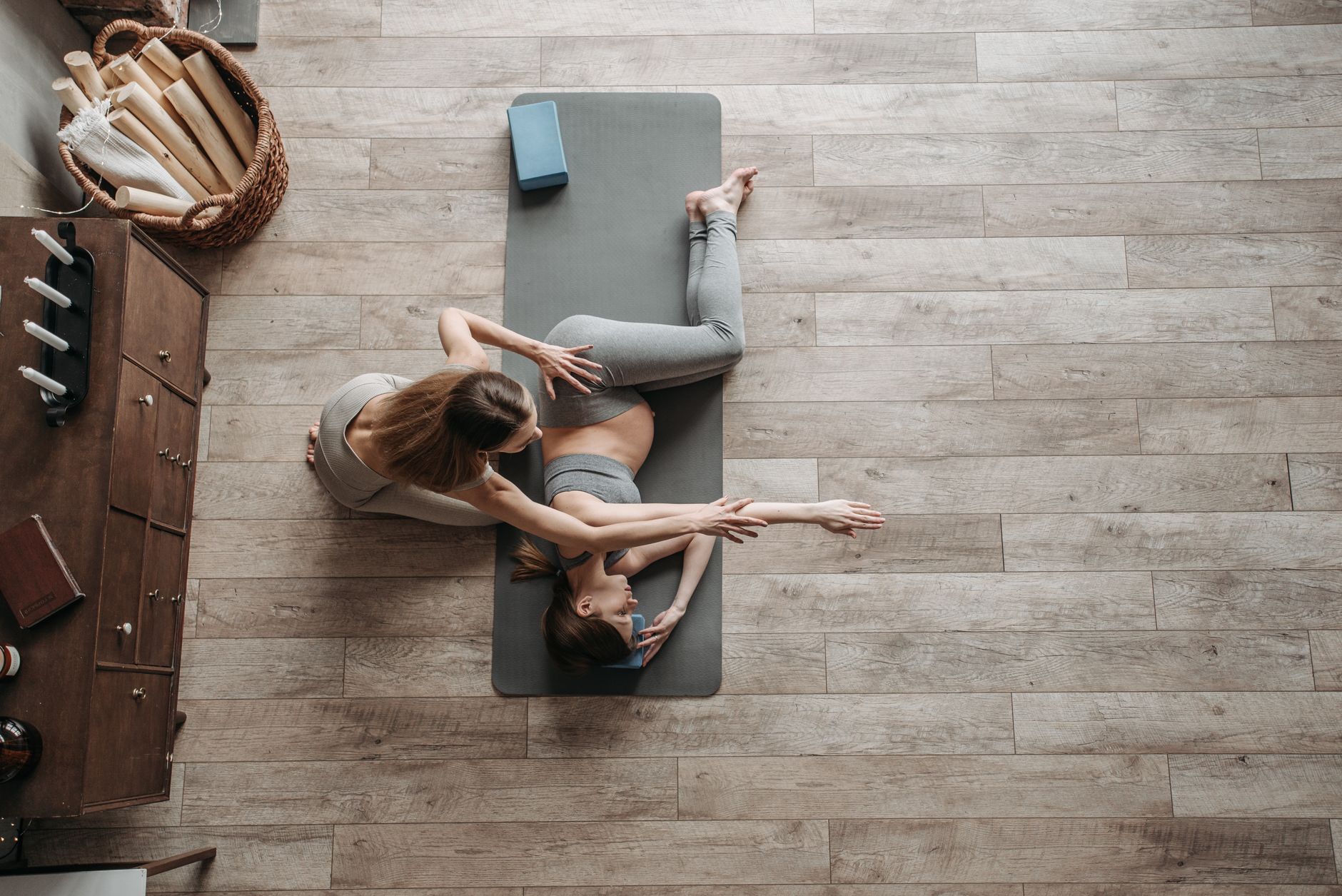
Side‑lying Leg Lifts: Lying on the left side (the recommended side for circulation) and lifting the top leg strengthens hips without pressure on the uterus.
Supported Bridge (Setu Bandha Sarvangasana) with a yoga ball: Opens the chest and reduces lower‑back strain while the ball cushions the sacrum.
Child’s Pose (Balasana) with a wide stance: Provides a gentle stretch for the back and hips, and the wider knees accommodate the growing belly.
Focus on maintaining a neutral spine and using props to keep the belly from being compressed. You’ll notice a natural “rocking” sensation as your center of gravity shifts—use it to guide you into more balanced, grounded movements.
Third trimester: stability and comfort
Standing Side Stretch with a wall: Place one hand on a wall for balance, lift the opposite arm overhead, and gently lean away from the wall to stretch the ribcage.
Pelvic Tilts on a yoga ball: Sit on a stability ball, feet flat on the floor, and gently rock the pelvis forward and back. This eases lower‑back pain and prepares the pelvis for birth.
Modified Tree Pose (Vrksasana) using a chair: Rest the lifted foot on the chair seat rather than the inner thigh, reducing the risk of a fall.
Seated Forward Fold with a bolster: Sit on a bolster, legs extended, and gently hinge at the hips. The bolster supports the torso and prevents abdominal compression.
These poses prioritize safety, keep the spine aligned, and avoid any deep forward bends that could compress the belly. Adding a gentle sway, such as a slow “Moon Salutation,” can help maintain flexibility while honoring the body’s new limits.
Across all trimesters, the key safety principles are: keep the belly open, avoid deep twists that press the abdomen, stay on stable surfaces, and listen to any signals of discomfort. When a pose feels tight or wobbly, modify it with a prop or simply rest in a neutral position.
Standing side stretches keep the ribcage open while supporting a growing belly.
Can I do inversions during the second trimester of pregnancy?
Inversions—any pose where the heart is above the head—include shoulder stand, headstand, and handstand. ACOG’s 2022 guidelines note that inversions are not contraindicated in the early stages of pregnancy, but they become riskier as the uterus enlarges and the center of gravity shifts.
During the second trimester, many providers advise against full inversions because:
Balance is reduced, increasing fall risk.
Increased intra‑abdominal pressure can affect blood flow.
Some women experience dizziness or light‑headedness when upside down.
If you’re experienced and have a qualified prenatal instructor, you can try modified inversions that keep the shoulders grounded and use props:
Leg‑up‑the‑wall (Viparita Karani): Lie on your back with hips near a wall, scoot your legs up, and rest your arms by your sides. This gentle reversal improves circulation without compressing the belly.
Supported Dolphin Pose: Place forearms on a block or bolster, keep the hips elevated, and avoid letting the crown touch the floor.
Never attempt deep headstands or shoulder stands without a spotter, and always exit the pose slowly. If you feel any of the following, come out immediately: ringing in the ears, shortness of breath, or a sudden increase in uterine cramping. For many women, staying on the ground with the heart below the belly remains the safest approach.
How can I modify a Sun Salutation for a pregnant belly?
The Sun Salutation (Surya Namaskar) is a classic flow that builds heat, warms the muscles, and syncs breath with movement. In pregnancy, the sequence needs a few thoughtful tweaks to protect the abdomen and maintain balance.
Step‑by‑step modified Sun Salutation
Mountain Pose (Tadasana): Ground through the feet, engage the core gently, and inhale.
Half‑way Lift (Ardha Uttanasana) with a block: Place a block on each side of the mat, rest hands on the blocks, and hinge from the hips—no deep forward fold.
Low Lunge (Anjaneyasana) with a wide stance: Step the back foot out wide, keep the front knee over the ankle, and rest hands on a block for support.
Standing Forward Fold (Uttanasana) with a slight bend: Instead of folding fully, keep a soft bend in the knees and let the belly hang comfortably.
Half‑way Lift again: Return to the lifted position using the blocks.
Mountain Pose: Return to the top of the mat, inhale, and repeat.
Key modifications:
Use a block for hand support in the forward bends.
Keep the knees soft to avoid compressing the uterus.
Avoid the classic “Urdhva Dhanurasana” (wheel) and deep backbends.
Maintain a steady, even breath—inhale to lengthen, exhale to fold.
This version can be done for 5–10 minutes, building heat without overstretching the belly. Adding a gentle “Ujjayi” breath during the lifts helps keep the core engaged while still feeling relaxed.
Prenatal yoga breathing techniques to reduce labor pain
Breath is the bridge between mind and body, and prenatal yoga emphasizes patterns that calm the nervous system and prepare the uterus for active labor. ACOG recommends incorporating at least one dedicated breathing practice into each weekly yoga session.
Three core techniques
Ujjayi Breath (Victorious Breath): Slightly constrict the throat, inhale through the nose, and exhale audibly. This creates a gentle “ocean” sound that focuses attention and keeps the abdomen relaxed.
Box Breathing (Four‑four‑four‑four): Inhale for a count of four, hold for four, exhale for four, and pause for four. This rhythm steadies heart rate and reduces anxiety during early contractions.
Visualization Breath (Belly‑to‑Back): On inhale, imagine the breath traveling down to the pelvic floor; on exhale, picture it moving upward, lifting the belly like a balloon. This encourages diaphragmatic expansion without straining the abdomen.
Practicing these breaths for 5–10 minutes daily can lower perceived pain by up to 30 % according to a 2021 systematic review published in the Journal of Obstetric, Gynecologic & Neonatal Nursing (reviewed by ACOG). Even if you’re not in labor yet, regular breath work builds the muscle memory you’ll need when contractions begin. Pair the breath with a gentle sway or “rocking” movement to further calm the nervous system.
Yoga poses and stretches to relieve lower back pain and swollen feet in the third trimester
Lower‑back strain and edema (swollen feet) are among the most common discomforts reported by third‑trimester moms. Targeted yoga poses improve circulation, stretch tight muscles, and reduce pressure on the spine.
Back‑pain‑relieving poses
Cat‑Cow on a bolster: Place a bolster under your belly for support, then flow gently between arching and rounding the spine.
Pelvic Tilt on a yoga ball: Sit on a stability ball, feet planted, and rock the pelvis forward and back. This opens the lower back and eases tension.
Modified Child’s Pose with a wide knee stance: Knees spread wide, big toes touching, and torso resting on a block. The stretch releases lumbar muscles without compressing the belly.
Foot‑swelling‑relief stretches
Seated Ankle Circles: Sit on a block, extend one leg, and draw circles with the foot—10 each direction.
Standing Forward Fold with heels lifted: Place a block under the heels, hinge from the hips, and let gravity draw fluid from the lower legs.
Combine a back‑pain routine (5 minutes) with a foot‑stretch sequence (3 minutes) after each yoga class. Consistency helps keep swelling under 1–2 cm, a level many clinicians consider “normal” for late pregnancy. If swelling suddenly increases or is painful, it may signal pre‑eclampsia and warrants a prompt medical check.
Simple ankle circles can ease swollen feet after a long day on your feet.
Is it safe to practice yoga on a yoga ball, and which props are recommended for pregnant women?
Props turn a regular yoga mat into a supportive sanctuary. The yoga ball, blocks, straps, and a firm yet cushioned mat are the most frequently recommended items for prenatal practice.
Yoga ball safety
Choose a size‑appropriate ball: When seated, your knees should be at a right angle and your feet flat on the floor.
Use the ball on a non‑slippery surface—place a yoga mat underneath.
Limit movements that require rapid changes in direction; slow, controlled rocking is safest.
Avoid ball‑based inversions unless you have a certified prenatal instructor and a spotter.
When you feel a gentle wobble, engage your core lightly to maintain balance. The ball can also be used for seated forward folds, gentle hip openers, and pelvic tilts, all of which relieve tension without forcing the spine.
Other essential props
Yoga blocks: Firm foam or cork blocks provide hand support in standing poses and can be placed under the belly for seated forward folds.
Straps: A yoga strap (or a belt) helps you reach the feet in seated stretches without over‑extending the hamstrings.
Bolster or firm pillow: Use for gentle backbends, seated meditation, or as a cushion under the knees in supine positions.
Pregnancy‑friendly mat: Look for a mat with extra thickness (6–8 mm) and a non‑slip surface. Natural rubber or TPE materials are hypoallergenic and eco‑friendly.
These props not only protect you from strain but also help you maintain proper alignment as your body changes.
How often should pregnant women practice yoga each week, and what should beginners look for in a class or instructor?
Frequency depends on energy levels, trimester, and any pregnancy‑related complications. ACOG suggests that low‑impact exercise, including yoga, be performed at least twice a week for 20–30 minutes per session during the second and third trimesters. The first trimester can accommodate shorter, more frequent sessions (e.g., 3–4 times a week for 15 minutes) if you feel energetic.
Guidelines for safe weekly practice
Duration: 20–45 minutes per session; longer sessions increase fatigue and risk of overheating.
Intensity: Keep heart rate below 140 bpm (moderate intensity). Use the “talk test”—you should be able to hold a conversation while moving.
Rest days: At least one rest day between sessions to allow muscles to recover.
Hydration: Drink water before, during, and after class; avoid hot, humid rooms.
When you’re new to prenatal yoga, start with a short warm‑up (5 minutes) and a gentle cool‑down (5 minutes). Notice how your body feels after each session; if you’re unusually sore or fatigued, scale back the duration or intensity.
Choosing a beginner‑friendly prenatal class
Look for the words “prenatal,” “pregnancy,” or “expecting” in the class title.
Verify that the instructor holds a certification in prenatal yoga (e.g., Yoga Alliance’s “RYT‑200 with Prenatal Specialty”).
Ask about class size—smaller groups (≤10 participants) allow for individualized adjustments.
Ensure the studio provides props and a calm environment (soft lighting, moderate temperature).
Confirm that the instructor encourages modifications and never forces deep backbends or intense core work.
For “prenatal yoga classes near me for beginners,” a quick search on Google Maps or a platform like Mindbody will show local studios, community centers, and even virtual options that meet these criteria.
Yoga vs Pilates for pregnant women: safety comparison, and post‑delivery yoga recommendations
Both yoga and Pilates can improve core strength, posture, and breathing, but they differ in emphasis. Yoga tends to be more holistic, integrating mindfulness and gentle movement, while Pilates focuses on precise core activation. For pregnant women, safety hinges on the type of movements, the level of impact, and the instructor’s expertise.
Aspect
Yoga (Prenatal)
Pilates (Prenatal)
Core focus
Gentle engagement; avoids intense crunches
Strong emphasis on deep abdominal work; may stress the linea alba
Impact on uterus
Low‑impact, many poses keep belly open
Some mat work can compress the abdomen if not modified
Breath used for core activation, less focus on relaxation
Typical contraindications
Deep twists, inversions after first trimester
Supine or prone core work after 20 weeks; high‑intensity reformer work
Postpartum transition
Seamless, many poses evolve into gentle post‑natal flows
Often requires a separate “post‑natal Pilates” program
Overall, yoga is considered the safer first‑line option for most pregnant clients, especially those new to exercise. Pilates can be incorporated after the second trimester if the instructor is certified in prenatal Pilates and avoids supine work. Whichever you choose, keep the focus on supportive, low‑impact movement and always ask for modifications that honor your belly.
Post‑delivery yoga exercises
Pelvic Floor Kegels with diaphragmatic breathing: Sit comfortably, inhale to expand the belly, and gently contract the pelvic floor on exhale.
Cat‑Cow on a bolster: Supports the spine while re‑establishing mobility.
Modified Cobra (Bhujangasana) on a block: Opens the chest without over‑arching the lower back.
Seated Side Stretch with a strap: Gently lengthens the torso as you regain core strength.
Start with 10‑minute sessions 2–3 times a week, gradually increasing duration as your body heals. Listening to your body remains the most important guide—if a stretch feels sharp, ease back.
Prenatal yoga for pelvic floor health and postpartum recovery
The pelvic floor is a group of muscles that supports the bladder, uterus, and bowels. Pregnancy places extra pressure on these muscles, and many women experience leakage or a feeling of heaviness after delivery. Prenatal yoga offers gentle, targeted exercises that strengthen the pelvic floor without straining it.
Pelvic‑floor‑friendly poses
Supine Pelvic Tilts: Lie on your back with knees bent, gently flatten the lower back against the mat on an exhale, and release on an inhale. Perform 10–15 repetitions.
Standing March with Core Engagement: While holding onto a wall for balance, lift one knee toward the chest, engage the lower abdomen, then lower and switch sides. This mimics the “Kegel” contraction while moving.
Bridge with a Ball: Place a yoga ball beneath the sacrum, lift hips slightly, and focus on gently squeezing the pelvic floor as you exhale.
Practicing these moves a few times a week can reduce postpartum urinary leakage by up to 25 % according to the Royal College of Obstetricians and Gynaecologists (RCOG) 2023 guidance. After birth, continue the same exercises—now without a ball—to help the pelvic floor rebound more quickly.
Simple pelvic tilts support the pelvic floor without heavy strain.
Creating a safe home yoga space during pregnancy
Not every mom can attend a studio class, especially during the later weeks when travel becomes challenging. Setting up a calm, safe area at home lets you practice whenever you feel ready.
Key elements for a pregnancy‑friendly space
Stable, non‑slippery surface: Use a thick yoga mat (6–8 mm) on a flat floor. Avoid rugs that shift.
Good lighting: Natural daylight or a soft lamp reduces eye strain and helps you see proper alignment.
Temperature control: Keep the room comfortably cool (around 68‑72 °F) and avoid humid, heated environments that can raise core temperature.
Accessible props: Keep blocks, straps, and a bolster within arm’s reach so you don’t have to get up mid‑flow.
Minimal distractions: Turn off notifications, play gentle instrumental music if you like, and let others know you need a few uninterrupted minutes.
Even a small corner of a living room can become a sanctuary when you arrange these elements thoughtfully. A tidy space not only reduces the risk of tripping but also signals to your brain that it’s time to relax and breathe.
Mental health benefits of prenatal yoga and how to cultivate mindfulness
Beyond the physical advantages, yoga is a proven tool for reducing anxiety, depression, and stress during pregnancy. The NHS cites that regular mindfulness‑based movement can lower cortisol levels and improve sleep quality. For many expecting parents, the combination of breath, gentle movement, and present‑moment awareness creates a soothing ritual.
Practical mindfulness tips for your practice
Anchor to the breath: Each time your mind wanders, gently bring attention back to the inhale‑exhale rhythm.
Body scan: At the start or end of a session, mentally check in with each body part—from the soles of your feet to the crown of your head—notice sensations without judgment.
Gratitude cue: While holding a pose, silently name one thing you’re grateful for about your pregnancy. This rewires the brain toward positivity.
Even a brief 10‑minute mindful flow three times a week can reduce self‑reported anxiety scores by 15 % in a 2022 study from the University of Washington, aligning with ACOG’s recommendation to incorporate mental‑health strategies into prenatal care.
From our medical team: Prenatal yoga is a low‑risk activity that can enhance circulation, reduce stress, and improve sleep. Most poses are safe when you respect your body’s limits, use props, and stay hydrated. If you have a high‑risk pregnancy—such as placenta previa, pre‑eclampsia, or multiple gestation—check with your obstetrician before starting any new routine.
Myth vs. fact
Myth: “All yoga poses are safe in pregnancy.”
Fact: Deep backbends, intense core crunches, and most inversions should be modified or avoided after the first trimester to protect the uterus and maintain balance.
Myth: “You need a special yoga mat for pregnancy.”
Fact: A thicker, non‑slip mat (6–8 mm) provides extra cushioning for the knees and hips, but any stable, clean mat works as long as it doesn’t cause your hands or feet to slip.
Myth: “If you can’t touch your toes, you’re not doing yoga correctly.”
Fact: Flexibility varies greatly during pregnancy; the goal is to keep the spine neutral and avoid forcing stretches that compress the belly.
Key takeaways
Gentle, trimester‑specific poses—like Cat‑Cow, Modified Warrior II, and Side‑lying Leg Lifts—are safe throughout pregnancy.
Deep inversions are best avoided after the first trimester; try leg‑up‑the‑wall instead.
Use props (blocks, straps, a yoga ball, and a thicker mat) to support your growing belly and maintain balance.
Practice 2–3 times a week for 20–45 minutes, staying in a moderate‑intensity zone (talk test).
Incorporate breath work such as Ujjayi and Box Breathing to reduce labor pain and anxiety.
Choose certified prenatal instructors and small class sizes for personalized modifications.
Post‑delivery yoga can safely rebuild core strength; start with short, gentle sessions.
Target pelvic‑floor health with supine tilts and standing marches to aid postpartum recovery.
Set up a calm home space with a stable mat, good lighting, and easy‑access props for consistent practice.
Mindful breathing and gratitude cues enhance mental well‑being and reduce pregnancy‑related stress.
Frequently asked questions
Is it safe to do yoga after the first trimester?
Yes—most gentle yoga poses remain safe after the first trimester when you modify deep twists, inversions, and intense core work.
Which yoga poses should be avoided during pregnancy?
Avoid deep backbends (e.g., Wheel Pose), full inversions (headstand, shoulder stand), and intense abdominal crunches that compress the uterus.
Can prenatal yoga help with labor and delivery?
Studies reviewed by ACOG show that regular prenatal yoga can improve pain coping, reduce labor length, and increase the likelihood of a vaginal birth when combined with proper breathing techniques.
How many times a week should I do prenatal yoga?
ACOG recommends at least two moderate‑intensity sessions per week, each lasting 20–45 minutes, with rest days in between.
Do I need a special yoga mat for pregnancy?
A thicker, non‑slip mat (6–8 mm) offers extra cushioning for knees and hips, but any stable, clean mat works as long as it prevents slipping.
Are yoga blocks and straps safe for pregnant women?
Yes—when used correctly they provide support and allow you to maintain proper alignment without overstretching the belly.
Can I practice prenatal yoga if I have a high‑risk pregnancy?
If you’ve been diagnosed with a high‑risk condition such as placenta previa, pre‑eclampsia, or multiple gestation, you should get clearance from your obstetrician before starting any yoga routine. Modified, low‑impact poses are often still possible, but professional guidance is essential.
What should I do if I feel contractions during a yoga session?
Stop the practice, sit or lie down in a comfortable position, and focus on slow, deep breathing. If the contractions become regular, intensify, or are accompanied by pain, contact your provider right away. Light, rhythmic breathing can sometimes ease early Braxton‑Hicks contractions.
When to call your doctor
If you experience any of the following during or after a yoga session, stop immediately and contact your obstetric provider:
Sudden, sharp abdominal pain or cramping
Vaginal bleeding or spotting
Dizziness, faintness, or shortness of breath
Severe back pain that doesn’t improve with rest
Swelling that suddenly becomes painful or is accompanied by a headache
These symptoms could signal a complication that requires professional evaluation. This article is for informational purposes only and does not replace personalized medical advice.
References
American College of Obstetricians and Gynecologists. “Physical Activity and Exercise During Pregnancy and the Postpartum Period.” 2022 Clinical Guidance.
National Health Service (UK). “Exercise in Pregnancy.” Updated 2023.
Centers for Disease Control and Prevention. “Pregnancy and Physical Activity.” 2023.
World Health Organization. “Recommendations on Antenatal Care for a Positive Pregnancy Experience.” 2022.
Journal of Obstetric, Gynecologic & Neonatal Nursing. “Effectiveness of Prenatal Yoga on Labor Pain.” Systematic Review, 2021.
Yoga Alliance. “Prenatal Yoga Teacher Training Standards.” 2022.
Royal College of Obstetricians and Gynaecologists. “Guidelines on Exercise in Pregnancy.” 2023.
Mayo Clinic. “Yoga during pregnancy: Benefits and safety.” 2023.
American Physical Therapy Association. “Pregnancy and Postpartum Exercise.” 2022.
Royal College of Obstetricians and Gynaecologists. “Pelvic floor health during and after pregnancy.” 2023.
National Institute for Health and Care Excellence (NICE). “Mental health and wellbeing in pregnancy.” 2022.
Not sure about the label on Prenatal Yoga Safe Poses By Trimester Video Guides products?
Snap the ingredients list and SafeFilter checks every ingredient for your stage — only 3 free scans this month, then you're locked until reset. Unlimited from $7/mo or $50/yr.
When Shubhra Mishra was expecting her first child in 2016, she was overwhelmed by conflicting food advice — one site said yes, another said never. By the time her second baby arrived in 2019, she realized millions of mothers face the same confusion.
That sparked a five-year journey through clinical nutrition papers, cultural diets, and expert conversations — all leading to BumpBites: a calm, compassionate space where science meets everyday motherhood.
Her long-term vision is to build a global community ensuring safe, supported, and free deliveriesfor every mother — because no woman should face pregnancy alone or uninformed. 🌿
🌍 Stand with mothers, shape safer guidance
Join a small circle of experts who review BumpBites articles so expecting parents everywhere can decide with confidence.