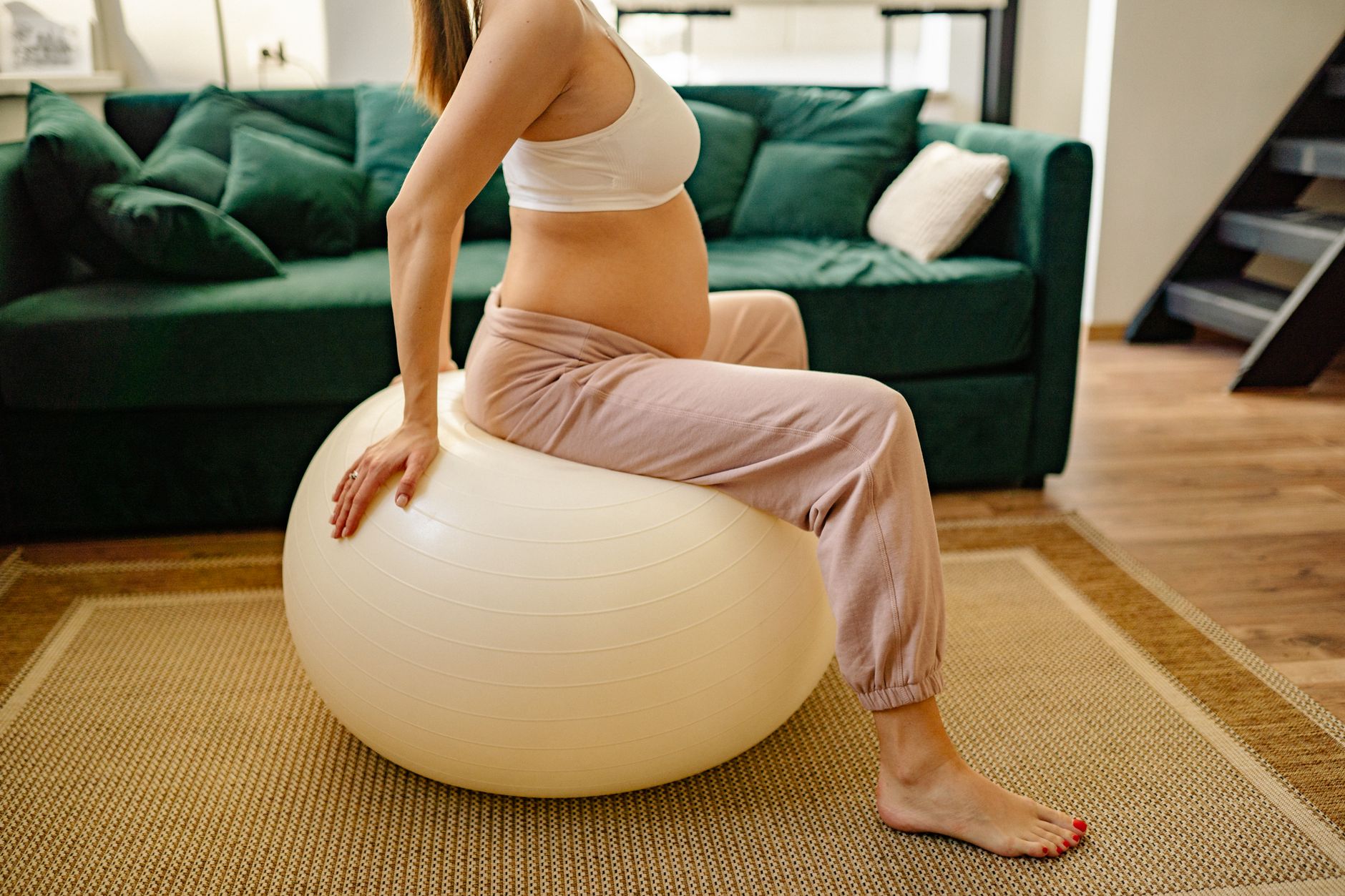
Pilates ball pregnancy exercises are a safe and effective way to strengthen your core, pelvic floor, and back muscles, supporting your body through pregnancy and preparing for birth. Learn essential moves for a healthier, stronger you.
By Shubhra Mishra — a mom of two who turned her own confusion during pregnancy into BumpBites, a global mission to make food choices clear, safe, and stress-free for every expecting mother. 💛
Check whether any food is safe during pregnancy with the BumpBites Food Safety Checker.
Quick take: Pilates ball exercises are generally safe for most pregnant women when you choose movements that support your changing body, keep the intensity moderate, and listen to your comfort level. They can ease back pain, strengthen core and pelvic‑floor muscles, and boost mood—all while you stay at home, preparing your body for labor and postpartum recovery.
It’s 2 a.m., you’ve just woken up with a sharp twinge in your lower back, and the pregnancy‑related aches are making you wonder if a gentle workout could help. You’re not alone—many expectant moms turn to the Pilates ball for its supportive, low‑impact nature. It feels good to move, but knowing *how* to move safely is key. In this guide, we’ll walk through the safest moves, explain why the ball is a pregnancy‑friendly tool, and give you a step‑by‑step home routine you can start today.
We’ll cover everything from first‑trimester basics to pelvic‑floor strengthening, and even how to adapt the exercises as your belly grows. We’ll also explore how the Pilates ball can be a valuable tool for labor preparation and pain relief. By the end, you’ll have a clear plan, know the key benefits, and feel confident that you’re moving safely for you and your baby, empowering you to embrace your pregnancy journey with greater comfort and strength.
Pilates ball exercises for pregnancy back pain — what works and why?
Back pain affects up to 70 % of pregnant people, especially in the second and third trimesters when the uterus shifts your center of gravity, increasing the curve in your lower back (lumbar lordosis). The Pilates ball provides a soft, movable surface that encourages gentle spinal flexion and extension without the jarring impact of floor work, offering a unique blend of support and challenge that can significantly alleviate discomfort.
The ball's inherent instability creates a dynamic environment, encouraging your body to engage often-underutilized stabilizing muscles. This subtle engagement helps to decompress the spine, improve circulation to the affected areas, and gently realign your posture. Many women find the fluid, rocking motions on the ball incredibly soothing, almost like a self-massage, which can reduce muscle tension and nerve irritation contributing to back pain.
Why the ball eases lumbar strain
The ball’s “unstable” surface forces the deep stabilizing muscles—multifidus, erector spinae, and transverse abdominis—to engage subtly. This low‑level activation relieves tension in the larger, over‑worked back muscles. Think of it as a miniature, supportive “massage” that you control, allowing your body to find a more neutral and comfortable spinal alignment. This gentle activation, without heavy loading, is crucial for supporting the spine as relaxin, a pregnancy hormone, loosens ligaments.
Furthermore, the ball allows for a greater range of motion in safe, controlled ways than floor exercises might. For instance, sitting on the ball encourages a more upright posture, which can reduce the compressive forces on your lower back. The gentle bouncing or rocking motions can also stimulate proprioception—your body's sense of its position in space—helping you become more aware of your posture and correct it throughout the day.
Top back‑pain moves
Seated spinal roll: Sit on the ball with feet flat, gently roll the ball forward, allowing the spine to round into a C‑shape. Focus on articulating each vertebra. Roll back up, keeping the movement smooth and controlled. Perform 8‑10 repetitions. This move gently mobilizes the entire spine.
Supine knee‑to‑chest on the ball: Lying on your back (ensure you're not flat on your back for extended periods in later pregnancy; use a wedge or pillow under one hip if needed), place the ball under your knees. Bring one knee toward your chest, then switch sides. This gently opens the lower back and hips, alleviating tension in the glutes and piriformis, which can contribute to sciatic pain.
Wall‑supported back extension: With the ball between your lower back and a wall, slowly press the hips forward, extending the spine gently. Hold for a few breaths, then return. This movement provides supported spinal extension, counteracting the forward pull of your growing belly.
Pelvic tilts (seated on ball): Sitting upright on the ball, gently tilt your pelvis forward and backward, allowing your lower back to arch and then flatten slightly. This small, controlled movement helps to find and maintain a neutral spine, strengthening the muscles that support it.
Each exercise should feel like a gentle stretch, not a pain‑inducing thrust. If you hear a sharp “pop” or feel sharp pain, stop immediately and reassess your form. It's about finding ease and gentle movement, not pushing through discomfort.
In addition to these moves, maintaining a neutral pelvis and avoiding prolonged sitting can further reduce discomfort. A short walk after meals and a supportive maternity pillow at night also help keep your spine aligned, complementing the work you do on the Pilates ball. Remember to get up and move every 30-60 minutes if you have a desk job, even if it's just for a quick stretch or walk to the kitchen.
Safe pilates ball exercises for the first trimester
The first trimester is a time of profound hormonal change and heightened fatigue, often accompanied by nausea, but it’s also the ideal window to establish a gentle exercise habit before the belly gets larger and energy levels fluctuate further. The focus should be on maintaining mobility, practicing mindful breathing, and initiating low‑impact core activation, setting a strong foundation for the months ahead.
During these early weeks, your body is undergoing rapid internal changes, including a significant increase in blood volume and the production of hormones like relaxin, which begins to soften ligaments. While you might not "look" pregnant yet, your body is working incredibly hard. Gentle, supportive exercises on the Pilates ball can help combat common first-trimester symptoms like fatigue and mild backache, and can be a wonderful way to connect with your body.
Key safety points for early pregnancy
Keep the ball at a comfortable height—usually around hip level when seated—allowing your feet to be flat on the floor and knees at a 90-degree angle. This ensures stability and proper alignment.
Avoid any move that involves rapid twisting, deep abdominal compression, or holding your breath. Your movements should be slow, controlled, and fluid.
Stay hydrated by sipping water throughout your workout, and stop immediately if you feel dizziness, lightheadedness, shortness of breath, or increased nausea. Listen to your body's signals.
Maintain a moderate intensity. You should be able to hold a conversation comfortably during your workout (the "talk test").
Beginner‑friendly routines
Ball assisted cat‑cow: Place hands on the ball while on hands‑and‑knees on the floor. Inhale to arch (cow), gently dropping your belly and lifting your gaze. Exhale to round (cat), tucking your pelvis and drawing your belly button towards your spine. Repeat 8‑12 times, focusing on spinal mobility and gentle core engagement.
Pelvic tilts on the ball: Sit on the ball, feet flat, and gently tilt the pelvis forward and back, feeling the lower back engage and release. This helps to find a neutral pelvic position and can relieve early back discomfort. Perform 10–15 gentle tilts.
Side‑lying leg lifts: Lie on your side with the ball supporting your head and neck (or use a pillow). Lift the top leg slowly, keeping the hip stable and not letting your torso rotate. Do 8‑10 lifts each side. This strengthens the outer hip and gluteal muscles, which are important for pelvic stability.
Gentle seated bounces: Simply sit on the ball with feet flat and gently bounce up and down. This can improve circulation, engage core stabilizers subtly, and provide a sense of relaxation. Start with 1-2 minutes.
These movements build a foundation for later core work while respecting the delicate hormonal environment of early pregnancy. They encourage body awareness and can help manage common first-trimester symptoms, preparing your body for the physical demands of the trimesters to come.
Pilates ball core strengthening during pregnancy
“Core” in pregnancy isn’t about striving for a six‑pack; it’s about the deep stabilizing muscles that protect your spine, support the growing uterus, and prepare your body for the demands of labor and postpartum recovery. The Pilates ball can safely challenge these essential muscles without the risk of high‑impact pressure or excessive strain on the abdominal wall, which is vital as your body changes.
The deep core unit includes the transverse abdominis (your body's natural corset), the pelvic floor muscles, the multifidus (small muscles along your spine), and the diaphragm. These muscles work together synergistically to provide stability and support. During pregnancy, the stretching of the abdominal muscles can lead to diastasis recti (separation of the outermost ab muscles), so exercises that focus on *deep* core engagement rather than superficial crunching are essential for prevention and management, as recommended by the American College of Obstetricians and Gynecologists (ACOG).
Core‑targeting moves
Ball bridge: Lying on your back (again, consider a slight incline or wedge under one hip in later pregnancy), place the ball under your hips. Press through your heels to lift the pelvis, engaging the glutes and deep core. Hold for 5 seconds at the top, ensuring your hips are level, then slowly lower down. Repeat 10‑12 times. This strengthens the glutes, hamstrings, and the deep core stabilizers.
Ball roll‑outs (modified): Kneel on a mat, hands on the ball shoulder-width apart. Gently roll the ball forward a few inches, keeping the spine neutral and engaging your core to prevent your lower back from arching. Return to start. Perform 6‑8 repetitions. The key here is to control the movement from your core, not your arms, and keep the range of motion small.
Seated ball twist (gentle): Sit upright on the ball, feet flat, arms crossed over chest or hands on hips. Rotate the torso slightly to each side, staying within a comfortable range and initiating the movement from your core, not just your shoulders. Do 8‑10 twists per side. This improves spinal mobility and engages the oblique muscles gently.
Standing wall roll-down: Stand with your back against a wall, ball between your mid-back and the wall. Gently bend your knees and roll down the wall a few inches, using the ball for support, engaging your core as you lower and lift. This helps with spinal articulation and core control in an upright position.
These exercises engage the transverse abdominis and pelvic‑floor synergy, which is essential for supporting the growing uterus, reducing the risk of diastasis recti, and helping with postpartum recovery. By focusing on controlled, mindful movements, you're building functional strength that will serve you well throughout pregnancy and beyond.
Balancing strength and flexibility
Pregnancy can tighten the hip flexors and hamstrings due to postural changes. Adding a ball stretch after each core set—like a seated forward fold over the ball (with open legs to accommodate your belly) or a gentle hip flexor stretch with one knee on the floor and the ball supporting the front leg—keeps the muscles supple and prevents over‑compensation and muscle imbalances. Always prioritize gentle, sustained stretches over bouncing movements to protect your joints, which are more lax due to relaxin.
Pilates ball exercises for pregnancy pelvic floor
The pelvic floor is a hammock of muscles at the base of your pelvis that supports your uterus, bladder, and bowels. It bears the increasing weight of the baby and plays a starring role in labor and delivery. Strengthening it with the Pilates ball can improve bladder control (reducing common pregnancy incontinence), reduce the risk of pelvic organ prolapse, and enhance your body's ability to relax and contract these muscles effectively during childbirth, potentially shortening the second stage of labor.
A well-conditioned pelvic floor can also improve recovery postpartum, helping to restore tone and function. The Pilates ball provides an excellent tactile cue, allowing you to *feel* the engagement and release of these muscles more clearly. It also encourages proper posture, which is fundamental to optimal pelvic floor function, as noted by the American Physical Therapy Association (APTA).
Pelvic‑floor friendly moves
Ball seated Kegels: Sit comfortably on the ball, feet flat. Inhale deeply, allowing your belly to expand and your pelvic floor to relax downwards. As you exhale, gently contract the pelvic floor muscles as if stopping urine flow or holding back gas. Lift and squeeze *upwards* and *inwards*. Hold 3‑5 seconds, then fully release for 5-10 seconds. Repeat 10‑15 times. Focus on isolating these muscles without clenching your glutes, thighs, or abs.
Supine heel squeezes on the ball: Lie on your back with the ball under your knees, feet resting on top. Squeeze your heels together, engaging the inner thighs and pelvic floor simultaneously. This synergy helps activate the deeper pelvic floor muscles. Perform 12‑15 repetitions.
Ball-assisted squats: Stand with the ball against a wall, lean into it with your lower back, and perform a shallow squat. The wall support reduces pressure on the pelvic floor while still activating the glutes and leg muscles. As you squat down, visualize your pelvic floor lengthening and relaxing; as you stand up, gently lift and engage it.
Deep breathing with pelvic floor awareness: Sit on the ball. Place one hand on your belly and one on your chest. Inhale slowly through your nose, feeling your belly expand and your pelvic floor relax and descend. Exhale slowly through your mouth, feeling your belly gently draw in and your pelvic floor gently lift. This connection is vital for both strength and relaxation.
Combine these with breathing drills—inhale through the nose, exhale through the mouth—to enhance muscle recruitment and promote relaxation, which is just as important as strength for the pelvic floor, especially for labor. Regular, consistent practice of these exercises can make a significant difference in your comfort and confidence.
Modifying pilates ball exercises for pregnancy — trimester‑specific tips
As your belly grows and your body changes throughout pregnancy, the ball’s height, the specific exercises you can comfortably perform, and the range of motion you can safely use will naturally change. Understanding these adaptations is key to maintaining a safe and effective workout routine that supports your evolving anatomy, as emphasized by the National Health Service (NHS) guidelines on exercise in pregnancy.
The hormone relaxin, which softens ligaments, means your joints are more mobile and potentially less stable. Your center of gravity shifts, impacting balance. Blood volume increases, affecting cardiovascular response. All these factors necessitate thoughtful modifications to ensure your exercise remains beneficial and risk-free.
Second trimester modifications
Use a larger ball (65 cm or 75 cm, depending on your height) to accommodate a higher center of gravity and provide better support for your growing bump. A general rule is that your hips should be slightly higher than your knees when seated on the ball with feet flat.
Shift from purely seated or supine positions to standing or supported positions, especially for core work, to avoid excessive forward tilt or prolonged lying on your back (which can compress the vena cava).
Limit deep forward bends; aim for a comfortable stretch rather than a full fold. Instead, try a wide-leg seated forward fold over the ball to make space for your belly.
Incorporate more side-lying exercises for glute and hip strength, as these are excellent for pelvic stability and avoid direct abdominal pressure.
Increase rest periods between sets as your cardiovascular system works harder.
Third‑trimester modifications
Place a folded towel under the ball for extra cushioning and stability when sitting, especially if you experience pelvic girdle pain.
Favor side‑lying and wall‑supported moves to keep the spine neutral and avoid any potential pressure on the vena cava (the large vein that carries deoxygenated blood back to your heart).
Shorten the range of motion on exercises like roll‑outs or squats—keep the ball within a few inches of the start point, focusing on control and deep core engagement rather than depth.
The ball can also be used for gentle rocking, hip circles, and figure-eight movements while seated, which can help prepare the pelvis for labor by encouraging mobility and relaxation.
Pay extra attention to proper breathing, using your breath to assist with pelvic floor relaxation and core support.
General safety checklist
Check ball firmness: it should be firm enough to support your weight without sinking, but not over-inflated to the point of being rigid. You should be able to make a slight indentation with your thumb.
Maintain a stable surface—avoid hardwood floors that may cause the ball to slip. Opt for carpet, a rug, or a yoga mat.
Use a non‑slip mat underneath if you’re on a polished surface to prevent the ball from sliding out from under you.
Listen to your body: stop if you feel pain (especially sharp, sudden pain), dizziness, lightheadedness, vaginal bleeding, fluid leakage, contractions, or shortness of breath. These are signals that you need to rest or consult your provider.
Stay hydrated before, during, and after your workout.
Wear comfortable, supportive clothing and shoes that allow for freedom of movement.
These thoughtful tweaks keep the workout effective while respecting the evolving anatomy and physiological demands of pregnancy. Always remember that consistency with gentle, modified movements is more beneficial than sporadic, intense workouts.
Benefits of using a pilates ball during pregnancy
Beyond pain relief, the Pilates ball offers a suite of advantages that support both physical and emotional well‑being, contributing significantly to a more comfortable and empowered pregnancy journey. Its versatility makes it a standout tool for expectant parents looking to stay active and prepare their bodies for childbirth.
Physical benefits
Improved posture: The unstable nature of the ball encourages continuous micro-adjustments to maintain balance, strengthening the deep core and back muscles that support spinal alignment. This reduces the exaggerated sway‑back (lordosis) often seen in later pregnancy, which contributes to back pain.
Enhanced balance: As your center of gravity shifts with your growing belly, your balance can be compromised. Working on an unstable surface like the Pilates ball trains your proprioceptive system, improving your coordination and helping to prevent falls.
Weight management: Incorporating Pilates ball exercises into a regular routine, especially when combined with other low-impact cardio, can help maintain a healthy gestational weight gain, which is important for both maternal and fetal health, as per CDC guidelines.
Flexibility: Gentle stretches on the ball keep the hip flexors, hamstrings, and shoulders supple. This increased flexibility can relieve muscle tightness, improve range of motion, and can be particularly beneficial for opening the pelvis in preparation for labor.
Circulation boost: Gentle bouncing or rocking on the ball can improve blood flow, reducing swelling in the legs and ankles, a common pregnancy complaint.
Mental and emotional benefits
Moving on a ball releases endorphins, which are natural mood boosters that can lower anxiety, reduce stress, and improve sleep quality—two common concerns for pregnant people. The rhythmic breathing inherent in Pilates also promotes mindfulness and stress relief, helping you to feel more connected to your body and your baby. Taking dedicated time for yourself to move and breathe can be a powerful act of self-care.
Gentle ball stretches can improve posture and mood throughout pregnancy.
Pilates ball exercises for pregnancy sciatica relief
Sciatica—a sharp, shooting pain that radiates down the back of the leg—affects many expectant mothers as the growing uterus compresses the sciatic nerve, or as hormonal changes and postural shifts put pressure on the piriformis muscle. The Pilates ball’s supportive yet movable surface can gently decompress the nerve while strengthening the surrounding muscles and releasing tension in the hips and glutes, offering much-needed relief.
The key to sciatica relief with the ball lies in its ability to facilitate gentle, controlled movement that mobilizes the pelvis and hips without aggravating the nerve. It allows for stretches that might be difficult or uncomfortable to perform on a flat surface, providing cushioning and support, as highlighted by the Royal College of Obstetricians and Gynaecologists (RCOG) in their guidance on pregnancy-related pain.
Targeted sciatica moves
Ball-assisted piriformis stretch: Sit on the ball, cross one ankle over the opposite knee (creating a "figure-four" shape). Gently lean forward from your hips, keeping your spine long, until you feel a stretch in your glute and outer hip. Hold 20‑30 seconds per side. This targets the piriformis muscle, which often compresses the sciatic nerve.
Supine hip roll on the ball: Lying on your back (with hip wedge if in later pregnancy), place the ball under your knees, feet resting on top. Gently let your knees and hips roll side‑to‑side, keeping your shoulders grounded. This mobilizes the sacroiliac (SI) joint, which can become stiff or misaligned during pregnancy, contributing to sciatic pain.
Standing hamstring stretch with ball support: Place the ball against a wall at hip height. Step one foot forward, heel down, toes up. Place your hands on the ball for support and gently lean forward, keeping your back straight, until you feel a stretch in your hamstring. This allows for a supported stretch without straining the lower back. Hold 20‑30 seconds each leg.
Child's Pose with ball support: Kneel on your mat, place the ball in front of you. Gently rest your chest and arms over the ball, allowing your hips to sink back towards your heels. This creates a gentle traction for the spine and can relieve pressure on the sciatic nerve.
Combine these with diaphragmatic breathing to relax the surrounding muscles and reduce nerve irritation. Remember, consistency is key, and gentle movement is often more effective than forceful stretching when dealing with sciatica. If the pain intensifies, stop and consult your healthcare provider.
Choosing the right Pilates ball for pregnancy
Selecting the correct Pilates ball is crucial for both safety and effectiveness during pregnancy. It's not a one-size-fits-all situation, as your body changes and your needs evolve. The right ball will provide optimal support, allow for proper alignment, and accommodate your growing belly, ensuring your exercises are beneficial and comfortable.
Size matters: finding your fit
The most important factor is the ball's diameter. When you sit on the ball with your feet flat on the floor, your hips should be slightly higher than your knees, and your knees should be at approximately a 90-degree angle. This ergonomic position ensures proper spinal alignment and prevents undue stress on your hips and lower back.
55 cm ball: Generally suitable for individuals 5'0" (152 cm) to 5'4" (163 cm) tall.
65 cm ball: Most commonly recommended for individuals 5'5" (165 cm) to 5'11" (180 cm) tall. This is often a good starting point for many pregnant women.
75 cm ball: Ideal for individuals 6'0" (183 cm) and taller, or for those in later pregnancy who need extra height to accommodate a larger belly and maintain the hips-above-knees rule.
If you're between sizes, it's often better to go for the larger ball, especially as your pregnancy progresses, as you can always under-inflate it slightly for a lower height, but you can't make a small ball larger.
Material and features to look for
Anti-burst (burst-resistant) technology: This is non-negotiable for safety. An anti-burst ball will slowly deflate if punctured, rather than popping suddenly, significantly reducing the risk of injury. Look for "anti-burst" or "burst-resistant" clearly stated on the packaging.
Non-slip surface: A slightly textured or matte finish will provide better grip, preventing you from sliding off the ball, especially during more dynamic movements.
Durability: Choose a ball made from thick, high-quality PVC that can withstand regular use. Check the maximum weight rating, ensuring it comfortably exceeds your current weight.
Pump included: Many balls come with a hand pump, which is convenient for initial inflation and for adjusting firmness as needed.
Investing in a good quality, appropriately sized Pilates ball is a small but significant step towards a safer and more comfortable pregnancy exercise routine. You may find it helpful to try sitting on different sizes at a store if possible, or measure your inseam length and consult manufacturer guidelines for a more precise fit.
Pilates ball for labor and delivery: a secret weapon
The Pilates ball isn't just for prenatal workouts; it can become an invaluable tool during labor and delivery, often referred to as a "birthing ball." Its supportive, yielding surface offers comfort, mobility, and a natural way to encourage optimal fetal positioning, potentially easing the birthing process. Many hospitals and birthing centers now provide birthing balls, but having your own familiar ball can be reassuring.
The use of birthing balls during labor is supported by organizations like the World Health Organization (WHO), which advocates for upright and mobile positions during labor to improve outcomes and maternal comfort. The ball allows you to adopt various positions that use gravity to your advantage and reduce pressure on your perineum.
How the ball helps during labor
Pain relief during contractions: Sitting and gently rocking or bouncing on the ball can provide counter-pressure to your perineum and lower back, easing the intensity of contractions. The movement also distracts from pain and helps you stay relaxed.
Opening the pelvis: Sitting upright and performing gentle hip circles or figure-eight movements on the ball encourages the pelvis to open, creating more space for the baby to descend. This can be particularly helpful if labor is progressing slowly.
Optimal fetal positioning: Remaining upright and mobile can help the baby move into an optimal head-down, anterior position, which is generally more favorable for birth. Sitting on the ball can encourage this rotation.
Conserving energy: The ball allows you to remain upright and active without expending as much energy as standing or walking, which can be crucial during long labors.
Comfortable rest positions: You can lean over the ball while kneeling or standing, resting your upper body and taking pressure off your back, while maintaining an upright posture.
Positions to try during labor
Seated and rocking: Sit on the ball, feet flat, and gently rock your pelvis from side to side or in circles.
Leaning over: Kneel on the floor and lean your upper body over the ball, resting your head and arms. This takes pressure off your back and allows your partner to provide back massage.
Squatting support: Hold onto the ball for support while performing gentle squats or lunges.
Slow bouncing: Gentle, controlled bouncing can help relax the pelvic floor and encourage descent.
Discuss the use of a birthing ball with your obstetric provider or doula during your prenatal appointments. They can offer personalized advice and demonstrate techniques. While generally safe and beneficial, if your water has broken, some providers may recommend limiting movement to reduce infection risk, so always follow their specific guidance.
Pilates ball workout for pregnancy at home — a complete routine
Putting the pieces together, here’s a balanced 30‑minute session you can repeat 2‑3 times a week. This routine is designed to address common pregnancy discomforts, build functional strength, and promote relaxation. Adjust the reps and duration based on your trimester, energy levels, and comfort, always prioritizing how your body feels over hitting specific numbers.
Before you begin, ensure you have your appropriately sized, anti-burst Pilates ball, a non-slip mat if needed, and a water bottle nearby. Find a quiet space where you won't be interrupted. Remember to breathe deeply throughout each exercise – inhaling to prepare, exhaling during exertion. This mindful breathing enhances core engagement and promotes relaxation.
Exercise
Reps / Duration
Target area
Trimester modification
Seated spinal roll
8‑10 reps
Lower back, spine mobility
Use a larger ball in 2nd/3rd trimester for comfort; keep movement gentle.
Pelvic tilts (seated)
10‑15 reps
Core, lower back, pelvic awareness
Focus on subtle movement; avoid extreme tilting as belly grows.
Ball bridge
10‑12 reps
Glutes & core, hamstrings
Place a towel under the ball for extra cushioning; ensure hips are level.
Ball roll‑outs (modified)
6‑8 reps
Core stability, transverse abdominis
Limit forward roll distance to 3‑4 inches; keep spine neutral.
Pelvic‑floor Kegels on ball
10‑15 reps (3‑5 sec hold)
Pelvic floor strength & relaxation
Maintain upright posture; focus on lift and full release.
Keep the stretch gentle; stop if pain intensifies; open legs wider for belly.
Standing hamstring stretch with ball
20‑30 sec each leg
Flexibility, hamstring release
Use a lower ball height for stability; keep standing leg slightly bent.
Start with a 5‑minute warm‑up—marching in place, gentle arm circles, or light bouncing on the ball—to get your blood flowing and muscles ready. Then flow through the exercises, taking short breaks between sets as needed. End with a 5‑minute cool‑down of deep breathing on the ball, perhaps a gentle child's pose over the ball, or light stretching. This helps your heart rate return to normal and promotes muscle recovery.
Having a few ball sizes handy lets you adjust the workout as your belly grows.
Remember to stay hydrated, wear supportive shoes, and keep your breathing steady and controlled. If any movement feels uncomfortable or causes pain, modify the range, reduce the repetitions, or swap for a gentler alternative. Consistency is more important than intensity during pregnancy, so aim for regular, enjoyable sessions.
Important safety precautions and when to avoid the Pilates ball
While Pilates ball exercises are generally safe and highly beneficial for most pregnant women, it's crucial to be aware of certain safety precautions and specific situations where their use might be contraindicated. Your safety and the well-being of your baby are always the top priority. Always consult your obstetric provider before starting any new exercise routine during pregnancy, especially if you have any pre-existing health conditions or pregnancy complications, as advised by ACOG.
General contraindications for exercise in pregnancy (consult your doctor)
Certain medical conditions or pregnancy complications may mean that exercise, including Pilates ball work, is not recommended. These include, but are not limited to:
Pre-eclampsia or gestational hypertension: High blood pressure conditions during pregnancy.
Placenta previa: When the placenta covers the cervix.
Risk of preterm labor: History of preterm birth, incompetent cervix, or multiple gestations.
Vaginal bleeding or ruptured membranes: Any unexplained bleeding or leakage of amniotic fluid.
Severe anemia or certain heart/lung diseases: Conditions that could be exacerbated by physical exertion.
Severe growth restriction of the baby: Where fetal growth is significantly below expected.
If your doctor has advised against exercise, always follow their guidance. They can help you find alternative ways to manage discomfort and stay healthy.
Specific cautions for Pilates ball use
Dizziness or lightheadedness: These can be signs of overheating or reduced blood flow. Stop immediately, sit down, and hydrate.
Nausea: If you feel sick, discontinue the exercise.
Unstable surface: Ensure the ball is on a non-slip surface to prevent falls. Avoid highly polished floors without a mat underneath.
Over-exertion: You should be able to hold a conversation during your workout. If you're breathless, you're working too hard.
Listen to your body: Pregnancy is not a time to push through pain. Any sharp pain, especially in your abdomen or pelvis, is a signal to stop.
Warning signs to stop exercising and call your doctor
Beyond general discomfort, specific symptoms warrant immediate medical attention. Stop exercising and contact your obstetric provider if you experience any of the following:
Vaginal bleeding or fluid leakage
Sudden or severe abdominal pain or persistent contractions
Persistent dizziness or feeling faint
Shortness of breath that doesn't resolve with rest
Chest pain or calf pain/swelling (could indicate a blood clot)
Headache, muscle weakness, or vision changes
Decreased fetal movement
This list is not exhaustive, but covers the most critical symptoms. When in doubt, always err on the side of caution and reach out to your healthcare team.
From our medical team: Pilates ball work is a safe, low‑impact way to maintain strength and comfort during pregnancy when you follow the guidelines above. The ball offers unique advantages for supporting your changing body and can even be a valuable tool during labor. Always check with your obstetric provider before starting a new routine, especially if you have high‑risk factors, any pre-existing conditions, or a history of preterm labor. Your doctor can help tailor an exercise plan that's right for you.
Myth vs. fact
Myth: You should avoid any core work once you’re pregnant.
Fact: Gentle core activation, especially with a supportive ball, helps protect the spine, supports the growing uterus, and can improve labor outcomes and postpartum recovery when done correctly. The key is to focus on deep core muscles, not traditional crunches.
Myth: The Pilates ball is only for advanced exercisers.
Fact: Beginners can start with simple seated, supine, and wall-supported moves; the ball’s cushioning and stability make it ideal for all fitness levels, including those new to exercise.
Myth: You can’t exercise on a ball after the first trimester.
Fact: With proper modifications—such as choosing a larger ball size, reducing range of motion, and incorporating wall support or side-lying positions—the ball remains a safe and effective tool throughout the third trimester, even offering benefits for labor preparation.
Myth: Any exercise ball is fine; a "Pilates" ball is just marketing.
Fact: While often used interchangeably, it's crucial to use a high-quality, anti-burst exercise ball (often called a stability ball or Swiss ball) that is appropriately sized for your height. Look for "anti-burst" certification for safety, as lower-quality balls can rupture suddenly.
Key takeaways
Start with low‑impact, seated, or wall-supported moves in the first trimester and progress gradually as your body adapts.
Focus on exercises that strengthen your deep core, pelvic floor, and back muscles, utilizing the ball’s supportive and unstable surface for added benefit.
Modify each exercise for your trimester: choose a larger ball, shorten your range of motion, and add extra support or opt for side-lying positions as your belly grows.
Incorporate mindful breathing and relaxation techniques to boost stress relief, improve sleep quality, and connect with your body.
Use the sample 30‑minute routine 2‑3 times a week for balanced strength, flexibility, posture improvement, and preparation for labor.
Always stop if you feel sharp pain, dizziness, lightheadedness, vaginal bleeding, or shortness of breath, and consult your obstetric provider.
Consider using your Pilates ball during labor for pain relief, pelvic mobility, and to encourage optimal fetal positioning.
Frequently asked questions
Is it safe to use a pilates ball during pregnancy?
Yes—most pregnant people can safely use a Pilates ball as long as they choose appropriate exercises, keep intensity moderate, avoid deep abdominal compression, and listen carefully to their body's signals. Always consult your healthcare provider before starting.
What are the benefits of pilates during pregnancy?
Pilates can significantly improve posture, strengthen deep core and pelvic‑floor muscles, reduce common pregnancy-related back and pelvic pain, aid healthy weight management, and promote relaxation and stress relief through controlled breathing and mindful movement.
Can I do pilates if I'm pregnant and have back pain?
Absolutely; gentle ball‑supported moves like seated spinal rolls, pelvic tilts, and supine knee‑to‑chest stretches are specifically designed to mobilize the spine and relieve pregnancy‑related back discomfort by engaging stabilizing muscles and decompressing the spine.
How often should I do pilates exercises during pregnancy?
Most experts, including ACOG, recommend aiming for at least 150 minutes of moderate-intensity exercise per week. For Pilates ball exercises, this typically translates to 2‑3 sessions per week, each lasting 20‑30 minutes, allowing at least one rest day between workouts.
What are some good pilates exercises for pregnancy at home?
Home‑friendly options include ball bridges, modified roll‑outs, seated spinal rolls, pelvic‑floor Kegels on the ball, wall‑supported back extensions, and gentle seated hip circles, all adaptable for various trimesters.
Can pilates help with pregnancy sciatica?
Yes—targeted ball stretches for the piriformis muscle (like the figure-four stretch) and gentle hip rolls can help reduce sciatic nerve irritation and tension while strengthening supporting muscles around the pelvis and hips.
What size Pilates ball should I use during pregnancy?
The ideal size depends on your height. When seated on the ball with feet flat, your hips should be slightly higher than your knees. For most women, a 65 cm ball is appropriate, but those taller than 5'11" (180 cm) may prefer a 75 cm ball, especially in later pregnancy.
Can I use a regular exercise ball instead of a Pilates ball?
Yes, "Pilates ball," "exercise ball," and "stability ball" are often used interchangeably. The most important factor is to ensure it's an anti-burst (burst-resistant) ball of the correct size for your height, made from durable, non-slip material, for safety during pregnancy.
When to call your doctor
If you experience any of the following, contact your obstetric provider right away: sudden or severe abdominal pain, vaginal bleeding or fluid leakage, persistent dizziness or lightheadedness, shortness of breath, chest pain, calf pain or swelling, severe headache, vision changes, or a noticeable decrease in fetal movement. These could be signs of serious complications.
This article is for informational purposes only and does not replace personalized medical advice from your healthcare provider.
References
American College of Obstetricians and Gynecologists (ACOG). “Physical Activity and Exercise During Pregnancy and the Postpartum Period,” Committee Opinion No. 804, 2023.
National Health Service (NHS). “Exercise in pregnancy,” updated 2022.
International Federation of Gynecology and Obstetrics (FIGO). “Guidelines for Physical Activity in Pregnancy,” 2021.
Mayo Clinic. “Pregnancy exercises: What’s safe?” accessed July 2026.
World Health Organization (WHO). “Recommendations on Antenatal Care for a Positive Pregnancy Experience,” 2022.
American Physical Therapy Association (APTA). “Core stabilization for pregnant patients,” 2022.
Royal College of Obstetricians and Gynaecologists (RCOG). “Management of Pregnancy‑Related Low Back Pain,” 2023.
Centers for Disease Control and Prevention (CDC). “Healthy Weight Gain During Pregnancy,” 2022.
American College of Obstetricians and Gynecologists (ACOG). “Approaches to Limit Intervention During Labor and Birth,” Committee Opinion No. 766, 2019.
Physiopedia. "Pelvic Girdle Pain in Pregnancy," updated 2023.
Not sure about the label on Pilates Ball Pregnancy Exercises Strengthening Safely products?
Snap the ingredients list and SafeFilter checks every ingredient for your stage — only 3 free scans this month, then you're locked until reset. Unlimited from $7/mo or lock $50/yr through Aug 31 (5 days left).
When Shubhra Mishra was expecting her first child in 2016, she was overwhelmed by conflicting food advice — one site said yes, another said never. By the time her second baby arrived in 2019, she realized millions of mothers face the same confusion.
That sparked a five-year journey through clinical nutrition papers, cultural diets, and expert conversations — all leading to BumpBites: a calm, compassionate space where science meets everyday motherhood.
Her long-term vision is to build a global community ensuring safe, supported, and free deliveriesfor every mother — because no woman should face pregnancy alone or uninformed. 🌿
🌍 Stand with mothers, shape safer guidance
Join a small circle of experts who review BumpBites articles so expecting parents everywhere can decide with confidence.