ashington’s PFL replaces a portion of your wage, up to a maximum weekly amount. The benefit is calculated as 100 % of your average weekly wage, but it is capped at the state’s “maximum wage” limit, which is adjusted annually.
In practice, most full‑time employees receive close to the cap because the average weekly wage in Washington is about $1,200. If you earn less than the cap, you’ll get 100 % of your actual average weekly earnings.
It’s also worth noting that the state does not require you to use any accrued sick or vacation leave before tapping PFL, although many employers have policies that require you to coordinate the two. If you do have accrued paid time off, you can “stack” it with PFL to extend your total paid time off.
Self‑employed mothers who have opted into the program receive the same benefit calculation, but the premium you pay is higher because you cover both employer and employee share.
Because the benefit is wage‑based, it scales with your earnings, which means higher‑paid families receive more absolute dollars, but the replacement rate remains consistent across the board.
What is the process to apply for maternity leave benefits in Washington?
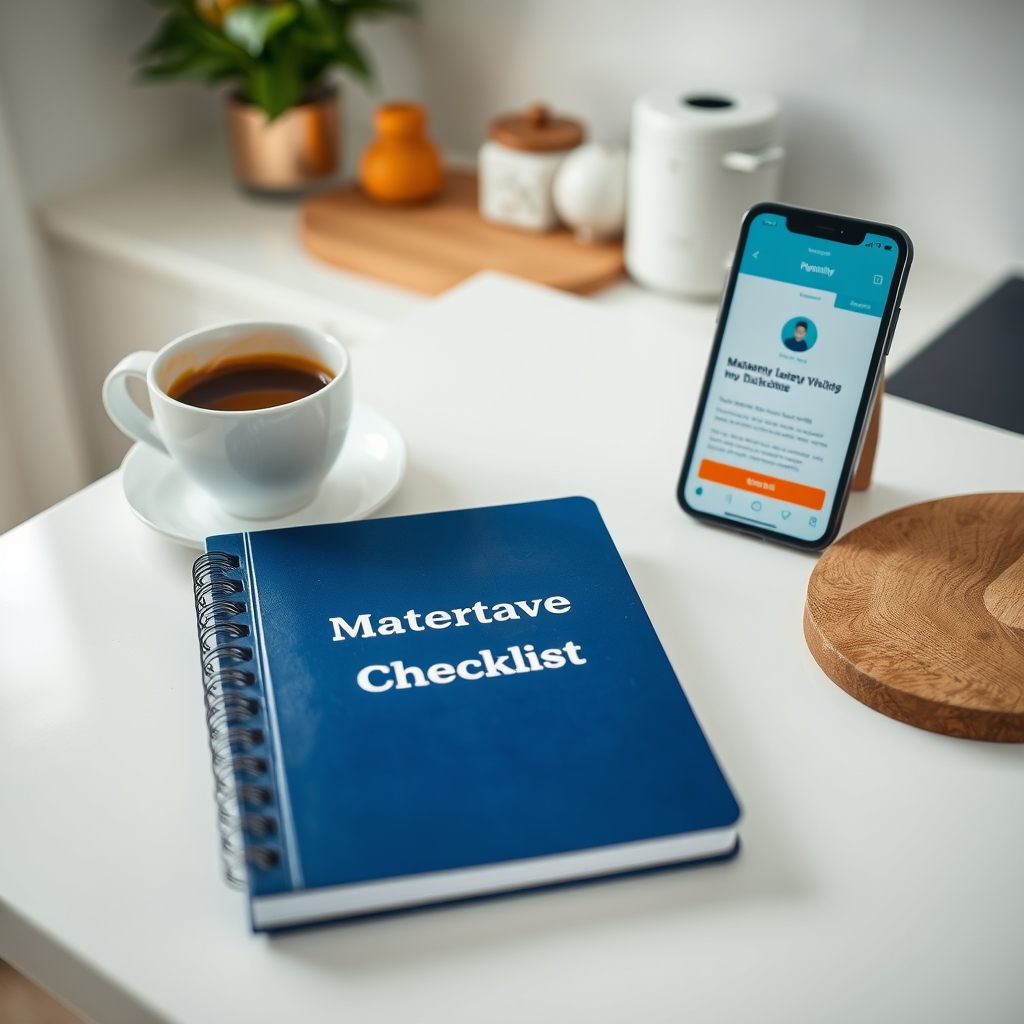
Applying for PFL is a straightforward, three‑step process, but it helps to stay organized. Below is a step‑by‑step checklist you can print and keep on your fridge.
- Gather documentation: You’ll need a completed Claim for Paid Family Leave (form PFL‑01), a copy of your birth certificate or adoption paperwork, and recent pay stubs that show your earnings and hours.
- Submit the claim: Claims can be filed online through the L&I portal, by phone, or by mail. Online submission is fastest—most applicants receive a decision within 10 business days.
- Wait for verification: L&I will verify your employment history, premium contributions, and qualifying event. If anything is missing, they’ll contact you for clarification.
- Receive benefits: Once approved, benefits are deposited directly into your bank account every two weeks. You’ll continue to receive payments as long as you meet the weekly eligibility criteria.
During the waiting period, keep your employer informed about your expected start date and any changes to your plan. Most HR departments appreciate a heads‑up, and it can smooth out any scheduling gaps.
For part‑time employees, the same forms apply, but the benefit amount will be lower because it’s based on your actual average weekly wage. If you’re self‑employed, you’ll also need to submit a Schedule C (or equivalent) to demonstrate your income.
Pro tip: Save a digital copy of every document you upload. L&I’s portal will let you track the status of your claim, and having a backup can speed up any appeal if needed.
How does Washington's maternity leave interact with federal FMLA?
The federal Family and Medical Leave Act (FMLA) provides up to 12 weeks of unpaid, job‑protected leave for qualifying employees. Washington’s PFL runs parallel to FMLA—meaning you can have both protections at the same time, but the benefits differ.
- Job protection: Both Washington law and FMLA guarantee that your position (or an equivalent one) will be available when you return.
- Paid vs. unpaid: Washington’s PFL provides wage replacement; FMLA does not. You’ll typically receive PFL payments while also enjoying the job‑security side of FMLA.
- Eligibility overlap: If you qualify for both, the 12 weeks of PFL will count against the 12 weeks of FMLA entitlement. In other words, you cannot take 12 weeks of paid leave plus another 12 weeks of unpaid leave for the same birth.
- Employer obligations: Employers covered by FMLA must also provide the same job protection as Washington law, but they are not required to fund the state PFL. That’s why the state’s insurance program is crucial.
Many Washington employers choose to “coordinate” the two, offering a single leave package that satisfies both sets of rules. If your employer does not, you can still claim PFL benefits directly from L&I while your FMLA rights are enforced by your HR department.
According to the U.S. Department of Labor, the combined effect of state PFL and federal FMLA often results in a more seamless experience for families, as long as employers clearly communicate how the two interact.
Can I extend my maternity leave beyond the standard period in Washington?
Yes—Washington’s law allows for extensions under certain circumstances, though you won’t receive additional wage replacement after the 12‑week cap.
Here are the most common scenarios:
- Medical extension: If a doctor certifies a complication that prevents you from returning to work, you may qualify for an additional disability benefit, which can provide up to another 12 weeks of partial wage replacement.
- Employer‑approved unpaid leave: After the paid portion ends, you can request unpaid leave under the state’s “Leave of Absence” policy or under FMLA, provided you have remaining weeks of entitlement.
- Parental leave vs. maternity leave: Some employers differentiate “maternity leave” (time for the birthing parent) from “parental leave” (time for any parent). In those cases, you might be able to stack an additional 4‑6 weeks of unpaid parental leave after the paid period ends.
To request an extension, submit a written request to your HR department, attach any medical documentation, and clarify whether you’ll be using paid disability benefits or unpaid leave. Keep copies of all correspondence—these will be useful if you need to appeal a denial.
Remember that any extension beyond the state‑mandated 12 weeks still requires you to maintain eligibility for benefits, such as continuing to meet the weekly wage‑replacement criteria.
What job protections does Washington provide for employees on maternity leave?
Washington’s laws go beyond the federal baseline to ensure you’re not penalized for taking time off to welcome a new child. Key protections include:
- Job reinstatement: You must be returned to the same position or an equivalent one with the same pay, benefits, and seniority.
- Anti‑discrimination clause: It is illegal for an employer to discriminate against you because you are pregnant, have taken maternity leave, or are planning to have a child.
- Continuation of benefits: Health insurance, retirement contributions, and other benefits must continue during your leave, though you may have to continue paying your share of premiums.
- Protection against retaliation: If you experience any negative action (e.g., a demotion or reduced hours) after taking leave, you have the right to file a complaint with the Washington State Human Rights Commission.
These protections apply to both private‑sector and public‑sector employees, but public agencies often have additional union‑negotiated clauses that may give you even more generous leave options.
For example, the Washington State Human Rights Commission has issued guidance that “reasonable accommodations” must be provided for pregnancy‑related needs, reinforcing the state’s commitment to a supportive workplace.
Are there differences in maternity leave benefits for private vs. public sector workers in Washington?
Both sectors adhere to the same state‑wide PFL program, but there are a few nuances:
- Premium payment: Private employers usually pay a small portion of the PFL premium (about 0.2 % of each employee’s wages). Many public agencies, especially those covered by collective bargaining agreements, may have the premium fully covered by the government.
- Additional leave: Some public‑sector jobs (e.g., state teachers, university staff) offer extra paid leave days beyond the 12 weeks of PFL, often funded through separate “sick” or “vacation” banks.
- Union contracts: Unionized public employees often have language that guarantees a certain number of paid parental leave days, which can be stacked with PFL.
- Self‑employment in public‑sector contracts: Contractors who work for state agencies can elect coverage, but they must meet the same 820‑hour rule and pay both employer and employee portions of the premium.
Overall, the baseline benefit—up to 12 weeks of wage replacement—is the same, but public‑sector workers may enjoy extra paid days or more generous continuation of benefits.
How does Washington's maternity leave policy affect self‑employed mothers?
Self‑employment used to be a gray area, but Washington has made it easier for solo entrepreneurs to tap into the PFL system. Here’s what you need to know:
- Opt‑in requirement: You must register for the PFL program through L&I and pay the full premium (both employer and employee shares). The premium rate for 2026 is 0.4 % of your taxable earnings.
- Eligibility threshold: The 820‑hour rule still applies, which translates to roughly 20 hours per week for a year. If you have irregular income, you can still meet the threshold by combining multiple projects.
- Benefit calculation: Your weekly benefit will be 100 % of your average weekly earnings, up to the same $1,620 cap. Because self‑employed income can fluctuate, L&I uses the most recent quarterly wage reports to determine the average.
- Documentation: You’ll need to submit a copy of your most recent tax return (Schedule C or equivalent) and proof of earnings for the past 12 months.
One mother we spoke with, “Maria,” told us that opting in felt daunting at first, but the online portal made the process simple. She said, “I filed my claim the same day my baby was born, and the first payment arrived two weeks later—exactly what I needed to cover our rent.”
If you miss the deadline to register before your birth, you can still apply for disability benefits, which provide a lower wage replacement rate but can cover the same time frame.
Washington state maternity leave calculator and tax implications
Because the benefit amount depends on your average weekly wage, many people use a simple calculator to estimate their weekly payment. Below is the basic formula:
Weekly benefit = (Average weekly wage) × (100 % replacement) – (capped at $1,620)
To find your average weekly wage, total your earnings for the past 12 months and divide by 52. For example, if you earned $60,000 in the last year, your average weekly wage is $1,154, and you’d receive $1,154 per week in PFL.
Tax considerations:
- Federal taxes: PFL benefits are considered taxable income. You’ll receive a 1099‑G at the end of the year, and you must include the amount on your federal tax return.
- State taxes: Washington has no state income tax, so the benefit is not taxed at the state level.
- Social Security and Medicare: PFL payments are subject to Social Security and Medicare taxes, which are automatically withheld by L&I.
- Impact on other benefits: Because the benefit is counted as income, it can affect eligibility for need‑based programs like SNAP or Medicaid. However, the wage replacement is generally lower than your pre‑leave earnings, so many families remain eligible.
We recommend running your numbers on the L&I PFL calculator before you file, and consulting a tax professional if you have complex income sources.
Maternity leave benefits for adoptive parents in Washington
Adoption qualifies as a “birth‑related” event under Washington’s PFL law, meaning adoptive parents can claim the same 12 weeks of wage replacement. The eligibility criteria remain the same—820 hours of covered work and a qualifying adoption placement.
Because the adoption process can be lengthy, many families start the paperwork early. The L&I portal allows you to submit adoption paperwork (court order or agency placement documents) in place of a birth certificate. If your adoption is final after you’ve already begun your leave, you can still retroactively claim benefits for the weeks you were caring for the child, provided you meet the hour requirement.
Some agencies also offer supplemental paid leave, so it’s worth asking your HR department whether they have an “adoption assistance” policy that can be stacked with state PFL.
Coordinating leave with your partner’s benefits
Washington’s PFL is not limited to the birthing parent. Non‑birthing partners who meet the 820‑hour threshold can also apply for up to 12 weeks of wage replacement to bond with the new child. This means both parents can potentially be on paid leave at the same time, or you can stagger the leave to maximize coverage.
When planning, talk with your partner about each person’s eligibility, employer policies, and any supplemental benefits. A common strategy is for the birthing parent to take the first six weeks (when recovery is most critical) while the partner begins a few weeks later, extending the family’s total paid leave to 18 weeks.
Remember that each claim is independent—your partner will need to file a separate PFL claim, submit their own documentation, and meet the hour requirement. Coordinating early can prevent surprises and help you both enjoy uninterrupted bonding time.

Myth vs. fact
Myth: You must use all your sick or vacation days before you can receive state paid family leave.
Fact: Washington law does not require you to exhaust accrued paid time off before tapping PFL. Employers may have their own policies, so check your handbook.
Myth: Federal FMLA provides paid leave, so you don’t need to apply for state benefits.
Fact: FMLA is unpaid. Washington’s PFL is the only source of wage replacement for most employees.
Myth: Self‑employed mothers are not eligible for any paid leave.
Fact: By opting into the state program and meeting the hour threshold, self‑employed moms can receive the same wage replacement as employees.
Key takeaways
- Eligibility: 820 hours of covered work in the past 12 months and a qualifying birth or adoption event.
- Benefit amount: Up to $1,620 per week for 12 weeks, based on 100 % of your average weekly wage.
- Application: File online with L&I, submit birth documentation, and keep copies of pay stubs.
- Job protection: You’re guaranteed reinstatement to the same or equivalent position, with continued benefits.
- Extensions: Medical disability benefits or unpaid employer leave can add weeks, but not additional wage replacement.
- Self‑employed: Opt‑in to the program, meet the hour threshold, and you’ll receive the same benefits.
- Adoptive parents: Same eligibility rules apply, so you can claim PFL for adoption events.
- Partner coordination: Both parents can file separate claims, allowing up to 24 weeks of combined paid leave.
Frequently asked questions
How long is maternity leave in Washington?
Washington’s paid family leave provides up to 12 weeks of wage replacement. If you need additional time, you can use unpaid leave under the state’s “Leave of Absence” policy or the federal FMLA, provided you have remaining weeks of entitlement.
Do I have to use my sick leave for maternity leave in Washington?
No. State law does not require you to exhaust sick or vacation time before receiving PFL. However, some employers may have internal policies that ask you to coordinate paid time off with PFL, so it’s best to check your employee handbook.
Can I receive both state paid family leave and employer‑provided maternity leave in Washington?
Yes. Many employers offer supplemental paid maternity leave on top of the state PFL. In that case, you’ll receive the employer’s benefit first, and then the state PFL will fill any remaining gap up to the 12‑week cap.
What is the wage replacement rate for Washington's maternity leave?
The wage replacement rate is 100 % of your average weekly wage, capped at $1,620 per week for 2026. If you earn less than the cap, you’ll receive the full amount of your average earnings.
Is maternity leave in Washington covered by the federal Family and Medical Leave Act?
Washington’s PFL runs alongside the federal FMLA. Both provide job protection, but only Washington’s program offers paid benefits. The 12 weeks of PFL count against the 12 weeks of FMLA entitlement.
How do I know if I qualify for Washington's maternity leave benefits?
Check three criteria: (1) at least 820 hours of covered work in the past 12 months, (2) a qualifying birth, adoption, or foster placement, and (3) employment with an employer who contributes to the state PFL fund (or you’ve opted in as self‑employed).
What should I do if my maternity leave claim gets denied?
First, review the denial letter for specific reasons. Then, gather any missing documentation—often a birth certificate or additional pay stubs—and submit an appeal within 30 days. You can also contact the Washington State Department of Labor & Industries’s appeals unit for assistance.
Can I use my accrued vacation time to extend my paid family leave?
Yes. While Washington law doesn’t require you to use vacation or sick leave before PFL, many employers allow you to “stack” accrued paid time off with PFL. This can extend your total paid time away from work, though the wage‑replacement amount remains capped at the PFL maximum.
What happens to my health‑insurance premiums while I’m on leave?
Under Washington law, your health‑insurance coverage must continue during leave. You’ll typically continue paying your share of premiums, but the employer’s contribution stays intact. If you’re unsure, confirm the exact arrangement with your HR benefits specialist.
When to see a doctor or specialist
If you experience any of the following, contact your OB‑GYN or a qualified healthcare provider right away:
- Heavy bleeding or signs of postpartum hemorrhage.
- Fever ≥ 100.4 °F (38 °C) that lasts more than 24 hours.
- Severe depression, anxiety, or thoughts of self‑harm (post‑partum mood disorders).
- Persistent pain, swelling, or signs of infection at the incision or perineal area.
These medical concerns are separate from your leave benefits, but getting prompt care ensures you’re eligible for any disability extensions that may be needed.
References
- Washington State Department of Labor & Industries – Paid Family Leave program overview, 2026.
- U.S. Department of Labor – Family and Medical Leave Act (FMLA) regulations.
- American College of Obstetricians and Gynecologists (ACOG) – Guidelines on postpartum care and return to work.
- National Association of State Workforce Agencies – State paid family leave comparisons, 2025.
- Internal Revenue Service (IRS) – Tax treatment of paid family leave benefits, Publication 525.
- Washington State Human Rights Commission – Anti‑discrimination provisions for pregnancy and parental leave.
- U.S. Department of Labor – Coordination of State Paid Family Leave with Federal FMLA, 2024.
- Academy of Nutrition and Dietetics – Impact of wage replacement on family nutrition security, 2023.