Learn how to safely administer LMWH injections, store them properly, and travel with confidence. This guide covers step‑by‑step technique, storage rules, and travel tips for pregnant users.
By Shubhra Mishra — a mom of two who turned her own confusion during pregnancy into BumpBites, a global mission to make food choices clear, safe, and stress-free for every expecting mother. 💛
Check whether any food is safe during pregnancy with the BumpBites Food Safety Checker.
Quick take: LMWH (low‑molecular‑weight heparin) can be given safely at home, while traveling, and during pregnancy as long as you follow the injection technique, store the medication at the right temperature, and rotate sites correctly. Keep the medication cool (2‑8 °C), use a clean subcutaneous spot, and dispose of needles in a sharps container. If you notice severe pain, large bruises, or signs of infection, contact your provider right away.
It’s 2 a.m., you’ve just taken a deep breath after a night‑time cramp, and the thought that “I might have missed my LMWH dose” is keeping you awake. You’re not alone—many expecting moms juggle the practicalities of daily injections with the excitement (and anxiety) of a growing baby. The good news is that with a little routine, the process becomes as predictable as brushing your teeth. Below, we walk through everything you need to know: from the exact injection steps to how to keep your vials cool on a weekend getaway.
🔢 Calculate it for your situation: Use our VTE Prophylaxis (RCOG) for a personalized result in seconds.
In this guide we’ll cover the why, the how, and the when of LMWH injection training for pregnancy. You’ll learn how to choose and rotate injection sites, the temperature limits for storing your medication, travel‑friendly storage hacks, ways to ease common side effects, and the safety rules for disposing of needles. By the end, you’ll have a clear, step‑by‑step plan you can refer to anytime—whether you’re at home, in a hotel room, or on a road trip.
Why LMWH is used in pregnancy
Low‑molecular‑weight heparin (LMWH) is the first‑line drug for preventing and treating venous thromboembolism (VTE) in pregnant women. Pregnancy naturally increases clotting factors, and the risk of a deep‑vein thrombosis is up to five times higher in the third trimester. LMWH works by inhibiting factor Xa, which helps keep blood from clotting excessively without crossing the placenta, so it’s considered safe for the developing fetus.
Guidelines from the American College of Obstetricians and Gynecologists (ACOG) and the Royal College of Obstetricians and Gynaecologists (RCOG) recommend LMWH for women with a personal or family history of VTE, certain thrombophilias, or prolonged immobility. The medication is typically prescribed as a daily subcutaneous injection in the abdomen or thigh, and the dosage is calibrated to your weight and kidney function. Because the drug has a relatively long half‑life (about 4‑5 hours), it can be administered at the same time each day, which simplifies the routine.
Understanding the “why” helps you stay motivated during the daily ritual. You’re not just giving yourself a shot—you’re protecting your circulation, reducing the chance of a clot that could threaten both you and your baby. This background also informs the importance of proper technique, storage, and disposal, which we’ll explore in detail.
In addition, large‑scale studies have shown that LMWH reduces VTE incidence in high‑risk pregnancies by more than 80 % compared with no prophylaxis. While the absolute risk remains low for most women, the relative reduction is substantial, reinforcing why consistent use matters.
Step‑by‑step LMWH injection technique
Even
though the idea of a needle can feel intimidating, the actual injection process is quick and straightforward. Below is a detailed walk‑through that you can practice with a dummy pen before moving to your real medication.
What you’ll need
A prefilled LMWH syringe (most brands come in single‑use pens)
Alcohol swabs
A sterile gauze pad
A sharps disposal container (puncture‑proof)
Clean hands or disposable gloves
Preparation (1‑minute)
Wash your hands thoroughly with soap and water, or use an alcohol‑based hand sanitizer.
Gather all supplies on a clean surface. Keep the LMWH vial in its original packaging until you’re ready to use it.
If your LMWH comes in a prefilled pen, check the expiration date and ensure the solution is clear—not cloudy or discolored.
Choosing the injection site (30 seconds)
Most providers recommend the outer portion of the abdomen, at least 2 inches (5 cm) away from the belly button. For women with a large uterus, the upper outer thigh is an equally safe alternative. We’ll cover site rotation in the next section.
Cleaning the skin (15 seconds)
Wipe the chosen spot with an alcohol swab and let it air‑dry. Do not rub the area, as this can cause irritation.
Administering the injection (45 seconds)
Pinch a small fold of skin (about 1 inch wide) to lift the subcutaneous tissue away from the muscle.
Hold the pen at a 90‑degree angle to the skin. Some pens have a “click” mechanism—press the button firmly to release the dose.
Inject the entire volume in one smooth motion. You should feel a quick “pop” as the needle penetrates the tissue.
Release the skin fold and keep the needle in place for a few seconds (usually 5‑10 seconds) to ensure full delivery.
Withdraw the needle, apply gentle pressure with the gauze pad, and discard the used syringe into the sharps container.
Aftercare (30 seconds)
Do not rub the injection site. Lightly massage the area for a few seconds to help disperse the medication, unless your provider advises otherwise. Observe the site for any immediate bleeding; a small drop is normal and should stop quickly.
Practicing this routine a few times a week, even with a dummy pen, builds confidence. Many pregnant women tell us that after the first five days, the process feels as automatic as taking a prenatal vitamin.
If you encounter a bent needle, a blocked flow, or unexpected resistance, pause and replace the pen. A brief troubleshooting step—checking the needle for kinks and ensuring the pen is at room temperature—can prevent pain and ensure the full dose is delivered.
Choosing and rotating injection sites
Consistent site rotation reduces the risk of bruising, skin irritation, and tissue damage. The most common locations are the abdomen (outer quadrants) and the upper outer thigh. Below is a simple schedule you can follow.
Day
Injection site
Monday
Right lower abdomen (2 inches from navel)
Tuesday
Left lower abdomen
Wednesday
Right upper thigh (mid‑thigh, lateral side)
Thursday
Left upper thigh
Friday
Right lower abdomen
Saturday
Left lower abdomen
Sunday
Right upper thigh
When you’re using only the abdomen, alternate sides each day and move at least 2 inches horizontally each time. If you’re mixing abdomen and thigh injections, aim for a 2‑day gap between using the same quadrant.
Tips for a comfortable site
Choose a spot that’s not over a scar, stretch mark, or area of recent surgery.
Avoid sites that feel unusually tight or sore—your body will signal when a location needs a break.
Keep the skin clean and dry. Moisture can increase the chance of a “wet” injection that feels more painful.
One reader described how she “mapped out” her abdomen with a washable marker at the start of her second trimester. By the end of the month, the visual cue helped her remember to rotate, and she noted far fewer bruises.
Documenting your rotation in a small notebook or on a phone app can be a lifesaver. A simple log that records date, side, and any reactions lets you and your provider spot patterns early and adjust the plan if needed.
Storing LMWH at home and on the go
LMWH is temperature‑sensitive. Most manufacturers, including enoxaparin (Lovenox) and dalteparin (Fragmin), recommend refrigeration at 2‑8 °C (36‑46 °F) until the first use. After opening, many pens can be kept at room temperature (up to 25 °C or 77 °F) for up to 30 days, but it’s crucial to check the specific product label.
Home storage checklist
Place the vial or pen in the refrigerator as soon as you receive it. Do not store it in the freezer.
Keep the medication in its original box to protect it from light.
Write the “opened on” date on the label with a permanent marker.
If you move the pen to a refrigerator‑freezer combo, store it in the lower compartment—away from the freezer door.
When the storage period expires (usually 30 days after opening), discard any remaining doses safely.
Using a small fridge thermometer can give you confidence that the temperature stays within range, especially in homes with fluctuating ambient temperatures.
Understanding temperature guidelines
According to the FDA and the European Medicines Agency, a temporary temperature excursion of up to 2 °C above or below the recommended range for less than 24 hours does not typically compromise potency. However, prolonged exposure to heat can degrade the heparin, reducing its anticoagulant effect—a risk you don’t want during pregnancy.
If you’re unsure whether your medication has been compromised, contact your pharmacy. They can test the vial or advise whether a replacement is needed.
Travel‑friendly LMWH kit and temperature tricks
Whether you’re heading to a weekend beach retreat or a long‑haul flight, a well‑packed LMWH kit makes the process stress‑free. Below are the essentials you should bring, plus clever ways to keep the pen cool without a refrigerator.
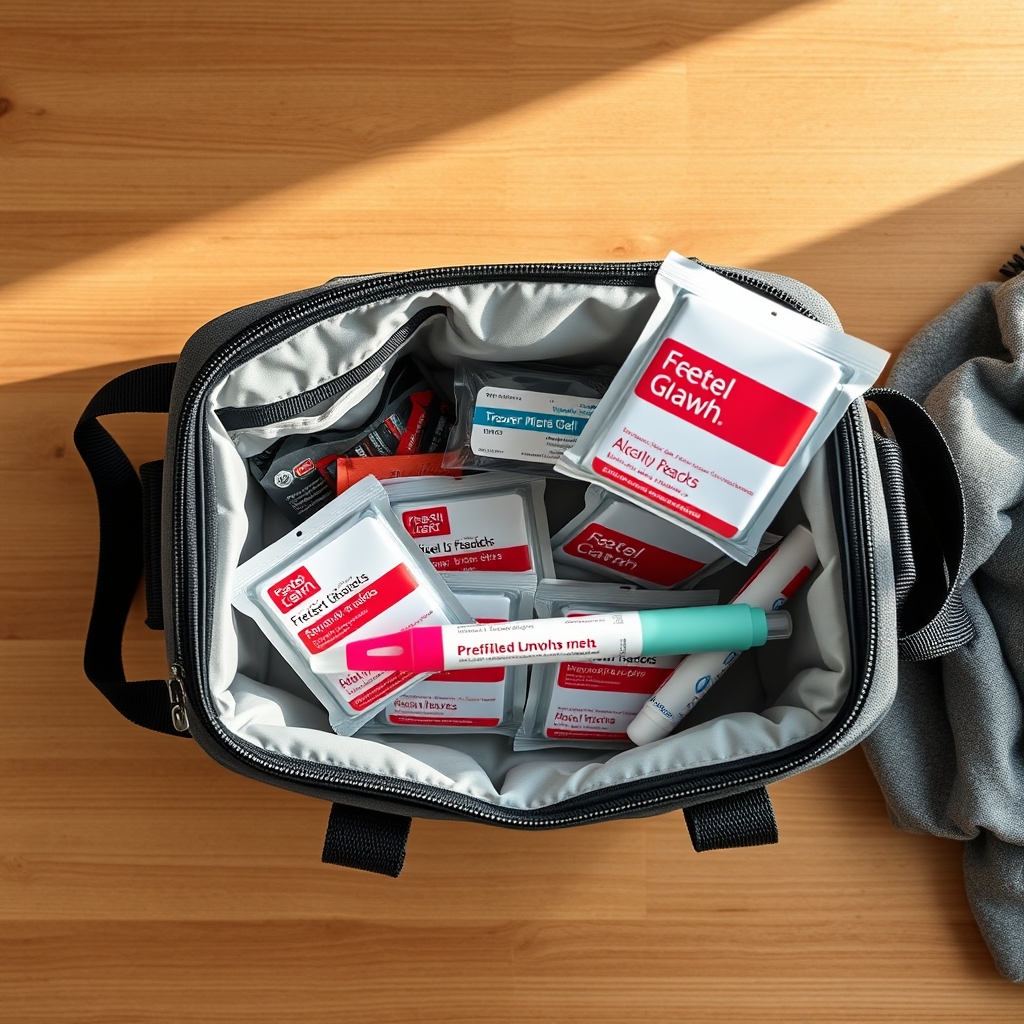
What to pack
One prefilled LMWH pen (or vial) for the duration of the trip.
A small insulated cooler bag (size of a lunchbox).
Four to six reusable ice packs or gel “cold packs” that can be frozen before you leave.
A portable, puncture‑proof sharps container (many travel kits include a compact version).
Alcohol swabs, gauze pads, and a spare set of gloves.
A copy of your prescription and a brief note from your provider confirming the medication.
Keeping it cool on the road
Place the LMWH pen in the insulated bag with a frozen gel pack wrapped in a thin towel to avoid direct frost contact. The bag can be stored in the cabin of an airplane (under the seat) or in the car’s glove compartment—just away from direct sunlight.
For longer trips, consider a “cool‑box” style travel cooler that plugs into a car’s 12‑V outlet. Some travel‑friendly coolers maintain 2‑8 °C for up to 24 hours with a single ice pack.
What to do if the temperature rises
If you notice the bag feels warm, replace the gel pack with a fresh frozen one, or move the container to a cooler spot (e.g., the bathroom cabinet during a hotel stay). You can also place the pen in a small zip‑lock bag and submerge it in a bowl of cold water for a few minutes—just be sure the water doesn’t seep into the pen.
Many moms have reported that a simple “ice‑pack sandwich” (pen between two gel packs, each wrapped in a cloth) works perfectly for a 5‑day road trip. It’s a low‑tech solution that satisfies the storage temperature guidelines without a powered fridge.
Managing side effects and injection‑site reactions
Most pregnant women experience minimal side effects from LMWH, but a few common concerns can arise. Knowing how to handle them can keep you comfortable and confident.
Bruising and bleeding
Minor bruising is normal, especially if you’re rotating sites frequently. To minimize bruising:
Apply gentle pressure with a gauze pad for 1‑2 minutes after the injection.
Use a cool compress (a clean, damp cloth chilled in the fridge) after the injection to reduce swelling.
Avoid vigorous rubbing or massaging the site for the first hour.
If you notice a bruise that expands beyond 2 cm, becomes very painful, or is accompanied by significant swelling, contact your provider. Large bruises can sometimes indicate a hematoma that may need evaluation.
Pain during injection
A quick “pinch” feeling is typical. If the pain feels sharp or lasts more than a minute, try these steps:
Check that the needle is not bent or clogged.
Make sure you’re injecting at a 90‑degree angle; a shallower angle can increase discomfort.
Warm the pen in your hand for a few seconds before use—cold medication can feel more painful.
Consider using a smaller‑gauge needle (some pens offer 27‑gauge options).
Allergic or skin reactions
Although rare, some individuals develop a localized rash or itching around the injection site. If this occurs, stop using the current pen and call your provider. They may suggest a different LMWH brand or an alternative anticoagulant.
Systemic side effects
Symptoms such as unexplained nosebleeds, prolonged bleeding from cuts, or dark stools could signal excessive anticoagulation. While these are uncommon with prophylactic LMWH doses, they warrant immediate medical attention.
Heparin‑induced thrombocytopenia (HIT)
HIT is a rare immune reaction that can cause a sudden drop in platelet count. If you develop new bruising, petechiae, or unusual bleeding, your provider may order a platelet count to rule out HIT. Prompt detection is essential, but the risk in pregnancy is very low with LMWH.
Safety, disposal, and dosage timing
Proper disposal of used needles protects you, your family, and the environment. Always place the used pen or syringe in a puncture‑proof sharps container immediately after use. When the container is three‑quarters full, seal it and arrange for a local hazardous‑waste pickup or bring it to a pharmacy that accepts sharps.
Understanding dosage schedule and timing
LMWH is usually prescribed once daily at the same time each day—often in the evening to align with bedtime routines. Consistency helps maintain stable anticoagulant levels. If you need to shift the timing (e.g., due to travel across time zones), adjust by no more than 2 hours forward or backward to avoid a double‑dose gap.
When you’re unsure about the exact dose for your weight or kidney function, you can use the VTE Prophylaxis (RCOG) calculator to estimate the appropriate regimen based on your clinical details.
Special considerations for labor and delivery
Most obstetric teams will ask you to stop LMWH 12‑24 hours before planned induction or scheduled cesarean to reduce bleeding risk. For spontaneous labor, your provider will assess the timing of your last dose and may give a short‑acting anticoagulant if needed. Keep a copy of your injection log handy for the delivery team.
Red‑flag symptoms
While routine bruising is expected, watch for these warning signs that require prompt medical evaluation:
Severe pain at the injection site that does not improve after 30 minutes.
Rapidly expanding bruises or a hard lump under the skin.
Unexplained bleeding from gums, nose, or cuts that lasts longer than 10 minutes.
Signs of a blood clot—calf pain, swelling, warmth, or sudden shortness of breath.
If any of these occur, call your obstetrician, midwife, or go to the nearest emergency department.
What to do if you miss a dose
If you realize you’ve missed a dose, take it as soon as you remember—provided it’s at least 8 hours before your next scheduled injection. If it’s closer than 8 hours, skip the missed dose and resume your regular schedule. Do not double‑dose to “catch up.”
Document the missed dose in your injection log and inform your provider at your next visit. In most cases, a single missed dose does not increase VTE risk dramatically, but consistent adherence is key for optimal protection.
How LMWH interacts with other medications and supplements
LMWH can potentiate the effects of other anticoagulants, antiplatelet agents (like aspirin), and some herbal supplements (e.g., ginkgo, garlic, ginger). While low‑dose aspirin is sometimes prescribed alongside LMWH for specific indications, you should always confirm the combination with your provider.
Non‑prescription supplements that thin the blood should be discussed before use. Your provider may advise stopping them during pregnancy or adjusting the LMWH dose. Likewise, certain antibiotics (e.g., quinolones) and anti‑inflammatory drugs can affect clotting; always list all medications during prenatal visits.
Understanding your injection log and communicating with your care team
A simple log—whether handwritten or digital—serves as a communication bridge between you and your provider. Record the date, time, injection site, any bruising or pain, and any notable symptoms. This information helps clinicians assess adherence, spot trends, and make dose adjustments if needed.
Bring the log to each prenatal appointment, especially before delivery planning. It also empowers you to ask informed questions, such as “Should I switch injection sites because I’ve had bruising on my right thigh?” or “Is my current dose still appropriate given my weight gain?”
Travel‑friendly LMWH kit and temperature tricks (continued)
Airline regulations allow you to carry syringes and sharps containers in checked baggage, but many carriers also permit them in carry‑on bags if they’re properly packed. Always declare the items at security, and keep the sharps container sealed. A small, TSA‑approved travel kit can simplify the process and avoid delays.
Some travelers prefer a reusable “travel‑size” insulin cooler that can double as a LMWH cooler. These devices are designed to keep medication within a narrow temperature band, and they often come with a built‑in temperature indicator—a handy visual cue for peace of mind.
Pack an insulated cooler bag with gel packs to keep LMWH at the right temperature while you travel.
Doctor's note
From our medical team: LMWH is a cornerstone of VTE prevention in pregnancy, and with proper technique, storage, and disposal, it can be managed safely at home and while traveling. If you ever feel uncertain about any step—whether it’s rotating sites, keeping the medication cool, or interpreting a reaction—reach out to your care team. They can provide personalized guidance and, if needed, adjust your regimen to keep both you and your baby safe.
🔢 Ready to crunch your numbers? Use our VTE Prophylaxis (RCOG) for a personalized result in seconds.
Myth vs. fact
Myth: LMWH must be refrigerated at all times, even after opening.
Fact: Most LMWH pens can be kept at room temperature (up to 25 °C) for 30 days after first use, but they should be refrigerated before opening. Always follow the specific product’s label.
Myth: You can inject LMWH anywhere on the body, like an insulin shot.
Fact: LMWH is recommended for subcutaneous injection in the abdomen or upper outer thigh. Intramuscular injection can increase bleeding risk and is not advised.
Myth: If you get a bruise, you should stop the medication.
Fact: Small bruises are common and usually harmless. Persistent or large bruising should be discussed with your provider, but it does not automatically mean you must discontinue LMWH.
Key takeaways
Store LMWH in the refrigerator (2‑8 °C) until first use; after opening, keep it at room temperature (<25 °C) for up to 30 days.
Inject subcutaneously in the outer abdomen or upper outer thigh, rotating sites each day to prevent skin irritation.
Use an insulated cooler bag with gel packs for travel; replace packs if they warm up.
Apply gentle pressure after injection, and use a cool compress to reduce bruising.
Dispose of needles in a puncture‑proof sharps container and arrange for proper disposal.
Contact your provider if you experience severe pain, large bruises, or signs of abnormal bleeding.
Document each dose, site, and any reactions in a log to share with your care team.
If you miss a dose, take it as soon as you remember—unless it’s within 8 hours of the next scheduled dose.
Frequently asked questions
Can I travel with LMWH injections?
Yes—LMWH can be taken while traveling as long as you keep the medication within the recommended temperature range (2‑8 °C before opening, up to 25 °C after opening) and follow proper injection technique.
How do I store LMWH at home?
Keep the unopened vial or pen in the refrigerator (2‑8 °C), and once opened, store it in a cool, dry place away from direct sunlight, not exceeding 25 °C for up to 30 days.
What is the proper technique for subcutaneous LMWH injection?
Wash your hands, clean the injection site with an alcohol swab, pinch a fold of skin, insert the needle at a 90‑degree angle, deliver the dose, hold for a few seconds, then apply gentle pressure and dispose of the needle safely.
Do I need to refrigerate LMWH?
Yes, before the first use LMWH should be refrigerated. After the first dose, most pens can be stored at room temperature for up to a month, but always check the specific product label.
How often should I rotate injection sites for LMWH?
Rotate sites daily—alternate sides of the abdomen and, if using the thigh, switch between legs. A simple schedule (right abdomen → left abdomen → right thigh → left thigh) helps prevent tissue irritation.
Can LMWH cause bruising after injection?
Minor bruising is common and usually harmless. If bruises become large, painful, or spread, contact your provider for evaluation.
Can I use an insulin pen for LMWH?
No. Insulin pens are not designed for LMWH, which has a different viscosity and dosing mechanism. Always use the specific LMWH pen or syringe provided by your pharmacy.
Is it safe to take LMWH with low‑dose aspirin?
In some high‑risk pregnancies, doctors may prescribe low‑dose aspirin together with LMWH, but you should never start or stop aspirin on your own. Discuss any antiplatelet therapy with your provider first.
When to call your doctor
If you notice severe pain at the injection site, large or rapidly expanding bruises, unexplained bleeding (e.g., nosebleeds lasting >10 minutes), signs of a blood clot (calf swelling, sudden shortness of breath), or any allergic reaction such as rash or itching, call your obstetrician or midwife immediately. This article provides general information and is not a substitute for personalized medical advice.
References
American College of Obstetricians and Gynecologists (ACOG). “Low‑Molecular‑Weight Heparin for Thromboprophylaxis in Pregnancy.” Clinical Guidance, 2023.
Royal College of Obstetricians and Gynaecologists (RCOG). “Management of Venous Thrombo‑Embolism in Pregnancy.” Green‑top Guideline, 2022.
U.S. Food and Drug Administration (FDA). “Enoxaparin Sodium (Lovenox) Prescribing Information.” 2023.
European Medicines Agency (EMA). “Dalteparin Sodium (Fragmin) Product Monograph.” 2022.
National Institute for Health and Care Excellence (NICE). “Anticoagulation in Pregnancy.” Clinical Guidelines, 2021.
Centers for Disease Control and Prevention (CDC). “Travel Health: Anticoagulants.” 2022.
World Health Organization (WHO). “Safe Use of Medicines in Pregnancy.” Technical Report, 2020.
Mayo Clinic. “Low‑Molecular‑Weight Heparin (LMWH) Injections – How to Use.” Patient Education, 2023.
British Society for Haematology. “Guidelines for the Management of VTE in Pregnancy.” 2022.
American Society of Hematology (ASH). “Heparin‑Induced Thrombocytopenia (HIT) in Pregnancy.” Clinical Update, 2021.
Not sure about the label on Lmwh Injection Training Technique Storage Travel Tips products?
Snap the ingredients list and SafeFilter checks every ingredient for your stage — only 3 free scans this month, then you're locked until reset. Unlimited from $7/mo or $50/yr.
When Shubhra Mishra was expecting her first child in 2016, she was overwhelmed by conflicting food advice — one site said yes, another said never. By the time her second baby arrived in 2019, she realized millions of mothers face the same confusion.
That sparked a five-year journey through clinical nutrition papers, cultural diets, and expert conversations — all leading to BumpBites: a calm, compassionate space where science meets everyday motherhood.
Her long-term vision is to build a global community ensuring safe, supported, and free deliveriesfor every mother — because no woman should face pregnancy alone or uninformed. 🌿
🌍 Stand with mothers, shape safer guidance
Join a small circle of experts who review BumpBites articles so expecting parents everywhere can decide with confidence.