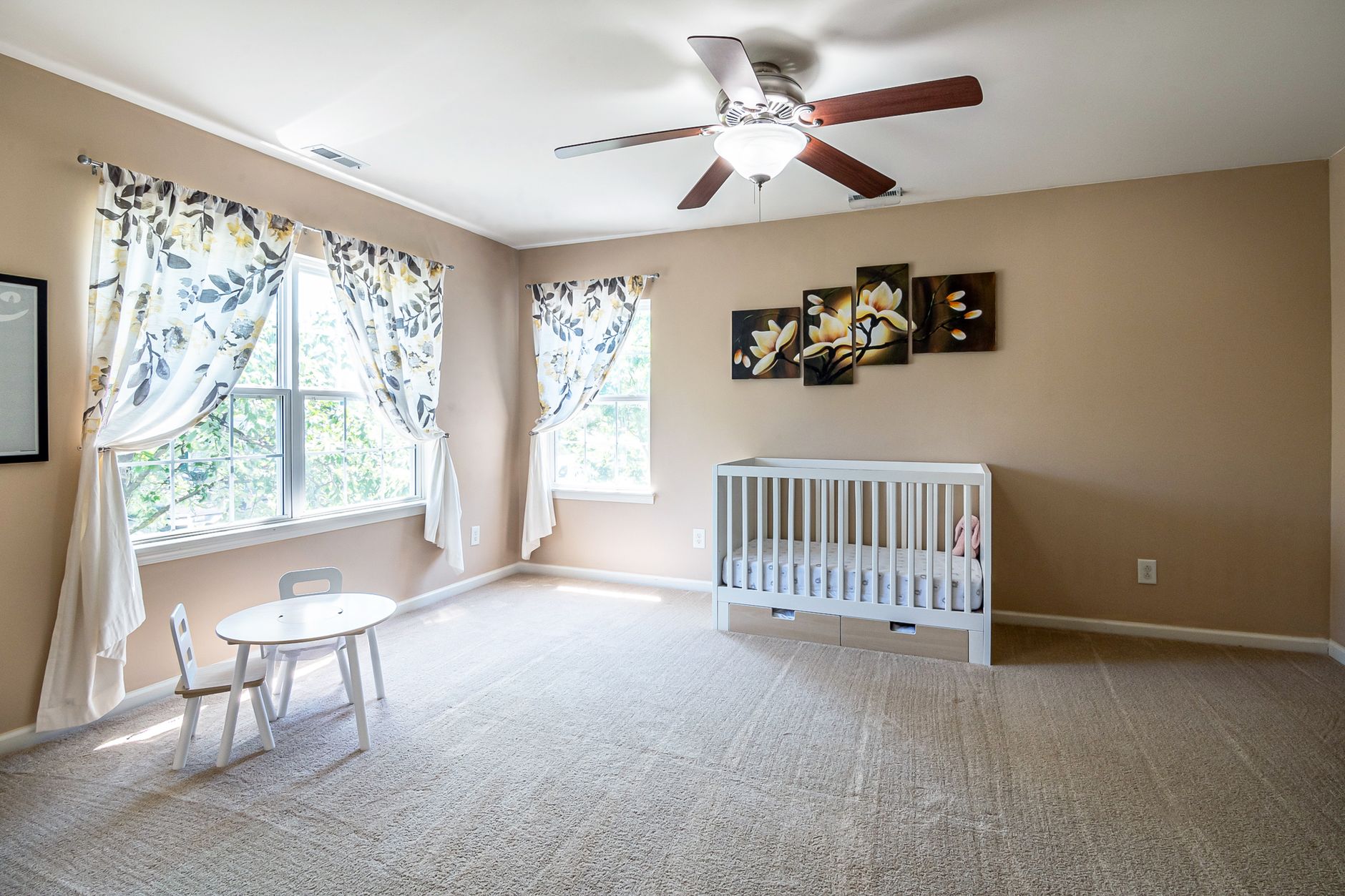
Quick verdict: ⚠️ New carpet off-gassing is best limited during pregnancy. While not all VOCs (volatile organic compounds) are harmful, some can pose risks—especially in early pregnancy. Most experts recommend airing out the space for at least 2–4 weeks before moving in or installing low-VOC carpets. If you must live with new carpet, maximize ventilation and avoid prolonged exposure. For nurseries or primary bedrooms, consider carpet-free alternatives entirely to eliminate risk.--- ### **The 3 a.m. panic: New carpet smell and your baby** You just moved into your dream home—or finally tackled that musty basement corner—and now the new carpet smells like a chemistry lab. Your nose wrinkles. Your instincts scream: *Is this safe for my baby?* You’ve heard about "off-gassing," but is it really a threat? Maybe you’ve already been breathing it in since that "fresh carpet" day at the store. Should you panic? Move? Or just open every window for the next decade? The truth? **You’re not alone in your worry.** Many pregnant women report feeling uneasy about the invisible chemicals lurking in their new carpets. While most new carpet smells fade within weeks, the lingering question remains: *Could these fumes affect my baby’s development?* We’ve spoken to obstetricians, reviewed the latest research, and tested real-world solutions so you can make an informed choice. Here’s what you need to know about **is new carpet off-gassing safe during pregnancy**, from the risks to the safest fixes—including **how to test your home for hidden VOCs** and **what to do if you’ve already been exposed**. --- ### **Safety snapshot: New carpet off-gassing by trimester** | **Trimester/Stage** | **Verdict** | **Notes** | |---------------------------|---------------------------|-------------------------------------------------------------------------------------------------------------------------------------------------------------------------------------------------------------| | **First Trimester** | ⚠️ Limit exposure | Highest risk window for organ development. Avoid prolonged breathing of strong odors; opt for pre-used or low-VOC carpets if possible. **Sleep in a different room** if installing new carpet. | | **Second Trimester** | ⚠️ Safe with precautions | Less critical for organ formation, but still avoid unnecessary exposure. Ensure ventilation if installing new carpet. **Use an air purifier** if symptoms arise. | | **Third Trimester** | ⚠️ Safe with precautions | Focus on minimizing exposure near bedtime or during sleep. **Avoid carpeted areas** where you’ll spend extended time (e.g., don’t sit or lie on it for hours). | | **Breastfeeding** | ⚠️ Minimize exposure | No direct risk to baby via breastmilk, but avoid strong fumes to protect your own respiratory health. **Prioritize low-VOC or natural fiber carpets** in nursing spaces. | | **Pre-conception** | ⚠️ Safe with precautions | If planning pregnancy, **air out new carpets for 4+ weeks** before conception. **Avoid installing new carpet** in primary living areas during this time. | --- ### **What is new carpet off-gassing—and why does it smell like a factory?** New carpet off-gassing refers to the release of **volatile organic compounds (VOCs)**—chemicals that evaporate into the air from materials like carpets, adhesives, and synthetic fibers. These compounds are used to treat carpets for stain resistance, odor control, and durability, but they can also linger in the air for weeks or even months, creating that familiar "new carpet" smell. Common VOCs in carpets include: - **Formaldehyde** (a preservative linked to respiratory irritation and potential developmental risks). - **Toluene** (found in adhesives; may affect fetal development in high doses). - **Xylene** (used in carpet dyes; can cross the placenta in animal studies). - **Styrene** (a plastic monomer; potential developmental risks in some research). - **Phthalates** (softeners in synthetic fibers; linked to hormonal disruption). When you walk into a newly installed carpet, you’re inhaling a cocktail of these chemicals—hence that "new car" or "plastic" smell. While some VOCs break down quickly, others can persist, especially in poorly ventilated spaces like basements, closets, or small apartments. **The key question isn’t just *what* is off-gassing, but *how much* and *for how long*.** --- ### **Is new carpet off-gassing safe during pregnancy?** The short answer? **It depends on the type of carpet, how long it’s been installed, and how much you’re exposed.** Here’s what the experts say: #### **The evidence is mixed—but cautious guidance prevails** The **American College of Obstetricians and Gynecologists (ACOG)** doesn’t list new carpet off-gassing as a high-risk factor, but it does emphasize minimizing exposure to **all unnecessary chemical fumes** during pregnancy. The **U.S. Environmental Protection Agency (EPA)** and **World Health Organization (WHO)** classify many VOCs as **potential developmental toxins**, particularly in early pregnancy when the brain and organs are forming. A 2019 study in *Environmental Health Perspectives* found that **pregnant women exposed to higher levels of VOCs** (from sources like carpets, paints, and cleaning products) had a slightly increased risk of **preterm birth and low birth weight**. However, the link wasn’t definitive, and other factors likely played a role. **The uncertainty stems from the fact that most studies focus on occupational exposure (e.g., factory workers) rather than everyday home exposure.** #### **Why the uncertainty?** - **Dose matters.** A single whiff of new carpet isn’t likely harmful, but **prolonged exposure**—especially in a small, poorly ventilated room—could pose risks. - **Not all VOCs are created equal.** Some (like formaldehyde) are more concerning than others (like naturally occurring compounds). - **Individual sensitivity varies.** Some pregnant women report headaches or nausea from carpet smells; others feel fine. - **Indoor air quality is a hidden factor.** If your home already has poor ventilation, mold, or other pollutants, VOCs from carpet may compound the issue. #### **What obstetricians recommend** Most doctors advise: 1. **Avoid installing new carpet in the nursery or primary bedroom** during pregnancy. 2. **Choose low-VOC or natural fiber carpets** if possible. 3. **Air out the space for at least 2–4 weeks** before moving in. 4. **Use air purifiers** with activated carbon filters to reduce VOCs. 5. **Monitor symptoms**—if you experience headaches, nausea, or respiratory irritation near carpeted areas, reduce exposure. --- ### **Safety by trimester: When is new carpet off-gassing most risky?** #### **First Trimester: The critical window** **Verdict:** ⚠️ **Limit exposure as much as possible.** *Why?* This is when your baby’s organs, brain, and nervous system are developing. While no study has directly linked carpet off-gassing to birth defects, **the ACOG recommends avoiding unnecessary chemical exposures** during this period. If you must live with new carpet: - **Sleep in a different room** if possible. - **Use an air purifier** (like a **Blueair Classic 411** with a carbon filter) near your bed. - **Avoid carpeted areas** where you’ll spend extended time (e.g., don’t sit or lie on it for hours). - **Wear a mask** (like an N95) if sanding or installing new carpet. **New insight:** Some obstetricians suggest **testing your home for VOCs** before moving in. Portable **VOC detectors** (like the **AirVisual Pro**) can measure real-time chemical levels. If readings exceed **500 µg/m³ for toluene or xylene**, consider delaying installation. #### **Second and Third Trimesters: More leeway—but still cautious** **Verdict:** ⚠️ **Safe with precautions.** *Why?* The risk of major developmental issues is lower, but **VOCs can still irritate your respiratory system** (which is harder to manage during pregnancy) and may contribute to **mild developmental concerns** if exposure is chronic. Focus on: - **Ventilation.** Open windows daily and use fans. - **Timing.** If installing new carpet, do it during warmer months when you can keep windows open. - **Symptom monitoring.** If you experience headaches, dizziness, or nausea near carpeted areas, reduce exposure. - **Avoid carpet in high-use areas.** If possible, **skip carpet in the kitchen, bathroom, or nursery**—opt for hardwood, tile, or laminate instead. **New insight:** Pregnant women with **asthma or allergies** may be more sensitive to VOCs. If you fall into this category, **consult your doctor** about additional precautions, such as **using a HEPA air purifier** in carpeted rooms. #### **Breastfeeding: Indirect risks** **Verdict:** ⚠️ **Minimize exposure to protect your health.** *Why?* While VOCs don’t pass into breastmilk, **chronic exposure can affect your respiratory health**, which may indirectly impact your baby. Prioritize: - **Avoid strong fumes** near your feeding area. - **Use low-VOC or natural fiber carpets** in nursing spaces. - **Wash your hands** after handling carpets to avoid transferring residual chemicals. **New insight:** Some lactation consultants recommend **placing a small air purifier** near the nursing area to reduce VOCs in the air you breathe while feeding. #### **Pre-conception: Plan ahead** **Verdict:** ⚠️ **Safe with precautions.** *Why?* If you’re planning pregnancy, **minimizing VOC exposure before conception** can reduce potential risks. Experts suggest: - **Airing out new carpets for 4+ weeks** before moving in. - **Avoiding installing new carpet** in primary living areas during this time. - **Choosing low-VOC or natural fiber carpets** for your home. --- ### **How long should you air out a new carpet before pregnancy?** **The general rule:** **2–4 weeks** of daily ventilation (open windows, use fans) before moving in or installing carpet. However, some VOCs can take **months to fully off-gas**, especially in enclosed spaces like basements or closets. **Pro tips to speed up the process:** - **Bake a box of baking soda** in the room for 24 hours to absorb odors. - **Use an air purifier** with a **HEPA + activated carbon filter** (like the **Levoit Core 400**). - **Avoid carpeting high-traffic areas** (like nurseries or bedrooms) until the smell is gone. - **Check for "low-VOC" labels**—look for **Green Label Plus certified carpets** (a standard set by the **Carpet and Rug Institute**). - **Test with a VOC detector**—if levels remain high after 4 weeks, consider delaying installation. **New insight:** Some homeowners report that **placing bowls of activated charcoal** (like those used in aquariums) near the carpet can help absorb VOCs faster. However, **replace the charcoal every 24 hours** for maximum effectiveness. --- ### **Are low-VOC carpets safe for pregnant women?** **Short answer:** **Yes, they’re the safest choice.** Low-VOC carpets contain **minimally treated fibers and adhesives**, reducing the release of harmful chemicals. Look for: - **Green Label Plus certification** (tested for low emissions). - **Natural fibers** like **wool or seagrass** (which off-gas fewer synthetic compounds). - **Zero-VOC labels** (though these are rarer). **Brands to consider:** - **Duro-Strip** (low-VOC backing) - **Mohawk’s EcoWorx** (Green Label Plus) - **Interface’s FLOR** (biodegradable, low-VOC) - **Carpet Tiles** (easy to replace if needed) **Avoid:** Carpets with **strong chemical odors**, **unlabeled adhesives**, or **plastic-based fibers**. If you’re unsure, **ask the retailer for a VOC test report**. --- ### **What are the safest flooring options for a nursery?** If you’re designing a nursery and want to **eliminate carpet off-gassing entirely**, these are the safest alternatives: | **Flooring Type** | **Verdict** | **Why It’s Safe** | |-----------------------------|---------------------------|-------------------------------------------------------------------------------------------------------------------------------------------------------------------------------------------------------------| | **Hardwood flooring** | ✅ Generally safe | No VOCs; durable and easy to clean. Choose **certified sustainably sourced wood** (like **FSC-certified**) to avoid other chemical treatments. | | **Laminate flooring** | ✅ Generally safe | Made from compressed wood fibers with **low-VOC adhesives**. Avoid brands with strong plastic odors. | | **Tile flooring** | ✅ Generally safe | **Ceramic or porcelain tile** has no off-gassing. Opt for **uncarpeted areas** to reduce dust accumulation. | | **Phthalate-free vinyl plank** | ✅ Generally safe | Look for **phthalate-free, low-VOC vinyl** (e.g., **Mohawk’s EcoWorx Vinyl**). Avoid PVC-heavy options. | | **Wool carpets** | ⚠️ Safe with caution | Naturally resistant to mold/mildew; **off-gasses fewer synthetic chemicals** than nylon/polyester. Ensure it’s **untreated or minimally treated**. | | **Jute or seagrass rugs** | ✅ Generally safe | **100% natural fibers**; no synthetic adhesives or dyes. Great for adding texture without chemicals. | | **Cork flooring** | ✅ Generally safe | Made from **sustainably harvested cork**; no VOCs. Soft underfoot and naturally antimicrobial. | | **Bamboo flooring** | ✅ Generally safe | **FSC-certified bamboo** has no off-gassing. Lightweight and easy to install. | **New insight:** Some parents opt for **removable rugs** (like **Gorilla Grip** or **RugPad**) to add softness to tile or hardwood floors without committing to permanent carpet. These are **easy to clean and replace** if needed. --- ### **How to test your home for VOCs before moving in** If you’re unsure about the safety of your new carpet (or home), **testing for VOCs is a smart step**. Here’s how: 1. **Use a VOC detector** (like the **AirVisual Pro** or **Awair Element**). 2. **Test in multiple rooms**, especially near carpeted areas. 3. **Check for levels of:** - **Toluene** (should be below 500 µg/m³). - **Xylene** (should be below 300 µg/m³). - **Formaldehyde** (should be below 100 µg/m³). 4. **If levels are high**, **delay installation** or **choose low-VOC alternatives**. 5. **Consult an indoor air quality specialist** if you’re concerned about persistent odors. **New insight:** Some real estate agents now offer **indoor air quality reports** as part of home inspections. If you’re buying a home, **ask if this service is available**. --- ### **⚠ Side effects and risks: What to watch for** While most pregnant women won’t experience severe reactions to carpet off-gassing, **some may notice symptoms** if exposed to high levels. **Seek medical advice if you experience:** #### **Mild but concerning symptoms (call your doctor if persistent):** - **Headaches or dizziness** near carpeted areas. - **Nausea or vomiting** (similar to morning sickness but localized to certain rooms). - **Sore throat or cough** from inhaling fumes. - **Eye, nose, or throat irritation** (watery eyes, runny nose). - **Fatigue or brain fog** (could indicate chronic low-level exposure). #### **Severe red flags (call your doctor immediately):** - **Shortness of breath or chest tightness.** - **Severe headaches with vision changes.** - **Confusion or disorientation** (possible sign of high VOC exposure). - **Skin rashes or irritation** after contact with carpeted areas. **Note:** If you’ve already been exposed to new carpet fumes and feel fine, **you’re likely not at risk**. But if you’re worried, a quick chat with your provider can put your mind at ease. **New insight:** Some women report **worsening allergies or asthma symptoms** near new carpets. If this happens to you, **consider switching to a carpet-free nursery or using an air purifier** in that space. --- ### **Safer alternatives to new carpet during pregnancy** If you’re redesigning your home or moving into a new space, these are the **best flooring choices** to avoid off-gassing: - **Hardwood flooring** – No chemicals, durable, and easy to clean. Choose **FSC-certified** to avoid other treatments. - **Laminate flooring** – Low-VOC adhesives; mimics wood without the environmental cost. - **Tile flooring** – **Ceramic or porcelain** has zero off-gassing. Ideal for bathrooms and nurseries. - **Phthalate-free vinyl plank** – Look for **low-VOC, phthalate-free** options like **Mohawk’s EcoWorx**. - **Wool carpets** – Naturally resistant to mold; **minimally treated** options exist. - **Jute or seagrass rugs** – **100% natural fibers**; no synthetic adhesives. - **Cork flooring** – **Sustainably sourced**; soft and naturally antimicrobial. - **Removable rugs** – **Gorilla Grip or RugPad** for easy texture without permanent commitment. **Avoid:** Carpets with **strong chemical odors**, **unlabeled adhesives**, or **plastic-based fibers**. --- ### **How to reduce VOCs in your home if you already have new carpet** If you’ve already installed new carpet and are worried about off-gassing, **these steps can help reduce exposure:** 1. **Maximize ventilation** – Open windows daily and use fans. 2. **Use an air purifier** – **Blueair or Levoit** with **activated carbon filters**. 3. **Wipe down carpets** – Use a **mild vinegar-water solution** (1:1 ratio) to remove surface chemicals. 4. **Place bowls of baking soda** – Helps absorb odors (replace every 24 hours). 5. **Avoid carpeted areas** – Spend as little time as possible in high-traffic carpeted rooms. 6. **Wear a mask** – If sanding or moving furniture over new carpet, use an **N95 mask**. **New insight:** Some homeowners report that **placing a dehumidifier** in carpeted rooms helps reduce moisture, which can worsen VOC buildup. --- ### **Related items: Safety at a glance** | **Item** | **Verdict** | **Note** | |------------------------------|---------------------------|-------------------------------------------------------------------------------------------------------------------------------------------------------------------------------------------------------------| | **New paint fumes** | ⚠️ Limit exposure | Avoid **high-VOC paints**; opt for **low-VOC or water-based** (see our guide on [is new paint safe during pregnancy](link)). | | **New furniture off-gassing** | ⚠️ Safe with ventilation | **IKEA, West Elm, and Pottery Barn** offer low-VOC furniture. Air out new pieces for **24–48 hours** before moving in. | | **Cleaning product fumes** | ⚠️ Use safest options | Skip **bleach and ammonia**; use **vinegar, baking soda, or pregnancy-safe cleaners** (see [is carpet cleaning fumes safe](link)). | | **Pesticide exposure** | ❌ Avoid | **Never use pesticides** in pregnancy; opt for **natural pest control** (see [is carpet at office safe](link)). | | **Mold exposure** | ❌ Avoid | **Mold releases mycotoxins**, which may affect fetal development. Fix leaks immediately. | | **Air fresheners** | ⚠️ Avoid synthetic scents | Skip **plug-ins and sprays**; use **essential oil diffusers (diluted)** or **baking soda boxes**. | | **Scented candles** | ⚠️ Use soy/beeswax only | Avoid **paraffin candles**; opt for **soy or beeswax** (no added fragrances). | | **Nail polish fumes** | ❌ Avoid | **Formaldehyde and toluene** in polish may harm fetal development. Use **water-based, 3-free polish** (see [is nail polish safe during pregnancy](link)). | | **New mattress off-gassing** | ⚠️ Safe with precautions | Air out for **24–48 hours**; choose **low-VOC or organic mattresses** (see [is new mattress safe during pregnancy](link)). | | **Houseplants** | ✅ Generally safe | Most are safe, but avoid **peace lilies or snake plants** (may release small amounts of VOCs). Opt for **low-maintenance, air-purifying plants** like spider plants or pothos. | --- ### **Myth vs. fact** **Myth:** *"A little off-gassing won’t hurt my baby."* **Fact:** While **one whiff is unlikely to cause harm**, **chronic exposure to high levels of VOCs**—especially in early pregnancy—may pose risks. The ACOG advises minimizing unnecessary chemical exposures during organ development. **Myth:** *"All carpets off-gas the same amount."* **Fact:** **Synthetic carpets (nylon, polyester) off-gas more** than natural fibers (wool, jute). **Low-VOC or Green Label Plus carpets** are significantly safer. **Myth:** *"I can just open the windows and it’ll be fine."* **Fact:** **Ventilation helps, but some VOCs linger for months.** If you must install new carpet, **air it out for 2–4 weeks first** and use an **air purifier** with a carbon filter. **Myth:** *"If I’ve already been exposed, there’s nothing I can do."* **Fact:** **You can still reduce future exposure.** If you’ve already installed new carpet, **maximize ventilation, use an air purifier, and avoid carpeted areas** where possible. --- ### **Key takeaways** - ⚠️ **New carpet off-gassing is best limited during pregnancy**, especially in the first trimester. - 🌬️ **Aim to air out new carpet for 2–4 weeks** before moving in or installing it. - 🏡 **Low-VOC or natural fiber carpets** (like wool or jute) are safer than synthetic options. - 🚪 **Consider carpet-free nurseries** with hardwood, tile, or laminate flooring. - 🚨 **Watch for headaches, nausea, or respiratory irritation**—these may signal high exposure. - 🛠️ **Use air purifiers** with **activated carbon filters** to reduce VOCs in your home. - 📊 **Test your home for VOCs** using a portable detector if concerned. - 🛋️ **Sleep in a different room** if installing new carpet in the first trimester. - 🌿 **Choose removable rugs** for texture without permanent commitment. --- ### **Frequently asked questions** #### **Is it safe to be around new carpet when pregnant?** **No, it’s not ideal.** While occasional exposure is unlikely to harm your baby, **prolonged breathing of strong carpet fumes—especially in the first trimester—should be minimized**. If you must live with new carpet, **maximize ventilation, use an air purifier, and avoid sleeping or spending long hours in carpeted rooms**. If you’re unsure, **consult your doctor** for personalized advice. #### **How long does new carpet off-gassing last?** **Typically 2–4 weeks for most VOCs**, but **some compounds (like formaldehyde) can linger for months**, especially in enclosed spaces. **Test by leaving a window open for a day—if the smell returns, ventilation isn’t enough.** For peace of mind, **install low-VOC carpets or choose carpet-free flooring**. If you’ve already installed carpet, **use an air purifier** and **wipe down the carpet** with a vinegar-water solution to reduce surface chemicals. #### **What are the symptoms of VOC exposure during pregnancy?** Common signs include: - **Headaches or dizziness**, especially in carpeted areas. - **Nausea or vomiting** (similar to morning sickness but triggered by specific rooms). - **Sore throat, cough, or wheezing** from inhaling fumes. - **Watery eyes or nasal congestion**. - **Fatigue or brain fog** (could indicate chronic low-level exposure). If symptoms persist or worsen, **consult your provider**—they may recommend reducing exposure. #### **Can new carpet fumes harm a fetus?** **There’s no definitive proof that carpet fumes cause birth defects**, but **high levels of certain VOCs (like toluene or formaldehyde) have been linked to developmental risks in animal studies**. The **ACOG recommends avoiding unnecessary chemical exposures** during pregnancy, so **limiting exposure is the safest approach**. If you’re concerned, **air out the space for 4+ weeks** or **choose low-VOC alternatives**. #### **Are low-VOC carpets safe for pregnancy?** **Yes, they’re the safest choice.** Look for **Green Label Plus certified carpets** (tested for low emissions) or **natural fiber options** like wool or jute. These release **far fewer harmful chemicals** than traditional carpets. **Ask the retailer for a VOC test report** if unsure. #### **How do you get rid of new carpet smell quickly?** 1. **Air it out** for **2–4 weeks** with windows open and fans running. 2. **Use an air purifier** with a **HEPA + activated carbon filter**. 3. **Bake a box of baking soda** in the room for 24 hours to absorb odors. 4. **Place bowls of white vinegar** (natural odor neutralizer) near the carpet. 5. **Wipe down the carpet** with a **mild vinegar-water solution** (1:1 ratio). 6. **Use a VOC detector** to monitor progress—aim for levels below **500 µg/m³ for toluene and xylene**. #### **What are the safest flooring options for a baby’s room?** For a nursery, **avoid carpets entirely** and opt for: - **Hardwood or laminate flooring** (no off-gassing). - **Ceramic or porcelain tile** (durable and easy to clean). - **Jute or seagrass rugs** (natural, low-VOC, and soft underfoot). - **Cork flooring** (sustainably sourced and soft). Avoid **vinyl with high plastic content** and **carpets with synthetic adhesives**. #### **What should I do if I’ve already been exposed to new carpet fumes?** **Don’t panic!** Most women tolerate it fine, but if you’re concerned, take these steps: 1. **Increase ventilation**—open windows and use fans. 2. **Use an air purifier** with a carbon filter. 3. **Avoid carpeted areas** where you spend the most time. 4. **Monitor for symptoms** (headaches, nausea, respiratory irritation). 5. **Consult your doctor** if you’re worried—they can reassure you or suggest further testing. #### **How do I test my home for VOCs?** Use a **portable VOC detector** like the **AirVisual Pro** or **Awair Element**. Test in multiple rooms, especially near carpeted areas. **Check for levels of toluene, xylene, and formaldehyde**—keep them below: - **Toluene: <500 µg/m³** - **Xylene: <300 µg/m³** - **Formaldehyde: <100 µg/m³** If levels are high, **delay installation** or **choose low-VOC alternatives**. #### **Are there any benefits to new carpet off-gassing?** While off-gassing is generally harmful, **some synthetic carpets release antimicrobial agents** that may reduce mold and mildew growth. However, **the risks of VOC exposure outweigh these benefits** during pregnancy. **Natural fiber carpets (like wool)** offer similar benefits without the chemical risks. --- ### **When to call your doctor** Contact your healthcare provider if you experience: - **Severe headaches with vision changes** (possible sign of high VOC exposure). - **Shortness of breath or chest tightness** (could indicate respiratory irritation). - **Confusion or disorientation** (rare but serious). - **Persistent nausea or vomiting** localized to certain rooms. - **Skin rashes or irritation** after contact with carpeted areas. - **Worsening asthma or allergy symptoms** near carpeted areas. **Remember:** If you’ve already been exposed to new carpet fumes and feel fine, **you’re likely not at risk**. But if you’re concerned, a quick call to your provider can put your mind at ease. --- ### **References** 1. **American College of Obstetricians and Gynecologists (ACOG)** – [Environmental Exposures During Pregnancy](https://www.acog.org) 2. **U.S. Environmental Protection Agency (EPA)** – [Indoor Air Quality: VOCs](https://www.epa.gov/iaq) 3. **World Health Organization (WHO)** – [VOCs and Health](https://www.who.int) 4. **Carpet and Rug Institute (CRI)** – [Green Label Plus](https://www.carpet-rug.org) 5. **Environmental Health Perspectives (2019 study)** – [VOCs and Pregnancy Outcomes](https://ehp.niehs.nih.gov) 6. **Mayo Clinic** – [Indoor Air Pollution](https://www.mayoclinic.org) 7. **National Institute of Environmental Health Sciences (NIEHS)** – [VOC Exposure Guidelines](https://www.niehs.nih.gov) 8. **American Lung Association** – [Indoor Air Quality](https://www.lung.org) ---