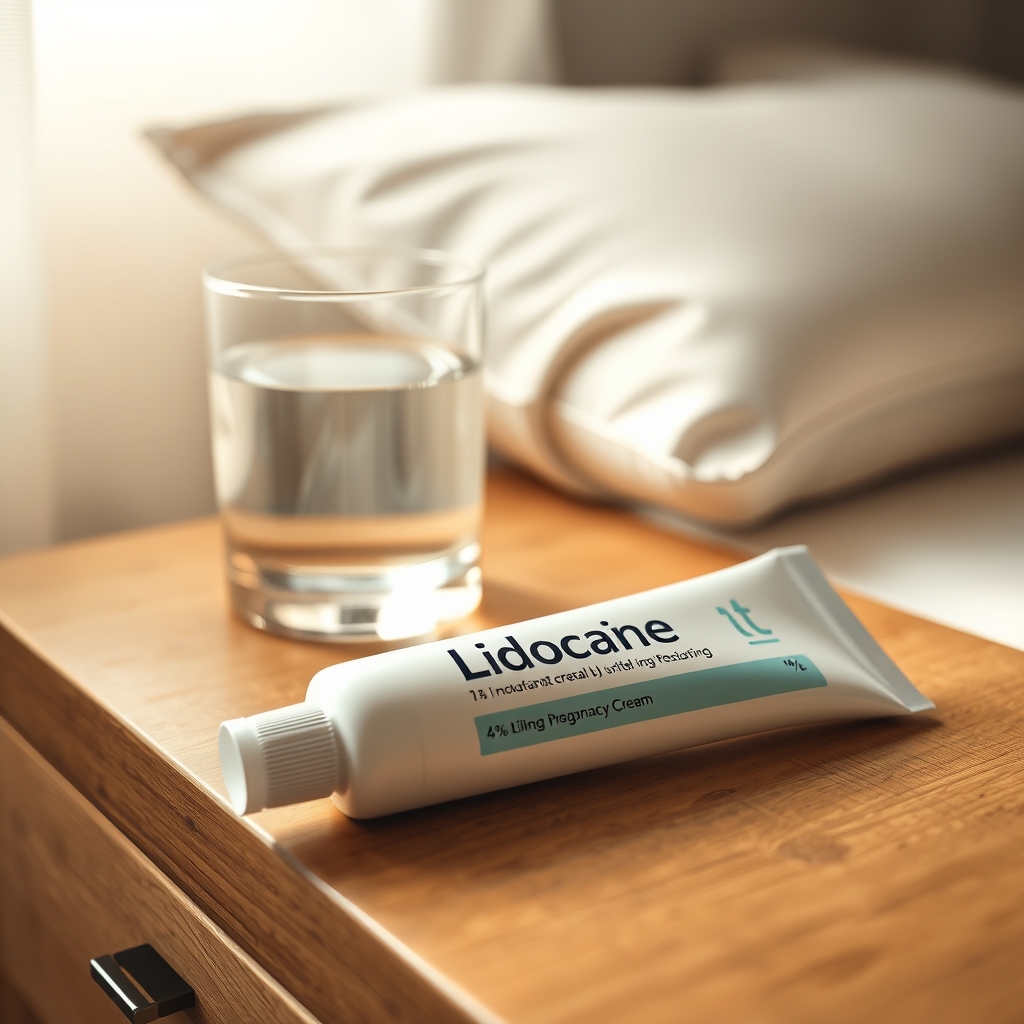
Lidocaine cream is generally safe during pregnancy when used in limited amounts and under medical supervision, especially in the second and third trimesters
By Shubhra Mishra — a mom of two who turned her own confusion during pregnancy into BumpBites, a global mission to make food choices clear, safe, and stress-free for every expecting mother. 💛
Check whether any food is safe during pregnancy with the BumpBites Food Safety Checker.
Quick verdict: ⚠️ Lidocaine cream is generally considered safe during pregnancy when used as directed for short-term pain relief. Most obstetricians and the FDA classify topical lidocaine as low-risk, but you should still use the smallest effective amount and avoid applying it to large areas of skin or broken skin. If you're using it for a specific condition (like eczema or labor pain), check with your provider first—some situations call for extra caution.
You’re rubbing your aching lower back at 11 p.m., the pregnancy pillow isn’t cutting it, and you remember that tube of lidocaine cream in the medicine cabinet. “Is this even safe?” you wonder, phone already in hand. If you’ve already smoothed some on before Googling, take a breath—you’re not alone, and the news is mostly reassuring.
Lidocaine cream is a topical anesthetic that numbs skin and eases pain from minor injuries, muscle soreness, or skin conditions. Because it’s applied to the skin (not swallowed or injected), very little of the medication enters your bloodstream, which means even less reaches your baby. Still, pregnancy changes how your body absorbs medications, and every trimester brings different concerns. Below, we’ll walk through what’s safe, what’s not, and what to use instead if you’d rather play it extra cautious.
Lidocaine cream safety by trimester and breastfeeding
Stage
Verdict
Notes
First trimester
⚠️ Safe with caution
Avoid large or repeated applications; stick to small areas and short-term use.
Second trimester
✅ Generally safe
Low systemic absorption; use the smallest effective amount.
Third trimester
✅ Generally safe
Same as second trimester; avoid broken skin or mucous membranes.
Breastfeeding
✅ Generally safe
Minimal transfer to breast milk; apply after nursing if possible.
What is lidocaine cream?
Lidocaine cream is a topical anesthetic—meaning it numbs the skin where you apply it. It’s the same active ingredient found in numbing sprays at the dentist, but formulated as a cream, gel, or ointment for skin use. You’ll find it over-the-counter in strengths up to 4% (like Aspercreme with Lidocaine) and by prescription in higher strengths (like Xylocaine 5%).
It works by temporarily blocking nerve signals in the skin, which dulls pain from minor burns, insect bites, muscle soreness, or skin conditions like eczema. Because it’s applied externally, only a tiny fraction enters your bloodstream—far less than if you took a pill or got an injection. That low absorption is why most obstetricians consider it a safer choice than oral pain relievers during pregnancy.
Is lidocaine cream safe during pregnancy?
Current guidance from the American College of Obstetricians and Gynecologists (ACOG) and the FDA classifies topical lidocaine as low-risk during pregnancy. The FDA’s pregnancy category system (now replaced by the more nuanced Pregnancy and Lactation Labeling Rule) previously listed lidocaine as Category B—meaning animal studies showed no risk, and human studies are either lacking or reassuring. While the new labeling doesn’t use letter categories, lidocaine’s safety profile remains well-established for short-term, small-area use.
Here’s why the risk is considered low: when you apply lidocaine cream to intact skin, only about 3% of the drug is absorbed into your bloodstream. From there, it’s quickly broken down by your liver and excreted. That means very little—if any—reaches your baby. The NHS (UK) and Mayo Clinic both list topical lidocaine as generally safe during pregnancy when used as directed.
That said, pregnancy changes how your body handles medications. Your skin may absorb more lidocaine than usual, especially if you’re applying it to a large area or broken skin. That’s why most providers recommend using the smallest amount needed and avoiding repeated or long-term use unless specifically advised.
Is lidocaine cream safe to use in the first trimester?
The first trimester is the most sensitive window for fetal development—it’s when your baby’s organs are forming. While there’s no strong evidence that lidocaine cream harms a developing fetus, most obstetricians recommend extra caution during these early weeks. If you can, try non-medication options first (like a cold compress or prenatal massage). If you do use lidocaine cream, stick to a pea-sized amount on a small area, and don’t reapply more than 3-4 times a day.
If you’ve already used lidocaine cream before realizing you were pregnant, don’t panic. The amount that reaches your baby is minimal, and the risk is very low. Still, mention it at your next prenatal visit so your provider can note it in your chart.
How much lidocaine cream can pregnant women apply safely?
The general rule is less is safer. For over-the-counter lidocaine creams (up to 4% strength), the standard recommendation is:
Apply a thin layer to the affected area.
Use no more than 3-4 times per day.
Limit application to an area no larger than the size of your palm.
Avoid broken or irritated skin, which can increase absorption.
For prescription-strength lidocaine (5% or higher), follow your provider’s instructions exactly. Never use more than prescribed, and don’t apply it under bandages or heating pads, which can increase absorption.
If you’re using lidocaine cream for a specific condition (like eczema or muscle pain), ask your provider for a personalized dosage plan. They may recommend a lower frequency or a different strength based on your needs.
Can I use generic lidocaine topical during pregnancy?
Yes, generic lidocaine creams are just as safe as brand-name versions like Xylocaine or Aspercreme. The active ingredient is identical, and the FDA requires generics to meet the same safety and efficacy standards as brand-name drugs. The only difference is usually the inactive ingredients (like fragrances or preservatives), which don’t affect the medication’s safety during pregnancy.
If you’re sensitive to certain additives, check the label for ingredients like parabens or lanolin, which can irritate some people’s skin. Otherwise, generic lidocaine is a cost-effective and safe choice.
What are the risks of using lidocaine cream while pregnant?
While lidocaine cream is generally safe, it’s not risk-free. Here’s what to watch for:
Skin irritation: Redness, itching, or a rash at the application site. This is the most common side effect and usually mild.
Allergic reaction: Hives, swelling, or difficulty breathing. This is rare but serious—stop using the cream and call your provider if it happens.
Systemic absorption: If you use too much or apply it to broken skin, lidocaine can enter your bloodstream in higher amounts. Symptoms include dizziness, confusion, or a metallic taste in your mouth. These are signs to stop using the cream and contact your provider.
Theoretical fetal risk: While no studies show harm to babies, high systemic levels of lidocaine (from overuse) could theoretically affect fetal heart rate or oxygen levels. This is why sticking to the recommended amount is so important.
Most side effects are mild and go away once you stop using the cream. If you experience any severe symptoms (like difficulty breathing or irregular heartbeat), seek medical attention immediately.
Are there safer alternatives to lidocaine cream for pregnancy pain relief?
If you’d rather avoid lidocaine altogether, here are some pregnancy-safe alternatives for pain relief:
Cold compress: A simple ice pack or frozen gel pack can reduce swelling and numb minor pain. Apply for 10-15 minutes at a time, with a cloth barrier to protect your skin.
Prenatal massage therapy: A certified prenatal massage therapist can target muscle tension and improve circulation. Always choose a therapist experienced in pregnancy massage.
Acetaminophen gel (e.g., Tylenol Topical): While oral acetaminophen is the go-to pain reliever during pregnancy, topical versions are also considered safe for short-term use. They work by reducing inflammation at the application site.
Menthol topical (e.g., Biofreeze): Menthol creates a cooling sensation that distracts from pain. It’s generally safe during pregnancy, but avoid applying it to broken skin or large areas.
Aloe vera gel (e.g., Lily of the Desert): Soothes minor skin irritation and sunburn. Choose a pure, additive-free version to avoid unnecessary ingredients.
Low-dose capsaicin cream (e.g., Zostrix): Derived from chili peppers, capsaicin depletes a pain-signaling chemical in the skin. It’s safe in low concentrations (0.025% or 0.075%) but can cause a burning sensation at first.
Low-potency hydrocortisone cream (e.g., Cortizone-10): For itchy or inflamed skin (like eczema), a 1% hydrocortisone cream is safe for short-term use. Avoid stronger steroids unless prescribed.
Is lidocaine cream safe for pregnant women with eczema?
If you have eczema, your skin is more likely to be broken or inflamed, which can increase lidocaine absorption. While lidocaine cream isn’t contraindicated for eczema, it’s not the first-line treatment—moisturizers and low-potency hydrocortisone creams are usually safer choices.
If your provider recommends lidocaine for eczema-related pain or itching, use it sparingly and only on intact skin. Avoid applying it to open sores or severely irritated areas. If your eczema is flaring, ask your provider about pregnancy-safe moisturizers or prescription options that might work better.
Does the brand Xylocaine cream have pregnancy safety data?
Xylocaine (a brand-name version of lidocaine) has been studied more extensively than some generics, but the safety data applies to lidocaine as a whole. The FDA and ACOG don’t distinguish between brands when it comes to pregnancy safety—what matters is the active ingredient and how you use it.
Xylocaine is available in both over-the-counter (up to 4%) and prescription (5%) strengths. If you’re using the prescription version, follow your provider’s instructions closely. For over-the-counter Xylocaine, the same dosage rules apply: small amounts, short-term use, and avoidance of broken skin.
Is lidocaine cream safe for labor pain management?
Lidocaine cream is not typically used for labor pain management. During labor, providers usually rely on epidurals, spinal blocks, or IV medications for pain relief—all of which are administered by a healthcare professional in a controlled setting. Topical lidocaine isn’t strong enough to manage labor pain and isn’t recommended for this purpose.
If you’re looking for non-medication pain relief options during labor, consider:
Hydrotherapy (warm showers or baths)
Massage or counterpressure
Breathing techniques
TENS units (transcutaneous electrical nerve stimulation)
Always discuss your pain management plan with your provider ahead of time.
Related topical pain relievers: pregnancy safety at a glance
Item
Verdict
Notes
Benzocaine cream
⚠️ Safe with caution
Similar to lidocaine but less studied in pregnancy; use sparingly.
Prilocaine cream
⚠️ Safe with caution
Often combined with lidocaine (e.g., EMLA); avoid large or repeated applications.
Tetracaine ointment
❌ Best avoided
Higher systemic absorption; not recommended during pregnancy.
Lidocaine patches (e.g., Lidoderm)
⚠️ Talk to your doctor first
Higher lidocaine content; absorption varies by patch type.
EMLA cream (lidocaine/prilocaine)
⚠️ Safe with caution
Combination increases absorption; use only as directed by your provider.
Diclofenac gel (e.g., Voltaren)
❌ Best avoided
NSAID; linked to fetal risks in late pregnancy.
Capsaicin cream (e.g., Zostrix)
✅ Generally safe
Safe in low doses; may cause temporary burning sensation.
Myth vs. fact
Myth: Lidocaine cream is completely safe during pregnancy because it’s just a topical treatment.
Fact: While lidocaine cream is generally safe, it’s not risk-free. Even topical medications can be absorbed into your bloodstream, especially if applied to broken skin or large areas. Always use the smallest effective amount and follow your provider’s guidance.
Myth: If lidocaine cream is safe for me, it’s safe for my baby.
Fact: While the amount of lidocaine that reaches your baby is minimal, it’s still important to use it cautiously. Your baby’s developing organs are more sensitive to medications, so it’s best to err on the side of caution.
Myth: You can’t use lidocaine cream at all during the first trimester.
Fact: You can use lidocaine cream in the first trimester, but it’s wise to be extra cautious. Stick to small amounts and short-term use, and try non-medication options first if possible.
Key takeaways
Lidocaine cream is generally safe during pregnancy when used as directed for short-term pain relief.
Use the smallest effective amount—apply a thin layer to a small area, no more than 3-4 times per day.
Avoid applying lidocaine to broken skin, large areas, or mucous membranes, which can increase absorption.
First-trimester use is not contraindicated, but non-medication options are preferred if possible.
Generic lidocaine creams are just as safe as brand-name versions like Xylocaine.
If you have eczema or broken skin, ask your provider before using lidocaine cream.
For labor pain, lidocaine cream isn’t recommended—discuss other options with your provider.
If you experience dizziness, confusion, or difficulty breathing, stop using the cream and call your provider.
Frequently asked questions
Can I use lidocaine cream while pregnant?
Yes, you can use lidocaine cream during pregnancy, but it’s best to use it sparingly. Stick to the smallest effective amount, avoid broken skin, and don’t apply it more than 3-4 times a day. If you’re unsure, check with your provider—especially if you’re using it for a specific condition like eczema.
Is it safe to apply lidocaine to my belly during pregnancy?
Applying lidocaine cream to your belly is generally safe as long as your skin is intact (no rashes, cuts, or irritation). Avoid using it on stretch marks or areas where your skin is thin or broken. If you’re using it for round ligament pain, try a cold compress or prenatal massage first.
What are the side effects of lidocaine cream for pregnant women?
Most side effects are mild and limited to the application site, like redness, itching, or a rash. Rarely, lidocaine can be absorbed in higher amounts, causing dizziness, confusion, or a metallic taste in your mouth. If you experience any of these, stop using the cream and contact your provider.
How long should I wait after using lidocaine cream before giving birth?
There’s no need to wait—lidocaine cream is safe to use right up until labor. However, it’s not typically used for labor pain management (epidurals or other methods are preferred). If you’re using it for muscle soreness or skin irritation, you can continue as needed, but avoid applying it to large areas or broken skin.
Are there any risks to the baby from lidocaine cream?
The risk to your baby is very low because only a tiny amount of lidocaine enters your bloodstream when applied to intact skin. No studies have shown harm to babies from topical lidocaine use during pregnancy. Still, it’s best to use the smallest effective amount to minimize any potential risk.
What are safer pain relief options during pregnancy?
Safer alternatives to lidocaine cream include cold compresses, prenatal massage, acetaminophen gel (like Tylenol Topical), menthol topicals (like Biofreeze), and aloe vera gel. For muscle pain, low-impact exercise or physical therapy can also help. Always check with your provider before trying a new pain relief method.
Does lidocaine cross the placenta?
Yes, lidocaine can cross the placenta, but the amount that reaches your baby is minimal when used as directed. Topical lidocaine is absorbed in very small quantities, so the risk to your baby is considered low. Still, it’s best to use it cautiously and only when necessary.
When to call your doctor
Call your provider if you experience any of the following after using lidocaine cream:
Severe skin irritation, swelling, or a rash that spreads.
Signs of an allergic reaction, like hives, difficulty breathing, or swelling of your face, lips, or tongue.
Dizziness, confusion, or a metallic taste in your mouth (signs of systemic absorption).
Irregular heartbeat or chest pain.
Any unusual symptoms in your baby, like decreased movement (though this is unlikely to be related to lidocaine cream).
Remember, this article is for informational purposes only and isn’t a substitute for medical advice. Always check with your provider before using any medication during pregnancy, even over-the-counter topical treatments.
References
American College of Obstetricians and Gynecologists (ACOG). (2021). Medications and Pregnancy.
U.S. Food and Drug Administration (FDA). (2020). Pregnancy and Lactation Labeling Rule.
National Health Service (NHS). (2022). Can I use painkillers during pregnancy?
Mayo Clinic. (2023). Pregnancy and medications: What’s safe?
MotherToBaby. (2023). Lidocaine Fact Sheet.
Centers for Disease Control and Prevention (CDC). (2021). Treating for Two: Medicine and Pregnancy.
A pea-sized dab of lidocaine cream can ease muscle soreness—just stick to small areas and short-term use.Cold compresses are a simple, medication-free way to ease pregnancy-related muscle pain.Aloe vera gel soothes minor skin irritation without any medication—just choose a pure, additive-free version.
Not sure about the label on Is Lidocaine Cream Safe During Pregnancy products?
Snap the ingredients list and SafeFilter checks every ingredient for your stage — only 3 free scans this month, then you're locked until reset. Unlimited from $7/mo or $50/yr.
When Shubhra Mishra was expecting her first child in 2016, she was overwhelmed by conflicting food advice — one site said yes, another said never. By the time her second baby arrived in 2019, she realized millions of mothers face the same confusion.
That sparked a five-year journey through clinical nutrition papers, cultural diets, and expert conversations — all leading to BumpBites: a calm, compassionate space where science meets everyday motherhood.
Her long-term vision is to build a global community ensuring safe, supported, and free deliveriesfor every mother — because no woman should face pregnancy alone or uninformed. 🌿
🌍 Stand with mothers, shape safer guidance
Join a small circle of experts who review BumpBites articles so expecting parents everywhere can decide with confidence.