When you know the exact first day of your LMP, the calculation mirrors Naegele’s rule but can be done with a calendar or a simple spreadsheet. Many women prefer a “pregnancy weeks” approach: count 40 weeks forward from the LMP, or count 280 days.
Using a calendar
- Mark the first day of your LMP on a monthly calendar.
- Count forward 9 months (or 40 weeks). The date you land on is your EDD.
- Remember that a week starts on a Sunday for many clinicians, so align your count accordingly.
Tip: Highlight the day you expect to reach each trimester milestone (12, 24, and 36 weeks). This visual cue can make appointments and prenatal classes feel more tangible.
Using a spreadsheet
Enter the LMP date in cell A1, then in cell B1 type =A1+280. The result displays your due date automatically. This method reduces arithmetic errors and works for any cycle length. You can also add conditional formatting to flag dates that fall on weekends, making it easier to plan prenatal visits.
Accuracy considerations
According to the Endocrine Society, a due date calculated from a reliable LMP is accurate within ± 7 days for a regular 28‑day cycle. However, if you have a longer or shorter cycle, the estimate can drift by several days. That’s why we’ll cover adjustments for irregular cycles next.
It’s also worth noting that the United Kingdom’s NHS advises using LMP dating as the first step, but to confirm it with an early‑trimester ultrasound whenever possible. This dual‑approach helps catch any hidden discrepancies early on.
How to calculate due date if you have irregular periods or a late ovulation
Irregular cycles (any variation beyond ± 5 days) or a late ovulation can throw off the classic 280‑day rule. In these cases, you’ll need to adjust the gestational age based on your average cycle length or use ovulation tracking data if available.
Adjusting for longer or shorter cycles
First, determine your average cycle length (e.g., 35 days). Subtract 14 days (the average luteal phase) from the cycle length to estimate the day of ovulation. Then, add 266 days (the typical length from ovulation to delivery) to that ovulation date.
Example: LMP = March 1, 2024; average cycle = 35 days.
- Estimated ovulation = March 1 + 21 days = March 22, 2024.
- EDD = March 22 + 266 days = December 14, 2024.
Late ovulation without tracking data
If you suspect a late ovulation but lack precise data, add 7‑10 days to the standard 280‑day count. This buffer aligns with the typical variability observed in studies from the American Society for Reproductive Medicine (ASRM).
Women with polycystic ovary syndrome (PCOS) often experience delayed ovulation. In those cases, using a basal body temperature chart or an ovulation predictor kit (OPK) can provide a more accurate ovulation day, which you can then plug into the 266‑day formula.
When to seek confirmation
If your calculated EDD differs by more than 10 days from your provider’s ultrasound estimate, request a follow‑up scan. Consistent large discrepancies may indicate a dating error or a potential growth concern.
Remember, the goal isn’t to achieve a perfect number on the calendar; it’s to have a reliable framework for monitoring fetal development and scheduling prenatal care.
How to calculate due date when you don’t know your last period date
Some women discover they’re pregnant without recalling their LMP—perhaps due to irregular bleeding, early pregnancy loss, or simply not tracking cycles. In these cases, clinicians rely on ultrasound measurements, but you can still make a rough manual estimate.
Using conception date estimates
If you know the approximate date of conception (e.g., from a recorded sexual encounter or IVF embryo transfer), add 266 days. For natural conception, subtract 14 days from the conception date to approximate the LMP, then apply Naegele’s rule.
Example calculation
Conception ≈ July 10, 2024. Add 266 days → April 2, 2025. This becomes your provisional due date.
When to rely on ultrasound
Early‑trimester (7‑12 weeks) ultrasound can date a pregnancy within ± 5 days. The ACOG recommends that if LMP is unknown, the dating ultrasound is the gold standard for establishing the gestational age.
In many countries, the FDA‑approved ultrasound devices are calibrated to provide consistent CRL measurements, ensuring that the dating is as accurate as possible across different clinical settings.
How to calculate due date after IVF or assisted reproductive technology
In vitro fertilization (IVF) and other assisted reproductive technologies (ART) provide a precise embryo transfer date, making manual calculation straightforward. The key is to know the exact day the embryo was transferred and the embryo’s developmental stage (e.g., day 3 or day 5 blastocyst).
Calculating from embryo transfer
For a day 5 blastocyst transferred on January 15, 2024, add 266 days (the standard gestation from fertilization) minus 5 days (since the embryo is already 5 days old). So, EDD = January 15 + 261 days = October 3, 2024.
Single vs. multiple embryo transfers
If multiple embryos are transferred, the earliest‑developing embryo typically dictates the due date. However, twins or higher‑order multiples often arrive a few days earlier than a singleton pregnancy, so clinicians may adjust the EDD by – 3 to – 5 days.
Special considerations
Women who undergo frozen‑embryo transfers (FET) often have a more regular uterine environment, which can make the manual estimate align closely with ultrasound dating. Nonetheless, ACOG advises a confirming scan at 6‑8 weeks gestation.
Because ART cycles are tightly monitored, many patients receive a “planned” due date from their fertility clinic right after transfer. This date can be used as a baseline, but still benefits from early‑trimester ultrasound confirmation.
How to calculate due date using early ultrasound measurements
Early ultrasound (typically 7‑12 weeks) is the most accurate method to refine a manual due date. The measurement of crown‑rump length (CRL) correlates strongly with gestational age.
CRL‑based dating
At 8 weeks (56 days), the average CRL is ≈ 1.6 cm. The American College of Radiology notes that a CRL‑based estimate is accurate within ± 5 days when performed before 12 weeks.
Step‑by‑step ultrasound dating
- Obtain the CRL measurement from your ultrasound report.
- Use the corresponding gestational age chart (e.g., CRL = 2.0 cm ≈ 9 weeks).
- Count forward 40 weeks from the gestational age to set the EDD.
When ultrasound overrides manual dates
If the ultrasound-derived EDD differs by more than 7 days from your LMP‑based estimate, most clinicians will adopt the ultrasound date as the official EDD. This practice aligns with guidelines from the Society for Maternal‑Fetal Medicine (SMFM).
Ultrasound dating also helps detect early growth restrictions or multiple gestations that could otherwise skew a manual calculation, reinforcing why a first‑trimester scan is a key milestone in prenatal care.
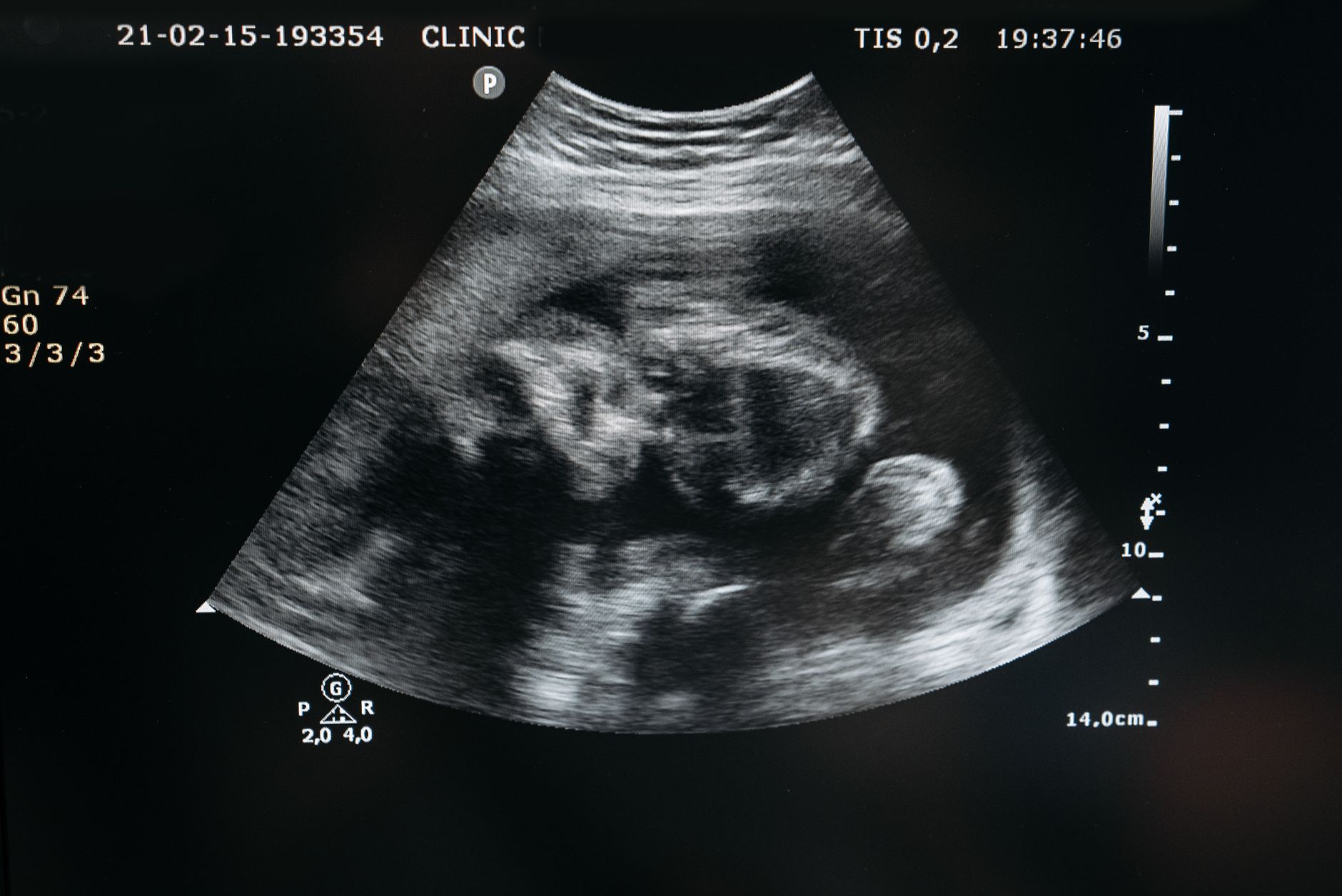
How to calculate due date for twins or multiple pregnancies
Twins and higher‑order multiples often arrive earlier than singletons. The standard adjustment is to subtract 3 to 5 days from the singleton EDD for each additional fetus.
Manual adjustment example
Singleton EDD = October 12, 2024. For twins, subtract 4 days → October 8, 2024. For triplets, subtract 8 days → October 4, 2024.
Why the shift occurs
Multiple gestations lead to increased uterine stretch and hormonal changes, prompting earlier labor. The National Institute of Child Health and Human Development (NICHD) reports that the average gestational length for twins is ≈ 35 weeks, compared with ≈ 40 weeks for singletons.
Ultrasound confirmation
Early ultrasound can differentiate singleton from multiple pregnancies, allowing precise dating. If twins are identified at 10 weeks, the ultrasound estimate will already incorporate the earlier delivery window.
Because twins often share a placenta (monochorionic) or have separate placentas (dichorionic), the type of twinning can further affect timing. Your provider will discuss these nuances when reviewing the ultrasound images.
Manual due date calculator vs online due date calculator accuracy
Both manual and online calculators rely on the same underlying formulas, but user input errors can affect precision. Below is a comparison of key factors.
In practice, most women find a hybrid approach most reliable: start with a manual calculation for a baseline, then input that date into an online tool that can incorporate ultrasound results.
Remember to double‑check the units (weeks vs. days) and to verify that the online calculator you choose follows ACOG‑endorsed algorithms. Some free apps may use outdated formulas, which can lead to a few days’ discrepancy.
What factors can shift a manually calculated due date
Even with careful calculation, several variables can move your estimated due date forward or backward.
Cycle length variation
Each day your cycle deviates from 28 days adds or subtracts roughly 1 day from the EDD. A 30‑day cycle pushes the due date + 2 days; a 26‑day cycle pulls it – 2 days.
Late ovulation
Ovulation occurring 2 weeks later than usual can shift the EDD + 14 days. This is common in women with polycystic ovary syndrome (PCOS) or those using fertility treatments that delay ovulation.
Early‑trimester ultrasound revisions
CRL measurements that suggest a gestational age > 7 days different from the LMP estimate will prompt a revised EDD.
Multiple pregnancies
Each additional fetus typically shortens the gestation by 3‑5 days.
Lifestyle factors
While they don’t change the math, extreme weight gain, smoking, or high stress can influence actual delivery timing. The Mayo Clinic notes that these factors may lead to earlier or later births, but they do not affect the calculated EDD.
When to adjust your due date after a missed period
If you miss your period and the calculated EDD seems off, wait for a confirmed pregnancy test and schedule a prenatal visit. An early ultrasound at 6‑8 weeks can provide a definitive dating, allowing you to adjust the manual estimate if needed.
Finally, keep a simple log of any new symptoms, weight changes, or medication adjustments. This record can help your provider explain any shifts and reassure you that the pregnancy is progressing as expected.

How to calculate due date using a pregnancy wheel (gestational age calculator)
A pregnancy wheel, also known as a gestational age calculator, is a physical or digital tool that lets you spin the months to line up your LMP with the expected delivery month. It’s a favorite in many OB‑GYN offices because it visualizes the timeline without any arithmetic.
Using a paper pregnancy wheel
- Locate the inner circle that marks months and weeks.
- Align the month of your LMP on the outer ring with the “0 weeks” marker.
- The point where the inner ring reads “40 weeks” shows your estimated due month and week.
Because the wheel accounts for the 280‑day rule automatically, it reduces the chance of a simple math error. However, you still need to adjust for irregular cycles or IVF dates manually.
Digital pregnancy wheel apps
Many reputable apps (e.g., those endorsed by the NHS) include a built‑in pregnancy wheel feature. They let you input your LMP, cycle length, and any known ovulation data, then instantly display the due month. The advantage is that you can save multiple scenarios—one for a regular 28‑day cycle and another for a 35‑day cycle—to see how the date shifts.
When choosing an app, look for one that cites ACOG or NHS guidelines in its “About” section. This ensures the underlying algorithm matches the standard 280‑day calculation.
How to calculate due date after a miscarriage (resuming calculations)
Experiencing a miscarriage can be emotionally taxing, and it also resets the dating clock if you become pregnant again soon after. The body may take a short period to return to its baseline hormonal state, which can affect ovulation timing.
Starting the new calculation
Begin by confirming the first day of your new LMP or the date of a documented ovulation test after the miscarriage. If you used a home ovulation predictor kit (OPK) and saw a positive result, add 266 days from that date to estimate the new due date.
If you’re unsure about ovulation timing, an early‑trimester ultrasound (7‑12 weeks) is the safest way to establish gestational age for the new pregnancy. The ultrasound will give you a fresh baseline independent of the previous cycle.
Emotional considerations
Many women report anxiety about “getting the date right” after a loss. Reassure yourself that the calculation is a tool, not a guarantee. Your provider will monitor growth closely, and any needed adjustments will be made during routine scans.
The Royal College of Obstetricians and Gynaecologists (RCOG) recommends offering a follow‑up appointment 6 weeks after a miscarriage to discuss both physical recovery and future pregnancy planning, including dating methods.
How to calculate due date for a surrogate pregnancy
Surrogacy adds another layer of complexity because the gestational carrier’s cycle, not the intended mother’s, determines the dating. The key dates are the embryo transfer (or fertilization) and the surrogate’s LMP if she conceived naturally.
Embryo transfer dating
For a day‑5 blastocyst transferred on February 1, 2024, subtract 5 days from the standard 266‑day gestation, then add the remaining days: 266 – 5 = 261 days. So the EDD would be February 1 + 261 days = October 19, 2024.
Natural conception by surrogate
If the surrogate reports her LMP, you can apply Naegele’s rule as usual. However, many surrogacy agencies also schedule an early ultrasound (around 8 weeks) to confirm dating, ensuring both the intended parents and the surrogate share a reliable timeline.
Legal contracts often specify that the surrogate’s medical records, including dating scans, are shared with the intended parents. This transparency helps all parties stay aligned on prenatal milestones.
Myth vs. fact
Myth: The due date is an exact deadline for delivery.
Fact: Due dates are estimates; only 5‑10 % of babies are born on their exact due date. Most deliveries occur within a two‑week window before or after the EDD.
Myth: You can’t calculate a due date without a regular menstrual cycle.
Fact: While regular cycles improve accuracy, clinicians can still estimate using ovulation data, conception dates, or early ultrasound measurements.
Myth: Online calculators are always more accurate than manual calculations.
Fact: Both rely on the same formulas; accuracy depends on the quality of the input data. Manual calculations let you customize for irregularities that many online tools overlook.
Key takeaways
- Use Naegele’s rule (add 1 year, subtract 3 months, add 7 days) as a baseline for a manual due date.
- Adjust the calculation for irregular cycles, IVF timing, or multiple pregnancies.
- Early‑trimester ultrasound (CRL) is the most accurate method, often refining the manual estimate within ± 5 days.
- Manual and online calculators are equally reliable when you input correct data; double‑check for arithmetic errors.
- Red‑flag symptoms—such as severe abdominal pain, heavy bleeding, or sudden swelling—warrant immediate medical attention regardless of your due‑date estimate.
- Always discuss any large discrepancies (> 10 days) with your OB‑GYN, who may order a confirming scan.
- Tools like pregnancy wheels or surrogate‑specific timelines can simplify complex scenarios.
Frequently asked questions
What is Naegele’s rule for calculating a due date?
Naegele’s rule adds 280 days (or 40 weeks) to the first day of your last menstrual period. The shortcut is “add 1 year, subtract 3 months, add 7 days.” It works best for a 28‑day cycle and provides a solid baseline for manual dating.
Can you calculate a due date without knowing your last menstrual period?
Yes. If you know the approximate conception date (e.g., from IVF or a recorded sexual encounter), add 266 days. When conception is uncertain, an early‑trimester ultrasound can give a reliable gestational age, which you then use to estimate the due date.
How accurate is a manually calculated due date compared to an ultrasound?
Manual calculations based on a reliable LMP are accurate within ± 7 days for regular cycles. Early ultrasound dating (7‑12 weeks) improves accuracy to ± 5 days. Discrepancies greater than 7 days usually lead clinicians to adopt the ultrasound‑derived date.
Why does my due date keep changing during pregnancy?
Changes often stem from updated information—such as a more precise ultrasound measurement—or from recognizing cycle irregularities, late ovulation, or multiple gestations. Small adjustments (± 3‑5 days) are normal; larger shifts should be discussed with your provider.
When should I start prenatal vitamins based on my calculated due date?
Begin prenatal vitamins as soon as you suspect pregnancy, ideally before confirming the due date. Folate is crucial during the first 4‑6 weeks, a period often before many women know their exact due date.
What factors can affect the calculation of a due date?
Cycle length, ovulation timing, IVF embryo transfer dates, multiple pregnancies, and early ultrasound measurements can all shift the estimated due date. Lifestyle factors like smoking or extreme weight changes may influence actual delivery timing but not the calculated estimate.
How can I use a pregnancy wheel to double‑check my due date?
Align the month of your LMP on the outer ring of the wheel with the “0 weeks” marker. The point where the inner ring reads “40 weeks” shows your estimated due month and week. This visual method helps catch arithmetic errors and works well alongside digital calculators.
Is it safe to rely on a due date after a miscarriage?
After a miscarriage, start a new calculation using the first day of your new LMP or a confirmed ovulation date. An early‑trimester ultrasound provides the most reliable dating for the new pregnancy, and your provider will monitor growth closely.
When to see a doctor / specialist
If your manually calculated due date differs by more than 10 days from an ultrasound estimate, or if you experience any of the following red‑flag symptoms, contact your OB‑GYN promptly:
- Severe abdominal or pelvic pain not relieved by rest.
- Heavy vaginal bleeding (soaking a pad in < 30 minutes).
- Sudden swelling of the hands, face, or feet.
- Fever > 100.4 °F (38 °C) without a known cause.
- Decreased fetal movement after 24 weeks gestation.
- Persistent contractions before 37 weeks (preterm labor signs).
This article provides general information and is not a substitute for personalized medical advice. Always discuss your specific situation with a qualified healthcare professional.
References
- American College of Obstetricians and Gynecologists. “Dating Pregnancy.” ACOG Practice Bulletin, 2023.
- Endocrine Society. “Clinical Practice Guidelines for Pregnancy Dating.” Endocrine Reviews, 2022.
- American Society for Reproductive Medicine. “Guidelines for Assisted Reproductive Technology.” ASRM, 2021.
- Society for Maternal‑Fetal Medicine. “Ultrasound Dating in Early Pregnancy.” SMFM Clinical Consensus, 2022.
- National Institute of Child Health and Human Development. “Multiple Gestations and Delivery Timing.” NICHD, 2020.
- Mayo Clinic. “Due Date: How Accurate Is It?” Mayo Clinic Proceedings, 2023.
- Harvard T.H. Chan School of Public Health. “Factors Influencing Gestational Length.” Nutrition Review, 2021.
- National Health Service (NHS). “Pregnancy dating and early ultrasound.” NHS Guidelines, 2022.
- Food and Drug Administration (FDA). “Ultrasound device standards.” FDA Guidance, 2021.
- Royal College of Obstetricians and Gynaecologists (RCOG). “Post‑miscarriage care and future pregnancy planning.” RCOG Clinical Guidance, 2023.