Quick take: Children’s Motrin (ibuprofen) is safe for most infants ≥ 6 months when given at 5‑10 mg per kilogram of body weight every 6‑8 hours, not exceeding 40 mg/kg per day. Newborns and babies under 6 months should only receive it under a doctor’s direction. Watch for stomach upset, rash, or signs of overdose such as vomiting or lethargy, and always use the dosing syringe that comes with the bottle for accurate measurement.
It’s terrifying when your baby’s temperature spikes in the middle of the night and you’re not sure how much medication is safe. You’re not alone—many parents stare at the tiny bottle of Children’s Motrin, wondering, “How often can I give baby Children’s Motrin?” The bottom line is that ibuprofen can safely reduce fever and relieve pain in infants ≥ 6 months, but the dose must be tailored to weight, given at proper intervals, and never exceed daily limits. In this guide we’ll walk through the exact dosage calculations, timing, safety checks, how to measure liquid ibuprofen, alternatives, storage tips, and the warning signs that mean you need medical help right away.
Whether you’re caring for a 6‑month‑old, a newborn, or a toddler, the same principles apply: read the label, use the provided syringe, and keep a log of each dose. Below you’ll find answers to the most common questions people type into Google, plus a clear dosage chart, a quick‑check symptoms list, and a side‑by‑side comparison of ibuprofen versus other fever reducers. Let’s turn that nighttime anxiety into confident, evidence‑based care.

What is the recommended dosage of Children’s Motrin for a 6‑month‑old baby?
For infants ≥ 6 months, the American Academy of Pediatrics (AAP) recommends a dose of 5 mg per kilogram of body weight for the lowest effective amount, up to 10 mg/kg for stronger relief. This translates to about 50 mg per kilogram per day divided into 3‑4 doses, but the total must never exceed 40 mg/kg per day. A typical 6‑month‑old weighs roughly 7 kg (15 lb), so the dose range is:
- Low dose: 5 mg × 7 kg ≈ 35 mg
- High dose: 10 mg × 7 kg ≈ 70 mg
Children’s Motrin liquid (100 mg per 5 mL) provides 20 mg per mL. Using the provided dosing syringe (1 mL = 20 mg), a 6‑month‑old would receive:
- Low dose: ≈ 1.75 mL (about 1 ½ mL)
- High dose: ≈ 3.5 mL (just under 2 teaspoons)
Because the syringe’s markings are in 0.5 mL increments, aim for the nearest mark. Always round down if you’re unsure—under‑dosing is safer than a potential overdose.
How to calculate the dose quickly
1. Weigh your baby (kg). 2. Multiply weight by 5 mg for the minimum dose. 3. Divide the resulting milligrams by 20 mg per mL to get the volume in milliliters. 4. Use the syringe to measure that exact amount.
How many times a day can I give my baby Children’s Motrin?
Children’s Motrin can be given every 6‑8 hours, which typically means 3‑4 times per day. The key is to maintain at least a 6‑hour gap between doses. For example, if you dose at 8 a.m., the next safe dose would be no earlier than 2 p.m.
Because infants have faster metabolism than older children, dosing every 6 hours maximizes fever control while minimizing stomach irritation. If your baby’s fever persists after three doses, it’s time to call your pediatrician rather than adding a fourth dose in a 24‑hour period.
Maximum daily dose limits
The total amount of ibuprofen should not exceed 40 mg/kg per 24 hours. Using the 7 kg example above, the absolute daily ceiling is 280 mg, which equals 14 mL of the 100 mg/5 mL formulation. Splitting this into three doses gives roughly 4.7 mL per dose, well within the 6‑8 hour interval.
Can I give Children’s Motrin to a newborn infant?
No. The FDA and AAP advise against giving ibuprofen to infants younger than 6 months because their kidneys are still developing, and they are more vulnerable to dehydration and stomach irritation. In rare cases where a newborn has a specific medical condition requiring ibuprofen, it must be prescribed and closely monitored by a pediatrician or neonatologist.
For newborns and infants under 6 months, the safest fever‑reducer is acetaminophen (Tylenol) at the appropriate dose (10‑15 mg/kg every 4‑6 hours, not exceeding 75 mg/kg per day). Always discuss any fever‑reduction plan with your doctor before giving medication to a newborn.
What are the signs of overdose from Children’s Motrin in babies?
Ibuprofen overdose is rare when dosing guidelines are followed, but it can happen if doses are mis‑measured or given too frequently. Early warning signs include:
- Persistent vomiting
- Diarrhea (sometimes with blood)
- Abdominal pain or bloating
- Lethargy or unusual drowsiness
- Rapid breathing or shallow breaths
- Reduced urine output (fewer wet diapers)
- Skin rash or hives
If you notice any of these symptoms, especially vomiting combined with low urine output, call your pediatrician or emergency services immediately. Prompt treatment can prevent kidney damage and other serious complications.
How long should I wait between doses of Children’s Motrin for infants?
The recommended interval is **at least 6 hours** and no more than **8 hours** between doses. This spacing allows the drug to clear enough of the infant’s system to avoid accumulation while still providing effective fever control.
Keep a simple dosing log—write the time and amount on a sticky note or in a phone app. If you’re unsure whether enough time has passed, err on the side of caution and wait a little longer before giving the next dose.
Is it safe to give Children’s Motrin with other fever reducers for babies?
Yes, but only under specific circumstances. The AAP notes that alternating ibuprofen and acetaminophen can be effective for stubborn fevers, provided the doses are **not given at the same time** and each drug stays within its own maximum daily limit.
Typical alternating schedule:
- Give ibuprofen (Children’s Motrin) at 8 a.m.
- Give acetaminophen (Tylenol) at 12 p.m.
- Give ibuprofen again at 4 p.m.
- Give acetaminophen at 8 p.m.
Never exceed 40 mg/kg per day of ibuprofen or 75 mg/kg per day of acetaminophen. Consult your pediatrician before starting an alternating regimen, especially if your baby has liver or kidney concerns.
What weight range is appropriate for Children’s Motrin dosage for babies?
Children’s Motrin is labeled for infants and children weighing **6 kg (13 lb) to 24 kg (53 lb)**. Below 6 kg, the medication is not recommended unless a doctor explicitly prescribes it. For babies between 6 kg and 12 kg, the dose will be on the lower end (5‑7.5 mg/kg). For those approaching 24 kg, the dose can be increased up to 10 mg/kg, but never exceed the 40 mg/kg per day ceiling.
Because weight can change rapidly in the first year, re‑measure your baby’s weight every few weeks and adjust the dose accordingly.
Children’s Motrin dosage chart by age
This chart is a quick reference, but always calculate the exact dose based on your baby’s current weight. The “volume” column reflects the amount of the 100 mg/5 mL Children’s Motrin suspension you should measure with the provided syringe.
Alternatives to Children’s Motrin for infant fever
If ibuprofen isn’t appropriate—because your baby is under 6 months, has kidney disease, or you simply prefer a different option—consider these alternatives:
- Acetaminophen (Tylenol): Safest for newborns and infants ≥ 2 months. Dose 10‑15 mg/kg every 4‑6 hours, max 75 mg/kg per day.
- Cool compresses: Apply a lukewarm, damp washcloth to the forehead, arms, or legs. This can gently lower temperature without medication.
- Increased fluid intake: Offer breast milk, formula, or water (if age‑appropriate) to prevent dehydration.
- Room temperature control: Keep the nursery at 68‑72 °F (20‑22 °C) and dress baby in lightweight clothing.
Always discuss any medication plan with your pediatrician, especially if your infant has chronic health issues.
How to store Children’s Motrin safely
Proper storage preserves potency and prevents accidental ingestion:
- Keep the bottle tightly closed and store it at room temperature (below 77 °F/25 °C).
- Do not refrigerate unless the label explicitly says it’s safe; cold temperatures can cause the suspension to separate.
- Store out of reach and sight of children—high shelves or a locked cabinet are best.
- Discard any medication that is past its expiration date or looks cloudy, separated, or has an off odor.
Label the bottle with the date you opened it. Most liquid ibuprofen remains stable for 14 days after opening, but check the manufacturer’s instructions.
What are the side effects of Children’s Motrin in babies?
Most infants tolerate ibuprofen well when dosed correctly. Common, mild side effects include:
- Upset stomach or mild abdominal pain
- Transient diarrhea
- Loss of appetite
- Rash
Rare but serious reactions can involve kidney impairment, severe allergic response (anaphylaxis), or gastrointestinal bleeding. If you notice persistent vomiting, blood in stool, or a sudden drop in urine output, seek medical care promptly.
When to call a doctor after giving Children’s Motrin to a baby
Contact your pediatrician or go to urgent care if any of the following occur:
- Fever persists for more than 24 hours despite dosing.
- Baby shows signs of dehydration (fewer than 6 wet diapers in 24 hours, dry mouth, sunken eyes).
- Vomiting or diarrhea lasts longer than 12 hours.
- Unusual rash, swelling, or breathing difficulty appears.
- Any symptom of possible overdose (see “Signs of overdose” above).
When in doubt, a quick call to your healthcare provider can prevent complications and give you peace of mind.
Difference between Children’s Motrin and infant ibuprofen
“Children’s Motrin” is a brand‑name liquid suspension (100 mg per 5 mL) formulated for children 6 months and older. “Infant ibuprofen” often refers to the same active ingredient but may be packaged in a different concentration (e.g., 50 mg per 5 mL) or a chewable tablet for toddlers. The key distinctions are:
- Concentration: Check the label—different products have different mg per mL.
- Age labeling: Some “infant” formulations are marketed for 3‑months‑plus, but the FDA still advises caution under 6 months.
- Flavor: Liquid versions may have fruit flavors; chewables have a milder taste.
Regardless of brand, always calculate the dose based on the exact concentration listed on your bottle.
How to measure liquid Children’s Motrin accurately
Accuracy matters. Follow these steps:
- Shake the bottle well for at least 10 seconds to ensure the suspension is uniform.
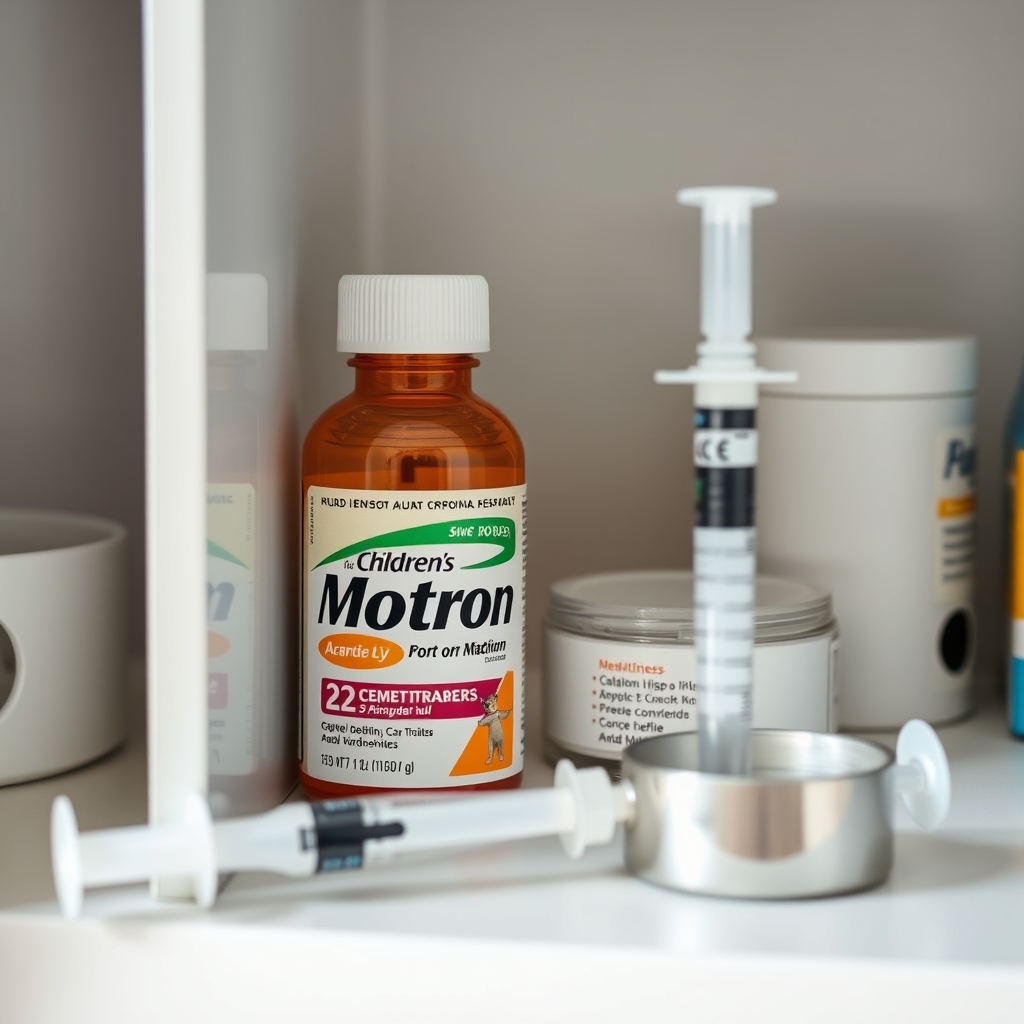
- Use the dosing syringe that comes with the bottle. Do not substitute a kitchen teaspoon, which can vary by up to 20 %.
- Place the syringe on a flat surface, pull the plunger to the desired mark, and read the measurement at eye level.
- After each dose, wipe the syringe with a clean tissue and replace the cap securely.
If you lose the original syringe, a pharmacy can provide a calibrated oral syringe (1 mL or 0.5 mL) that matches the concentration of your bottle.
Symptoms checklist
Use this quick checklist to decide whether your baby’s fever needs medication or medical attention:
- Fever ≥ 38.3 °C (101 °F) in an infant ≥ 6 months – consider ibuprofen.
- Fever ≥ 38.9 °C (102 °F) in a newborn < 6 months – call doctor immediately.
- Baby is unusually irritable, lethargic, or difficult to soothe – seek advice.
- Fewer than 6 wet diapers in 24 hours – contact provider.
- Vomiting or diarrhea lasting > 12 hours – call.
- Any rash, swelling, or breathing difficulty – emergency care.
Treatment options comparison
Natural remedies with evidence
While “natural” options are appealing, evidence for infant fever is limited. The following have modest support and are safe when used alongside standard care:
- Breast milk: Provides hydration and immune factors; keep feeding frequently.
- Cool (not cold) sponge bath: A lukewarm bath can lower skin temperature without causing shivering.
- Chamomile tea (infants ≥ 6 months): Small amounts (1‑2 oz) may soothe, but avoid honey due to botulism risk.
Never replace prescribed ibuprofen or acetaminophen with herbal remedies without a clinician’s guidance.
Myth vs. fact
Myth: “Giving ibuprofen every 4 hours will bring the fever down faster.”
Fact: Ibuprofen should be spaced at least 6 hours apart; dosing more frequently increases risk of stomach irritation and kidney stress without additional fever‑reduction benefit.
Myth: “All fevers in babies are dangerous and need medication.”
Fact: Mild fevers are a normal immune response. Medication is recommended only when the fever is ≥ 38.3 °C (101 °F) in infants ≥ 6 months, or if the child is uncomfortable.
Myth: “Children’s Motrin and infant ibuprofen are interchangeable without checking concentration.”
Fact: Always verify the mg per mL on the label. Using the wrong concentration can lead to under‑ or overdosing.
Key takeaways
- Use 5‑10 mg/kg dosing for infants ≥ 6 months; never exceed 40 mg/kg per day.
- Give doses every 6‑8 hours, with at least a 6‑hour gap.
- Measure with the supplied syringe; never rely on kitchen spoons.
- Newborns (< 6 months) should not receive ibuprofen unless directed by a doctor.
- Watch for overdose signs—vomiting, lethargy, reduced urine.
- Alternating with acetaminophen is safe when spaced properly and within daily limits.
Frequently asked questions
Can I give Children’s Motrin to a 2‑month‑old baby?
No. The FDA and AAP advise against ibuprofen for infants younger than 6 months because their kidneys are not fully mature. For a 2‑month‑old, acetaminophen is the recommended fever reducer.
How many milligrams of ibuprofen are safe for infants?
Infants ≥ 6 months can safely receive 5‑10 mg per kilogram of body weight per dose, not exceeding 40 mg/kg in a 24‑hour period.
What is the maximum daily dose of Children’s Motrin for a baby?
The ceiling is 40 mg/kg per day. For a 7 kg infant, that equals 280 mg total, which translates to about 14 mL of the 100 mg/5 mL suspension.
Is it okay to give Children’s Motrin with acetaminophen?
Yes, if you alternate them and keep each drug within its own daily maximum. Do not give them simultaneously.
What are the symptoms of ibuprofen overdose in infants?
Early signs include persistent vomiting, diarrhea, abdominal pain, lethargy, reduced urine output, and rash. Seek medical care immediately if these appear.
How long does Children’s Motrin stay in a baby’s system?
Ibuprofen’s half‑life in infants is roughly 2‑4 hours, so it is largely cleared within 12‑24 hours. However, the fever‑reduction effect lasts about 6‑8 hours per dose.
When to see a doctor / specialist
While occasional fever is common, certain red‑flag symptoms mean you need professional evaluation:
- Fever ≥ 38.9 °C (102 °F) in an infant < 6 months.
- Fever lasting longer than 24 hours despite appropriate dosing.
- Signs of dehydration: fewer than 6 wet diapers, dry mouth, sunken fontanelle.
- Vomiting or diarrhea persisting > 12 hours.
- Rash, swelling, difficulty breathing, or any allergic reaction.
- Any suspicion of overdose (see signs above).
For these concerns, contact your pediatrician, an urgent care clinic, or emergency services. If your baby has a chronic condition such as kidney disease, liver disease, or a known allergy to NSAIDs, discuss fever‑reduction strategies with a pediatric nephrologist or gastroenterologist.
References
- American Academy of Pediatrics. “Fever and Antipyretic Therapy.” AAP Clinical Report, 2022.
- U.S. Food and Drug Administration. “Ibuprofen (Children’s Motrin) Labeling Information.” FDA.gov, 2023.
- National Institutes of Health. “Ibuprofen Dosage for Children.” MedlinePlus, 2023.
- Centers for Disease Control and Prevention. “Infant Fever Management.” CDC.gov, 2022.
- Mayo Clinic. “Ibuprofen (Advil, Motrin) – Dosage for Children.” MayoClinic.org, 2023.
- Harvard T.H. Chan School of Public Health. “Understanding Over-the-Counter Pain Relievers.” HSPH, 2022.
- World Health Organization. “Guidelines for the Management of Fever in Infants.” WHO, 2021.



