Quick take: A 4‑month‑old typically drinks 24‑32 oz (710‑950 ml) of breastmilk per day, spread over 5‑6 feedings. Look for steady weight gain, ≥ 6‑7 oz per feeding, and satisfied cues as signs they’re getting enough. If your baby seems consistently hungry, is not gaining weight, or shows signs of dehydration, reach out to your pediatrician.
It’s 3 a.m., the house is quiet, and you’re staring at the clock, wondering if your little one is getting enough to eat. You’ve heard the numbers—“four months, six ounces per feeding”—but the real answer feels more nuanced. You’re not alone; countless mothers have stood in the same spot, scrolling through pages of advice, trying to decode what “enough” really looks like for their baby.
In this guide we’ll break down exactly how much breastmilk a 4‑month‑old needs, how to recognise the signs of adequate intake, and what to do if you’re concerned about supply or growth. We’ll cover typical feeding schedules, the impact of growth spurts, tips to boost your milk supply, and special considerations for twins or premature infants. By the end you’ll have a clear, evidence‑based roadmap for feeding your 4‑month‑old with confidence.

How many ounces of breastmilk does a 4 month old need per feeding?
At four months most babies are drinking between 5 oz and 7 oz (150‑210 ml) per feeding. The exact amount can vary based on size, appetite, and growth phase, but this range covers the majority of healthy infants. Babies who are larger or who have a faster metabolism may naturally take the higher end of the range, while a smaller infant might be comfortable with slightly less.
Because breastmilk composition changes throughout a feeding—starting with more watery foremilk and ending with richer hindmilk—your baby’s intake can fluctuate from one session to the next. The key is to watch for consistent patterns of weight gain and diaper output rather than obsess over exact ounces at each feed.
Most clinicians will reassure you that as long as your baby shows steady weight gain and meets diaper criteria, occasional variations of a half‑ounce are normal and not a cause for alarm (American Academy of Pediatrics, 2022).
What does “per feeding” really mean?
“Per feeding” refers to the amount taken in a single nursing session, not the total across the day. Babies often nurse for 10‑20 minutes on each breast, and the volume they receive is influenced by how efficiently they empty the breast and the milk flow at that moment.
Is 6 oz per feeding normal for a 4 month old?
Yes. A 6‑ounce feeding sits squarely in the middle of the typical range. If your baby consistently takes about 6 oz, you’re likely on track. However, occasional variations—slightly less on a sleepy day or a bit more during a growth spurt—are completely normal.
How many ounces per day should a 4 month old drink?
Multiplying the per‑feeding range by the average 5‑6 feedings a day yields 24‑32 oz (710‑950 ml) per day. This total aligns with recommendations from the American Academy of Pediatrics (AAP) and the Academy of Nutrition and Dietetics.
Breastfeeding frequency for a 4 month old baby
Most 4‑month‑olds nurse roughly every 3‑4 hours, resulting in 5‑6 sessions daily. Some babies may cluster feed—multiple short sessions close together—especially during a growth spurt or after a night of poor sleep.
When to worry about low intake
If your baby consistently takes less than 4 oz per feeding, is feeding less than 5 times a day, or isn’t gaining weight at the expected rate (≈ 150‑200 g per month), contact your pediatrician. Persistent low output can signal insufficient milk supply or an underlying health issue.
These thresholds are echoed by the NHS, which advises parents to monitor weight and diaper output as the most reliable indicators of adequate intake.
What is the average daily breastmilk intake for a 4 month baby?
Across the United States and the United Kingdom, studies indicate that the average daily intake for breastfed infants at four months falls between 24 oz and 32 oz (710‑950 ml). This range accommodates the natural variability among babies and reflects the guidance from the World Health Organization (WHO) and the National Institute for Health and Care Excellence (NICE).
Research also shows that babies tend to self‑regulate their intake when exclusively breastfed, meaning they will generally consume enough to meet their growth needs without parental prompting. This self‑regulation is a hallmark of successful lactation and supports healthy weight trajectories.
When you track intake over a week, you’ll often see a smooth curve rather than sharp spikes—another sign that the infant’s appetite is being met (Harvard T.H. Chan School of Public Health, 2023).
Formula‑fed babies at four months typically consume 28‑32 oz (830‑950 ml) per day, which is similar to breastfed intake. The key difference is the composition: breastmilk provides live antibodies and a dynamic balance of nutrients that adapts to your baby’s needs.
Normal weight gain for a 4 month breastfed baby
Most breastfed infants double their birth weight by 4‑5 months and gain about 150‑200 g (5‑7 oz) per week. Consistent weight gain within this range is a reliable indicator that milk intake is adequate.
How to store breastmilk for a 4 month old
When you need to pump, store milk in clean, BPA‑free containers. In the refrigerator (≤ 4 °C), breastmilk remains safe for up to 4 days. In a freezer (≤ ‑18 °C), it can be kept for 6‑12 months, though using it within 3 months preserves the most nutrients. Thaw frozen milk slowly in the fridge, never in the microwave, and gently swirl before feeding.
If you supplement with formula, the total daily volume (breastmilk + formula) should still fall within the 24‑32 oz range. Adjust the split based on your supply and your baby’s hunger cues, always aiming for the same overall intake.
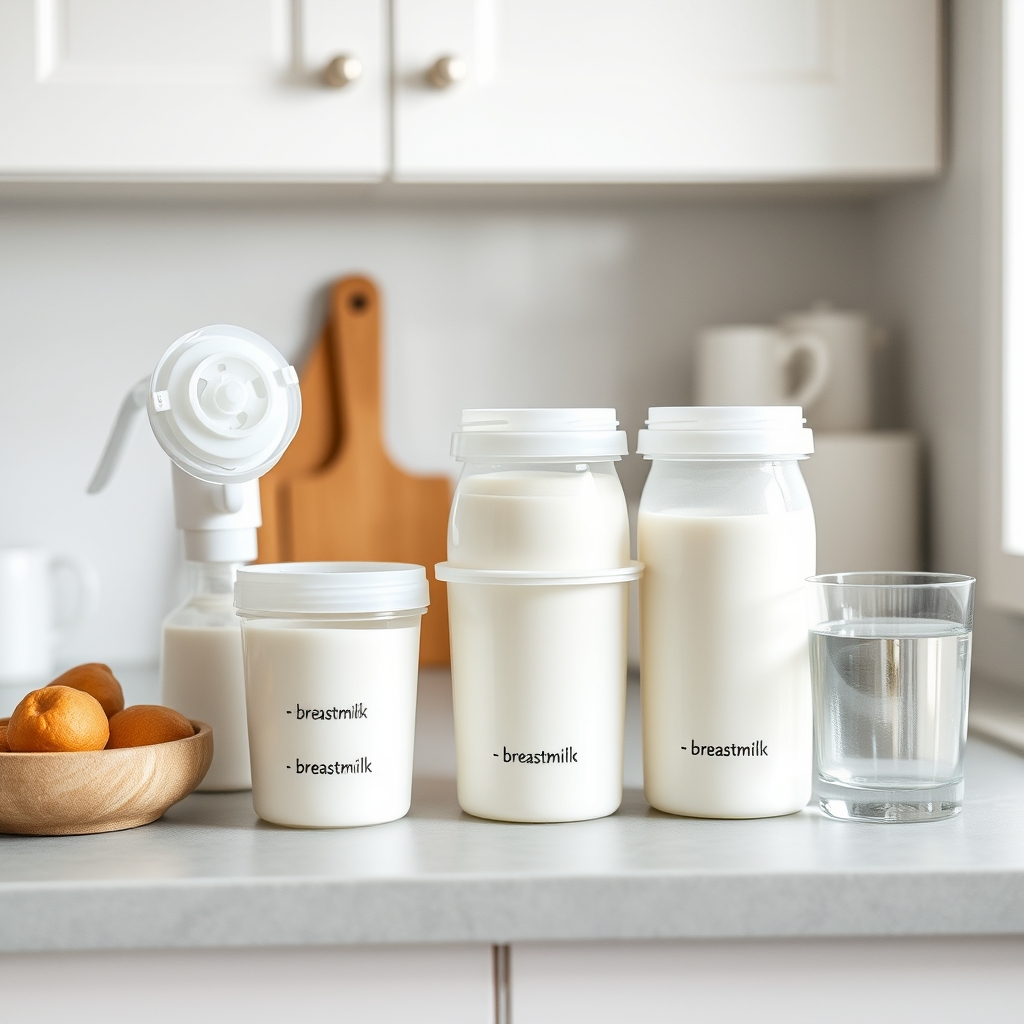
What are the signs my 4 month baby is getting enough breastmilk?
Because infants can’t tell us their exact intake, we rely on observable cues. Below is a practical symptoms checklist that many mothers find reassuring.
- Steady weight gain: At least 150‑200 g per month, measured in clinic visits.
- Frequent wet diapers: 6‑8 wet diapers per day, each soaked through.
- Consistent stool patterns: 3‑4 yellow, seedy stools daily (though some variability is normal).
- Contented demeanor after feeds: Baby appears relaxed, may fall asleep or look satisfied.
- Normal feeding duration: 10‑20 minutes per breast, with occasional longer sessions during growth spurts.
- Good latch and swallowing: You hear rhythmic sucking and swallowing sounds.
These signs are reinforced by the American College of Obstetricians and Gynecologists (ACOG), which emphasizes that a combination of weight gain and diaper output is the most reliable way to confirm adequate intake.
How to know if baby is dehydrated while breastfeeding
Dehydration is rare in well‑nursed infants but can occur if intake is insufficient. Look for fewer than 4 wet diapers, dry mouth, sunken fontanelle, or lethargy. If you suspect dehydration, seek medical care promptly.
When to see a pediatrician about milk intake
Contact your pediatrician if your baby shows any of the following red‑flag symptoms:
- Weight loss or gain < 150 g per month after the first two weeks.
- Fewer than 4 wet diapers in 24 hours.
- Persistent fussiness or inability to settle after feeds.
- Signs of dehydration (dry mouth, sunken fontanelle).
- Vomiting more than a few times a day.
Early evaluation helps rule out issues such as reflux or oral‑motor difficulties that can interfere with effective nursing.
How can I tell if my 4 month old is hungry or full?
Understanding hunger and satiety cues helps you respond appropriately, preventing over‑ or under‑feeding. Babies develop these cues gradually, and they can be subtle at first.
Hunger cues
- Rooting reflex: turning head toward the breast.
- Hand‑to‑mouth movements.
- Increased alertness and activity.
- Fussing or crying that calms when you bring the baby to the breast.
Satiety cues
- Turning away from the breast.
- Slowing or stopping sucking.
- Relaxed hands and body.
- Falling asleep after a feed.
Common mistake: “feeding on a schedule” vs. “feeding on demand”
At four months many parents shift to a schedule, but babies still benefit from demand‑based feeding. If your baby shows hunger cues before the next scheduled feeding, offering the breast can prevent unnecessary fussiness and support milk supply. The NHS advises that “responsive feeding” is the best way to ensure both infant nutrition and maternal comfort.
Responsive feeding also supports the infant’s developing ability to self‑regulate intake, a skill that benefits later eating patterns.
What are the breastmilk volume recommendations for 4 month old twins?
Twins present a unique challenge because each infant needs its own share of milk. The total daily volume for twins combined is roughly the same as for a single infant—24‑32 oz—so each twin typically receives 12‑16 oz per day.
Because twins often have different feeding rhythms, it’s helpful to track each child’s diaper output and weight gain individually. This dual monitoring ensures that one twin isn’t inadvertently receiving more than the other.
Feeding strategies for twins
- Alternate breasts: Offer one breast to each twin during a session, then switch.
- Stacked nursing: After the first twin finishes, the second continues on the same breast to ensure both get enough hindmilk.
- Pump and bottle: Pump after a feeding and give the expressed milk to the second twin, maintaining supply.
Impact on maternal supply
Frequent nursing or pumping for twins can actually boost supply, as the body responds to increased demand. However, adequate rest, hydration, and calorie intake remain essential. The Academy of Nutrition and Dietetics notes that an extra 500 kcal per day is often sufficient for most mothers of twins.
Many mothers of twins report that a well‑planned feeding schedule reduces stress and helps maintain consistent milk production.
How do growth spurts affect breastmilk consumption at 4 months?
Growth spurts typically occur around 2‑3 weeks, 6 weeks, 3 months, and again at 4‑6 months. During a spurt, a baby may increase intake by 20‑30 % and cluster feed more often.
These temporary spikes are driven by rapid brain development and the body’s need for extra calories. The good news is that most mothers see a quick rebound in milk supply within a few days of the increased demand.
Recognising a growth spurt
- Sudden increase in feeding frequency (every 2‑3 hours).
- More intense sucking during feeds.
- Shorter naps and more irritability.
- Temporary weight plateau followed by a rapid gain.
How to respond
Offer the breast whenever your baby shows hunger cues, even if it means extra feedings. This extra demand signals your body to produce more milk, usually within a few days. Most mothers find that supply catches up without additional supplementation.
Staying patient and trusting your baby’s cues during a spurt can prevent unnecessary anxiety and support a healthy feeding rhythm.
How can I increase breastmilk supply for a 4 month old?
If you’re concerned about low supply, the first step is to ensure the baby is effectively emptying each breast. Below are evidence‑based strategies, supported by the Academy of Nutrition and Dietetics and the International Lactation Consultant Association (ILCA).
Many of these techniques focus on increasing the frequency and efficiency of milk removal, which naturally stimulates production through the hormone prolactin.
Natural ways to boost supply
- Increase nursing frequency: Add 1‑2 extra sessions per day.
- Power pumping: Pump for 10 minutes, rest 10 minutes, repeat for an hour.
- Skin‑to‑skin contact: More cuddling releases oxytocin, which helps milk flow.
- Stay hydrated and eat enough calories: Aim for an extra 300‑500 kcal per day.
- Herbal galactagogues: Fenugreek and blessed thistle have modest evidence; discuss with your provider before use.
When to consider supplementation
If despite these measures your baby isn’t gaining weight or you’re unable to meet the daily volume, a pediatrician may recommend supplementing with expressed breastmilk or formula. Always prioritize maintaining the breastfeeding relationship while addressing nutritional needs.
Supplementation should be a temporary bridge, not a long‑term replacement, unless medically indicated.
What is the best feeding schedule for a 4 month old breastfed baby?
While every baby is unique, a flexible schedule that respects both infant cues and parental routine works best. Below is a comparison table of two common approaches.
Sample daily timeline (on‑demand)
- Morning feed (7 am)
- Mid‑morning feed (10 am)
- Midday feed (1 pm)
- Afternoon feed (4 pm)
- Evening feed (7 pm)
- Night feed (11 pm or as needed)
Tips for integrating a schedule
If you prefer a loose schedule, aim for at least 5 sessions daily and adjust based on baby’s cues. Keep a feeding log for a week to see patterns; you may discover your baby naturally settles into a rhythm that fits your life.
Remember that a predictable pattern can be comforting, but flexibility remains key to meeting your infant’s evolving needs.
Breastfeeding and sleep patterns at 4 months
By four months many infants begin to develop longer nighttime stretches, but sleep is still closely tied to feeding needs. A well‑fed baby is more likely to settle into a predictable sleep routine, yet growth spurts can temporarily disrupt this pattern.
The American Academy of Pediatrics (AAP) recommends a consistent bedtime routine—dim lights, a brief lullaby, and a final feed—while allowing the baby to fall asleep at the breast if they’re still hungry. This “feed‑to‑sleep” habit can be phased out gradually if parents prefer the baby to self‑soothe.
Managing night feeds
- Offer a full feeding before bedtime to reduce early‑night hunger.
- Keep night‑time lighting low to signal that it’s still sleep time.
- Consider “dream feeding” (a feed around 10‑11 pm) if your baby often wakes early.
When sleep disruption signals a problem
If your baby is waking more than 4‑5 times a night and showing poor weight gain, it could indicate an underlying issue such as reflux or a feeding inefficiency. Discuss these patterns with your pediatrician.
Consistently tracking night‑time awakenings alongside diaper output can give you concrete data to share with your clinician.
Introducing solids: timing and tips for a 4‑month‑old
While exclusive breastfeeding is recommended for the first six months, some parents wonder if they can start solids earlier. The NHS and AAP agree that around 4‑6 months is the appropriate window, once the baby can sit upright with minimal support and shows interest in food.
When you decide to start, begin with single‑ingredient purees (such as iron‑fortified rice cereal or pureed carrots) and introduce one new food every three days. This approach helps you monitor for allergic reactions while still keeping breastmilk as the primary source of nutrition.
First foods and nutrient focus
- Iron‑rich cereals: Complement the iron stores that decline after 4‑6 months.
- Pureed legumes: Provide protein and additional iron.
- Avocado or banana: Offer healthy fats for brain development.
Safety and preparation
Always ensure foods are smooth and free of chunks that could cause choking. Use a breast‑milk‑compatible spoon and feed in a calm, distraction‑free environment. If you notice persistent vomiting, rash, or diarrhea after a new food, stop feeding it and contact your pediatrician.
Introducing solids does not reduce breastmilk intake; many babies continue to nurse on demand while exploring new flavors.
How does breastmilk composition change after 4 months?
While the overall calorie content remains stable, the proportion of certain nutrients shifts as your baby grows. By four months, foremilk still contains more lactose and water, but hindmilk becomes richer in fat and immune‑protective factors such as secretory IgA.
These changes support rapid brain development and help protect against infections. The Academy of Nutrition and Dietetics notes that the evolving composition is one reason why continued exclusive breastfeeding remains beneficial beyond the first three months.
Practical tip
Allow your baby to finish one breast before offering the other. This practice ensures they receive a balanced mix of foremilk and hindmilk, which can aid satiety and growth.

Common breastfeeding challenges at 4 months and how to address them
Even with a good start, many mothers encounter hurdles around the four‑month mark. Common issues include nipple pain, let‑down reflex fatigue, and perceived low supply.
Addressing these challenges early can prevent frustration. For nipple pain, ensure proper latch and consider using a lanolin cream after feeds. If let‑down feels weak, try breast massage before nursing or a warm compress to stimulate flow. When supply feels low, remember that frequent nursing or pumping is the most effective remedy (International Lactation Consultant Association, 2022).
When to seek professional help
If pain persists beyond a week, you notice a sudden drop in diaper output, or you feel overwhelmed, reach out to a certified lactation consultant. Early support often resolves issues quickly and protects both milk supply and bonding.
Myth vs. fact
Myth: A 4‑month‑old should drink exactly 6 ounces at every feeding.
Fact: Intake varies; 5‑7 oz per feeding is normal, and occasional smaller or larger feeds are expected.
Myth: If a baby refuses the breast, they must be weaned.
Fact: Temporary refusals can be due to illness, teething, or a growth spurt. Offer the breast later and monitor cues.
Myth: Breastmilk supply cannot increase after the first few weeks.
Fact: Supply responds to demand. More frequent nursing or pumping can boost production well into the third month and beyond.
Key takeaways
- Most 4‑month‑olds need 24‑32 oz of breastmilk daily, spread over 5‑6 feedings.
- Steady weight gain, frequent wet diapers, and satisfied cues indicate adequate intake.
- Growth spurts can temporarily raise volume needs; respond with extra feeds.
- Boost supply by nursing more often, power pumping, and staying hydrated.
- Twins each require roughly half the total daily volume; alternate feeding or pump‑and‑bottle can help.
- Night‑time feeding patterns often stabilize by 4 months, but growth spurts may cause temporary disruptions.
- If your baby shows red‑flag signs—poor weight gain, dehydration, or persistent fussiness—consult your pediatrician.
- Breastmilk composition continues to evolve after 4 months, providing increasing fat and immune factors.
- Address common challenges early with proper latch, skin‑to‑skin, and professional lactation support.
Frequently asked questions
How many ounces of breastmilk should a 4 month old drink each day?
On average, a 4‑month‑old consumes 24‑32 oz (710‑950 ml) of breastmilk per day. This translates to roughly 5‑7 oz per feeding across 5‑6 sessions.
What are the signs of adequate milk intake in a 4 month old?
Key signs include steady weight gain (≈ 150‑200 g per month), 6‑8 wet diapers daily, regular yellow stools, and a calm, satisfied demeanor after feeds.
Can a 4 month old baby get enough nutrition from breastmilk alone?
Yes. Breastmilk provides all the calories, proteins, fats, and antibodies a healthy 4‑month‑old needs. Supplementation is only advised if growth or weight gain concerns arise.
How often should I breastfeed a 4 month old?
Most infants nurse every 3‑4 hours, for a total of 5‑6 feedings per day. Some may cluster feed during growth spurts.
What causes a sudden increase in breastmilk consumption at 4 months?
Growth spurts, illness, or teething can trigger a temporary rise in hunger, leading babies to nurse more often and take larger volumes.
Is it normal for a 4 month old to refuse breastmilk sometimes?
Occasional refusals are common and can be linked to a sore throat, ear infection, or a brief developmental phase. Offer the breast later; if refusals persist, seek medical advice.
How do I know if my baby is dehydrated while breastfeeding?
Signs of dehydration include fewer than 4 wet diapers, dry mouth, sunken fontanelle, and lethargy. If you notice these, contact your pediatrician promptly.
When can I safely start introducing solid foods?
Most experts, including the NHS and AAP, recommend beginning solids between 4‑6 months once the baby can sit with support, shows interest in food, and has lost the tongue‑thrust reflex. Start with single‑ingredient purees and watch for any allergic reaction.
What should I do if my baby wakes multiple times at night?
Frequent night waking can be normal during growth spurts. Offer a full feeding before bedtime, keep lights dim, and consider a dream feed around 10‑11 pm. If night waking coincides with poor weight gain, discuss it with your pediatrician.
Can pumping help if my baby seems unsatisfied after feeds?
Yes. Pumping after a nursing session can empty any remaining milk, signaling your body to produce more. It also provides expressed milk you can offer later, ensuring the infant receives a full feed.

When to see a doctor or specialist
If you observe any of the following, schedule a pediatric appointment promptly. The pediatrician may refer you to a lactation consultant or a pediatric gastroenterologist if needed.
- Weight loss or gain < 150 g per month after the first two weeks.
- Consistently fewer than 4 wet diapers in 24 hours.
- Persistent fussiness despite frequent feeding.
- Signs of dehydration (dry mouth, sunken fontanelle).
- Vomiting more than a few times a day or ongoing diarrhea.
- Sudden decrease in milk output despite regular nursing.
- Night waking that interferes with growth or weight gain.
Remember, this article provides general information and is not a substitute for personalized medical advice. Always discuss your concerns with a qualified health professional.
References
- American Academy of Pediatrics. “Breastfeeding and the Use of Human Milk.” Policy Statement, 2022.
- Academy of Nutrition and Dietetics. “Nutrition Care Manual: Breastfeeding.” 2023.
- World Health Organization. “Infant and Young Child Feeding.” 2021.
- International Lactation Consultant Association. “Guidelines for Managing Low Milk Supply.” 2022.
- National Institute for Health and Care Excellence (NICE). “Breastfeeding Guidance for Health Professionals.” 2022.
- Harvard T.H. Chan School of Public Health. “Breastfeeding and Infant Growth.” 2023.
- American College of Obstetricians and Gynecologists. “Breastfeeding Guidance.” 2023.
- National Health Service (NHS). “Introducing solid foods.” Updated 2023.
- U.S. Food and Drug Administration (FDA). “Infant Formula Regulations.” 2022.
- American Psychological Association (APA). “Responsive Feeding and Infant Development.” 2021.
- International Lactation Consultant Association. “Common Breastfeeding Challenges.” 2022.



