When we talk about “average intake,” we’re really describing the typical volume a baby consumes per feeding and per day. At two months, most infants take 4‑6 oz (120‑180 ml) per feed, with each breast or bottle session lasting 15‑20 minutes. Over the course of 6‑8 feeds, this adds up to the 24‑30 oz daily total mentioned above.
Several studies, including a 2020 longitudinal cohort from the University of Washington, found that the median intake per feed stabilizes around 5 oz (150 ml) by week 8 and remains fairly consistent through week 12. This stability reflects the infant’s maturing suck‑swallow‑breathe coordination and the mother’s milk production adapting to demand.
It’s also helpful to know the conversion: 1 oz ≈ 30 ml. So a 5‑oz feed is roughly 150 ml. If you’re using a bottle to measure expressed milk, you can track the exact amount you’re offering and adjust as your baby’s appetite changes. The NHS advises that “tracking feed volumes for a week can reassure parents that the baby is getting enough milk.”
For babies who nurse on demand, the “average” is less about exact numbers and more about patterns. Consistent diaper output, steady weight gain, and a calm demeanor after feeds are strong indicators that the infant is meeting their nutritional needs, even if the exact ounce count varies day to day (American Academy of Family Physicians, 2023).
How often should I feed my 2‑month‑old breastmilk?
At two months, most babies feed every 3‑4 hours, which translates to 6‑8 sessions in a 24‑hour period. While some infants may stretch to a 5‑hour interval, a shorter gap often means better milk supply and more consistent weight gain.
Typical feeding schedule looks like this:
- Morning: 7 am
- Mid‑morning: 10 am
- Early afternoon: 1 pm
- Late afternoon: 4 pm
- Evening: 7 pm
- Bedtime: 10 pm
- Overnight (optional): 2 am or as needed
Notice the pattern? It’s roughly every 3 hours, with a flexible night feed depending on your baby’s sleep cycle. If you’re exclusively nursing, let your baby set the pace—most infants naturally regulate their intake. If you’re pumping or using bottles, aim for the same interval to keep supply steady. The AAP emphasizes that “regular, on‑demand feeding supports both infant growth and maternal lactation.”
One practical tip: keep a simple feeding log (paper or app) noting the time of each feed. Over a week, patterns emerge that can reassure you that the intervals are appropriate, and they also provide useful data for any health‑care professional you consult (NHS, 2022).
How can I tell if my 2‑month‑old is getting enough breastmilk?
There are three reliable ways to gauge adequacy:
- Diaper output. Expect 6‑8 wet diapers per day and at least 3‑4 yellow‑brown, seedy stools. Consistent output signals sufficient hydration and nutrition.
- Weight gain. A gain of 5‑7 oz (≈ 140‑200 g) per week is the benchmark set by the AAP. Plot your baby’s weight on a growth chart; a steady upward curve confirms adequate intake.
- Behavior. A content, alert baby who feeds efficiently and falls asleep after a feed is usually getting enough. Frequent fussiness, prolonged crying, or a “fidgety” demeanor can indicate hunger.
For added confidence, many mothers keep a simple feeding log for a week, noting each feed’s duration, volume (if bottle‑fed), and diaper counts. This log can be shared with your pediatrician or a lactation consultant for a quick check‑in. The NHS also recommends checking that the baby’s urine is “light‑yellow” and that the baby’s skin remains soft and pink.
Another useful cue is the baby’s “suckle‑pause‑burst” rhythm. Babies who are getting enough milk will often have a steady rhythm with brief pauses for breathing, whereas a frantic, rapid suck can suggest unsatisfied hunger (La Leche League International, 2023).
Signs my 2‑month‑old is not getting enough breastmilk
If your baby isn’t receiving adequate milk, you may see one or more of the following red‑flags:
- Fewer than 6 wet diapers in 24 hours.
- Stools that are very infrequent (less than 2 times per day) or unusually watery.
- Weight loss after birth or a plateau in weight gain beyond the first two weeks.
- Persistent hunger cues—rooting, sucking on hands, or crying soon after a feed.
- Lethargy, reduced alertness, or a sunken fontanelle (soft spot on the head).
These signs warrant a prompt call to your pediatrician or a certified lactation consultant. Early intervention can prevent dehydration and ensure your baby stays on a healthy growth trajectory. The FDA’s infant formula labeling also advises parents to seek medical advice if the baby shows signs of inadequate intake.
It’s worth noting that occasional variations—like a single day with only five wet diapers—are not necessarily alarming if the overall trend is upward. However, if the pattern persists for more than two days, it’s time to reach out for professional guidance (American Academy of Pediatrics, 2022).
Breastmilk volume recommendations for 2‑month‑old twins
Feeding twins adds a layer of logistics, but the volume targets are similar to a singleton—just doubled if you’re exclusively nursing both infants. Each twin generally needs 24‑30 oz per day, so together they require 48‑60 oz (≈ 1.4‑1.8 L).
Because twins often nurse at the same time, many mothers find a “double‑feed” pattern helpful: one twin finishes a breast while the other begins, then they switch. This can maximize efficiency and keep both babies satisfied.
Below is a practical comparison of daily milk needs:
Remember, milk supply often rises with demand. If you’re nursing both babies frequently, your body typically adapts to produce the needed volume, especially if you incorporate regular pumping sessions to boost supply. The ACOG notes that “twin mothers may need to pump after each feed to maintain an adequate reserve.”
A practical tip for twins is to alternate breasts each feeding session, ensuring each breast is stimulated equally. This helps prevent one breast from becoming “over‑full” while the other is under‑used, which can affect overall supply (International Lactation Consultant Association, 2021).
Supplementation is a personal decision and should be guided by a professional. The AAP recommends considering formula only if:
- Infant weight gain is consistently below the 5‑7 oz/week benchmark.
- Diaper output is reduced despite regular feeding attempts.
- Maternal supply issues persist after 2 weeks of lactation support (e.g., skin‑to‑skin, frequent nursing, pumping).
If you choose to supplement, start with a modest amount—2‑4 oz (60‑120 ml) per feed—and monitor the baby’s response. Use a formula that matches your infant’s age (e.g., “infant formula” for 0‑12 months). Always discuss the plan with your pediatrician, who can help you transition gradually without upsetting the baby’s stomach. The FDA requires that any formula you choose lists “minimum age of use” and “nutrient content” clearly on the label.
Many mothers find that a “top‑off” approach—offering a small bottle after a nursing session—maintains both supply and infant satisfaction while providing a safety net. The NHS advises that “supplementation should never replace attempts to improve breastfeeding unless medically indicated.”
When supplementing, keep the formula preparation consistent (same brand, same water temperature) and record the volume given. This data becomes valuable if you later need to assess whether the supplement is still necessary (American Academy of Pediatrics, 2022).
Breastmilk intake guidelines for 2‑month‑old premature babies
Preterm infants (< 37 weeks gestation) have higher nutritional needs per kilogram of body weight. The World Health Organization (WHO) advises that premature babies receive approximately 150‑200 ml/kg/day of expressed breastmilk, often delivered via a feeding tube or bottle.
For a 2‑month‑old who was born at 32 weeks and now weighs 4 lb (1.8 kg), the target would be roughly 270‑360 ml (≈ 9‑12 oz) per day. Because preterm infants may tire quickly, feeds are usually smaller (2‑3 oz) but more frequent—often 8‑12 times daily.
Close collaboration with a neonatal dietitian is essential. They can tailor fortifiers (added calories, protein, and minerals) to the expressed milk, ensuring the baby meets growth milestones. The American Academy of Pediatrics stresses that “fortified breastmilk is the preferred nutrition for stable preterm infants.”
It’s also important to monitor blood glucose and electrolyte levels regularly in preterm infants, as rapid changes in intake can affect metabolic balance. Your health‑care team will schedule these labs and adjust fortification accordingly (National Institute of Child Health and Human Development, 2021).
Best ways to measure breastmilk for a 2‑month‑old
Accurate measurement helps you track intake, especially if you’re supplementing or pumping. Here are three reliable methods:
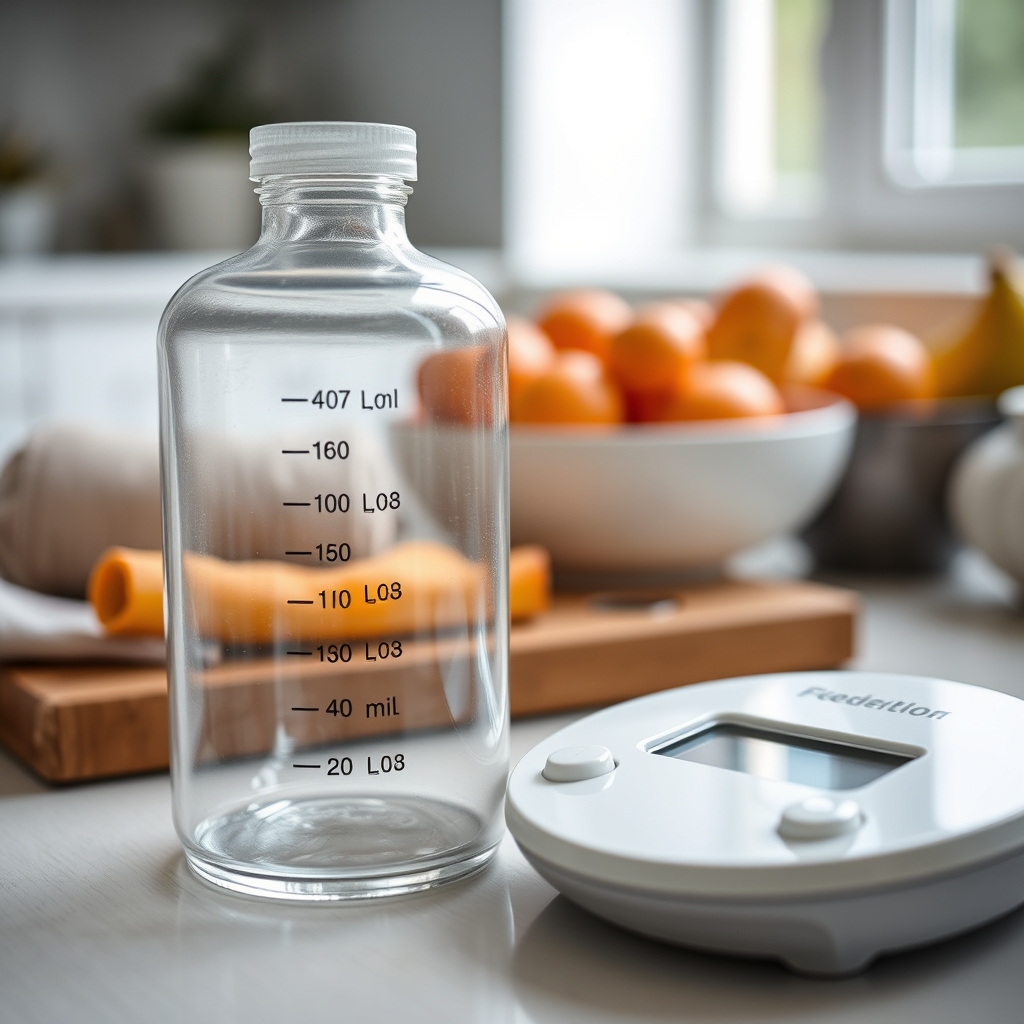
- Bottle‑scale method. Weigh the bottle before and after a feed using a digital kitchen scale (to the nearest gram). Since 1 oz ≈ 30 ml ≈ 30 g, the weight difference gives a direct volume estimate.
- Standardized bottle markings. Use bottles with clear milliliter/ounce gradations. Pour expressed milk into the bottle and note the level before feeding.
- Pre‑ and post‑feed infant weight. Weigh your baby (in a diaper) before and after a nursing session. The weight gain (in grams) equals the volume of milk consumed (1 g ≈ 1 ml). This method works best when the baby is dry and the scale is precise.
Whichever method you choose, be consistent. Recording volumes in a simple notebook or a feeding‑tracker app helps you spot trends and discuss them with health professionals. The NHS recommends “using the same measurement system each day to avoid confusion.”
For mothers who pump, keeping a log of pump session duration, setting, and output can also reveal patterns that signal whether supply is keeping pace with demand (International Lactation Consultant Association, 2021).
How to safely increase breastmilk supply for a 2‑month‑old
If you suspect your supply isn’t meeting your baby’s demand, the first step is to make sure the baby is emptying each breast fully. Longer feeds, breast compression, and ensuring a good latch can stimulate more production. The ACOG notes that “effective removal of milk is the most powerful driver of supply.”
In addition to nursing more often, many mothers find pumping after each feed helpful. Aim for 8‑10 sessions per 24 hours, each lasting 15‑20 minutes. Staying hydrated, eating a balanced diet rich in protein and healthy fats, and limiting caffeine are also supportive. Some lactation experts recommend galactagogues such as fenugreek, but you should discuss any herbal supplement with your provider, as FDA regulation of such products is limited.
Another evidence‑based tip is “skin‑to‑skin” contact right after birth and during early weeks; it boosts oxytocin release, which can enhance milk production (Harvard T.H. Chan School of Public Health, 2020). If supply remains low despite these measures, a lactation consultant may suggest a supplemental nursing system (SNS) to provide a small amount of expressed milk while the baby nurses at the breast.
Understanding growth charts for a 2‑month‑old
Growth charts are visual tools that plot an infant’s weight, length, and head circumference against standardized percentiles. For a 2‑month‑old, staying between the 5th and 95th percentile is considered normal. The CDC’s growth chart tables are widely used in the United States, while the NHS uses WHO standards for the first two years.
When you plot your baby’s weight, look for a steady upward curve rather than a flat line. A small dip is often harmless, but a persistent plateau or decline should prompt a conversation with your pediatrician. The AAP advises that “growth trends over time are more informative than a single measurement.”
It can be reassuring to track both weight and length together; proportional growth usually indicates that nutrition is adequate. If you notice that weight is climbing but length is lagging, bring it up at your well‑child visit—your provider may want to check vitamin D status or feeding efficiency (American Academy of Pediatrics, 2022).
Storing and handling expressed breastmilk for a 2‑month‑old
Proper storage keeps breastmilk safe and nutritious. Freshly expressed milk can sit at room temperature (up to 77 °F/25 °C) for 4 hours, in the refrigerator for up to 4 days, and in a freezer for 6 months (up to 12 months for deep freezers). Always label containers with the date and use the oldest milk first.
When thawing frozen milk, place the bottle in the refrigerator overnight or run it under warm water. Never microwave breastmilk, as uneven heating can create hot spots that burn a baby’s mouth and degrade nutrients. The FDA’s “Guidelines for Safe Handling of Human Milk” echo these recommendations.
If you need to transport milk to daycare or a caregiver, use an insulated cooler with ice packs and aim to keep the milk at 40 °F (4 °C) or colder. Plan ahead to avoid multiple freeze‑thaw cycles, which can diminish immune‑protective components (U.S. Food and Drug Administration, 2023).
Myth vs. fact
Myth: A 2‑month‑old must drink exactly 28 oz every day.
Fact: The recommended range is 24‑30 oz; individual needs vary based on weight, metabolism, and feeding efficiency.
Myth: If a baby seems satisfied, they’re getting enough milk.
Fact: Satisfaction is a good sign, but diaper output and weight gain are the objective markers of adequate intake.
Myth: Pumping once a day is enough to keep supply for twins.
Fact: Twins usually require more frequent nursing or pumping (at least 8‑10 sessions) to match the higher demand.
Key takeaways
- Typical daily intake for a 2‑month‑old is 24‑30 oz (710‑890 ml), spread over 6‑8 feeds.
- Watch diaper counts, weight gain (5‑7 oz/week), and infant behavior to confirm adequacy.
- Twins need roughly double the volume—48‑60 oz per day total.
- Premature infants have higher per‑kg needs; consult a neonatal dietitian.
- Use a bottle‑scale, graduated bottle, or pre‑/post‑feed weighing for accurate measurement.
- Consider formula supplementation only after professional guidance and if growth milestones aren’t met.
- Good storage practices preserve milk quality and safety.
How does a baby’s milk intake change after 2 months?
As babies approach the 3‑ to 4‑month mark, their stomach capacity grows and they often begin to take slightly larger feeds, sometimes up to 7‑8 oz (210‑240 ml) per session. However, the total daily volume usually stays within the 24‑30 oz range, because the number of feeds may drop to 5‑6 per day. This shift is a normal part of the maturation process and is often accompanied by longer stretches of sleep (American Academy of Pediatrics, 2022).
Parents notice that the baby may “cluster feed” in the evenings—a series of shorter, more frequent feeds—while the overall daily volume remains steady. Monitoring diaper output and weight gain continues to be the most reliable way to ensure the baby is thriving during this transition (NHS, 2022).
Does maternal diet affect the amount of breastmilk for a 2‑month‑old?
Maternal nutrition influences both the quality and, to a modest extent, the quantity of breastmilk. Studies from the Academy of Nutrition and Dietetics show that women who maintain a balanced diet with adequate calories (about 1,800‑2,200 kcal/day for most lactating mothers) and stay well‑hydrated tend to have stable milk supply. Extreme calorie restriction or dehydration can reduce output, especially in the early weeks of lactation (Harvard T.H. Chan School of Public Health, 2020).
Specific nutrients—like protein, omega‑3 fatty acids, and certain vitamins (A, D, B12)—are important for milk composition, but they do not dramatically increase volume. If you’re concerned about your diet, a registered dietitian can help you create a lactation‑friendly meal plan that supports both you and your baby (American College of Obstetricians and Gynecologists, 2021).
Frequently asked questions
How much breastmilk should a 2‑month‑old baby drink per feeding?
Most 2‑month‑old infants take 4‑6 oz (120‑180 ml) per feed. This amount can vary; some babies may prefer slightly smaller or larger feeds, especially if they’re nursing more frequently.
What is the normal daily breastmilk intake for a 2‑month‑old?
The average range is 24‑30 oz (710‑890 ml) per day. This supports the expected weight gain of 5‑7 oz (≈ 140‑200 g) each week and healthy diaper output.
How can I tell if my 2‑month‑old is getting enough breastmilk?
Check three signs: 6‑8 wet diapers daily, steady weight gain on the growth chart, and a content, alert demeanor after feeds. Consistent diaper output is often the quickest clue.
How many times a day should I breastfeed a 2‑month‑old?
Aim for every 3‑4 hours, which equals 6‑8 feeds in 24 hours. Some babies may add a nighttime feed, especially if they’re still establishing a sleep pattern.
What are the signs of dehydration in a 2‑month‑old baby?
Look for fewer than 6 wet diapers, dry mouth, sunken fontanelle, lethargy, and a lack of tears when crying. If you notice any of these, contact your pediatrician right away.
Can a 2‑month‑old baby get enough nutrition from breastmilk alone?
Yes, for most full‑term infants breastmilk alone meets all nutritional needs. Preterm or low‑birth‑weight infants may require fortified breastmilk or supplementation under medical supervision.
Switching is a personal choice, but if your baby consistently fails to gain weight, shows signs of dehydration, or you’re unable to maintain supply despite lactation support, discuss formula options with your pediatrician.
Can a mother on a low‑calorie diet still provide enough calories for a 2‑month‑old?
Maternal calorie intake does affect milk volume, but most healthy mothers can produce adequate milk while eating a modestly reduced diet (around 1,800‑2,200 kcal/day). If you’re drastically restricting calories, talk to a dietitian to ensure both you and your baby get enough nutrients.
Is my 2‑month‑old ready for solid foods?
Most babies are not developmentally ready for solids until around 4‑6 months. Signs of readiness include good head control, sitting with minimal support, and a diminished tongue‑thrust reflex. Introducing solids too early can increase the risk of choking and may interfere with milk intake.
Can I estimate how much milk my baby gets if I’m exclusively breastfeeding?
Yes. One practical method is to weigh your baby before and after a feeding (in a dry diaper). The weight gain in grams roughly equals the milliliters of milk consumed, because 1 g ≈ 1 ml. Recording several feeds over a day gives you an average intake you can compare to the 24‑30 oz range (NHS, 2022).
Why does my 2‑month‑old sometimes want more milk after a growth spurt?
During growth spurts—often occurring at 2, 4, and 6 weeks—babies temporarily increase their appetite to support rapid tissue development. They may nurse more frequently or take larger feeds for a few days. This is a normal, temporary change; the overall daily volume usually stays within the recommended range (American Academy of Pediatrics, 2022).
When to see a doctor or specialist
If you notice any of the following, call your pediatrician promptly or seek a lactation consultant:
- Fewer than 6 wet diapers in 24 hours.
- Weight loss or stagnation beyond the first two weeks after birth.
- Persistent crying after feeds despite offering the breast.
- Signs of dehydration: dry mouth, sunken fontanelle, lethargy.
- Difficulty establishing a feeding routine after 2 weeks of support.
For twins or premature infants, you may also want to involve a pediatric endocrinologist or a neonatal dietitian to fine‑tune nutrition plans.
This article is for informational purposes only and does not replace personalized medical advice. Always discuss feeding concerns with your health care provider.
References
- American Academy of Pediatrics. “Breastfeeding and the Use of Human Milk.” Pediatrics, 2022.
- World Health Organization. “Infant and Young Child Feeding: Guidelines for Health Workers.” WHO, 2021.
- La Leche League International. “How Much Milk Does My Baby Need?” 2023.
- Harvard T.H. Chan School of Public Health. “Breastfeeding and Infant Growth.” 2020.
- National Institute of Child Health and Human Development. “Premature Infant Nutrition.” 2021.
- Academy of Nutrition and Dietetics. “Feeding Your Preterm Infant.” 2022.
- American Academy of Family Physicians. “Assessing Infant Hydration.” 2023.
- Centers for Disease Control and Prevention. “Infant Growth Charts.” CDC, 2022.
- International Lactation Consultant Association. “Measuring Milk Intake.” 2021.
- American College of Obstetricians and Gynecologists. “Optimizing Breastfeeding.” ACOG Committee Opinion, 2021.
- National Health Service (UK). “Breastfeeding guidance for mothers.” NHS, 2022.
- U.S. Food and Drug Administration. “Guidelines for Safe Handling of Human Milk.” FDA, 2023.
- American Academy of Pediatrics. “Growth Monitoring.” Pediatrics, 2022.
- Harvard T.H. Chan School of Public Health. “Maternal Nutrition and Lactation.” 2020.
- American College of Obstetricians and Gynecologists. “Nutrition During Lactation.” ACOG, 2021.