6 weeks pregnant is roughly 1.5 months. Learn how weeks convert to months in pregnancy, why tracking matters, and what to expect at this early stage.
By Shubhra Mishra — a mom of two who turned her own confusion during pregnancy into BumpBites, a global mission to make food choices clear, safe, and stress-free for every expecting mother. 💛
Check whether any food is safe during pregnancy with the BumpBites Food Safety Checker.
Quick take: At 6 weeks pregnant, you’re about 1.5 months along—not quite 2 months. Pregnancy is counted in weeks because it’s more precise, but most people still think in months. The first trimester (weeks 1–12) is roughly 3 months long, so 6 weeks puts you halfway through your second month. Use a simple rule: divide weeks by 4.3 to get months (6 ÷ 4.3 ≈ 1.4 months).
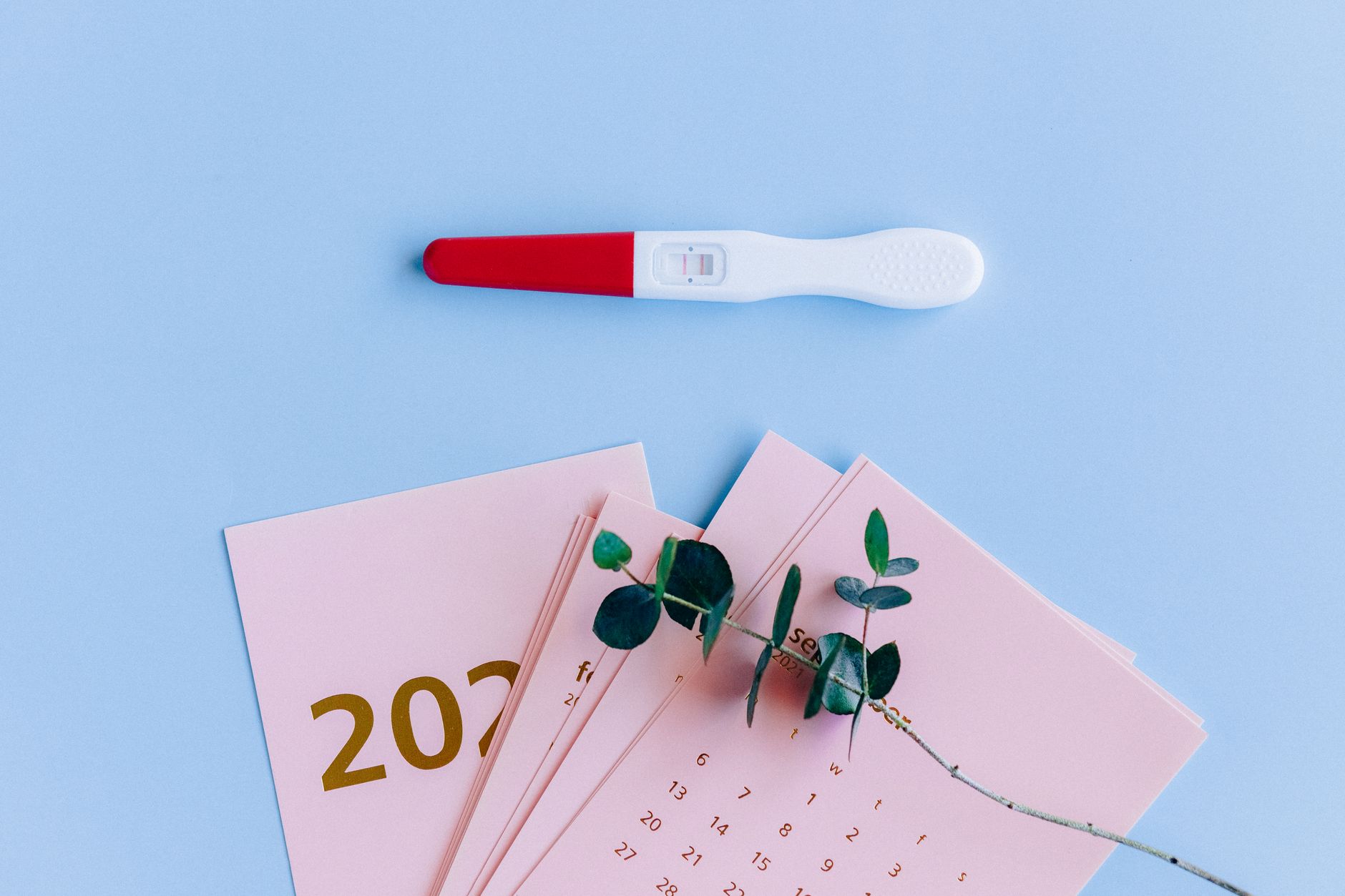
You just saw those two pink lines, and now the questions are flooding in: How far along am I, really?Is 6 weeks one month or two?Why does my doctor say 6 weeks when I feel like I’m barely a month pregnant? It’s 3 a.m., you’re wide awake, and the numbers just aren’t adding up.
Here’s the truth: pregnancy math is confusing because we’re mixing two systems—weeks (what doctors use) and months (what everyone else uses). At 6 weeks, you’re not even halfway through your second month. But don’t worry—we’ll break it down so you can stop Googling and start planning. This guide covers exactly how many months 6 weeks pregnant is, why the numbers seem off, and what to expect at this stage.
Six weeks pregnant feels like a milestone—but how many months is it, really?
Is 6 Weeks Pregnant 1 Month or 2 Months?
At 6 weeks pregnant, you’re 1 month and about 2 weeks along—not quite 2 full months. Here’s why it feels confusing:
Most people think a month is exactly 4 weeks, but months average 4.3 weeks (30–31 days).
6 weeks ÷ 4.3 ≈ 1.4 months—so you’re closer to 1.5 months than 2.
Doctors start counting from the first day of your last period, not conception (which usually happens around week 2). That means at 6 weeks, you’ve only been actually pregnant for about 4 weeks.
Many moms tell us the same thing: “I thought I’d be 2 months by now!” But pregnancy weeks don’t line up neatly with calendar months. Think of it like this: if you’re 6 weeks along, you’ve just finished your first month and are halfway through your second.
How to Calculate Pregnancy Months from Weeks Accurately
Want to convert weeks to months without the guesswork? Here’s the simplest way:
Divide your weeks by 4.3 (the average number of weeks in a month). For 6 weeks: 6 ÷ 4.3 ≈ 1.4 months.
Use the “4-week rule” for a rough estimate: 4 weeks = 1 month, 8 weeks = 2 months, and so on. But remember—this is an estimate, not exact.
Count from your last period, not conception. Pregnancy is dated from the first day of your last menstrual period (LMP), so 6 weeks = 6 weeks since LMP.
Try this quick trick: if you’re 6 weeks pregnant, subtract 4 weeks (1 month) and you’re left with 2 weeks—so you’re 1 month and 2 weeks. Not quite 2 months yet!
Grab a notebook and do the math yourself—it’s simpler than it seems.
Why Does 6 Weeks Pregnant Feel Like Only 1 Month?
If you’re 6 weeks pregnant but feel like you’ve barely started, you’re not alone. Here’s why it feels like only 1 month:
Pregnancy is counted from your last period, not conception. That means at 6 weeks, you’ve only been actually pregnant for about 4 weeks.
Early symptoms can be subtle. At 6 weeks, you might have mild nausea or fatigue, but it’s not always obvious. Many women don’t feel “pregnant” until closer to 8–10 weeks.
You’re still in the first trimester, which lasts until week 12. The first trimester is often the most uncertain time, and it’s normal to feel like you’re just getting started.
Your body hasn’t changed much yet. At 6 weeks, your uterus is still small, and you likely won’t have a visible bump. It’s easy to feel like you’re “only” 1 month along when you don’t see physical changes.
One reader shared: “I was shocked when my doctor said I was 6 weeks pregnant. I still felt like my period was just late, not that I was already a month and a half in!” This is completely normal—early pregnancy can feel like a slow build, not a sudden leap.
6 Weeks Pregnant in Months: Doctor vs. Online Calculators
Ever noticed that your doctor’s timeline doesn’t match what you see online? Here’s why:
Source
How They Calculate
6 Weeks = ? Months
Why the Difference?
Your doctor
Counts from the first day of your last period (LMP). Uses weeks as the standard unit.
~1.5 months
Doctors prioritize precision. Weeks are more accurate for tracking fetal development and due dates.
Online calculators
Some use 4 weeks = 1 month (simplified). Others use 4.3 weeks = 1 month (more accurate).
1–1.5 months
Online tools vary. Some round up (6 weeks = 2 months), while others use the 4.3-week average (6 weeks ≈ 1.4 months).
Your own math
Depends on whether you use 4 weeks or 4.3 weeks per month.
1–2 months
If you think 4 weeks = 1 month, 6 weeks feels like 1.5 months. If you use 4.3, it’s closer to 1.4 months.
Here’s the key takeaway: Doctors will always use weeks, but it’s okay to think in months for your own planning. Just remember that 6 weeks is not a full 2 months—it’s closer to 1.5.
If you’re using an online calculator, check how it converts weeks to months. Some tools let you toggle between “simplified” (4 weeks = 1 month) and “precise” (4.3 weeks = 1 month) calculations. For the most accurate results, use the 4.3-week method.
Can You Show a Pregnancy Week-to-Month Conversion Chart?
Yes! Here’s a simple week-to-month conversion chart to help you visualize where 6 weeks fits in:
Weeks Pregnant
Months Pregnant (Approx.)
Trimester
Key Milestones
4 weeks
1 month
First
Positive pregnancy test. Implantation complete.
6 weeks
1.5 months
First
Baby’s heartbeat may be detectable on ultrasound. Early symptoms (nausea, fatigue) start.
8 weeks
2 months
First
Embryo is now a fetus. Major organs begin forming.
12 weeks
3 months
First
First trimester ends. Risk of miscarriage drops. Nuchal translucency scan may be offered.
16 weeks
4 months
Second
Baby’s movements may start (though you may not feel them yet). Anatomy scan coming up.
Baby is viable outside the womb (with medical support). Glucose screening for gestational diabetes.
28 weeks
6.5 months
Third
Third trimester begins. Braxton Hicks contractions may start.
32 weeks
7.5 months
Third
Baby’s movements are strong. Group B strep test coming up.
36 weeks
8.5 months
Third
Baby is “early term.” Pelvic exams may start to check for dilation.
40 weeks
9+ months
Third
Due date! Baby is full term. Labor could start any day.
At 6 weeks, you’re 1.5 months pregnant and still in the first trimester. This chart is a handy reference, but remember: every pregnancy is unique. Your due date and milestones may vary slightly.
Print out a chart and keep it handy—it’s a lifesaver when the numbers get confusing.
What Trimester Is 6 Weeks Pregnant and How Many Months Is That?
At 6 weeks pregnant, you’re in the first trimester, which lasts from week 1 to week 12. Here’s how it breaks down in months:
First trimester (weeks 1–12): ~3 months (1–3 months pregnant).
Second trimester (weeks 13–27): ~3 months (4–6 months pregnant).
Third trimester (weeks 28–40+): ~3 months (7–9+ months pregnant).
At 6 weeks, you’re 1.5 months pregnant and still in the early part of the first trimester. This is often the most uncertain time, as many women are just learning they’re pregnant and may not have had their first ultrasound yet.
Here’s what to expect in the first trimester:
Weeks 1–4: Conception and implantation. You may not even know you’re pregnant yet.
Weeks 5–8: Early symptoms start (nausea, fatigue, breast tenderness). Baby’s heartbeat may be detectable on ultrasound.
Weeks 9–12: Symptoms may peak. Baby’s major organs begin forming. First prenatal visit and blood tests.
Many women describe the first trimester as a rollercoaster—exciting, but also overwhelming. At 6 weeks, you’re still in the early stages, and it’s normal to feel a mix of emotions. One mom shared: “I was thrilled to be pregnant but also terrified. I kept thinking, ‘Is it too early to tell anyone?’ and ‘What if something goes wrong?’ Turns out, those feelings are completely normal.”
How Many Months Is 6 Weeks and 3 Days Pregnant?
At 6 weeks and 3 days pregnant, you’re about 1.5 months along. Here’s how to calculate it:
6 weeks = ~1.4 months (6 ÷ 4.3 ≈ 1.4).
3 days = ~0.1 months (3 ÷ 30 ≈ 0.1).
Total: 1.4 + 0.1 = 1.5 months.
In practical terms, 6 weeks and 3 days is still not quite 2 months. You’re just over halfway through your second month of pregnancy.
If you’re tracking your pregnancy day by day, remember that every day counts! At this stage, your baby is growing rapidly. At 6 weeks and 3 days, here’s what’s happening:
The embryo is about the size of a lentil (4–6 mm long).
The neural tube (which becomes the brain and spinal cord) is closing.
The heartbeat may be detectable on an ultrasound (though it’s not always visible this early).
You might start noticing early symptoms like nausea, fatigue, or breast tenderness.
One reader described this stage as “a mix of excitement and impatience.” She said: “I was 6 weeks and 3 days pregnant, and I kept checking my calendar, thinking, ‘Why does this feel like it’s taking forever?’ But then I’d remember—my baby is growing every single day, even if I can’t see it yet.”
Why Do Some People Say 6 Weeks Is 1.5 Months Pregnant?
You might hear people say 6 weeks is 1.5 months pregnant, and here’s why:
Months aren’t exactly 4 weeks long. A month averages 4.3 weeks, so 6 weeks ÷ 4.3 ≈ 1.4 months (or ~1.5 months when rounded).
Pregnancy is counted from your last period, not conception. At 6 weeks, you’ve only been actually pregnant for about 4 weeks, which feels closer to 1 month.
Some people round up. If you think of 4 weeks as 1 month, then 6 weeks is 1 month and 2 weeks—close enough to 1.5 months for a rough estimate.
Online calculators vary. Some tools use 4 weeks = 1 month, while others use 4.3 weeks = 1 month. The latter gives a more accurate result (6 weeks ≈ 1.4 months).
Here’s the bottom line: 1.5 months is a reasonable estimate for 6 weeks pregnant, but it’s not exact. The most precise way to think about it is that you’re 1 month and about 2 weeks along.
If you’re trying to explain your pregnancy timeline to friends or family, saying “I’m about 1.5 months pregnant” is perfectly fine—just know that it’s not a full 2 months yet.
6 Weeks Pregnant Symptoms vs. 2 Months Pregnant Symptoms
At 6 weeks pregnant, your symptoms might feel mild compared to what’s coming at 2 months (8 weeks). Here’s how they compare:
Symptom
6 Weeks Pregnant
2 Months Pregnant (8 Weeks)
Nausea
Mild to moderate. May start around week 6. Often called “morning sickness,” but it can happen any time of day.
Often peaks around 8–10 weeks. Can be severe for some women (hyperemesis gravidarum).
Fatigue
Common. Your body is working hard to support early pregnancy. You might feel exhausted by midday.
Still common, but some women start to feel a bit more energy as they adjust to pregnancy hormones.
Breast tenderness
Mild to moderate. Breasts may feel swollen or sore, similar to PMS.
Often more pronounced. Nipples may darken, and veins may become more visible.
Frequent urination
May start around week 6 as your uterus begins to grow and press on your bladder.
More noticeable. Your uterus is still small, but pregnancy hormones increase blood flow to your kidneys, making you pee more often.
Mood swings
Common. Hormonal changes can make you feel emotional or irritable.
Still common. Some women describe this stage as a “hormonal rollercoaster.”
Food aversions/cravings
May start around week 6. You might suddenly dislike foods you usually love (or crave strange combinations).
Often stronger. Cravings and aversions can become more intense as pregnancy progresses.
Bloating
Mild bloating is common. You might feel “puffy” even if you don’t have a visible bump yet.
More noticeable. Your uterus is growing, and pregnancy hormones slow digestion, leading to bloating.
Spotting
Light spotting can be normal (implantation bleeding). However, heavy bleeding or cramping should be checked by a doctor.
Less common. If you experience spotting after 8 weeks, contact your provider.
At 6 weeks, many women describe their symptoms as “manageable but annoying.” One reader said: “I had mild nausea and fatigue at 6 weeks, but by 8 weeks, it was like someone turned up the volume. Suddenly, I was exhausted all the time and couldn’t stand the smell of coffee.”
Remember: every pregnancy is different. Some women breeze through the first trimester with few symptoms, while others struggle with severe nausea or fatigue. If your symptoms are affecting your daily life, talk to your provider—they can offer support and solutions.
Is 6 Weeks Pregnant Considered Early Pregnancy?
Yes, 6 weeks pregnant is considered early pregnancy. Here’s what that means:
First trimester: The first trimester lasts from week 1 to week 12. At 6 weeks, you’re still in the early part of this trimester.
High-risk period: The first 12 weeks are when the risk of miscarriage is highest (though it drops significantly after week 6–7 if a heartbeat is detected).
Uncertainty: Many women haven’t had their first ultrasound yet at 6 weeks, so there’s still a lot of unknowns.
Subtle symptoms: At 6 weeks, symptoms may be mild or even nonexistent. It’s normal to feel like you’re “just getting started.”
Early pregnancy is often described as a “waiting game.” You’re excited, but you might also feel anxious or impatient. One mom shared: “I was 6 weeks pregnant and already counting down the days until my first ultrasound. I kept thinking, ‘When will I feel like this is real?’ It’s okay to feel that way—early pregnancy is a time of big emotions.”
Here’s what to focus on during early pregnancy:
Take care of yourself: Rest when you can, stay hydrated, and eat small, frequent meals to manage nausea.
Attend your first prenatal visit: Your provider will confirm your pregnancy, estimate your due date, and discuss next steps (like blood tests or an early ultrasound).
Be patient: It’s normal to feel like nothing is happening yet. Your baby is growing, even if you can’t see or feel it.
Reach out for support: If you’re feeling overwhelmed, talk to your partner, a trusted friend, or your healthcare provider. You don’t have to go through this alone.
Early pregnancy can feel like a whirlwind of emotions. It’s okay to feel excited, nervous, or even unsure. What matters most is that you’re taking steps to care for yourself and your baby.
How Many Months Is 6 Weeks Pregnant According to NHS Guidelines?
According to the NHS (National Health Service), 6 weeks pregnant is about 1.5 months. Here’s how the NHS explains it:
The NHS uses weeks as the primary unit for tracking pregnancy, but they acknowledge that many people think in months.
They recommend using the 4.3-week average to convert weeks to months (6 weeks ÷ 4.3 ≈ 1.4 months).
The NHS also notes that pregnancy is counted from the first day of your last period, not conception. This means at 6 weeks, you’ve only been actually pregnant for about 4 weeks.
In practical terms, the NHS would describe 6 weeks pregnant as “just over 1 month” or “about 1.5 months”. They emphasize that weeks are more accurate for medical tracking, but it’s okay to think in months for your own planning.
Here’s what the NHS says about early pregnancy:
At 6 weeks, your baby is about the size of a lentil (4–6 mm long).
The neural tube (which becomes the brain and spinal cord) is closing.
You might start experiencing early symptoms like nausea, fatigue, or breast tenderness.
It’s normal to feel a mix of excitement and uncertainty at this stage.
The NHS also reminds women that every pregnancy is unique. Your due date, symptoms, and milestones may vary slightly from the “average.” If you have questions or concerns, they encourage you to reach out to your midwife or GP.
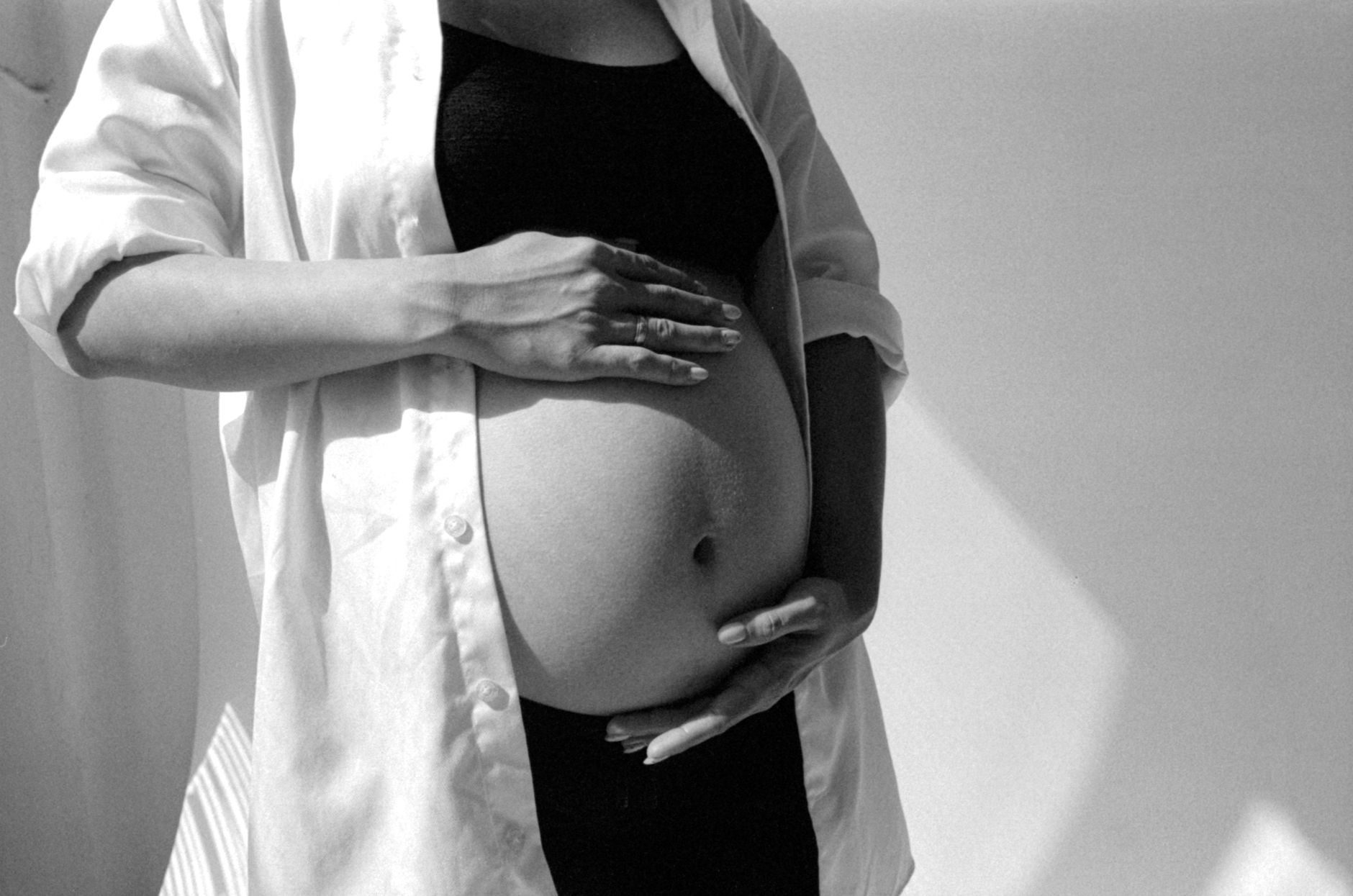
6 Weeks Pregnant Belly Size vs. 2 Months Pregnant
At 6 weeks pregnant, your belly likely won’t look any different—you’re still in the very early stages. Here’s how belly size compares at 6 weeks vs. 2 months (8 weeks):
Timeframe
Belly Size
What’s Happening Inside
What You Might Notice
6 weeks pregnant
No visible bump. Your uterus is still small and tucked behind your pelvic bone.
Your baby is about the size of a lentil (4–6 mm). The neural tube is closing, and the heartbeat may be detectable on ultrasound.
You might feel bloated or “puffy,” but it’s unlikely anyone else will notice. Some women describe feeling “thicker” around the waist, but this is usually due to bloating, not a growing uterus.
2 months pregnant (8 weeks)
Still no visible bump for most women. Your uterus is growing but still small.
Your baby is about the size of a raspberry (1.5 cm). Major organs are forming, and the heartbeat is usually visible on ultrasound.
You might notice your clothes feeling tighter around the waist, but this is often due to bloating or water retention. Some women start to see a slight “pooch,” but it’s usually not a true baby bump yet.
One reader shared her experience: “At 6 weeks, I looked exactly the same—no one would’ve guessed I was pregnant. By 8 weeks, my jeans felt snug, but I still didn’t have a bump. It wasn’t until around 12 weeks that I started to show.”
Here’s what to expect with belly size in the first trimester:
Weeks 1–12: Most women don’t have a visible bump. Any changes you notice are usually due to bloating, water retention, or hormonal shifts.
Weeks 12–16: Some women start to show, especially if this isn’t their first pregnancy. Others may not show until closer to 20 weeks.
Factors that affect when you show: Your body type, muscle tone, whether this is your first pregnancy, and how your baby is positioned all play a role.
If you’re worried about your belly size (or lack of it), remember: every pregnancy is different. Some women show early, while others don’t until the second trimester. If you have concerns, talk to your provider—they can reassure you or check that everything is progressing normally.
At 6 weeks, your belly won’t show yet—but by 8 weeks, you might notice some bloating.
When Does the First Trimester End in Months?
The first trimester ends at 12 weeks pregnant, which is about 3 months. Here’s how it breaks down:
First trimester: Weeks 1–12 (~3 months).
Second trimester: Weeks 13–27 (~3 months).
Third trimester: Weeks 28–40+ (~3 months).
At 12 weeks, you’re officially 3 months pregnant and entering the second trimester. This is often called the “honeymoon phase” of pregnancy because many women experience a boost in energy and a reduction in early symptoms like nausea.
Here’s what to expect as the first trimester comes to a close:
Symptoms may ease: For many women, nausea and fatigue start to improve around week 12. You might feel more like yourself again.
Risk of miscarriage drops: After week 12, the risk of miscarriage decreases significantly (to about 1–2%).
First major ultrasound: Around week 12, you may have a nuchal translucency scan to check your baby’s development and screen for chromosomal conditions.
Visible changes: Some women start to show a small baby bump around week 12, especially if this isn’t their first pregnancy.
One mom described the end of the first trimester as “a huge relief.” She said: “I was so anxious during the first 12 weeks. Every little twinge made me worry. But once I hit 12 weeks and saw my baby’s heartbeat on the ultrasound, I finally felt like I could relax a little.”
If you’re counting down the days until the first trimester ends, remember: it’s okay to feel impatient. The first 12 weeks can feel like a marathon, but you’re almost there!
6 Weeks Pregnant Ultrasound: What to Expect
If you have an ultrasound at 6 weeks pregnant, here’s what you can expect:
Transvaginal ultrasound: At 6 weeks, your baby is still very small, so most providers use a transvaginal ultrasound (a wand inserted into the vagina) for a clearer image.
What you’ll see: Your baby will look like a tiny white blob on the screen. If the ultrasound is done early in week 6, you might not see a heartbeat yet. By the end of week 6, a heartbeat is often visible (though it’s not always detectable this early).
Baby’s size: At 6 weeks, your baby is about 4–6 mm long (the size of a lentil). The ultrasound will measure the gestational sac and, if visible, the embryo.
Heartbeat: If a heartbeat is detected, it will likely be around 90–110 beats per minute. Don’t worry if it’s not visible yet—it may be too early.
What the provider is looking for: The ultrasound will confirm the pregnancy is in the uterus (not ectopic), check for a heartbeat, and measure the gestational sac to estimate your due date.
Many women describe their 6-week ultrasound as “surreal.” One reader said: “I couldn’t believe I was seeing my baby for the first time. It looked like a tiny dot, but knowing there was a heartbeat made it feel real.”
Here’s what to do before your 6-week ultrasound:
Drink water: Your provider may ask you to drink water before the ultrasound to fill your bladder, which can help get a clearer image.
Bring a support person: If you’re nervous, ask your partner or a friend to come with you. They can hold your hand and share the moment with you.
Prepare for emotions: Seeing your baby for the first time can be overwhelming. It’s okay to feel excited, nervous, or even unsure. Take a deep
Not sure about the label on How Many Months Is 6 Weeks Pregnant products?
Snap the ingredients list and SafeFilter checks every ingredient for your stage — only 3 free scans this month, then you're locked until reset. Unlimited from $7/mo or $50/yr.
When Shubhra Mishra was expecting her first child in 2016, she was overwhelmed by conflicting food advice — one site said yes, another said never. By the time her second baby arrived in 2019, she realized millions of mothers face the same confusion.
That sparked a five-year journey through clinical nutrition papers, cultural diets, and expert conversations — all leading to BumpBites: a calm, compassionate space where science meets everyday motherhood.
Her long-term vision is to build a global community ensuring safe, supported, and free deliveriesfor every mother — because no woman should face pregnancy alone or uninformed. 🌿
🌍 Stand with mothers, shape safer guidance
Join a small circle of experts who review BumpBites articles so expecting parents everywhere can decide with confidence.