

Quick take: At 12 weeks pregnant, you're officially 3 months along — but you're also on the cusp of the second trimester. Pregnancy is counted in weeks because it's more precise, but most of us still think in months. At this stage, your baby is about the size of a lime, and you might finally start feeling a little less exhausted (fingers crossed!). We'll break down the week-to-month math, what's happening with your baby, and what to expect as you wrap up your first trimester.
You're staring at your calendar, counting squares, and muttering to yourself: "If I'm 12 weeks pregnant, why does it feel like I've been pregnant forever — but also like it's only just begun?" You're not alone. The first trimester is a whirlwind of symptoms, emotions, and endless Google searches. And when someone asks, "How far along are you?" you freeze. Do you say "12 weeks" and watch their eyes glaze over, or do you say "3 months" and risk the follow-up: "Wait, isn't that 4 months?"
Here's the truth: at 12 weeks, you're 3 months pregnant — but you're also about to enter your second trimester. The confusion comes from the messy overlap between weeks and months. In this guide, we'll clear up the math, explain why doctors count in weeks, and walk you through exactly what's happening with your body and your baby at this exciting milestone. No more calendar panic — just clear answers and a little reassurance.
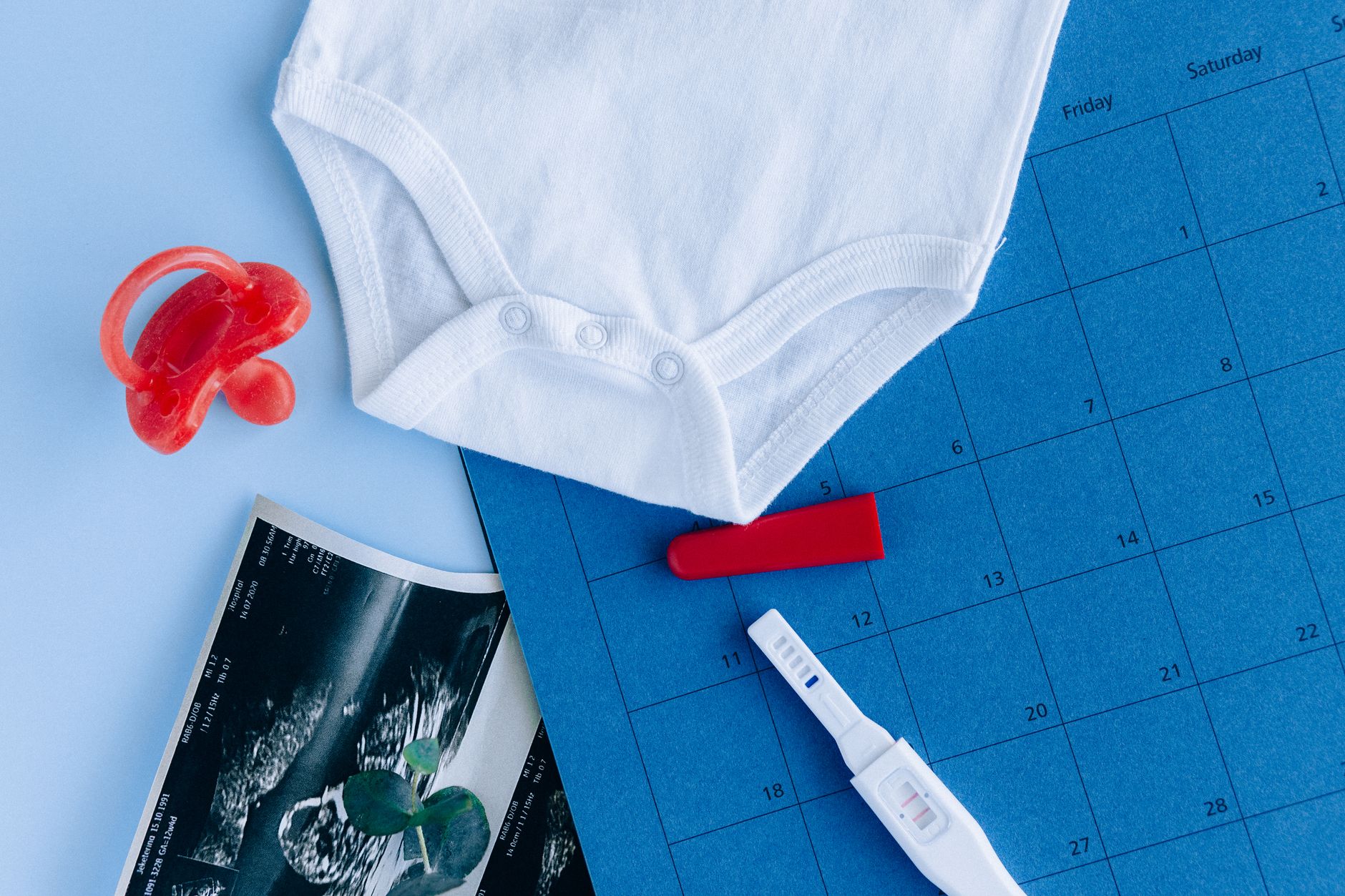
Is 12 Weeks Pregnant 3 Months or 4 Months?
This is the question that sends every pregnant person down a Google rabbit hole. The short answer: 12 weeks pregnant is 3 months. But the long answer is a little more nuanced — and it's all about how we count.
Pregnancy is typically measured in weeks because it's more precise. A month isn't exactly 4 weeks; it's closer to 4.3 weeks. So when you hit 12 weeks, you're about 2.75 months along — which rounds to 3 months. But here's where the confusion creeps in: if you divide 12 weeks by 4, you get 3 months. But if you think about the fact that a month is slightly longer than 4 weeks, you might feel like you're "almost 4 months."
Many moms describe this moment like this: "I told my coworker I was 12 weeks, and she said, 'Oh, so you're 3 months?' I nodded, but then my brain started spiraling. If I'm 3 months, why does it feel like I've been pregnant forever? And why does my app say I'm in my second trimester next week?" The truth is, both answers are technically correct — but in everyday conversation, 12 weeks = 3 months.
To make it even clearer, here's a simple breakdown:
- 4 weeks = 1 month
- 8 weeks = 2 months
- 12 weeks = 3 months
So if you're 12 weeks pregnant, you're 3 months along. You're also just one week away from the second trimester, which officially starts at 13 weeks. That's why this stage feels like a transition — you're wrapping up the first trimester, but you're not quite in the "honeymoon phase" of pregnancy yet.
Why Is 12 Weeks Considered the End of the First Trimester?
The first trimester is defined as weeks 1 through 12, and it's a period of rapid development for your baby. By the time you reach 12 weeks, your baby has gone from a tiny cluster of cells to a fully formed fetus with working organs, muscles, and even fingerprints. The risk of miscarriage also drops significantly after this point — which is why many parents wait until the end of the first trimester to share their news.
For many moms, the first trimester is also the toughest. Fatigue, nausea, and mood swings can make it feel like you're running a marathon with no finish line in sight. One mom described it like this: "I spent the first 12 weeks feeling like I'd been hit by a truck. I was exhausted, nauseous, and emotional. But when I hit 12 weeks, it was like someone flipped a switch. Suddenly, I had energy again, and I could actually enjoy being pregnant."
Here's what makes 12 weeks such a big deal:
- Baby's development: By 12 weeks, your baby's major organs are formed, and they can even make tiny movements (though you won't feel them yet). Their face is fully formed, complete with a tiny nose and ears.
- Lower risk of miscarriage: The risk of miscarriage drops dramatically after 12 weeks. While it's never zero, this milestone brings a lot of emotional relief.
- Symptom shift: Many women start to feel less nauseous and more energetic around this time. It's not universal, but it's a welcome change for most.
- First ultrasound: Many providers schedule the first major ultrasound around 12 weeks. This is when you might hear your baby's heartbeat for the first time or even see them wiggling on the screen.
Of course, every pregnancy is different. Some women sail through the first trimester with barely a symptom, while others struggle right up until 14 or 15 weeks. But for most, 12 weeks marks the beginning of a new phase — one where pregnancy starts to feel a little more real (and a little less like a secret battle with exhaustion).
How Does 12 Weeks Pregnant Compare to Months in Fetal Development?
At 12 weeks pregnant, your baby is about the size of a lime — roughly 2 to 2.5 inches long and weighing about half an ounce. But size isn't the only thing that matters. This is a stage of incredible development, and understanding what's happening inside your body can make the week-to-month math feel a little more meaningful.
Here's how your baby's development at 12 weeks (or 3 months) stacks up:
| Developmental Milestone | What It Means | How It Compares to Months |
|---|---|---|
| Fully formed organs | Your baby's liver, kidneys, intestines, and brain are all working, though they'll continue to grow and mature. | This happens by the end of the third month (12 weeks), marking the transition from "embryo" to "fetus." |
| Tiny movements | Your baby can move their arms and legs, though you won't feel it yet. These movements help strengthen their muscles. | These reflexive movements start around 9–12 weeks (2.5–3 months) but won't be noticeable to you until much later. |
| Fingerprints and nails | Your baby's fingers and toes are fully separated, and tiny nails are starting to form. They even have unique fingerprints! | This happens by 12 weeks (3 months), though their nails will continue to grow throughout pregnancy. |
| Working digestive system | Your baby's intestines are now in their abdomen (they started outside the body and moved in), and they can practice swallowing amniotic fluid. | This milestone is reached by 12 weeks (3 months), setting the stage for further growth. |
| Vocal cords | Your baby's vocal cords are forming, though they won't make a sound until after birth. | This happens by 12 weeks (3 months), as part of the rapid development of their respiratory system. |
| Bone hardening | Your baby's bones are starting to harden, particularly in the skull and long bones. They're no longer just soft cartilage. | This process begins around 12 weeks (3 months) and continues throughout pregnancy. |
Many moms describe this stage as surreal. One reader shared: "I remember looking at the ultrasound screen at 12 weeks and thinking, 'That's a whole person in there.' It was the first time pregnancy felt real to me — not just a abstract idea, but a tiny human growing inside me."
At 3 months, your baby is still tiny, but they're no longer just a cluster of cells. They're a fully formed fetus with working systems, and they're about to enter a phase of rapid growth. Over the next few weeks, they'll double in size, and you might even start to notice a tiny baby bump.

What Milestones Happen at 12 Weeks Pregnant in Months?
Reaching 12 weeks (or 3 months) pregnant is a big deal — not just because it marks the end of the first trimester, but because it's a stage packed with milestones for both you and your baby. Here's what you can expect around this time:
For Your Baby
- First movements: Your baby is now moving their arms and legs, though you won't feel it yet. These movements help strengthen their muscles and prepare them for life outside the womb.
- Fully formed face: Your baby's face is now fully formed, complete with a tiny nose, ears, and even eyelids that can open and close. Their facial features will continue to refine over the coming weeks.
- Working reflexes: Your baby can now suck their thumb, swallow amniotic fluid, and even hiccup. These reflexes are practice for life after birth.
- Growing bones: Your baby's bones are starting to harden, particularly in the skull and long bones. This process will continue throughout pregnancy.
- Unique fingerprints: Your baby's fingers and toes are fully separated, and they now have unique fingerprints — just like you!
For You
- Symptom shift: For many women, the nausea and exhaustion of the first trimester start to ease around 12 weeks. You might find yourself feeling more energetic and less queasy.
- First ultrasound: Many providers schedule the first major ultrasound around 12 weeks. This is when you might hear your baby's heartbeat for the first time or even see them wiggling on the screen.
- Baby bump: While every body is different, many women start to notice a tiny baby bump around this time. It might not be visible to others yet, but you'll likely feel your clothes fitting a little differently.
- Emotional relief: The risk of miscarriage drops significantly after 12 weeks, which can bring a huge sense of relief. Many parents also feel more comfortable sharing their news at this stage.
- Increased blood volume: Your blood volume has increased by about 50% to support your growing baby. This can lead to symptoms like dizziness or lightheadedness, especially when you stand up quickly.
One mom described this stage like this: "At 12 weeks, I finally felt like I could breathe. The nausea was fading, I had more energy, and I could actually enjoy a meal without worrying about running to the bathroom. It was like my body was finally catching up to my brain — I was pregnant, and it was starting to feel real."
Of course, every pregnancy is different. Some women sail through 12 weeks with barely a symptom, while others still feel exhausted and nauseous. But for most, this stage marks the beginning of a new phase — one where pregnancy starts to feel a little more manageable (and a little more exciting).
Can You Show a Pregnancy Week-to-Month Conversion Chart?
Absolutely! One of the most confusing parts of pregnancy is figuring out how weeks translate to months. To make it easier, we've put together a simple week-to-month conversion chart. This chart follows the most common way to count pregnancy months: 4 weeks = 1 month. While this isn't perfectly precise (since months are slightly longer than 4 weeks), it's the simplest way to think about it in everyday terms.
| Weeks Pregnant | Months Pregnant | Trimester | Key Milestones |
|---|---|---|---|
| 1–4 weeks | 1 month | First trimester | Conception, implantation, early pregnancy symptoms (or none at all). |
| 5–8 weeks | 2 months | First trimester | Baby's heart starts beating, major organs begin forming, nausea and fatigue may peak. |
| 9–12 weeks | 3 months | First trimester | Baby is fully formed, risk of miscarriage drops, first ultrasound, symptoms may start to ease. |
| 13–16 weeks | 4 months | Second trimester | Baby's movements may start (though you won't feel them yet), baby bump may appear, energy levels improve. |
| 17–20 weeks | 5 months | Second trimester | Baby's movements become noticeable (quickening), anatomy scan, baby's senses develop. |
| 21–24 weeks | 6 months | Second trimester | Baby's lungs develop, viability outside the womb becomes possible (though still very early), baby bump is obvious. |
| 25–28 weeks | 7 months | Third trimester | Baby's brain develops rapidly, sleep cycles form, you may feel more frequent movements. |
| 29–32 weeks | 8 months | Third trimester | Baby gains weight quickly, bones harden, you may experience Braxton Hicks contractions. |
| 33–36 weeks | 9 months | Third trimester | Baby drops into position for birth, lungs mature, you may feel more discomfort as baby grows. |
| 37–40+ weeks | Full term | Third trimester | Baby is fully developed and ready for birth, labor can start at any time. |
Here's a quick reference for some common week-to-month questions:
- 12 weeks pregnant: 3 months
- 13 weeks pregnant: 3 months (start of the second trimester)
- 20 weeks pregnant: 5 months
- 28 weeks pregnant: 7 months
- 36 weeks pregnant: 9 months
Many moms find it helpful to bookmark this chart or even print it out. One reader told us: "I kept this chart on my fridge and checked it every week. It made me feel like I was making progress, even when pregnancy felt endless. Seeing that I was '3 months' instead of just '12 weeks' helped me wrap my head around how far along I really was."
Remember, this chart is a general guide. Every pregnancy is different, and your provider may count weeks or months slightly differently. If you're ever unsure, don't hesitate to ask your doctor or midwife for clarification.
How Accurate Is Counting Pregnancy in Months vs. Weeks?
If you've ever felt confused by the week-to-month math of pregnancy, you're not alone. The truth is, counting pregnancy in months is less accurate than counting in weeks — but that doesn't mean it's not useful. Here's why doctors prefer weeks, and how you can make sense of both systems.
Why Doctors Count in Weeks
Pregnancy is measured in weeks for a few key reasons:
- Precision: A week is a fixed unit of time (7 days), while a month can vary from 28 to 31 days. Counting in weeks gives your provider a more accurate sense of how far along you are and what's happening with your baby.
- Developmental milestones: Your baby's growth and development happen on a weekly basis. For example, your baby's heart starts beating around week 6, and their major organs are formed by week 12. These milestones are tied to weeks, not months.
- Medical consistency: Using weeks ensures that all providers are on the same page. Whether you're in New York or London, "12 weeks pregnant" means the same thing.
- Due date calculation: Your due date is calculated based on weeks (40 weeks from the first day of your last period). This method is more reliable than counting months, which can vary.
One OB-GYN explained it like this: "Think of pregnancy like baking a cake. You wouldn't say, 'I'll take it out of the oven after 2 months.' You'd say, 'I'll take it out after 30 minutes.' Weeks are our 'minutes' — they give us a precise timeline for what's happening inside your body."
The Problem with Counting in Months
While counting in months can feel more intuitive, it's also where a lot of confusion comes in. Here's why:
- Months aren't all the same length: February has 28 days, while July has 31. If you're counting 4 weeks as a month, you'll end up with "extra" days that don't fit neatly into a month.
- Pregnancy doesn't divide evenly: A full-term pregnancy is 40 weeks, which is about 9.2 months. If you try to divide 40 weeks into 9 months, you'll end up with some months having 4 weeks and others having 5.
- Different counting methods: Some people count pregnancy months as 4 weeks each, while others try to account for the extra days. This can lead to conflicting answers (e.g., "Is 12 weeks 3 months or 4 months?").
For example, if you're 12 weeks pregnant, you're about 2.75 months along. If you round down, you're 2 months. If you round up, you're 3 months. And if you're trying to account for the extra days in a month, you might feel like you're "almost 4 months." No wonder it's confusing!
How to Make Both Systems Work for You
So how do you reconcile the two? Here are a few tips:
- Think in weeks first: When you're talking to your provider or tracking your pregnancy, use weeks. It's the most accurate way to measure your progress.
- Convert to months for everyday conversation: If someone asks how far along you are, it's fine to say "3 months" instead of "12 weeks." Most people aren't tracking the exact week-to-month math, and they'll understand what you mean.
- Use a conversion chart: Keep a week-to-month chart handy (like the one above) so you can quickly see how your weeks translate to months. This can help you feel more connected to both systems.
- Don't stress the exact number: Whether you're 12 weeks or 3 months, what matters most is that you and your baby are healthy. The exact number isn't as important as the progress you're making.
One mom shared her approach: "I used weeks with my doctor and months with my family. It kept things simple. When my mom asked how far along I was, I'd say '3 months.' When my doctor asked, I'd say '12 weeks.' It worked for me, and it kept everyone happy."
At the end of the day, both systems have their place. Weeks are more precise and useful for medical tracking, while months can feel more relatable in everyday life. The key is to find a system that works for you — and to remember that the exact number isn't as important as the journey you're on.
What Should I Expect at 12 Weeks Pregnant in Terms of Symptoms?
Reaching 12 weeks pregnant is a milestone worth celebrating — and for many women, it comes with a welcome shift in symptoms. While every pregnancy is different, here's what you might expect around this time:
Symptoms That Might Ease Up
- Nausea: For many women, the nausea and vomiting of the first trimester start to fade around 12 weeks. You might find yourself able to eat a wider variety of foods without feeling sick. One mom described it like this: "At 12 weeks, I suddenly realized I hadn't thrown up in a week. It was like my body had finally caught up to the fact that I was pregnant — and I could enjoy a meal again."
- Fatigue: The exhaustion of the first trimester often starts to lift around this time. You might find yourself with more energy to tackle your day (though don't be surprised if you still need an afternoon nap).
- Breast tenderness: Your breasts may still feel full or sensitive, but the intense tenderness of the first trimester often starts to ease by 12 weeks.
- Frequent urination: While you'll still need to pee more often than usual (thanks to your growing uterus pressing on your bladder), the urgency may start to ease up a bit.
Symptoms That Might Stick Around (or Get Worse)
- Heartburn: As your uterus grows, it can push on your stomach and cause acid reflux. This symptom often gets worse as pregnancy progresses, but it can start as early as 12 weeks.
- Bloating and constipation: Hormonal changes can slow down your digestion, leading to bloating and constipation. This is a common symptom that can persist throughout pregnancy.
- Mood swings: The hormonal rollercoaster of pregnancy can cause mood swings, and these don't always disappear at 12 weeks. You might find yourself feeling more emotional than usual, or you might have days where you feel more stable.
- Food aversions and cravings: While your nausea might ease up, your food aversions and cravings could stick around. Some women find that their tastes change throughout pregnancy, while others have the same cravings from start to finish.
New Symptoms That Might Appear
- Visible baby bump: While every body is different, many women start to notice a tiny baby bump around 12 weeks. It might not be visible to others yet, but you'll likely feel your clothes fitting a little differently. One mom told us: "At 12 weeks, I suddenly realized my jeans were tight. I looked in the mirror and saw the tiniest little bump. It was the first time I felt like my body was really changing."
- Dizziness or lightheadedness: As your blood volume increases, you might feel dizzy or lightheaded, especially when you stand up quickly. This is a common symptom that can persist throughout pregnancy.
- Headaches: Hormonal changes, dehydration, and low blood sugar can all contribute to headaches during pregnancy. These can start as early as 12 weeks and may come and go throughout your pregnancy.
- Increased vaginal discharge: You might notice more vaginal discharge around this time. This is normal and helps protect your birth canal from infection. However, if the discharge is foul-smelling, itchy, or accompanied by pain, call your provider.
Symptoms That Could Be a Red Flag
While most symptoms at 12 weeks are normal, there are a few that warrant a call to your provider:
- Severe abdominal pain or cramping: Mild cramping can be normal, but severe or persistent pain could be a sign of something more serious.
- Heavy bleeding or spotting: Light spotting can be normal, but heavy bleeding (like a period) could be a sign of miscarriage or another complication.
- Severe nausea or vomiting: If you can't keep any food or liquids down, you could be at risk for dehydration. Your provider can help you manage severe morning sickness.
- Fever or chills: A fever could be a sign of infection, which can be dangerous during pregnancy.
- Severe headaches or vision changes: These could be signs of preeclampsia, a serious pregnancy complication.
One mom shared her experience: "At 12 weeks, I suddenly felt like my old self again. The nausea was gone, I had energy, and I could finally enjoy a meal. But I also noticed a tiny bump — and that's when it hit me. I wasn't just 'maybe pregnant' anymore. I was growing a real person."
Remember, every pregnancy is different. Some women sail through 12 weeks with barely a symptom, while others still feel exhausted and nauseous. If you're ever unsure about a symptom, don't hesitate to call your provider. They're there to help you navigate this journey, one week (or month) at a time.
From our medical team:"At 12 weeks, you're at a pivotal point in your pregnancy. Your baby has completed a major phase of development, and your body is starting to adjust to the changes. While it's normal to feel a mix of relief and excitement, it's also important to stay attuned to your body. If something doesn't feel right — whether it's persistent pain, heavy bleeding, or severe symptoms — don't hesitate to reach out. We're here to support you, and there's no such thing as a 'silly' question when it comes to your health or your baby's."
Myth vs. Fact
When it comes to pregnancy, myths and misconceptions are everywhere — especially around the 12-week mark. Here are a few common ones we hear all the time, along with the facts to set the record straight.
Myth: If you're 12 weeks pregnant, you're 4 months along.
Fact: At 12 weeks, you're officially 3 months pregnant. The confusion comes from the fact that months aren't exactly 4 weeks long. While 12 weeks divided by 4 equals 3 months, some people try to account for the extra days in a month and end up rounding up to 4 months. But in everyday conversation (and medical terms), 12 weeks = 3 months.
Myth: The risk of miscarriage is gone after 12 weeks.
Fact: While the risk of miscarriage drops significantly after 12 weeks, it's not zero. Most miscarriages happen in the first trimester, but they can still occur in the second trimester (though it's much less common). The risk continues to decrease as your pregnancy progresses.
Myth: You should start feeling your baby move at 12 weeks.
Fact: While your baby is moving at 12 weeks, you won't feel it yet. Most women start to feel their baby's movements (called "quickening") between 16 and 25 weeks. If this is your first pregnancy, you might not feel anything until closer to 20 weeks. If you've been pregnant before, you might notice movements a little earlier.
Myth: If you're not showing at 12 weeks, something is wrong.
Fact: Every body is different, and every pregnancy is different. Some women start to show as early as 12 weeks, while others don't have a visible bump until much later. Factors like your body type, muscle tone, and whether this is your first pregnancy can all affect when you start to show. If your provider isn't concerned, you shouldn't be either.
Myth: You can't tell the baby's sex at 12 weeks.
Fact: While it's not common, some providers can determine the baby's sex as early as 12 weeks with a high degree of accuracy — especially if they're using a high-resolution ultrasound. However, most providers wait until the anatomy scan (around 18–20 weeks) to confirm the baby's sex, as it's more reliable at that stage.
Key Takeaways
- At 12 weeks pregnant, you're officially 3 months along. While the week-to-month math can be confusing, 12 weeks = 3 months in everyday conversation.
- 12 weeks marks the end of the first trimester. This is a major milestone, as your baby is fully formed and the risk of miscarriage drops significantly.
- Your baby is about the size of a lime at 12 weeks and is hitting major developmental milestones, like moving their arms and legs, forming fingerprints, and practicing swallowing.
- Many women start to feel less nauseous and more energetic around 12 weeks, though every pregnancy is different. Some symptoms, like heartburn and bloating, might stick around or even get worse.
- Counting pregnancy in weeks is more accurate than counting in months, but both systems have their place. Use weeks for medical tracking and months for everyday conversation.
- If you're ever unsure about a symptom or milestone, don't hesitate to call your provider. They're there to support you and answer your questions.
Frequently Asked Questions
Is 12 weeks pregnant 3 months?
Yes! At 12 weeks pregnant, you're officially 3 months along. While the week-to-month math can be confusing (since months aren't exactly 4 weeks long), 12 weeks is widely accepted as 3 months in everyday conversation and medical terms.
Why do doctors count pregnancy in weeks instead of months?
Doctors count pregnancy in weeks because it's more precise. A week is a fixed unit of time (7 days), while a month can vary from 28 to 31 days. Counting in weeks gives your provider a more accurate sense of how far along you are and what's happening with your baby's development.
What trimester is 12 weeks?
12 weeks marks the end of the first trimester. The first trimester runs from week 1 to week 12, the second trimester from week 13 to week 27, and

