Discover a no-equipment home workout for moms to stay fit effortlessly. Safe, quick routines for busy schedules—start today!
By Shubhra Mishra — a mom of two who turned her own confusion during pregnancy into BumpBites, a global mission to make food choices clear, safe, and stress-free for every expecting mother. 💛
Check whether any food is safe during pregnancy with the BumpBites Food Safety Checker.
Quick take: Finding time for yourself as a mom can feel impossible, especially when it comes to fitness. A home workout for moms with no equipment offers a flexible, effective way to regain strength, boost energy, and prioritize your well-being, even on the busiest days. You can achieve significant results with just your body weight and a few minutes, focusing on safe, postpartum-friendly movements.
The laundry is piling up, the kids need dinner, and you haven't had a moment to yourself all day. Sound familiar? Many moms feel the squeeze when it comes to fitness, often putting their own needs last. The idea of hitting a gym or even buying fancy equipment can feel like another impossible task on an already overflowing plate.
But what if you could carve out just 10 or 15 minutes a day, right in your living room, with absolutely no equipment needed? This guide is for every mom who’s ever felt too tired, too busy, or too overwhelmed to exercise. We’ll walk you through how to create an effective, safe, and genuinely achievable home workout routine that fits into your life, not the other way around. From postpartum recovery to building strength and stamina, we've got you covered – no special gear required.
We understand the unique challenges moms face, from navigating time blocking for stay at home moms to simply finding a quiet moment. That's why we’re focusing on practical, bodyweight exercises that you can do whenever and wherever you find a window of opportunity, helping you feel stronger, more energized, and more like yourself again.
Starting Safely: Home Workouts for New Moms with No Equipment Postpartum
Welcoming a new baby is a monumental journey, and your body undergoes incredible changes. When it comes to restarting exercise, patience and safety are paramount, especially for home workouts for moms with no equipment postpartum. The general recommendation from the American College of Obstetricians and Gynecologists (ACOG) is to wait until your six-week postpartum check-up before beginning any structured exercise routine. However, this is a general guideline, and your individual recovery might be shorter or longer. Always get clearance from your doctor or midwife before starting any new fitness regimen.
Once you have the green light, begin gently. Your body needs time to heal, and pushing too hard, too soon, can lead to injury or prolong recovery. Focus on rebuilding your foundation, starting with gentle core activation and pelvic floor exercises, which we'll cover in more detail later. Think of this initial phase as reconnecting with your body and gently waking up dormant muscles.
What to avoid in early postpartum:
High-impact activities: Jumping, running, or anything that puts significant pressure on your pelvic floor and healing abdominal muscles.
Heavy lifting: Beyond lifting your baby, avoid exercises that require maximal effort until your core and pelvic floor are strong.
Crunches and traditional sit-ups: These can worsen diastasis recti (abdominal separation) and put undue strain on your recovering core.
Holding your breath: Exhale on exertion to protect your pelvic floor and avoid intra-abdominal pressure.
Start with short sessions, even just 5-10 minutes, and gradually increase duration and intensity. Listen to your body – if something hurts, stop. Fatigue, bleeding, or pain are all signals that you might be doing too much. Remember, the goal isn't to "bounce back" quickly, but to build sustainable strength and health for the long term.
Start with gentle, functional movements that help you build strength for everyday tasks.
Quick & Effective: 10-Minute No-Equipment Workouts for Busy Moms at Home
When you're a busy mom, 10 minutes can feel like a luxury. The good news is, you don't need hours to see benefits. Short, focused bursts of activity can significantly improve your fitness, energy levels, and mood. These quick home workouts for moms with no equipment are designed to be efficient and adaptable, perfect for squeezing in during naptime, while your toddler plays nearby, or even before the rest of the family wakes up.
The key to making quick workouts effective is to focus on compound movements (exercises that work multiple muscle groups) and to minimize rest periods. Aim for 30-45 seconds of work per exercise, followed by 15-20 seconds of rest as you transition to the next move. Repeat the circuit 2-3 times.
Sample 10-Minute No-Equipment Workout
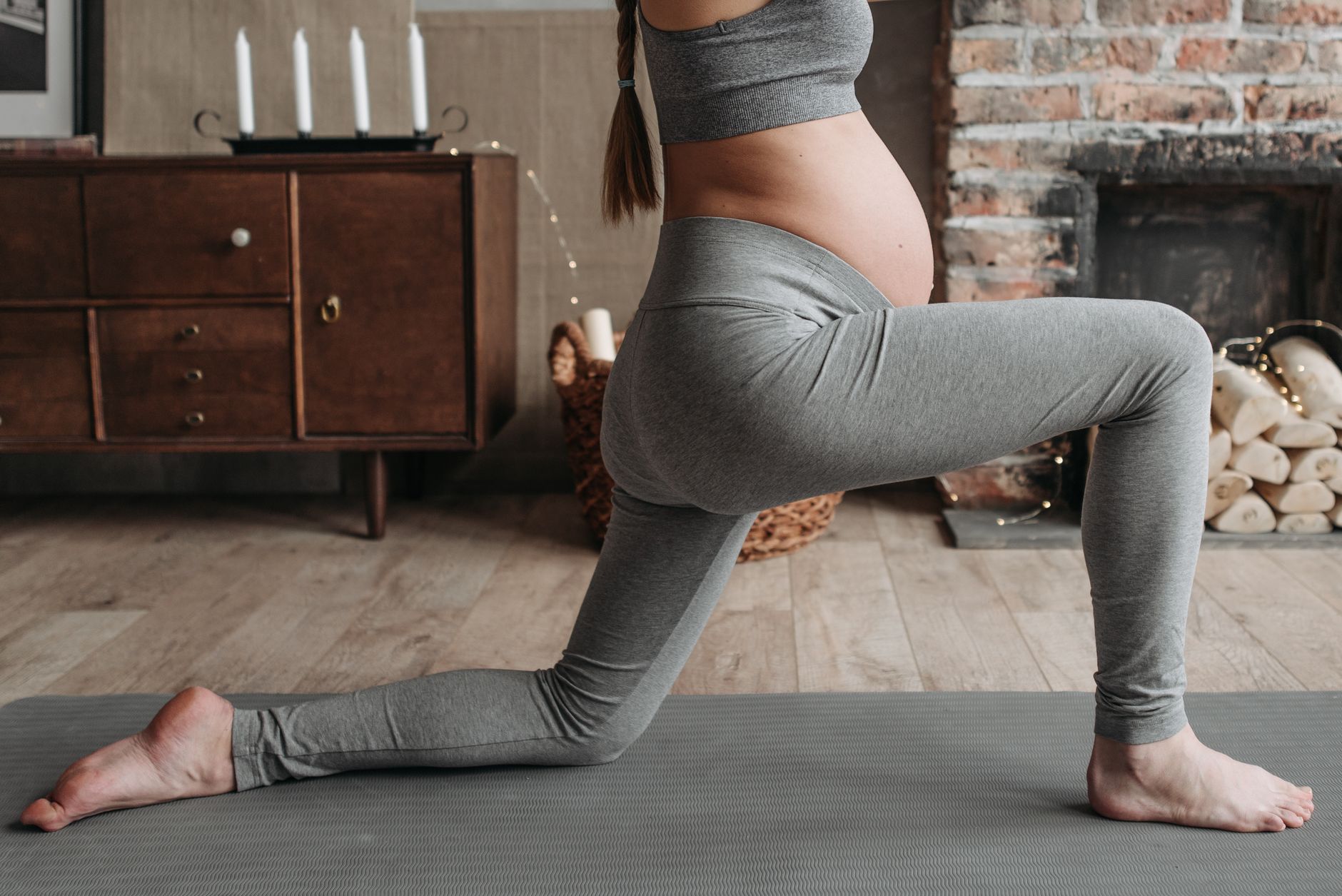
Squats (Bodyweight): Stand with feet shoulder-width apart, chest up, and lower as if sitting in a chair. Keep your weight in your heels. (Modify postpartum by reducing depth or doing wall squats).
Push-ups (Knees or Wall): Modify by doing them against a wall, on your knees, or with hands elevated on a sturdy surface. Focus on keeping your core engaged.
Glute Bridges: Lie on your back, knees bent, feet flat. Lift your hips toward the ceiling, squeezing your glutes at the top. Great for glute and core strength.
Reverse Lunges: Step one leg back, lowering your hips until both knees are at a 90-degree angle. Alternate legs. (Modify by reducing depth).
Plank (Knees or Forearms): Hold a straight line from head to heels, engaging your core. Modify by dropping to your knees or doing an incline plank against a counter.
Even Quicker: 5-Minute No-Equipment Workout for Moms with No Time
Sometimes, even 10 minutes is a stretch. For those truly slammed days, a 5-minute routine is better than nothing. Pick 3-4 exercises and do each for one minute, with minimal rest. Focus on movements that give you the most bang for your buck.
Minute 1: Wall Sit (or deep squat hold)
Minute 2: Standing March (high knees, slow and controlled)
Minute 3: Alternating Reverse Lunges
Minute 4: Push-ups (wall or incline)
Minute 5: Bird-Dog (alternating arm and leg extension on all fours, great for core stability)
For moms with toddlers, try incorporating them! Lift your baby during squats (if safe and cleared by your doctor), or have your toddler "help" with push-ups by sitting on your back (carefully!). Make it playful and fun, so it feels less like a chore and more like family time. Even listening to podcasts for moms working from home can help pass the time and keep you engaged during your short workout.
Understanding Diastasis Recti: How to Modify Exercises Without Equipment
Diastasis recti (DR) is the separation of the rectus abdominis muscles (your "six-pack" muscles) down the midline of your abdomen. It's common during and after pregnancy, affecting up to two-thirds of women, according to the Mayo Clinic. While it often resolves on its own, for some, it persists and can contribute to back pain, pelvic floor dysfunction, and a "pooch" belly. Understanding how to check for DR and modify exercises is crucial when doing home workouts for moms with no equipment.
How to Check for Diastasis Recti
Lie on your back with your knees bent and feet flat on the floor.
Place one hand behind your head for support.
With your other hand, place your fingertips horizontally across your belly button.
Gently lift your head and shoulders a few inches off the floor, as if doing a mini-crunch. As you lift, you should feel the edges of your rectus abdominis muscles come together.
Note the gap: If you feel a gap of two or more finger-widths, or if you see a "doming" or "coning" along your midline, you likely have diastasis recti.
Always consult a pelvic floor physical therapist for a definitive diagnosis and personalized guidance. They are specialists who can provide tailored advice for your recovery.
Modifying Exercises for Diastasis Recti
The goal is to avoid exercises that put excessive strain on the midline, which can worsen the separation. Focus on exercises that activate your deep core muscles (transverse abdominis) without causing bulging or coning. Here's how to modify common bodyweight movements:
Original Exercise
Diastasis Recti-Safe Modification (No Equipment)
Traditional Crunches/Sit-ups
Avoid. Instead, focus on deep core breathing (exhale as you gently draw your belly button towards your spine). Pelvic tilts on your back.
Full Plank
Incline Plank or Kneeling Plank. Ensure your core stays flat and engaged, no coning. Start on forearms if wrists are an issue.
Push-ups (Floor)
Wall Push-ups or Incline Push-ups. Reduce the angle to decrease core strain. Keep your core tight.
Squats/Lunges
Focus on form. Keep your core gently engaged throughout the movement. Avoid holding your breath. Reduce depth if you feel pressure.
Leg Lifts (on back)
Single Leg Slides or Bent Knee Leg Lowers. Keep one foot on the floor and slide the other leg out, or lower one bent knee at a time. Ensure your lower back stays pressed into the floor.
The key is to always think about engaging your deep core – imagine gently hugging your baby with your abdominal muscles – before initiating any movement. If you notice any doming or bulging, stop the exercise and try a more modified version.
Building a Strong Core: Postpartum-Safe Workouts for Moms Without Equipment
After childbirth, your core isn't just about aesthetics; it's about functional strength, supporting your back, improving posture, and providing stability for all your daily tasks, from lifting your child to carrying groceries. Traditional core exercises like crunches can often be counterproductive, especially postpartum. Instead, focus on rebuilding your deep core unit with postpartum-safe workouts for moms without equipment.
The "core" isn't just your abs; it includes your pelvic floor, diaphragm, and deep back muscles. A holistic approach is essential. Here are some of the best core bodyweight exercises that are gentle yet effective:
Pelvic Tilts: Lie on your back, knees bent, feet flat. Gently flatten your lower back into the floor by tilting your pelvis up slightly, engaging your lower abs. Release. Repeat slowly.
Transverse Abdominis (TA) Breathing: Lie on your back or sit upright. Place hands on your lower abdomen. Inhale, allowing your belly to expand gently. Exhale slowly, imagining you're zipping up a tight pair of jeans, drawing your belly button towards your spine and up towards your ribs. Hold this gentle engagement for a few seconds. This is how to engage your core during workouts postpartum.
Bird-Dog: Start on all fours, hands under shoulders, knees under hips. Keep your back flat and core engaged. Slowly extend one arm forward and the opposite leg back, keeping your hips level. Return to start and alternate. This is fantastic for stability.
Glute Bridges: Lie on your back, knees bent, feet flat, hip-width apart. Engage your glutes and lift your hips off the floor until your body forms a straight line from shoulders to knees. Lower slowly. This strengthens glutes and helps stabilize the pelvis.
Side-Lying Leg Lifts: Lie on your side, bottom arm extended, top arm for support. Legs straight. Gently lift your top leg towards the ceiling, keeping your core stable and hips stacked. Lower slowly. Targets obliques and hip abductors.
Dead Bug (Modified): Lie on your back, knees bent over hips, shins parallel to the floor (tabletop position). Keep your lower back pressed into the floor. Slowly lower one heel towards the floor, maintaining core engagement. Return and alternate.
Focus on quality over quantity. Perform each exercise slowly and with control, truly feeling your core muscles engage. These exercises are not just about building strength but also about improving neuromuscular control and reconnecting with your body after pregnancy and childbirth. Aim for 10-15 repetitions or 30-60 second holds for each exercise, for 2-3 sets.
The bird-dog exercise helps stabilize the core and improve balance, safely.
Consistency is Key: How Often Should Moms Do Home Workouts Without Equipment for Results?
The question of "how often" often comes with the unspoken desire for "how quickly." While it's natural to want to see results, especially when you're making an effort to fit in a home workout for moms with no equipment, consistency truly trumps intensity. The World Health Organization (WHO) recommends at least 150 minutes of moderate-intensity aerobic activity or 75 minutes of vigorous-intensity aerobic activity per week, plus muscle-strengthening activities at least two days a week, for adults.
For moms, this might look like:
3-5 days a week: Aim for dedicated workout sessions.
Duration: 10-30 minutes per session. Even 5-minute bursts count!
Mix it up: Combine strength, cardio, and flexibility.
The most effective schedule is one you can stick to. If that means three 15-minute sessions a week, that’s fantastic. If it means a 30-minute session and two 10-minute sessions, that works too. Don't aim for perfection; aim for presence. One reader shared, "I used to think if I couldn't do a full hour, it wasn't worth it. Now I just do 15 minutes while my baby naps, and I feel so much better. It's truly a game-changer for my mental health."
Tracking Progress Without Equipment
You don't need a gym membership or fancy gadgets to track your progress. Here’s how you can monitor your improvements with no equipment:
Repetition Count: Can you do more squats or push-ups than last week in the same amount of time?
Time Held: Can you hold a plank for 10 seconds longer?
Form Improvement: Is your form stronger, more controlled, and less shaky?
Energy Levels: Do you feel more energized throughout the day? Are daily tasks (like lifting your child) easier?
Clothing Fit: While weight loss isn't the only metric, noticing your clothes fit differently can be a sign of muscle gain and fat loss.
Journaling: Keep a simple log of your workouts, how you felt, and any small victories. This can be incredibly motivating.
Remember, results aren't just about physical changes. Improved mood, better sleep, reduced stress, and increased functional strength for daily mom-life tasks are all significant and valuable results of consistent movement. For instance, consistent exercise can also boost mental clarity, which can be useful if you're exploring top side hustles for stay-at-home moms.
Gentle Movement: Low-Impact Cardio Exercises for Moms at Home (No Equipment, No Jumping)
Cardio doesn't have to mean high-impact, joint-jarring movements. For many moms, especially postpartum or those with joint pain, low-impact cardio exercises for moms at home (no jumping, no equipment) are ideal. They get your heart rate up, improve cardiovascular health, and boost endurance without putting excessive strain on your body. Plus, they're quiet enough not to wake a sleeping baby!
Aim for 20-30 minutes of continuous movement, or break it into shorter 10-15 minute segments if that fits your schedule better. Here are some effective no-jump, no-equipment cardio options:
Marching in Place / High Knees (Modified): Lift your knees high towards your chest, pumping your arms. Control the movement; no need to jump. Increase pace to raise heart rate.
Butt Kicks (Modified): Bring your heels towards your glutes one at a time, swinging your arms. Again, keep it controlled and non-jumping.
Arm Circles: Stand tall, extend arms to the sides. Make small, then medium, then large circles, forward and backward. Surprisingly effective for getting blood flowing and warming up the upper body.
Shadow Boxing: Stand with a slight bend in your knees. Throw punches (jabs, crosses, hooks, uppercuts) into the air. Keep your core engaged and pivot your hips for power. This is a great full-body cardio and stress-reliever.
Walking Lunges (No Weights): Step forward into a lunge, then bring your back foot forward to meet the front, and step immediately into a lunge with the other leg. Keep it fluid.
Standing Oblique Crunches: Stand with hands behind your head. Bring one elbow towards the opposite knee, engaging your obliques. Alternate sides. This provides gentle core work while moving.
Side Shuffles: Take a few steps to one side, then reverse. Stay low in a slight squat as you shuffle.
Stair Climbing (if you have stairs): Simply walking up and down a set of stairs for 10-15 minutes is an excellent low-impact cardio workout.
To make these exercises more challenging, increase your speed, the range of motion (where safe), or the duration of each movement. You can also combine them into a circuit, performing each for 1-2 minutes before moving to the next, with minimal rest in between. Keep a water bottle nearby and stay hydrated!
Beyond the Sweat: How to Stay Motivated with Home Workouts as a Tired Mom
Let's be honest: some days, the thought of adding "workout" to your already packed schedule feels like trying to squeeze a camel through the eye of a needle. Staying motivated with home workouts as a tired mom requires more than just willpower; it needs strategy, self-compassion, and realistic expectations. Many women tell us their biggest hurdle isn't the workout itself, but simply getting started.
Here are practical tips to keep you going, even when you're running on fumes:
Lower the Bar: If you planned 30 minutes but only have 5, do 5. Consistency at a low level is better than perfection that never happens.
Schedule It (and Protect It): Just like you schedule doctor's appointments, schedule your workout. Even if it's just a 10-minute block. Treat it as non-negotiable "you time."
Find Your "Why": Is it more energy for your kids? Better sleep? Stress relief? A stronger back? Remind yourself of your deeper motivation beyond just "exercise."
Workout Buddies (Virtual or In-Person): Having someone to check in with can be a huge motivator. Even if you're working out separately, knowing someone else is doing it too can help.
Reward Yourself (Non-Food): After a week of consistent effort, treat yourself to a new book, a long bath, or an episode of your favorite show uninterrupted.
Dress the Part: Sometimes just putting on your workout clothes can shift your mindset and make it easier to start.
Involve the Kids: Turn it into playtime! Do "animal walks" (bear crawls, crab walks) with toddlers. Lift your baby for squats or chest presses (safely!). It makes it fun and eliminates the "I don't have time because of the kids" excuse.
Create an Inviting Space: Even a small corner of your living room can become your workout zone. Clear clutter, maybe put on some energizing music.
Listen to Your Body: Some days, a gentle stretch or a walk is all you can manage. That's okay. Honoring your body's needs prevents burnout.
One mom shared, "My biggest breakthrough was letting go of perfection. If I miss a day, I just pick back up tomorrow. No guilt. That's what made it sustainable for me." Remember, this is about self-care, not self-punishment. Prioritizing your physical health contributes to your overall well-being, allowing you to show up as your best self for your family. If you're feeling overwhelmed, exploring resources on topics like term life insurance for stay-at-home moms can help alleviate financial anxieties, indirectly supporting your mental space for self-care.
Strengthening Your Foundation: Pelvic Floor Exercises for Postpartum Recovery
The pelvic floor is a group of muscles and ligaments that support your bladder, uterus, and rectum. Pregnancy and childbirth place significant strain on these muscles, often leading to weakness, incontinence, or pelvic pain. Strengthening your foundation with pelvic floor exercises for moms at home (no equipment, postpartum recovery) is a crucial, often overlooked, aspect of postpartum fitness.
Pelvic floor exercises, often called Kegels, are about more than just "squeezing." It’s about learning to both contract and fully relax these muscles. The National Institutes of Health (NIH) emphasizes the importance of proper technique for effectiveness.
How to Perform Kegel Exercises Correctly
Identify the Muscles: Imagine you're trying to stop the flow of urine or prevent passing gas. The muscles you feel lift and squeeze are your pelvic floor. Avoid squeezing your glutes, thighs, or abs.
Slow Contractions: Slowly lift and squeeze your pelvic floor muscles, holding for 5-10 seconds. Focus on an "elevator lift" sensation – lifting upwards and inwards. Don't hold your breath.
Full Relaxation: Equally important is fully relaxing the muscles for the same amount of time after each contraction. Imagine letting go completely. This allows the muscles to recover and prevents them from becoming overly tight.
Fast Contractions: After slow contractions, try quick flicks – rapid squeezes and immediate releases. These help with sudden urges or coughs.
Incorporating Pelvic Floor Exercises into Daily Workouts and Life
Pelvic floor exercises can be integrated seamlessly into your existing home workout for moms with no equipment, or simply into your daily routine. No one even needs to know you're doing them!
During Exercises: Practice a gentle pelvic floor lift (a "Kegel") as you exhale during the exertion phase of movements like squats, lunges, or glute bridges. This helps protect your pelvic floor from downward pressure.
"The Knack": Before you cough, sneeze, or lift something heavy, perform a quick pelvic floor contraction. This pre-activation, known as "The Knack," can help prevent leakage.
Daily Opportunities: Do a set while nursing, waiting for the kettle to boil, or sitting at a traffic light. Aim for 3 sets of 10 slow contractions and 10 fast contractions, 3 times a day.
If you experience persistent leakage, pain, or difficulty with these exercises, it’s highly recommended to see a pelvic floor physical therapist. They can provide a personalized assessment and guidance, which is invaluable for full recovery.
Gentle pelvic tilts and core breathing are excellent for rebuilding your foundation.
Myth vs. Fact
When it comes to home workouts, especially for moms, there are a lot of misconceptions floating around. Let's clear up a few:
Myth: You need to feel the burn or be sore to know a workout was effective.
Fact: While some muscle soreness (DOMS) can happen, it's not a direct indicator of an effective workout. Consistent, proper form, and feeling your muscles work are far better measures. Many postpartum-safe exercises focus on deep muscle activation and stability, which won't necessarily lead to intense soreness but are incredibly beneficial.
Myth: You need hours of exercise to see any real results.
Fact: This is simply not true, especially for home workouts for moms with no equipment. Short, consistent bursts of activity (even 10-15 minutes) can significantly improve cardiovascular health, strength, mood, and energy levels. The key is consistency and making those short periods count with effective, compound movements.
Myth: If you have diastasis recti, you can never do ab exercises again.
Fact: You absolutely can and should do core exercises with diastasis recti, but you need to choose the right ones. Avoid traditional crunches or sit-ups that put outward pressure on the midline. Instead, focus on deep core activation, transverse abdominis breathing, and exercises that don't cause coning or bulging. A pelvic floor physical therapist can guide you to rebuild core strength safely.
Key Takeaways
Start home workouts for moms with no equipment only after getting medical clearance, typically around 6 weeks postpartum.
Prioritize gentle core and pelvic floor exercises to rebuild your foundation safely.
Short, consistent workouts (5-15 minutes) are highly effective for busy moms; focus on compound movements.
Learn to check for diastasis recti and modify exercises to avoid worsening separation.
Low-impact cardio (no jumping) can elevate heart rate and build endurance without stressing joints or the pelvic floor.
Motivation comes from lowering the bar, scheduling workouts, finding your "why," and celebrating small victories.
Pelvic floor exercises (Kegels) are crucial for postpartum recovery and should be integrated into daily life and workouts.
Listen to your body, avoid pain, and remember that any movement is better than none.
Frequently Asked Questions
Can I do home workouts as a new mom without equipment?
Yes, absolutely! Home workouts with no equipment are an excellent option for new moms, offering flexibility and convenience. Always ensure you've received clearance from your doctor or midwife, typically at your 6-week postpartum check-up, before starting any exercise routine. Begin with gentle, low-impact movements to rebuild strength and connect with your body.
How soon after giving birth can I start no-equipment workouts?
Most healthcare providers recommend waiting until your 6-week postpartum check-up to ensure your body has healed sufficiently. However, some gentle movements like walking and basic pelvic floor exercises might be approved earlier, depending on your individual recovery and birth experience. Always get personalized advice from your doctor before beginning.
What are the best no-equipment exercises for postpartum moms?
The best no-equipment exercises for postpartum moms focus on gentle core strengthening, pelvic floor activation, and functional movements. Examples include pelvic tilts, transverse abdominis breathing, glute bridges, bird-dog, wall push-ups, modified planks (on knees or incline), and bodyweight squats with proper form. These help rebuild strength safely.
How long should a home workout be for moms with no equipment?
The ideal length for a home workout for moms with no equipment depends on your time and energy levels. Even 5-10 minute sessions can be highly effective if done consistently. Aim for 15-30 minutes when possible, focusing on compound movements and minimal rest. The most important factor is consistency, so choose a duration you can realistically stick to.
Are no-equipment workouts effective for losing baby weight?
Yes, no-equipment workouts can be effective for losing baby weight safely, especially when combined with a balanced diet. While weight loss is a complex process, consistent bodyweight exercises build muscle, boost metabolism, and burn calories. Focus on full-body movements and gradually increasing intensity. Remember, the goal is sustainable health and strength, not just rapid weight loss.
What exercises should postpartum moms avoid without equipment?
Postpartum moms should generally avoid exercises that put excessive strain on the healing core and pelvic floor, especially if they have diastasis recti. This includes traditional crunches, sit-ups, full planks (initially), high-impact jumping, and heavy lifting. Any movement that causes pain, coning/doming of the abdomen, or leakage should be avoided or modified until you've fully recovered and strengthened your deep core.
When to See a Doctor or Specialist
While home workouts for moms with no equipment are generally safe and beneficial, it’s crucial to know when to seek professional medical advice. Contact your doctor, midwife, or a pelvic floor physical therapist if you experience any of the following:
Persistent pain during or after exercise, especially in your pelvis, hips, or back.
Increased vaginal bleeding or unusual discharge after a workout.
Any signs of pelvic organ prolapse, such as a feeling of heaviness or bulging in your vagina.
New or worsening urinary or fecal incontinence (leaking urine or stool).
Continued or worsening diastasis recti (abdominal separation) or noticeable coning/doming of your abdomen during core exercises.
Persistent fatigue or exhaustion that doesn't improve with rest.
Any other concerns about your physical recovery or mental well-being.
This article provides general information and is not a substitute for professional medical advice, diagnosis, or treatment. Always consult with a qualified healthcare provider for any health concerns or before making any decisions related to your health or treatment.
References
American College of Obstetricians and Gynecologists (ACOG). Exercise During Pregnancy and Postpartum.
Mayo Clinic. Diastasis Recti.
World Health Organization (WHO). WHO guidelines on physical activity and sedentary behaviour.
National Institutes of Health (NIH). Pelvic Floor Exercises (Kegel Exercises) for Women.
Not sure about the label on Home Workout For Moms No Equipment products?
Snap the ingredients list and SafeFilter checks every ingredient for your stage — only 3 free scans this month, then you're locked until reset. Unlimited from $7/mo or $50/yr.
When Shubhra Mishra was expecting her first child in 2016, she was overwhelmed by conflicting food advice — one site said yes, another said never. By the time her second baby arrived in 2019, she realized millions of mothers face the same confusion.
That sparked a five-year journey through clinical nutrition papers, cultural diets, and expert conversations — all leading to BumpBites: a calm, compassionate space where science meets everyday motherhood.
Her long-term vision is to build a global community ensuring safe, supported, and free deliveriesfor every mother — because no woman should face pregnancy alone or uninformed. 🌿
🌍 Stand with mothers, shape safer guidance
Join a small circle of experts who review BumpBites articles so expecting parents everywhere can decide with confidence.